 The trees look spooky now. Box elders, honeylocusts and alders, and even some of the sycamores, have dropped so much of their foliage since that weirdly hot weather a few weeks ago. The smoky sky as a backdrop enhances the spooky factor. The trees do not seem to be too distressed. They just dropped their leaves a bit early to conserve resources. If they had not dropped foliage by now, they would be dropping it soon anyway.
Trees are not stupid. They know what they are doing. Otherwise, they would not survive as long as they do out in the elements. Sometimes, they seem to know what the weather will do before it does it; like dogs, cats and horses that start to get their undercoats early before a cold winter.
Deciduous trees and other plants defoliate for winter for a few reasons. Those from farther north probably see no need to work so hard to collect sunlight while sunlight is so minimal. Up north, days are shorter, and sunlight is diminished as it passes through so much of the atmosphere at a lower angle. Deciduous plants from colder climates shed their foliage because they know that if they do not, it will get frozen anyway. Those from snowy climates do not want foliage to collect heavy snow that can break limbs. Defoliation also eliminates much of the wind resistance that can break limbs during winter storms. There are a few advantages to being deciduous.
In California, we have a native California buckeye, Aesculus californica. In chaparral conditions, it can be ‘twice-deciduous’. It does not need to be so in less arid regions, such as the Santa Cruz Mountains. It really depends on the weather.
As a twice-deciduous plant, the California buckeye develops new foliage in spring like other deciduous plants do. It stays foliated as long as it wants to; but if things get too dry and warm in the middle summer, the foliage shrivels and falls. To a casual observer, the trees seem to die. However, between the first autumn rain and the first winter frost, California buckeye develops a second phase of autumn foliage to briefly compensate for summer dormancy. This foliage stays late until it gets frosted and falls. Winter dormancy is just like that of any other deciduous tree. In spring, the process starts all over again.
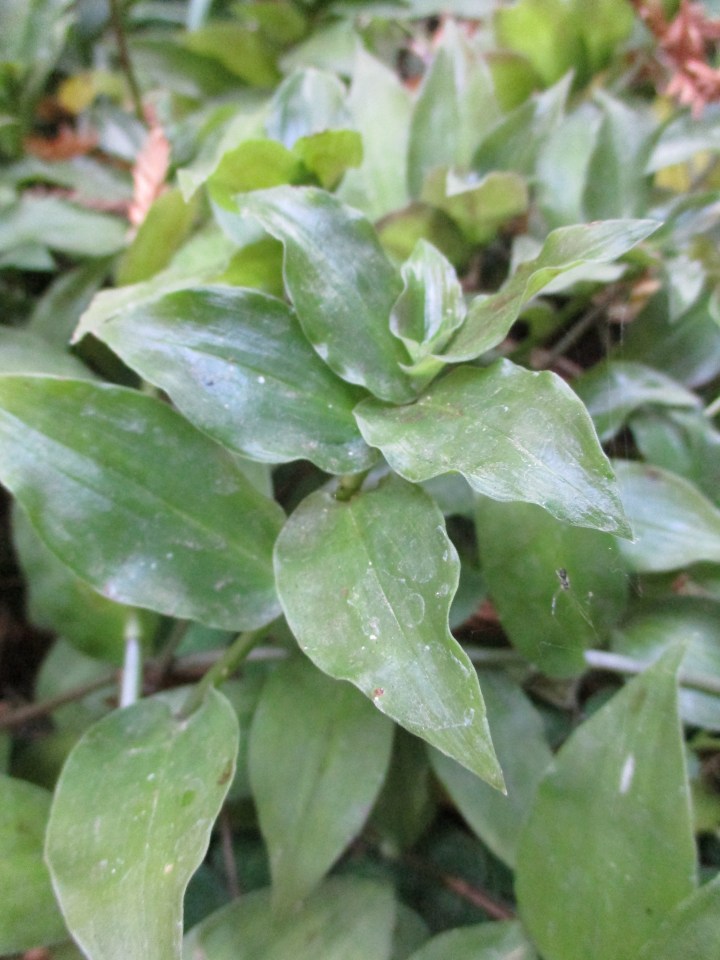 It could not have survived out in the desert for forty years. Wandering Jew, Tradescantia fluminensis, would have desiccated before its first summer. Well watered gardens are a completely different situation. Wandering Jew can become invasive and mix with other more desirable ground covers, only to die back and turn dark brown through winter. It starts over the following spring.
 Philodendrons, dracaenas, ferns, palms or any sort of tropical foliage inside our homes only create an illusion of closeness to nature. Naturally, these plants live in very different climates, mostly thousands of miles away. Not only do they have no business in our homes; they have no business on the North American Continent. Some can live in the garden, but only with unnatural watering.

