Forcing Bloom From Bare Stems

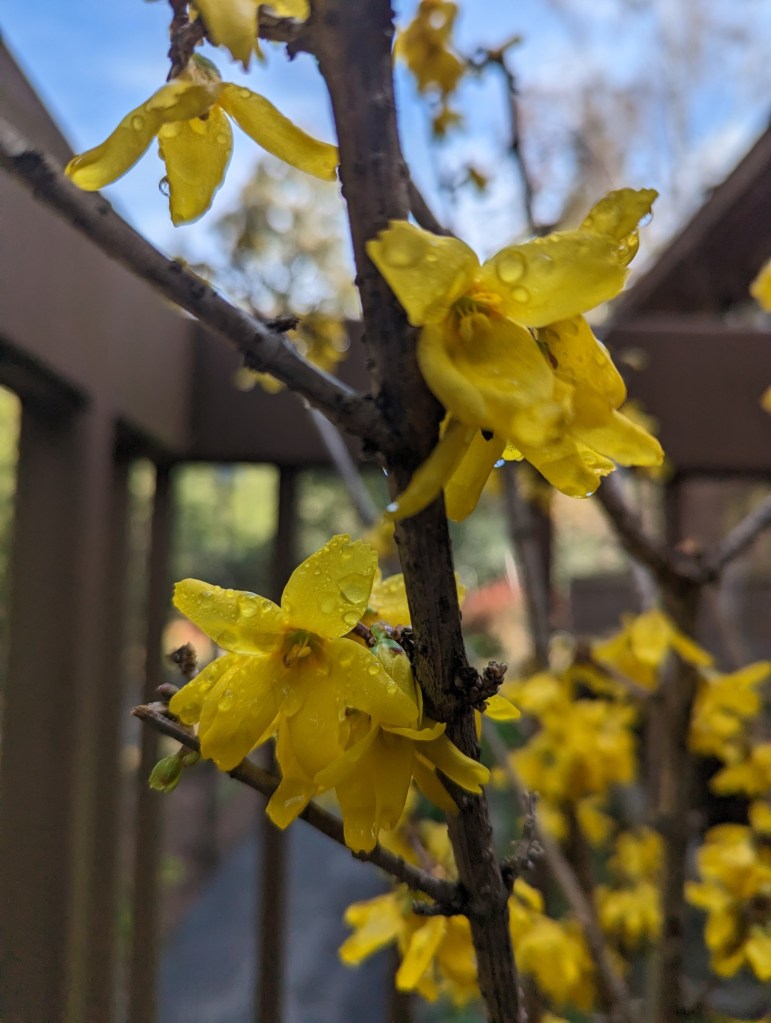
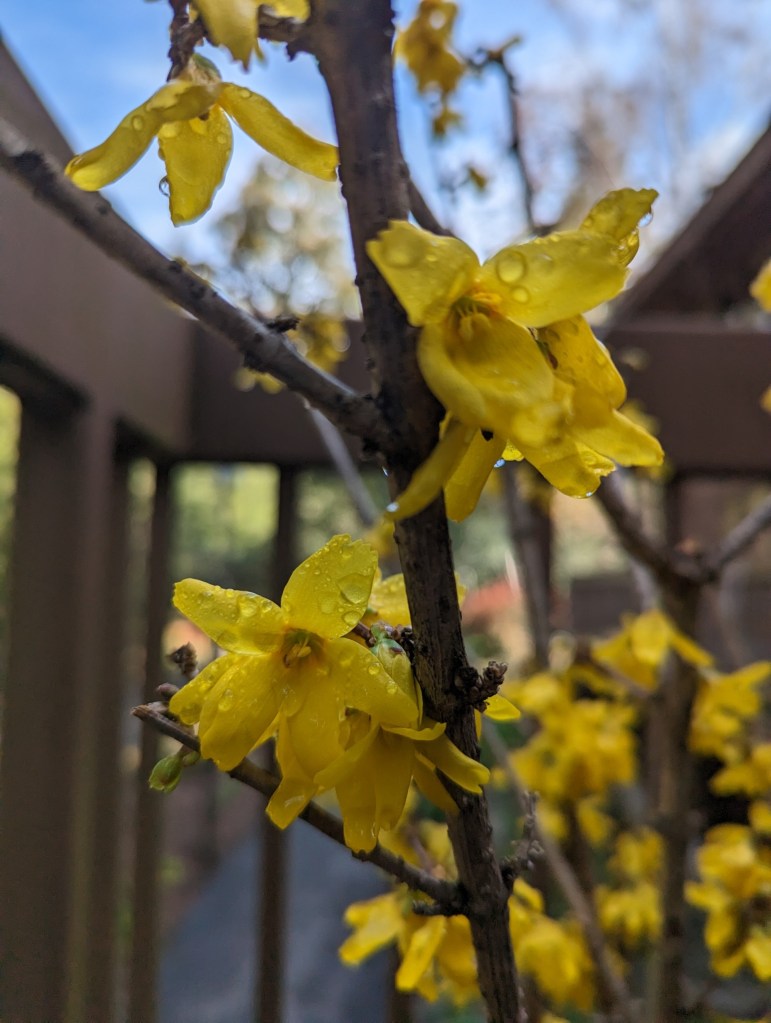
Forsythia is ideal for forcing bloom.

Spring bulbs, with prechilling, were conducive to the technique of forcing bloom earlier. A few summer bulbs might still be responsive to it, although it is getting late for most. Now, it is about time for forcing bloom with certain dormant deciduous stems. Most are already beginning to bloom. Forcing bloom merely accelerates this process for cut flower stems.

Forcing bloom for dormant deciduous stems is actually simpler than for bulbs. It involves merely cutting stems that are about to bloom and bringing them indoors. The warmth of a home interior is what accelerates profuse bloom. Aridity of home interiors may accelerate the deterioration of this bloom. However, homes also provide shelter from wind and rain.

Witch hazel, flowering quince and forsythia are mostly done blooming locally. Otherwise, they are conducive to forcing bloom, and will be available next winter. Several flowering cherries and flowering plums are now about ready for forcing bloom. Redbuds are ready also, though some will be later. Flowering crabapples should bloom later in their season.

Several fruit trees are as conducive to forcing bloom as their fruitless flowering relatives. Their floral color and profusion are less extravagant only because of their breeding. Fruit is, after all, the priority. With planning, dormant pruning can involve leaving a few surplus stems to cut later. Then, cutting them about now should not compromise fruit production.

With precise timing, wisteria and lilac are conducive to forcing bloom. Technically, so are dogwood and several deciduous magnolias. They bloom relatively slowly though. A few flowers should therefore be blooming before collection of their stems. Evergreen species are less striking in bloom. Fringe flower and Oregon grape can perform elegantly though.

Forcing bloom is more popular where winters are cooler. This is partly because gardens lack floral color for so long through winter. Those who enjoy flowers are in more of a rush to bring some into their homes. Also, dormant vegetation is more reactive to warmth after colder winters. Warmth might not stimulate bloom as effectively after locally mild winters.

Forsythia

00108This may seem to be three months early, or an entire season out of season; but this is when bare root forsythia, Forsythia X intermedia, gets planted. Even so, the smaller of new bare root plants will bloom with only a few flowers early in their first spring, so will not produce their famously profuse and garishly bright yellow bloom for another year and three months. They will be worth the wait.

Flowers are small but very abundant. They bloom as winter turns to spring, before there is any new foliage to interfere with their splendor. Foliage develops as bloom finishes, and if the weather is right, it might get somewhat colorful in autumn. The simple paired leaves are about two or perhaps three inches long. Big plants should stay less than ten feet tall, but can get taller if lightly shaded.

Pruning should be done after bloom rather than before, and from the inside out rather than from the outside in. Dormant pruning, although more horticulturally correct, eliminates some of the canes that would otherwise bloom in spring. After bloom, older overgrown canes that are beginning to deteriorate should be pruned to the ground to promote development of new canes to replace them.

Bloom Is Earlier If Forced

60224thumbProperly pruned deciduous fruit trees probably do not have too many extra stems to spare now. Neglected trees would have more to offer. Believe it or not, a few of us who prune deciduous fruit trees diligently and meticulously in winter sometimes leave a few unwanted stems to prune out and take into the home now that the flower buds are beginning to swell and are about to bloom.

Bloom accelerates once the bare twigs are inside where the nights are warmer than outside. If the buds are plump enough, they can bloom in a day or a few. (If not plump enough, the buds may desiccate before they bloom.) Twigs that are already blooming can be brought in as well, but do not last quite as long. Blossoms are a bit messy as they later drop petals, but are worth the bother.

The technique is simply known as ‘forcing’, which works something like forcing bulbs to bloom prematurely. Timing is critical. If a few blossoms are already blooming elsewhere on the tree, the fattest unblooming buds that are already showing color are ready to be cut and brought in. They only need to be put in a vase with water like any other cut flower, and can mix with other flowers.

Stone fruits (of the genus Prunus) like almond, apricot, plum, prune, peach, nectarine and cherry, start to bloom about now, although not in this order. Apple and pear bloom later. All their fruitless counterparts, known simply as flowering plum, flowering cherry, flowering crabapple and so on, are even more colorful, and some types bloom with ruffled double flowers. All bloom without foliage.

Flowering quince and forsythia have already bloomed, but would have been the most spectacular bare twigs to force into bloom. Pussywillow is probably the most familiar forced bloom twig. Hawthorn (Crataegus spp.) blooms something like pear, but the aroma may be objectionable to some. More adventurous garden enthusiasts force witch hazel (winter), redbud and star magnolia.