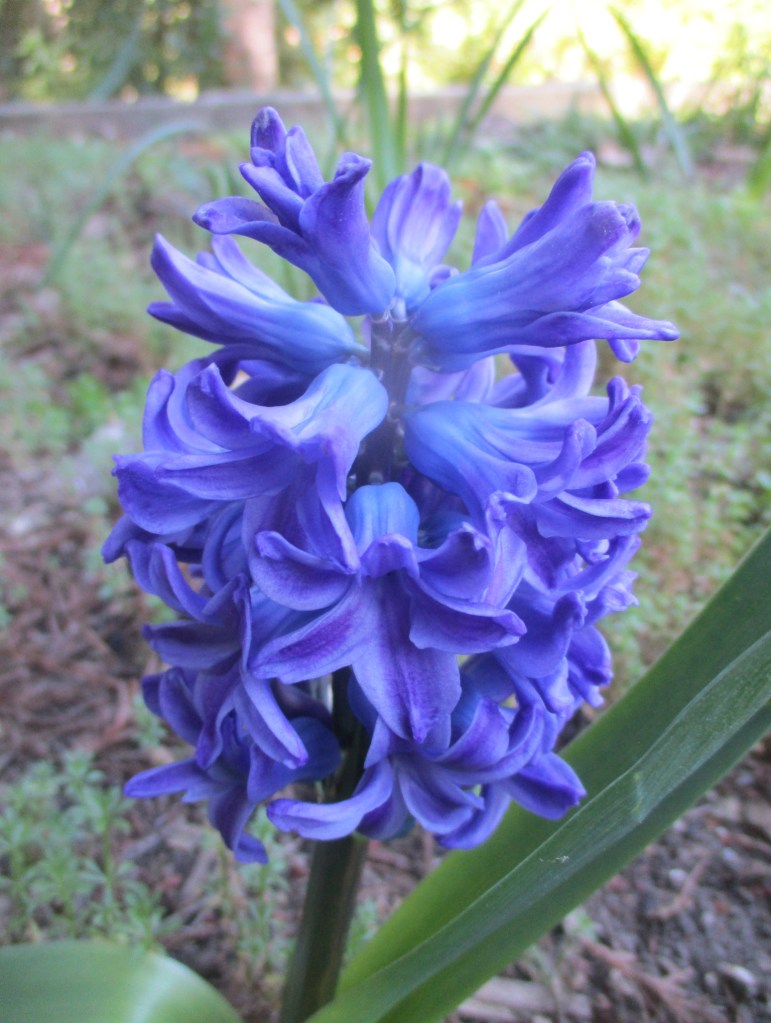
Hyacinth

Hyacinth are both colorful and fragrant.

Most flowers that must attract pollinators do so with either color or fragrance. Hyacinth is an exception that does both. It is as fragrant as it is colorful. Its intensely rich fragrance is supposedly comparable to that of lilac. Its floral color range includes many hues and tints of most colors but green. It blooms for very early spring along with many types of daffodil.

Dormant hyacinth bulbs go into their gardens about now, but do nothing until after winter. They then bloom with several narrowly tubular florets on stoutly cylindrical trusses. Each floral stem is only about half a foot tall, but stands above its narrow leaves. Foliage lasts for merely two months or so after bloom. It eventually withers with the warmth of summer.

Hyacinth crave rich soil, sunny exposure and regular irrigation after the winter rain stops. They can work nicely with cool season annuals, such as pansies or violas. They appear and bloom just before pansies and violas finish their seasons. Alternatively, hyacinth are conducive to forcing. Unfortunately, they like more winter chill than they experience here after prechilling.
Horridculture – Just When You Thought It Couldn’t Get Any Sillier . . .

P81121Two others have already written about this far more proficiently than I would have:
https://sweetgumandpines.wordpress.com/2018/11/18/abomination/
Amaryllis, Queen of the Forced Bulbs
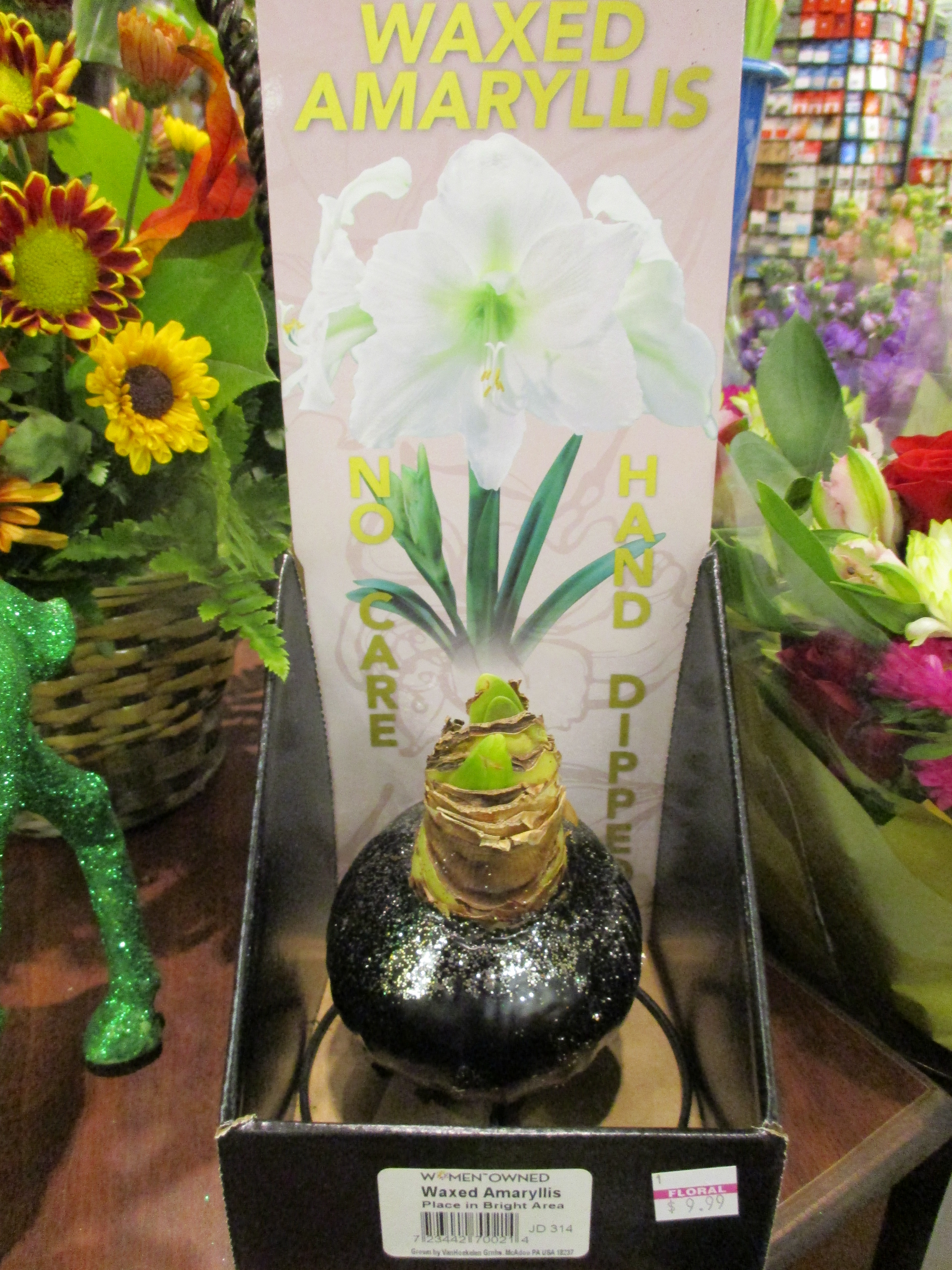
These two articles say it all. I would not have bothered to write about it too if I had not already taken the picture above. I did not read the label to learn what one of these articles said about why these bulbs were waxed. It seals in moisture, so that the bulbs do not desiccate while they bloom without water or moist media. They at least get water when forced by the conventional manner.
I suppose to many who force amaryllis bulbs, there is no problem with waxing them like this, since they are typically discarded as their forced bloom deteriorates. There is no expectation for the bulbs to survive the process to regenerate and bloom the following year.
We can at least pretend that we intend to nurture amaryllis bulbs that bloom in a ‘forcing kit’ that includes a small volume of potting media that sort of sustains the fleshy roots through the process. After all, they can survive the process and get potted into larger volumes of media to recover and bloom again. Some of us have actually sustained such bulbs for a few years Bulbs that are purchased bare and then potted directly into more reasonable volumes of media are of course more sustainable from the beginning.
Poinsettias and living Christmas trees are no better than forced amaryllis. Nor are the Easter lilies in spring.
Like amaryllis bulbs, Easter lilies can be purchased bare and grown directly out in the garden. Those that are forced in pots can be planted out in the garden afterward to possibly recover. Otherwise, they too get discarded after bloom.
Poinsettias can technically be grown as houseplants, but rarely survive that long. Those that do not get tossed after they shed their colorful bracts are likely to get tossed as they languish in recovery from the process of forcing them to bloom in a very contrived greenhouse environment.
Living Christmas trees are actually more of a problem if the ‘do’ survive. They so often get planted into small gardens, and often next to foundations of homes, with the belief that they will always stay small and innocent. The problem is that most are seedlings of the Italian stone pine, which grows very big and very fast, and soon becomes a problem that is very expensive to remove. If not planted in a garden and allowed to destroy all within reach, they die from neglect and confinement within their own pots, often within their first year.