When a tree falls in a forest and there is no one around to hear, it makes a big noise, as well as a mess, and it leaves some if its root in the ground. If a redwood tree falls in a forest, and there is no one around to hear, it is probably better that way. It wold be dangerous to be too close to a redwood when it comes down! They are so big and tall, and are typically so crowded amongst other trees, that they bring down tons of debris with them.
Falling redwoods are rare. They live for centuries or thousands of years. Yet, sooner or later it happens. In more modern history, after the ecology of the redwood groves was disrupted by extensive harvesting, redwoods sometimes get killed by forest fires. (Redwoods are some of the few trees in California that survive forest fires by being fire retardant, but can be killed if enough of the more combustible trees around them burn hotly enough. Extensive harvesting allowed more of the other combustible trees to mix into redwood forests than would normally be there.)
The one thing that redwoods do even less frequently than fall is die. Even after they fall, burn to ‘death’ or get cut down, they regenerate from their stump or roots. Sometimes, several or many genetically identical new trees that are all attached to the same root system develop around a dying parent before it falls. They sometimes do so after a parent burns or gets cut down. Eventually, the original tree decays, leaving a circle of new trees around where it once was. Outsiders often refer to them as ‘fairy rings’. To us, they are just tree circles or rings. Larger and more impressive circles might be known as ‘chapels’ or better yet, ‘cathedrals’.
They are impressive features in the forests. When the area nearby gets landscaped, they are typically ignored because they are so excellent that they can not be improved. There are not many plants that live in the debris of redwoods anyway.
1. This is a nice small but crowded chapel where I work.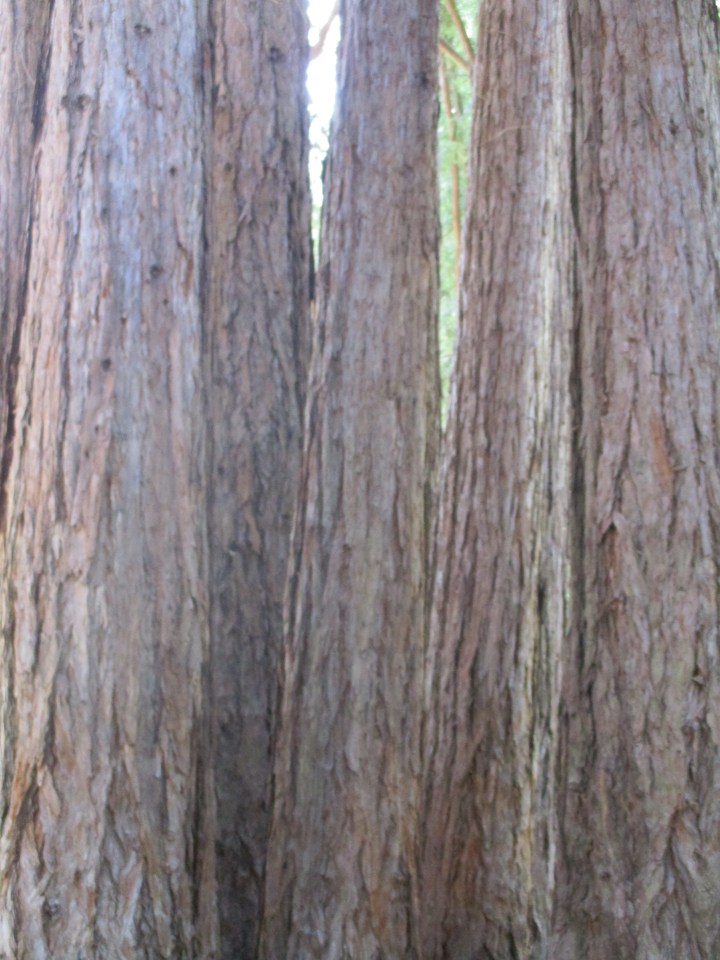
2. How does such a chapel get landscaped? It doesn’t. Ours happens to have a nice patch of azaleas nearby. This picture was taken earlier. Bloom finished a while ago.
3. These azaleas are just so excellent that I had to get a better picture to show them off.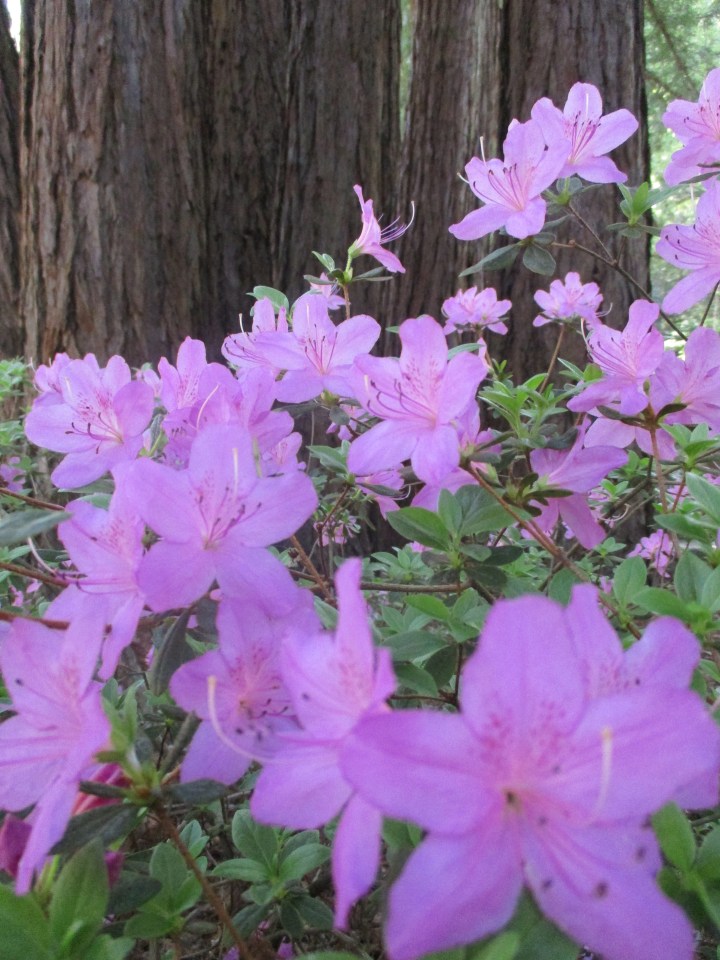
4. Forget-me-not happens to be one of those few plants that does not mind light redwood litter, so we often let it grow and bloom if it shows up in a good spot.
5. Columbine just seems to look good with redwoods for some reason, but it dislikes the litter. This columbine is in a nearby planter that does not get much litter.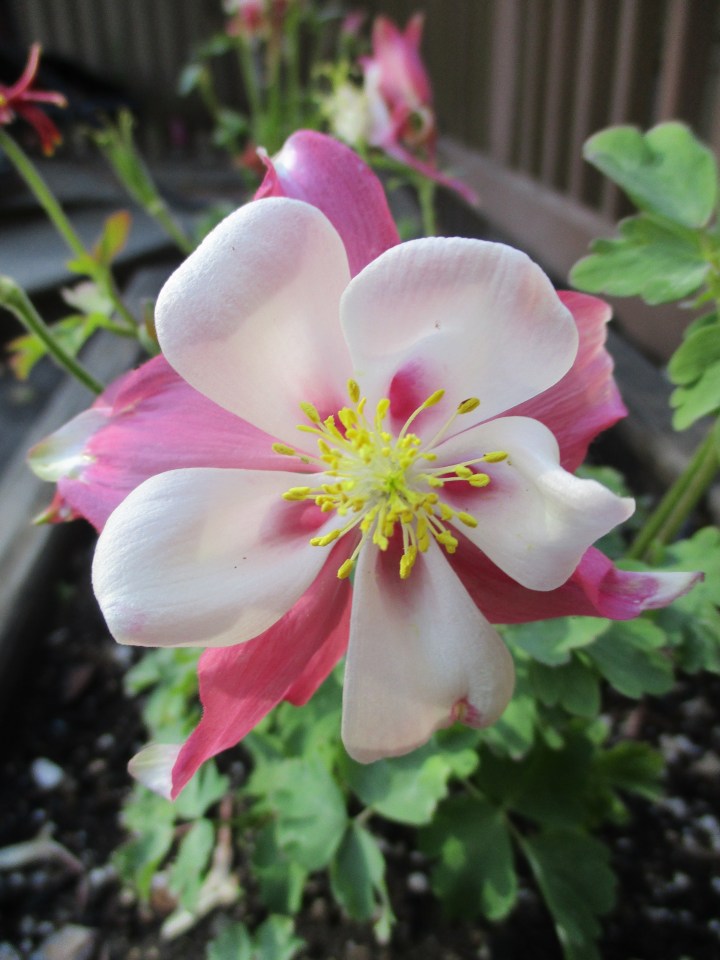
6. I can not explain the red freesias that bloom earlier in spring. There are yellow and purple ones too. No one knows where they came from, but they do not seem to be bothered by a bit of redwood litter.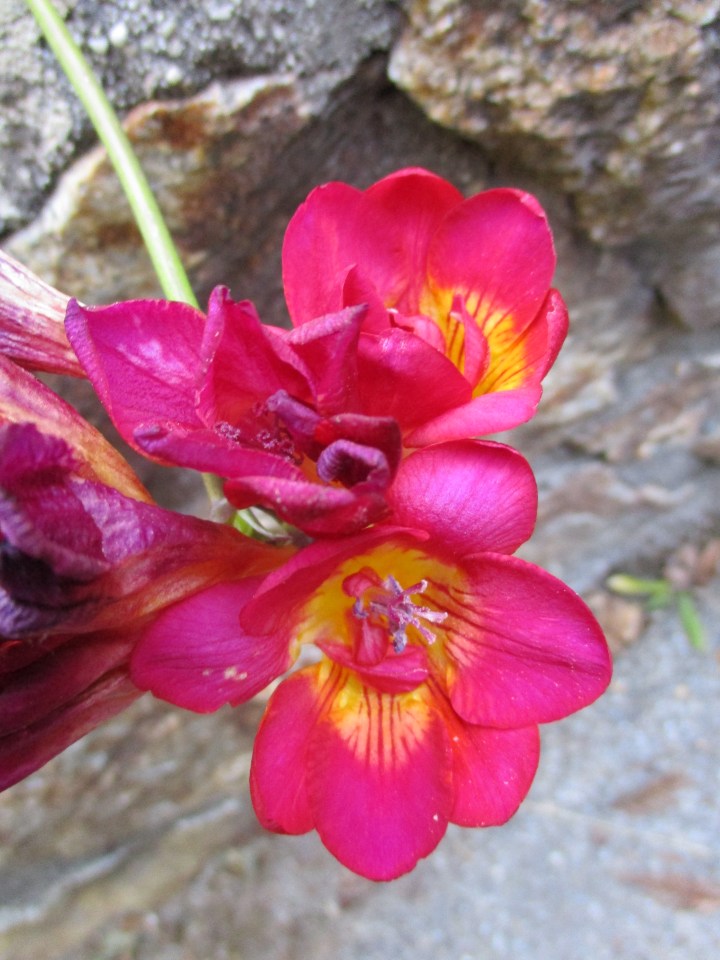 This is the link for Six on Saturday, for anyone else who would like to participate:
https://thepropagatorblog.wordpress.com/2017/09/18/six-on-saturday-a-participant-guide/
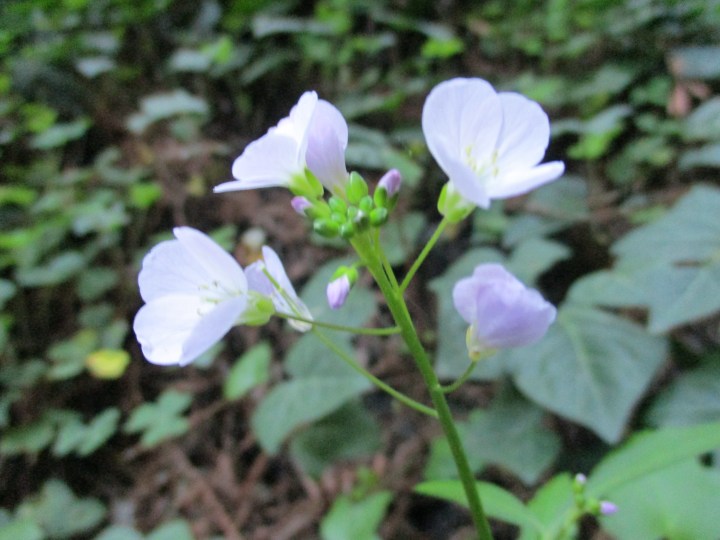 There are so many big trees in the Santa Cruz Mountains that keep most of us looking up. It is easy to miss much of the understory plants that grow on the forest floor.
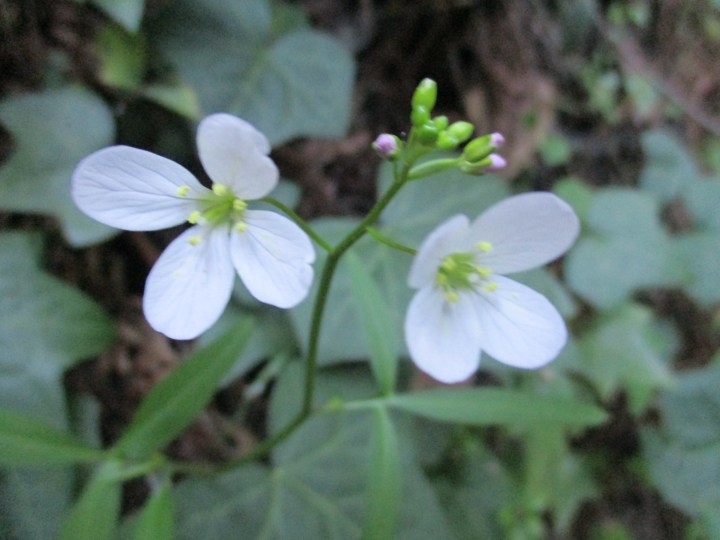 The flowers were not completely white. They were very pale hues of pink. The wood sorrel in the last picture was slightly more pinkish than the unidentified cruciferous (of the family Cruciferae) flowers of the first two pictures. Pale flowers, particularly those that seem to be adorned with barely perceptible patterns, are typically those that use infrared and ultraviolet color to attract pollinators that can see such color. If that was their intention, they would not look so bland to the pollinators whom they prefer to attract.
 Matthew McDermott got this picture, which was actually part of a video, of a tree burning from within during the devastating fires in Sonoma County last October 9. Many of us saw it in the news. It is actually not as uncommon as it would seem to be. Interior wood is more combustible, and sometimes already well aerated from decay, so can burn if exposed to fire through wounds or cavities, while the exterior of the same tree resists combustion. This is why there are so many big and healthy coastal redwoods with burned out hollow trunks. Of course, trees more commonly burn from the outside.
 Now that I have been watching a few other blogs for three months, I notice that some people write some very interesting or at least entertaining articles about topic that are not directly related to the main topic of their respective blogs. Most are just like old fashioned slide shows (remember those?) with cool pictures from around the neighborhood, travels, home projects, or whatever might be interesting. I have not done this yet; but I happen to have a bit of free time at the moment, so thought that I would post these three pictures of the historic Felton Covered Bridge. Although I am technically from Los Gatos, my home is in the Santa Cruz Mountains between Los Gatos and Felton. I also have history in Felton, since my grandparents and my Pa used to live here.
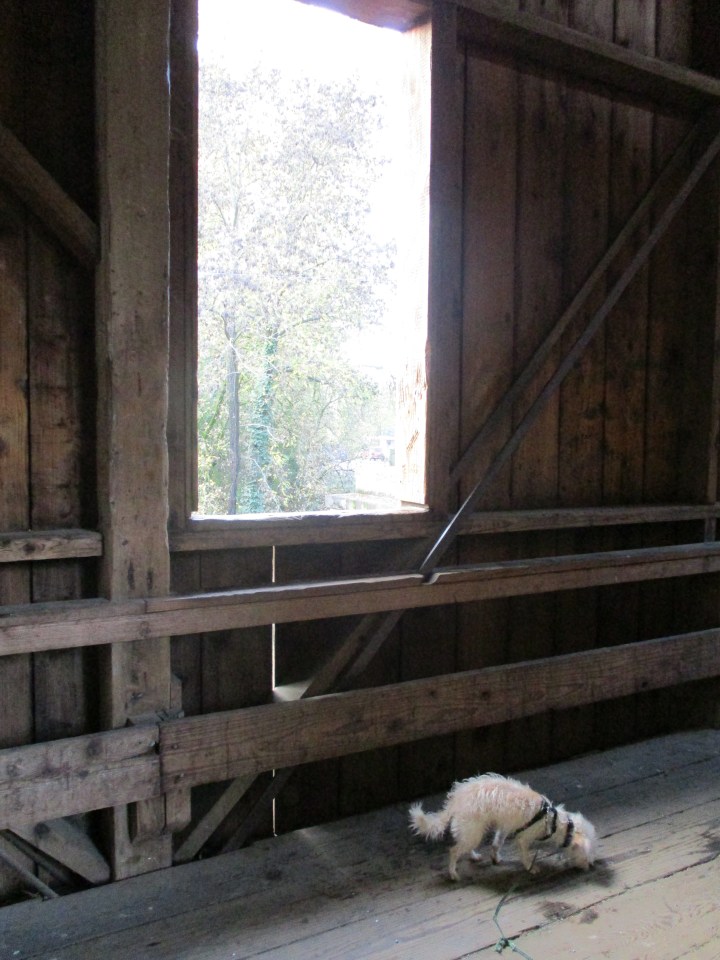 This is the southwestern of the four sidelight windows on the Felton Covered Bridge. If crossing from the end in the upper picture, it would be on the left side toward the far end. It is the best window in the house. Rhody to the lower right might be mistaken for a rodent (
  This is the view from that same window. That wet thing below is the San Lorenzo River. The black spots in that wet thing below are ducks. Once the rain starts, the San Lorenzo River really looks more like river than a creek. This last spring, in the San Lorenzo River right below the Bridge, we scattered the ashes of a good friend, Steven Ralls, with whom I went to Oklahoma (to the right in the illustration –
  It is hard to beat redwoods. Seriously! There are only three specie, which are now three different genera; but one is the biggest tree in the world, one is the tallest tree in the world, and the third is one of only a few conifers that are deciduous. The biggest and the tallest are both native to California. The deciduous redwood is from China.
 Tony Tomeo