 The pros and cons of wax privet, Ligustrum japonicum ‘Texanum’ might get it a rating of about 2.5 out of 5. It seems that every asset is offset by a liability. The profuse clusters of tiny white flowers are sweetly fragrant, but are also a serious problem for those allergic to pollen. The berries attract birds, but are also very messy, and contain seeds that can germinate in the strangest of places.
The dense evergreen foliage is prettier and actually glossier than that of the more common glossy privet. Growth is slower, and therefore easier to maintain as a shorn hedge. Regular shearing deprives wax privet of most, but not all of its bloom and seed. Glossy privet is more invasive if allowed to set seed, but less invasive as a shorn hedge deprived of bloom before producing seed. Without shearing, wax privet eventually reaches ground floor eaves, and gets about half as broad. It can be groomed into a small tree.
Unwanted feral seedlings should be pulled as soon as they are detected. If cut instead of pulled, they are likely to regenerate, and will be impossible to pull the second time around. Roots are rather greedy.
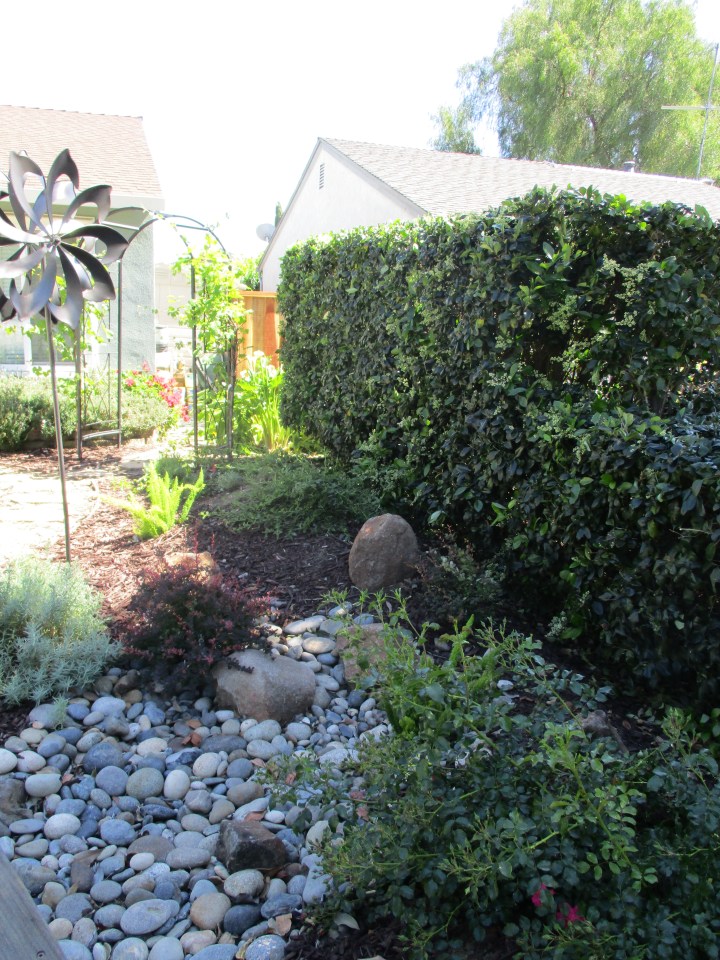 Hedges are a complicated topic! Like lawns, they are among the more functional features of a landscape. They can be used to provide privacy within, obscure unwanted views beyond, or merely to separate a large landscape into cozier or more functional spaces. Except for hedges that are grown for spring flowers or autumn color, most hedges are evergreen with finely textured foliage.
 Tony Tomeo