Frost Protection

For many species, frost damage is not as bad as it looks.

            My colleague in the Los Angeles area still sends me seeds for all sorts of strange plants that I probably should not be growing in my less climactically temperate garden, making it difficult to conform to the primary rule of frost protection: ‘Select plants that are appropriate to the particular climate.’ No matter how often I remind my clients of this rule, I really do not want to abide by it. There are just too many interesting but inappropriate plants.

            So the next option is to grow frost sensitive plants in containers that can be moved to sheltered areas prior to frost. That worked while I had an extra parking space in the carport and some room under the porch for giant bird-of-Paradise, plumeria, philodendrons and such. Eventually though, some of these plants get too large to be contained; and I really do not want to keep pruning them back. Besides, I prefer to grow things in the ground.

            The third option is to put sensitive plants in spots that are naturally warmer, or where they are sheltered below the canopies of large evergreen trees, lath or wide eaves. Just remember that plants under eaves are also sheltered from rain, so may need to be watered occasionally through winter. Steep slopes are not quite as cold because cold air drains off. However, flat areas below slopes get colder as they catch cold air that drains from uphill. South facing exposures are of course warmer than northern exposures.

            I know probably better than most that there are always some plants that are not ‘appropriate to the particular climate’, that I do not want to grow in pots, and that prefer to be out in exposed parts of the garden. For example, bougainvilleas are somewhat tender, have sensitive roots that do not like to be confined, and really want to be out in the open to take advantage of warming sunshine during summer. Such plants in colder areas will either need to be protected, or will get damaged by frost.

            Burlap suspended above the foliage by stakes is typically enough to protect sensitive plants from frost. I have used old towels and linens where my neighbors can not see. Plastic sheeting is also effective, but should be removed before sunlight warms the air too much underneath. Paper grocery bags or cardboard boxes are enough for small plants.

            I actually allow some of my larger plants that would be difficult to cover to get damaged by frost, and then prune out the damage later. If they are too big to cover easily, they are probably big enough to survive frost. Damaged stems should be left until the end of winter both to insulate stems below, and also because early pruning stimulates new growth that is even more sensitive to frost. 

Not All Pruning Happens In Winter

If necessary, Oregon grape can be pruned to the ground now.

Spring has sprung; and winter has wenter . . . or whatever winter does to get out of the way of spring. Plants are more active now than at any other time of year. Deciduous plants that were dormant and bare through winter have already started to bloom and produce new foliage. Evergreen plants are now making new foliage to replace their tired old foliage that lingered through cold, wet and windy winter weather. 

Frost is very unlikely this late. It is safe to sow seeds for all sorts of warm season vegetables and annual flowers, like beans, okra, zucchini, nasturtiums and sunflowers. It is likewise time to plant small plants for certain vegetables and flowers that are too slow to start from seed, like tomatoes, peppers, eggplants, petunias and impatiens.

Winter was the time to prune almost all deciduous plants (which defoliate) and many evergreen plants while they were dormant. However, pruning of plants that are susceptible to frost damage needed to be delayed until about now, even if they had been damaged earlier. Premature pruning would have stimulated new growth, which would have been even more sensitive to subsequent frost.

Any lavender starflower, bougainvillea, marguerite daisy or blue potato bush foliage that was damaged by earlier frost can now be pruned away. New foliage should already be appearing. Also, any mushy frost damaged leaves of giant-bird-of-Paradise and banana can be removed, and should be replaced by new foliage as the weather gets warmer.

The end of winter and beginning of spring is also the best time for any necessary severe restorative pruning of plants that can be damaged by frost, as well as many heartier evergreen plants. It is late enough to avoid frost, while early enough to take advantage of the first new growth phase of the season.

For example, lavender starflower that is both overgrown and damaged by frost can be pruned back to the main stems now, instead of merely shorn to remove damaged foliage. If pruned earlier, it would have not only been more sensitive to frost, but would have remained unsightly as long as weather remained too cool for it to regenerate new foliage.

It likewise can not be pruned much later without wasting most of the new spring growth that is presently developing, which would be very stressful and delay bloom. Pruning severely now will be unsightly for the least amount of time before new growth regenerates and blooms. It would also be less stressful, since it coincides with natural dormancy and regenerative cycles.

Privets, junipers, oleanders, photinias, bottlebrush and pittosporums that need restoration should also get it now, not because they are sensitive to frost, but so that they recover as efficiently as possible as weather gets warmer. Besides, bottlebrush, pittosporum and some other plants are susceptible to disease if pruned during winter, because pruning wounds are easily infected during rainy weather.

Frost

Before

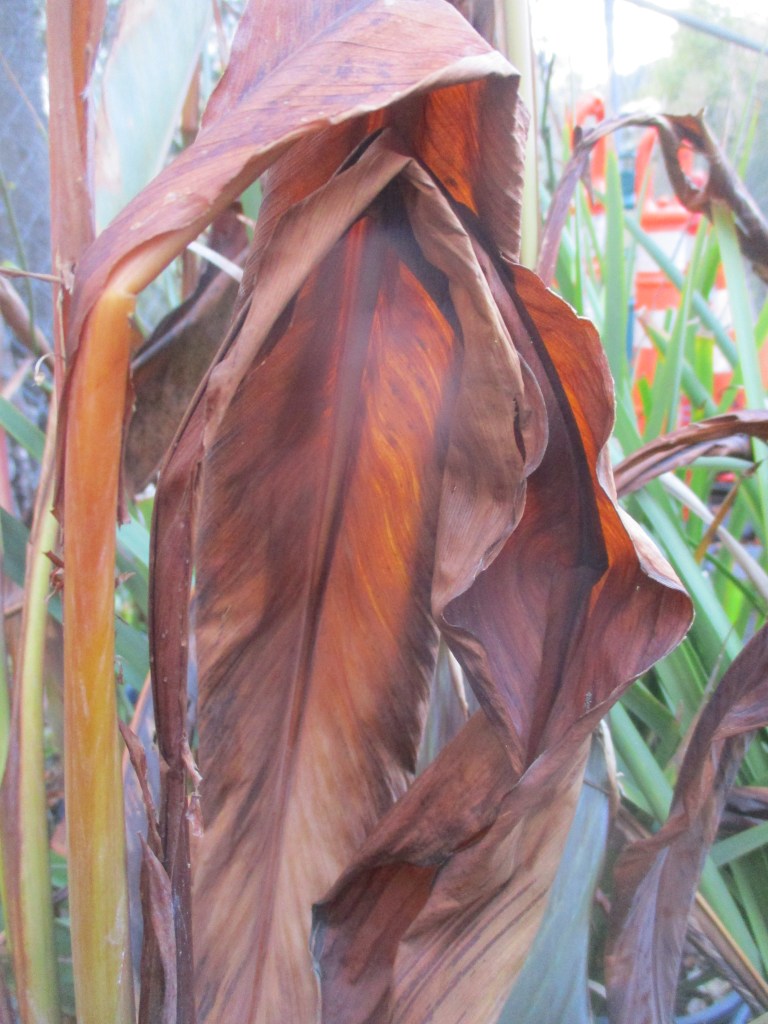
This elephant ear was happy and healthy as the sun set last night. As the sun rose this morning, it was sagging from frost damage. The picture that was taken prior to damage posted here (at my previous ‘Six on Saturday’ post) at midnight. Frost likely occurred shortly afterward. The picture that was taken after damage was taken only a few hours later.

Frost does not happen frequently enough to get much consideration here. When it does happen, it is not severe. This particular frost was only thirty- two degrees. Nonetheless, I should have sheltered the elephant ear. It would not have taken much effort to do so. I could have simply moved it over a few feet, so that it would have been under an eave. A few other species were likewise worthy of shelter. A few, though, should not even be grown here. The most practical means with which to avoid frost damage is to refrain from growing species that are vulnerable to it.

Fortunately, the elephant ear and all other species that were slightly damaged by frost early this morning should recover efficiently. Elephant ear typically loses its foliage through winter, and regenerates foliage for spring anyway. No more frost is predicted for the next week.

I am glad that I do not need to contend with the sort of frost that kills vulnerable species completely. The possibility of such weather would be much more limiting.

A pair of bougainvillea that I planted last autumn actually succumbed to frost last winter. Although bougainvillea commonly loses foliage and perhaps a few small stems to frost, basal stems should not have succumbed. I wanted to get them into their landscape during autumn, so that they could benefit from cool rain through winter, and be ready to grow in spring. Their replacements will get planted in spring.

After

Freeze Damage Necessitates Selective Pruning

Warmth stimulates recovery from freeze damage.

Pruning at the proper time has been a concern all winter. Dormant pruning was timely as soon as defoliation began. It remains timely almost until bloom. Pollarding and coppicing are generally although unnecessarily a bit later within that range. Spring pruning begins soon after bloom. Pruning of freeze damage starts after the last reasonable threat of frost.

Frost is as variable as the many climates here. Generally, it causes more damage farther inland and at higher elevations. Conversely and generally, it causes less damage closer to the coast and at lower elevations. Many southern coastal climates experience no frost. However, frigid air drains downhill. Within any plateau, the frostiest areas are the lowest.

Last frost dates should help with scheduling of pruning or grooming of freeze damage to vulnerable vegetation. The last frost date for a climate is the average date of its last frost. Frost becomes increasingly unlikely afterward. That is the best time to add warm season vegetables and annuals to the garden. It is also when to begin grooming freeze damage.

If not too unsightly, freeze damage lingers until the last frost date for two primary reasons. It shelters vulnerable tissue below, including any new growth that develops prematurely. Also, removal of such damage stimulates new growth that would be even more exposed and innately more vulnerable to frost. However, priorities change soon after the last frost.

Then, it becomes important to groom or prune away freeze damage prior to generation of fresh new growth. For milder climates, it is already timely to do so. It might be a while for less mild climates. Even for frostless climates, this might be a good time to groom growth that is only incidentally shabby. Such grooming gets more complicated with new growth.

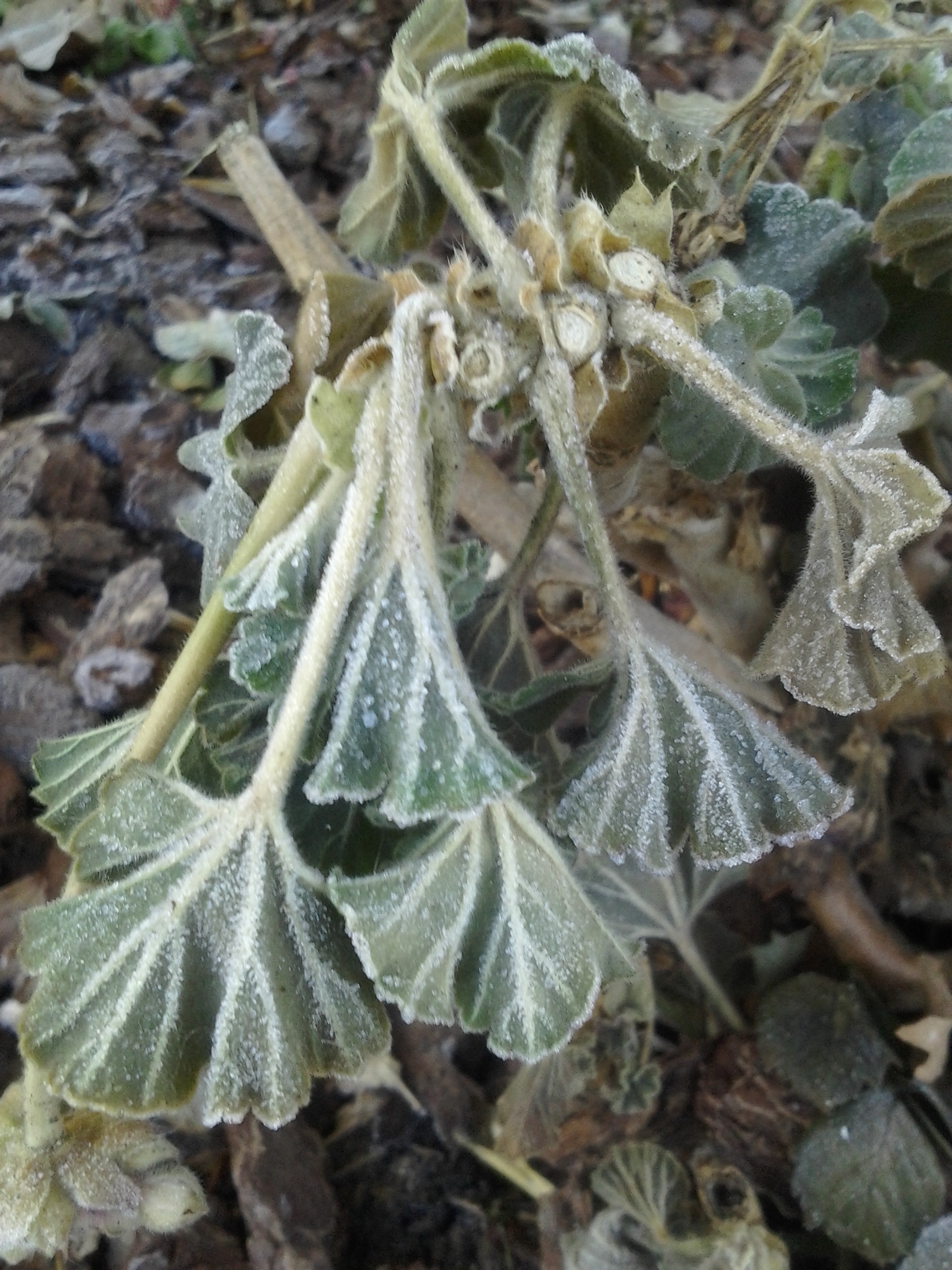
Many zonal geraniums are already extending new growth up through shabby old growth. Removal of such old growth or freeze damage without damaging mingling new growth is no simple task. If new growth stretches for sunlight below old growth, it might flop without support from the old growth. It may be more practical to cut all growth back to regenerate. Canna also develop similar complications.

Frost Damage Makes Its Appearance

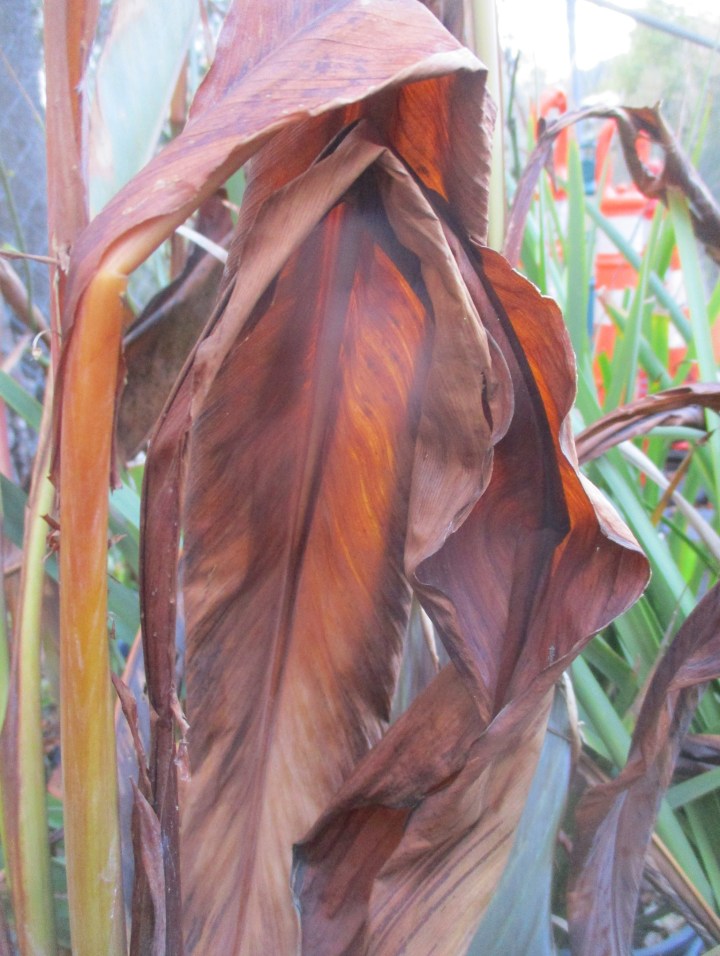
Frost damage of canna looks shabby.

Exotic plants are not native. They are from someplace else. Yet, most plants within most home gardens are exotic. Most are capable of tolerating the more extreme climates from which they originated. Some tropical or subtropical plants actually prefer milder climates. After the recent cool weather, some vulnerable plants exhibit symptoms of frost damage.

Vulnerability is relative though. Honeybush and elderberry can be mostly evergreen with minimal chill, or deciduous with more pronounced chill. Both tolerate more chill than they can experience here. What may seem to be frost damage of specimens that are normally evergreen could be a normal deciduous response to slightly abnormally cooler weather.

Frost damage is also relative. Partial defoliation of Mexican lime might happen annually after minor frost, so may not be alarming. However, such seemingly minor damage could involve stems or entire trees. Luxuriant canna foliage that so instantly becomes unsightly after minor frost can be more alarming. However, dormant rhizomes are safe until spring.

The simplest means to avoid frost damage is to not grow plants that are susceptible to it. Obviously, that is quite limiting. Besides, plants that were not susceptible last winter may be susceptible this winter or sometime in the future. Weather is annually variable. Some susceptible plants can grow in pots that are portable enough to relocate to winter shelter.

Small but immobile plants that are vulnerable to frost damage may appreciate temporary shelter during frosty weather. Any sort of sheeting or cardboard suspended by any sort of stakes and strings should be adequate. Ideally, the sheeting should not touch the foliage below. Incandescent Christmas lights under such sheeting radiate a slight bit of warmth. Frost occurs only at nighttime locally.

Frost protection can be unsightly, but it is less unsightly than frost damage. Fortunately, it is temporary during frost. If not too unsightly, most frost damage should remain until after the last frost date. It insulates other vulnerable vegetation within. Furthermore, premature grooming or pruning stimulates new growth that is more vulnerable to subsequent frosts.

Frost Damage Is Not Cool

Frost damage is a cold reality.

Frost happens. It may not happen every winter. It may not happen everywhere. For a few of the mildest climates, it may not be a major concern. For some climates though, it might have potential to cause significant problems. The best means to avert frost damage is to avoid plants that are vulnerable to a degree of frost that is normal for a particular climate.

Of course, that is not as simple as it sounds. Even in mild climates, angel’s trumpet might get shabby from chill that is not cold enough for frost. Where weather gets cooler, familiar plants such as bougainvillea, avocado, lemon, fuchsia and pelargonium may experience frost damage. Such plants necessitate certain precautions, and must assume innate risk. 

Some plants that are susceptible to frost damage can live in portable pots that can move to sheltered situations prior to frosty weather. Some might be houseplants that live in the garden for part of the year, but come inside at least for winter. Eaves, particularly if above walls of heated buildings, may be adequate protection for marginally susceptible plants.

Plants that are susceptible to frost damage, but live in the ground or are too big to move, may need temporary protection from frost. Such protection might consist of tarps, burlap, old sheets, plastic trash bags or cardboard, suspended above by stakes and string. Thin materials, such as sheets or trash bags, can freeze through, so should not touch foliage.

Protective tenting materials should not remain over sensitive foliage for too long. Ideally, they should be in place immediately prior to frost, and then gone immediately after. Since frost occurs at night here, protection is useful only overnight. During daytime, it obstructs sunlight, but collects heat to stimulate new growth that is more sensitive to frost damage.

Many plants are too big to protect. Fortunately, bigger plants are less susceptible to frost damage than smaller plants. If possible, outer foliage that succumbs should remain until the local last frost date. Although unsightly, it shelters inner growth. Moreover, premature removal of frost damage stimulates new growth that is even more susceptible to subsequent frost damage.

Jack Frost Nipping At Foliage

Yuck! Freezer burn!

It is impossible to deny that the weather has been unusually cold when tough perennials like ligularia and farfugium express symptoms of frost damage. Late autumn and winter are expected to be cold, but not as cold as it has been recently. Ligularia, farfugium and most tough perennials should recover as if nothing happened. Cannas will naturally die back or need to be cut back to the ground later, but their resilient rhizomes should be safe, and regenerate later as winter ends. Unfortunately, sensitive perennials like pelargoniums may have been killed if frost damage extended too far into lower stems and roots.

The best way to protect plants from frost is to grow only plants that are not so vulnerable to frost. The problem with this technique is that it is too limiting. Abstaining from the few most sensitive plants like bananas and angel wing begonia probably would not be a problem for most of us. However, avoidance of moderately sensitive plants would involve familiar plants like bougainvilleas, lemons and split leaf philodendron.

Many of the smaller sensitive plants like angel wing begonia, can be grown in containers that can be moved to more sheltered spots if and when necessary. They can be brought inside or moved onto covered porches. If they only need to be protected for a few days during the coldest weather, they can be moved into garages. The problem with this technique is that many plants get too big for containers.

Bougainvilleas eventually get big, and do not like to be grown in containers anyway. They should be planted in warm spots in the garden not only because their foliage can be damaged by frost in winter, but also because they like warmth during summer. A south facing wall with an eave above provides a nice warm exposure, a bit of protection from frost above, and a slight bit of ambient warmth from the building behind it. Even if the foliage gets frosted, the main stems within should be safe.

During the coldest nights, sensitive foliage can be protected by burlap, paper, plastic or any sheeting suspended above by stakes or any light framework. With this technique, only exposed foliage or foliage that touches the sheeting will be damaged. It is unfortunately not practical to tent large plants like giant bird-of-paradise.

Even though it is unsightly, unprotected foliage and stems that get damaged by frost should not necessarily be pruned away immediately. This damaged foliage insulates and protects sensitive stems below. Besides, such early pruning can stimulate new growth that will be even more sensitive to frost later.

Frost!

Fire and Ice! Frost becomes a concern at about the same time that fire season ends here. Like the article about fire yesterday, this article is from three years ago, in fact, at about the same time.

tonytomeo's avatarTony Tomeo

P71208+K1Yes, we get it too. It took a while, but we finally got it just like most of everyone else in North America and the Northern part of the Norther Hemisphere. It is not much to brag about, but it is enough to melt the big feral pumpkin vine that I wrote about earlier ( https://tonytomeo.wordpress.com/2017/12/03/too-late-for-pie/ ). It has actually been frosting for a few nights. I just got around to getting this picture this morning.

Now that the foliage is melting and collapsing, a leak is now visible in the exposed valve manifold that was obscured in the previous picture. It did not get cold enough to freeze the pipe, so the water was dripping freely. This confirms the earlier theory about where the pumpkin vine was getting water from.

Two pumpkins are also exposed by the collapsing foliage. They were not visible earlier. Unfortunately, they are too under-developed…

View original post 161 more words

Frost Is Now Old News

00304thumb
Minor frost can cause major damage.

Frost was something of a nonissue for some of us this winter. For those of us in milder climates, in rarely is. Those who limit selection of what grows in their gardens to species that are resilient to frost need not be concerned with it. Those of us who enjoy gardening a bit too much are more likely to grow a few marginal species that would prefer to be somewhere with milder winter weather.

Protection from frost might have been a concern prior to the onset of cold weather. Then, there was more concern for the few plants that might have been damaged by frost. Grooming and pruning of damaged foliage and stems needed to be delayed until after the threat of subsequent frost. Now that it is so late in the season, subsequent frost is very unlikely. It is safe to clean up any mess.

Pruning and grooming of foliage and stems that were damaged by frost is delayed for two main reasons. Firstly, the damaged material, although unsightly, helps insulate undamaged foliage and stems below it from subsequent frost. Secondly, premature removal of damaged material stimulates premature development of new foliage and stems that are more sensitive to subsequent frost.

Not only is it now safe to prune and groom frost damaged plants, but such procedures should not be delayed while affected plants recover. The same frost damaged material that provided a bit of protective insulation earlier would now interfere with the healthy development of new stems and foliage. Pruning can now promote new growth that was preferably delayed through colder weather.

Because the weather has been so pleasantly mild for quite a while already, new growth may already be developing among some frost damaged plants. Damaged material should be removed as carefully as possible to limit damage to such new growth. Many perennials that were not damaged this year might be pruned as if they were, to remove tired old growth, and promote new growth.

Many of the dormant spores of fungal and bacterial pathogens that overwinter in old foliage will be removed as such foliage gets groomed away.

Frost Is History For Now

80328thumbThere is no doubt that frost will return next autumn. It does that every year. Right now, we are more concerned that is should not return prior to that. It is now safe to plant plants that are sensitive to frost. Even if the weather were to somehow get cold enough to necessitate protection of frost sensitive plants, it will not be severely cold, and it will not last long. It is best to start now than to delay.

It is also safe to prune away foliage and stems that were damaged by frost through winter. It was best to leave it in place through winter, both to provide a bit of insulation for undamaged stems below, and to not promote new growth. Pruning it away allows warming sunlight to the undamaged stems, and stimulates generation of new growth. A bit of new growth might already be apparent.

Many leafy perennials can be cut to the ground, or at least just above their rhizomes. The tall vertical canes of cannas can be cut back to the low horizontal rhizomes that creep along the ground. The canes are not really stems anyway, but are merely upright foliar shoots. Any shorter new shoots that are beginning to develop can remain, even if a few outer leaves happen to be damaged.

Zonal geraniums can likewise be pruned almost to the ground, leaving only stubs of lower stems, even if only upper and outer foliage was damaged by frost. Although they do not need to be cut back so severely, they respond to such pruning splendidly, with vigorous new stems and foliage. The fungal foliar disease known as ‘rust’ overwinters in old leaves that get removed in the process.

Lemons, limes and any other citrus that were damaged by frost only need to have their damaged stems removed as far back as viable growth, where new buds might already be visible. However, if more pruning is necessary, this would be a good time to do it. Major pruning should not be done later in summer because the sensitive bark of inner stems can be scalded by sudden exposure to too much sunlight. Small trees that are sensitive to frost become more resilient as the grow larger.