Jack Frost Nipping At Foliage

Yuck! Freezer burn!

It is impossible to deny that the weather has been unusually cold when tough perennials like ligularia and farfugium express symptoms of frost damage. Late autumn and winter are expected to be cold, but not as cold as it has been recently. Ligularia, farfugium and most tough perennials should recover as if nothing happened. Cannas will naturally die back or need to be cut back to the ground later, but their resilient rhizomes should be safe, and regenerate later as winter ends. Unfortunately, sensitive perennials like pelargoniums may have been killed if frost damage extended too far into lower stems and roots.

The best way to protect plants from frost is to grow only plants that are not so vulnerable to frost. The problem with this technique is that it is too limiting. Abstaining from the few most sensitive plants like bananas and angel wing begonia probably would not be a problem for most of us. However, avoidance of moderately sensitive plants would involve familiar plants like bougainvilleas, lemons and split leaf philodendron.

Many of the smaller sensitive plants like angel wing begonia, can be grown in containers that can be moved to more sheltered spots if and when necessary. They can be brought inside or moved onto covered porches. If they only need to be protected for a few days during the coldest weather, they can be moved into garages. The problem with this technique is that many plants get too big for containers.

Bougainvilleas eventually get big, and do not like to be grown in containers anyway. They should be planted in warm spots in the garden not only because their foliage can be damaged by frost in winter, but also because they like warmth during summer. A south facing wall with an eave above provides a nice warm exposure, a bit of protection from frost above, and a slight bit of ambient warmth from the building behind it. Even if the foliage gets frosted, the main stems within should be safe.

During the coldest nights, sensitive foliage can be protected by burlap, paper, plastic or any sheeting suspended above by stakes or any light framework. With this technique, only exposed foliage or foliage that touches the sheeting will be damaged. It is unfortunately not practical to tent large plants like giant bird-of-paradise.

Even though it is unsightly, unprotected foliage and stems that get damaged by frost should not necessarily be pruned away immediately. This damaged foliage insulates and protects sensitive stems below. Besides, such early pruning can stimulate new growth that will be even more sensitive to frost later.

Six on Saturday: Frozen II

Contrary to popular belief, there is a bit of chill during winter here. I was surprised by how many were surprised by my pictures of slight frost last week. The stone fruit that used to grow in the Santa Clara Valley could not have produced without adequate chill. Some deciduous trees color well for autumn, and all defoliate. We do not use much firewood, but some of us use some.

It may not look much like autumn to outsiders. Nonetheless, I find the local climate to be more than satisfactory for what I grow. In some regards, I find it to be ideal. Rhody just stays in by the stove.

1. Sycamores are trashy. Because of anthracnose, they dropped leaves in spring. They dropped more after the Fire. Now they are defoliating for winter. A bulldozer is used for all the leaves.

2. Bald cypress colors well by simple local standards, even if it is merely orangy brown. Bald cypress is rare here, perhaps because of the climate, or perhaps because of its buttressing roots.

3. Dogwood fruit is messy through winter. Surprisingly, wildlife is not particularly interested in it. I should make jelly with it for competition at the Harvest Festival next year (if it happens).

4. FreeBay is how we refer to small piles of bay firewood left on roadsides for neighbors to take away. Vegetation management has become a priority, and generates firewood as a byproduct.

5. Canna behave as outsiders expect them to here. They try to continue blooming until they eventually get frosted. The minor frost they experienced so far was insufficient to stop them yet.

6. Minor frost seems to evaporate as readily as it thaws when exposed to sunlight. This sure looks like autumn. I somehow sort of believe that this is what autumn looks like in other regions.

This is the link for Six on Saturday, for anyone else who would like to participate:

https://thepropagatorblog.wordpress.com/2017/09/18/six-on-saturday-a-participant-guide/

Frost!

Fire and Ice! Frost becomes a concern at about the same time that fire season ends here. Like the article about fire yesterday, this article is from three years ago, in fact, at about the same time.

tonytomeo's avatarTony Tomeo

P71208+K1Yes, we get it too. It took a while, but we finally got it just like most of everyone else in North America and the Northern part of the Norther Hemisphere. It is not much to brag about, but it is enough to melt the big feral pumpkin vine that I wrote about earlier ( https://tonytomeo.wordpress.com/2017/12/03/too-late-for-pie/ ). It has actually been frosting for a few nights. I just got around to getting this picture this morning.

Now that the foliage is melting and collapsing, a leak is now visible in the exposed valve manifold that was obscured in the previous picture. It did not get cold enough to freeze the pipe, so the water was dripping freely. This confirms the earlier theory about where the pumpkin vine was getting water from.

Two pumpkins are also exposed by the collapsing foliage. They were not visible earlier. Unfortunately, they are too under-developed…

View original post 161 more words

Six on Saturday: Frozen

It was unusually cool yesterday morning. Deciduous trees are a bit more colorful. Some are defoliating. It is looking more like autumn. The soil is still damp from a little bit of rain more than a week ago. Although there is no more rain in the forecast, this rainy season could start at any time now. This is the time for autumn planting, and will soon be the time for dormant pruning.

As much as I like enjoy this weather and this time of year, I can understand why people get annoyed by it in climates where it starts sooner, lasts longer, and gets significantly cooler.

1. Frost on the windshield is not uncommon during winter. It is uncommon prior to winter though. It is also uncommon in the relatively warm (less cool) area where this vehicle was parked.

2. Frost on the roofs is a bit unexpected so early as well. It had covered this roof thoroughly, but is melting now that the sun is coming up. The weather really did not ‘feel’ as cold as it looked.

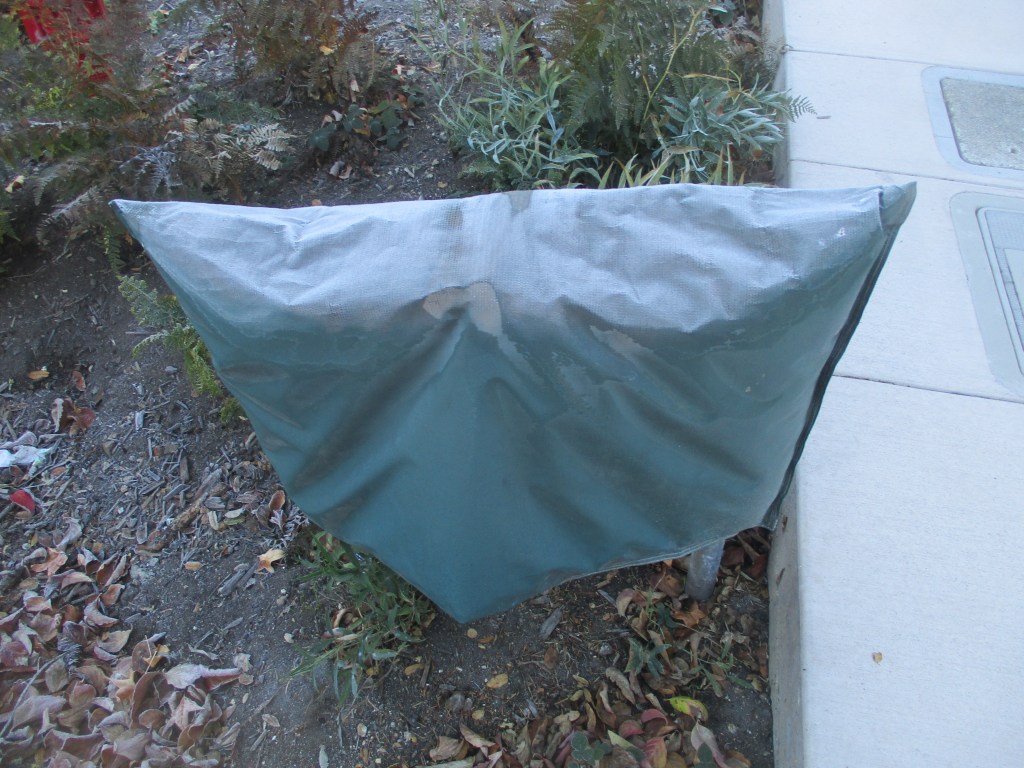
3. This contraption does not seem so ridiculous now. It insulates an exposed water main, to hopefully protect it from freezing. Water pipes seldom freeze here. Nonetheless, it is a possibility.

4. Dogwood colors well for autumn, even when the weather is not so cool. The species does not perform so well in the Santa Clara Valley, just a few miles north. Notice the frosty roof beyond.

5. This young birch is already defoliated! Actually, it is a formerly canned specimen that is a bit distressed from planting on November 8. Other birches are still wearing bright yellow foliage.

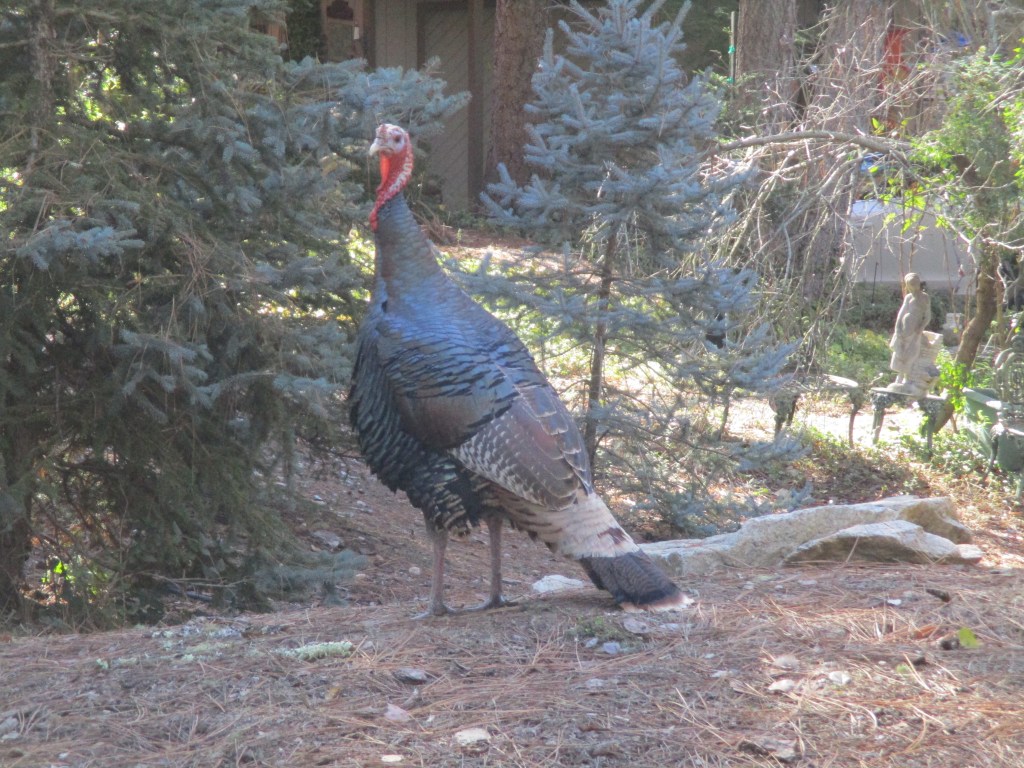
6. Turkeys return annually, precisely on the morning after Thanksgiving, after disappearing for about two or three weeks. Who knows where they go? Their stupidity might be exaggerated.

This is the link for Six on Saturday, for anyone else who would like to participate:

https://thepropagatorblog.wordpress.com/2017/09/18/six-on-saturday-a-participant-guide/

Mild Weather Is Still Problematic

50527thumb
Minimal frost delayed certain spring blooms.

It is amazing that so many orchards are so productive in California, and that so many similar orchards had formerly been productive in the urban areas in which so many of us now live. Nowadays, it takes so much work to care for just a few fruit trees in home gardens. Horticulture is not what it used to be.

Diseases and pests get transmitted all over the world at a rate unlike at any other time in history. It is just too easy to buy and sell infected plants online, and get them delivered without adequate inspection. Many varieties of plants that are so easily imported may not perform as reliably as the more traditional varieties.

Modern landscaping does not make fruit production any easier. Most deciduous fruit trees do not get pruned adequately or properly. Many get too much water. Almost all must live in crowded landscape conditions where diseases and pest proliferate. Sanitation (removal of infected plant parts) is rarely as efficient as it should be.

Then there is all this crazy weather! First, the winter does not get as cool as it should. Then, it does not get warm enough in spring. It is all so difficult to keep track of. Many plants do not know how to respond. Those that stay dormant through cool weather got an early start. Those that like warmth in spring started late.

The unfortunate deciduous fruit trees that need both a good chill through winter and nice warm spring weather are really confused. Early blooms were ruined by brief late frosts or brief rain showers. Some delayed blooms were not synchronized with pollinators. Some of the minimal fruit is developing slowly.

Even the fruitless or ‘flowering’ relatives of the deciduous fruit trees are annoyed by the weather. Many flowering cherry trees that should have bloomed profusely prior to foliation delayed bloom until lower foliage started to appear. However, both bloom and foliation are so slow and sporadic that upper stems stayed bare quite late.

Flowering crabapple trees, which generally bloom after flowering cherries, actually bloomed more reliably, and were not delayed as much. Hopefully, fruiting apple and pear trees, although late, will be more productive than so many of the cherry, apricot, plum, peach and nectarine trees will be this year.

Frost Is Now Old News

00304thumb
Minor frost can cause major damage.

Frost was something of a nonissue for some of us this winter. For those of us in milder climates, in rarely is. Those who limit selection of what grows in their gardens to species that are resilient to frost need not be concerned with it. Those of us who enjoy gardening a bit too much are more likely to grow a few marginal species that would prefer to be somewhere with milder winter weather.

Protection from frost might have been a concern prior to the onset of cold weather. Then, there was more concern for the few plants that might have been damaged by frost. Grooming and pruning of damaged foliage and stems needed to be delayed until after the threat of subsequent frost. Now that it is so late in the season, subsequent frost is very unlikely. It is safe to clean up any mess.

Pruning and grooming of foliage and stems that were damaged by frost is delayed for two main reasons. Firstly, the damaged material, although unsightly, helps insulate undamaged foliage and stems below it from subsequent frost. Secondly, premature removal of damaged material stimulates premature development of new foliage and stems that are more sensitive to subsequent frost.

Not only is it now safe to prune and groom frost damaged plants, but such procedures should not be delayed while affected plants recover. The same frost damaged material that provided a bit of protective insulation earlier would now interfere with the healthy development of new stems and foliage. Pruning can now promote new growth that was preferably delayed through colder weather.

Because the weather has been so pleasantly mild for quite a while already, new growth may already be developing among some frost damaged plants. Damaged material should be removed as carefully as possible to limit damage to such new growth. Many perennials that were not damaged this year might be pruned as if they were, to remove tired old growth, and promote new growth.

Many of the dormant spores of fungal and bacterial pathogens that overwinter in old foliage will be removed as such foliage gets groomed away.

Some Annuals Are Not Annual

50114thumb
Some summer annuals can survive winter.

So many annuals are actually perennials. They just get dug and replaced because they are not pretty enough during their off season. For warm season annuals, winter is the off season. For cool season annuals, summer is the off season. However, if left alone, many annuals that are actually perennials go dormant so that they can survive through their off season to regenerate and perform again for another season, or several seasons

Cyclamen and various primroses are cool season annuals that are in season now. Cyclamen will go dormant and defoliate as the weather gets warm in summer. Primroses do not defoliate, but get rather runty through warm weather. If planted with other light duty warm season perennials that take over for them, no one notices. For example, primroses are colorful enough now to distract from tired fleabane. By the time primroses fade, the fleabane takes over.

Chrysanthemums are among the flashiest of perennial annuals, but also have a short season. They typically get planted while blooming in autumn, but finish their bloom cycle before winter. After all the rain and cool weather . . . and then a bit of warm weather, some are already dying back to the ground; but closer examination might reveal new growth already emerging from the roots!

Nasturtiums can obscure regenerating chrysanthemums nicely. If the frost sets them back, they recovery quickly. They will bloom more colorfully by spring, and continue until summer gets too warm. By that time, the chrysanthemums should be filling out nicely to bloom by autumn. As the chrysanthemums finish, the nasturtiums will have sown their seeds, so that the process can start over again. Neither chrysanthemum nor nasturtium need to be removed while out of season. They only need to be pruned back and groomed accordingly.

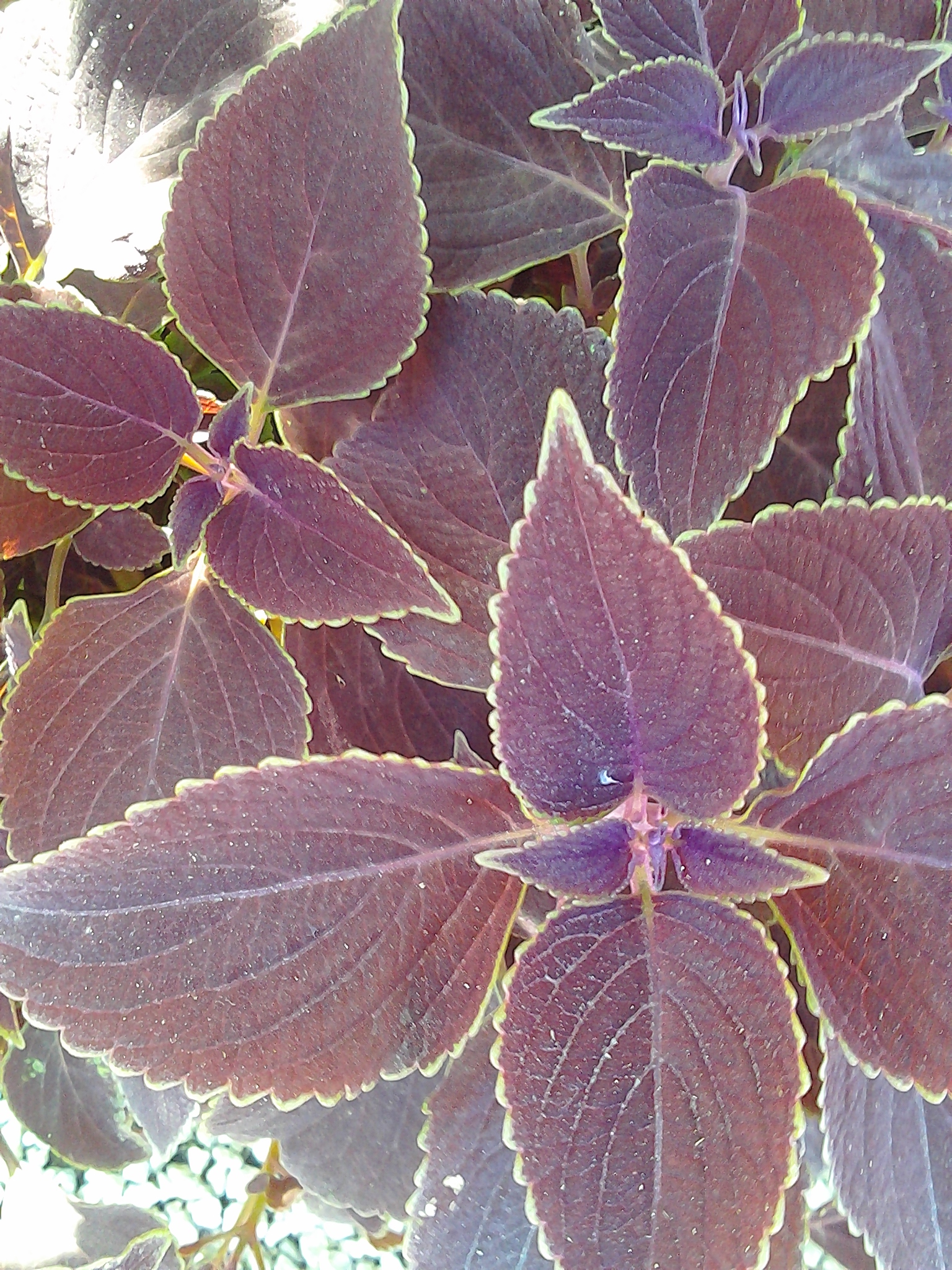
Coleus, impatiens, fibrous begonias and maybe even polka dot plant that were only moderately damaged by frost might be salvageable if they can stay put long enough. That is the advantage of growing them in pots with other small perennials that will cover for them when they die back or need to be pruned back.

Frost Is Just Too Cool

31218thumb
Frost makes tender foliage ugly fast.

Is it too late to warn about frost? After all the rain, the recent and sudden cold weather was quite a surprise. Fortunately, these recent frosts were relatively mild. This sort of weather is probably just enough to start to satisfy plants that require chilling through winter without causing too much damage to too many sensitive plants. So far, only the most sensitive plants, like angels’ trumpet, canna and left-out houseplants show symptoms of frost damage. (Cannas should get cut to the ground at the end of winter anyway.)

Doing without all frost sensitive plants would be too limiting. Lemon, avocado, bougainvillea, fuchsia and Australian tree fern would be off limits. Such plants are worth growing, as long as we understand the potential for occasional frost damage. Those that are too big to protect may sometimes need to get pruned for removal of stems that get killed by frost. In milder climates, such damage will be very rare. In cooler spots, damage is more common, and may involve a few tougher plants, like jacaranda.

Smaller plants that are sensitive to frost, such as jade plant, angel wing begonia and the various pelargoniums, can be grown in containers so that they can be moved to sheltered spots before the weather gets too cold for them. The most sensitive sorts need to be moved under a porch roof or eave, or maybe into a garage. More resilient plants may be safe under overhanging trees or against a wall. South or west facing stucco walls radiate a slight bit of warmth at night.

Frost sensitive plants that get too big for containers should be planted in sheltered spots, like below eaves or larger trees. If a severe frost is predicted, young plants can be protected by burlap, paper, trash bags or any convenient sheeting suspended above by stakes. Foliage that touches the sheeting may get frozen, but foliage within should be fine.

Foliage and stems that get damaged by frost should not necessarily get pruned away immediately. Although unsightly, the dead foliage insulates damaged stems below from subsequent frost. Besides, premature pruning can stimulate new growth, which is more sensitive to subsequent frost.

Some Plants Need To Chill

41210thumbIt is easy to snivel about the weather when it gets uncomfortable for us. The rain gets too wet. The temperature gets too cool. Even here on the west coast, without the cold of Minnesota, the heat of Arizona, the humidity of Louisiana or the rain of the west coast of Washington, we tend to think about weather by limited human standards. What we fail to consider is that many other organisms rely on a variety of weather conditions for their survival.

Deciduous plants make it obvious that they know how to deal with cool winter weather. What is not so obvious that that many deciduous plants actually need specific wintry conditions to be convinced that it really is winter. If the weather does not get cool enough, or stay cool long enough, some plants do not go dormant long enough to get the rest that they need in order to perform adequately the following spring and summer.

For example, the reason that only a few of the many different varieties of apple can be grown locally is that most have chill requirements that exceed what they get here. A chill requirement is a specific duration of cool winter weather. Only a minority of all varieties were bred for their minimal chill requirements, so that they will produce reliably even where winters are innately mild.

Besides chill requirements, some seeds like to be soaked in moist soil before they germinate the following spring. This lets them know that it is raining, like it typically does in winter. Pecans, for example, can be soaked for a while inside before sowing, bur really prefer to be out in the garden through winter, where they can tell than rain water is actually flowing past them through the soil, and the microorganisms in the soil help to break down their shells.

It is all about timing. Chill requirements get apple trees to bloom in spring, only after they were convinced that it was already winter. If they were not so specific, they might bloom after a brief cool spell in autumn, leaving their blossoms or developing fruit vulnerable to later frost. Pecans germinate and grow only after the danger of frost, but before the weather gets too dry. If they start too early, they may not survive frost. If they start too late, they may desiccate through summer.

Way Beyond Last Frost Date

90410thumbScheduling of gardening chores is as important now as it ever was. We plant warm season vegetables and annuals in time for spring and summer. We plant cool season vegetables and annuals for autumn and winter. We pick flowers as they bloom. We harvest fruits and vegetables as they ripen. We watch the seasons change on our calendars, as well as in the locally specific weather.

Yet, the one scheduling tool that we do not hear as much about as we did when agriculture was more common in the region is the ‘last frost date’. It refers to the average date of the last potentially damaging frost for a specific region. The last of such frosts might actually be earlier or later, but the last frost date remains a standardized time to plan particular procedures and planting around.

There are likely a few reasons why we do not talk about the last frost date much. The most relevant reason is likely the timing. Around here, the last frost date is sometime in January. It is earlier in some spots, and later in others, but it is sometime between January 1 and 30. It is simply too early to limit much of what we do in the garden in early spring, and is irrelevant to most winter chores.

It might seem to be just as irrelevant now, since the last frost was so long ago. Seed for warm season vegetables and annuals is sown as the weather gets warmer only because it would grow too slowly while the weather is too cool in winter, not because of a threat of frost. There really is quite a bit of time between the last frost and warm spring weather, while the weather is still rather cool.

However, pruning of plants that were damaged by frost should have been delayed at least until after the last frost date, and perhaps as late as spring. Although unsightly, damaged growth shelters inner growth from subsequent frost. Besides, premature pruning stimulates new growth that is more sensitive to subsequent frost. Most of such pruning is delayed until just after the last frost date.

If delayed longer, fresh new growth will show how far back damaged stems must get pruned.