Persimmon

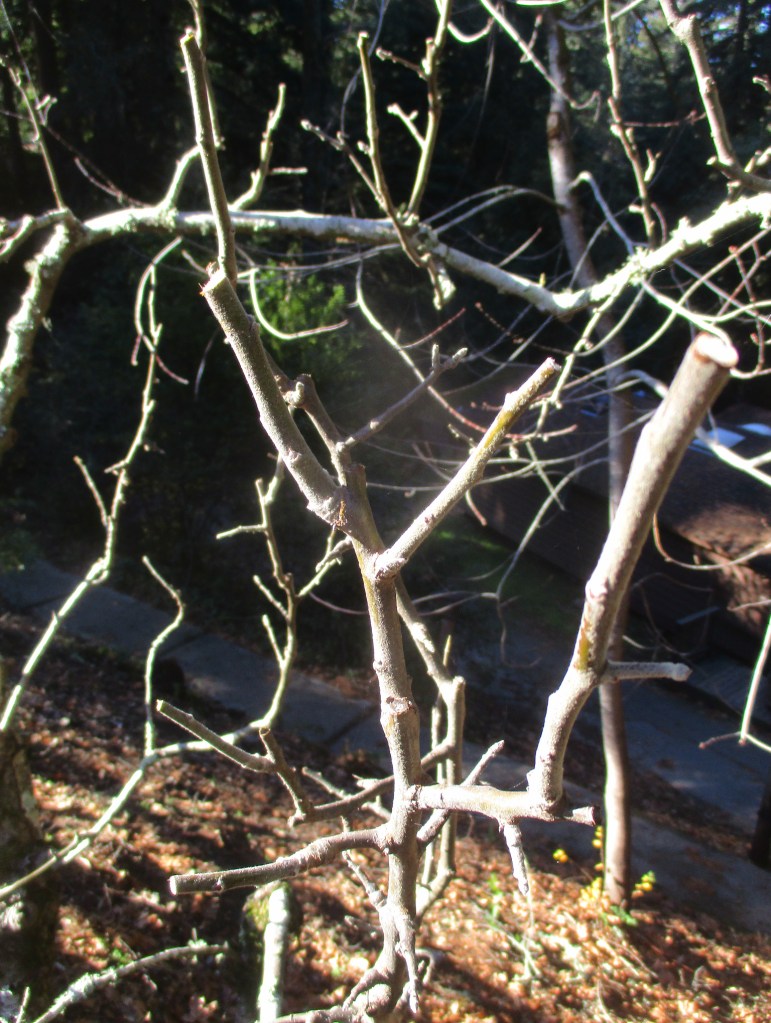
Persimmons ripen as their leaves fall.

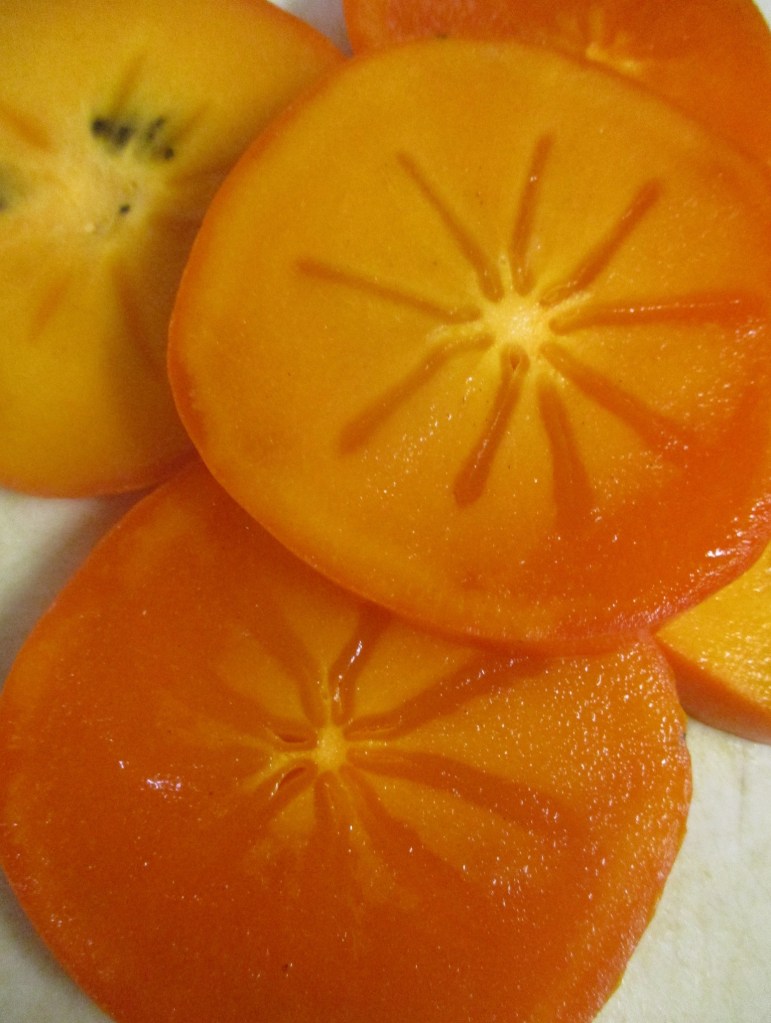
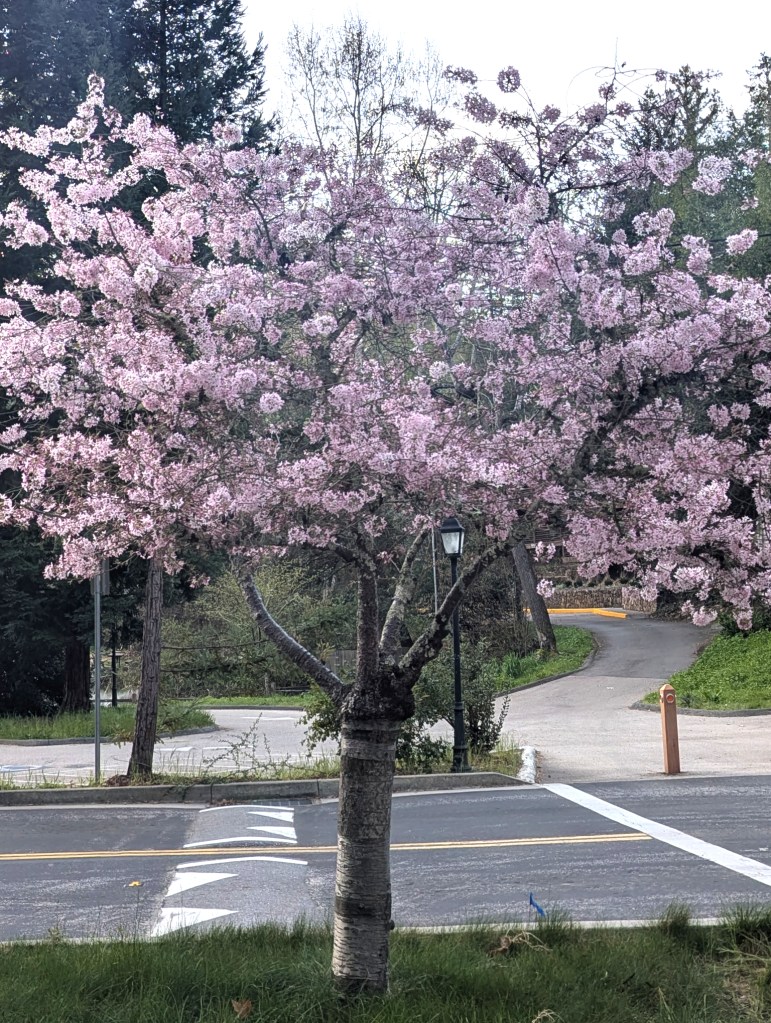
It lacks the spectacular spring bloom of the other deciduous fruit trees, but compensates. Persimmon, Diospyros kaki, performs double duty with fall color. Its autumn foliar color is impressively fiery orange. Then, it defoliates to reveal plump, abundant and comparably fiery orange fruit. So, it is spectacular with both autumn foliar color and autumn fruit color.

Persimmon trees are tempting. Some cultivars can grow twenty feet tall to become small or even mid sized shade trees. However, if they do so, much of their overly abundant fruit is unreachable. Aggressive and strategic pruning limits their production with most of their fruit in reach. Although undemanding otherwise, this major dormant pruning is important.

Persimmons are self fruitful without a pollinator. However, they supposedly provide more fruit of better quality with another cultivar. Fruit is unfortunately inedible before thoroughly ripe, but then all ripens simultaneously. That is an incentive to share with neighbors and friends. With a bit of effort, fruit is conducive to drying and freezing, although not canning. Ripe fruit is very perishable.

Village Harvest

The Santa Clara Valley was formerly famous for fruit and nut production.

(This article is recycled from several years ago, so contains outdated information.)

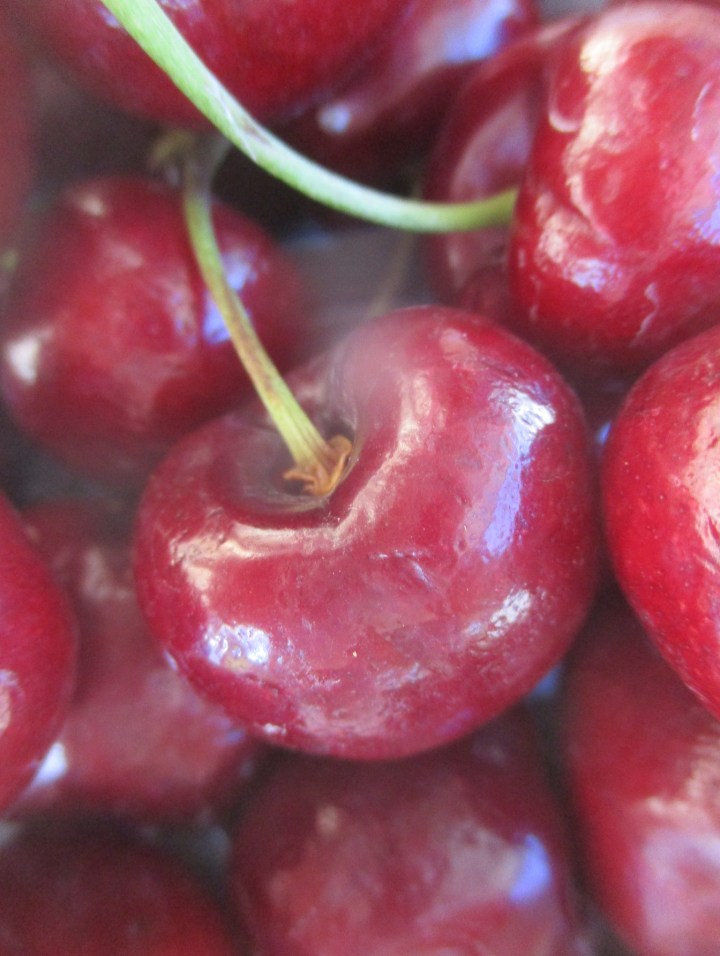
The vast orchards that formerly inhabited the Santa Clara Valley were here because this is among the best places on Earth to grow apricots, cherries, prunes, almonds and walnuts. Actually, there are not many fruit trees that would prefer to be somewhere else. Home gardens continue to produce the many traditional fruits, as well as many other types of fruit that were not so common in the orchards; such as citrus, figs, apples, pears, persimmons, avocados, peaches, nectarines and too many more to fit into a brief list.

Those of us who enjoy growing fruit trees do not need to be reminded of how well they do here. Some trees produce too much and  can become overwhelming. It is not always possible to can, dry, freeze or share with friends and neighbors all the fruit from the more productive trees. Leaving the fruit out in the garden is not only wasteful, but also bad for the garden, attractive to vermin, very messy and smelly.

Besides, there are other people in the community who could use it. During this past year, Village Harvest has harvested from local gardens, and distributed to those who can use the produce, approximately 156,000 pounds of fruit. The record for distribution of produce may be exceeded this year after apples, persimmons and citrus are harvested.

Volunteers make Village Harvest possible, by collecting excessive fruit from home gardens. Some of the people with productive trees like to retain some of the fruit. Volunteers are also welcome to take some of the fruit. The vast majority of fruit gets dispersed to others in the community who can use it.

(Most of the following information is outdated.)

The next apple harvest event in the Cupertino orchard on October 22 may no longer be able to accommodate additional volunteers; but the next major apple harvest in the Woodside Orchard on October 29 may still be in need of volunteers. Harvests take about three and a half to four hours, between 9:00 a.m. and 12:30 p.m.. Volunteers must be at least sixteen years old.

Volunteers can register for harvest events, or get more information at villageharvest.org. Early registration is recommended since space is limited. Volunteer instructions, including meeting location addresses will be e-mailed to volunteers a few days prior to each event. Those of us with excessively productive fruit trees who happen to be within range of harvest events can possibly make arrangements to get fruit harvested.

The next few neighborhood harvests will be on October 25 in Central San Jose, October 31 in Sunnyvale, November 1 in Central San Jose, November 6 in Mountain View, November 8 in Central San Jose, and November 14 in Sunnyvale. Sunnyvale harvests begin at 8:00 a.m.. Some harvests are repeated. For example, the Central San Jose harvests are weekly on Tuesday.

Mango Seedlings

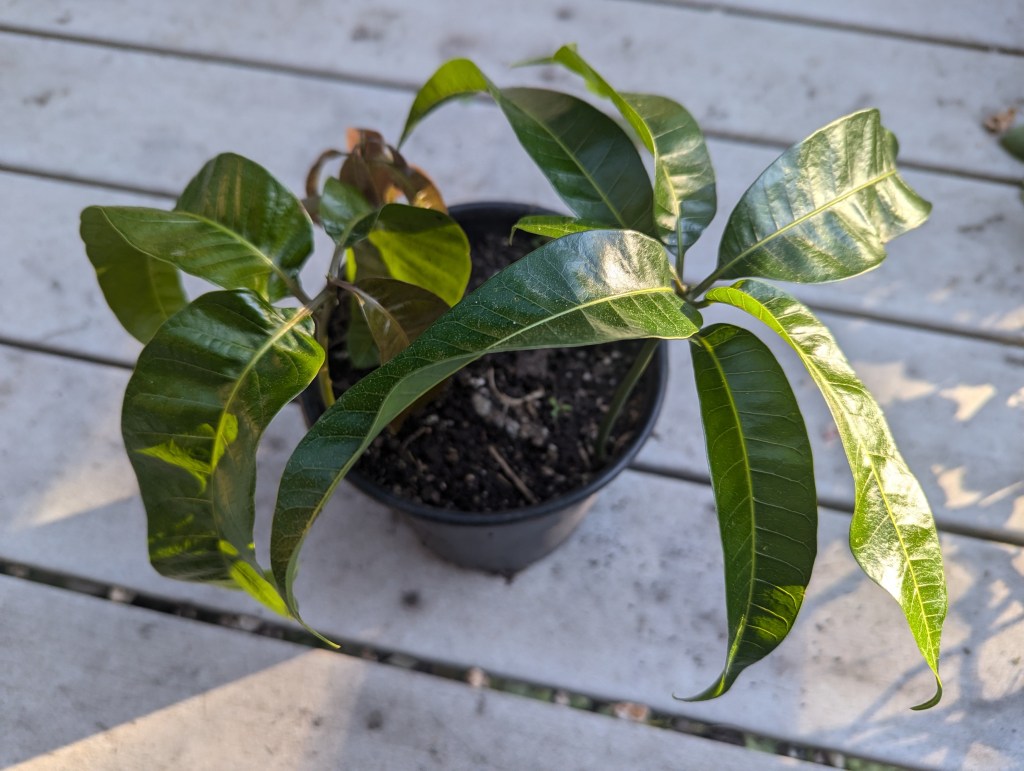
There are a few reasons to not grow avocado trees from seed. Such trees take a few years to produce fruit. Then, their fruit may be very different from the fruit that provided the seed. It is therefore better to purchase a grafted tree, or at least to graft a seedling. However, some of the best and most productive avocado trees have grown from seed. I have been acquainted with many such trees, and have never met even one that produced inferior fruit. (The primary problem that I notice with seed grown avocado trees is that they grow so tall while young that most of their fruit is out of reach, but that is another topic for later.) Anyway, this is my justification for growing mango trees from seed. I am told that they are much more likely than seed grown avocado trees to produce inferior fruit. I suppose that I will find out now. I am willing to try grafting them if their fruit is not good. They can at least become good understock. Yet, I am also wondering why I get into these situations. I should have known better than to grow something that I know nothing about.

Pair of Pears

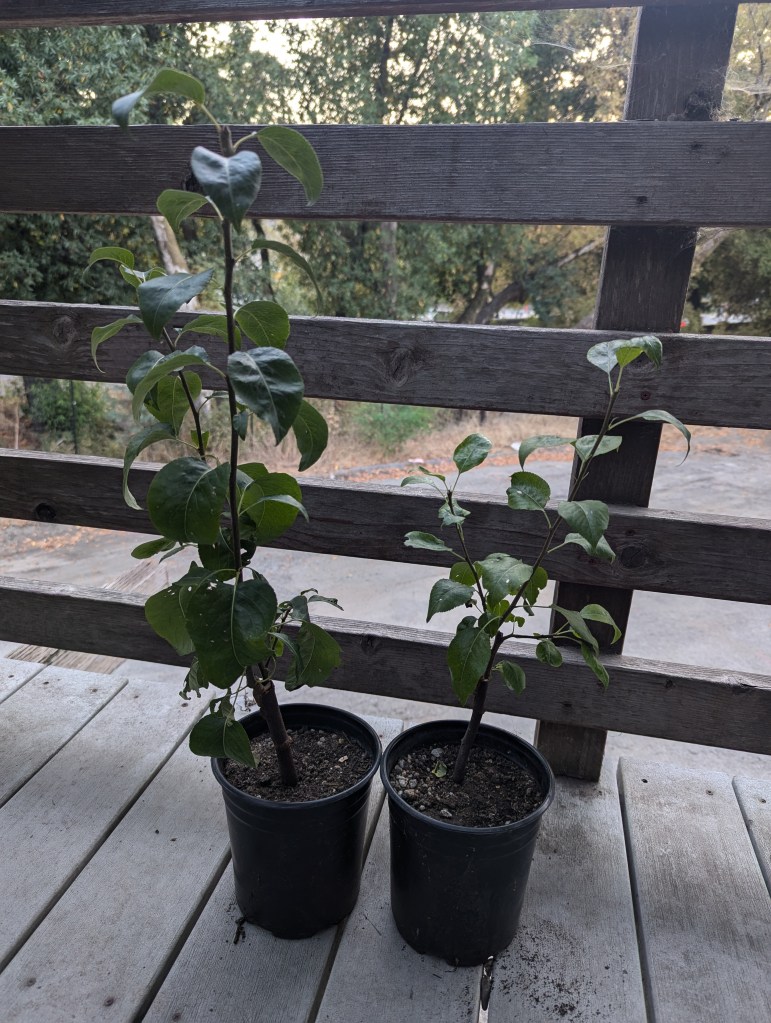
‘Beurre d’Anjou’ is to the left. ‘Seckel’ is to the right.

Two new pear trees have grown well this year after being grafted last winter.

‘Seckel’ is to the right in the picture above. I acquired its scion from the Scion Exchange of the Monterey Bay Chapter of the California Rare Fruit Growers on the first of February. It was one of only two cultivars that I wanted to graft onto one of only three quince understock trees that were available at the time.

‘Beurre d’Anjou’ is to the left in the picture above. Because it was unavailable from the Scion Exchange, and also because it was the other of only two cultivars that I wanted to graft, I purchased its scion online.

I wanted to retain one of the three quince understock trees for its fruit, and possibly for cuttings for understock for more pear trees in the future. However, more copies of it grew from cutting from the two trees that were grafted last winter. Now, I have a third quince tree to graft a pear scion onto this winter. I will most likely procure a scion of ‘Bartlett’, because, a very long time ago, that was the most common cultivar within the orchards of the Santa Clara Valley.

Apricot

Some late apricots are still ripening.

Apricot trees, which are mostly of the species Prunus armeniaca, have history here. Vast apricot orchards formerly inhabited the Santa Clara Valley. Many remain as a significant industry of the San Joaquin Valley. Apricot trees are both famously reliable and famously productive here. If they can not inhabit orchards, they can be as happy in home gardens.

Home garden apricot trees are not quite the same as orchard trees. Most are grafted onto dwarfing rootstock to stay more compact than orchard trees. More cultivars are popular in home gardens than in orchards. Regardless, even relatively compact home garden trees need dormant pruning in winter. Otherwise, they provide more fruit than they can support.

Apricot trees change with the seasons. They are strikingly bare while dormant for winter. Their profuse white bloom is spectacular for early spring. Their rich green foliage mostly obscures their fruit as it ripens through early summer. It then turns cheery yellow before it defoliates in autumn. Home garden trees should be about ten feet tall with good pruning. Fruit is difficult to reach in overgrown trees.

Plum

Plums are now ripening for summer.

Prunes are not merely dried plums. They are European fruits which, although very edible fresh, are also popular for drying. Their significant sugar content inhibits mold during the drying process. Plums, Prunus domestica, are of the same species, but are of Japanese origin. They are quite popular fresh, but are more likely to mold than dry like prunes can.

Besides their lower sugar content, plums are a bit bigger and rounder than most prunes. Prunes are ‘freestone’, so their flesh separates from their seeds when ripe. Old fashioned plums are ‘clingstone’, so their flesh adheres to their seeds when ripe. The most popular plums are maroon or purple. Others are red, yellow, orange, green, blue or almost black.

Almost all plum trees within home gardens are semi dwarf. Although they do not grow as big as orchard trees, they can grow twenty feet tall. They require specialized aggressive dormant pruning during winter. Otherwise, they become shabbily overgrown with most of their fruit out of reach. Their prolific and bright white bloom is spectacular for early spring.

Almond / Almond

Pote-8-o or pote-aht-o? Tome-8-o or tome-aht-o? Ape-ricot or app-ricot? Pee-can or pi-kahn? What about “almond”? This is different from the distinction of plums and prunes. It is a matter of pronunciation. Is “almond” pronounced like “salmon” or “common”? Those who grow them, and likely know better than the rest of us, commonly pronounce it like “salmon”. Most of the rest of us pronounce it like “common”. The nuts are harvested by machines that shake them from their trees, which supposedly shakes the ‘ell out of them, which sort of makes sense. Although the “l” is silent within both pronunciations, it might be slightly more so within the “common” pronunciation. Everything associated with almonds prior to harvest, such as their orchards, trees, bloom, unharvested nuts and their collective industry, commonly employs the “salmon” pronunciation, in which the “l” may be slightly less silent. Everything associated with harvested and processed nuts and their products, which are what most of us are familiar with, more commonly employs the “common” pronunciation. For the pair of trees in my garden, I use the “salmon” pronunciation. For their nuts, I use the “common” pronunciation.

Elderberry Glut

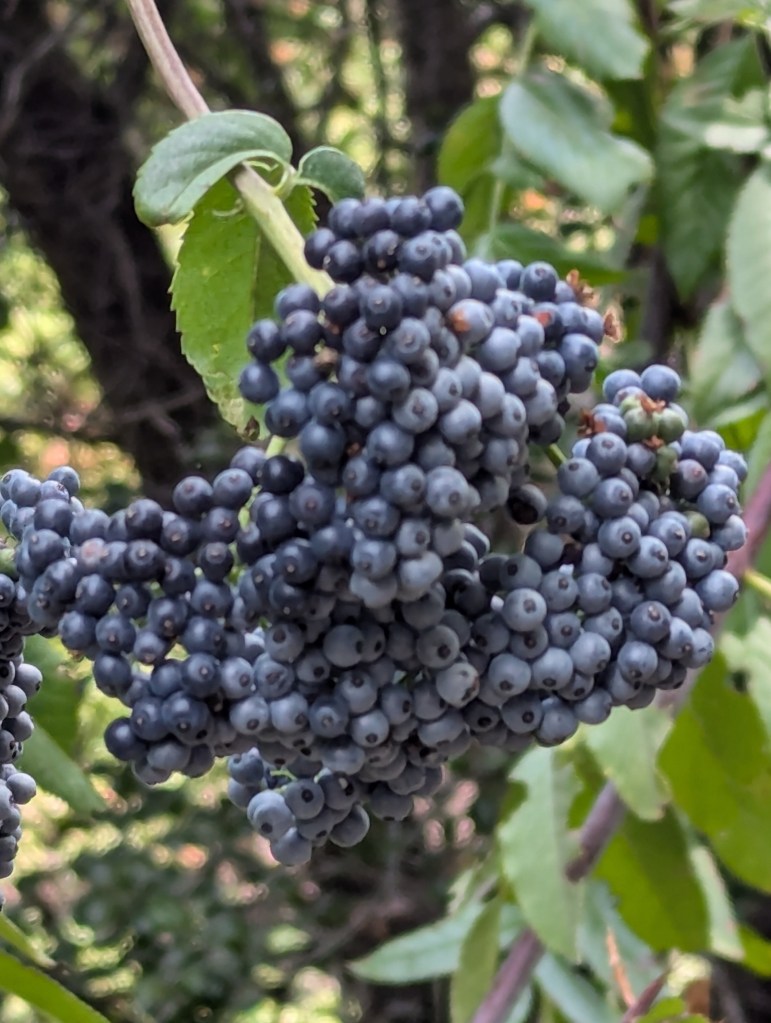
‘Black Tower’ European black elderberry is not very black yet.

Perhaps my explanation of the elderberry glut here was a bit brief last Saturday. Allow me to explain.

Sambucus caerulea, blue elderberry is native and grows wild here, so was innately the first on the scene.

Sambucus nigra ‘Black Lace’ European black elderberry arrived next. I do not know who procured it or why, but it was left here in a can before my time. I put it into a landscape just to get it out of the storage nursery. In other words, I was none too keen on it, so I just wanted to make it go away. Instead, because it was so popular with those who saw it in the landscape, I learned to appreciate it. Then, I figured that it would be even more appealing if it produces berries for birds, so I sought a mate for it.

Sambucus nigra ‘Madonna’ European black elderberry was almost the perfect mate. I would have preferred ‘Albomarginata’, but did not want to pay for it. ‘Madonna’ in a #1 can was available for only a few dollars because it looked so shabby two winters ago.

Sambucus racemosa, red elderberry was a gift from Tangly Cottage Gardening shortly afterward. They were a group of four seedlings, so needed no mate for pollination. Although they are supposedly native here, I had never seen them before, but want to grow them.

Sambucus nigra ‘Albomarginata’, ‘Atropurpurea’ and ‘Black Tower’ European black elderberry, and Sambucus racemosa ‘Lemony Lace’ red elderberry unexpectedly became available for a few dollars each just last winter because, like ‘Madonna’ European black elderberry two years prior, they were shabby while dormant. Without a plan, I procured all of them. ‘Lemony Lace’ red elderberry, the only red elderberry of the four, could be pollinated by the red elderberries that already came from Tangly Cottage Gardening. As I mentioned, ‘Albomarginata’ was the cultivar that I would have preferred to ‘Madonna’ that I procured earlier.

Sambucus canadensis ‘Nova’ and ‘York’ American black elderberry were the last acquisitions at the end of bare root season last winter. They are for fruit production in my home garden.

I would have been pleased with only ‘Black Lace’ and one other pollinator cultivar for it within the landscapes at work. For my home garden, I wanted only blue elderberry, red elderberry and American black elderberry. I would have preferred wild American black elderberry, but can not complain about the cultivars that I got. Collectively, we got much more than we bargained for.

Oem Update

This is the larger of two oem pups.

Oem is beginning its third spring here. Fortunately, it has not yet grown too big to stay. That could change soon now that the weather is warming. I still do not know what to do with it as it grows. It is the largest species of banana in the World, Musa ingens. The foliage of the original pseudostem was frosted enough last winter to get trimmed away, leaving only an unsightly bare trunk. It is only beginning to replace its foliage for this season. Just as readily though, it produced two pups, which will likely grow faster than the original pseudostem did during the last two seasons. They are growing from a larger rootbase. Meanwhile, there are several other cultivars of banana growing here also. There were about fourteen last year. There are about two dozen this year! Only a few will remain compact enough to inhabit the landscapes at work, but even fewer will be appropriate there. Banana trees are not exactly comparable with the style of a redwood forest. Most, including the oem, will likely inhabit a riparian area of my home garden, which is also in a redwood forest. Goodness! I really should have planned this better.

Unexpected Lemon

‘Meyer’ lemon was never my favorite lemon. However, when I grew citrus trees in the early 1990s, it was the most popular of forty or so cultivars. There really is nothing else like it. Relative to other lemons, its fruit is distinctively less acidic, more richly flavored, and sometimes ridiculously abundant. All other lemons are more sour but less flavorful. Besides ‘Meyer’ we grew ‘Lisbon’, ‘Eureka’, ‘Variegated Pink’ and ‘Ponderosa’. Of these four others, only ‘Ponderosa’ is not a mutant of ‘Lisbon’, although its comparably mild flavor and robust acidity suggest that it is. All four grow as small but upright trees. Only ‘Meyer’ naturally grows broader than tall, sort of like shrubbery.

‘Eureka’ lemon inhabits one of the landscapes at work, where it produces enough average lemons for those of us who know about them. I grew cuttings from it for my own garden, but am concerned that, since they are not grafted onto dwarfing understock, they could eventually grow quite large. I also grew an ungrafted cutting of ‘Ponderosa’ lemon for the same landscape at work that the ‘Eureka’ lemon already inhabits, because it happens to be at the Ponderosa Lodge. ‘Ponderosa’ lemon grows with an upright form, but because it naturally stays smaller than ‘Eureka’ lemon and its relatives, I am not too concerned about it growing too large.

‘Meyer’ lemon came to my garden like a stray cat. Well, it is a bit more complicated than that, but it involved about as much planning. The history of how it came to its previous home is too extensive to describe here. To be brief, I installed it into a garden a few years ago because someone wanted it there after previous unsuccessful attempts to grow the same. Then, it needed to be removed prior to the sale of the home. I did not know what to do with it, so brought it here. I canned it and set it aside until space becomes available for it. I really did not expect it to do much until then. I sort of hoped that someone else would want it for their garden, but after we had been through so much together, I also sort of hoped that it would stay here. Anyway, while I was busy ignoring it in its partly shady and less than ideal situation, I noticed that it had produced this single lemon for me over winter. Well, I suppose that it will be a permanent feature of my garden now.