Nectarine

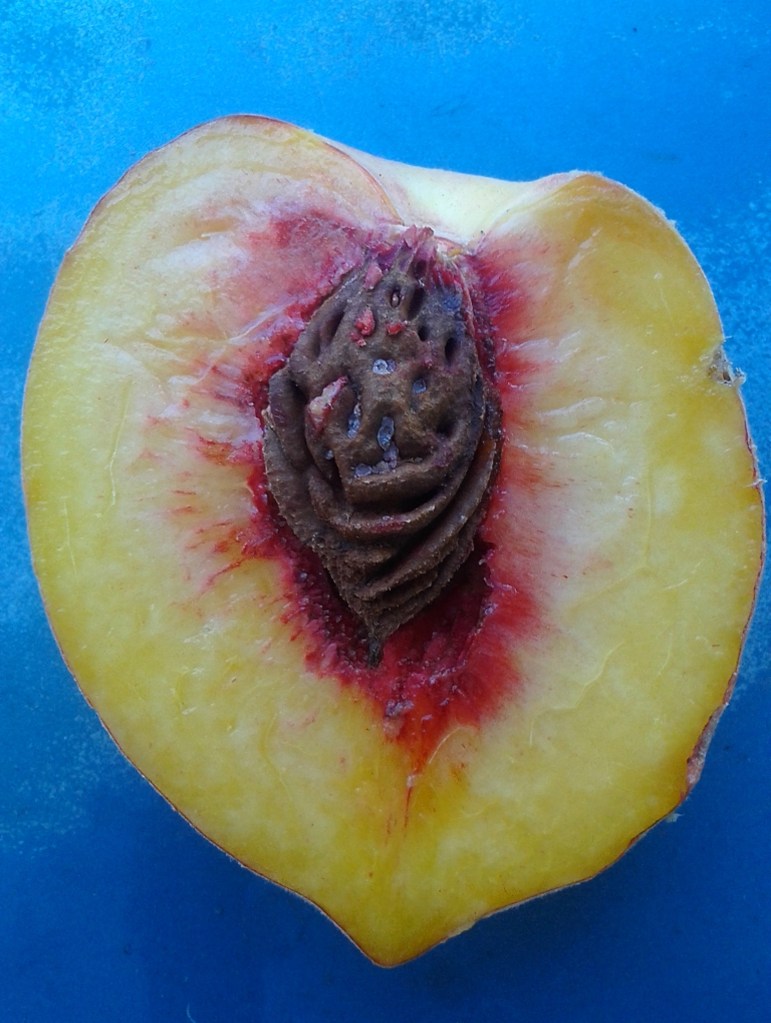
Nectarines are merely peaches without fuzz.

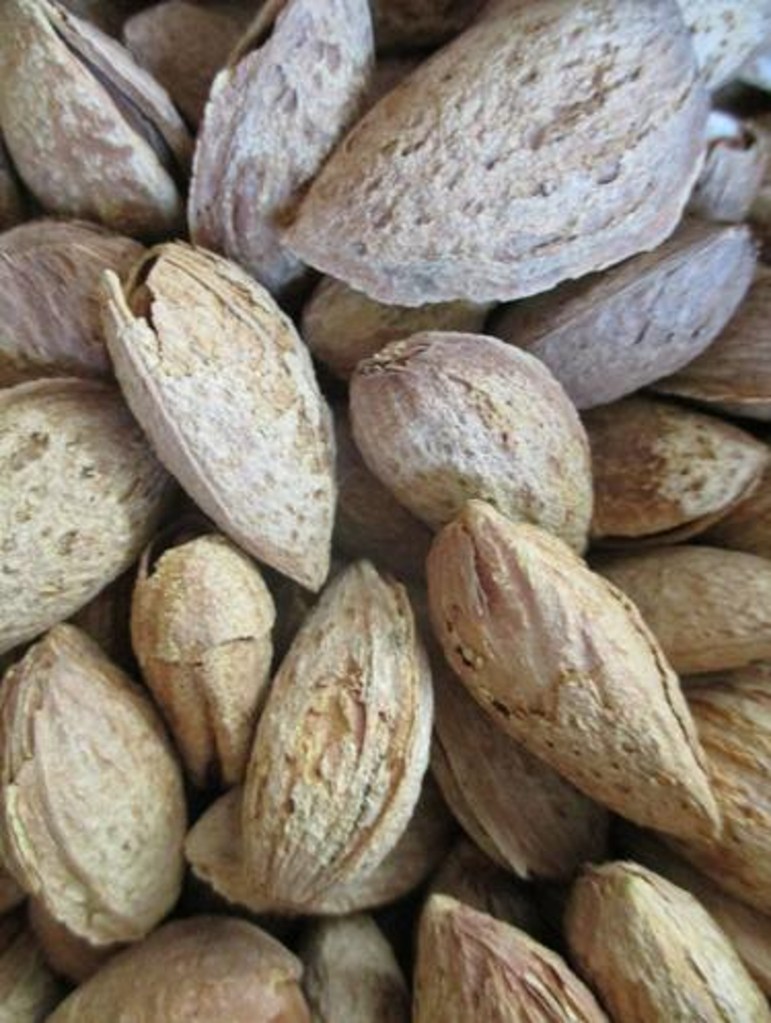
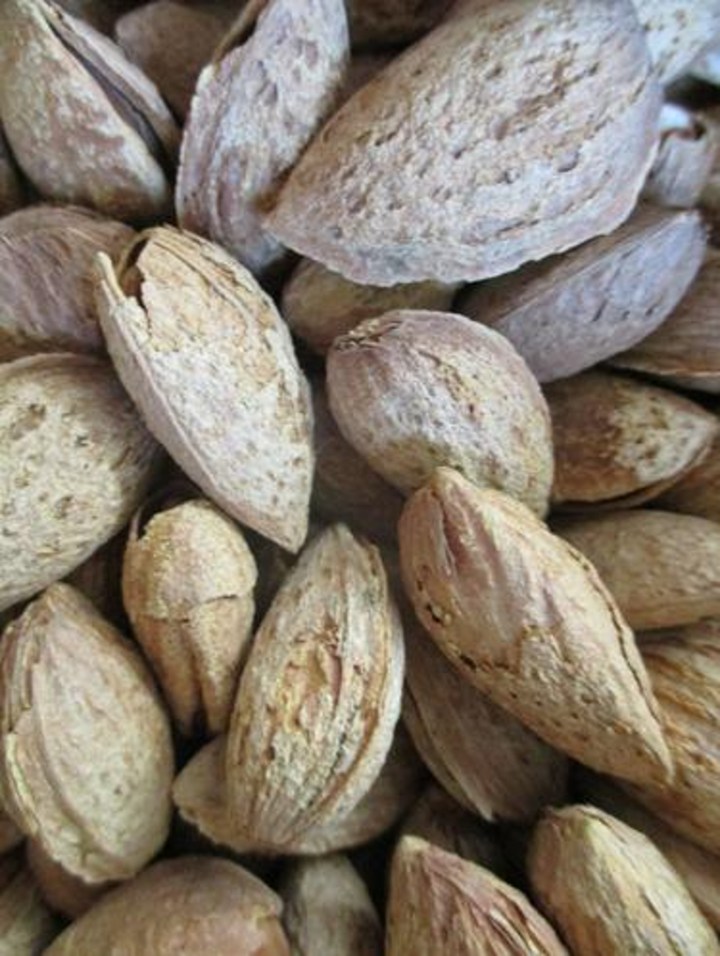
Stone fruit classification can get confusing. All stone fruit are of the same genus, Prunus. This includes almonds, which are stones or seeds of inedible fruit. Prunes are European fruits that are conducive to juicing and drying. Plums are similar Japanese fruits for fresh consumption, but not for drying. The two are more different than peaches and nectarines.

Nectarines, Prunus persicaria var. nucipersica, are simply peaches without fuzz. Cultural requirements are about the same for both. They need only very minor chill through winter to vernalize, and enjoy summery warmth. Trees are not very productive for their first year or two. Then, they may produce for only about twenty years. Thirty year old trees are old.

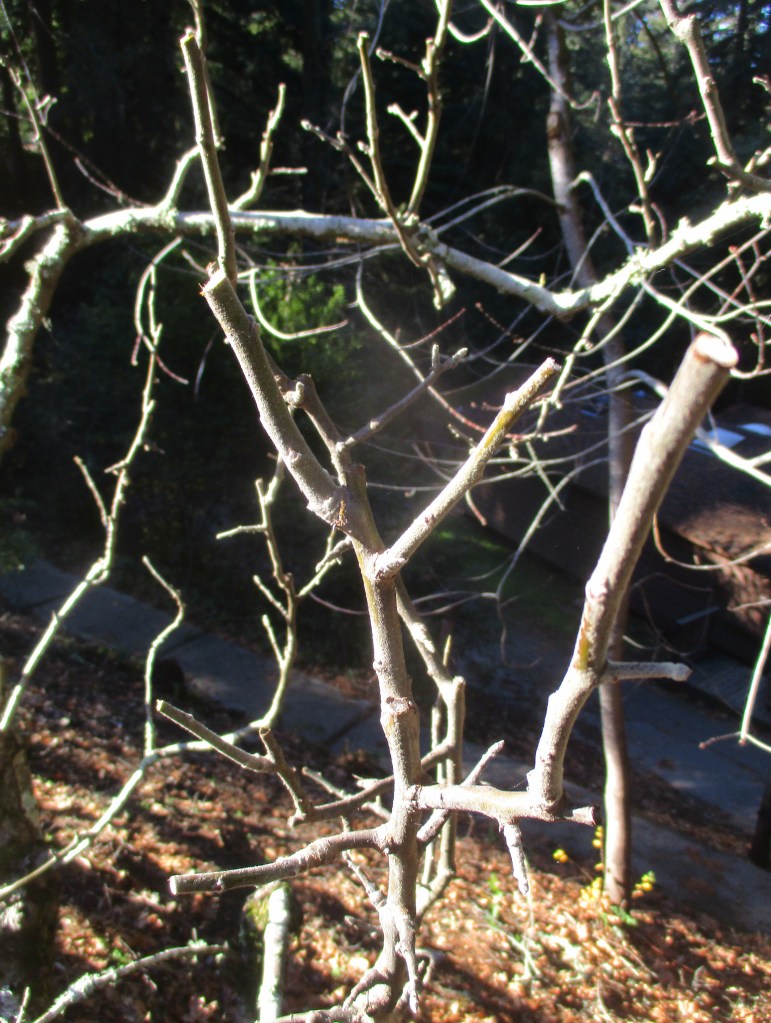
Both nectarine and peach trees require aggressive pruning while dormant during winter. Otherwise, they can not support the weight of their big and abundant fruit during summer. Semidwarf trees, which are the most popular, can potentially grow twenty feet high. They should stay half as high with adequate pruning. Most of their fruit should be within reach. Bare root trees initially disperse roots more readily than canned trees.

Bare Root Season Is Winter

Dormant roots resume growth next spring.

Gardening is dynamic. It must adapt as each season becomes the next. Autumn became winter. Then, suddenly, the Christmas Season became bare root season. Cut Christmas trees that did not sell became green waste. Formerly expensive live Christmas trees that did not sell became bargains. They must relinquish their spaces for fresh bare root stock.

The chronology could not be better. Christmas trees are seasonable while not much else is. Their season abruptly ends precisely as bare root season begins. Bare root season is contingent on the winter dormancy of all associated bare root stock. While dormant, such stock is unaware of what is happening. Otherwise, it would not survive such techniques.

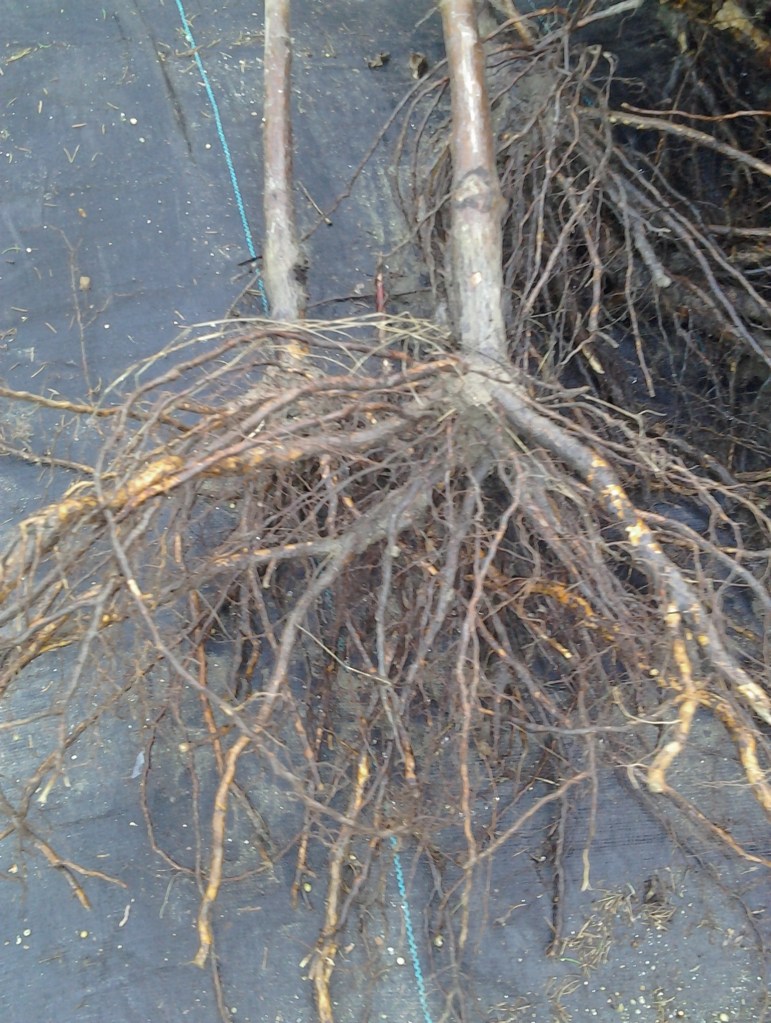
Bare root stock grows in the ground on farms. The roots become bare by separation from their soil during winter dormancy. They should be comfortable within the soil of their new gardens before dormancy ends. They disperse new roots into their new gardens as they resume growth after dormancy. Therefore, transition from farm to garden should be quick.

Some bare root stock arrives by parcel delivery with damply wrapped and bagged roots. More is available from nurseries, with its roots relaxing within damp sand until purchase. Some is available within individual bags of damp sawdust. Most bare root stock benefits from generally minor trimming or grooming. All benefits from prompt and proper planting.

Bare root season is the best time to procure and install several types of plants. Bare root stock is significantly less expensive than canned stock. It is also much less cumbersome to bring home from nurseries. Because bare roots were never confined within cans, they disperse more efficiently. Formerly canned root systems must recover from confinement.

Deciduous fruit trees and roses are the most popular bare root plants. More cultivars are available during bare root season than as canned nursery stock later. Several deciduous but fruitless trees, vines and shrubs are also available. So are a few types of berries and perennials, like rhubarb, asparagus and artichoke. Bare root season finishes with winter.

‘Karpooravalli’ Banana

‘Karpooravalli’ is a relatively undemanding cultivar.

‘Cavendish’ and its variants have always been the most familiar types of banana locally. They are the most popular that are available from produce markets. From nurseries, they remain the most commonly available cultivars. A few other options are only beginning to become available. A few of these could be more reliably productive within local climates.

‘Karpooravalli’ has been available here for quite a while, but remains uncommon. Those who are familiar with it often describe it as wanting ‘only sunshine and water.’ It tolerates soil of inferior quality better than other cultivars, and craves less fertilizer. Within rich soil, it may crave none. It should likely stay away from fences that its pups could sneak under.

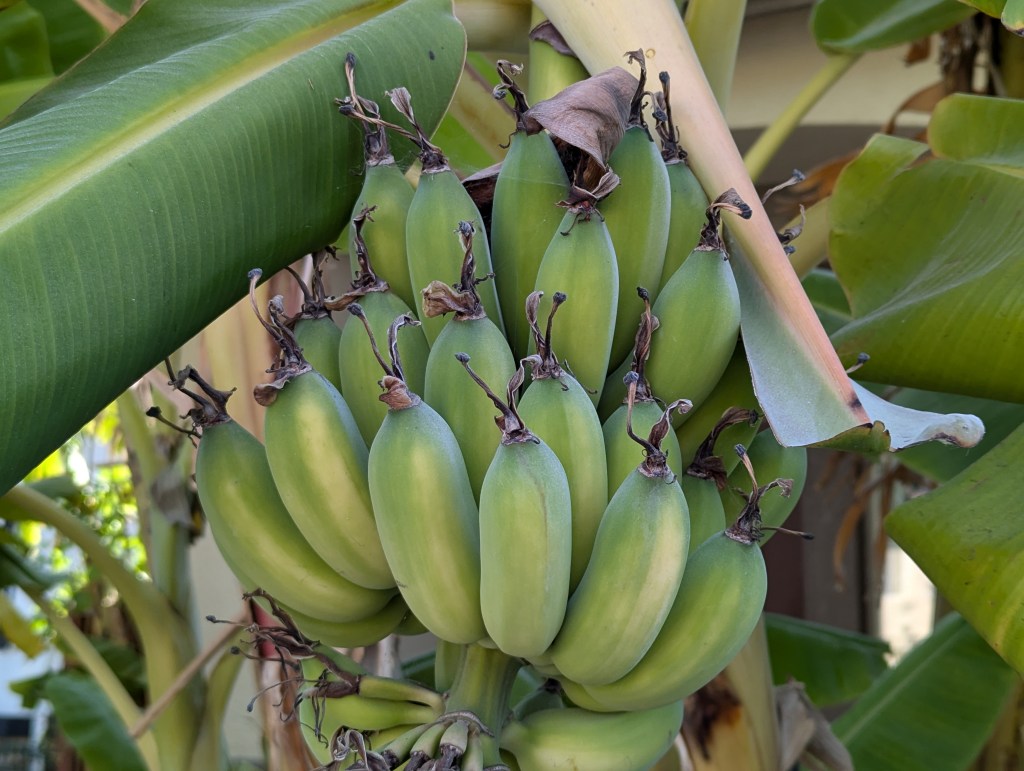
‘Karpooravalli’ is supposedly the sweetest of the Indian bananas. Although its fruit is a bit shorter than more familiar bananas, it is often a bit plumper. Ripe fruit is yellow with pale green blush, and delightfully aromatic. Foliage is more resilient to wind than that of most other cultivars. It can stand more than fifteen feet tall on its very vigorous pseudostems.

Karpooravalli

Karpooravalli bananas after removal of their edible male flowers below.

Pronunciation is only slightly easier than when I first tried to read it. Spelling still necessitates cheating, which I do not feel at all guilty about. Karpooravalli is a big name! I must get acquainted with it though, since it will likely be with me for the rest of my life.

Yes, it is another cultivar of banana, which is something else that I do not feel at all guilty about. I have no intention of retaining all of the other twenty or so cultivars that are already here. In the future, I will likely give away most of them to colleagues, without retaining pups. I actually already have plans to install at work the two that are least likely to produce edible fruit, and never grow either in my own garden again.

Karpooravalli banana pups

These four new pups of Karpooravalli arrived last Monday, just two days after eight unidentified pupping pups and a single pup of ‘Blue Java’ which is also known as the ‘Ice Cream’ banana. Like these previously most recent acquisitions, as well as another ‘Blue Java’ pup and another unidentified pup that were acquired together last year, these four pups of Karpooravalli are from a private garden. All of the other cultivars here are from nurseries, and most were tissue culture plugs that never actually grew in soil.

That is the dilemma. Cultivars from nurseries are expendable. I can give them away without retaining any copies and not miss them. However, cultivars from private gardens have history, even if I am unaware of it. They are important to someone.

I can give away the recently acquired pup of ‘Blue Java’ only because another pup of it from another important source is already established here, and I knew when I took it that it would not be staying. Also, I can give away almost all of the other unidentified pups that came with it because there are already too many to retain. However, I will retain at least one of them because I know that the cultivar was important to the person who shared it. Likewise, I will retain my first copy of ‘Blue Java’ and the unidentified pup that came with it because they are important to the person who shared them.

Karpooravalli is fortunately one of the more reliably productive cultivars here, and provides sweet fruit with remarkably rich flavor. It is gratifying to know this now because I will grow it for as long as I can tend the garden. This particular Karpooravalli is very important to the person who grew it in her garden for a few decades before sharing it with me, so it is important to me now. I know that I will eventually need to share it with others as it multiplies in the future, but I will prefer to share it with those who respect its importance.

Before I was in kindergarten, I acquired my rhubarb from my paternal paternal great grandfather, and my Dalmatian iris from my maternal maternal great grandmother. Both are growing well in my garden now, and always will. I acquired my common lily of the Nile and the first of my common zonal geranium a few years later. Much of what inhabits my garden now has been with me for many years. Yet, I acquired my first Japanese iris, persicaria and goldenrod as recently as late last winter from Tangly Cottage Gardening. Perhaps it is never too late to start another important tradition.

Karpooravalli bananas

Still Going Bananas!

Most of the banana pups and plugs are manageable, . . . for now.

Three more cultivars of banana arrived this week. There are now as many as twenty here. Three are unidentified. Of these three, two could be redundant to others. Of these two, one is merely dormant corms that could rot before generating new foliage. Another is already generating pups. Another is represented by a pair of pups. Eight grew from pups. Twelve grew from tissue culture plugs. Five have already grown too big to remain in the nursery where this picture was taken. At least three can grow more than twenty feet tall. At least two can grow more than forty feet tall. One is Musa ingens, which is the largest species of banana in the World, which can grow more than sixty feet tall! This sounds like fun, but so far, we only intend to add one of these twenty to only one of the landscapes! Three other small cultivars might remain potted in other landscapes, but are merely a minority of the total. Banana ‘trees’ are not exactly easy to accommodate. They want generous irrigation. Their ‘trunks’ grow very fast, but do not last long. Because they can not be climbed, every ‘trunk’ requires a radius that is comparable to its potential height to free fall when it gets cut down. None of the refined landscapes can forfeit areas that are large enough for ‘trunks’ of the larger cultivars to fall. Riparian areas that can accommodate them, and even without irrigation, are forested with redwoods, which banana ‘trees’ are not aesthetically compatible with. I would say that we will figure this out as they grow, but banana ‘trees’ grow very fast. They can remain canned for the rest of this season, but would be very displeased with such confinement next year. It is about to get even more interesting.

Village Harvest redirects surplus from home gardens to those who can use it.

Surplus need not go to waste.

(This article is several years old, so some of the information within is likely outdated.)

Those who witnessed the event know that it actually happened. During citrus season a few years ago, a crew of volunteers descended upon, or should I say, ascended ladders into the legendary and monstrously large King Grapefruit Tree in a gallant but hopeless attempt to harvest the fruit. Our caravan of an assortment of smaller pickups and my full sized Ford that we drove out to confront this aberration of nature where it resided was completely full by the time we had harvested only about a third of the fruit. We left happy with our plunder, but unexpectedly defeated by the abundance left behind. I have seen many fruit trees throughout my career, but have never seen so much fruit in a single tree! 

It may have watched us leave exasperated with our mud-flaps dragging, but the King Grapefruit Tree was not solely victorious. We Village Harvest volunteers and the many beneficiaries of Village Harvest enjoyed its fruit for weeks! Village Harvest arranges for community fruit harvesting events to collect fruit that might otherwise go to waste so that it can instead be distributed to people in the community who can use it. The fruit of the King Grapefruit Tree was donated, and more was harvested later, so that it would not become an unwanted mess for the residents of the nearby home.

This is just one of many examples of how Village Harvest community fruit harvesting events benefit everyone involved. Those who donate their surplus fruit get it harvested and taken away before it becomes messy. Village Harvest volunteers get to take a bag or so of the fruit that gets harvested during the event. The clientele of the local food agencies that distribute the produce get fresh home grown fruit from the Santa Clara Valley; which is, as we all know, the best in the world.

Although citrus season is still several months away, five community fruit harvesting events are scheduled to collect summer fruit through July. On July 18 and again on August 1, two Mountain View community harvesting events will be from 9:00 a.m. to 12:30 p.m.. Two Central San Jose community harvesting events will be from 8:30 a.m. to 12:30 p.m. on both July 20 and July 27. The Sunnyvale community harvesting event will be from 8:00 a.m. to noon on July 26. Locations to meet for each event can be determined when making reservations.

Information about volunteering for any of these and other events, or how to arrange for donation of fruit, can be found at the website, www.villageharvest.org, or by telephoning 888 – 378 4841. Because admission is limited, it is advisable to make reservations for any event early, either online or by telephone. (It may be too late for the July 18 event.) Parking is also limited, so participants should carpool if possible. Pickups and station wagons to help transport fruit are very helpful. So is a grocery bag to share in the harvest afterward. Covered shoes (not sandals) are important. Layered clothing is more comfortable for cool mornings that get warmer closer to noon.  

Going Bananas! II

‘Double Mahoi’ banana pup with pups

‘Double Mahoi’ banana has been tediously slow. Although I now know why, I am disappointed with its development so far. After the primary pup that I split from the original last year got frosted over winter, I noticed that its central bud survived and was barely beginning to recover. Then, it stopped. I mean, it did nothing for several days or maybe more than a week, even though the weather was warming. Also, the foliage remained pale, as if it had just emerged. Because it was stagnating for so long as the weather was warming, at least one of its leaves got scalded in the middle. Then, because I gave it a bit too much soluble fertilizer, its leaves got bad tip burn. I suspected that it was up to something while seemingly inactive, but did not really know. Finally, the tip of its first pup appeared. Then another appeared, and then a few more! While still just a pup, it had an entire litter of eight pups, which is four times ‘Double Mahoi’, and I do not know if it is finished. Of course, eight pups sharing resources do not grow fast. Also, the tip burn continued as the pups initially emerged, which likely inhabited growth for a while. For now, I can only give them plenty of water, and refrain from giving them more fertilizer. They have good exposure, but I will move them under saran if the weather gets too warm for such small pups to be so exposed. I doubt that all eight pups will survive, but I would have been pleased with merely one. Of course, the one original pup will not survive the process of diverting its resources to its pups, but that is an acceptable consequence of getting a bit more than expected.

Original ‘Double Mahoi’ pup not much more than a month ago

Big Lemons

Ungrafted ‘Eureka’ lemon

All but two of the forty or so cultivars of citrus that I grew in the early 1990s were grafted onto the same dwarfing shaddock rootstock. Only ‘Meyer’ lemon and ‘Seville’ sour orange were not grafted, or ‘on their own roots’. ‘Meyer’ lemon naturally stays compact enough to not need a dwarfing rootstock. it was our most popular cultivar. ‘Seville’ sour orange supposedly grows about as large as the various dwarfed sweet orange with or without a dwarfing rootstock, as if the rootstock does nothing to limit its ultimate size. It was our least popular cultivar.

‘Eureka’ lemon, ‘Lisbon’ lemon and ‘Sanguinelli’ blood orange grow larger than any of the other grafted dwarf citrus that we grew. ‘Eureka’ lemon is actually a variant cultivar of ‘Lisbon’ that produces fruit throughout the year, which is a desirable attribute within home gardens. ‘Lisbon’ lemon may seem to be a bit more productive, but only because it produces all of its fruit within a more defined season, which can be a desirable attribute for orchard production. Otherwise, ‘Eureka’ and ‘Lisbon’ lemons are indistinguishable from each other, and grow quite tall. ‘Sanguinelli’ blood orange grows about as large, with a nearly identical upright form, but with a softer foliar texture.

Without dwarfing understock, ungrafted ‘Eureka’ and ‘Lisbon’ lemon trees can grow as big as small shade trees, and produce more fruit than they can support against gravity. Their broken limbs are a horridly thorny mess to clean up. ‘Sanguinelli’ blood orange trees can grow about as large, although they support the weight of their fruit more efficiently, and any debris that they generate, hopefully from pruning rather than breakage, is not so objectionable to handle.

So, I should have known better than to plug a bunch of ‘Eureka’ lemon cuttings. As cuttings, they lack dwarfing understock. I shared more than half with neighbors, who have been warned. About fourteen remain. One is more than enough.

Ponderosa

‘Ponderosa’ for the Ponderosa

Citrus ripen through winter. This ‘Ponderosa’ lemon is taking its time, probably because it is still growing. Individual ‘Ponderosa’ lemons commonly weigh two pounds, and can potentially get a bit heavier than five pounds. That is heavier than some of Rhody’s chihuahua friends. I doubt that this particular lemon will get much larger than it is now, but it is already bigger than an average ‘Eureka’ lemon. It is about as big as a baseball.

The problem with this fruit is that it is on a tiny lemon tree in a #1 can. It is one of two fruits. I should not have allowed them to develop as much as they have. I should have removed them when they first appeared in order to divert resources into vegetative growth, rather than fruit development. Now that they grew this much, I sort of want them to finish ripening. It would be a waste to remove them now. After they ripen, I can prune their stems from the tiny tree, and process them as cuttings to grow more new trees.

I would like to install this little ‘Ponderosa’ lemon tree into a landscape at Ponderosa Lodge. Not only is its name appropriate, but the weirdly huge fruit might be interesting to the children who come to ‘Outdoor Science’ school there. Contrary to the huge size of its fruits, ‘Ponderosa’ lemon trees do not grow very large or very fast. However, a mature ‘Eureka’ lemon already inhabits the garden there, and we recently installed a ‘Bearss’ lime. Another lemon tree would redundant. We would prefer to grow a more edible citrus within the limited space that is available, such as a sweet orange, Mandarin orange or kumquat. For now, we will just enjoy this tiny lemon tree with its huge lemons right here.

Citrus Fruit Ripens Through Winter

Unharvested lemons stay fresh for months.

Winter is bare root season, which is the best time for installation of deciduous fruit trees. It is also the best time for dormant pruning of deciduous fruit trees. Evergreen fruit trees do not get much attention. Installation and any pruning of evergreen fruit trees happens after winter. However, regardless of perceived neglect, winter is actually citrus season.

Technically, citrus are always in season here. That is because most citrus fruits last so long on their trees after ripening. Also, some types produce a few fruits sporadically after their primary season. The latest ‘Lisbon’ lemons can still be good as the earliest of the following season ripen. ‘Eureka’ lemons ripen in minor phases after their primary phase.

Therefore, winter is citrus season merely because it is when most citrus fruit ripens. The schedule is ideal. It begins as pear and apple season finishes. It finishes as cherry and apricot season begins. Pears and apples, and especially cherries and apricots, are less predictable than citrus. Fortunately, citrus can begin a bit early or finish late if necessary.

All citrus are species or hybrids of the same genus of Citrus. Kumquats also classify as Fortunella though. The primary components of the flavors of their fruits are sweet, sour and bitter. The most familiar oranges are sweet oranges, but sour and bitter oranges also exist. Most lemons and limes are sour, but there are also sweet lemons and sweet limes.

Oranges, which are generally sweet oranges, are the most popular citrus. Navel oranges are traditional eating oranges. ‘Valencia’ is a traditional juicing orange. Blood oranges are a bit more tart, with blushed or red flesh and juice. ‘Seville’ sour orange is useful for marmalade. Rare bitter oranges provide flavoring for teas, and fragrance for perfumery.

Lemons are the second most popular citrus. Mandarin oranges, or mandarines, should probably be more popular. They are the more perishable of citrus though, because their rinds are relatively loose. Tangerines are merely mandarines of the Americas. ‘Rangpur’ lime is a sour mandarine. Real limes are very diverse, but mostly ripen greenish yellow. Grapefruits combine sweet, sour and bitter.