PruneYard

No more prunes.

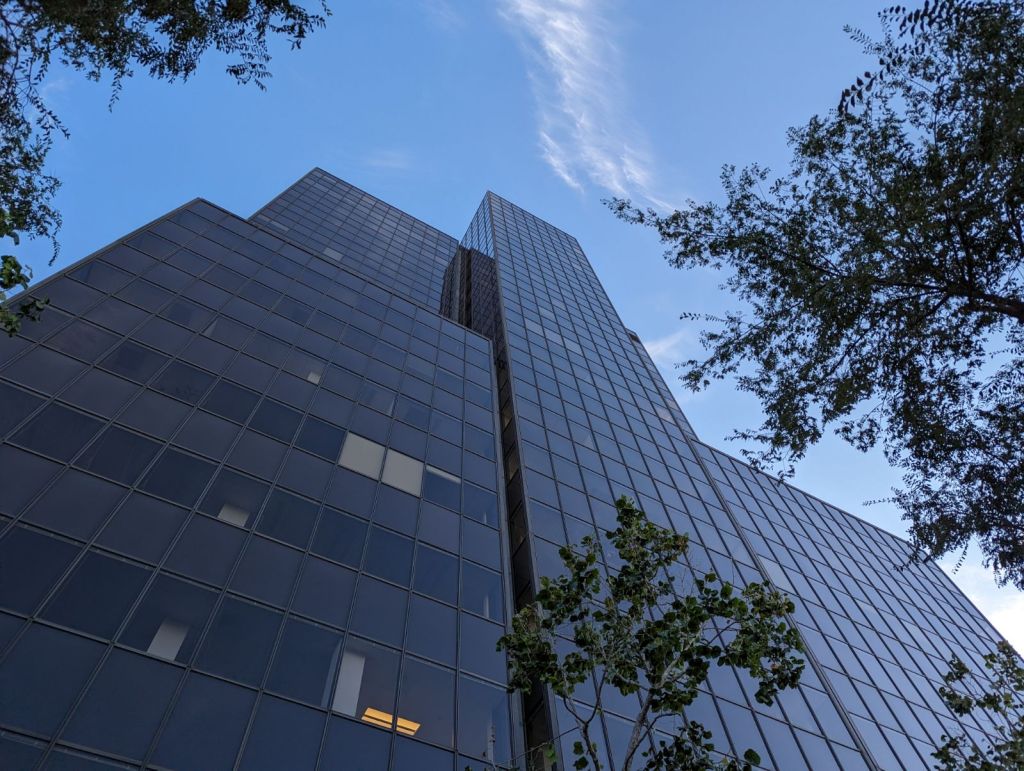
Ulmus parvifolia, Chinese elm extends most prominently into the picture from the right, with another bit from the left of the upper margin. Platanus X acerifolia, London plane extends into the picture from the right of the lower margin, with another minimal bit from the upper left. Otherwise, no other vegetation is visible. This is not exactly a horticultural topic.

The PruneYard Tower 1 is the big and dark skyscraper above the elms and planes. For a few years, it was the tallest skyscraper between San Francisco and Los Angeles. Like many major urban developments, it and its associated complex of buildings is named for what it displaced.

The PruneYard really was what its name describes, a large yard for drying prunes, as well as apricots, from the formerly vast orchards that surrounded it. Because the primary PruneYard complex of buildings is almost as old as I am, I can not remember it not being there. However, I can remember the ruins of some of the associated facilities nearby, as well as abandoned remnants of orchards. The stouter PruneYard Tower II was added in about 1976. The PruneYard Place was added in the early 1990s.

Nowadays, the name of the PruneYard must seem silly to those who are unaware of its history. Few are aware of the difference between prune and plum. Even those of us who can remember the last scraps of orchards find it difficult to believe that, not only were orchards here, but that they were formerly much more vast, and occupied most of the Santa Clara Valley. Just as tourists go to see the fall color of New England, tourists formerly came here to see the spring bloom. It is no wonder that the Santa Clara Valley was also known as the Valley of Heart’s Delight.

What Is This?! III

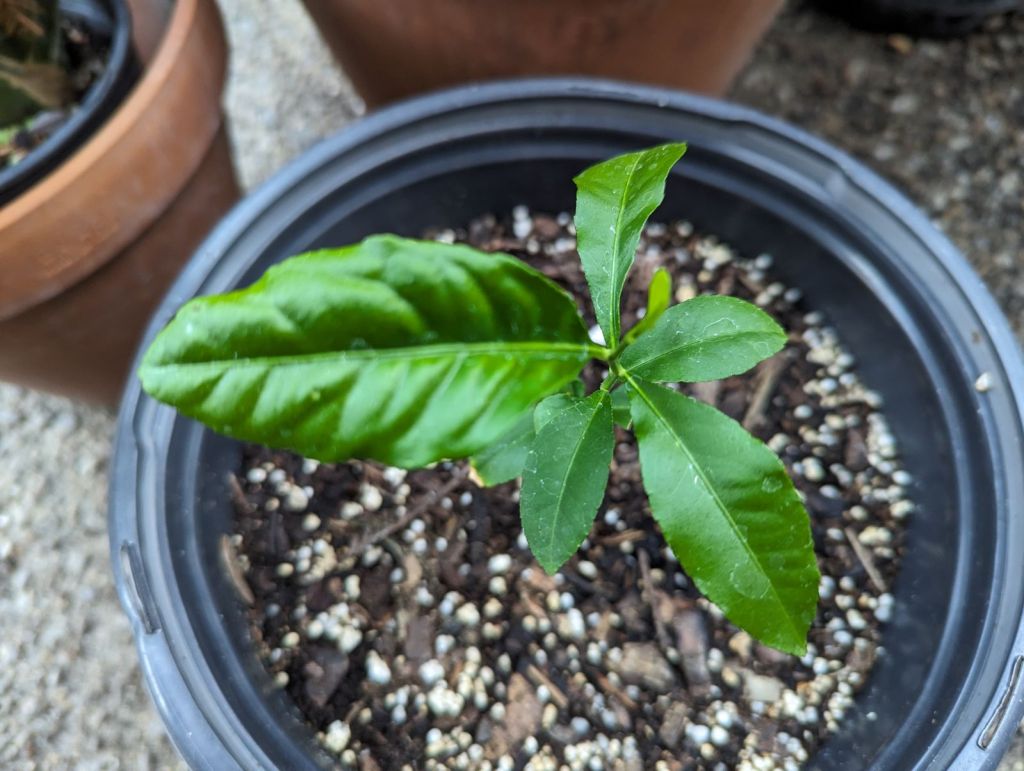
Could it be lychee?

Prior to the identification of Hibbertia scandens last week, another mystery arrived. I probably should have mentioned it earlier, but as with the previous mystery, I thought that I would have identified it before I felt compelled to mention it here. Unlike the previous mystery though, I did not recognize it as something that I had encountered in the past.

Someone with whom I work, who is not so horticulturally oriented, brought it from one of the homes that he was working at. It had been left by a former tenant. Initially, I thought that it was merely a can of otherwise unused media in which a common bay laurel seed had germinated. However, it is not a bay laurel seedling. Also, contrary to how it appears in the picture, it is remarkably centered within the can, as if intentionally plugged there.

Initially, I thought that it resembled coffee, Coffea arabica. However, coffee exhibits opposite leaf arrangement, and these leaves are alternately arranged. Besides, viable unroasted coffee seed is not exactly common. Now, I sort of suspect that it could be lychee, Litchi chinensis. Although uncommon, seeded lychee fruit are not as rare as unroasted coffee. Although their leaves are so closely paired among mature specimens that they seem to be oppositely arranged, they are technically alternately arranged, and more obviously so among juvenile growth. If this is lychee, it will not produce identifying bloom for a few years.

Realistically, immediate identification of this seedling is unimportant. I could have put less effort into discarding it than I put into writing about it. Therefore, I will merely give it what it needs until it grows enough for identification. I will not mind discarding it if I identify it as something that is useless. Otherwise, I can find it a home.

Oem

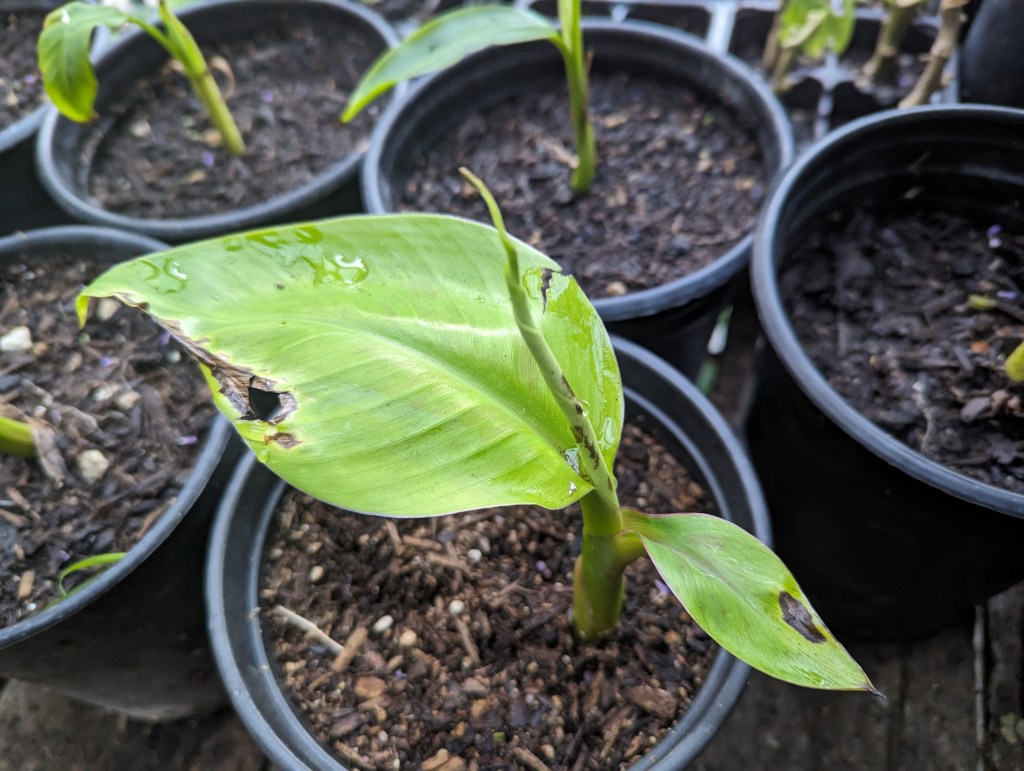
This picture is from my Six on Saturday post for this morning.

Its name is so minimalistic and blunt in the language of the indigenous people who are most familiar with it. Others might know it as the giant highland banana. It seems to me that most of us who find it to be of interest know it by its botanical name of Musa ingens.

Oem, or giant highland banana, or Musa ingens, is native to the tropical montane forests of New Guinea. Because it is endemic to high elevations, it does not perform so well in the sort of continually hot and humid tropical climates that most other species of banana enjoy. It actually prefers the weather to get somewhat cool at night. Therefore, it is more likely to be happier here than in Southern Florida, Hawaii or coastal San Diego County.

Not many horticultural enthusiasts grow it anyway. Actually, I do not know of anyone else who grows it. I have seen only a few comments online regarding germination of the very rare and expensive seed. Furthermore, no one seems to be successful with germination. This particular species does not generate pups as readily as other species of the genus, and even if it did, there are no established specimens from which to procure such pups.

However, its lack of popularity is less likely a result of its rarity and difficulty to propagate, but more likely because of its massive scale. In the wild, oem can grow to a hundred feet tall! It may be limited to about half as tall within cultivation, and without competition from other tall trees, but that is nonetheless a potential to get fifty feet tall! That may not seem like much relative to other trees, particularly the redwoods that are more than a hundred feet tall, with potential to get three times as tall. The concern is that banana trees are not actually trees. They are merely humongous perennials. Their pseudostems do not grow for very long before they begin to deteriorate and collapse. Pseudostems of smaller sorts may complete the process within two years, but are easily removed afterwards. Fifty foot tall pseudostems take significantly more time to mature and then deteriorate, but are not so easily removed from refined landscapes. Arborists can not climb them to cut them into sections. They require space to fall harmlessly. They are full of water, so are very heavy.

Now, oem lives here. It is merely a single dinky pup, but grows very efficiently. I have no idea of what to do with it. It can likely stay canned through this year, but may need to go into the ground next year. Not only does it need plenty of space, but it does not conform to the styles of any of the landscapes here. Consequently, it might eventually inhabit my home garden, regardless of its awkward appearance. This will likely get very interesting.

Quince

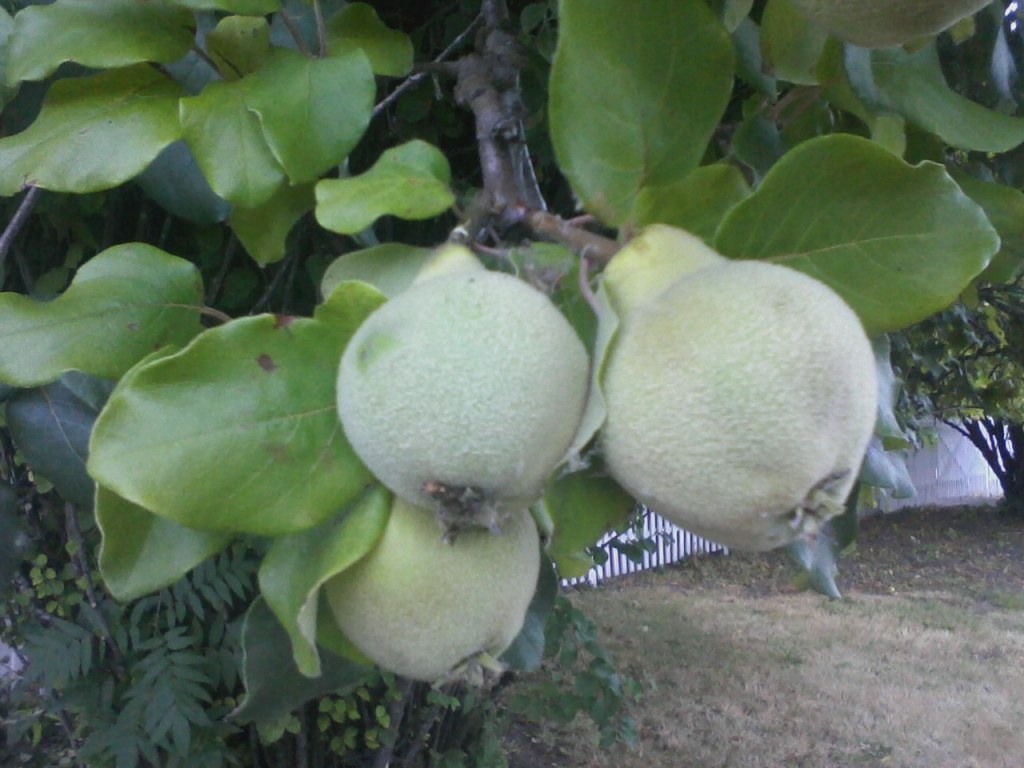
Quince has become a rare fruit.

With the many slender arching trunks, quince, Cydonia oblonga, is more like a large deciduous shrub than a fruit tree. Even old trees are not much more than twenty feet tall and broad. Most of the rare trees that can be found are old, because quince is such an old fashioned fruit. The fruit is still immature and covered with white pubescence (fuzz). By late autumn, it will be remarkably aromatic and resemble golden pears, about four inches long and nearly as wide, and so hard that it should be cooked.

Date Palm

Many relocated mature date palms were recycled from date orchards.

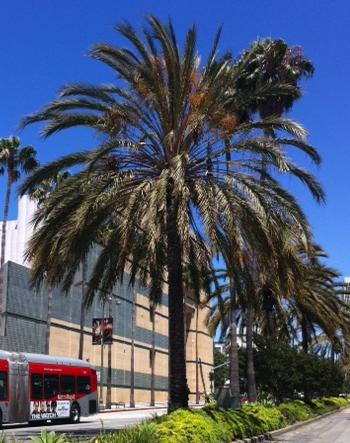
It seems that recycled large date palms, Phoenix dactylifera, became trendy in the past few decades while vast date orchards around Las Vegas were displaced by urban sprawl. They are stately trees with airy but bold rounded canopies between twenty and thirty feet wide. Mature trees are more than fifty feet tall on single trunks. Varieties with multiple trunks are shorter and rare. The ten to twenty foot long leaves are pinnately compound with folded foot long leaflets, and nasty basal spines.

Each date palm tree is either male or female (dioecious). Orchards are almost exclusive to fruiting female trees with only a few male trees grown separately for their pollen, which gets applied manually. Without male pollinators, recycled formerly productive female trees are fruitless, and therefore not messy.

Date palms may have been in cultivation for nine thousand years! The Judean date palm was grown from seed that was lost in storage for two thousand years, which (until recently) was the oldest known viable seed!

Trees Naturally Dominate Their Gardens

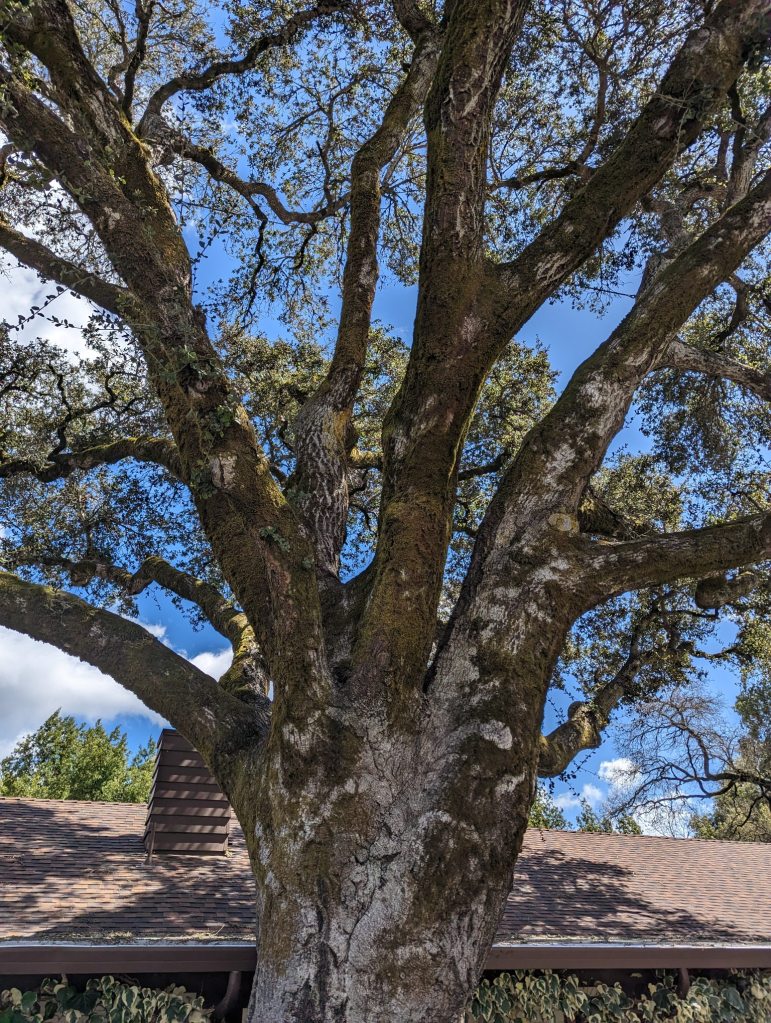
Oaks slowly become grand and sculptural.

Trees are generally the most significant living components within a home garden. Even treeless gardens benefit from nearby trees. Some old redwoods contain more wood than the homes that they shade. Some old oaks inhabited their gardens centuries before their gardens did. With few exceptions, nothing in a garden is as big or permanent as a tree.

Japanese maples, citrus trees and other small trees can be among the exceptions. They might be smaller than some of the shrubbery they share their gardens with. Papayas and other herbaceous trees can also be exceptions. Some live for only a few brief years. The definition of what a tree is can be vague. Variable interpretations complicate this matter.

A tree is a woody perennial plant with a single tall trunk and branches. However, banana trees develop several unbranched herbaceous trunks. Palms and tree ferns are neither woody nor branched. Arboriform yuccas are no woodier than palms. Many trees develop many trunks. Banyans use roots as trunks. This definition does not even describe ‘tall’.

Ultimately, the characteristics of a tree are more important than its definition. Shade trees near homes should be deciduous to let warm sunshine through in winter. Evergreens are better for obscuring unwanted scenery throughout the year. Evergreens are messier than most deciduous vegetation though. Their shedding is not so limited to distinct seasons.

Fruit trees are some of the most misunderstood inhabitants of home gardens. Not many grow big enough to function as shade trees. Fruit is difficult to harvest from those that do. Almost all require intensive and specialized pruning and maintenance. Few get it. Most eventually succumb to neglect. Citrus and avocados are some of the least demanding.

Palms, whether or not they qualify as a type of tree, are also misunderstood. They lack branches, so are not conducive to pruning away from utility cables. Their single terminal buds grow only upward. Removal is the only option for palms that encroach too closely to high voltage cables. Even the best palms need grooming from professional arborists. Most quickly grow beyond reach from the ground or even a ladder, and are dangerous to climb.

Rain Can Ruin Bloom And Developing Fruit

Bloom is not really early. Frost and unusually torrential rain just happen to be late.

Again this year, the excellent weather that makes gardening so much fun even through winter has the potential to become a problem. Winters are innately mild here, and like this year, are sometimes mild and warm enough to prompt many plants to bloom much too early. Many of the fruit trees and their ‘flowering’ (non-fruiting) counterparts are already finishing bloom as if it is the middle of spring, even though the equinox is about two weeks away. This should not be a problem for the flowering cherries, plums, pears and apples (flowering crabapples), but is risky for the many trees that should produce fruit.

The problem is that, despite the weather, it really is winter and early spring, so could potentially rain while fruit trees are blooming. The rain can batter the blooms, or cause them to rot before they set fruit, compromising or even eliminating the fruit production for the following summer. Trees that are not blooming, or just barely showing ‘color’ of the first few blossoms, should be safe. Also, the trees that bloomed earliest and have already set fruit should likewise be safe, as long as the weather does not stay rainy too long, which it almost never does here. Trees that are in full bloom when it rains are the most sensitive to damage.

It is impractical to cover mature trees with plastic sheeting to protect them from rain. Even if it is possible to get the sheeting over the trees, it knocks much of the bloom or developing fruit off anyway. Also, if the sheeting is not removed when the rain stops, it can trap humidity, which can rot the blooms that were so carefully protected from the rain. (Although, high trees hold the plastic high enough from the ground to allow for good air circulation.)

Small trees are easier to cover, but do not produce enough fruit to worry about. In other words, it would be easier to buy fruit at a market, or to get it from friends and neighbors with different varieties (that bloom at different times) than to put too much effort into protecting trees from the rain. In most situations, it is best to just accept that fruit trees will sometimes have ‘off’ years when they either do not produce, or produce only minimal quantities of fruit. The good news is that trees that lose some but not all of their fruit often produce best.

Plum bloom is not resilient to late frost or rain.

Deciduous Fruit Trees Need Specialized Dormant Pruning.

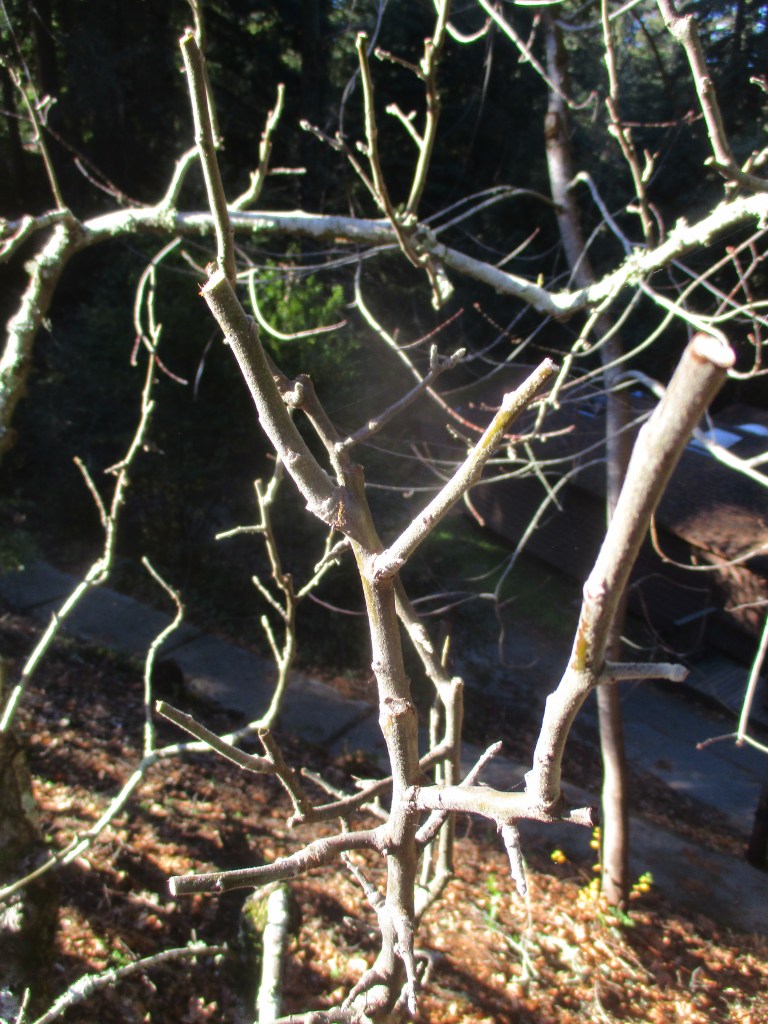
Apple and other pomme fruit trees are pruned very differently from stone fruit trees.

It seems unfair that so many deciduous fruit trees are available without warnings that they need such specialized maintenance. They are certainly worth growing. Otherwise, not many of us would grow them. Yet, those of us acquiring fruit trees for the first time should be aware that, with few exceptions, deciduous fruit trees need specialized and meticulous pruning while dormant every winter.

The pruning these trees require is too specialized to explain in a few short paragraphs; but can be researched for each particular type of fruit tree. Sunset publishes an excellent book about ‘Fruit Tree Pruning’, that illustrates and explains the different types of pruning that each different fruit tree needs. Pruning is the sort of thing that gets better with experience; so even though the pruning gets more involved over the years as the trees grow, the procedure becomes more familiar.

Without pruning, deciduous fruit trees produce more fruit than they can support, which disfigures and breaks branches as the fruit matures and gets too heavy. Even if limbs do not break, overabundant fruit is often of inferior quality because the trees that produce it exhaust their resources. Fruit of well pruned trees may not be as abundant, but is typically better. Besides, pruning is good arboricultural hygiene, keeping trees vigorous and more resistant to disease.

The stone fruits probably need the most severe pruning. These are fruits like apricots, plums, prunes, nectarines and peaches, that have hard pits or ‘stones’. They develop fruit on stems that grew during the previous year. Generally, these stems need to get cut back short enough to support the weight of the fruit that will develop in the next season. Dead, dying, damaged and diseased stems, known as the four ‘D’s, should be pruned out completely.

Cherries and almonds are the exceptions to the generalization about severe pruning for stone fruit, since the trees can support the weight of the fruit. They only need pruning to eliminate the four ‘D’s and to limit height. Because almonds get shaken from their trees instead of picked, they are often allowed to get quite tall, and can even function as small shade trees. Peaches are the opposite extreme since their fruit is so large and heavy, necessitating the harshest pruning.

Pomme fruits like apples and pears need similar but somewhat different pruning, which preserves stunted ‘spur’ stems that produce fruit low on older stems for many years. Like cherries, certain pears may not need much pruning. Certain apples need more pruning than others. Again, the needs of particular trees are best learned from experience.

Volunteer At Filoli

Rose gardens require significant effort.

(This article posted in 2012, so much of its information is now outdated.)

How could so many public gardens throughout the area get all the work that needs to be done in winter? There are roses to prune in both of the Rose Gardens of San Jose. Fruit trees in the Historic Orchard of Guadalupe Gardens need to be pruned. Even Village Harvest of Palo Alto needs to collect citrus fruits that ripen through winter. All this works gets done only because there are so many generous volunteers to help.

The gardens of Filoli are fortunate to get so many volunteers through the year. Nonetheless, the extra pruning that the deciduous fruit trees need in winter reminds us that more volunteers are often welcome. Not only are there big collections of modern and classic apple and pear trees at Filoli, but many are espaliered onto trellis-like supports. (‘Espalier’ trees are pruned onto trellises, fences, walls or other lateral supports, so that they can attain considerable width without much depth from front to rear, conserving space.)

The New Volunteer Recruitment Open House at Filoli is not until January 21. However, those interested in attending must register in only the next few days, before 4:00 p.m. on January 13! Registration can be arranged at volunteer@filoli.org or by telephoning 650 – 364 8300 extension 300, and leaving one’s name and daytime telephone number. The New Volunteer Recruitment Open House will be from 9:30 to 11:30 a.m. on January 21, at the Visitor and Education Center of Filoli, located at 86 Canada Road in Woodside.

Guests will learn about the many different opportunities to volunteer. More than 1,200 volunteers presently help sustain Filoli in areas such as house and garden self guided docents, member services, visitor services, the Ambassador Program, the Cafe and the Garden Shop.

Besides the sixteen acres of English Renaissance gardens that display an expansive horticultural collection, the 654 acre Filoli property includes a 36,000 square foot residence furnished with an extensive collection of 17th and 18th century English antiques, and is recognized as one of the finest remaining country estates of the early 20th century. More information can be found at http://www.filoli.org.

Mandarin Orange

Mandarin oranges are the earliest citrus.

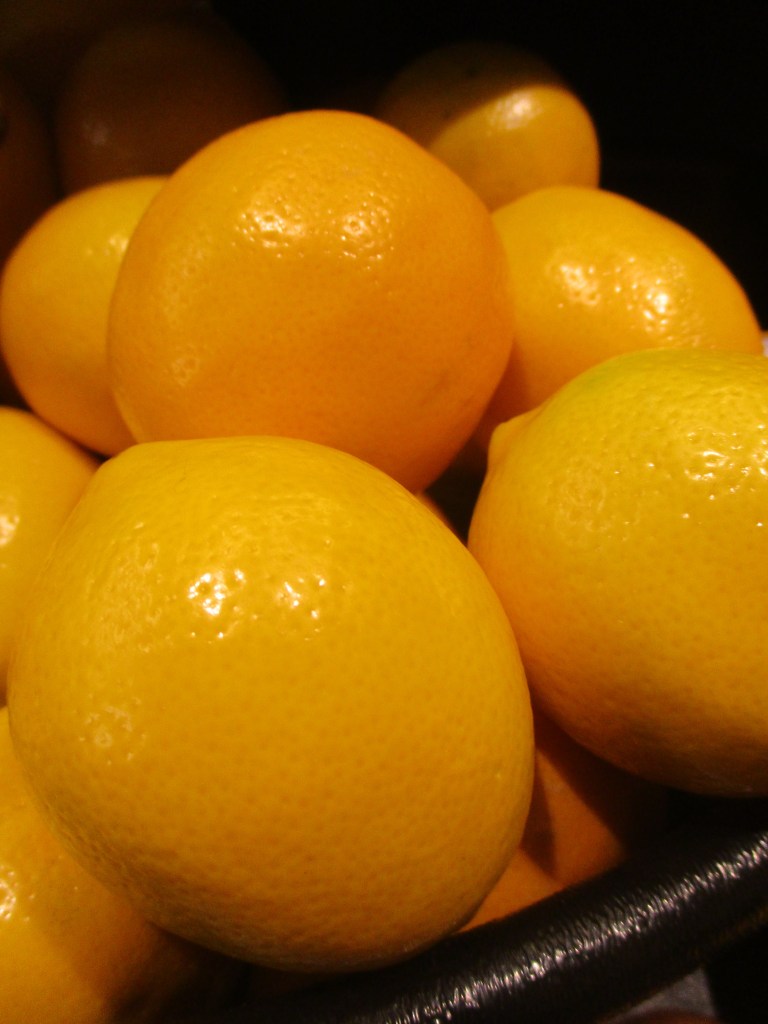
Mandarin orange, Citrus reticulata, and nuts are some of the more traditional goodies for Christmas stockings. In Northern Europe centuries ago, nuts from the Americas were still exotic treats. The availability of perishable citrus fruits from Mediterranean regions relied on expensively efficient shipping. Consequently, citrus fruits were almost like delicacies.

Even when shipping was slow, Mandarin oranges ripened in time to arrive by Christmas. However, they needed fast shipping because they are more perishable than other citrus. They are innately more prone to oxidation because their rind and segments fit so loosely together. Of course, that is why they are so delightfully easy to peel, pull apart and share.

Mandarin oranges are smaller, more oblate, brighter orange, but also more variable than common sweet oranges. Among their many cultivars, their smaller leaves and thorniness are likewise variable. Very few very old trees grow taller than fifteen feet. Tangerines are merely barely genetically distinct Mandarin oranges that developed within the Americas.