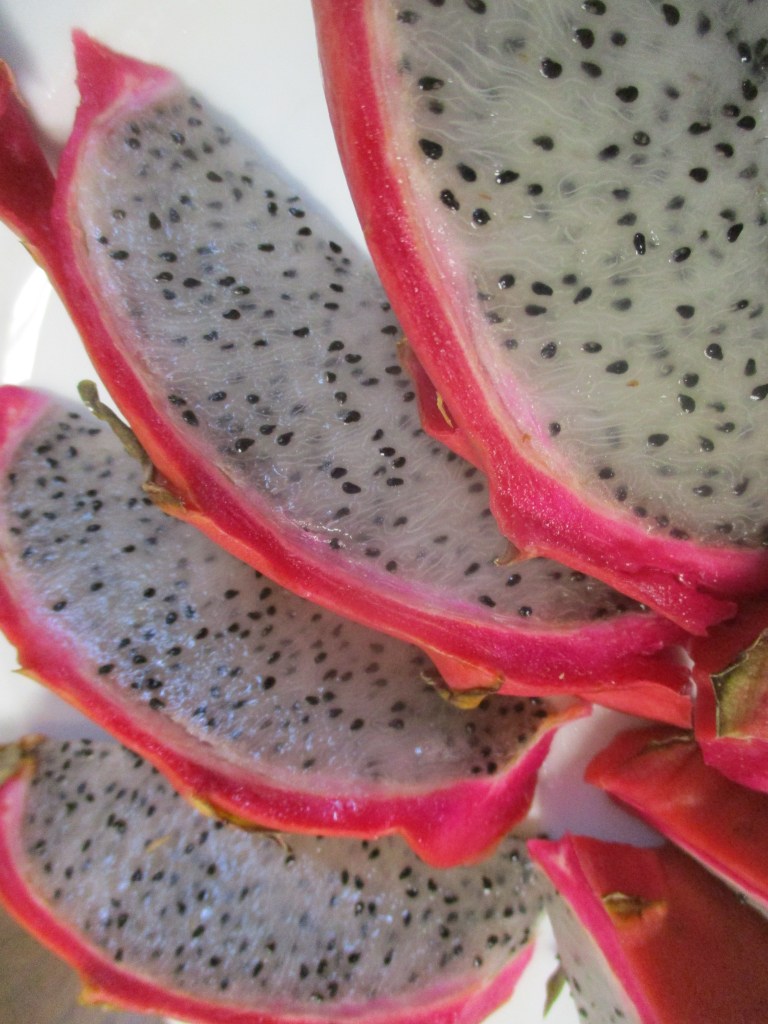
This weird tropical cactus gets mixed reviews. Pitahaya fruit, or dragon fruit, is abundant in favorable conditions, but develops potentially bland flavor. The green succulent stems may be vigorous, but develop distinctly pendulous form that resembles Sigmund the sea monster. Bloom lasts from summer to autumn, but individual flowers open for just a night.
Selenicereus undatas is the most popular pitahaya. Its fruit weighs between half a pound and a pound, and has white flesh. Selenicereus costaricensis fruit is similar, but with red flesh, and perhaps slightly more flavor. Selenicereus megalanthus fruit is smaller, thorny and yellow, with white flesh and richer flavor. Home grown fruit is superior to market fruit.
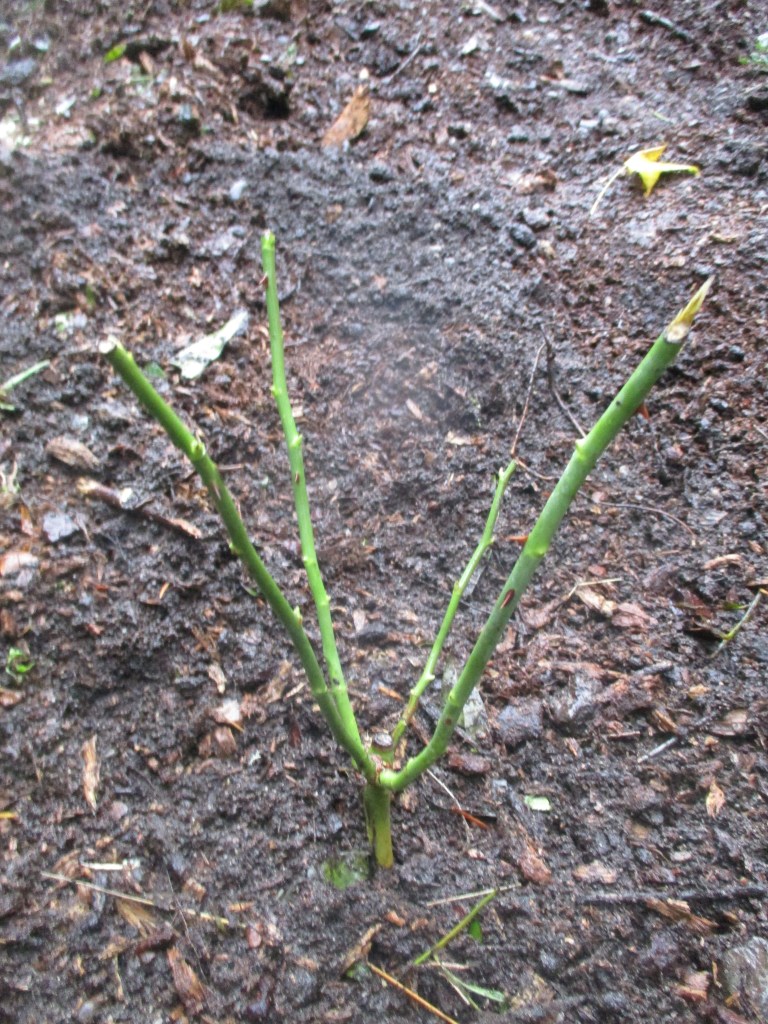
Pitahaya grows very easily from cuttings or pruning scraps. Young stems climb with wiry aerial roots, so need substantial support. Fruiting stems hang downward from the tops of such support. Most modern cultivars need no pollinator. Some old cultivars need another of its same species for pollination. Pitahaya is vulnerable to frost where winters are cool.
Bare root season began as the Christmas season ended. Literally, as the last Christmas trees relinquished their space in nurseries, bare root stock occupied it. Most of this stock grew in Oregon, where winter weather is cooler, so was ready for digging and relocation prior to arrival. Now that it is here, the season for planting bare root stock is quite limited.
Almost all bare root stock is deciduous. It defoliated through autumn, so the stems are as bare as the roots are. Most bare root stock is fruit and nut trees, such as almond, apricot, cherry, plum, peach, apple, pear, persimmon and fig. Grape, currant, gooseberry, wisteria and rose are ready for planting bare root too. All are dormant, so unaware of the process.
They do not stay dormant for long though. They must be planted in their new homes prior to the end of winter, when warming spring weather stimulates new growth. They can not sustain such growth if their roots are unable to disperse into soil. This is why the season for relocating and planting bare root stock is so limited to winter. It relies on cool weather.
Fortunately, planting bare root stock is surprisingly simple. Soil amendment that prompts root growth away from confined root systems of canned (potted) stock is not so important. Since new roots grow directly from formerly bare roots into surrounding soil, amendment is only helpful for soil of inferior quality. Fertilizer will not be helpful until growth resumes.
A hole for planting bare root stock needs to be just big enough to contain the flared roots. It must be shallow enough to suspend any graft union above grade, without loose soil to settle below. Watering is only needed to soak and settle soil around roots, and will not be needed again until after the rainy season. Pruning removes crowded or damaged stems.
Of course, not all fruit trees are conducive to planting bare root. Evergreen plants are not as dormant during winter as deciduous plants are. Their roots are therefore less resilient to separation from the soil. Pitahaya, avocado and some citrus, which can be marginally vulnerable to frost in some climates, are more vulnerable after autumn or winter planting.
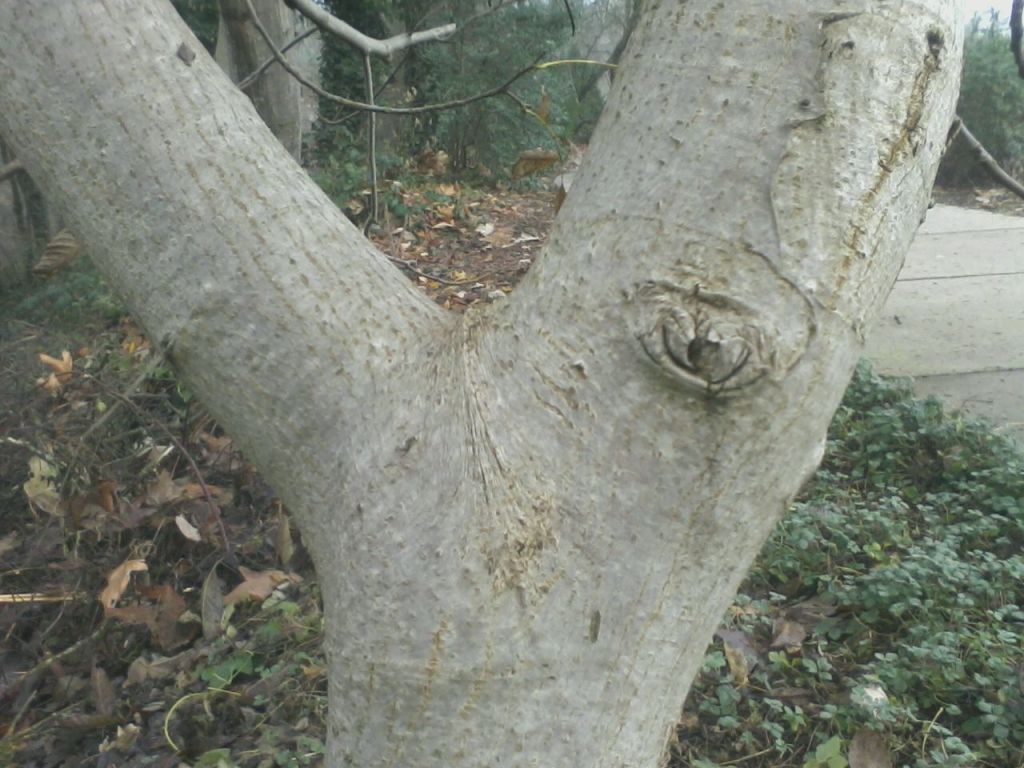
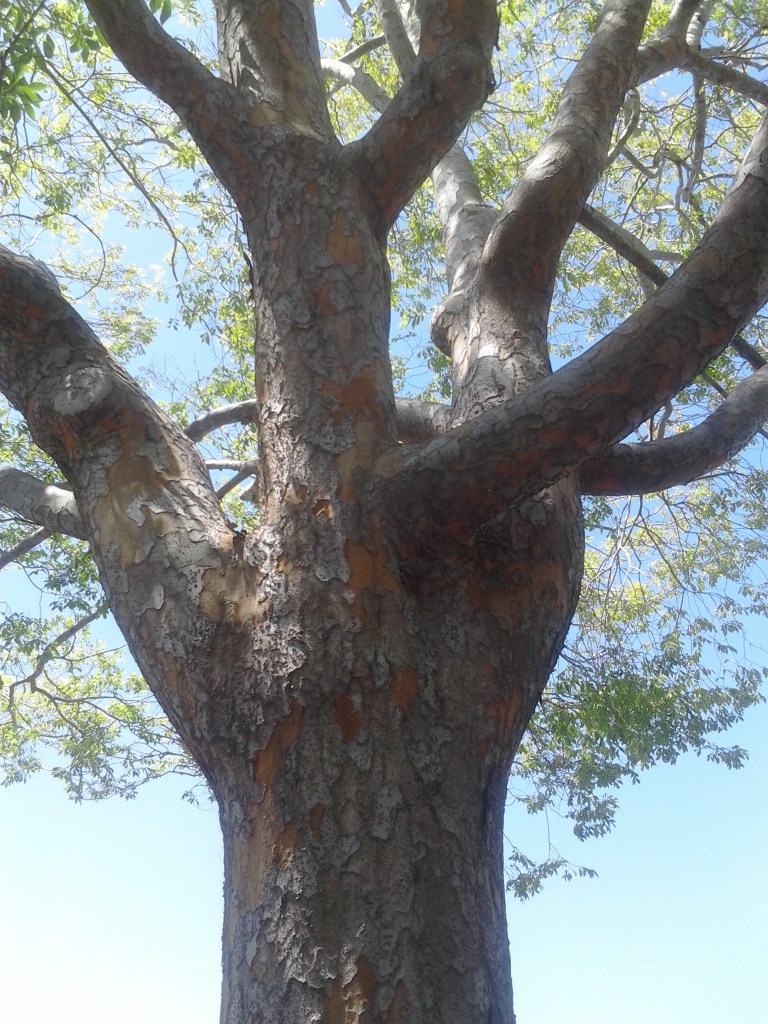
It may take a few years for a walnut tree to grow into a sculptural specimen with striking white limbs.
Like many ‘English’ plants, the English walnut, Juglans regia, is not actually from England. It is Persian, so is quite comfortable here in California. However, the foliar litter and husks contain a natural herbicide that can make nearby seed grown plants and annuals uncomfortable. Planted trees are typically grafted onto native California black walnut understock (roots) that is more resistant to disease, and improves stability.
Mature trees can be as tall as seventy five feet with trunks as wide as five feet, but are almost always significantly smaller, and even proportionate to urban gardens, although notoriously messy with bloom, leaves and nuts. The pinnately compound leaves are generally less than a foot long, with five to nine leaflets that can be between two to six inches long, and about two inches wide. The bark is notably smooth and gray until trees get quite old and furrowed.
As for fig, date, avocado, grape and olive, the esteemed pomegranate, Punica granatum, has been in cultivation for a very long time. Several thousands of years of domestication have generated countless cultivars. They are now popular in many regions and cultures throughout the World. They produce very well here and in other Mediterranean climates.
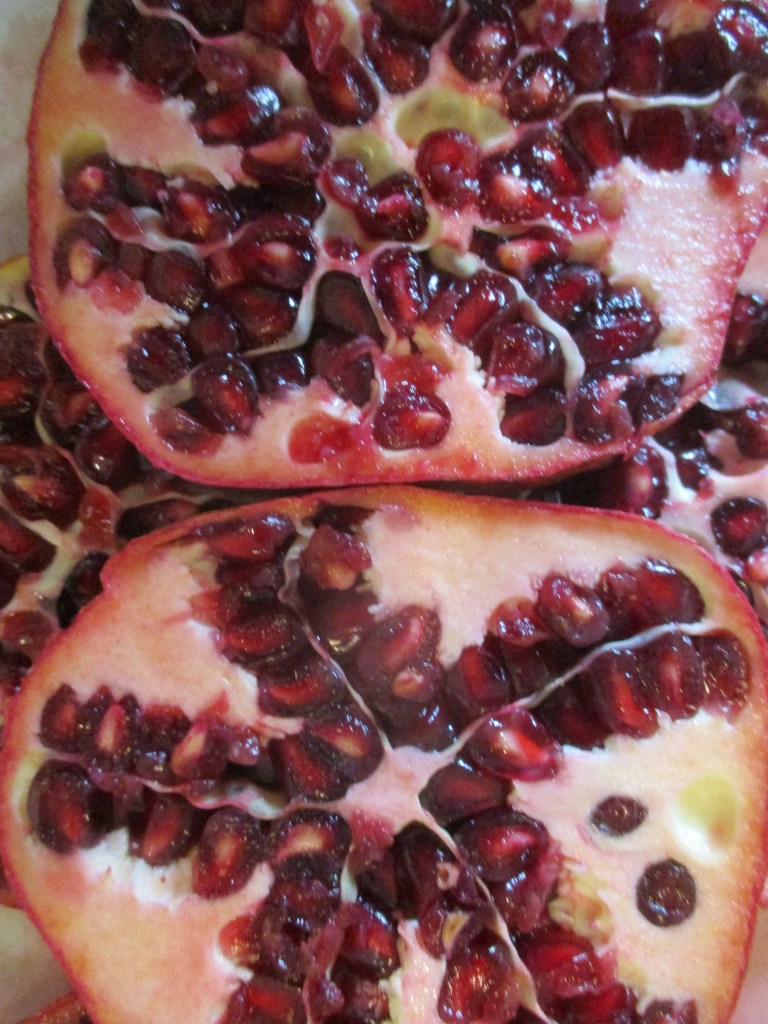
Most locally popular pomegranate fruits are brownish red, and about three to four inches wide. Each fruit contains hundreds of seed, which are surrounded by juicy and delicately succulent flesh. They separate easily, like many tiny and tender berries. Most are garnet red. Some cultivars produce fruit with darker purplish, lighter pink or even colorless flesh.
Without dormant pruning, pomegranate trees can get taller than fifteen feet, and develop dense thicket growth. Fruit is easier to collect from well groomed shorter trees. Individual trees may develop a few trunks, and live for two centuries. Orangish red flowers bloom in spring. Leaves turn yellow prior to defoliation in autumn. Fruit ripens in autumn or winter.
Dormant pruning happens during winter, while the plants that benefit from it are dormant. Obviously, it would not be dormant pruning otherwise. Such processes are less stressful to plants while they are inactive and essentially anesthetized like a surgery patient. This is also why fresh bare root stock becomes available and ready for planting during winter.
Bare root stock grows on farms for a few years. Any grafting is part of the process. When stock is sufficiently mature, growers dig and separate its roots from the soil that it grew in. Much of the stock goes to retail nurseries for heeling into damp sand for sale. Some gets neat packaging with damp sawdust around its roots. Some goes out for mail order sales.
Regardless of the process, it all happens quickly and early during winter dormancy. Bare root stock must then get into soil again, quickly and before the end of winter dormancy. It will not survive if it resumes growth without soil to contain new roots. Planting should be as soon as possible, so that roots can settle in with rain, and be ready to grow by spring.
Bare root stock is less expensive than canned (potted) stock because it is so lightweight and easier to process. Since it occupies less space than canned stock in retail nurseries, more varieties of bare root stock are available. Bare root stock is easier to load into a car, and plant into a garden. Once in a garden, it disperses roots quickly and more efficiently.
Deciduous fruit trees are the most popular bare root stock. Of these, most are stone fruits or pome fruits. The stone fruits, of the genus Prunus, include cherry, plum, prune, apricot, peach, nectarine, their hybrids, and almond. Apple, pear, and quince are pome (pomme) fruits. Pomegranate, persimmon, fig, mulberry and walnut are somewhat popular as well.
So much more than deciduous fruit and nut trees are available as bare root stock. Grape, kiwi, currant, gooseberry and blueberry are deciduous fruiting vines or shrubs, not trees. Blackberry, raspberry and strawberry are evergreens. Rhubarb, asparagus and artichoke are perennial vegetables. Rose, wisteria, hydrangea and so many more are fruitless ornamental plants.
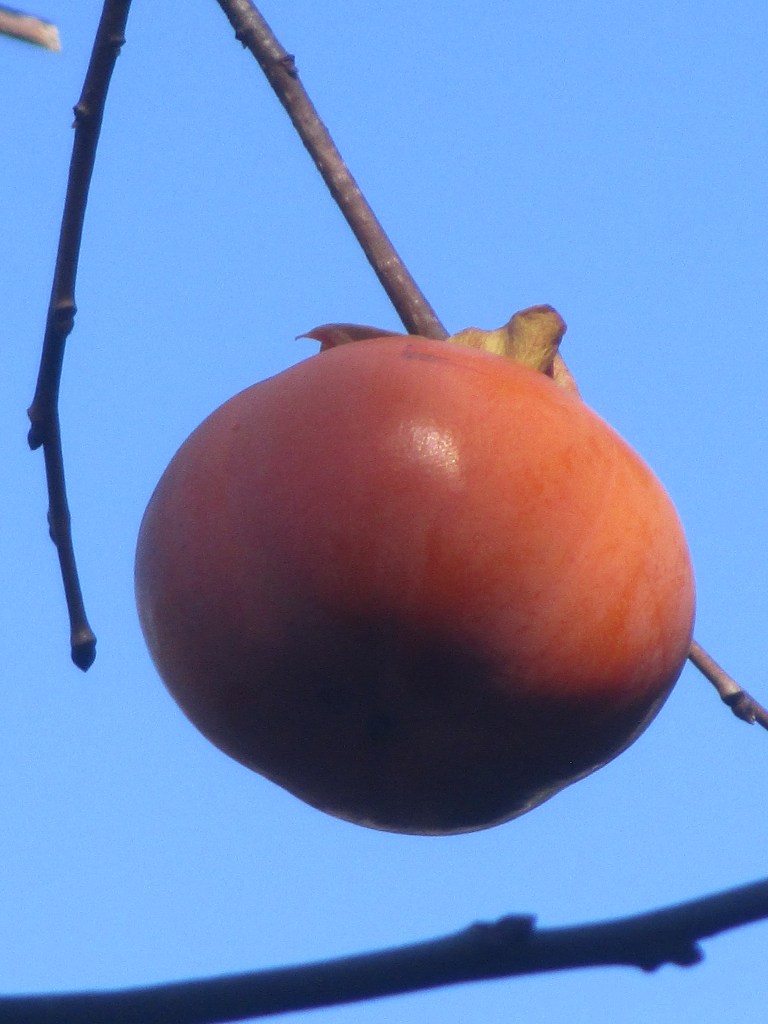
Most other deciduous fruit trees provide delightfully profuse spring bloom as well as fruit. Persimmon, Diospyros kaki, does not. It compensates though, with brilliant orange foliar color for autumn. Defoliation reveals comparably bright orange ripe fruit. The awkwardly bulky fruit may look silly on lanky limbs of otherwise bare trees, but they sure are yummy!
Persimmon trees will not require a pollinator to generate an abundance of fruit. However, according to some experts, paired trees of different cultivars produce more abundant fruit of slightly better quality. Abundance is not necessarily an asset though. Unfortunately, all that very perishable fruit ripens at the same time. Fruit is inedible before completely ripe.
Mature persimmon trees can get big enough to become moderate shade trees. If they do, their abundant fruit will be too high to reach, and will generate a horrendous mess when it falls. Although they are handsome trees, they should probably stay relatively short and compact. New trees should be planted while dormant during winter, preferably bare root.
While they are dormant through winter, deciduous fruit trees require specialized ‘dormant pruning’. Exceptions are rare. Most need major pruning that might seem to be excessive. Without such pruning, fruit trees produce more fruit than they can sustain. Excessive fruit is very likely to be of inferior quality, beyond reach, and heavy enough to disfigure limbs.
Dormant pruning limits the volume and weight of fruit that can develop during a following season. By eliminating structural deficiencies and maintaining compact form, it improves the structural integrity of trees. It eliminates diseased stems, and concentrates resources into healthy stems. Dormant pruning concentrates resources into less but better fruit too.
Dormant pruning is necessary because of extensive breeding to improve the quality and quantity of fruit that fruit trees produce. The ancestors of modern cultivars of fruit produce either smaller or less abundant fruit that they can generally support in the wild. However, even some wild fruit trees will produce better fruit with pruning to concentrate resources.
The many various types of fruit trees need various types of specialized dormant pruning. Unfortunately, such trees, which are so commonly available from nurseries, do not come with instructions. It is important to be aware of the sort of maintenance any particular fruit tree will require, prior to incorporating it into a garden. Some dormant pruning is extreme!
The various stone fruits are the most popular deciduous fruit trees. They are of the genus ‘Prunus‘. Their fruits contain single large seeds, or ‘stones’. This includes apricot, cherry, nectarine, peach, plum, prune, almond and all their hybrids. They need the most intense dormant pruning. (Almond nuts are stones of leathery fruits that are the hulls of the nuts.)
Although uncommon within the mild coastal climates of Southern California, pome fruits, primarily apple and pear, are very popular too. They require specialized dormant pruning that is very different from what stone fruits need. Likewise, persimmon, pomegranate, fig, mulberry, currant, kiwi, grape and cane berries, each need customized dormant pruning.
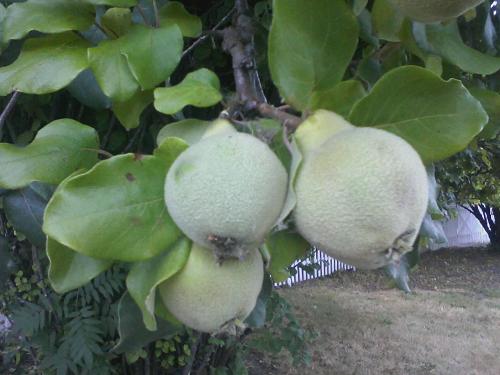
Quince and other fruit used to be much more common in home gardens.
The vast orchards of the Sacramento and San Joaquin Valleys are there for a reason. California is one of the best place in the world to grow fruit trees. However, whether they are in vast orchards or compact urban gardens, even the happiest and healthiest of fruit trees need considerable and specialized attention.
Most of the classic deciduous fruit trees have been bred and selected and bred some more over the past many centuries to produce unnaturally large and abundant fruit. Consequently, most are unable to support the weight of all the fruit that they are capable of producing. This is why it is so important for them to be pruned while dormant through winter.
Pruning improves the structural integrity of fruit trees, and limits the abundance and weight of the fruit produced during the following season. With a bit of planning, pruning can keep much of the fruit within reasonable reach so that those picking it do not need to go dangerously high on ladders. Annual winter pruning also promotes vigorous spring and summer growth that is more resistant to disease.
Apricots, plums, prunes, nectarines, peaches and cherries are all related ‘stone’ fruits (of the genus Prunus), so need various degrees of similar pruning. Peaches need more aggressive pruning because the fruit is so heavy. Cherries and almonds need less pruning because the fruit is lighter. (Almonds can grow beyond reach because the nuts get shaken or knocked from the trees instead of picked.) Regardless of the extent of pruning, the ‘four D’s’, which are ‘dead, dying, damaged and diseased’ stems, should be pruned from all deciduous fruit trees.
Vigorous stems that grew last year need to be thinned and cut back but not removed completely since they are the stems that will bloom and develop fruit next year. The stems that grow from them this year will get pruned next winter to produce the following year. Apples, pears and quinces require similar pruning of their vigorous upper growth, but produce much of their fruit on lower ‘spur’ stems that do not elongate much and may never need pruning.
Fig trees are probably the most tolerant of pruning mistakes, since they produce fruit twice each year. Overly aggressive pruning may compromise their first phase of fruiting, but promotes the second phase. Light pruning does the opposite, compromising the second phase by allowing excessive production of the first phase.
Winter pruning of deciduous fruit trees will undoubtedly seem harsh to a beginner. Trees will need more pruning each year as they grow. Fortunately, pruning becomes more familiar with experience, and as the results of pruning can be observed over time. It is among the most important of gardening tasks for those who grow fruit trees, so is really worth studying more thoroughly.
It was probably the extra chill this last winter that made some deciduous fruit trees bloom more profusely early in spring than they typically do. Unusually busy bees in some regions improved pollination and subsequent fruit set, although some was dislodged by late rain. The sudden warmth this last spring not only improved the flavor of fruit, but also made some grow larger than typical.
More and better fruit is usually what those who grow fruit strive for. The problem with some trees now is excess. After pruning our fruit trees every winter for a few years, we get to know how much to prune them to maximize productions without overloading the trees. When the trees produce more than expected, they may not be able to support the weight of their own fruit.
Many plum and peach trees have already dropped limbs that were overburdened with the weight of fruit. Nectarine, apricot, pluot (and aprium, plumcot and all those weird hybrids), and prune trees can potentially drop limbs as well. Even without breaking, heavy limbs can get disfigured simply by sagging downward. Broken or sagging limbs expose inner bark to sun scald.
Broken limbs obviously can not be salvaged, so can only be removed. They should be cut cleanly away without leaving stubs. Sagging limbs can be propped with notched stakes tucked under side branches that will keep them from sliding upward. The notches keep such stakes from sliding off to either side. Much of the excessive fruit can be removed from severely sagging limbs. However, if the fruit is so ripe that it will not be getting any heavier, there is no advantage to removal.
Formerly shaded bark that suddenly becomes exposed to direct sunlight should be shaded. If partly shaded though much of the day, it should be safe. If expected to be shaded next year by new growth, bark can be protected temporarily with duct tape or stapled cardboard, or even foliated bits of the limb that broke, tied over the bark. Light colored paint is unsightly, but can be applied to reflect sunlight from bark that is expected to remain exposed permanently.
Excessive weight is not only a problem for fruit trees. Some sweetgum, fruitless mulberry and old fashioned Chinese elm trees can produce so much healthy foliage that limbs hang lower than they should. Some shade trees can even drop limbs ‘very’ unexpectedly, when the weather is warm and humid, but without wind.
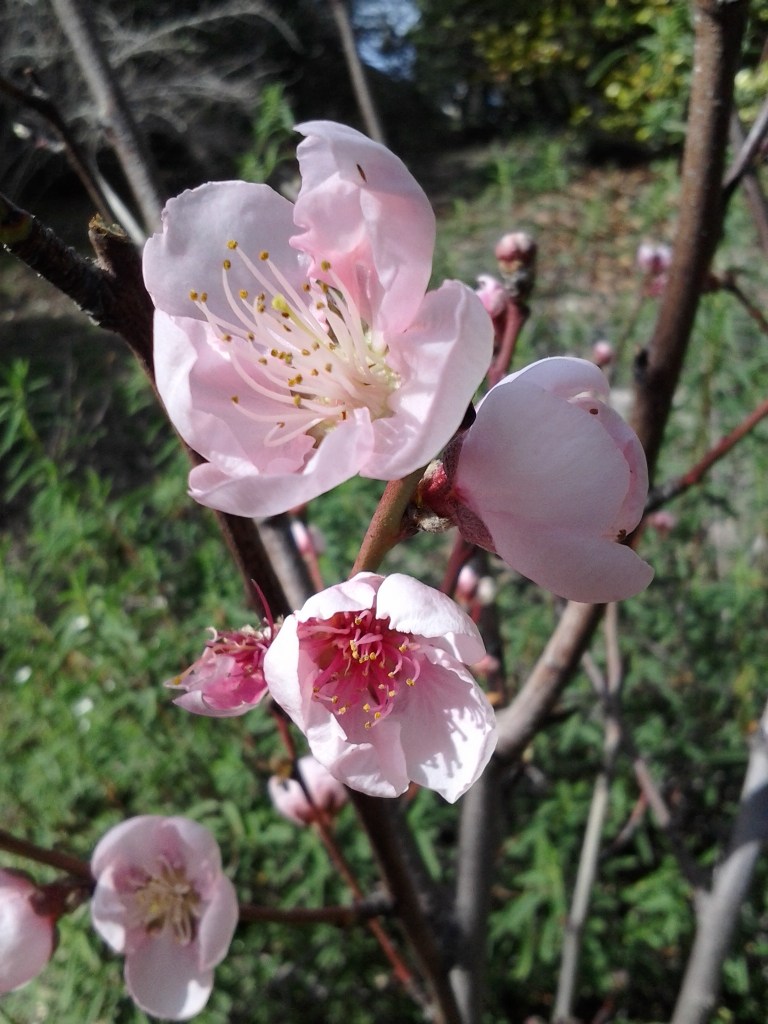
All of the popular fruit trees produce flowers. Otherwise, they could not produce fruit. The stone fruits, such as almond, apricot, cherry, peach, plum and prune, bloom very impressively this time of year. (Stone fruits have single large seeds known as stones. Almonds are the large stones of small fruits that resemble peaches.) The pomme fruits, such as apple and pear, bloom about as prolifically shortly afterward, followed lastly by related but rare quince.
The difference between these trees and their counterparts known as ‘flowering’ trees is not so much the flowers, but the fruit. ‘Flowering’ is something of a euphemism for trees that might otherwise be known as ‘fruitless’, since they produce either uselessly small fruit, or no fruit at all.
This may seem silly to those who enjoy growing fresh fruit in the garden. However, fruit trees require so much pruning in winter, and can be so messy if the fruit does not get completely harvested. The flowering trees are happy to provide the profuse bloom without so much maintenance and potential mess. Because they were developed as ornamental trees, their flowers are more impressive, with many more shades of pink, as well as white. Many types bloom with big and fluffy double flowers.
Flowering cherry and plum are probably the most popular of the flowering stone fruit trees. Most flowering plums have purplish foliage, so are more commonly known as purple-leaf plum. Flowering almond, apricot, prune and peach are relatively somewhat rare. Most flowering stone fruit trees are completely fruitless, but some purple-leaf plum can produce messy and sour plums as they mature.
Flowering pear is probably not recognized as such because it is more often known as fruitless pear. Ironically, it can produce enough tiny pear fruit to be messier than other flowering fruit trees. Flowering pear blooms only white, and is not as florific as the other flowering trees, but grows large enough to be a mid-sized shade tree, and has the advantage of remarkable foliar color in autumn. Evergreen pear is an entirely different sort of tree that only blooms well if the weather is just so, and lacks fall color (because it is semi-evergreen).
Flowering apples are known as flowering crabapples. Unlike the other flowering trees, many flowering crabapples develop a sloppy branch structure if not pruned almost like trees that produce fruit. Yet, the weirdest of the flowering trees is the flowering quince, which is not even the same genus as fruiting quince. It develops into a thicket that blooms before everything else. Fruiting quince instead matures into a rampant tree, and blooms after the other fruit trees.


 Tony Tomeo