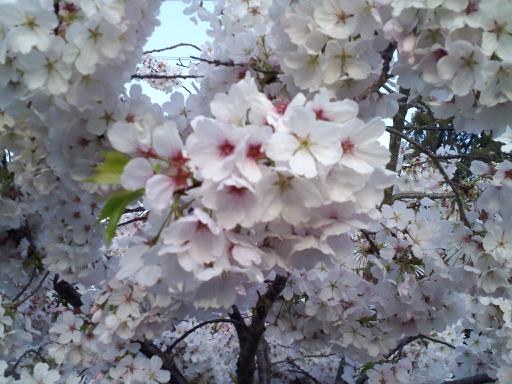
Flowering Cherry

Flowering cherry is the fruitless counterpart of fruiting cherry.

Like camellias and chrysanthemums, the many different varieties of flowering cherries, Prunus spp., have been developed by horticulturists in Japan for centuries. There are now almost too many to choose from. Most stay less than about twenty feet tall and broad, so are proportionate to compact gardens. A few stay even smaller. The classic Yoshino flowering cherry can get somewhat larger. Weeping cherries have pendulous branches. Columnar types are noticeably taller than wide, at least while young. Some flowering cherries have remarkable fall color.

Despite my preference for cherry trees that produce cherries, I can not deny that the spring bloom of the innately non-fruiting flowering cherries is spectacular! Most bloom before any foliage develops. Their flowers can be single, semidouble or double, in various shades of white or pink, including rich rosy pink. They can not be very messy without fruit. Unfortunately though, flowering cherry trees are susceptible to rot in the endemically dense soil, so should not be watered too much.

Flowering Apricot

Flowering apricot blooms before flowering cherry.

Even when weather is more typical for the local climate, many types of flowering apricot, Prunus mume, bloom during winter. Flowers seem to be a bit more resilient to wind, rain and frost than those of flowering cherry that bloom a month or so later. Nonetheless, they are delicate and share their white or pastel pink color with wintry landscapes only briefly. 

Although many garden varieties of flowering apricot are fruitless, some, particularly feral trees, produce fruit. Some of such fruit is desirable to those who utilize it. However, most is unpalatable without specialized processing. Flowering apricot works as understock for a few related trees, so occasionally grows from the roots of such trees after their removal. 

Flowering apricot is quite rare locally, which is why it seems to be so unseasonable as it blooms so early. Like flowering cherry and plum, it blooms on otherwise bare stems prior to generating new foliage for spring. Copious bloom of garden varieties is nicely fragrant. Flowers are nearly an inch wide. Mature trees are about ten to more than twenty feet tall, and almost as broad.

Cherry Blossom Festival

P80324KI would say that this is our own private Cherry Blossom Festival, but it really gets a crowd. These two old trees are at the edge of the main roadway through town, so several people driving by stop to take pictures. They may not seem to be very impressive compared to healthier flowering cherry trees, but they are what we have, and we are happy to get the bloom.

Decades ago, fruiting cherries were some of the more common orchard trees in the Santa Clara Valley. Flowering cherries were only somewhat popular in home gardens, and might have been less popular without the Japanese influence. They are more popular in cooler climates, not only because they are happier in cooler climates, but also because those who live where winters are harsh have a better appreciation for bloom that so happily celebrates the end of winter.

These particular trees are unfortunately deteriorating. They are quite old, and the trunks and main limbs rot and die back a bit more each year. No one wants to cut them down because they are such a familiar landmark this time of year. Few people can remember when the trees were not there.

We are grateful for the bloom this year because the weather could have easily ruined it. It was so warm earlier in winter that bloom could have very easily been accelerated, and happened just as frosty or rainy weather resumed. The trees seemed to know what time of year it was, and waited for the right time. It did happen to rain just prior to when these pictures were taken, but the blossoms had just opened, so were resilient to the rain. Weather should be milder for the next few days, until these trees are finished with their bloom.P80324K+