Thanksgiving

Thanksgiving is a celebration of gratitude. It was created by early American settlers who were grateful for their harvest at a time when the exotic fruits, vegetables and grains that they brought with them from Europe were only beginning to get established in unfamiliar climates and soils. They were also grateful for the generosity of the indigenous people, as well as the native fruits, vegetables and game that they introduced them to. Regardless of how meager their resources now seem to be by modern American standards, early American settlers were very grateful for what they had.

Nowadays, for most Americans, sustenance from all over the World is so reliably available and in such abundance that many neglect to appreciate it. As in the past, those who lack such abundance are more grateful for what is available to them. Perhaps that is why Thanksgiving is still so relevant, and such an excellent Holiday. It is a reminder of the importance of gratitude.

Gardening to grow fruits and vegetables, even on a scale that is very minor relative to how early American settlers did so, facilitates gratitude for the sustenance and any surplus that it generates. Produce from the garden is so much more satisfying than produce from a supermarket. A pantry of canned surplus from the garden is so much more gratifying than a pantry of food that was purchased from a supermarket. Perhaps there should be no difference, since food from a supermarket is purchased with money that is earned from other work, which should be comparatively gratifying.

Realistically, there is so much to be grateful for, and so much gratitude to celebrate. In fact, there is enough to justify a specific Holiday for it. Work and gardening can be resumed tomorrow or later, after this celebration of gratitude, Thanksgiving.
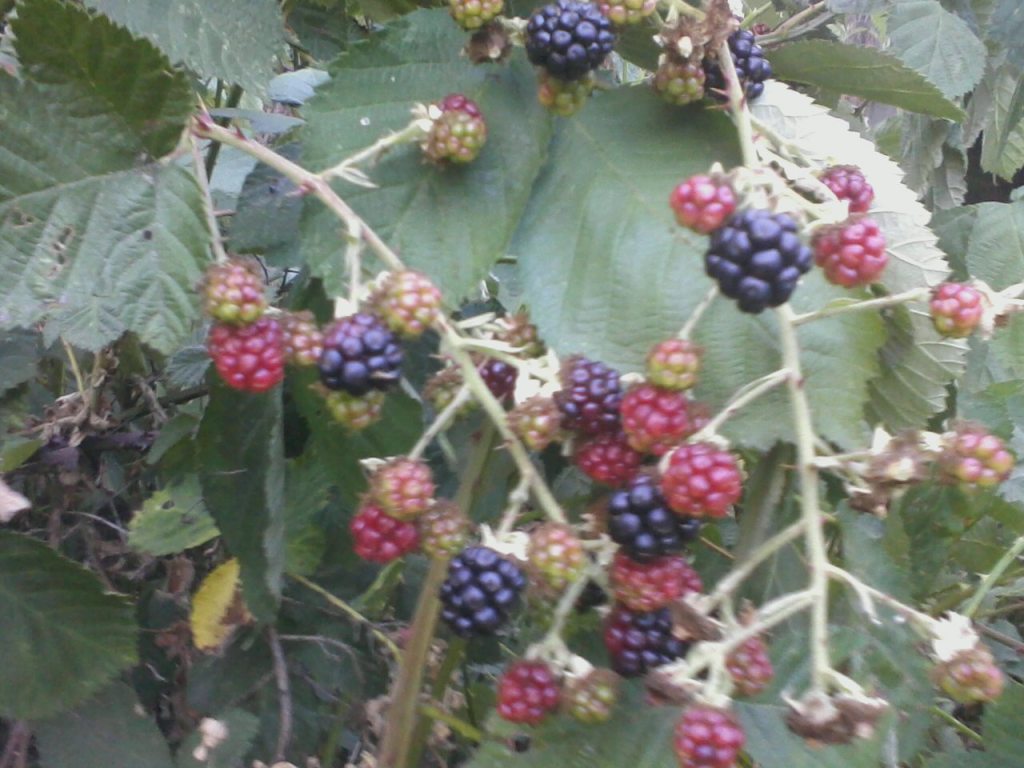
Blackberries And Raspberries Are Expensive For A Reason.

Cane berries need aggressive pruning, but are no fun to prune.

All the raspberries and blackberries that are now ripening do not come without a price. The canes that produce them may grow like weeds, and in many gardens really are weeds, but they need quite a bit of work. Like the deciduous fruit trees that need such meticulous pruning while dormant in winter, berry canes need winter pruning while dormant, as well as summer pruning as the berries finish.

Blackberry canes that have produced fruit should be cut at the ground as the fruit gets depleted. Then, for ‘trailing’ varieties, about a dozen of the new canes that grew since spring should be selected, pruned to about six feet long, and trained onto the same supports that the removed canes used. ‘Semi-erect’ varieties need only about half as many canes, and get cut about a foot shorter. (‘Erect’ varieties that get cut even shorter are not common locally.) All other canes should be cut to the ground. Through the rest of summer, the pruned canes develop side branches which should eventually get pruned to about a foot long in winter to bloom and produce fruit next year; but that part must wait.

Summer bearing raspberries, like ‘Willamette’, ‘Tulameen’ and ‘Canby’, do not need to develop side branches to produce fruit next year, so do not necessarily need to be groomed of spent canes and pruned just yet, and can actually wait until winter. Everbearing raspberries like ‘September’, ‘Heritage’ and ‘Fallgold’, are not nearly so simple, although canes that were selected while young last winter and allowed to grow through summer likewise need no pruning just yet. The top portions of these canes will produce fruit later in autumn, and later in winter, get pruned down as low as fruit developed. However, the lower portions of older canes that fruited the previous year and got their tops pruned down last winter are now finishing their second and last phase of fruit production, so should get pruned out as they finish.

Highlight: ‘Meyer’ Lemon

‘Meyer’ lemon is an interesting hybrid.

Of all the cultivars of citrus that are popular for home gardens, the ‘Meyer’ lemon is likely the most popular. However, it is not overly common in markets. That may be an incentive for growing it at home. Technically, it is not totally lemon. It is an odd hybrid of lemon and orange. Hence, its fruit has a distinctly rich flavor, but a bit less acidity than other lemons. 

‘Meyer’ lemon is distinct among citrus trees. It grows more like rigid shrubbery, with a few irregular trunks. Because it naturally develops compact form, it does not require dwarfing understock. Most old trees therefore grew from cuttings on their own roots. Modern trees commonly grow on understock though, so can develop suckers below their graft unions.

‘Meyer’ lemon fruit is abundant during autumn and winter. Minor quantities ripen through spring and summer also. All ‘Meyer’ lemon trees from nurseries nowadays are ‘Improved Meyer’, whether or not their labels say so. Their improvement was selection of stock that lacks a particular tristeza virus that was inherent to the original cultivar prior to the 1940s. 

The Fruits Of Our Labor

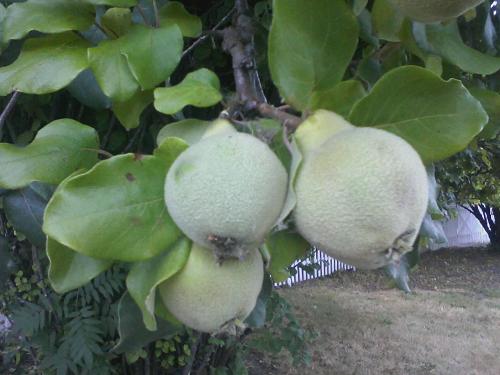
Quince and other fruit used to be much more common in home gardens.

The vast orchards of the Sacramento and San Joaquin Valleys are there for a reason. California is one of the best place in the world to grow fruit trees. However, whether they are in vast orchards or compact urban gardens, even the happiest and healthiest of fruit trees need considerable and specialized attention.

Most of the classic deciduous fruit trees have been bred and selected and bred some more over the past many centuries to produce unnaturally large and abundant fruit. Consequently, most are unable to support the weight of all the fruit that they are capable of producing. This is why it is so important for them to be pruned while dormant through winter.

Pruning improves the structural integrity of fruit trees, and limits the abundance and weight of the fruit produced during the following season. With a bit of planning, pruning can keep much of the fruit within reasonable reach so that those picking it do not need to go dangerously high on ladders. Annual winter pruning also promotes vigorous spring and summer growth that is more resistant to disease.

Apricots, plums, prunes, nectarines, peaches and cherries are all related ‘stone’ fruits (of the genus Prunus), so need various degrees of similar pruning. Peaches need more aggressive pruning because the fruit is so heavy. Cherries and almonds need less pruning because the fruit is lighter. (Almonds can grow beyond reach because the nuts get shaken or knocked from the trees instead of picked.) Regardless of the extent of pruning, the ‘four D’s’, which are ‘dead, dying, damaged and diseased’ stems, should be pruned from all deciduous fruit trees.

Vigorous stems that grew last year need to be thinned and cut back but not removed completely since they are the stems that will bloom and develop fruit next year. The stems that grow from them this year will get pruned next winter to produce the following year. Apples, pears and quinces require similar pruning of their vigorous upper growth, but produce much of their fruit on lower ‘spur’ stems that do not elongate much and may never need pruning.

Fig trees are probably the most tolerant of pruning mistakes, since they produce fruit twice each year. Overly aggressive pruning may compromise their first phase of fruiting, but promotes the second phase. Light pruning does the opposite, compromising the second phase by allowing excessive production of the first phase.

Winter pruning of deciduous fruit trees will undoubtedly seem harsh to a beginner. Trees will need more pruning each year as they grow. Fortunately, pruning becomes more familiar with experience, and as the results of pruning can be observed over time. It is among the most important of gardening tasks for those who grow fruit trees, so is really worth studying more thoroughly.

Pear

00122
Properly pruned peartrees produce pears prolifically.

Ancestral species of modern pears grow wild from western Europe and northern Africa to eastern Asia. Long before they were domesticated and developed in China about three thousand years ago, their fruit was eaten by indigenous people. Farther west, dozens of cultivars were developed and popularized in ancient Roman societies. There are now more than three thousand cultivars.

Most pears that are popular in America are descendants of European pear, Pyrus communis. Asian pears, which are mostly descendants of Pyrus X bretschneideri and Pyrus pyrifolia, became a fad in the 1980s, and are still somewhat popular, particularly in California. Asian pears are generally rounder and firmer than the familiar ‘pear shaped’ European pears that soften as they ripen.

There are too many cultivars of pear for all to conform to similar characteristics. All that are grown for fruit are deciduous, and almost all have potential to exhibit remarkable foliar color in autumn. Abundant clusters of small white flowers bloom in spring. Floral fragrance of some cultivars might be unappealing. Semi-dwarf trees can get more than fifteen feet tall, so should be pruned lower.

Pears can be shades of yellow, green, red or brown, and might be blushed or russeted. They can be canned, dried, juiced, or eaten fresh.

Himalayan Blackberry

90828Of all the aggressively invasive exotic species on the West Coast, Himalayan blackberry, Rubus armeniacus, could be the nastiest! It seems to be impossible to kill. It forms dense thickets of wickedly thorny canes that develop roots where they touch the ground. Even if canes are cut to the ground, and the roots are pulled out, new plants regenerate quickly from remaining bits of roots.

Individual canes can grow more than twenty feet long in their first year! They may lay on the ground to creep under a thicket, or arch up and over other plants that are fifteen feet tall. These canes develop blooming and fruiting branches in their second year. By their third year, they are replaced by new canes. The palmately compound leaves are smaller for the fruiting second year canes.

Trusses of white or very pale pink flowers bloom late in spring. Dark purplish black berries that started ripening a few weeks ago are now being depleted. Some experts believe that Himalayan blackberries are bigger and sweeter than the fruit of most garden varieties. However, berries are only bigger among well cultivated canes; and keeping canes contained and pruned is not easy.

Rhubarb

60810+It is not easy to get a pretty picture of rhubarb, Rheum rhabarbarum. The big and sometimes flabby leaves are only impressive to those who know about the succulent petioles (leaf stalks) below. The petioles do not look like much either, until they are cooked into pies or garnet colored preserves. Shabby stalks of tiny flowers rarely bloom, and should get cut out to favor more foliar growth.
Traditional rhubarb stalks are mostly green with a red blush, and a distinctively tart flavor. Some modern varieties with richer red color are not quite as vigorous, and have milder flavor. Varieties with light green petioles are probably the most productive, but are not so richly colored when cooked. Tender young stalks are preferred to firmer mature stalks. Leaves are toxic, so they are not eaten.

Petioles can be harvested as soon as they are big enough in late spring, and as late as autumn. The outer leaves get plucked first, which leaves smaller inner leaves to continue growing. Plucking most of the leaves gets more of the tender inner stalks, but also slows growth so that new stalks may not be ready for a few months. Rhubarb likes rich soil, sunny exposure, and plenty of water.

Forage To Find Unexpected Fruit

Felton League, the Facebook group of the homeless and their friends in Felton, California, briefly mentions the source of some interesting, but typically overlooked fruits that can be found in the wild or unrefined landscapes. Blackberries, American plums and elderberries collected from rural roadsides have produced award winning jellies for the Santa Cruz Mountains Harvest Festival.
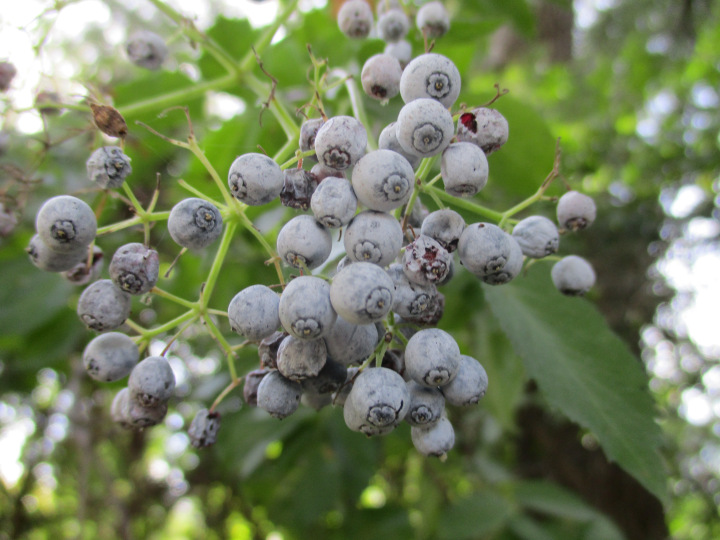
Unlike the fruit that so many of us put so much effort into growing in our home gardens, these fruits and others are productive without any help. They are commonly overlooked only because they are so easy to ignore. In some ways, they are inferior to ‘garden variety’ fruit; but they also have certain advantages. Free fruit that takes no more effort than harvesting is obviously a good thing.
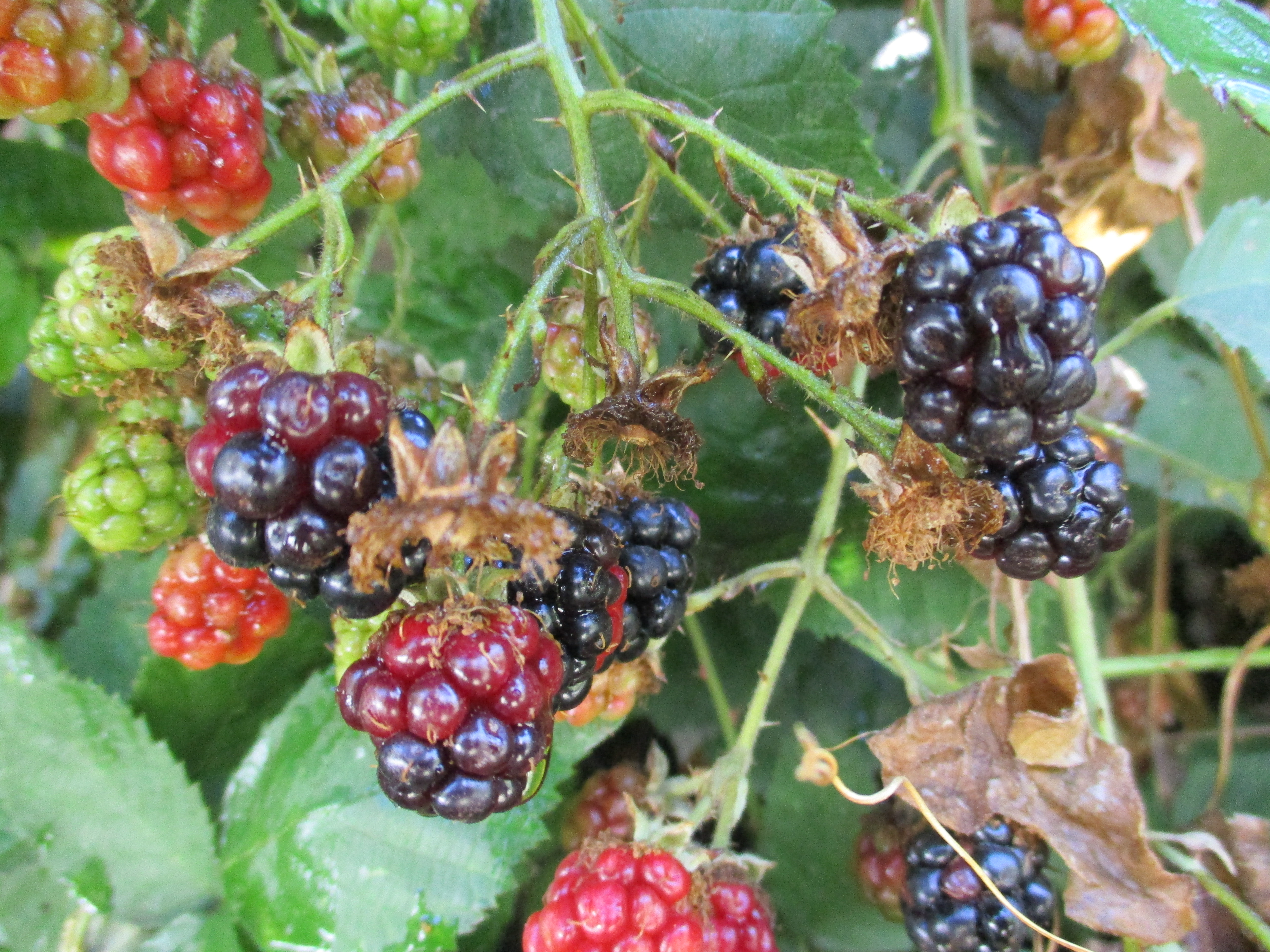
The most common wild blackberries are actually Himalayan blackberries that have naturalized. Unfortunately, they do not compare well to garden variety blackberries. They are not as abundant, and are difficult to pick from the wickedly thorny and rampant canes. Blue elderberries really are native, and are just as good or maybe better than black elderberries from eastern North America.
Figs, olives, grapes, rhubarb, prickly pears, apples and various citrus can sometimes be found in abandoned or neglected landscapes. Walnut, almond and wild plum trees sometimes grow from self-sown seed. Purple leaf plum is not always as fruitless as it is purported to be. Then there are all the other ornamental plants that happen to produce fruit that is useful to those willing to try it.
For example, Australian brush cherry, English hawthorn, Indian hawthorn (‘Majestic Beauty’), strawberry tree and even common freeway iceplant all produce fruit that can be cooked into luscious jelly. Of course, no fruit, particularly unfamiliar fruit, should be eaten or experimented with until it is confirmed to be safe for consumption. Many fruits really are toxic! Also, fruit should not be harvested from where it might be illegal to do so, such as private property or parks.

NOTE: This is an old article. Felton League is no longer a group on Facebook, but is now a blog here on WordPress.B90803K