Grafting fact and fiction

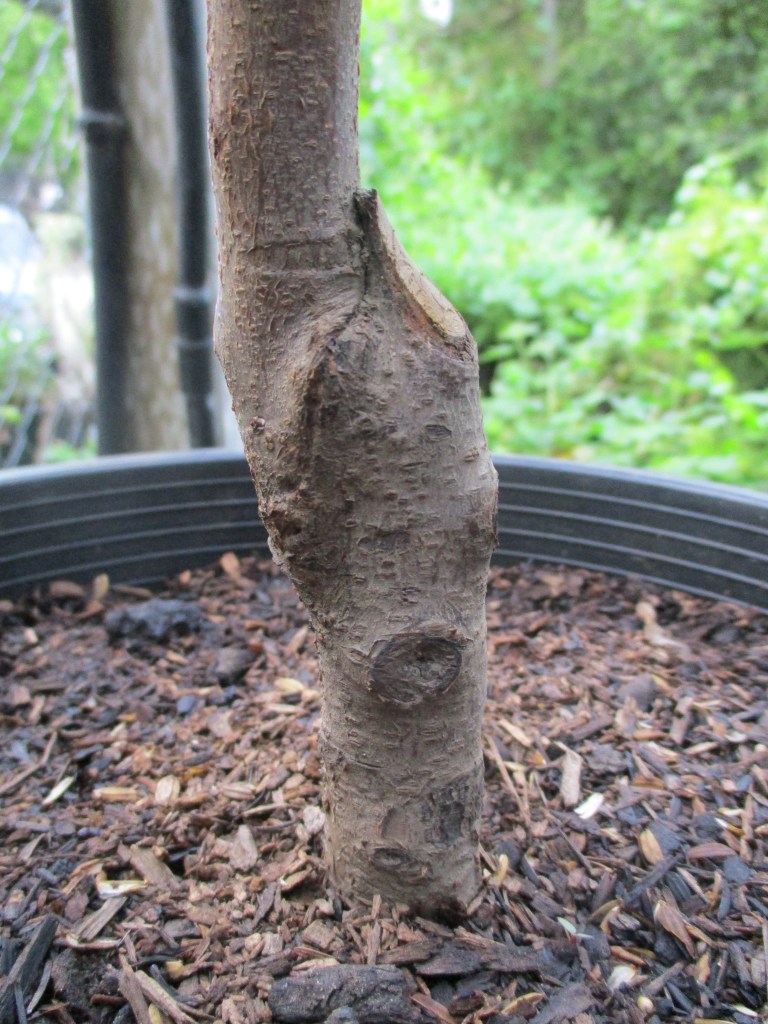
The scion is above this graft union. The rootstock is below.

There are not many Californians of my generation who do not remember growing avocado trees from seeds when we were kids. We simply impaled the big seeds around the middle with three evenly spaced toothpicks to suspend them from the rims of Dixie cups partly full of water. If just the bottoms of these seeds remained properly submerged, they grew roots and a stem with a few leaves, all they needed to grow into trees that were producing too many avocados by the time we got to high school.

Yet, I and others of my generation have always heard that avocado trees need to be grafted to produce fruit. (Grafting is the union of two or more compatible but different plants. The ‘scion’ is the upper portion that forms a trunk, branches and foliage. The ‘rootstock’ is the lower portion that provides roots.) Well, this is obviously not true, but does make us wonder about the advantages of grafted trees.

They myth of seed grown trees being unproductive probably originates from the tendency for seed grown avocado trees to be unproductive for the first few years during the juvenile stage. Scions of grafted trees are taken from adult growth that is ready to bloom and fruit immediately; although even grafted trees need a few years to grow large enough to produce more than just a few avocados.

Many plants are juvenile while young, in order to better compete in the wild. While juvenile, avocado tree seedlings grow vigorously enough to compete with other trees. Adult habits of blooming and fruiting would only slow them down. Besides being fruitless for many years, citrus seedlings are very thorny through their juvenile phase, to avoid getting eaten by grazing animals. Scions of grafted citrus trees are from relatively thornless adult growth that is immediately ready to produce fruit.

The primary advantage of grafting fruit trees though, is keeping the many different cultivars (cultivated varieties) ‘true to type’, since many seed grown plants exhibit at least some degree of genetic variation from their parents. For example, avocados from seed grown (ungrafted) trees tend to be much larger, but often less flavorful than the fruit that the original seed came from. No one really knows what the fruit will be like until it actually develops. Some seed grown peaches are indistinguishable from their parents, but most are very different. However, most pecans and chestnuts are actually produced from ungrafted seed grown trees.

The secondary advantage of grafting fruit trees is the ability to graft onto dwarfing rootstock. Although few avocado trees are dwarf trees, almost all citrus trees for home gardens are grafted onto dwarfing rootstock that keeps them more compact and proportionate to home gardens. Most deciduous fruit trees are similarly grafted onto semi-dwarf rootstock.

Everything Is Coming Up Roses

P00509-6
Grafting combines good scions with understock.

When an individual rose shrub blooms with two distinct types of flowers, it seems to be doing a little extra. It provides the big, bold and strongly stemmed roses that it is grown for, along with daintier dark red roses. Eventually though, the small red roses become more abundant, and can crowd out the more desirable roses.

Almost all of the older roses that are grown for cutting are grafted. This means that the stems that provide such excellent flowers above ground are attached to genetically different roots. When such plants were young, the graft union was more obvious, where the canes branched out from the single stem just above the roots.

The stems above the graft union are known as the ‘scion’. The roots below are known as the ‘understock’ or ‘rootstock’. The two are grafted together because the scion blooms so well, and the understock develops stronger and more efficient roots. Scions are not expected to grow roots any more than understock is expected to bloom.

Adventitious stems that develop from the understock below the graft union are known as ‘suckers’, probably because they suck resources that should go the scion. They should be removed as soon as they get noticed, before they can dominate the scion. They become more difficult to remove as they mature.

If possible, fresh new suckers should get broken off from their origin instead of simply pruned away. It sounds violent, but is actually more effective. Stubs left from pruning are much more likely to develop more suckers later. Suckers that get pruned back repeatedly can develop into significant burls.

Old rose shrubs that were planted with an abundance of organic soil amendments tend to sink into the ground as the soil amendments decompose. If a graft union gets buried, it can be difficult to distinguish between suckers and good canes that develop above the graft union.

‘Tree’ roses have two graft unions. The branched scion on top is grafted onto a straight stem of a different variety. The straight stem is grafted onto the understock at ground level. The trendy carpet roses and some other modern roses are not grafted, so will not develop suckers.

No One Likes A Sucker

50318thumb
Citrus have been bred for centuries.

Citrus trees that are grown from seed take a few years to mature enough to produce fruit. As they mature, the juvenile stems are outfitted with thorns that are even nastier than thorns on adult growth! Because most citrus has been extensively bred, seed grown trees are very likely to exhibit genetic variations. This is why citrus trees are cloned from stems of stock trees.

Cloned trees are genetically identical to their parents, so will always produce the same fruit. They are cloned from adult growth, so do not need time to mature from juvenile seedlings. They can therefore bloom and produce fruit as soon as their roots are ready. Also, their thorns are less dangerous.

Cloning citrus is not as simple as rooting them from cuttings though. With few exceptions, citrus trees are grafted onto genetically different rootstock. Most citrus trees in home gardens are grafted onto dwarfing rootstock that limits the size of the trees when mature. Orchard trees are grafted onto rootstock that allows them to get significantly larger.

The graft union, where the upper part of a grafted tree is attached to the rootstock, is typically visible just above the ground. The base of the trunk below the graft union is typically a bit more stout than the relatively lean section of trunk above the graft. Trunks of old trees are often more furrowed below the graft union than above it.

Sometimes, the rootstock tries to do more than provide roots. It can produce stems from below the graft union, known as ‘suckers’ that can potentially compete with the grafted portion of the tree above. Unfortunately, understock grows more aggressively than most types of citrus, so can overwhelm and shade out the desirable parts of an otherwise healthy citrus tree.

The most common understock for citrus produces suckers that are outfitted with unusually big and wicked thorns that are not to be messed with! If fruit develops, it seems to be humongous and disfigured lemons that lack flavor. Before they overtake good citrus trees, suckers should be pruned neatly away as they develop, without leaving any stubble to regenerate more sucker.