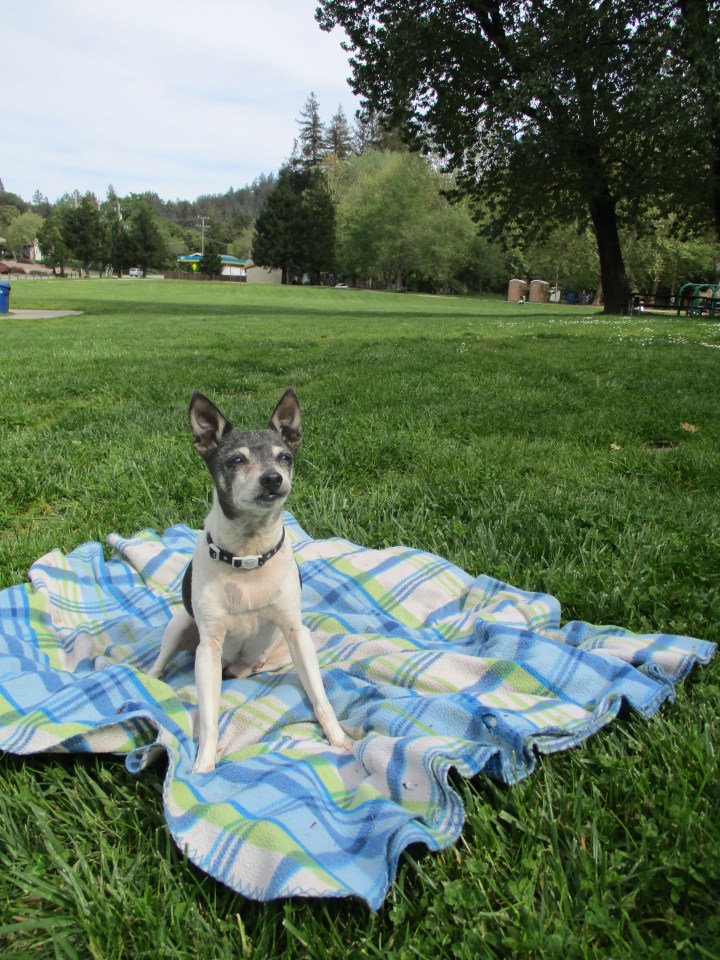
 Turf grasses are the ultimate in groundcover. They are very durable, and useful for covering large areas in a very user friendly manner. The toughest varieties are used for athletic fields because they withstand the wear and tear. In home gardens, all sorts of varieties are grown as lawns. Like other groundcovers, lawns limit erosion, and are cleaner than bare summer dust and winter mud.
Yes, turf grasses and lawns are the most useful of plant materials; but they are also the most demanding. They require more water than almost anything else, except only aquatic plants and some bedding plants. A healthy lawn must be mown and edged regularly, and as often as weekly in warm weather. Weeds are difficult to control once established. Gophers can cause serious damage.
Regardless, for all sorts of landscapes ranging from athletic fields to home gardens, a lawn is worth the work it takes to grow it. Only Trona High School has a dirt athletic field; and only because the soil is too saline and the weather is too scorching for turf grass. At least home garden lawns are more modest than they were years ago, with larger patios and decks, and other groundcover.
Artificial turf still has a bad reputation. The first AstroTurf of the late 1960s was nothing like real turf grass. It had a coarse texture, and eventually faded and deteriorated. Its main problem was that it was so regularly compared to real turf grass instead of recognized for its own attributes as an alternative to lawn, like carpeting for outdoor spaces. Yet, it was popular for certain applications.
Modern artificial turf looks and feels a bit more convincing, and is more resistant to wear and weathering. It might be more convincing if it were not so perfectly uniform. It is already more popular than old fashioned AstroTurf was, even for playgrounds and athletic fields. Artificial turf is expensive to purchase and install, but not as expensive as the maintenance and watering of real grass.
Compared to the installation of real turf grass that needs irrigation and soil amendment, the installation of artificial turf necessitates less excavation. It is therefore less invasive to the shallow roots of established trees and shrubs that are already in the landscape. However, plants that are accustomed to generous lawn irrigation might need to be watered through newly installed artificial turf.
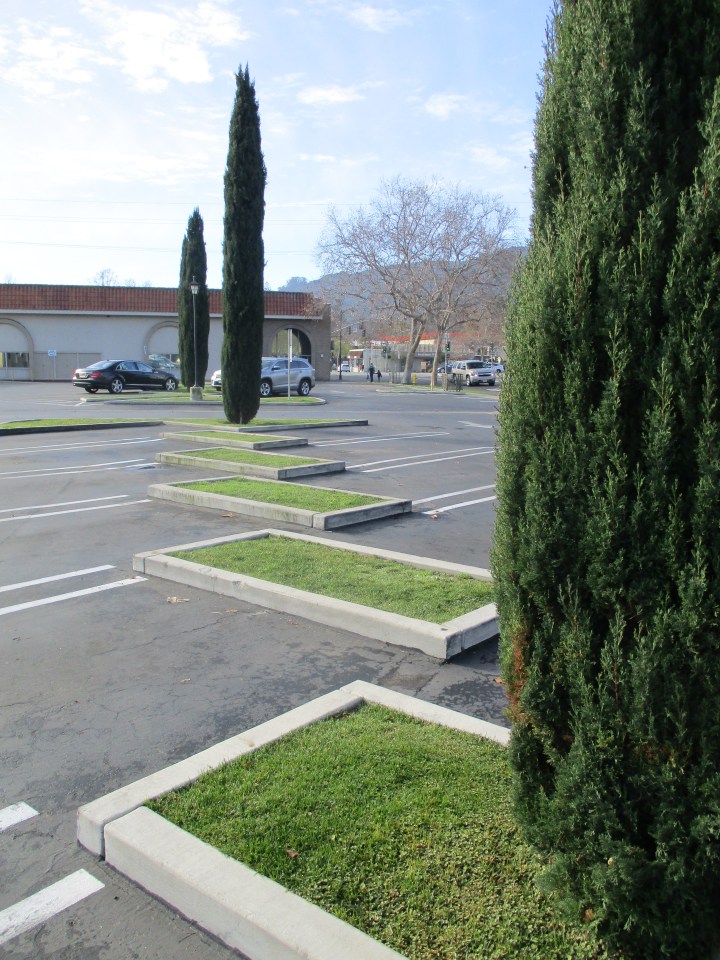 Perhaps I should elaborate on the ‘litter boxes’ in the ‘Six on Saturday’ post earlier this morning. As I already mentioned, they are in the same parking lot as the Leo and Leona sculptures. They were formerly inhabited by Italian cypress trees that would now be like those nearby if they had survived.
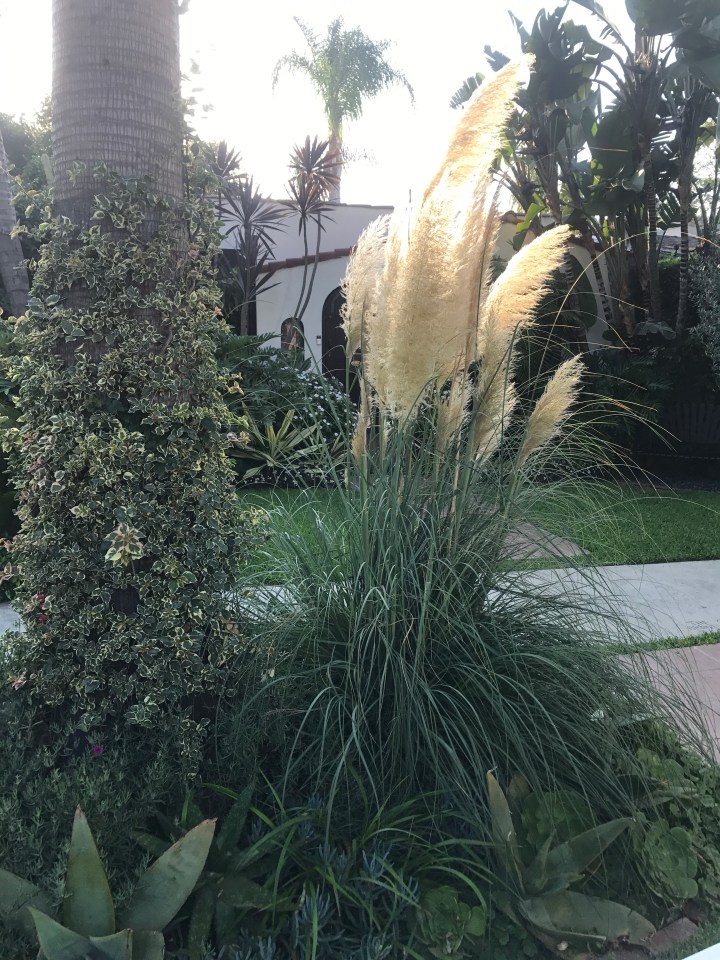 Modern garden varieties of pampas grass found in nurseries are generally non-invasive. Their flowers are described as ‘sterile’, and therefore unable to produce seed. What that really means is that they are exclusively female, and unable to produce seed without male pollinators. However, they have the potential to be pollinated by naturalized pampas grass, and sow a few hybrid seed.
 Tony Tomeo