Atlas Mountain Palm

Atlas Mountain palm resists frost damage.

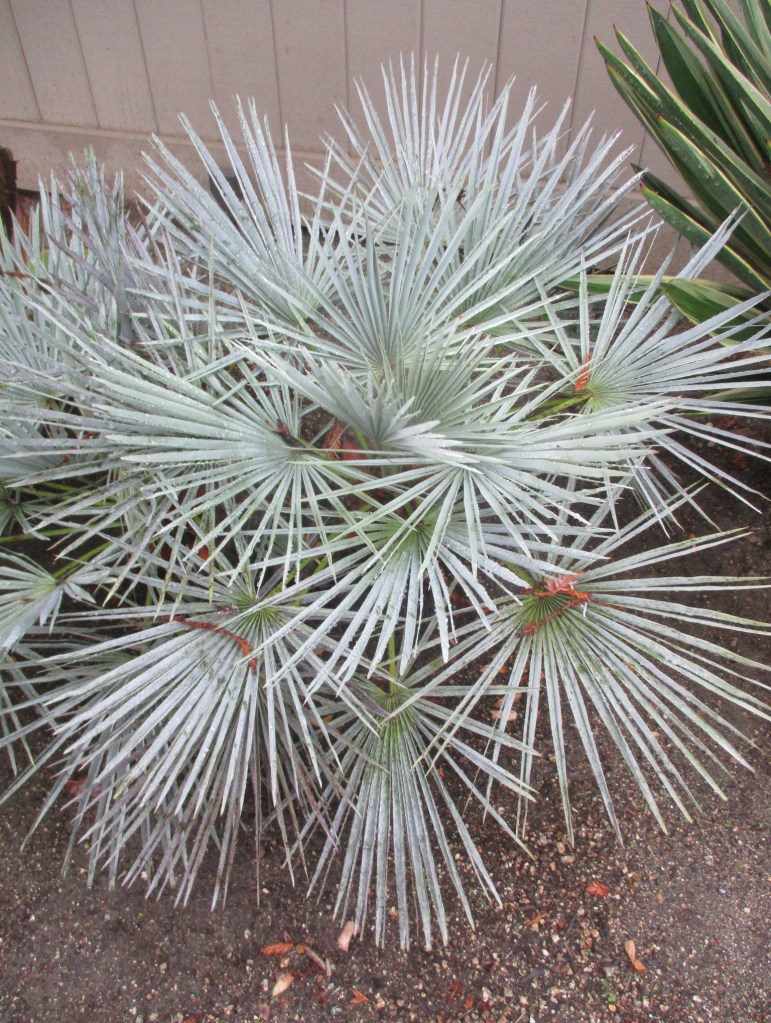
Mediterranean fan palm is a shrubby palm, with a few small trunks. Atlas Mountain palm, Chamaerops humilis var. argentea, is an even shrubbier variety. Mediterranean fan palm can grow slowly to about twenty feet tall. Atlas Mountain palm grows even slower to only about eight feet tall. Its several trunks become strikingly sculptural only after many years.

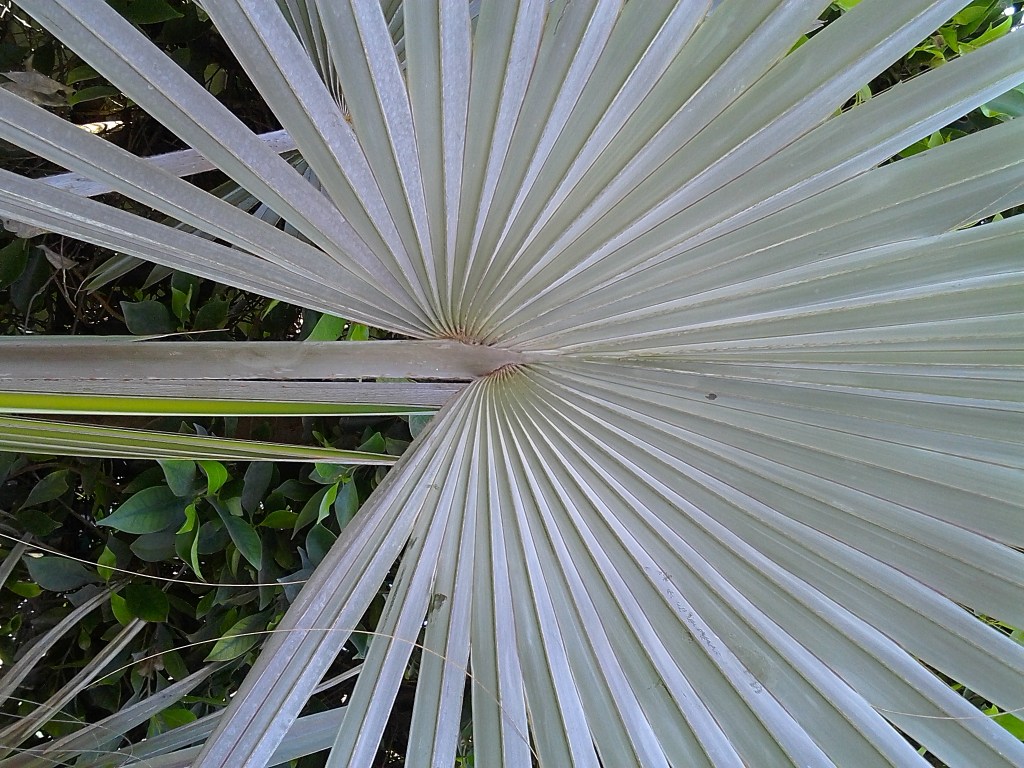
The primary allure of Atlas Mountain palm, though, is its distinctly silvery gray foliar color. Individual fan shaped leaves may be nearly two feet broad, with deep and narrow clefts. Petioles are so nastily thorny that grooming and pruning can be painfully difficult. Mature trunks can be six inches wide with dense coats of petiole bases. Bloom is not prominent.

Atlas Mountain palm is notably undemanding. Once established, it does not crave much water or fertilizer. Nor is it finicky in regard to soil quality. It is resilient to both extremes of heat and cold. After several years, it might benefit from thinning of superfluous trunks and pups. Like many palms, Atlas Mountain palm should perform well within big pots or tubs.

Rock Purslane

The pinkish magenta of rock purslane bloom is almost obnoxiously bright.

In Santa Cruz and coastal areas down to Los Angeles and San Diego, rock purslane, Calandrinia spectabilis (grandiflora) has been popular for only a few years. It is still somewhat uncommon here in the Santa Clara Valley. Because of the ambiguity of its Latin species name, it is most  commonly known simply by its genus name of Calandrinia.

Moderate watering is best. On the coast, rock purslane only needs water occasionally through the driest summer weather. It should recover readily from winter frost damage. Partial shade is not a problem, but may limit profusion of bloom. Harsh exposure or reflected glare can actually roast the tender succulent foliage.

From about now through autumn, limber, two foot tall stems suspend strikingly bright magenta flowers above the low, grayish evergreen foliage. The fragile leaves are neatly arranged in terminal rosettes. Foliage, stems, flower stalks and all parts are sensitive to traffic, and can even get broken by a cat sneaking through the garden. Broken bits and pieces of stem root very easily to make new plants, though.

Lavender Cotton

Neither lavender nor cotton, but a member of the Compositae Family.

The name is somewhat of a mystery. It is related to neither lavender nor cotton, but Santolina chamaecyparissus is known as lavender cotton nonetheless. The small, silvery gray leaves have a finely wrinkly texture, and are remarkably aromatic, like lavender. Though, the small and round bright yellow flowers look like daisies with the outer petals plucked off.

Unlike lavender and most other similar evergreen semiherbaceous shrubs, lavender cotton is adaptable to shearing, and is actually a classic component of traditional ‘knot gardens’, usually with another species of Santolina with green foliage to provide contrasting color. (Knot gardens feature small hedges with various foliar colors shorn into geometric and sometimes intricate patterns.) If regularly shorn, it is appreciated for its strikingly gray evergreen foliage, since it will not bloom.

Unshorn plants get about two feet tall and a bit broader, and will eventually need seasonal light shearing to remove fading flowers after bloom. Annual pruning at the end of winter keeps plants compact and neat without depriving them of their bloom. They otherwise eventually get bald in the middle and sloppy around the edges. (Some of us know about that.)

Good warm exposure and well drained soil is best. After their first year, lavender cotton does not need much water.

Silver Mountain Gum

Silver mountain gum needs no irrigation once established.

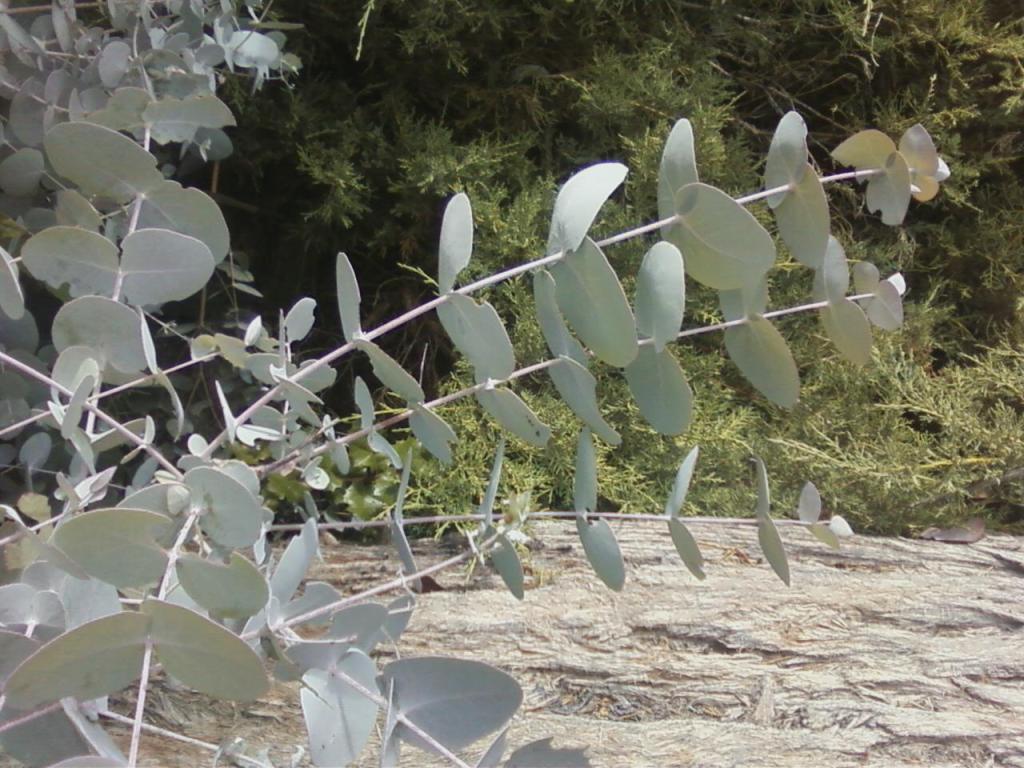
The bulky trunk and limbs, and shaggy bark of silver mountain gum, Eucalyptus pulverulenta, seem like they should be associated with a more imposing tree. Mature specimens are rarely more than twenty five feet tall. Those that try to get taller often fall over or break apart because they are unable to support their own weight, particularly if watered too generously. Aggressive pruning in spring and summer limits size, and also promotes an abundance of silvery juvenile foliage, which is popular as cut foliage.

Juvenile leaves are round and sessile (without petioles or stalks), and arranged in strict four-ranked formation. (Each pair of opposite leaves alternates with similar but perpendicular pairs.) Adult foliage is almost lanceolate (lance shaped) and not quite as silvery. Small, white, staminate flowers (without obvious petals) bloom between leaves from autumn through winter. Young stems have peeling bark.

Like almost all eucalypti, silver mountain gum gets established most efficiently and grows best if planted while small. They are actually best grown from seed, which can sometimes be obtained online. The next best option, which is actually least common, is #1 (1 gallon) trees. #5 (5 gallon) trees are typically the smallest trees available. Larger trees are likely to have problems dispersing their roots. Once established, silver mountain gum needs no fertilizer or watering.

Atemisia ‘Powis Castle’

Artemisia ‘Powis Castle’ is more foliar than floral.

The pleasantly aromatic and lacy silvery gray foliage of Artemisia ‘Powis Castle’ can either mix well with pink, lavender or light blue flowers, or contrast against bright red or orange. The dark angular leaves of bronze New Zealand flax or bronze cannas are striking against its low and softly mounding form, which stays less than two feet tall and not much more than twice as wide. Contrary to how Artemisia ‘Powis Castle’ enhances the color of other flowers and foliage, its own flowers are not much to look at, if they get noticed at all.

Foliage is fluffiest if mature plants get pruned down at the end of winter. New plants can be propagated by division in spring or autumn. As plants get established, good drainage becomes more important than frequent watering.

Honeybush

Bold color, texture, form and scale.

Where winter weather is cooler, honeybush, Melianthus major, is likely to be deciduous. If so, it annually sheds all growth that is above ground. It can not bloom where deciduous because only growth of a previous season can bloom. That is no problem here. Dark red floral spikes bloom boldly about two feet above jungly evergreen foliage for early spring.

This silvery gray foliage can grow taller and wider than six feet, even if deciduous during winter. Foliar texture is both luxuriant and elegant. Pinnately compound leaves are more than a foot long with serrate leaflets. Evergreen plants are tidier with grooming to remove deteriorating older foliage as new foliage replaces it. Deciduous plants are always fresh.

‘Antonow’s Blue’ is a bit bluer than the straight species. ‘Purple Haze’ is slightly purplish, with a slightly finer foliar texture. Some notice that the rich fragrance of honeybush bloom resembles that of honey. Also, some notice that the foliar aroma can be rather grungy. All parts of honeybush are toxic. Honeybush wants regular watering and abundant sunlight.

Silver Mountain Gum

Silver mountain gum is remarkably glaucous.

The strikingly glaucous juvenile foliage of silver mountain gum, Eucalyptus pulverulenta, is likely more familiar within floral design than in home gardens. Actually, it is uncommon within home gardens, although quite popular as cut foliage among florists. Its paired and sessile leaves are oval or bluntly cordate (‘heart shaped’), and about an inch or two long.

Adult growth is rare, even among established trees. However, small white flowers bloom from the axils of juvenile leaves that are a year old. (Juvenile growth of most species can not bloom.) Bloom might continue from spring until autumn, as blooming stems sag from the weight of younger distal growth. The aromatic and evergreen leaves stiffen with age.

Low and shrubby specimens with a few trunks may not get much higher than fifteen feet. They have potential to get twice as tall though, particularly if pruned up onto bare trunks. Lignotubers expand below the trunks. Strips of old bark shed to reveal fresh matte brown bark. Incidentally, the Latin name of this species often transposes for Eucalyptus cinerea.

Bismarck Palm

Silvery gray that is almost comparable to blue spruce is even more striking from a palm, like the Bismarck palm.

Most palm enthusiasts believe that the distinguished Bismarck palm, Bismarckia nobilis, is rare because it does not like local climates. It can be damaged by frost in winter, and prefers warmer weather in summer. Another concern is that they get too broad for compact urban gardens, since their shady foliar canopies can get more than twenty feet wide. However, a few seemingly happy specimens are sometimes seen about town.

Foliage of this rare palm is strikingly silvery gray. Green Bismarck palms are even more scarce, both because they are less tolerant to frost, and because they are not so striking. The big and rather rounded leaves are more than six feet wide, and maybe up to eight feet wide, on petioles (stalks) about six to eight feet long!

Mediterranean fan palm

The strikingly silver Atlas Mountain palm.

Not all palms are trees. Some lack trunks, so develop more as shrubbery. Some develop many slender stems, like bamboo. The thin canes of most rattan palms sprawl onto other vegetation for support, as vines. Mediterranean fan palm, Chamaerops humilis, develops multiple stout trunks, but grows so slowly that it can function as big sculptural shrubbery.

Old trunks can eventually get as high as twenty feet, and generally lean randomly. If they get too tall, smaller and more vigorous trunks can replace them. (An arborist can remove the bulky and thorny old trunks.) New trunks develop from basal pups, which can can get too densely foliated without occasional thinning. Removal of such pups might be difficult.

Mature trunks might be as wide as ten inches, with dense coats of basal petiole fiber and thorny petiole stubs. Thorough grooming can eliminate the stubs. However, petioles that suspend the evergreen palmate leaves are outfitted with the same wickedly sharp teeth. Leaves are about two feet wide. Atlas Mountain palm, Chamaerops humilis var.(iety) argentea has strikingly silvery foliage, and grows even slower.