
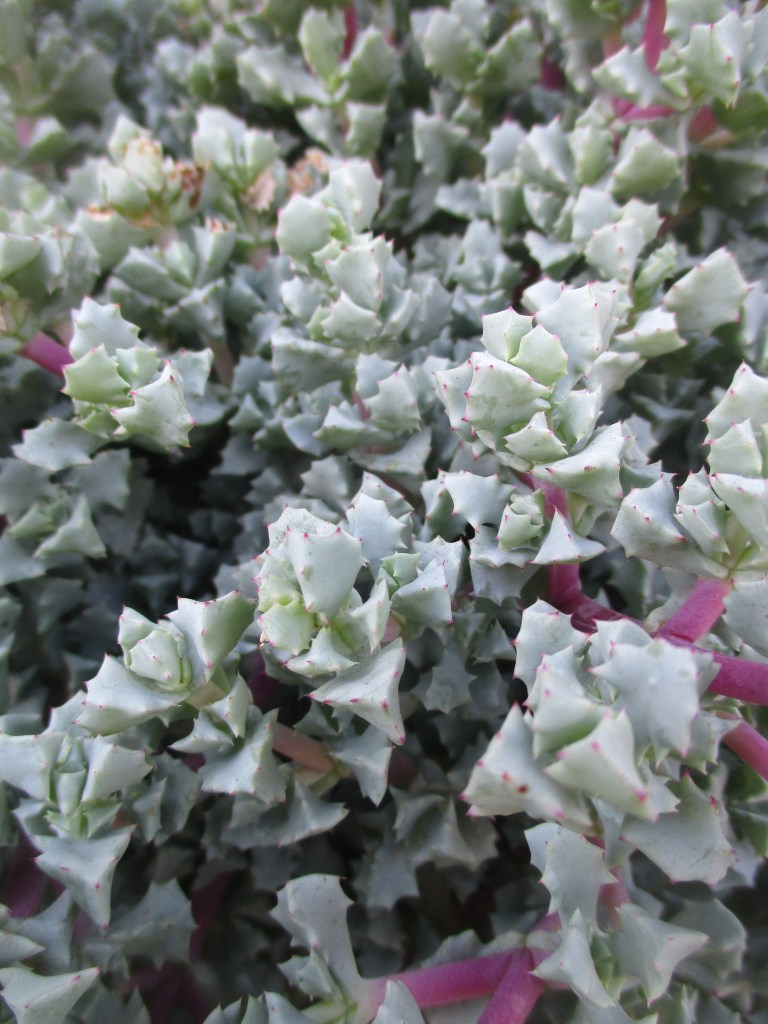
The silly common name actually suits its plump rosettes of pale bluish succulent leaves. Mexican snowball, Echeveria elegans, forms small colonies that might resemble stashes of snowballs. Individual rosettes are circular, and a bit wider than tall. The widest are four inches or so across. The evergreen leaves are as neatly radial as scales of a pine cone.
Some may know Mexican snowball, and various other species of Echeveria and related Sempervivum, as hen and chicks. Big rosettes can produce so many small pups around their edges that they are reminiscent of mother hens surrounded by their huddled chicks. These pups are quite easy to separate for plugging into pots or elsewhere in the garden.
Mexican snowball is happiest in sunny situations with rather regular watering, but should tolerate a bit of shade and lapses of watering. For small trees in big pots, it can cover the surface of the potting media nicely. Pups plugged into crevices of stone walls might grow into clinging colonies. Tiny pink flowers with yellow tips bloom on wiry stems about now.

 These are two pictures that did not make the grade for my ‘
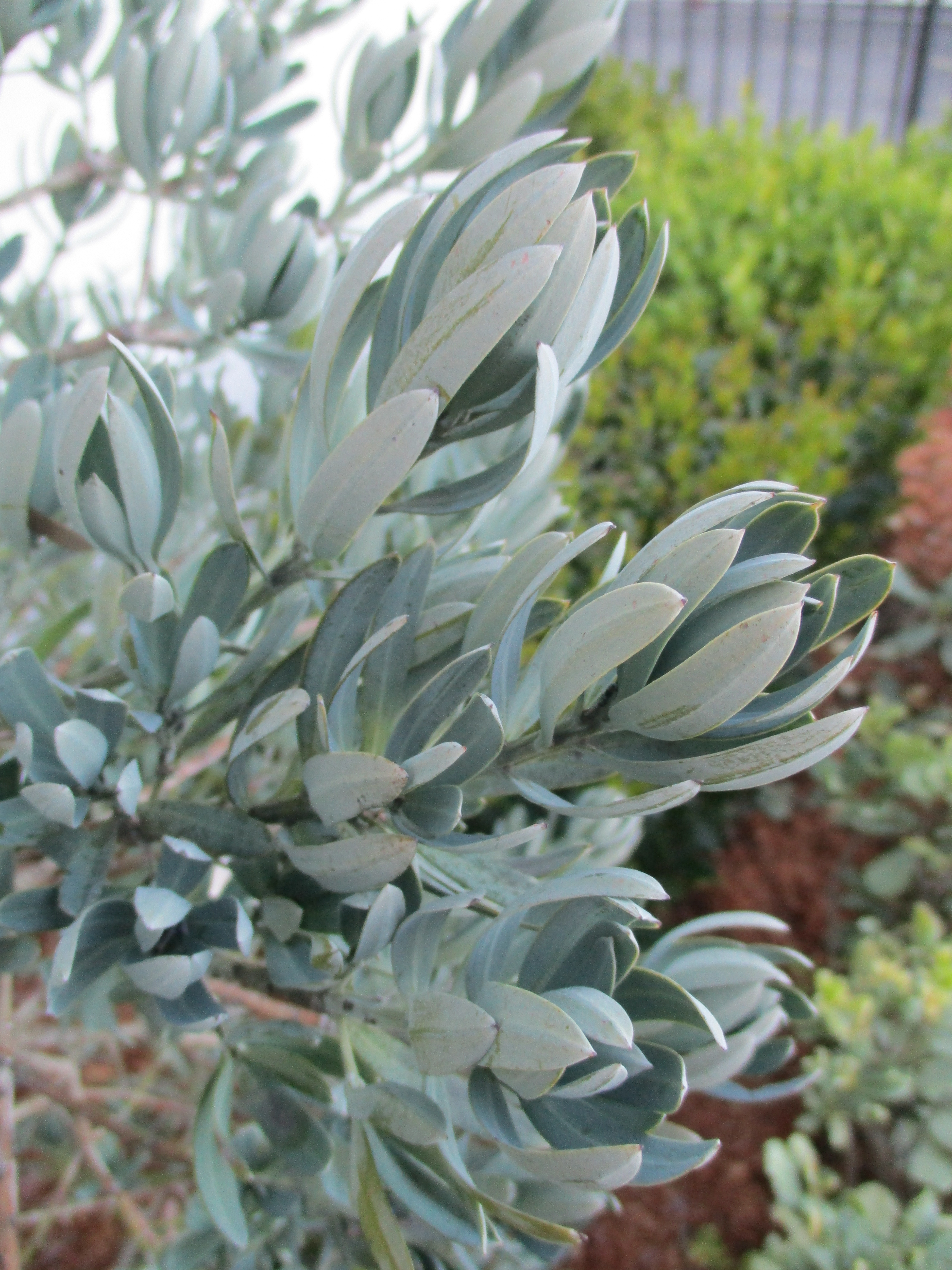 No, it is not an oxymoron. ‘Yellowwood’ is the common name for a few specie of Podocarpus. The evergreen (or ‘everblue’) foliage of ‘Icee Blue’ yellowwood, Podocarpus elongatus ‘Monmal’, really is as silvery grayish blue as the name implies. It can be as striking as some cultivars of Colorado blue spruce. It grows slowly in narrow columnar form to only about fifteen or twenty feet tall.
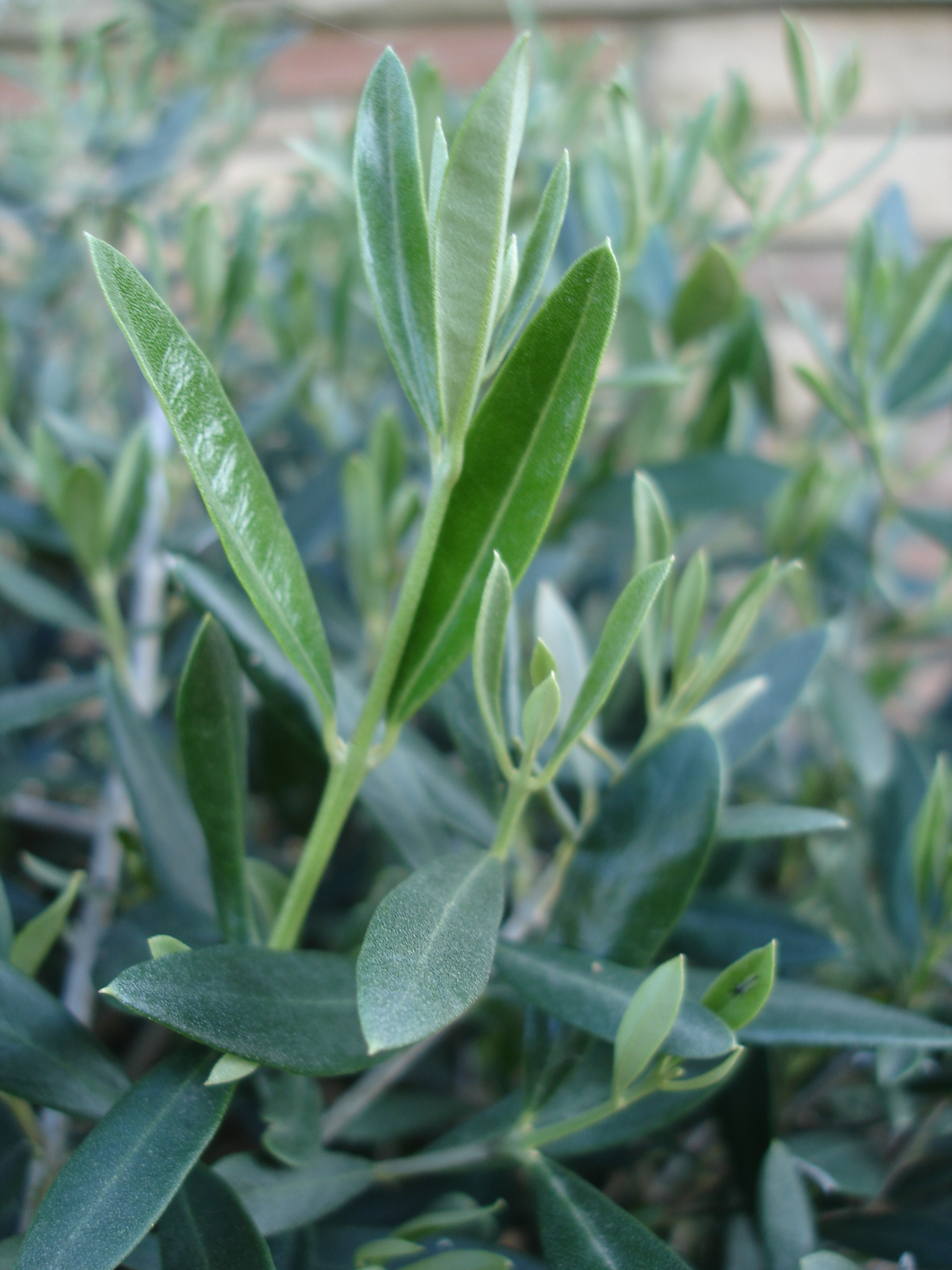 Those of us who appreciate olive trees for their fruit production or distinctively gnarly trunks probably would not understand the popularity of the Little Ollie olive, Olea europaea ‘Little Ollie’. Not only is is completely fruitless, but it lacks sculptural trunks and limbs. It is instead a short and and shrubby plant that gets only about three or four feet tall, with very dense grayish green foliage. Only the narrow evergreen leaves are recognizable as those of an olive tree.
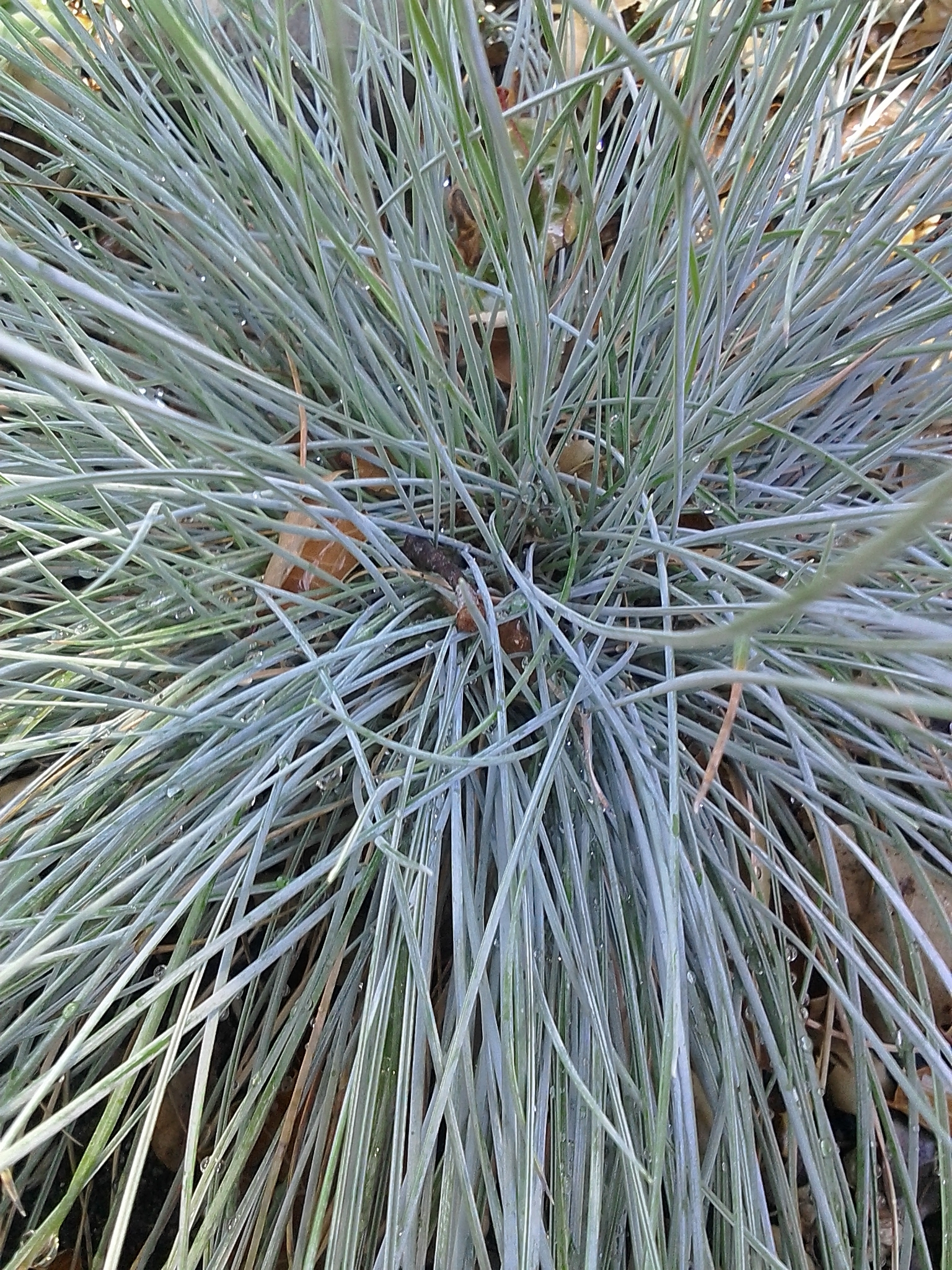 To avoid confusion with dwarf fescue blue turf grass, Festuca ovina glauca is more familiarly known as blue festuca. If planted close together and left to spread as a small scale ground cover, it is much lumpier and mounding than uniformly spreading turf. It is a clumping perennial that is more popularly grown as distinct tufts of finely textured blue gray foliage that looks like gray sea urchins.
 Some of us may remember deodar cedar, Cedrus deodara, from the opening scene of the Andy Griffith Show. They were in the background as Andy Taylor and his son Opie skipped stones on Myers Lake near Mayberry in North Carolina. Those well established and naturalized trees and the pond are actually in Franklin Canyon Park in the Santa Monica Mountains above Beverly Hills.
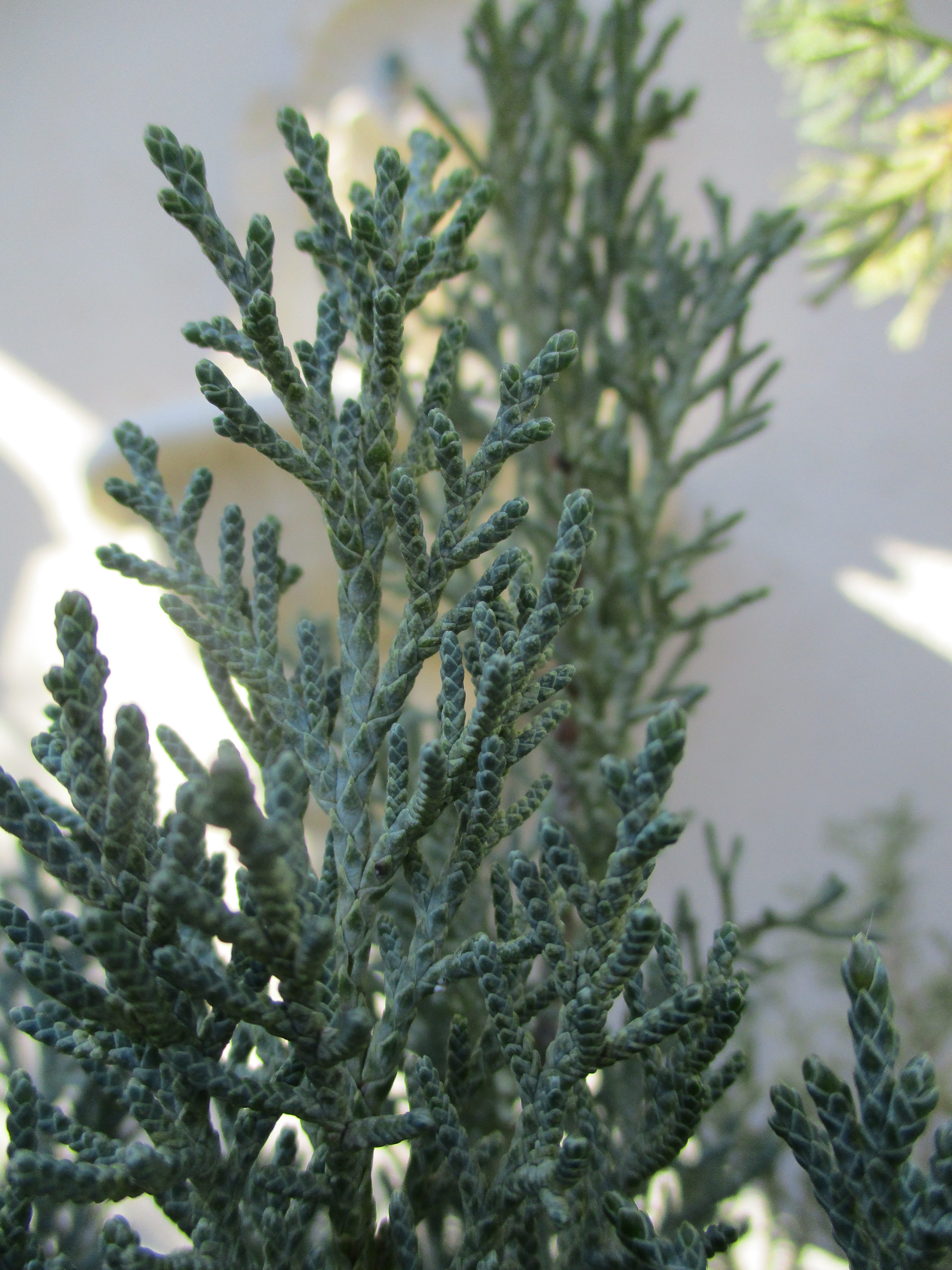 It is no coincidence that many plants with gray foliage are from mountains or deserts. Gray foliage is ‘glaucous’, which, like glaucoma, diffuses light. This helps to protect it from desiccation and scald when sunny weather is also hot, windy or arid. The glaucous foliage of Rocky Mountain juniper, Juniperus scopulorum, is what distinguishes it most from related North American junipers.
 Tony Tomeo