 Water is no more scarce in California than it has been in recorded history. The problem with it is that it is a limited resource that must be shared amongst too many people. Likewise, rainstorms are no more torrential than they have ever been. Floods, erosion and wind are only more destructive now because there is so much more infrastructure that can be damaged than ever before.
Rain and wind are perfectly natural. Furthermore, it is natural for the weather to knock down limbs or entire trees. It only seems unnatural when these limbs or trees fall on houses, cars or anything else that gets in their way. Plants actually enjoy rainy weather much more than we do. Some like to be rinsed of dust and debris left from former infestations of mites, aphid, scale or sooty mold.
What plants do not like about rain is erosion. It is bad enough that so many plants in refined gardens are deprived of their own litter to insulate the surface of the soil. It is even worse if the bare soil gets eroded away from fine feeder roots at the surface of the soil. This is something that the rest of us would agree on. We do not want gullies carved into slopes, or drains clogged with mud.
Trees, shrubs and some stout perennials with aggressive roots are useful where the potential for major erosion is a concern, but might not do much for annoying surface erosion. Sprawling and spreading plants that form dense networks of low branches and surface roots are more effective. They soften the splatter of rain, slow the flow of drainage, and catch much of any dislodged silt.
Groundcover plants like ivy, gazania and iceplant are probably the best option for controlling surface erosion. Dense and low shrubbery that spreads over the ground and holds its own debris probably work just as well. These include low junipers, trailing rosemary and dwarf coyote brush. Larger shrubbery can help if it can drag its lowest limbs on the ground, and no one rakes below it.
Mulching limits erosion while new plants grow. Although new mulch needs to be added annually as old mulch decomposes, less will be necessary as plants grow and cover more area. Mulch is also effective where no plants are desired. For large areas, especially where plants are not expected to fill in, landscape cloth below ornamental bark inhibits weeds. However, coarse bark slowly shifts downhill, so replaces one kind of erosion with another, and will eventually need to be raked back uphill.
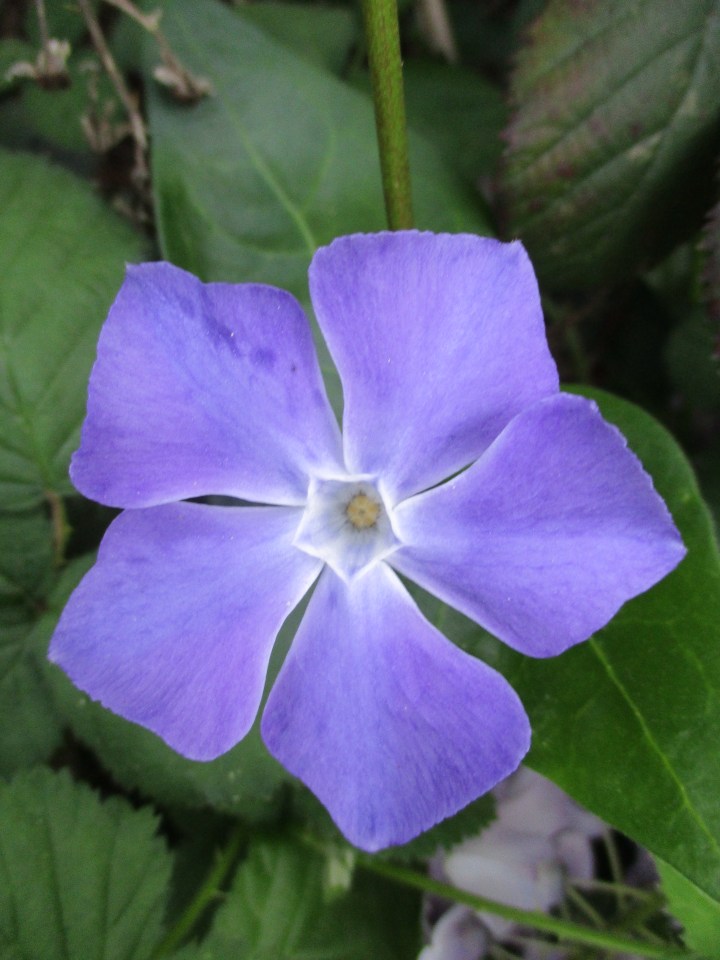 Like so many of the easiest to grow plants, periwinkle, Vinca major, is too easy to grow. It has become an invasive exotic (nonnative) weed in many moist riparian environments. It can get rather weedy in home gardens as well. This can be an advantage if it happens to fill in for bald spots in areas of other ground cover. It is a disadvantage if it overwhelms or competes with other plants.
 Lawns composed of turf grasses are the most functional, but also the most demanding forms of groundcover. That is old news. There are so many other less demanding low growing plants that that can cover the ground in areas that are not used like lawns are. Sometimes they work nicely just to control weeds. Sometimes they help to control erosion on otherwise unlandscaped hillsides.
 It looks like sweet alyssum, but is not even close. The tiny white flowers and finely textured foliage work almost as well for similar uses in the landscape. In fact, the plants are most often grown as short term warm season annuals. However, candytuft, Iberis sempervirens, is really a perennial that can be cut back in autumn, regenerate through winter, and bloom for spring and early summer.
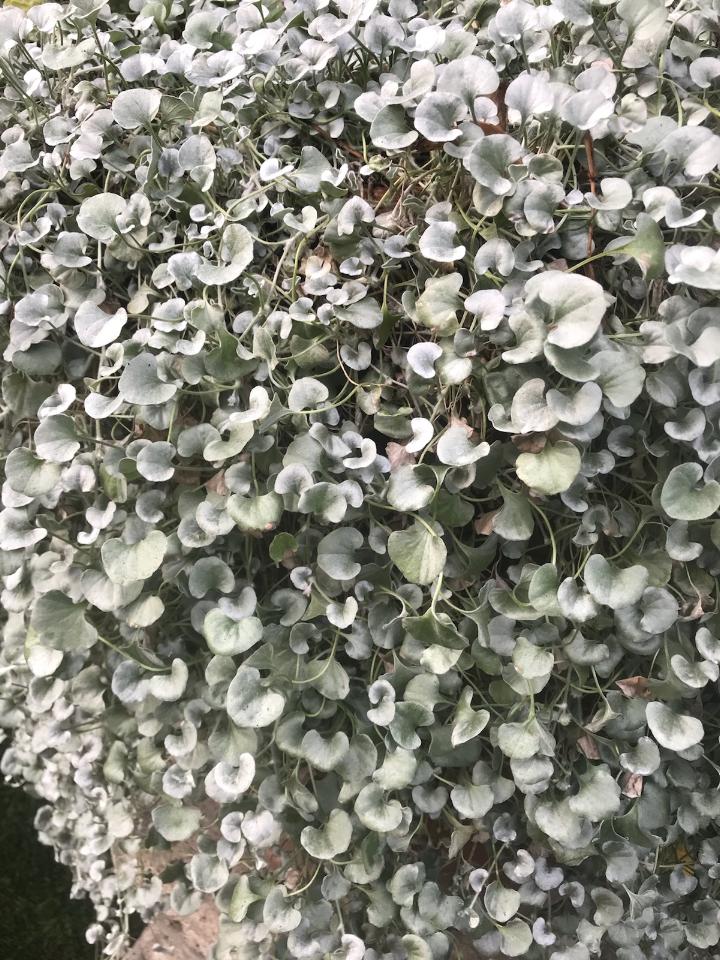 No one seems to know what ever happened to old fashioned dichondra lawns. Everyone seemed to like them, especially those of us who dislike turf grasses. Somehow, they became passe and very rare. The formerly common dichondra that such lawns were made of is now merely a resilient weed in turf lawns. But wait! We have not heard the last of this resilient and appealing perennial.
 Tony Tomeo