Chimney Clearance

Combustible debris accumulates in gutters and behind chimneys.

There are several reasons why fireplaces are not nearly as commonly used as they once were. Modern building regulations have prevented construction of newer fireplaces (except pellet stoves). Many fireplaces that were ruined by the Loma Prieta Earthquake were never replaced; partly because there are other more efficient sources of heat, and partly because of the concern of air quality. The fuel that was once relatively easy to obtain from orchards that were getting removed to relinquish their land for urban development has been exhausted.

Regardless, those of us who use fireplaces need to be certain that they do not become overwhelmed by trees or climbing vines. Cypress, cedars, pines and some fan palms are remarkably combustible and hazardous when they get too close to chimneys, particularly if the roofs below are covered with old fashioned cedar shingles.

All trees and vines should be pruned away from chimneys so that they are out of reach of sparks and heat. The more combustible trees should get more clearance than deciduous trees (that are bare through winter) need. Nearby Monterey pines, Cypress and any trees that tend to accumulate debris should be groomed of debris, even if their limbs are already pruned back for sufficient clearance.

Trees should also be pruned for clearance from roofs and gutters; and any accumulated debris should be removed. Even before the weight becomes sufficient to cause damage, the motion of limbs in the wind is abrasive to roofs. Older roofs, particularly cedar shingles, will deteriorate under any accumulation of organic debris, particularly as it gets wet from rain.
Gutters Innately Accumulate Falling Leaves

Falling leaves can overwhelm gutters.

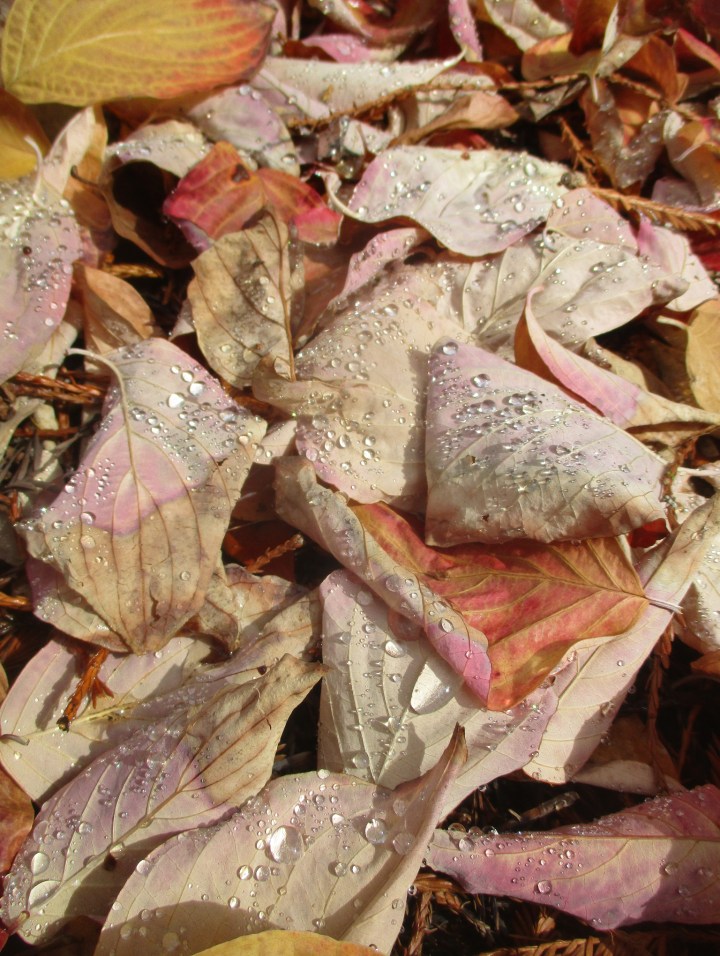
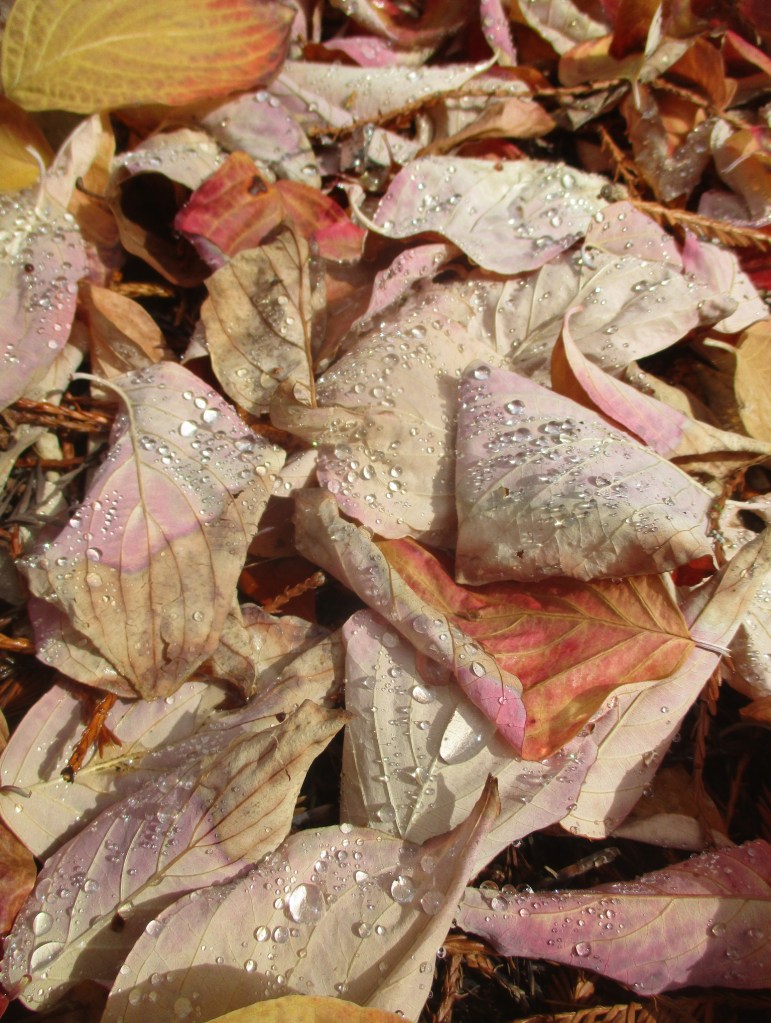
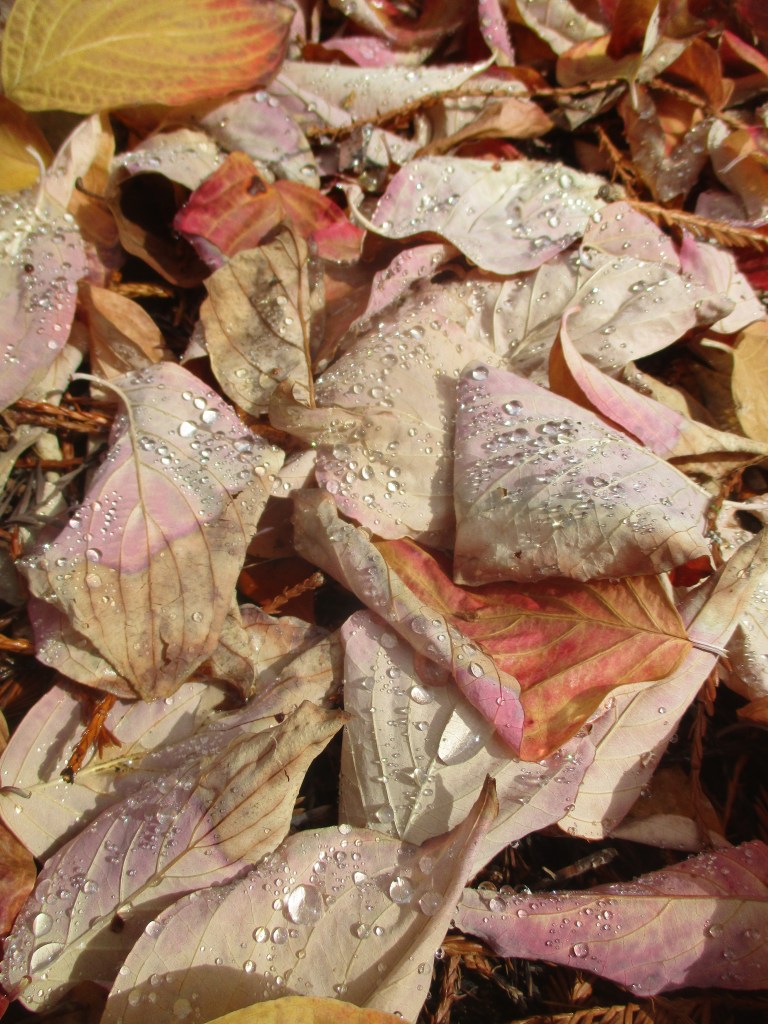
Autumn foliar color gets messy. It is spectacular while suspended in deciduous trees and even on the ground. The problem is that it mixes with wind and rain as it deteriorates and gets sloppy. It necessitates raking from lawns, ground covers and hardscapes. It requires removal from gutters, or eavestroughs, and where it accumulates on roofs. It gets messy.

The timing could not be worse. The wind and rain that cause it to be so messy are no fun to work in. Using ladders to clean gutters and roofs is more dangerous in wet conditions. Fallen leaves are messier and heavier while wet. Yet, they are not too heavy for winds to blow green waste piles about after raking. Autumn weather will get progressively worse.

Unfortunately, gutters that accumulate fallen foliage require cleaning to function properly.  Otherwise, foliar debris clogs them and their downspouts when they are most necessary. Rain water then flows over their edges and onto the ground below. It can be more than a minor annoyance. Splattering water can cause rot within adjacent walls that it dampens.

That is why old historic houses originally had ‘foundation plantings’ of dense vegetation. Some lacked gutters because gutters were very expensive. Instead, rain was allowed to flow from eaves and directly onto the ground. Dense vegetation between the dripline and the foundation contained the splattering. Almost all modern homes, though, have gutters.

Gutters may need cleaning more than once before deciduous trees defoliate completely. Evergreen trees necessitate cleaning as well, but do not shed so profusely for autumn. A few, such as redwoods and pines, are exceptionally messy. Because their mess may not coincide with autumn, cleaning it can be a bit earlier. It is easier during pleasant weather.

Cleaning gutters is a gardening task that may be best to leave for professionals. After all, it may involve climbing to unsafe heights on ladders and roofs. Installation of screen like devices over gutters can mitigate the need for future cleaning. Of course, gutters that are not below messy trees might never need cleaning. There are many variables to consider.

Debris Fills Gutters During Autumn

Falling leaves eventually become abundantly messy.

Autumn foliar color certainly is pretty while it lasts. Although less prominent locally than it is where cooler weather begins earlier, it is an asset to many home gardens. It generally appears a bit later within mild climates here, but might also remain suspended a bit later. Ultimately though, with enough wintry wind and rain, it eventually becomes foliar debris.

Evergreen foliage also contributes to the mess. It is likely less abundant than deciduous foliage is during autumn, but only because it sheds through more extensive seasons. For example, Southern magnolia sheds mostly through spring, as new foliage replaces older foliage. It then continues to shed additional debris throughout the year, including autumn.

Regardless of its various origins, foliar debris becomes more of a concern during autumn for two simple reasons. Firstly, and obviously, more of it accumulates during autumn than during any other season. Secondly, since autumn is the beginning of the rainy season, it is the most inconvenient time of year for such debris to accumulate within home gardens.

Roadside gutters, eavestroughs and their downspouts should drain efficiently. However, foliar debris can interfere with their drainage when it becomes most important. Roadside gutters are more accessible, so are easier to observe and clean. Eavestroughs and their downspouts may be beyond reach, but may need more cleaning if defoliation continues.

Foliar debris is unhealthy for turf, groundcover and shrubbery that it accumulates over. It inhibits photosynthesis by obstructing sunlight. It can also promote proliferation of fungal pathogens. This is why prompt raking is very important. Foliar debris can stain pavement and decking, and may be hazardously slippery. Behind chimneys, it can promote decay, and possibly become a fire hazard.

Vegetation Needs Clearance From Infrastructure

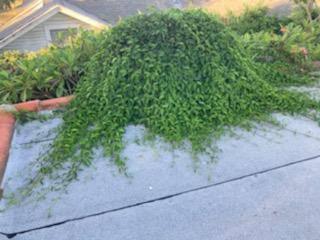
There is a chimney under this overgrown vine.

It may not seem like it is so now, but evergreen trees really are messier than most deciduous trees. They probably do not produce any more debris, but they drop their debris over much longer periods of time, or at various times, or simply ALL the time. Yet, at this time of year, it seems like the deciduous trees that mostly have dropped nothing or very little since last year, are making most of the mess in the garden as they defoliate for winter.

Defoliation is only beginning, and will continue for a while. Ironically, the most impressively colorful deciduous trees happen to be those that hold their foliage for a long time, making their defoliation process linger over a few months. Even the most efficiently neat trees that defoliate in a few days tend to do so during windy or rainy weather, when we are not so motivated to go out into the garden to clean up their mess.

As the rainy season begins in a few weeks or so, the gutters on the eaves should be cleaned of debris that has accumulated since last year. This can sometimes be delayed until all deciduous trees that contribute to the accumulation of debris are completely defoliated. Generally though, homes with many or big trees (or many big trees) may need their gutters cleaned more than once as they continue to collect debris through autumn and perhaps into winter.

Any debris that collects behind chimneys, in valleys (where roof slope changes direction) or anywhere else on the roof, should also be removed. Even without gutters to collect debris, flat roofs collect whatever debris that does not get blown off by wind. Only parapet roofs that are common on so many homes of Spanish architecture collect more debris, since they are sheltered from wind.

Trees and vines should never be allowed to lean onto roofs. Vines and some densely foliated trees tend to accumulate all sorts of debris that rots and then damages the roof below. Trees that touch roofing material are abrasive as they move in any breeze.

Obtrusive trees and vines are also a serious problem for chimneys. Cypress, cedar, pine and the beards (accumulations of dead foliage) of fan palms are particularly combustible. Even after they get soaked by rain, they can quickly dry if heated by the exhaust from a chimney. Maple, ash and other trees with open canopies may not be as combustible, especially while defoliated, but can get roasted by chimney exhaust, and can interfere with ventilation.

Gutters Collect Falling Autumn Leaves

Fall color will soon fill gutters.

Autumn is also fall for a reason. It is the season during which most deciduous foliage will fall. Some deciduous trees that lack good fall color may look neater without their shabby old foliage. Sadly though, the splendidly colorful deciduous trees must shed also. All that collective debris that succumbs to weather and gravity gets messy, and can clog gutters.

Evergreen plants shed too. They are just sneakier about it. Some shed old foliage during spring or summer while simultaneously replacing it to stay evergreen. Some shed slowly but steadily for several months, rather than concentrating the mess within a brief season. Many shed during autumn though, as wind and rain dislodge their lingering older foliage. 

Whether deciduous or evergreen, various plants shed at various rates. Monterey cypress shed so steadily through the year that they are never caught in the act. Fruitless mulberry can defoliate in just a few days if frosted suddenly enough. Sudden defoliation seems to be messier, but can be an advantage. For example, gutters may need cleaning just once. 

Weather is also variable. Rain began a bit early this year. The associated dampness can accelerate defoliation for some species. Other species respond more to temperature. An early chill may accelerate their shedding. It is therefore impossible to predict when it will be necessary to rake fallen leaves or clean gutters. There are simply too many variables. 

Unfortunately, the weather that causes leaves to fall is the very same weather that makes raking and cleaning gutters so unpleasant. No one wants to work in the garden while it is cold. Nor does anyone want to get onto a dangerously wet roof to clean gutters. There is no need to rake or clean gutters before rain and cool weather cause debris to fall though. 

It should be obvious when it is necessary to rake leaves from lawn, pavement and street gutters. Bigger leaves tend to be more problematic by clogging drainage. Smaller leaves may just as easily stain pavement or decking though. Roof gutters are not so visible, but probably need cleaning while raking is necessary nearby, and hopefully before clogging. 

Keep Vegetation Clear From Chimneys

51028thumbFireplaces simply are not what they used to be. Building regulations in many municipalities do not allow for the construction of new fireplaces, except only for pellet stoves. Fireplaces that get damaged by earthquakes are commonly removed instead of repaired. Now that urban sprawl has replaced so many of the rural areas and defunct orchards, firewood is more expensive, even if purchased from a tree service. When a tree needs to be cut down, no one seems to have the time to cut and split the wood.

Modern heating systems are so much more reliable, efficient and just plain easy. Their fuel can actually be less expensive than firewood, and is not nearly as polluting. There is no smoke to offend the neighbors. There are no potentially dangerous sparks. There is no dirty chimney that needs to be cleaned. There is no need for firewood occupying space in the garden. Yet, with all the advantages of other heating systems, many of who still have fireplaces like to use them now that the weather is getting cool.

Because so much heat and a few sparks go out through the chimney, it is extremely important to keep trees and vines away from the top of the chimney. Cypress, pines, cedars, large junipers, eucalypti and fan palms that are not groomed of their dried old leaves are very combustible. Vines like wisteria, bougainvillea, creeping fig and Boston ivy are not unusually combustible, but have a sneaky way of overwhelming chimneys and accumulating debris (and sometimes rat or bird nests!). Any vegetation will be combustible if it gets hot enough. Sparks from burning foliage above can easily ignite old fashioned cedar shingles.

Trees should also be pruned away from roofs, gutters, fences and anything else that can be damaged by the abrasive motion of the stems and foliage in the wind. Stems of deciduous trees lose weight as they defoliate, and may even lift off of roofs that they had been leaning onto just a few weeks ago, but should be pruned accordingly anyway. Branches that have been leaning on a roof for quite a while may have accumulated a bit more debris than would be expected. Gutters and downspouts should be cleared of debris before the rain starts, and may need to be cleared again later where deciduous trees fill them up through autumn and winter.

Unplanned Green Roof

p90106The last green roof that I wrote about was planned, although not in a typical manner. https://tonytomeo.com/2017/11/25/green-roof/ It is still my favorite green roof. Otherwise, I am none too keen on the fad. Very few buildings benefit from green roofs, and green roofs really do take more work than conventional landscapes in the ground.

The sort of green roof pictured here was most certainly not planned. It could have been the result of a an uncleaned gutter. All sorts of weeds can grow in the damp debris that can wash off of roofs, particularly in damp and foggy coastal climates where moisture so often drips from the edges of roofs. This gutter is just a short distance from the beach in Santa Cruz. The willows in the San Lorenzo River are next door.

Knowing what I know about this particular type of willow, I would guess that the cleanliness of the gutter, or lack thereof, was not really the problem. These aggressive willows can germinate in the slightest bit of debris, even under a single leaf that did not get rinsed or blown away fast enough. Once germinated, their finely textured roots are experts at clinging to anything that might otherwise get rinsed away. If there is not enough debris and dirt for them to grow in, they simply collect their own. Now that it has started the process, it will continue to collect debris and expand its root system until it gets removed or ruins the gutter. It seems to have already collected enough debris to share with a few grassy weeds nearby. It is mostly dormant now, and might have defoliated in the rain since this pictures was taken a few days ago. However, if it stays, it will resume aggressive growth as winter ends.

Falling Leaves Get Into Everything

51028thumbEven if they had been clean since they were emptied out last winter, gutters (eaves-troughs) near deciduous trees will eventually need to be cleaned again as they collect falling leaves through autumn. Leaves may continue to fall for several weeks, and will fall more abundantly as they get dislodged by rain.

Too many fallen leaves clog gutters and downspouts. If too much debris is left in downspouts for too long, it rots and settles so that it can be very difficult to dislodge. If rainwater can not adequately drain through gutters and downspouts, it can only flow over the edges of gutters. The falling water can erode the ground below, and splatter mud onto nearby walls.

This may not seem like much of a problem, but the reason that gutters and downspouts drain rainwater to the ground gently is to keep the walls dry and clean. Damp walls are likely to rot, especially if water splatters into basement vents. This is why early American homes that lacked expensive gutters were often outfitted with dense ‘foundation’ shrubbery or perennials to soften the splatter.

Leaves that accumulate in the valleys of the roof (where perpendicular slopes meet) should also be removed. Debris can also collect on the upslope side of a chimney. Homes with room additions have more awkward spots to collect debris than unaltered homes. Flat roofs and parapet roofs are of course very likely to collect debris under trees, and may need to be raked more than once.

Vines should not be allowed to climb onto roofs. They can tear apart roofing material, collect debris, and promote rot. Likewise, limbs of trees and large shrubbery should not be allowed to touch roofs, gutters, or even walls. Their motion in the breeze is abrasive to shingles, gutters, paint and siding. They can literally grind off shingles and break terracotta tiles.

Tree limbs should also be kept clear of chimneys. Even during rainy weather, hot exhaust from a chimney can dry and ignite limbs that get too close. Pine, cypress, cedar, and palms with beards (accumulated dead fronds) are very combustible.

Gutters And Chimneys Need Attention

71101thumbThere is no time that is best to clean the gutters on the eaves. They should probably be cleaned early before the debris within them gets dampened by the first rains. However, they will only need to be cleaned out again after more foliage falls. If cleaned only after all the foliage falls, they will be grungier, and there will be potential for some of the debris to flow into and clog the downspouts.

Most of the fresh leafy debris that fell recently is relatively easy to clean out. Debris that has been accumulating through the year will be more decomposed and settled in. Evergreen trees are somehow messier than deciduous trees. They drop smaller volumes of debris in autumn, but they drop the rest throughout the year. Deciduous trees drop all their foliage within a limited season.

That certainly does not mean that deciduous trees can not make a mess. All that foliage has to go somewhere. If the weather gets cool slowly, foliage falls slowly, and for a longer time. Some deciduous trees innately defoliate slowly, and may even wait all winter to finish. Fruitless mulberry, tulip tree and poplars typically defoliate efficiently, making a big mess that gets cleaned up once.

Flat roofs that lack gutters collect debris too. So do the spaces behind chimneys and in roof valleys (where the slope changes direction). Even if this debris does not interfere with the function of gutters and downspouts, it promotes rot in roofing material. Trees and vines that touch a roof are likely to be abrasive to roofing material if they move in the breeze, or hold debris against the roof.

Trees and vines must be kept clear of chimneys, not only because they can interfere with ventilation, but also because they can be cooked by exhaust from the fireplace below, and ignite! Fan palm beards (dead foliage that accumulates on trunks), pine, cypress, spruce and cedar are particularly combustible. Clinging vines can separate brick from mortar, which is another fire hazard.

Working on the roof and gutters is of course potentially dangerous. It might be best to get a professional for these sorts of jobs, especially if trees need to be pruned. While that is being done, there is plenty of raking and other gardening for us to do (without a ladder). Raking leaves is an important job too, since fallen leaves can shade out lawn, ground-cover and flowering annuals.