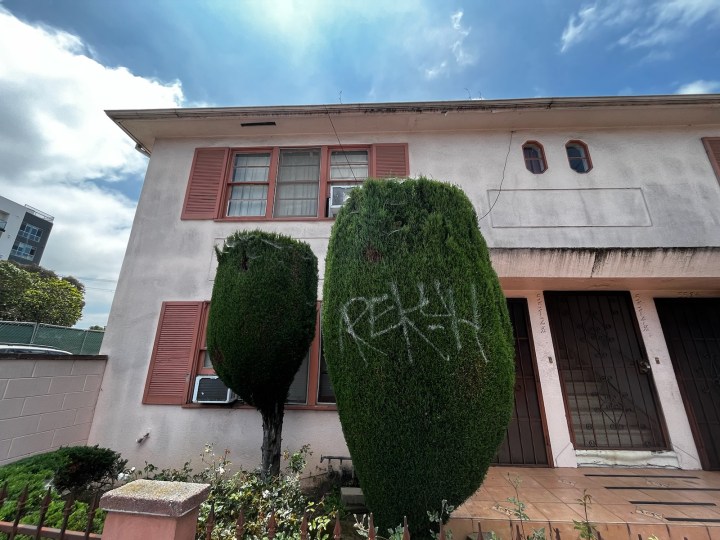
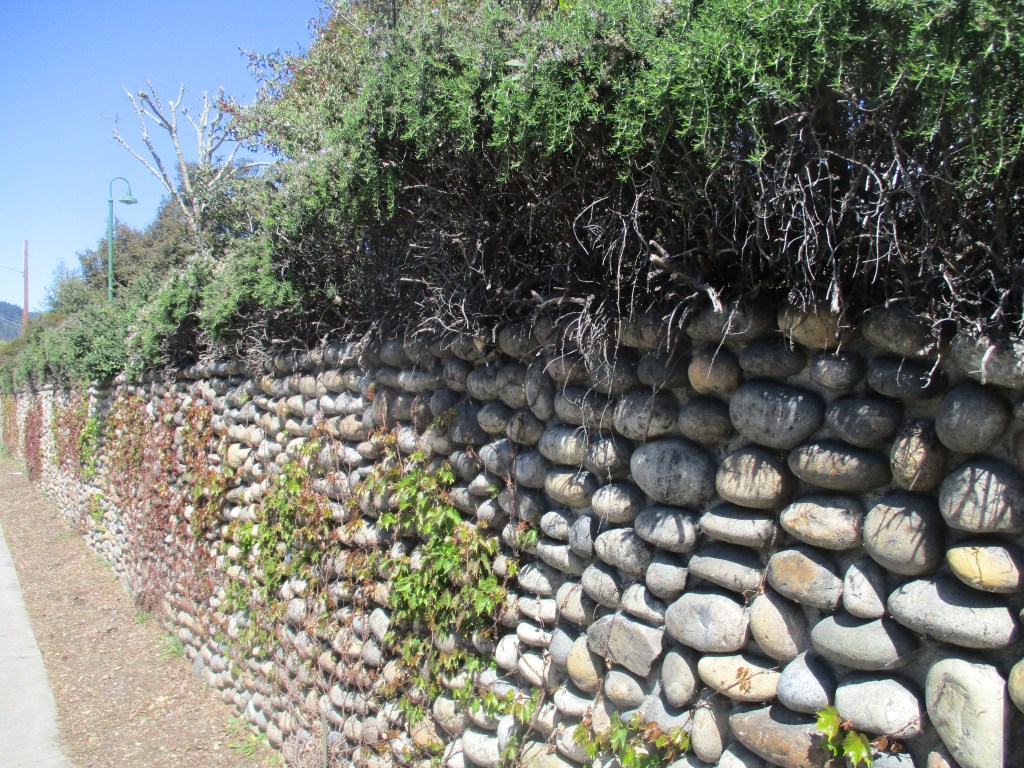
Rosemary happens to be one of the many plants that is perhaps too versatile to be respected. Low ground cover forms and sculptural upright forms are probably at their best without much attention. Shrubby forms can instead be shorn strictly into neat formal hedges.
The problem is that most rosemary eventually gets shorn and deprived of natural shape and texture, whether it needs it or not. Those that should be upright and sculptural become rounded over like bean bag chairs. Ground cover forms without their naturally soft texture are like flattened hedges. Those that should be shorn are seldom shorn properly for confinement, so become distended and obtrusive.
The many different kinds of juniper are similarly disgraced. Instead of becoming sculptural small trees, Hollywood juniper and Eastern red cedar more commonly get shorn into nondescript shrubs. Shrubby types get shorn so often that their appealing textures are never appreciated. Only a few of the densely foliated and compact junipers are conducive to formal shearing.
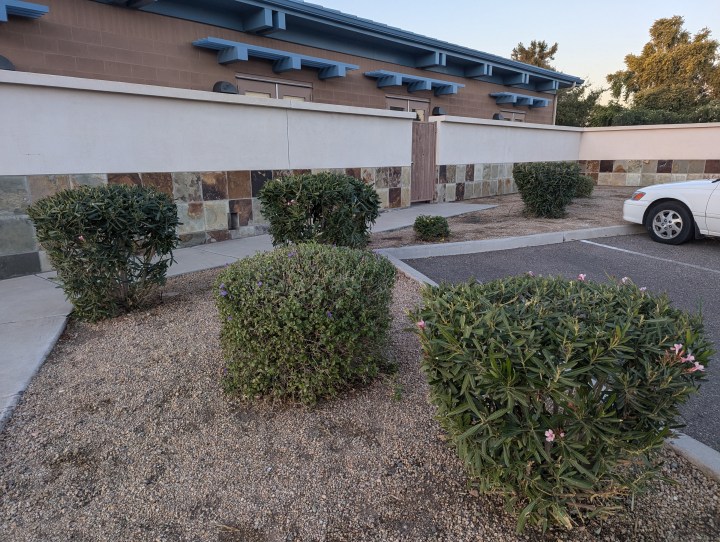
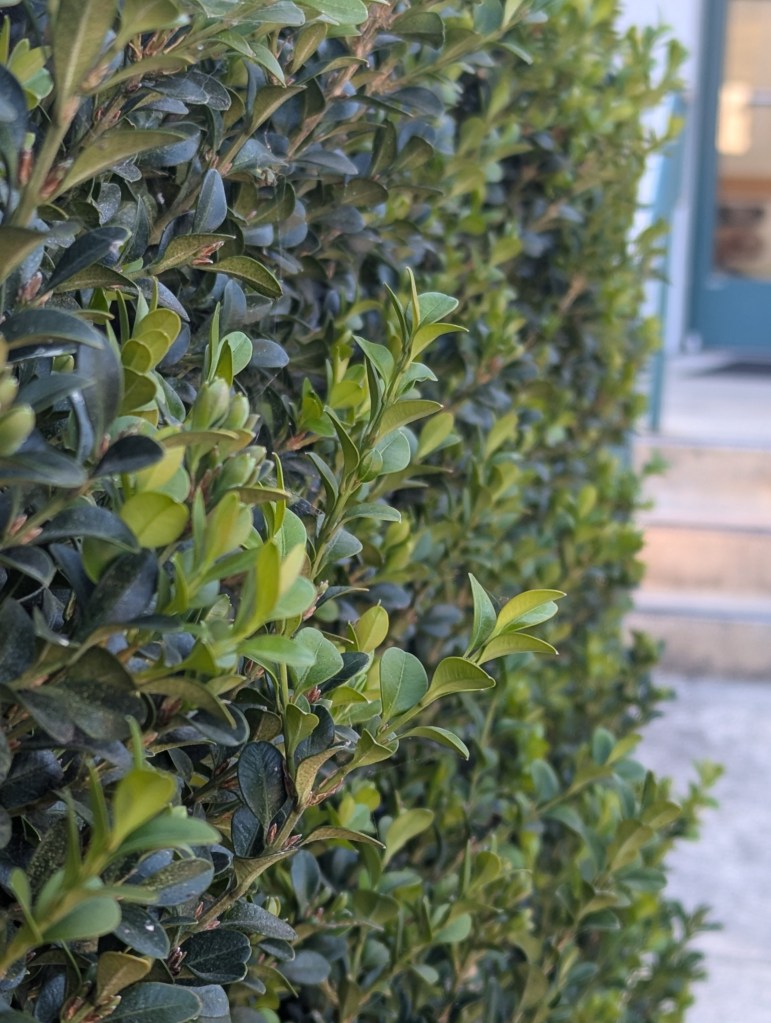
Shearing is certainly practical where formal hedges are desired, and for plants that have sufficiently dense and finely textured foliage. Yet, it is still important to shear such plants properly. Hedges should be slightly narrower at the top and wider at the bottom, so that lower foliage gets good sun exposure. Vertical surfaces are acceptable; but hedges should not be wider on top and narrower on the bottom.
Hedged or shorn plants should not be allowed to sneak out of their confinement to become obtrusive to usable space. For example, hedges along a driveway should not become so deep (from front to back) that they occupy usable space where cars could otherwise park. They function just as well if three feet deep as they would if they were eight feet deep!
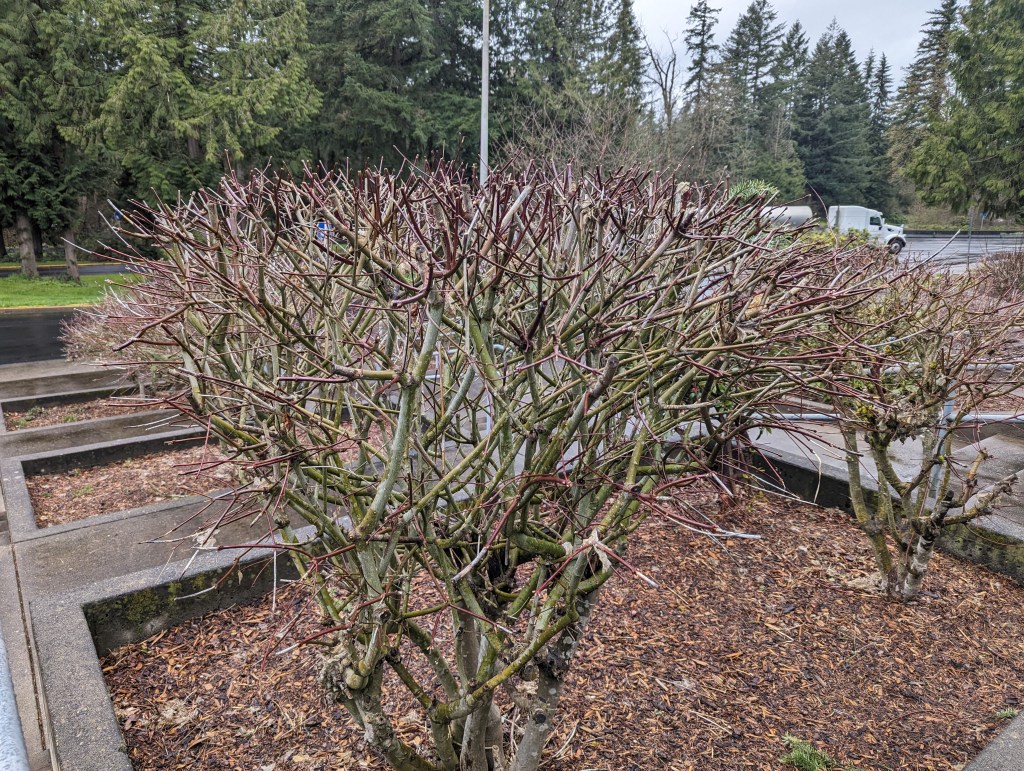
Most hedged plants that should not have been hedged can be salvaged with a bit or work. Unfortunately, the process can be quite involved and makes the shorn plants unappealing while they recover. Overgrown privet hedges can simply get cut back to bare limbs (late in winter) and allowed to sprout back. They should be cut back farther than they need to so that new growth has room to expand.
Overgrown photinias are not so tolerant to severe pruning, so need to be cut back selectively to allow sunlight into the interior. The largest and most obtrusive growth can be cut out completely at first, as long as some lower growth remains to sustain recovery and shade interior stems. As new growth emerges from within, more of the overgrown outer growth can get removed until it is replaced.
Alternatively, overgrown photinias, as well as oleanders, osmanthus, large junipers and some pittosporums can be allowed to grow wild on top if their obtrusive lower growth gets pruned away. Such overgrown plants often have appealing trunks within. The only problem is that hedges pruned up into rows of small trees do not obstruct lower views as they may have been intended to do, unless they get pruned up only on one side.
Remember that shearing is not the only option. Properly pruned plant are allowed to grow into some spaces, but not where they will get in the way. Natural growth habits should be exploited instead of oppressed.



 Tony Tomeo