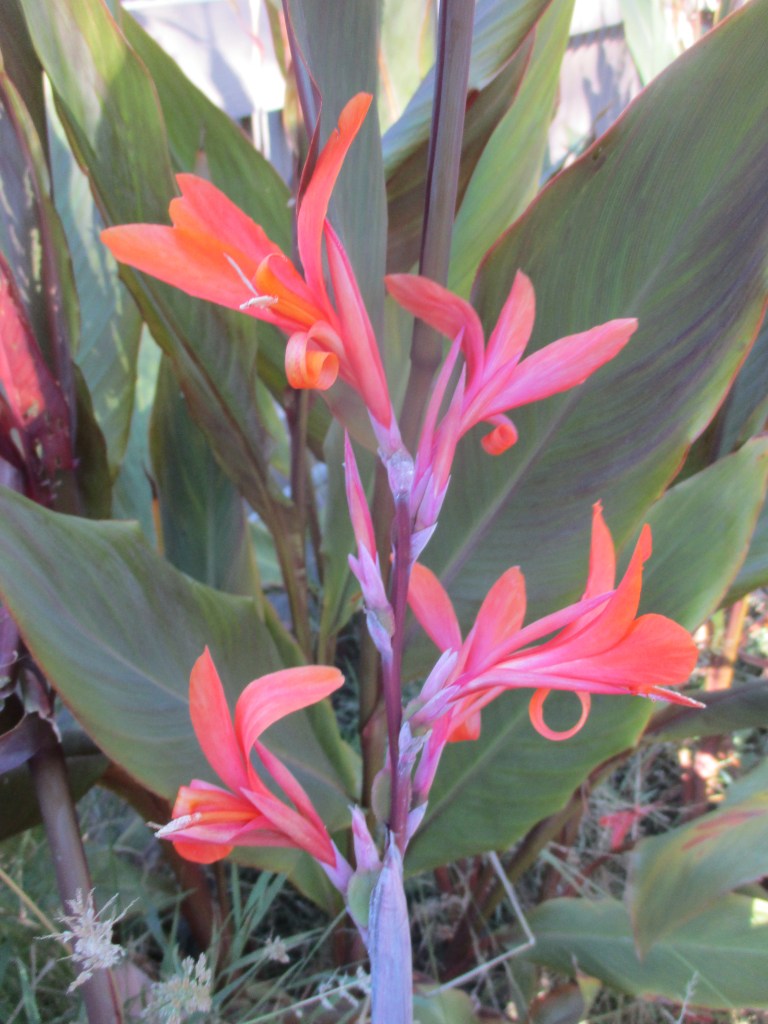
Perennials Perform Longer Than Annuals

Kaffir lily is a reliable perennial.

Annuals live for only one year. Biennials live for only two. Technically, all other plants are perennials. Horticulturally, this classification is much more specific. Generally, It does not include vegetation that qualifies as something else. Also generally, plants that qualify as perennial are herbaceous rather than woody. Of course, this is not as simple as it seems.

Palm trees that develop substantial trunks, for example, classify as herbaceous trees. So do arboriform yuccas, such as Joshua tree. Palms and yuccas that do not develop trunks can classify merely as perennials though. Different species of one genus could therefore classify very differently. Tree ferns may also qualify as herbaceous trees as they mature.

Many palms and yuccas, as well as agaves, bamboos and banana trees, are perennials. They might not seem as if they should be, since they can grow so large. Spring bulbs are more recognizable as perennials likely because of their small size. Lavenders and some salvia develop more woody stems than banana trees. They are perennials nonetheless.

Perennials are generally self perpetuating. Lavenders and similarly twiggy sorts may not not seem like they are, but they can be. Their lower stems that sprawl over the surface of the soil can grow adventitious roots. These adventitiously rooted stems can grow as new plants to replace the old. Herbaceous perennials are more overt about self perpetuation.

Lily of the Nile, for example, constantly produces new rhizomes to replace the old. It can do so indefinitely. Some may have done so longer than the oldest bristlecone pines have been alive. They do not retain old growth as evidence of their age. This self perpetuation is an advantage in home gardens. It facilitates both sustainability as well as propagation.

Lily of the Nile, Daylily, Kaffir lily and African iris are very simple to propagate by division. Once separated, either after bloom or while dormant, their rhizomes grow as new plants. Many perennials actually perform better after occasional division. It alleviates congestion by providing more space to grow and bloom. Canna and ginger rhizomes grow very fast. Canna may benefit from annual division.

‘Karpooravalli’ Banana

‘Karpooravalli’ is a relatively undemanding cultivar.

‘Cavendish’ and its variants have always been the most familiar types of banana locally. They are the most popular that are available from produce markets. From nurseries, they remain the most commonly available cultivars. A few other options are only beginning to become available. A few of these could be more reliably productive within local climates.

‘Karpooravalli’ has been available here for quite a while, but remains uncommon. Those who are familiar with it often describe it as wanting ‘only sunshine and water.’ It tolerates soil of inferior quality better than other cultivars, and craves less fertilizer. Within rich soil, it may crave none. It should likely stay away from fences that its pups could sneak under.

‘Karpooravalli’ is supposedly the sweetest of the Indian bananas. Although its fruit is a bit shorter than more familiar bananas, it is often a bit plumper. Ripe fruit is yellow with pale green blush, and delightfully aromatic. Foliage is more resilient to wind than that of most other cultivars. It can stand more than fifteen feet tall on its very vigorous pseudostems.

Banana Trees Actually Produce Bananas

Banana trees provide boldly lush foliage.

Banana trees, much like palms, arboriform yuccas and cordylines, are herbaceous trees. They develop no secondary xylem, or wood. What seems to be trunks are pseudostems, which are just leaves in very tight bundles. These pseudostems grow from subterranean corms, which can grow rather big. Each pseudostem is monocarpic, so dies after bloom.

Although they are very easy to grow, banana trees are not very popular. They can be too easy to grow, and become overwhelming. In some climates, frost can ruin their foliage for part of the year. In some exposures, their foliage can get shabby from wind. Some expect generous and frequent applications of fertilizer. All want generous and frequent irrigation.

These characteristics are contrary to growing banana trees merely for appealing foliage. Realistically, that is what most are for. Those of the Ensente genus are fortunately easier to maintain, but fruitless. Their lushly huge leaves are spectacular, relatively durable and generate much less debris. However, after a few years, they die without generating pups.

Banana trees of the Musa genus generate fruit, although some are primarily ornamental. A few produce delightfully colorful fruit that is too small, seedy or starchy to be palatable. Musa are more pervasive although less popular than Ensente. While Ensente come and go, Musa are reliably perennial. Several produce enough pups to potentially be invasive.

Musa, unlike Ensente, therefore develops colonies of a few to many pseudostem trunks. A few new trunks can replace each old trunk faster than they can deteriorate after bloom. Removal of deteriorating old trunks promotes growth and fruiting of new trunks. So does culling of congested new trunks. They propagate very easily by division with intact roots.

Because banana trees are tropical, they are unfamiliar with the seasons here. They grow fast with warmth but very slowly without it. They bloom randomly though. Flowers that try to bloom during autumn may stagnate long enough to rot through winter. Late fruit can do the same. Fruit that begins to develop early is much more likely to finish prior to autumn. Some cultivars develop faster.

Palm Trees Deserve Special Accommodation

Palm trees are bold landscape features.

Palm trees qualify as trees only because of their size and form. The most familiar sorts here develop trunks, and many grow quite tall. The smallest houseplant palms can grow as tall as dwarf citrus trees. Mexican fan palm can grow nearly a hundred feet tall. Palms are monocots, though, so are not actually woody. Technically, they are herbaceous trees.

Palm trees share this distinction with several other herbaceous trees. Banana tree trunks are just tightly rolled leaves. Tree ferns elevate their growth on roots that grow downward through rotting stem growth. Neither banana trees nor tree ferns can generate branches. Sago palms, cabbage trees and arboriform yuccas develop branches, but without wood.

Some palm trees develop a few trunks, but almost none develop branches above grade. Date palms can, but rarely branch. Doum palms typically branch, but are extremely rare. Any other branching palm trees are either aberrative or not really palm trees. Palm trunks do not grow wider as they grow taller. Adventitious roots can become buttressed, though.

All palm trees are evergreen, with either pinnate or palmate foliage. Feather palms have pinnate foliage. Each leaf consists of a central rachis that supports many narrow leaflets. Fan palms have palmate foliage. Each leaf radiates from the terminus of its stout petiole. Both basal leaflets of feather palms and petioles of fan palms are typically horridly spiny.

Since palm trees can not branch, they are not conducive to pruning to direct their growth. Their big but solitary terminal buds grow only upward and maybe away from shade. Any that reach high voltage cables can not go around, so necessitate removal. Clearance for overhanging obstacles is a major consideration for situating new palms. Some grow fast.

While unconducive to directional pruning, most palm trees benefit from grooming. Only a few shed their old foliage naturally. Most get shabby by retaining it. Many, particularly fan palms, eventually become combustible or infested with rodents. However, some may be visually appealing with neat beards of old foliage. Only arborists can groom large palms.

Perennial Plants Keep On Giving

Can a canna be too perennial?

Many popular annual bedding plants have potential to be perennial if they get a chance. Cyclamen commonly perform as a cool season annual, only until replacement with warm season annuals. However, after summer dormancy, their tubers can generate foliage and bloom again for several following winters. Replacement is just easier than maintenance.

Real annuals complete their entire life cycles, from germination to dispersal of seed and finally death, within a single year. Biennials generate vegetative growth through their first year, and then disperse seed and die during their second year. Perennials perform for at least two years, whether or not they get any opportunities to do so within home gardens.

Home garden culture complicates this classification though. Those who enjoy gardening expect perennial plants to reliably perform for many years or indefinitely. Many perennial plants do so with only minimal intervention. Some are self-sustaining, and might seem to naturalize. That may be why so many smaller or less vigorous types classify as annuals.

Another qualification of perennial plants is that they lack woody stems and roots. In other words, they are herbaceous. Palms and species of Yucca that develop trunks classify as perennial plants also, but for simplicity, the larger types are herbaceous trees. Generally, perennials are terrestrial. A few are epiphytic (live in trees) or lithophytic (live on stones).

Although several perennial plants can survive indefinitely here without intervention, most perform better with some degree of attention. Most ferns are neater if groomed to remove deteriorated fronds. Many grasses benefit from severe shearing during winter. African iris blooms better in response to regular deadheading to remove developing seed capsules.

Perennial plants are very diverse. It is impossible to generalize about their maintenance. One commonality among many is that they multiply. Lily of the Nile can produce so many individual shoots that it can eventually become too congested to bloom. Division of such shoots every several years or so promotes bloom, as well as propagates more plants for elsewhere in the landscape.

Perennial Plants Perform For Years

Perennial pea is similar to sweet pea, but as the name implies, it is perennial.

‘Perennial’ is a simple adjective that describes something that last for more than a single year. Horticulturally, it is not this simple. After all, every plant that is not an ‘annual’, which completes its entire life cycle within only one year, is technically a ‘perennial’. Those that develop lignified (woody) parts instead conform to such categories as tree, shrub or vine.

Even these categories are not as simple as they seem to be. Palms are trees, but without woody stems. Technically, they are merely very large perennials. Some consider them to be ‘herbaceous trees’. Yucca trees conform to the same category; while terrestrial yuccas are usual perennials. Sweet peas are annual vines. Perennial peas are perennial vines.

Many annual bedding plants, such as begonia, chrysanthemum, primrose, cyclamen and even busy Lizzie, are technically perennial. They could survive for a few or several years if they get such a chance. All ferns, including tree ferns, are perennials. So are bamboos, ornamental grasses, and many succulents. ‘Biennials’ are perennials that live two years.

Many of the most popular perennial plants have an indefinite life span. It is impossible to know how long they can survive. They are constantly replacing themselves with new but genetically identical parts. For example, bearded iris migrate and propagate by rhizomes that could have been propagating for centuries. New plants are identical to their original.

However, many perennial plants with potential to propagate indefinitely might eventually get shabby. New Zealand flax, after many years, may slowly migrate outward from where it started growing, leaving a bald spot in the middle. Outer shoots relocate easily to patch such bald spots, or unite as a fresh clump. Crowded lily of the Nile benefit from thinning.

Bulbs and bulb like plants are generally perennial, even if unreliable as such in the mild local climate. (Many bulbs and bulb like plants prefer more chill through winter than they get here.) Most of these sorts of perennials are dormant for part of the year, so die back to the ground. Hostas are bare through winter. Florists’ cyclamen are bare through summer.