
Vegetation management after several weeks of neglect has been . . . interesting. While we were unable to work, and during their most active growth of the year, weeds proliferated more than they had ever gotten away with before. As most get cut down by weed whackers, I pull those that mingled with desirable plants that weed whackers must avoid. It is a tedious process.
One of the more tedious of these projects, and perhaps the most tedious so far, required the removal of abundant weeds from a dense row of carpet roses. Fortunately, it was not as bad as I expected it to be. They young man who weeded this area during winter had done a remarkably thorough job, and eradicated most of the dreaded oxalis and tougher perennial grassy weeds.
The weeds that I pulled were big and impressive, but pulled out relatively easily. A few thistles were unpleasant to handle, but even they came out easily. Mock strawberry between some of the roses was still in good condition after the weeds that mingled with them were gone. I realize that I do not adequately appreciate all the weeding that happens here that I am not aware of.
Besides mock strawberry, another species that gets to stay in parts of the area that it spreads into is some sort of oregano. It seems to be common Italian oregano, but also seems to develop leaves that are slightly larger than they should be. It is too docile to be a problem for the roses, but occupies space that would otherwise be taken by weeds. Besides, it is nice to have around.
Even oregano needs to be managed sometimes. Quite a bit of it got pulled from the roses along with the weeds. I suppose it must be dried now.
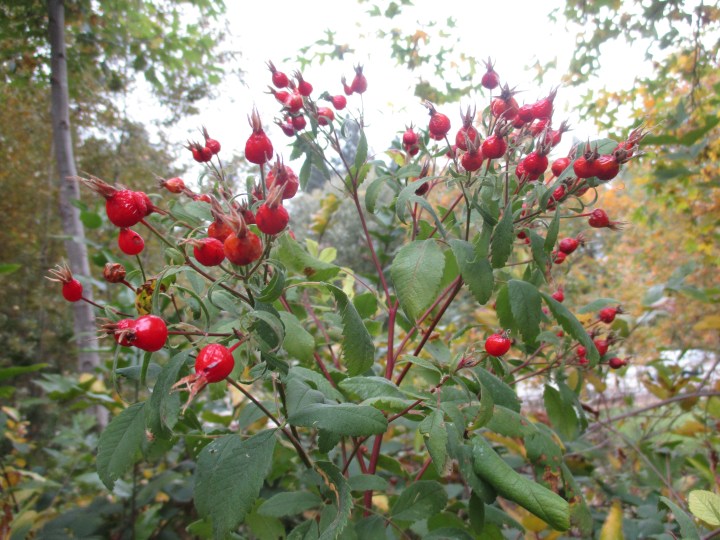 Chopped dried rose hips can be purchased from a supermarket in town that stocks an impressive variety of useful bulk herbs. They are used as a dietary supplement and remedy for several minor ailments. Although most of the copious vitamin C they contain while fresh is ruined by drying and storage, they are still popularly used as a remedy or preventative for colds and flu.
 Window boxes were supposedly invented in Venice to contain aromatic plants that repelled mosquitoes (and probably because garden space was so minimal in Venice). Hanging plants like nasturtium and ivy geranium are traditional window box plants because they do not obscure scenery or sunlight. Scented geraniums are also popular because they are be so strongly aromatic.
 There are only four seasons in which to grow herbs, but herbs are used for all sorts of seasonings. Most herbs are aromatic evergreen foliage. Some might be flowers, flower buds, stems, bark, seeds, roots or really any plant part. Those with the strongest flavors might be classified as spices. Herbs are used for culinary purposes. Many might be used medicinally. Some just smell pretty.
 They are NOT the same thing! Many herbs can be useful for both culinary and medicinal applications, but the distinction between the two is very important. Culinary herbs are used to flavor foods. Medicinal herbs are used like pharmaceutical drugs; but they lack the main safety feature of standardization. That means that they are potentially toxic and seriously dangerous if used improperly!
 It is considered to be an Italian herb, but since it was popularized in America in the late 1940s, oregano, Origanum vulgare, has become more popular in Italian-American cuisine than it is in Italy. It is now the traditional ‘pizza herb’ for American style pizza. Oregano happens to be one of the few herbs that is preferred dried rather than fresh. Only foliage is used, either before or after bloom.
 Herbs might be in our garden right now, whether we are aware of it or not. Trailing rosemary happens to be a popular and practical groundcover, and some varieties grow as low shrubbery. A few varieties of thyme also work as ground cover for small areas, or between stones. Various lavenders are popular low mounding shrubbery. Quite a few common landscape plants are also herbal.
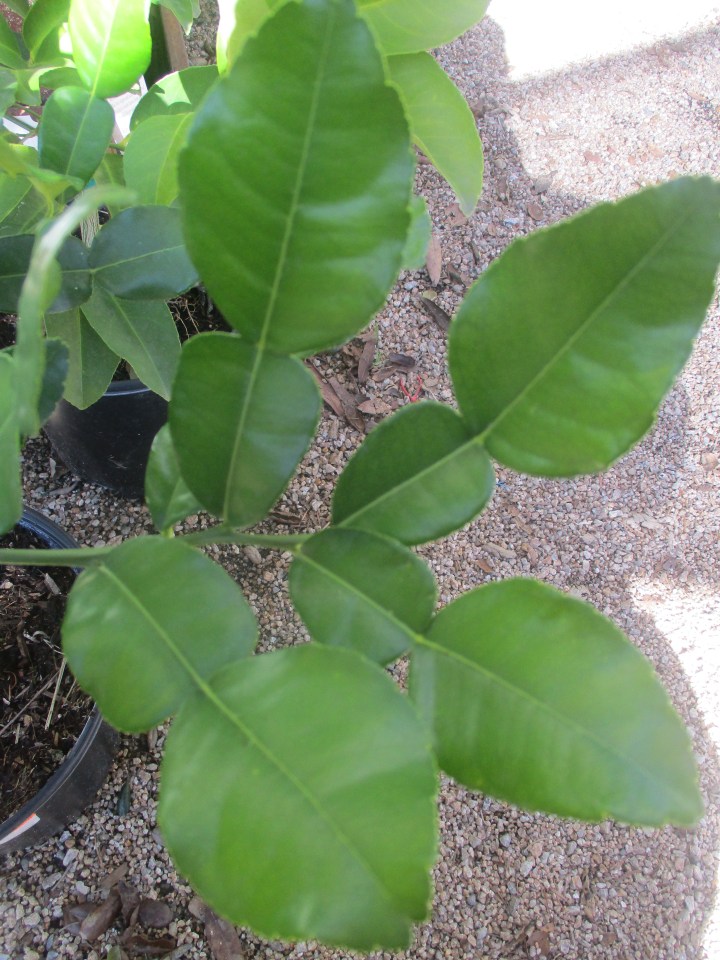 Of all the weird citruses available, this is one of the strangest. Makrut lime, Citrus hystrix, is not grown for its ugly wrinkled fruit. The rind and the juice are only rarely used for culinary or medicinal purposes. The important part of makrut lime is the aromatic foliage, particularly the modified petiole ‘wings’ that look like leaves. Fresh or dried, they are popular in the cuisine of Southeast Asia.
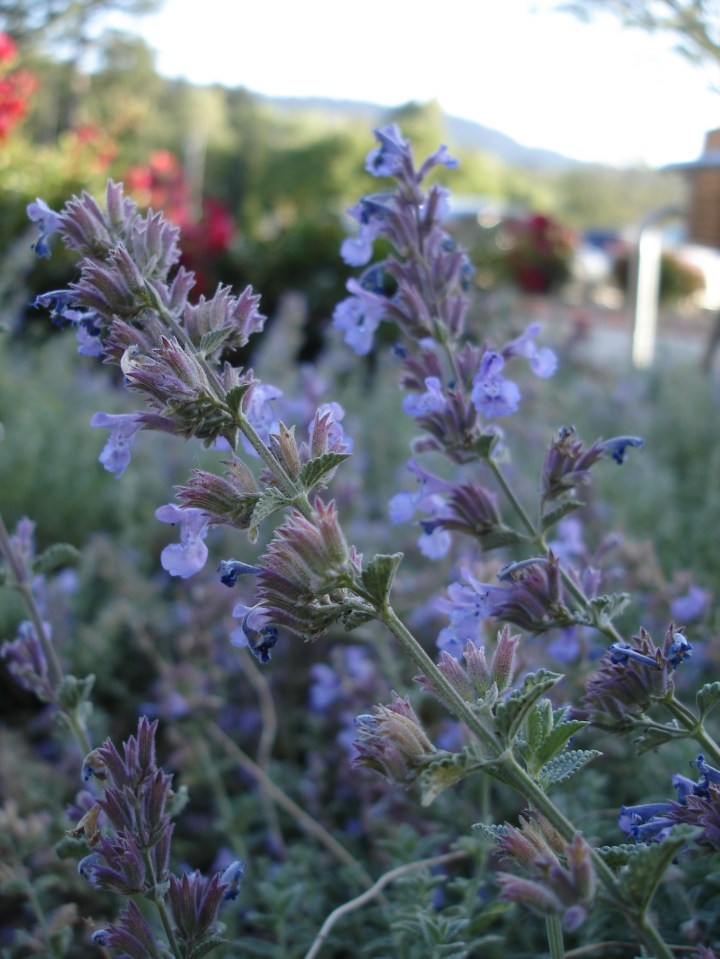 Out in deserts, where vegetation can be a scarce commodity, cacti, agaves and yuccas protect themselves from grazing animals with thorns, spines, caustic sap and distastefully textured foliage. None of these defense mechanisms is perfect. They only need to be better than what the competing specie are using. Many plants find that objectionable flavor and aroma work just fine for them.
 Tony Tomeo