
Vegetables grow mostly in designated vegetable gardens because they are not appealing enough for the rest of the landscape. Flowers for cutting might grow in designated cutting gardens, from which they are not missed after harvest. Culinary herbs can grow in herb gardens for the same reasons. Some might not be very pretty. After harvest, some might be too shabby for the landscape.
Of course, such perceptions are debatable. Home gardens are casual and customized. If Swiss chard, artichoke and other vegetables can grow in front yard landscapes, then culinary herbs can too. In fact, some already do. Rosemary, thyme, lavender and a few other culinary herbs happen to be popular for landscapes because they are so appealing and practical. There is a slight catch.
Culinary cultivars of herbs are distinct from landscape cultivars. Trailing rosemary is a landscape cultivar with sprawling growth that works well as a resilient ground cover. Another cultivar exhibits more sculptural upright growth. Both are well flavored. However, neither is as richly flavored as culinary cultivars of the same species. Yet, culinary cultivars are not so remarkable for landscaping.
Most of us are satisfied with landscape cultivars of rosemary for culinary application. Alternatively, culinary cultivars, which are rare in nurseries and landscapes, can adapt to landscape functions. Cultivars of culinary rosemary happen to make nice low and mounding hedging. Infrequent shearing or selective pruning does not constantly deprive it of too much of its more flavorful new foliage.
The same applies to several herbs that have both culinary and landscape applications. Compromise might be in order.
Incidentally, two culinary herbs, Grecian bay and bronze fennel, are presently quite trendy. Grecian bay or sweet bay (which is not California bay) is a very popular potted plant. In the ground, it can grow into a midsized tree. Bronze fennel is supposedly comparable to common fennel, but with sepia toned foliage. Chive, parsley and borage all work nicely with mixed perennials and annuals.

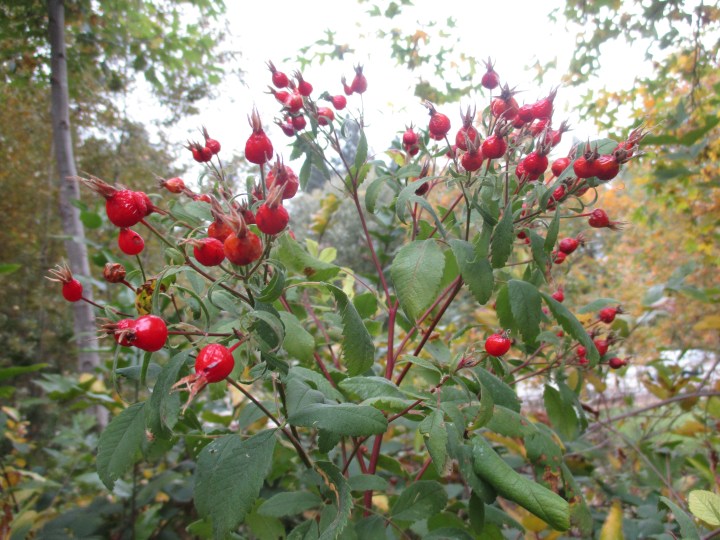 Chopped dried rose hips can be purchased from a supermarket in town that stocks an impressive variety of useful bulk herbs. They are used as a dietary supplement and remedy for several minor ailments. Although most of the copious vitamin C they contain while fresh is ruined by drying and storage, they are still popularly used as a remedy or preventative for colds and flu.
 Window boxes were supposedly invented in Venice to contain aromatic plants that repelled mosquitoes (and probably because garden space was so minimal in Venice). Hanging plants like nasturtium and ivy geranium are traditional window box plants because they do not obscure scenery or sunlight. Scented geraniums are also popular because they are be so strongly aromatic.
 There are only four seasons in which to grow herbs, but herbs are used for all sorts of seasonings. Most herbs are aromatic evergreen foliage. Some might be flowers, flower buds, stems, bark, seeds, roots or really any plant part. Those with the strongest flavors might be classified as spices. Herbs are used for culinary purposes. Many might be used medicinally. Some just smell pretty.
 They are NOT the same thing! Many herbs can be useful for both culinary and medicinal applications, but the distinction between the two is very important. Culinary herbs are used to flavor foods. Medicinal herbs are used like pharmaceutical drugs; but they lack the main safety feature of standardization. That means that they are potentially toxic and seriously dangerous if used improperly!
 It is considered to be an Italian herb, but since it was popularized in America in the late 1940s, oregano, Origanum vulgare, has become more popular in Italian-American cuisine than it is in Italy. It is now the traditional ‘pizza herb’ for American style pizza. Oregano happens to be one of the few herbs that is preferred dried rather than fresh. Only foliage is used, either before or after bloom.
 Herbs might be in our garden right now, whether we are aware of it or not. Trailing rosemary happens to be a popular and practical groundcover, and some varieties grow as low shrubbery. A few varieties of thyme also work as ground cover for small areas, or between stones. Various lavenders are popular low mounding shrubbery. Quite a few common landscape plants are also herbal.
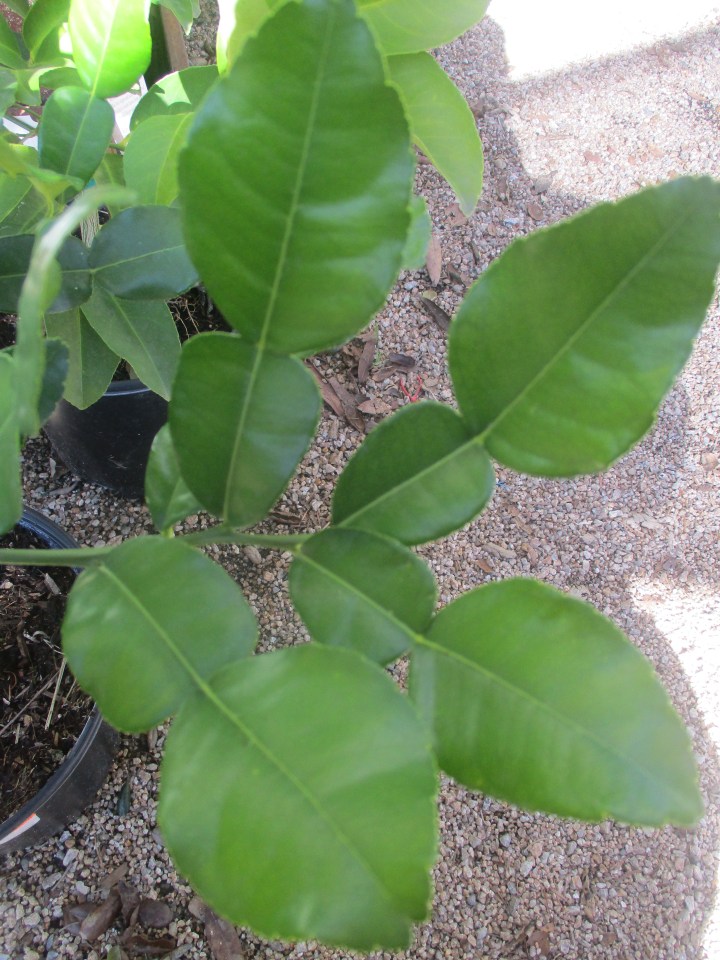 Of all the weird citruses available, this is one of the strangest. Makrut lime, Citrus hystrix, is not grown for its ugly wrinkled fruit. The rind and the juice are only rarely used for culinary or medicinal purposes. The important part of makrut lime is the aromatic foliage, particularly the modified petiole ‘wings’ that look like leaves. Fresh or dried, they are popular in the cuisine of Southeast Asia.
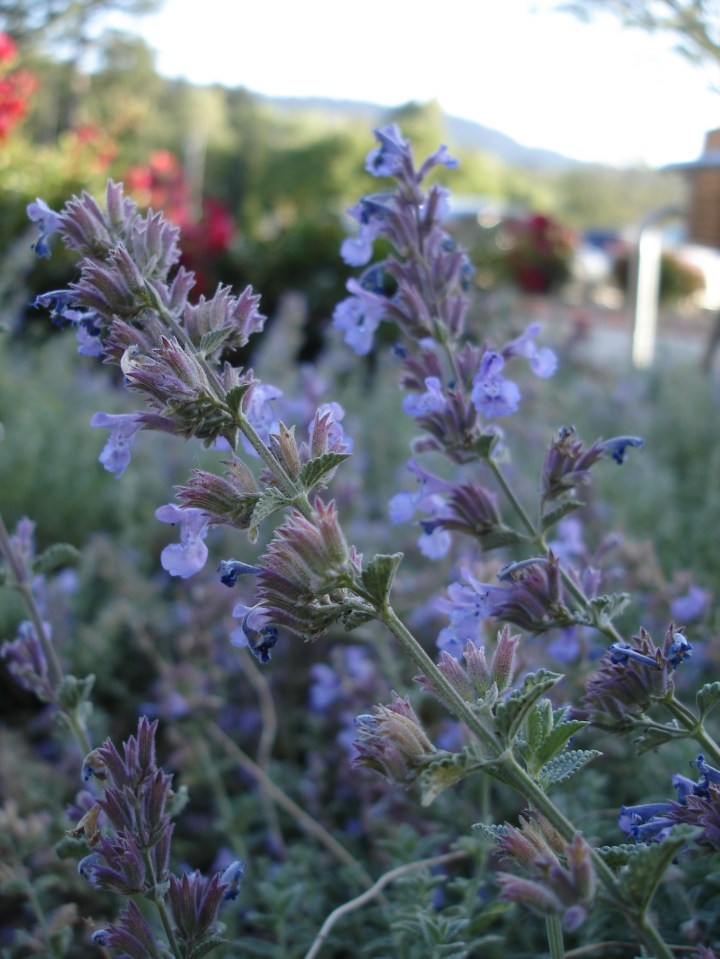 Out in deserts, where vegetation can be a scarce commodity, cacti, agaves and yuccas protect themselves from grazing animals with thorns, spines, caustic sap and distastefully textured foliage. None of these defense mechanisms is perfect. They only need to be better than what the competing specie are using. Many plants find that objectionable flavor and aroma work just fine for them.
