Integrated Pest Management Really Works

Pesticides are effective but innately toxic.

Wildlife is not the only menace to home garden fruits, nuts and flowers. All sorts of insect pathogens want their share also. Old fashioned nonselective insecticides can be helpful, but can leave toxic residue. They also eliminate beneficial insects that might help control pathogens. Integrated pest management, or simply IPM, is likely a more practical option.

Integrated pest management involves biological, cultural and physical pathogen control. Biological control can involve introduction of beneficial insects that consume pathogens. Ladybugs or lacewings are available from certain nurseries, for control of certain insects. However, doing nothing but allowing beneficial insects to proliferate naturally may work.

Some types of integrated pest management are standard procedure for home gardening. Cultural control may be as simple as growing varieties that are resistant to certain pests. This also involves not growing varieties that are susceptible to locally problematic pests. Sanitation is merely removal of detritus that some pathogens proliferate or overwinter in.

Physical or mechanical integrated pest management can be as simple as picking snails. Copper tape as a barrier to exclude snails and slugs is more involved but more effective. Sticky barriers, like ‘Tanglefoot’, prevent ants from cultivating aphid. (Ants cultivate aphid for sustenance.) Then, wasps, which are a biological control, control the aphid naturally.

Integrated pest management also includes various insect traps. Wasp traps use bait, like pheromones or sweet aroma, to attract stinging insects. Although they are not a problem for vegetation, stinging insects complicate gardening. Thrip traps attract thrip with yellow color, and trap them in glue. Apple maggot traps resemble developing apples, with glue.

Chemical pesticides are not beyond the realm of integrated pest management. However, such pesticides should be as nontoxic as possible. Furthermore, they should target only very specific pathogens. Although modern pesticides are safer than old fashioned types, they are still poison. They have significant potential to interfere with natural ecosystems.
Aphid Savor Fresh Spring Growth

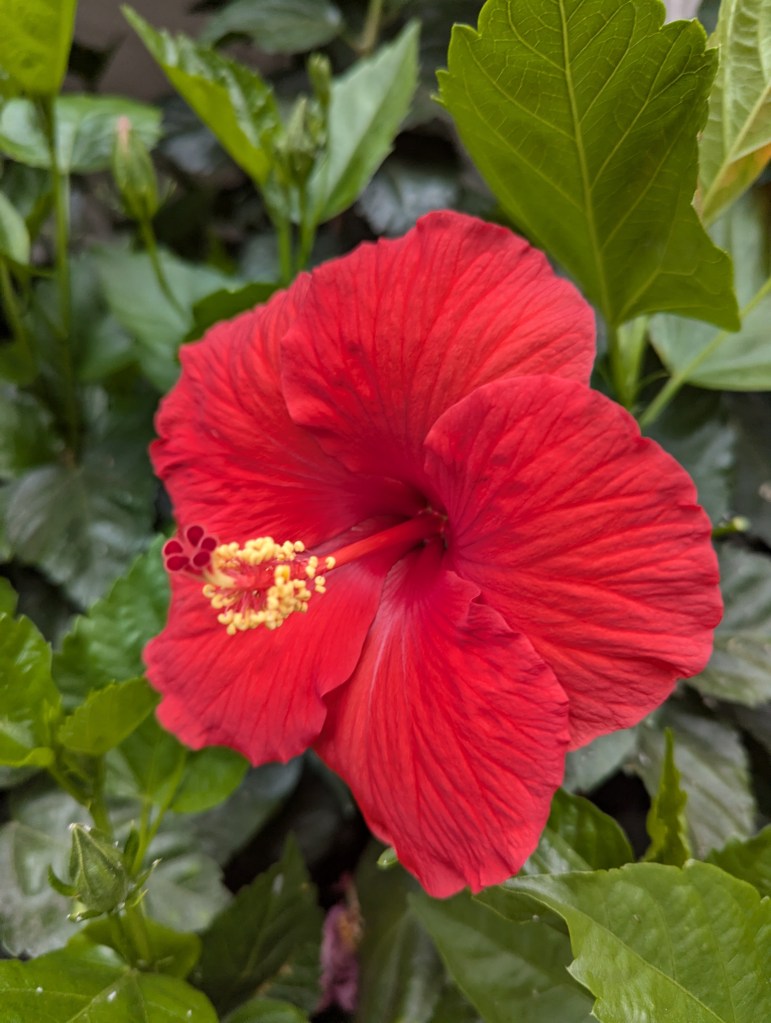
Not many hibiscus escape aphid completely.

Dormant pruning last winter did more than concentrate resources for flowers and fruits. It did more than eliminate superfluous growth, which many pathogens overwinter in. It also directed or concentrated resources for stems and foliage. Such growth now grows faster than some types of insect infestation. Aphid, though, are famously prolific and tenacious.

Hybrid tea roses very effectively demonstrate the advantages of dormant pruning. Those that lacked such pruning are more vulnerable to major aphid infestation now. Those that benefit from such pruning are significantly less vulnerable. Even with minor infestations, they may bloom well. Their vigorous stems grow at least as fast as aphid can proliferate.

It is too late for dormant pruning now. Furthermore, this is the beginning of aphid season. It continues until early autumn. Fortunately, aphid are usually not problematic for too long on the same hosts. Their natural predators often find and control them as their infestation culminates. They might continue to be present, but at a tolerable or unnoticeable degree.

Insecticides can be useful for severe infestation, but can interfere with natural processes. Some eliminate predatory insects that can naturally control aphid. If possible, it might be more practical to literally allow nature to take its course. Aphid are prolific, but essentially weak. Mildly soapy water kills them fast without killing many beneficial predatory insects.

Ants symbiotically cultivate aphid in exchange for their honeydew, (which is excrement). They protect their benefactors, and move them to ideal host material. Pruning citrus trees so that they touch nothing else can nearly block access to ants. Application of a barrier to their trunks, such as grease, blocks access more completely. Predatory insects still fly in.

This technique is practical for many small trees, but not low shrubby roses and hibiscus. For them, aphid might be easy to blast off with a spray nozzle on a hose. This procedure neither removes nor kills all aphid, but it can limit their damage. Repetition of the process will likely be needed a few days later, and maybe a few times. Aphid might be persistent, though.

Cicada

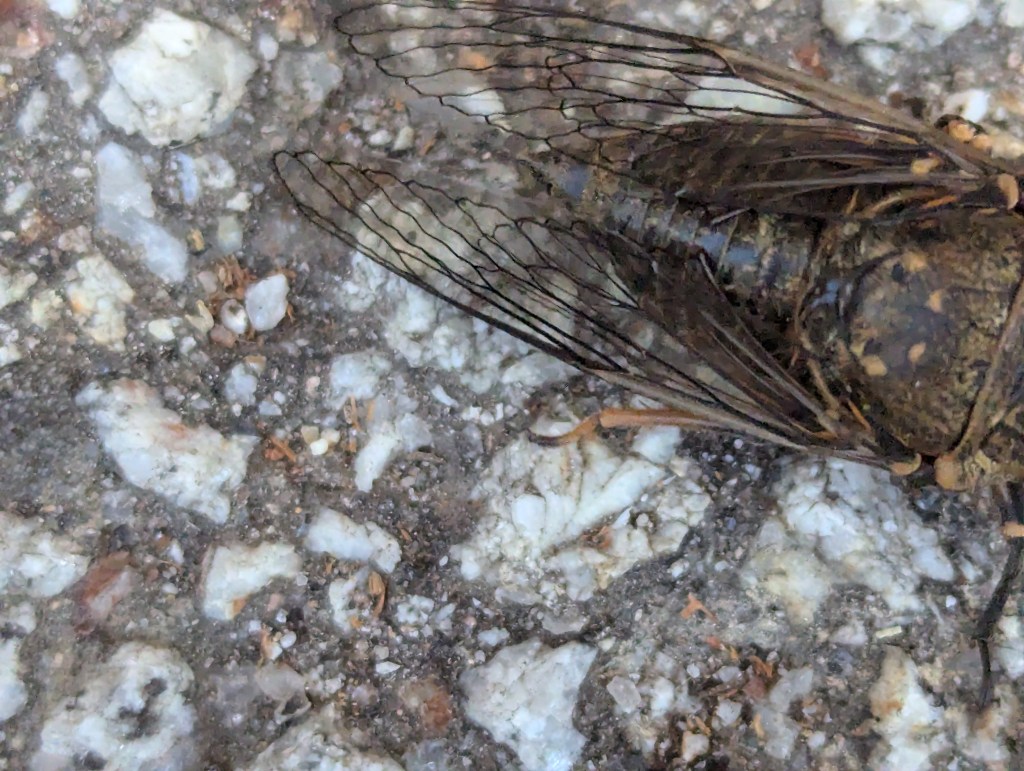
The left wing seems to be injured.

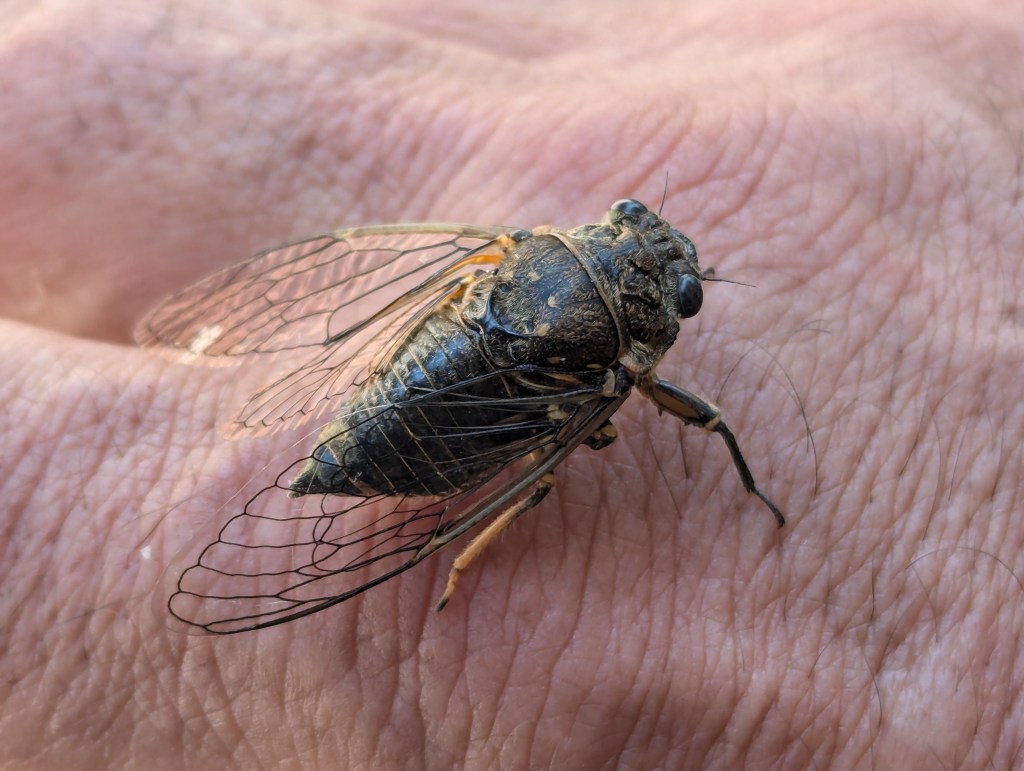
Contrary to common belief, cicadas are native to California. There are actually more native species here than in any other state. Of course, that is partly because California is so big, with so many distinctly diverse ecoregions. Cicadas are merely less prominent here because they are less numerous than they are within dense hardwood forests farther east. Within most regions here, they are somewhat rare. Even where they are most numerous, they do not congregate to form obnoxiously loud populations as they do elsewhere. Some native species are content to share their relatively mixed western forests with relatively few individuals of their own kind, and perhaps a few individuals of other cicada species. They are loud enough to find each other over significant distances. This cicada found its way to where I was enjoying the garden last Thursday. It was quite intimidating when it arrived with loud buzzing of its wings. It flew awkwardly before bashing into a steel building with a loud ‘PING’ that sounded more like a fat acorn falling onto the roof. I should have fled. It circled on the ground briefly before getting airborne again, and coming after me! It landed on my collar. I managed to maintain my composure as I removed it. I could see that one of its wings was impaired, as is evident in the picture above. That did not stop it from trying to fly again. It did not get far before landing on the asphalt driveway. It did not cooperate for the second picture below, which, although not of good quality, demonstrates that the impaired wing is not so impaired. It was likely merely out of whack from crashing into the wall. Before we could get acquainted, this no longer so intimidating cicada flew away as awkwardly as it arrived.

Both wings seem to be fine now. (This cicada did not want its picture taken.)

Insect Pathogens Prefer Less Biodiversity

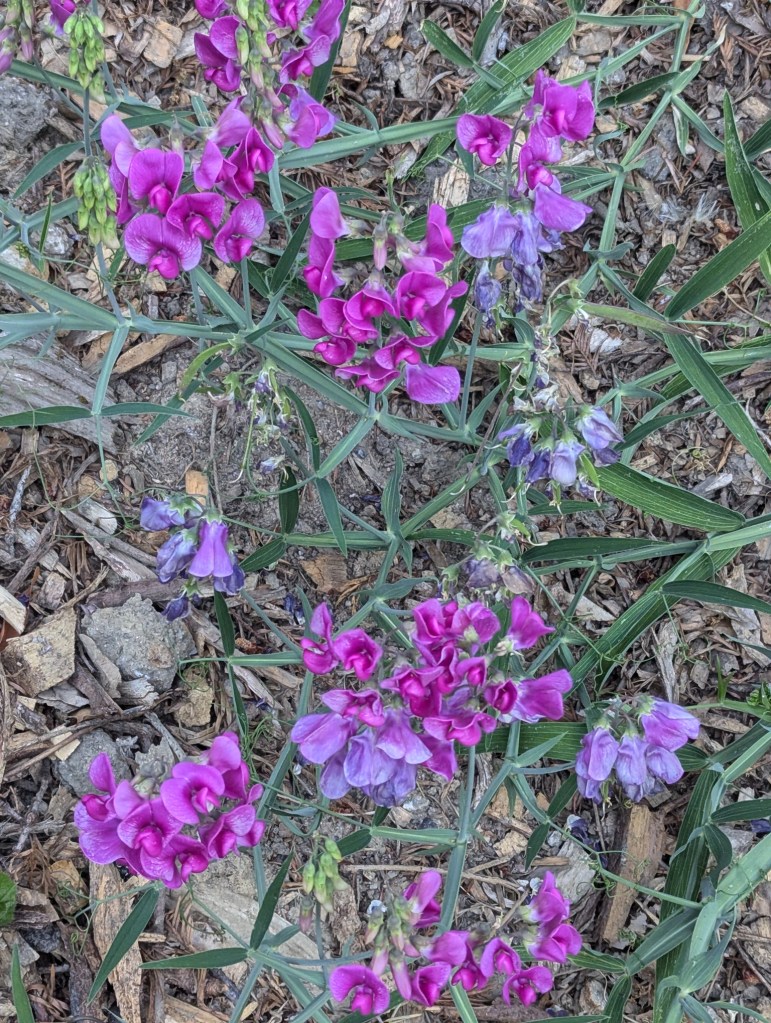
Wildflowers and even weeds promote biodiversity.

Weeds grow, bloom, disperse seed and die a natural death without much trouble. This is especially frustrating while insect pathogens destroy desirable vegetation. Weeds seem to be more resilient to insect infestation and damage. Many actually are. They use nature to their advantage. Cultivation of desirable vegetation interferes with natural biodiversity.

Those who enjoy gardening do not want to consider it to be unnatural. Nonetheless, it is. It involves many exotic species that are not natural components of regional ecosystems. Breeding to improve their performance unnaturally compromises their vigor. They rely on unnatural irrigation and perhaps fertilization. They sustain many exotic insect pathogens.

Most species within home gardens could not survive for long without cultivation. Several that can unfortunately become invasively naturalized. In the process, most that benefited from breeding revert to a feral status. Some eventually enjoy more biodiversity in the wild than in cultivation. They rely on naturally beneficial insects to mitigate insect pathogens.

Insect pathogens are quite often more problematic than weeds. However, generally, they are less problematic than they were years ago. This is partly a result of improvements of modern horticulture. Strangely though, it is also partly a result of sloppier gardening. Old fashioned monoculture for big areas is passe. Biodiversity became an incidental benefit.

More species of vegetation sustain more insect species. This might not have qualified as an advantage years ago. Now, garden enthusiasts are more aware that some insects are predatory of others. Predators may not eliminate all insect pathogens, but they often limit infestations. With adequate limitation, damage is likely to be tolerable or inconspicuous.

This is one of two primary reasons that insecticides are less common now. Besides their potentially hazardous toxicity, they are simply less necessary. When they are necessary, modern insecticides target more specific insects. They can kill pathogens without hurting beneficial insects. Vegetation that too frequently needs insecticides becomes unpopular.