 They were impossible to miss. They came at a weird time too.
As guests were arriving for a big event, a fire alarm was activated, and compelled everyone to leave the building that they were gathering in. The swarming bees met the guests as they came outside. The bees just happened to show up in the same place and at the same time as the guests were forced outside. Fortunately, no one seemed to mind, and some found the swarming bees to be compelling enough to stop and take pictures.
Initially, all the bees were flying in a big swarm. Those closest to the middle of the swarm were flying fast, sort of like angry wasps. No one saw the queen that the swarm was centered around, but she apparently landed on this redwood limb about forty feet up. The swarming bees slowly collected in this mass around the queen. By the time I took this picture, almost all were attached to the mass, with only a few still flying about.
At least three swarms started to establish new hives in buildings near here last year, and needed to be removed by beekeepers. One hive started to develop where another had just been removed. Another swarm was removed before establishing a new hive.
Bees seem to be attracted here. Perhaps they appreciate all the flowers in the landscapes. It is unfortunate that they can not stay where they typically try to move in. Most of us really like them.
This swarm was still here when I left, so I do not know what happened to it afterward. Hopefully, it either left the area, or at least moved into a place where it will not be problem, such as in a rotten tree trunk out in the forest where bees belong.
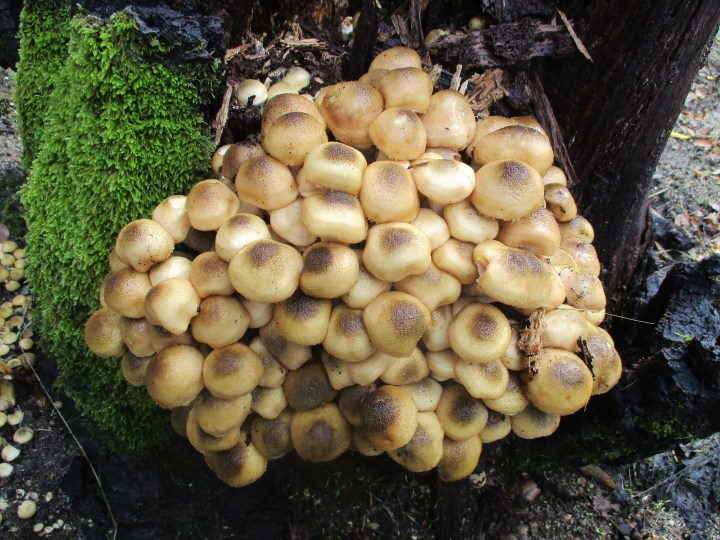 It is not easy for wild trees to adapt to a refined landscape. After a lifetime of adapting to their native environment and dispersing their roots to where the moisture is through the dry summers, they must adapt to all sorts of modifications such as excavation, irrigation and soil amendment. Newly installed plants grow into a new landscape while some mature trees succumb to disease and rot.
 You would think that those who maintain the County Parks would be prepared for anything. They nearly are. They know how to deal with gophers, moles, voles, weeds, flooding, all sorts of unpleasant weather, and of course, spontaneous limb failure of massive trees. They apparently did not plan for this one.
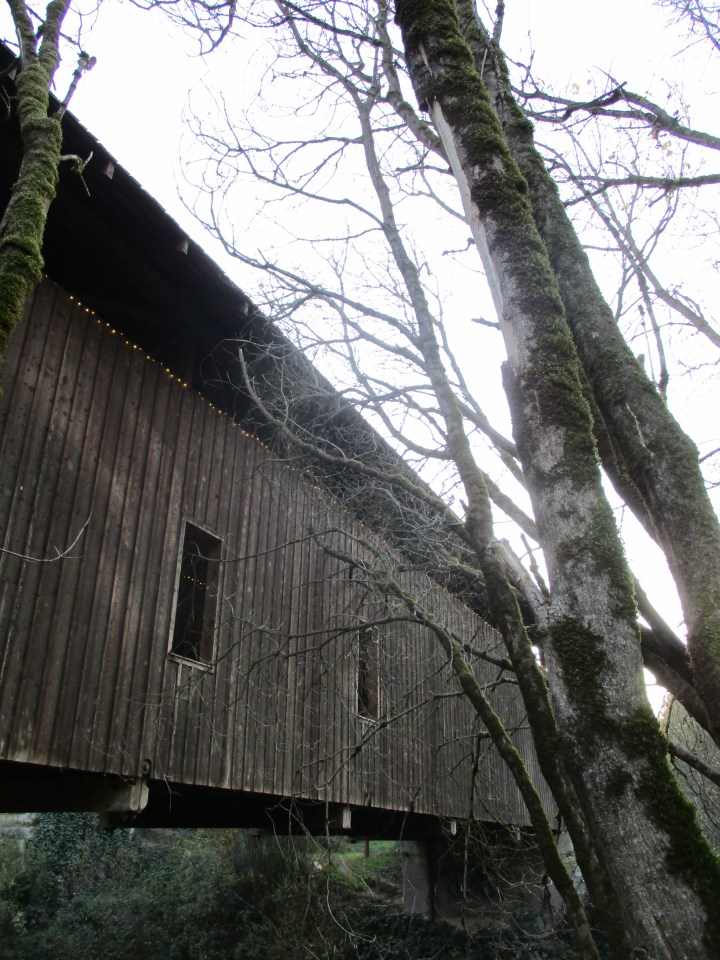
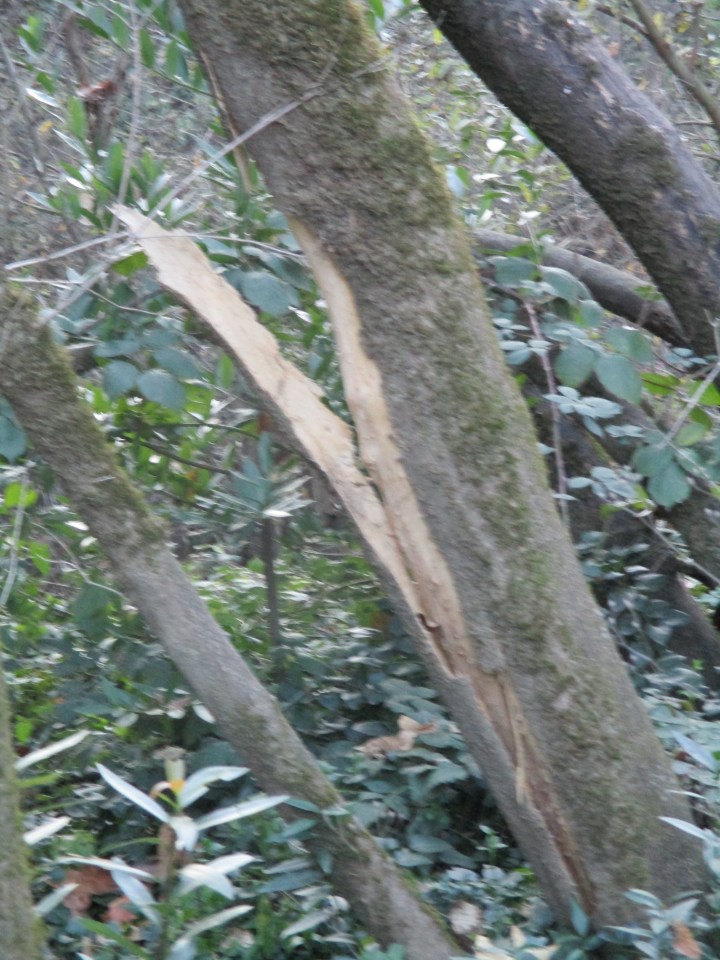
 What is killing the box elders? (

 Before you send me a comment about it, I am already aware that this is a very bad picture. It was taken with my primitive telephone because it was convenient at the time. This tired looking butterfly might not have waited for me to get the camera. It passed away, seemingly peacefully, right there on the hood of the old Chevrolet. It did not seem to be injured in any way. It probably simply expired like butterflies do after breeding. It is a natural process that the butterfly did not seem to be too distressed about. It gets no obituary because I am not qualified to write one. We are not sufficiently acquainted. I do not even know the specie of this butterfly.
 Remember our concern about the mistletoe? (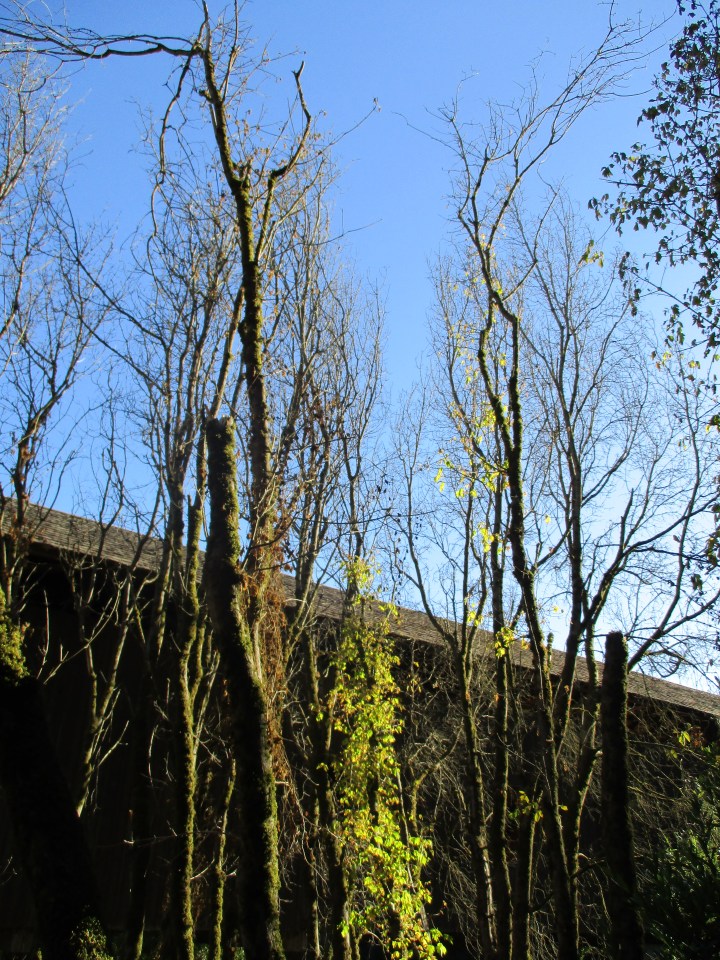
 Tony Tomeo