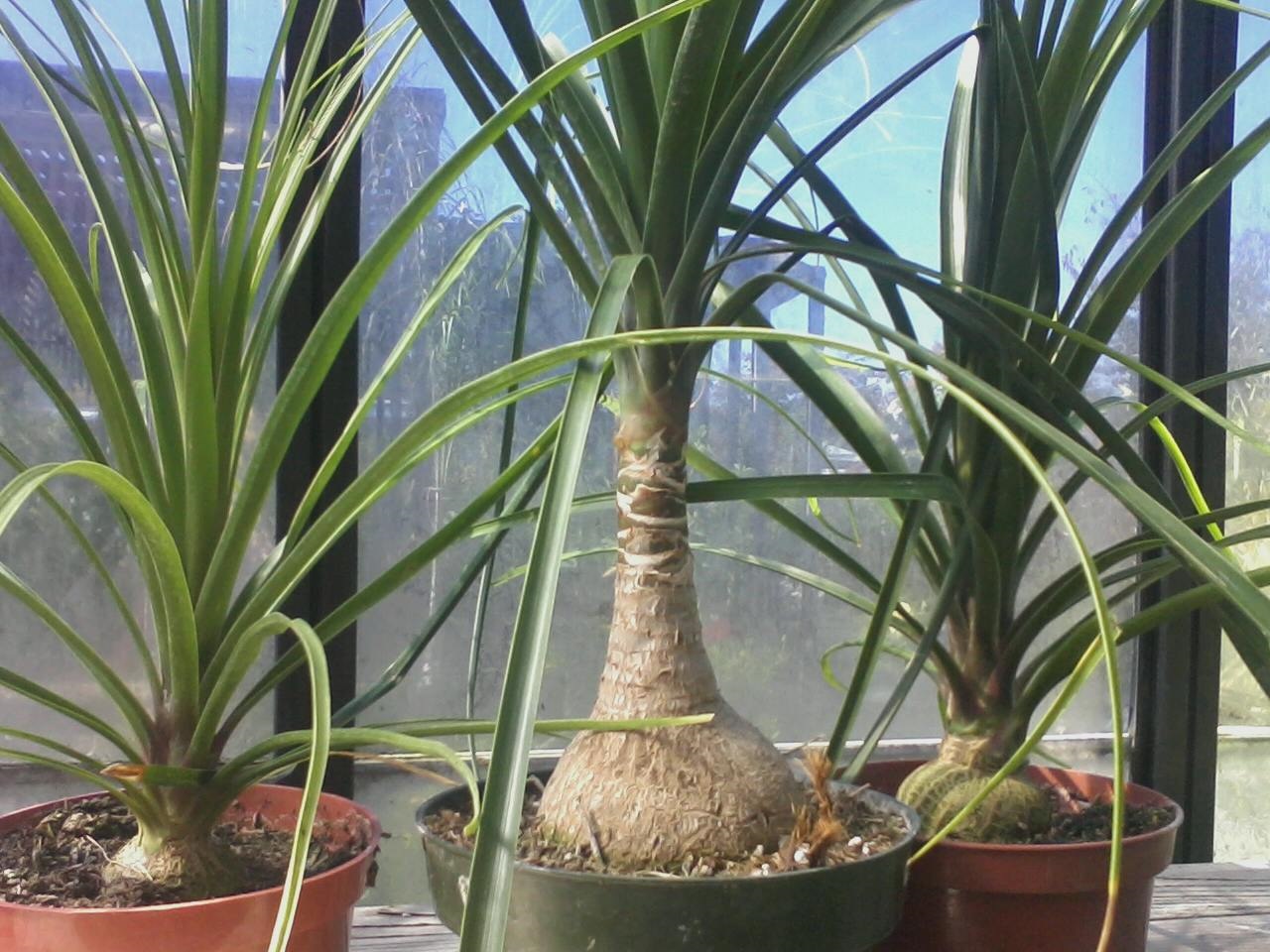
Houseplants Naturally Live Outside Somewhere.

Kalanchoe is a popular houseplant here, but grows wild in Madagascar.

The plants grown as houseplants may have serious disadvantages that prevent them from being happy in the garden, but have other advantages that help them survive indoors. They tolerate the lack of direct sunlight, the lack of humidity, the minimal fluctuations of temperature and the confinement to pots that they must endure for a domestic lifestyle. Their main difficulty in the garden is most are from tropical climates, so can not tolerate cold winter weather.

However, even happy houseplants like to get out once in a while. Even though most can not survive the coldest winter weather, the mildest winter weather is actually the best for them to get supervised outings. During clear and warm summer weather, sunlight can easily roast foliage.

Houseplants with glossy tropical foliage occasionally like to be rinsed of dust and whatever residue that they accumulate in the home. (African violets and plants with fuzzy leaves do not want water of their foliage!) Foliage can be rinsed in a shower or with a hose, but are more gently rinsed by very light drizzly rain.

Timing is important. Unusually cold or heavy rain should be avoided. Plants should be brought in before the sun comes out. It is probably best to not leave plants out overnight when it gets colder and they are not likely to be monitored. While the plants are outside, mineral deposits can be scrubbed from the bases of the pots.

The rain needs to fall this time of year anyway, so it may as well go to good use in as many practical ways as possible. It may be a while before it flows into the aquifer and gets pumped out to come back later for use around the home and garden.

So much of the water that gets used around the home has the potential to be used again. With modifications to plumbing and the sorts of soaps and detergents used around the home, used water, politely known as ‘greywater’, can be redirected, collected and distributed to the garden. Water may not be so important in the garden this time of year, but a Greywater Workshop happens to be coming up next week; and advance registration is required.

The Guadalupe River Park Conservancy’s Adult Greywater Workshop (for ages eighteen and up), ‘Greywater Basics: Reusing Household Water in your Landscape’, will be from 9:00 a.m. to noon on February 18th. The Workshop will be at the Guadalupe River Park and Gardens Visitor and Education Center at 438 Coleman Avenue in San Jose. Admission is $15, or $10 for members. More information is available, and reservations can be made, at www.grpg.org  or by telephoning 298 7657.

Tropical plants make a smooth transition as houseplants

Houseplants live outside somewhere.

Hibiscus, bougainvilleas, philodendrons and so many of the tropical and subtropical plants that we can enjoy in our gardens can only survive through winter in greenhouses in most other climates in America. Many of our tropical houseplants though, seem to be the same everywhere. Houseplants are generally grown in our homes not because they can not survive in our gardens, but because they ‘can’ survive in our homes.

Yes, houseplants are merely any plants, tropical or otherwise, that we grow in our houses. Yet, most and perhaps almost all of the plants that are best adapted to surviving as houseplants happen to be tropical plants. Tropicals do not need the seasons that they would get outside. Because many are native to dense and very competitive tropical forest environments, they are adapted to the sort of shade that they get in our homes, and survive on minimal volumes of soil that they have available while potted.

Nonetheless, they miss their tropical lifestyles. They only tolerate dry interior air, but would prefer more humidity. They would likewise prefer to be rinsed of dust more often than they can be in indoors. A regular supply of fresh organic debris to supply nutrients would be nice. However, if merely fertilized instead, tropicals are sensitive to salts and other toxins that eventually accumulate in the soil.

This is why some of the more resilient houseplants like to be brought outside for a gentle rinsing during a mild rain. As long as it is not too cool or windy, gentle rain rinses dust from the foliage and toxins from the soil. Plants can be brought out in the morning and brought in late to get as much time out in the rain as possible, but should not be left out overnight when it may get too cool. Even though they do not need any more moisture, plants can be watered by hose a few times to allow water to rinse freely through the soil.

Plants in overly decomposed potting soil are easier to repot with fresh soil while they are outside. Those that do not need to be repotted might still like getting grungy and potentially toxic mineral deposits scrubbed from their pots and drainage pans.

Houseplants Might Enjoy Some Weather

80404thumbThey were not always houseplants. They came from somewhere else. Most came from shady tropical forests, which is why they have such big dark green leaves, and are so tolerant of shady home interiors. They are pretty good sports about tolerating the domestic lifestyles that we subject them to, but they would really prefer to be thousands of miles away, growing wild back home.

Home interiors lack the sort of weather that the natural environments of houseplants get. The majority of houseplants would prefer rain, humidity, occasional breezes and perhaps more warmth. Some succulents may not miss the rain, but might crave heat and more sunlight. Regardless of what houseplants want, that can not get all of it in the comfort of our homes. They want to get out!

Unfortunately, that is not an option. Plants that have adapted to the relative darkness and protection from (shortwave or SUV) ultraviolet light in the home would roast if suddenly exposed to direct sunlight. (Windows block SUV light.) They would get battered by wind and damaged or killed by frost in winter. Those that become outdoor plants should be transitioned slowly and methodically.

However, there are a few times a year when the weather is not expected to get too cold, hot or windy, when houseplants can come out to the garden to get very lightly rinsed with a hose. Taking them out immediately prior to a light rain is even better. Rain is gentler and more sustained than a brief and coarse hose rinsing. Both techniques rinse away dust and residue from insect activity.

Rinsing does not eliminate mite, scale or mealybug infestations, but temporarily eliminates the residue from such infestations, and somewhat disrupts their activity. Mites prefer dusty plants to clean ones. While plant are outside, it would be a good time for any necessary repotting, or to apply horticultural oil to control mites or scale. Mineral deposits can also be scrubbed from saucers and the bottoms of pots. If hosed during sunny weather, houseplants should be shaded by a larger tree or awning.