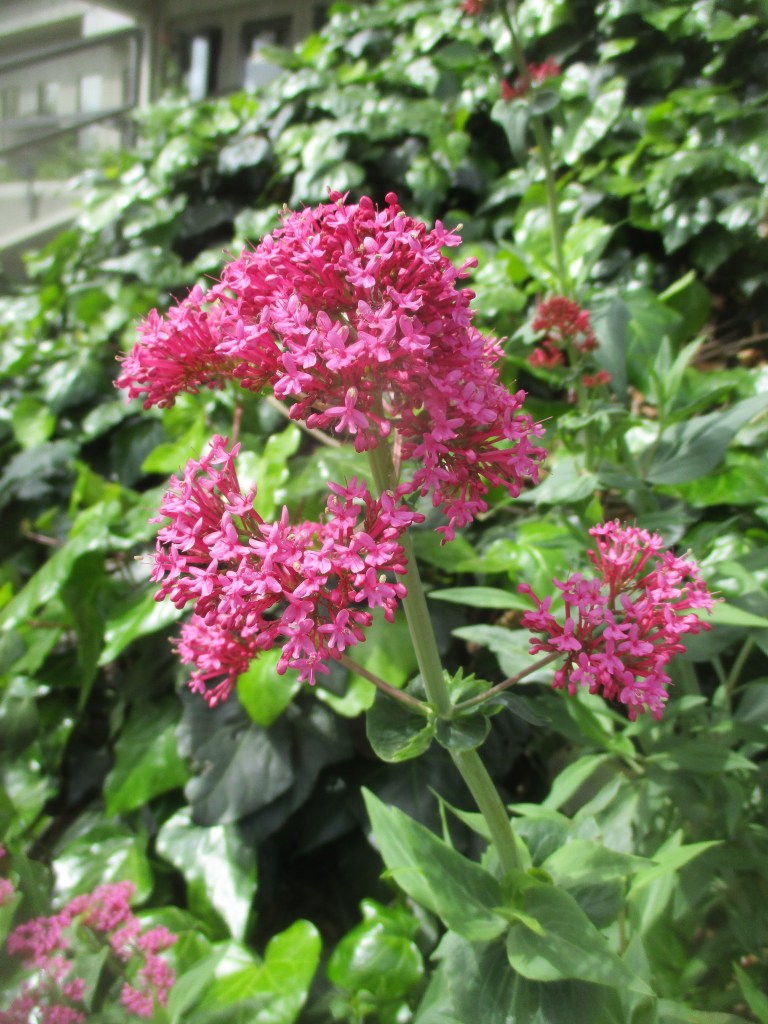
It is rare in nurseries, but common in and near old gardens. Jupiter’s beard, Centranthus ruber, was popular at least a century ago, and is now naturalized. It migrates so liberally, and transplants so easily, that there should be no need to purchase it. Those who grow it in established colonies may be happy to share. Specific cultivars can be elusive though.
Bloom is typically pinkish red, but can be brick red, purplish red, purplish pink, pale pink, or white. Individual flowers are tiny, but abundant, in rather dense and somewhat conical trusses. Bloom begins in spring and becomes more profuse until warm summer weather. A cool situation can inhibit primary bloom, but promote sporadic bloom through summer.
Jupiter’s beard prefers sunny exposure. Although a bit of shade can preserve foliar color and extend sporadic bloom through summer warmth, it compromises profusion of bloom. The slightly rubbery evergreen foliage of bloomed stems deteriorates slowly. Removal of older stems after bloom eliminates shabby growth, and also promotes fresh new growth.


 Tony Tomeo