FIRST Louisiana Iris!

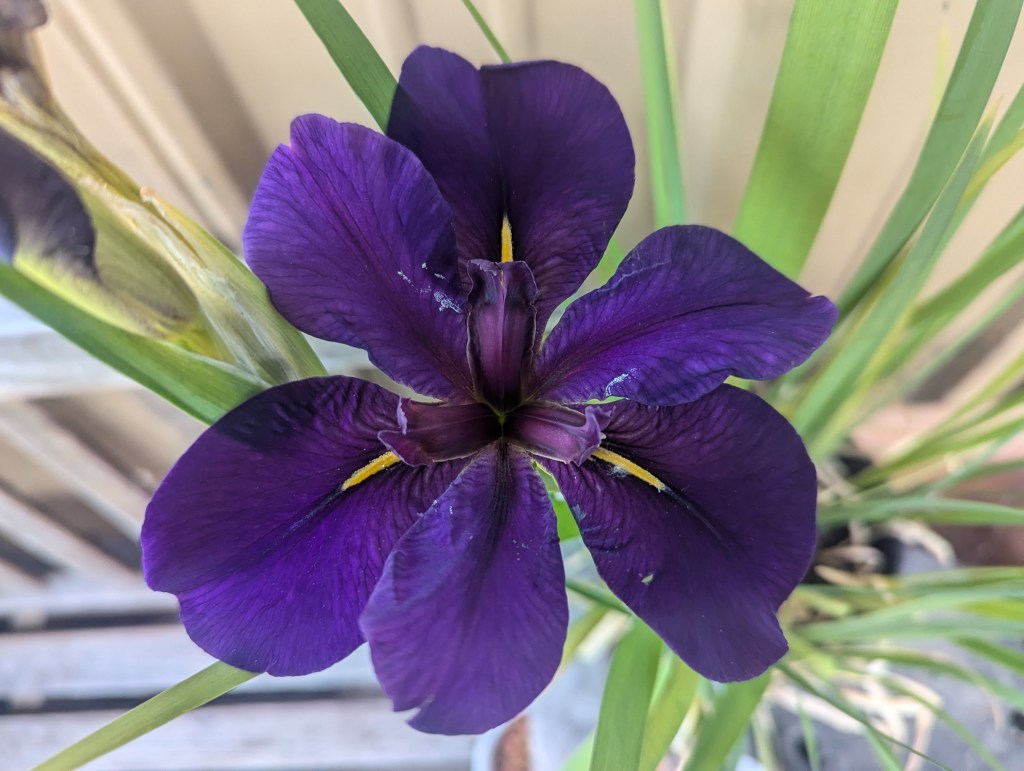
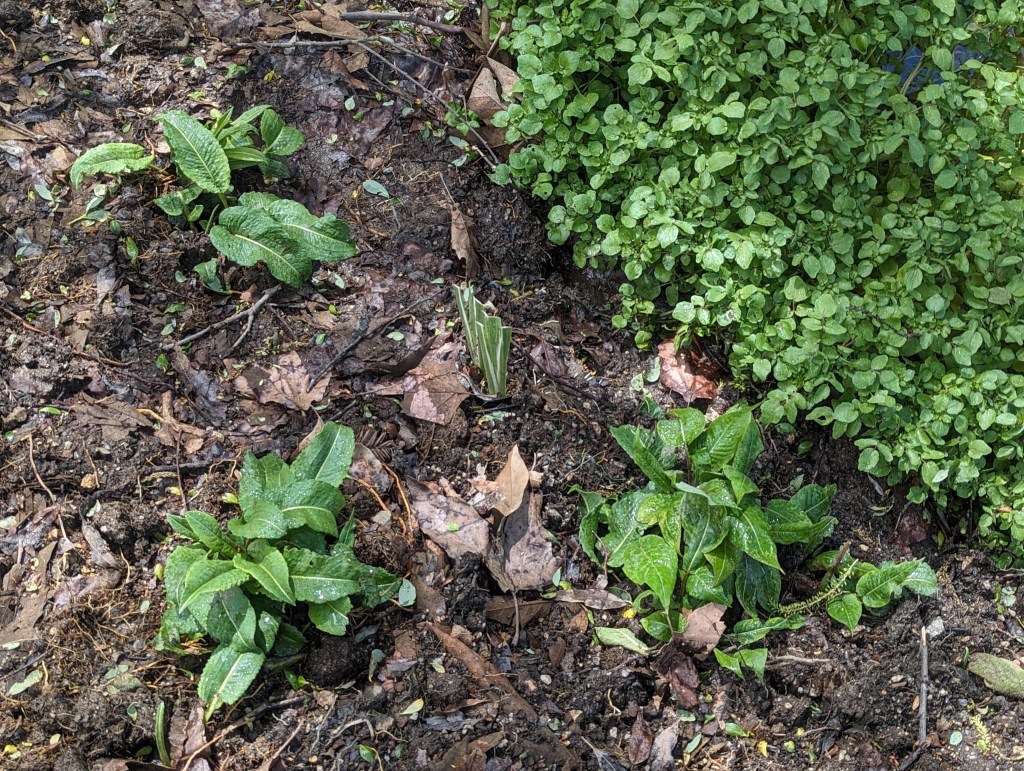
Finally, after two years, ‘Black Gamecock’ Louisiana iris from Tangly Cottage Gardening are blooming! At the end of winter of 2023, I divided a significant clump of them into enough pups for a thirty foot long row on the edge of the irrigation pond. They grew through summer, and should have bloomed for the following spring. Instead, a gopher ate all but a few pups. At the end of winter of 2024, I divided another clump into enough pups for a twenty foot long row in the same location, but closer to the water. Again, they grew through summer, and should have bloomed this spring, but instead, all but a few were eaten by a gopher. These that are now blooming are the survivors from the original batch, which were canned for their safety. They are blooming late, probably because they would rather be in the ground than canned. I will divide these into more cans now so they can proliferate and be divided again later, until there are twice as many as necessary for the edge of the pond. Then, I will plug some at the edge of the pond, into saturated soil that gophers can not dig under.

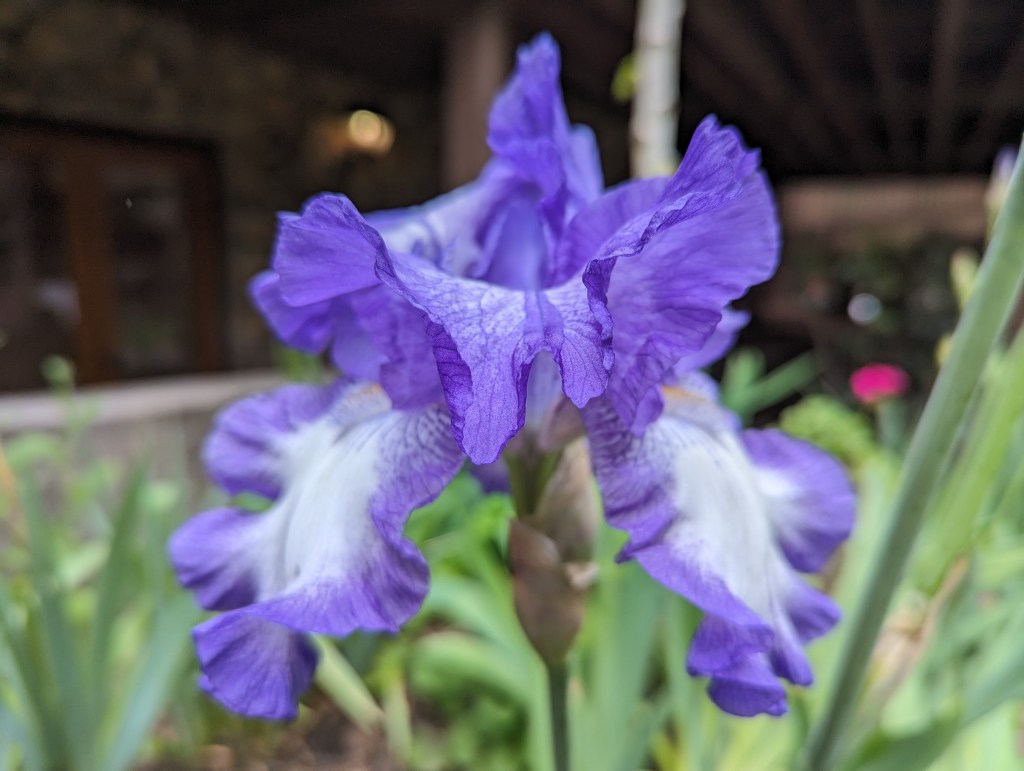
White Bearded Iris

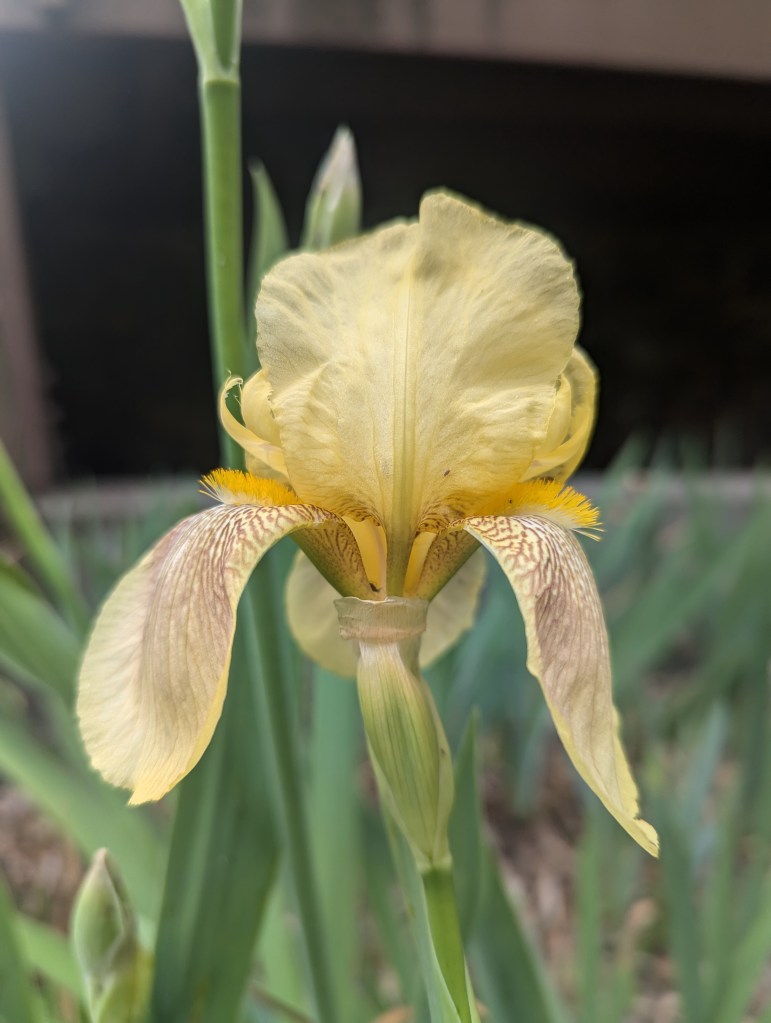
What makes this particular white bearded iris so special? Well, all three of the bearded iris that bloom white in my gardens are special. Each arrived with history, from other important gardens. I am impressed with this one now because it is so white. I did not know what color it was when I acquired it from its garden in Monterey so many years ago. I just wanted a souvenir from that particular garden after the owner passed away, so grabbed a bit of it during the estate liquidation. It bloomed for its first season, but was a dingy grayish white. I thought it might get whiter for its second season, but continued to bloom annually with the same unimpressive color. I could not eliminate it from my collection because of its historical significance. Because it is so uninteresting, I had not shared it or, until recently, tried growing it anywhere else. Then, because bearded iris grow and proliferate as they do, I brought a small bit of it to the Iris Bed at work, where I got this picture of it. I can not explain why it is so much whiter than it had been, but I am impressed.

Pacific Coast Hybrid Iris

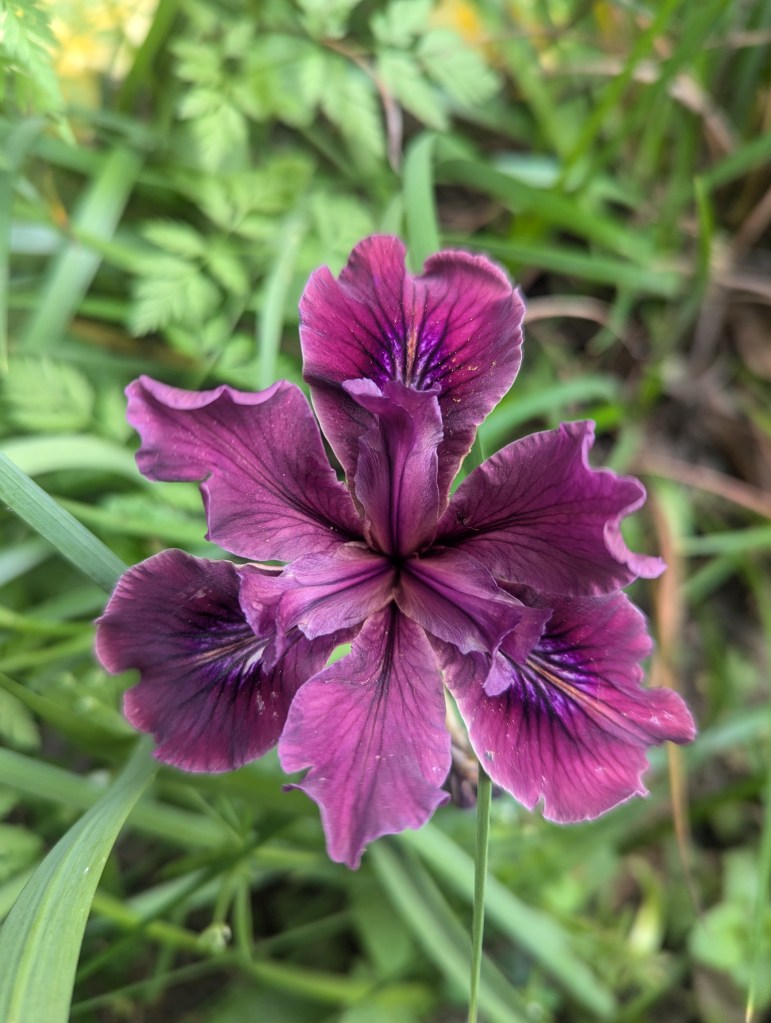
Hybridization has produced unnaturally rich color.

Several species of iris are native to the West Coast of North America. Iris douglasiana is probably the most colorful species. Hybridization with the others improved its floral color range and other characteristics. Several of such hybrid cultivars collectively became the Pacific Coast hybrid iris. However, the various cultivars developed from various ancestry.

Most Pacific Coast hybrid iris are finishing their bloom about now. Some bloomed earlier, at the end of last winter. Their flowers can be various shades of blue, purple, red, orange, yellow or white. This includes lavender, burgundy, rust, rose, coral, gold or creamy white. Only green colors lack. Brown pods of sterile seed are visually unappealing after bloom.

Flowers are about three or four inches wide and stand about a foot tall. Individual flowers do not last long, but bloom in succession for quite a while. Grassy and dark green foliage develops low mounds that stay lower than bloom. Propagation is simple by division from large foliar mounds during autumn. Generous watering can cause rot and patchy growth.

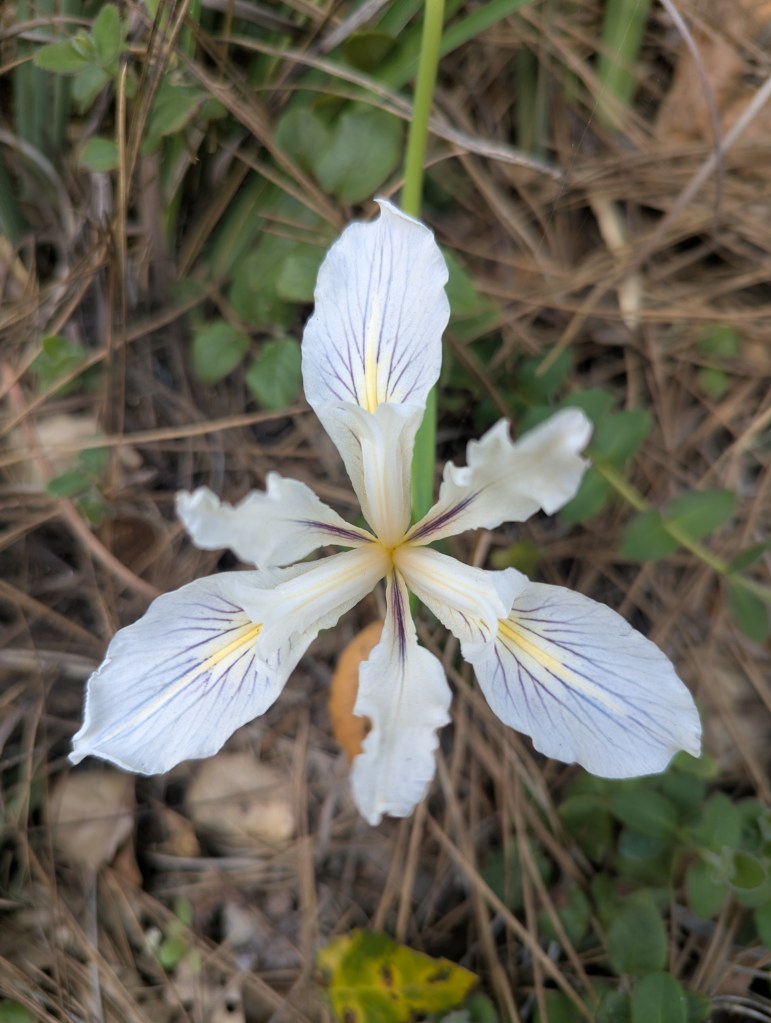
Iris fernaldii

Only four species of Iris are native here. The problem with identifying them is that three of them can be visually similar. Only Iris douglasiana is reliably and distinctively blue. Iris longipetala and Iris macrosiphon are generally pale blue, but can be as pale white with pale yellow veins as Iris fernaldii. Without keying it out, I can only guess that this particular iris is Iris fernaldii. The others seem to develop slightly larger and denser herds with slightly more upright foliage. Iris fernaldii develops relatively smaller herds and more relaxed foliage that does not stand as upright. Even what seems to be large herds are typically groups of smaller herds. Their flowers can lay almost on the ground. they shrivel too soon after cutting to work well as cut flowers. Nonetheless, they are a delightful native wildflower that is blooming as freely as it can where it grows wild. I really should relocate those that grow where they are not wanted, rather than discard them with other weeds. They might compete with weeds and other less visually appealing naturalized vegetation within areas that are not landscaped. Actually, they might be appropriate for a few areas that are casually landscaped.

Six on Saturday: Bearded Iris 2025

Too many iris are blooming now to document. Therefore, I limited my selection to a few bearded iris, which includes one that is not within the landscapes at work. Perhaps some of the other species can be featured next Saturday. With so much in bloom, it is difficult to be selective.

1. Of these Six, only this one does not inhabit the Iris Garden at work. It inhabits a small roadside planter in front of the totally awesome White Raven Coffee Shoppe in Felton. I believe that it is more caramel and charcoal colored than it appears to be in this picture.

2. Of these Six, only this one is likely identified. It conforms precisely to the descriptions of ‘Rosalie Figge’, including its habit of blooming sporadically throughout the year, with abundant bloom about now. Another participant of Six on Saturday identified it as such.

3. This relatively small pale yellow but nicely fragrant iris might be feral. It was found at a dumpsite for landscape debris, so could have grown from a deadheaded seed. It would likely be bigger and more colorful if it had grown from a discarded rhizome of a cultivar.

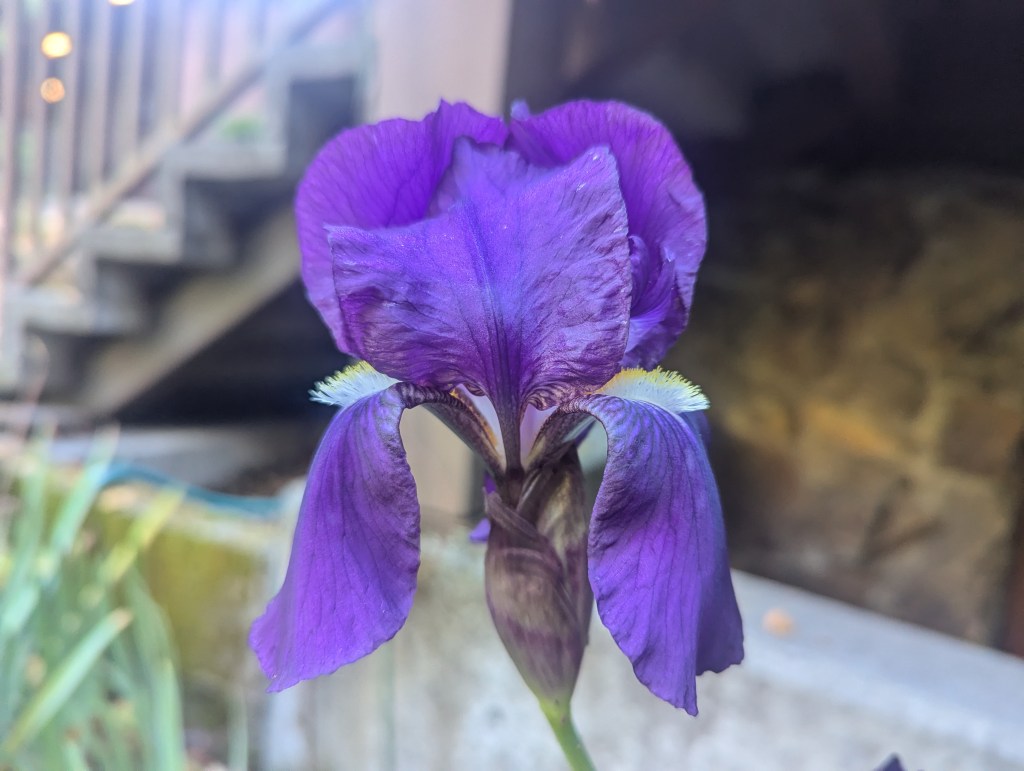
4. This big blue iris is as floppy as beagle ears, and is so heavy that its tall stems fall over if not staked. That is why its nearly horizontal stalk is obscured in its background behind it instead of visible below it. It is not actually as purplish as it seems to be in this picture.

5. Although more billowy and likely a bit bulkier, this garish iris needs no staking. Its tall and rather thin floral stems are sturdier than they seem to be. This happens to be one of my favorite bearded iris in this particular group. It was originally a gift from a neighbor.

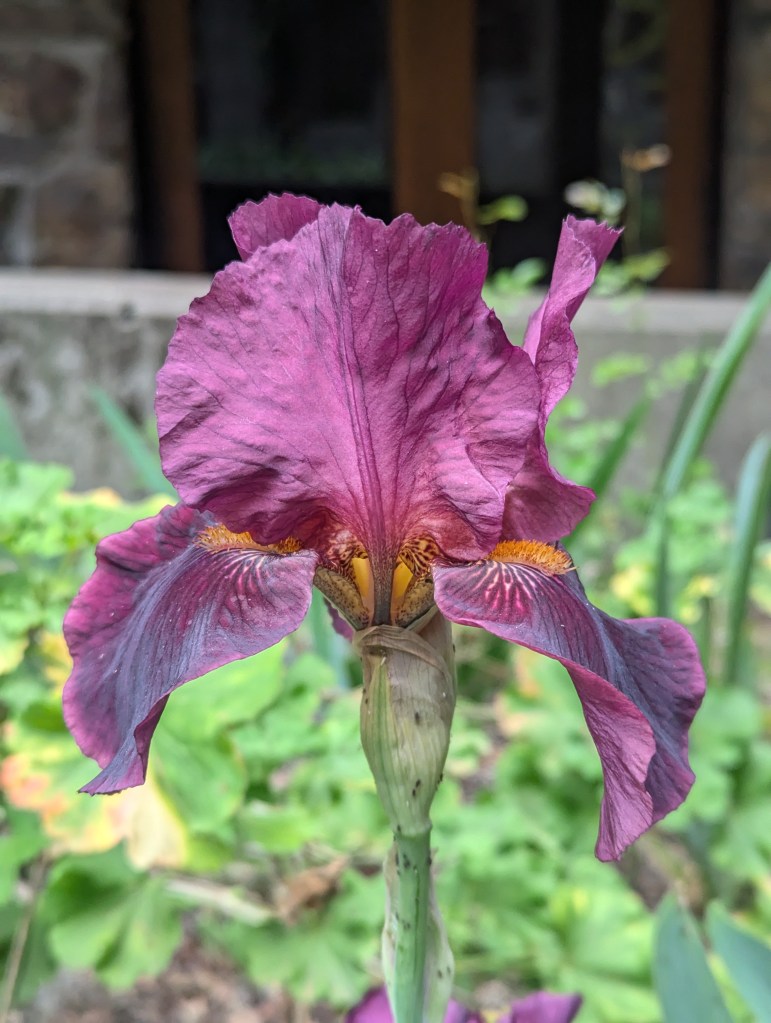
6. Color is again deficient. This bearded iris is not as purplish as it seems to be here. It is actually a rich burgundy red. I remember the origins of all the other iris here but can not remember how this one was acquired. I do not remember ever seeing it before this year.

This is the link for Six on Saturday, for anyone else who would like to participate: https://thepropagatorblog.wordpress.com/2017/09/18/six-on-saturday-a-participant-guide/

Six on Saturday: a Week of Flowers

‘A Week Of Flowers’ at ‘Words And Herbs’ reminded me that I really should share more floral pictures. These are from yesterday, though, not all year.

1. Salvia chiapensis, Chiapas sage blooms as long as the weather is warm. Then, it takes so long to realize that the weather is no longer warm that, by the time it finishes the last of its bloom, the weather is beginning to get warm enough for it to resume bloom again.

2. Cestrum fasciculatum ‘Newellii’, red cestrum blooms about as continuously. It should have finished blooming about a month ago, but will likely continue until more sustained cool weather just like it did last year. After pausing briefly, bloom resumes before spring.

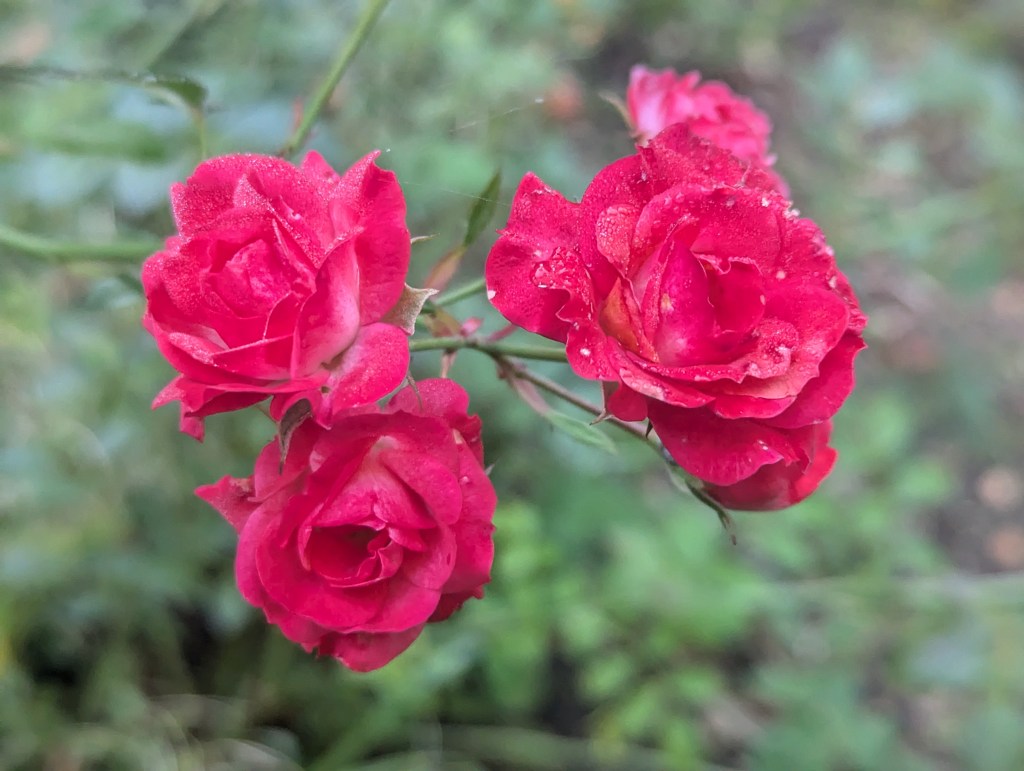
3. Rosa spp., carpet rose will eventually stop blooming and defoliate just long enough to get pruned back to the ground. It grows back like weeds, but such vigorous growth takes some time to decelerate enough to bloom, which might not be until the middle of spring.

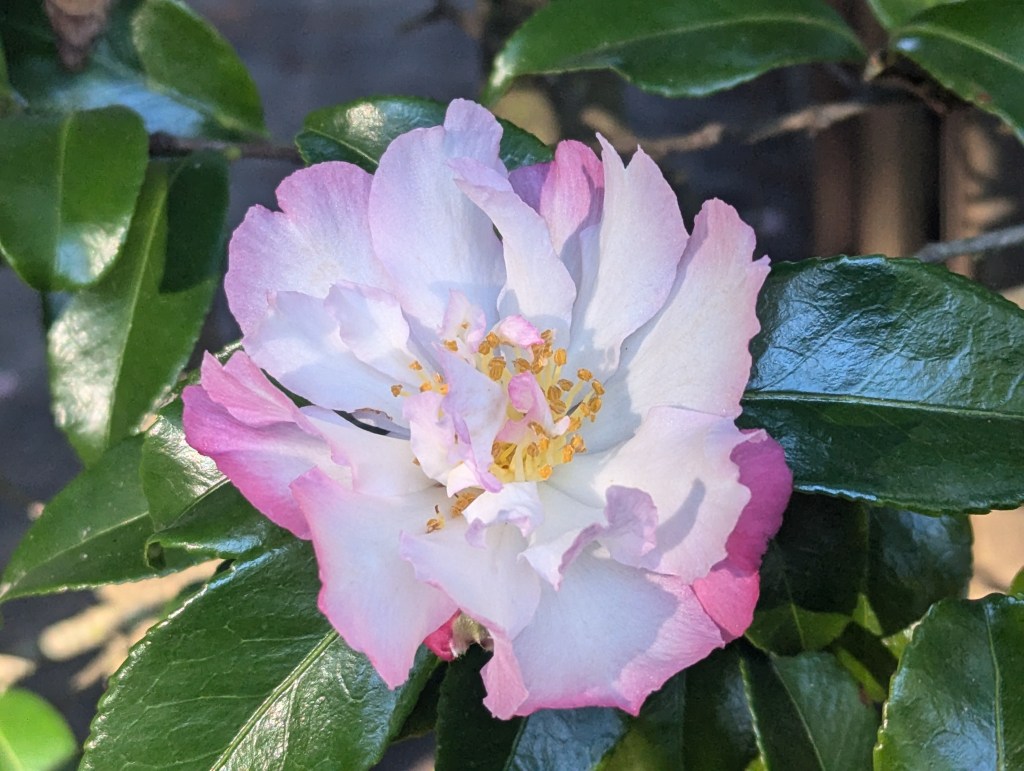
4. Camellia sasanqua, sasanqua camellia has become more of a small tree than a shrub. These flowers are too high up to appreciate individually, but are impressive in profusion. I thought that it is ‘Navajo’, but it now does not seem pink enough, and is a bit too ruffly.

5. Iris X germanica ‘Rosalie Figge’, unlike any other bearded iris here, blooms whenever it wants to, even during the coldest or rainiest weather, with ruins such bloom. I am not certain of its identity. Someone here on Six on Saturday suggested this name, and it fits.

6. Iris unguicularis, Algerian iris from Skooter’s garden, which is perhaps more properly known as Tangly Cottage Gardening, is now blooming to prove that it actually is winter. I am very pleased that it is such perfect blue, without purple, and blooms during winter.

This is the link for Six on Saturday, for anyone else who would like to participate: https://thepropagatorblog.wordpress.com/2017/09/18/six-on-saturday-a-participant-guide/

Six on Saturday: Mix It Up

Six pictures can not represent all that is blooming now. I did not even try. Nor did I post six pictures of six different cultivars of the same species, as I typically do with camellias, azaleas, rhododendrons, flowering cherries, roses, or other flowers that we grow several cultivars of. I posted three pictures of bearded iris, but I could have procured more than six if I wanted to. I likewise could have posted more than six pictures of different African daisy. I tried to mix it up a bit more than I typically do, as I did with the snakeroot here.

1. Persicaria bistorta, snakeroot and (likely) Iris ensata ‘Variegata’, variegated Japanese iris from Tangly Cottage Gardening are happy on the edge of the pond. The Japanese iris is barely visible at the center. The rest of it is on the edge of another stream. Naturalized exotic Nasturtium officinale, watercress to the upper right shows how close the water is. I thought that there were two cultivars of snakeroot, but found three labels for ‘Superba’, ‘Firetail’ and ‘Dimity’. I can segregate their copies later, but will likely leave these mixed.

2. Clivia miniata ‘Variegata’, variegated Natal lily from Brent’s Jungalow tried to bloom, but this happened before I took a picture. Its cultivar is unidentified, but it is variegated.

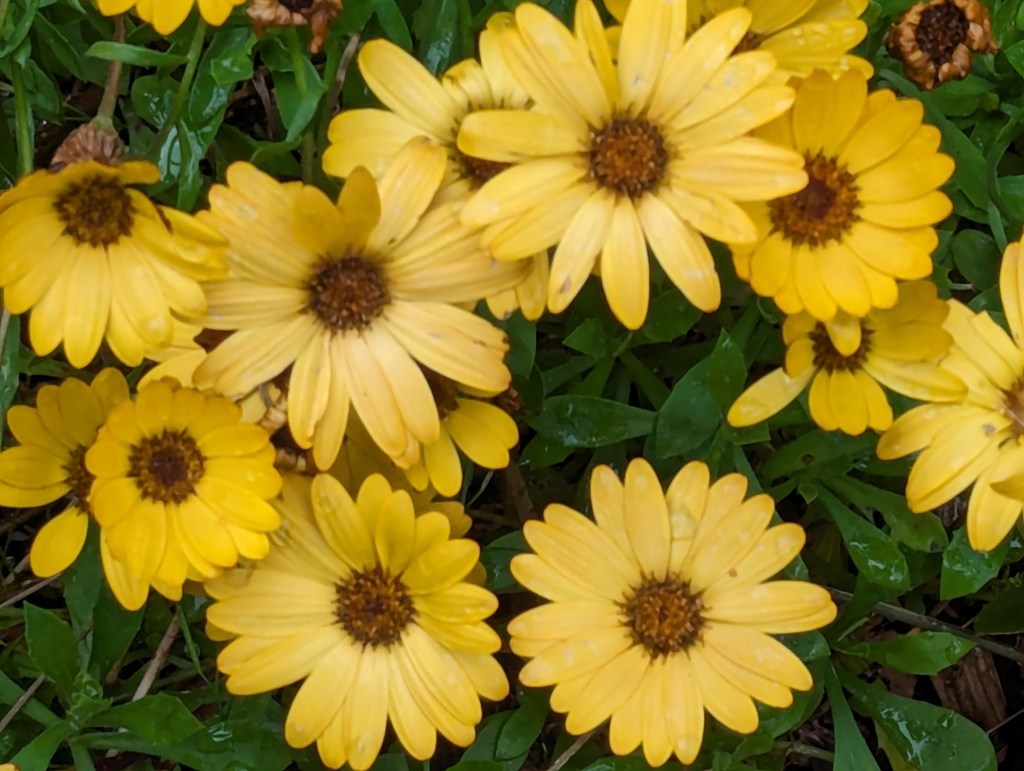
3. Osteospermum ecklonis, African daisy blooms too generously for anyone to take all its flowers. About six cultivars inhabit this particular landscape with a few more in another.

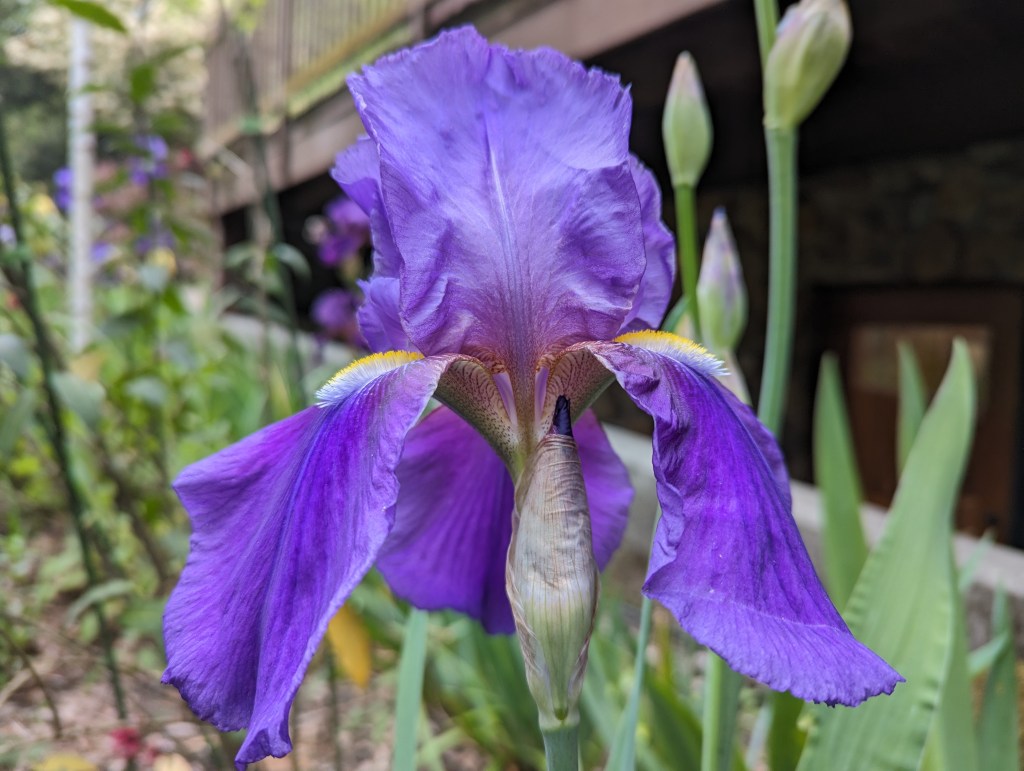
4. Iris X germanica, bearded iris are blooming so tall that some should be staked. There are too many cultivars in the Iris Bed to take pictures of, so I will show only these three.

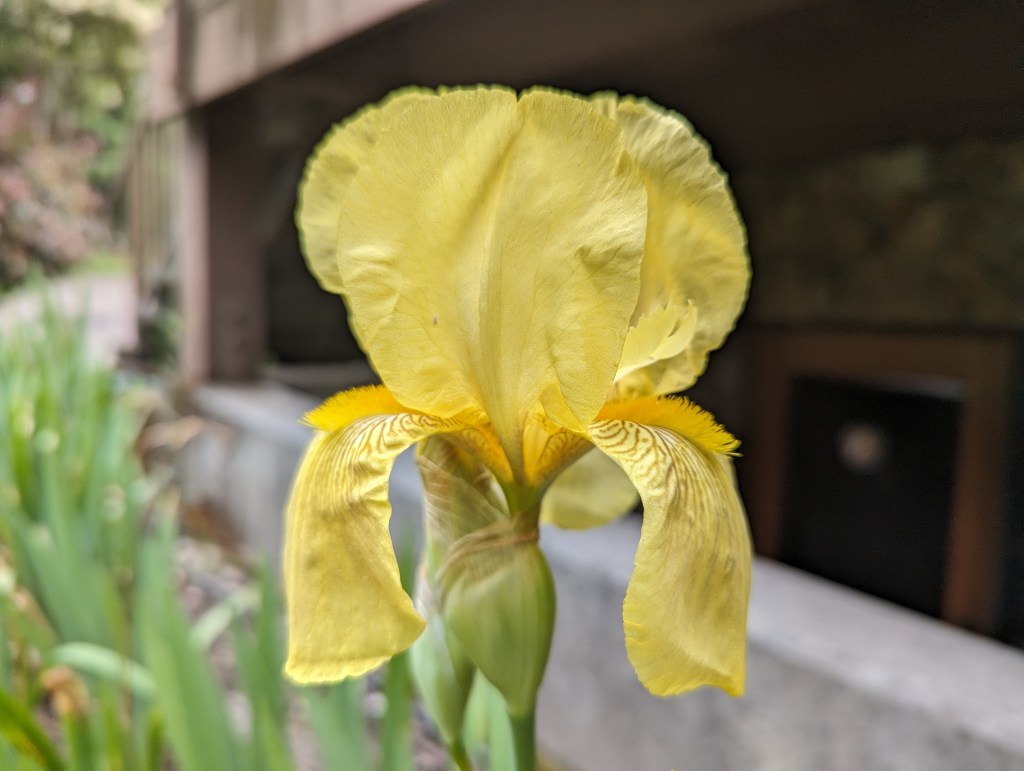
5. All cultivars of the primary Iris Bed are unidentified. At least three that were relocated from the forest are likely feral. One is pale white. This pale yellow looks like Tweety Bird.

6. All of the iris here, like the iris in my garden, have history. This iris is from the former home of an respected colleague. He brought it to me before the garden was demolished.

This is the link for Six on Saturday, for anyone else who would like to participate: https://thepropagatorblog.wordpress.com/2017/09/18/six-on-saturday-a-participant-guide/

Bearded Iris

Bearded iris blooms after spring bulbs.

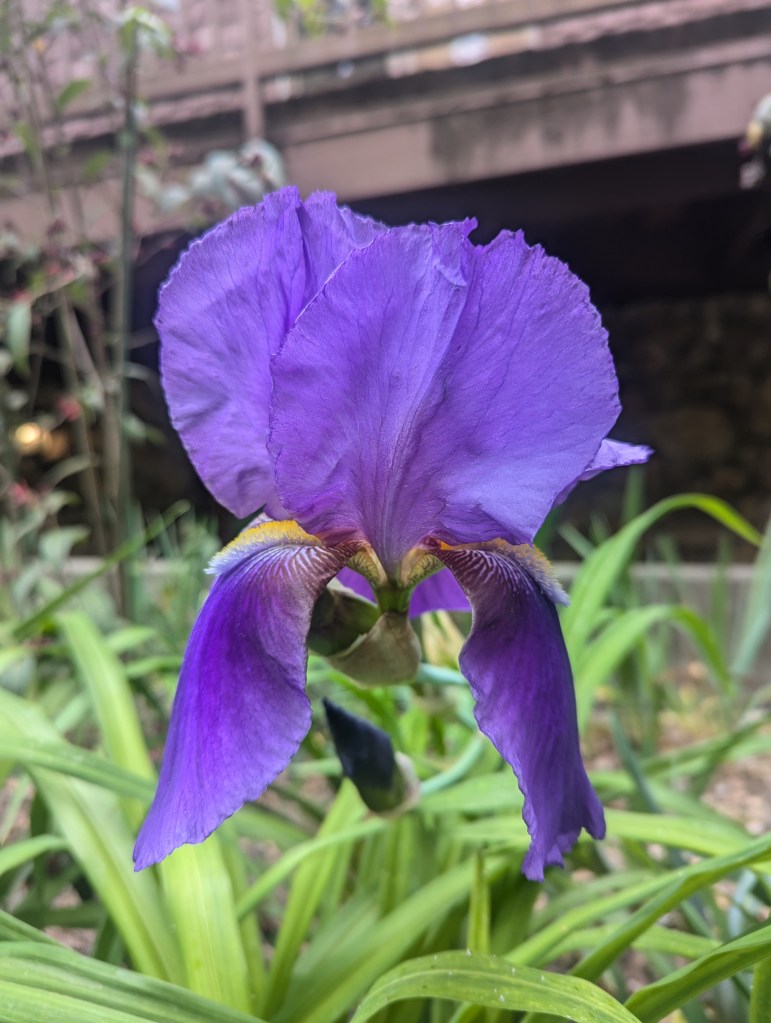
There may be no other flowers that exhibit such a diverse range of floral colors. Bearded iris, Iris X germanica, classifies as a hybrid of Iris pallida and Iris variegata. The genus of Iris derives its name from the Greek word for rainbow. As the name implies, it includes all colors of the spectrum. Floral form, height and, for some, fragrance is also quite variable.

About sixty thousand cultivars of bearded iris are supposedly documentable. It is difficult to estimate how many lack documentation. The smaller miniature cultivars are only a few inches tall. The tallest cultivars may grow four feet tall. Although they classify as summer bulbs, they are fleshy rhizomes that bloom for spring. Some will bloom again for autumn.

Bearded iris multiply whether or not anyone wants them to. Their rhizomes branch in two directions after bloom. Besides that, side shoots develop randomly from plump rhizomes. Congested rhizomes may bloom less. Division during summer promotes bloom. Division may happen annually or every few years. Bearded iris prefer sunny and warm exposure.

Six on Saturday: Vacation

Rhody, Carson and I are finally on vacation in Western Washington. As usual, departure was delayed. Now that we are here, and not at work, I have not been taking pictures like I should have been. Consequently, I am deficient of pictures for Six on Saturday. Four of these six, or two thirds, are not even relevant to horticulture.

1. Sasquatch, who is also known as Bigfoot, is a celebrity of the Pacific Northwest; and is a species that is commonly considered an individual. This was in Canyonville in Oregon.

2. Portland in Oregon is the City Of Roses. This is its South Waterfront district, south of Downtown. Incidentally, most roses prefer the climates of San Jose to those of Portland.

3. Rhody enjoys rest stops. They allow him to renew his ownership of Oregon. This is the Toutle River Rest Area, on northbound Highway 5, north of Castle Rock in Washington.

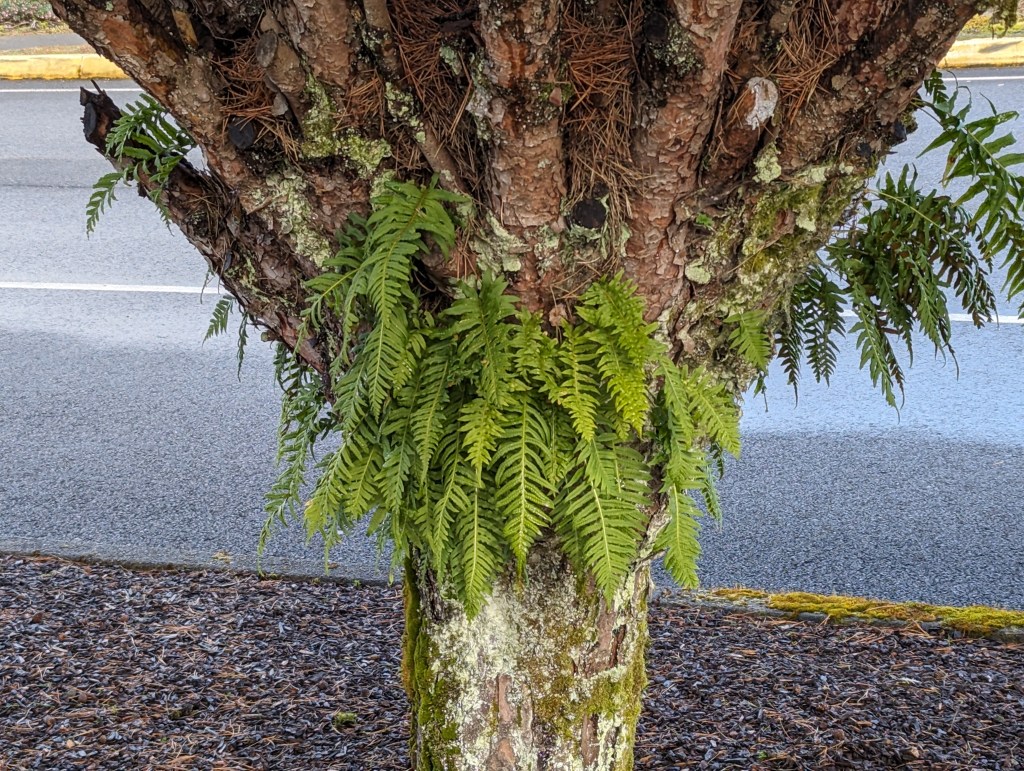
4. Ferns are common within the coastal climates of the Pacific Northwest. I do not know what this fern is. The pine may be a Japanese red pine. It is in Raymond in Washington.

5. ‘Black Gamecock’ Louisiana iris is to the left within the big box to the right. It was the priority, to replace what the gophers ate last year. There is more now than then! The rest of this vegetation is a dozen or so additional perennials from Tangly Cottage Gardening! I will get individual pictures of some of them as I process them when I get back to work. The unidentified variegated foliage to the far right seems to be variegated Japanese iris.

6. Skooter approves of my exploitation of his garden. He must know that I intend to take better care of his Louisiana iris than I did last year. He was on a sunny porch at the time.

This is the link for Six on Saturday, for anyone else who would like to participate: https://thepropagatorblog.wordpress.com/2017/09/18/six-on-saturday-a-participant-guide/

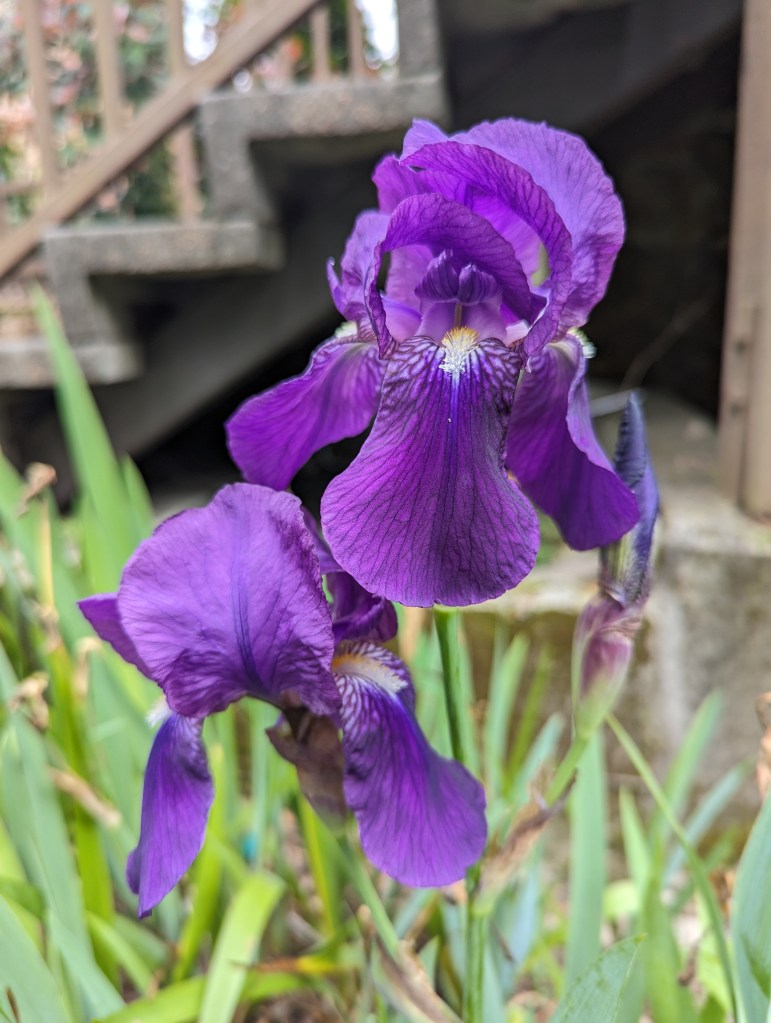
‘Rosalie Figge’?

Bearded iris should bloom for early spring, not winter.

Each of the several bearded iris that I grow have history. Their origins are more significant than their performance. None were merely purchased. I obtained my first, which is actually Dalmatian iris rather than bearded iris, from the garden of my maternal maternal great grandmother when I was about five years old, before I was in kindergarten.

Some of the seventeen or so that inhabit my garden may be added to a designated iris garden at work as they multiply. Some of the eight or so that inhabit the designated iris garden at work may be added to my garden as they multiply. I will likely procure at least two additional cultivars when I return to the Pacific Northwest later in winter, as well as Louisiana iris from another source.

The most abundant of the bearded iris within the designated iris garden at work were recycled from where they had become too abundant in a home garden in Santa Cruz. They are unidentified. I suspected that they might be a simpler species, rather than a hybrid bearded iris, because they resemble my simple Dalmatian iris. Their floral stems are similarly slender. The leaves are similarly somewhat narrow. The fragrance is similar. The main differences are that the floral stems are a bit shorter, the flowers are rich purple rather than lavender blue, and instead of blooming promptly and thoroughly only for early spring, they bloom sporadically throughout spring, and again about now.

After posting a picture of them last winter, I was informed that they could be ‘Rosalie Figge’. They conform to the description of the cultivar, although they bloom for winter rather than autumn. They were blooming a month ago, and are still blooming now. Although I do not care what they are, it would be nice to know.

It was blooming a month ago.