Six on Saturday: Good News

Horticulture occasionally involves some degree of disappointment. However, more than occasionally, it is surprisingly gratifying. After the mysterious disappearance of a colony of Louisiana iris, I remembered how much I enjoyed growing them. Unplanned bananas will be fun to grow in the future. Unseasonable bloom is at least as gratifying as seasonal bloom.

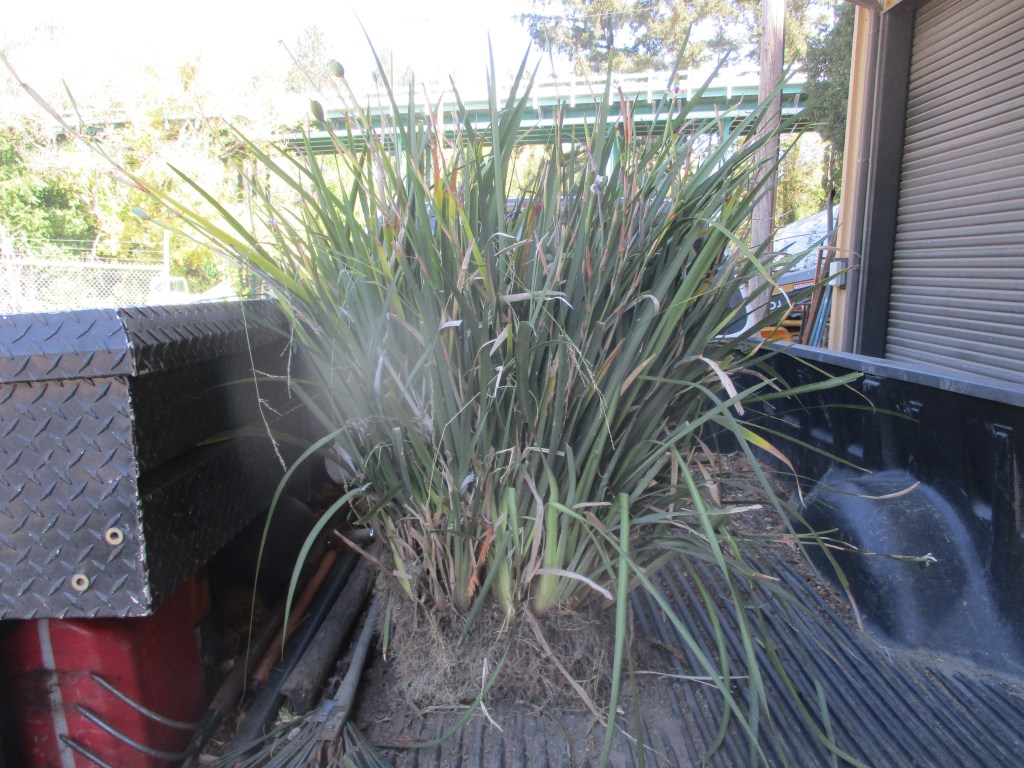
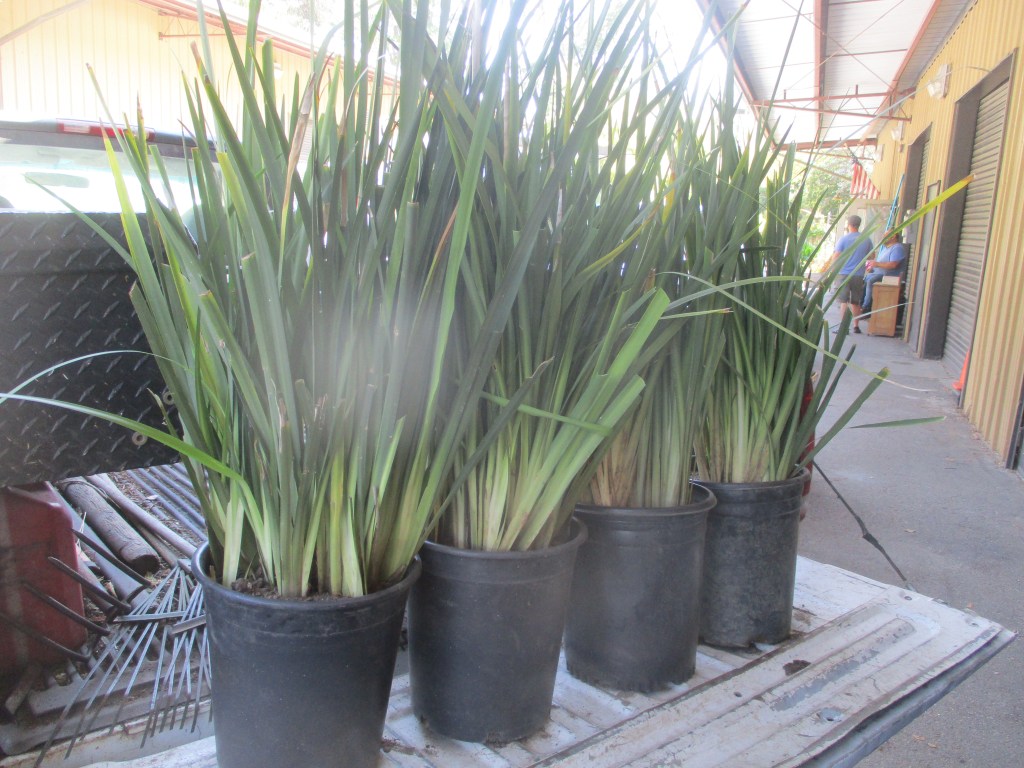
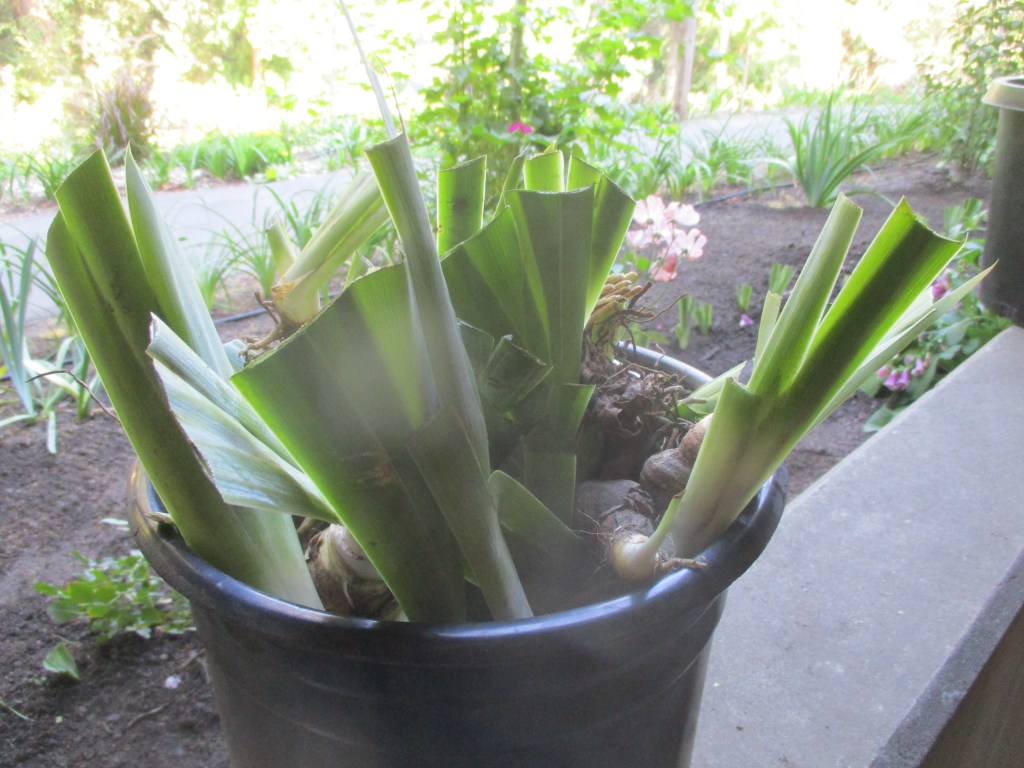
1. ‘Black Gamecock’ Louisiana iris was a gift from Tangly Cottage Gardening. Therefore, they were VERY important to me. I split and plugged them into a thirty foot long row on the edge of a pond at work. Sadly, after growing happily through summer, they suddenly and inexplicably disappeared. I am determined to not be unrealistically saddened about this, though. They were intended to be enjoyed, and I enjoyed growing them all summer. The good news is that Tangly Cottage Gardening offered replacement when I return this winter. Also, I found these four surviving plugs! I canned them here for their protection.

2. Iris unguicularis, Algerian iris was another of several prized gifts from Tangly Cottage Gardening. I split and plugged them into a row that is about twenty feet long last winter.

3. Musa acuminata, banana ‘trees’ are getting to be rather excessive. With these pairs of four new cultivars, there are now fourteen cultivars! There are no plans for any of them.

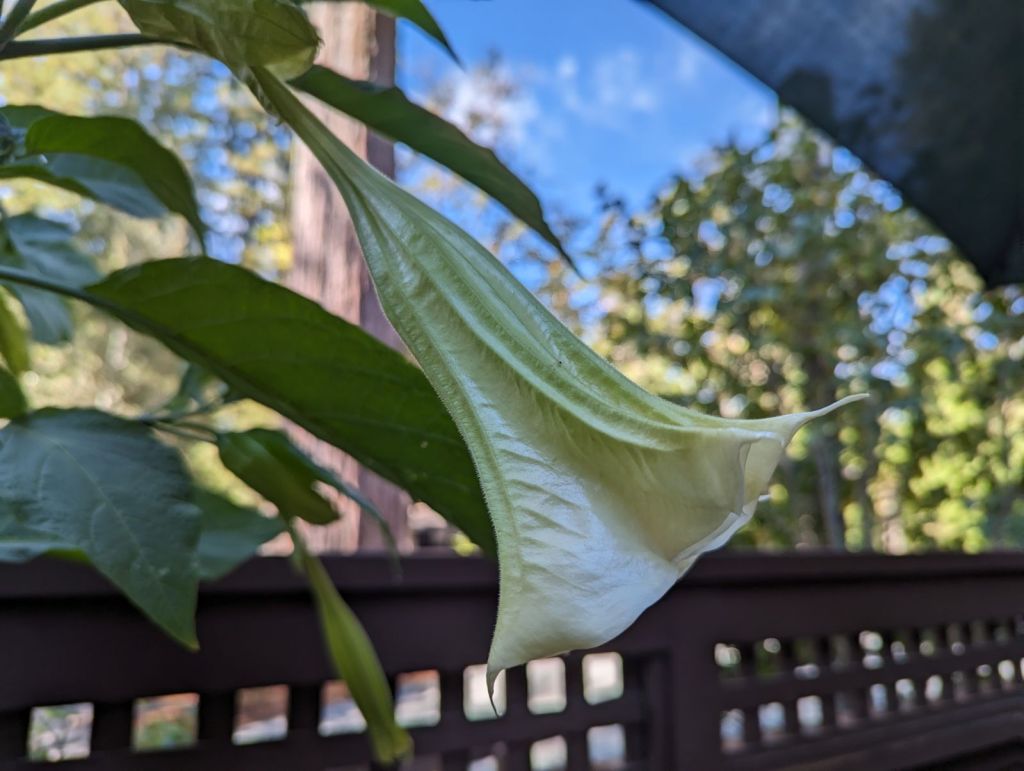
4. Brugmansia candida, double white angel’s trumpet failed to impress this year. Bloom was limited. Now that summer is over, it decided to bloom! I suppose this is good news.

5. Brugmansia X cubensis, ‘Charles Grimaldi’ continues to bloom late, and with this odd peachy color. Although I know that it should be simple yellow, I rather prefer this color.

6. Brugmansia, angel’s trumpet of an unidentified cultivar with single white flowers also decided to bloom late. This is impressive because it grew from a cutting from last spring!

This is the link for Six on Saturday, for anyone else who would like to participate: https://thepropagatorblog.wordpress.com/2017/09/18/six-on-saturday-a-participant-guide/

Horridculture – Gophers!(?)

Who took the Louisiana iris?!

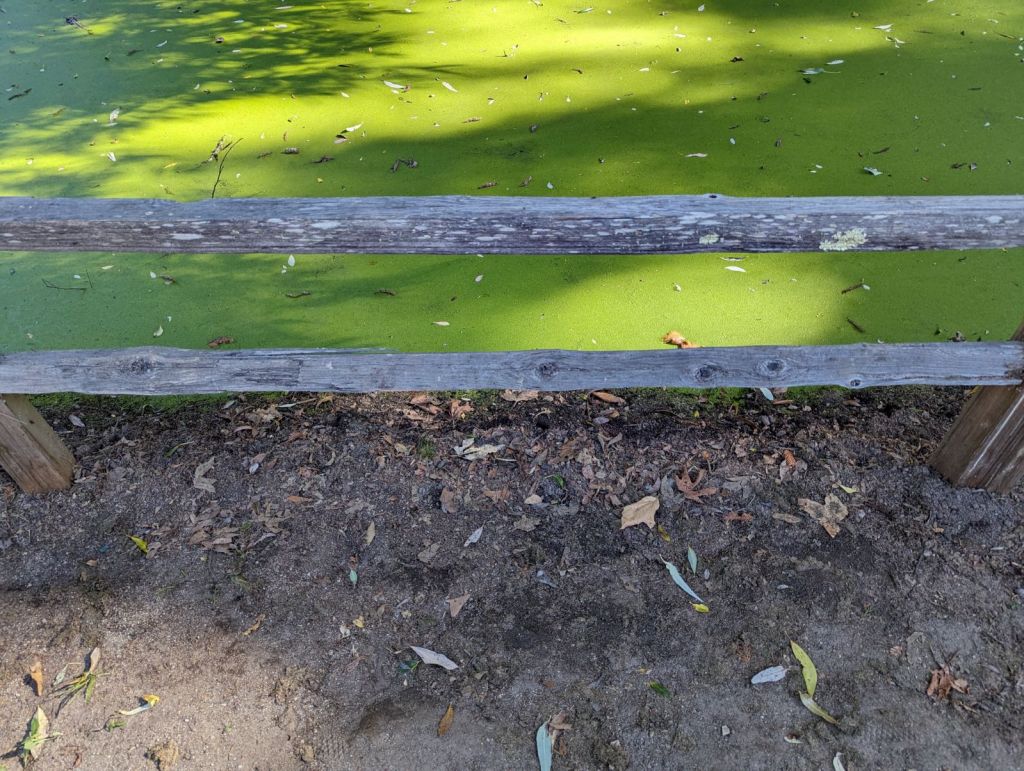
This is more infuriating than the rat or rats who ate the tops off of my rare young banana trees. I do not actually know who the culprit is, but can only guess that it is a gopher or a few gophers. Initially, I thought that it was someone who intended to pull weeds, but instead pulled the beloved Louisiana iris. All I know is that the iris were growing well, and are now completely gone!

These Louisiana iris were a gift from Tangly Cottage Gardening in Ilwaco, so were extremely important to me. After bringing them here at the end of last winter, I split and groomed them, and plugged them into a single row that was about thirty feet long. This row was on the edge of a pond, where I hoped they would form a network of rhizomes to help contain the shifting mud. It was an ideal situation. I watched them grow through the year, and expected them to bloom next season. They were totally awesome!

There is no indication that they were pulled or dug. Nor is there any indication that they were pulled downward from below. Although I found a few gopher tunnels, such tunnels were not sufficiently extensive to reach all of the rhizomes of the Louisiana iris.

Only four very small plugs remained. I dug and canned them to protect them from whomever or whatever took the rest of them. Although they can grow and multiply very efficiently, they will not replace the thirty foot long row for several years. Besides, even when they do proliferate, I do not know if I can safely install them back onto the edge of the pond. Without knowing what happened to the last colony, I can not protect a subsequent colony from the same fate.

Butterfly Iris

Butterfly is like a more softly textured version of African iris, with pale pastel yellow bloom.

What was introduced as a seemingly fancier alternative to the common African iris is now almost as popular. Butterfly iris, Dietes bicolor (or Morea bicolor), is about as easy to grow, and nearly as resilient. Instead of white, the flowers are soft yellow with three prominent purplish brown spots with orange margins. The grassy evergreen leaves are a bit narrower and pliable.

Mature plants may get nearly three feet high and five feet wide. For those who do not mind digging and splitting apart the tough and densely matted rhizomes, large clumps are very conducive to propagation by division in autumn or winter. Deadheading (removal of stems that have finished blooming) promotes continued bloom and limits dispersion of seed that might otherwise grow new plants where they are not wanted. A bit of partial shade or minimal watering are probably nothing to worry about, but may inhibit bloom. Well exposed, well watered and well deadheaded butterfly iris should bloom from early spring until early winter.

Six on Saturday: Bearded Iris

Iris are blooming late but splendidly within the new iris bed. It is gratifying to assemble various bearded iris within their dedicated garden. #1 and #2 do not inhabit the new iris bed yet, but are tempting because they resemble cultivars that I crave. I purchase no iris. Doing so would be an egregious violation of my very discriminating standards. However, if I ever find it, the one cultivar of bearded iris that I would make an exception for is ‘San Jose’.

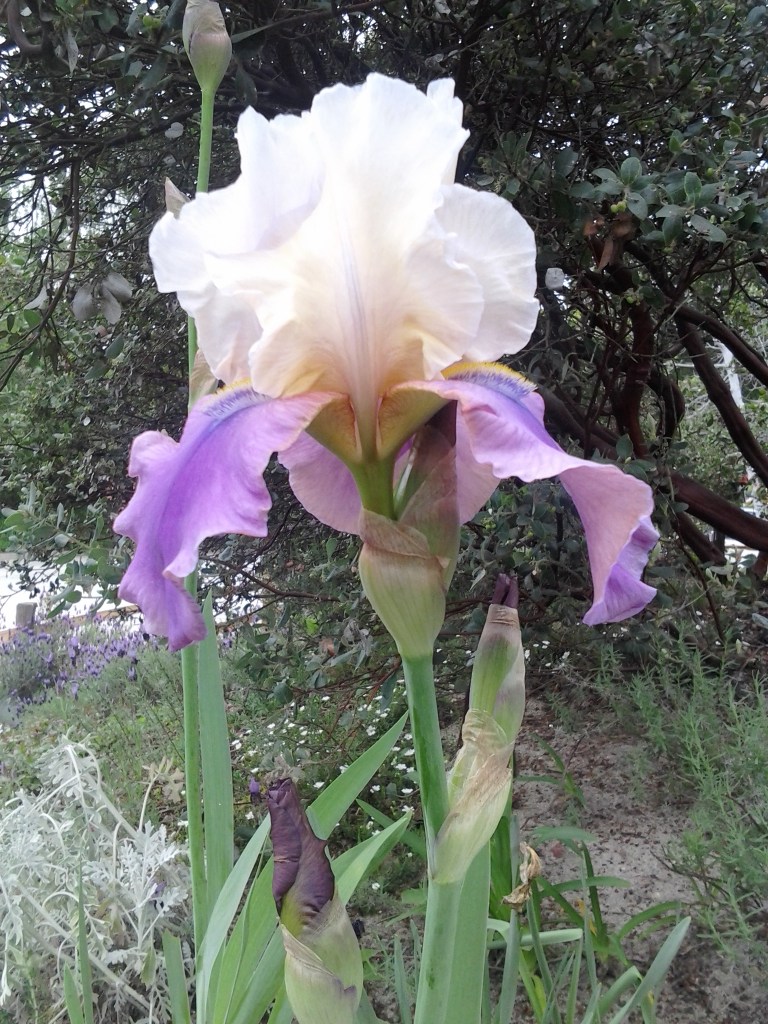
1. ‘Los Angeles’ looks just like this, although this is not exactly an exemplary specimen. I should get a copy of it, regardless of its identity. Perhaps an expert could identify it later. It was a few days old, but stayed on tables for a luncheon at Felton Presbyterian Church.

2. ‘San Jose’ looks almost like this, but frillier, with less veining of the purplish falls. This blooms in front of the White Raven coffee shop in Felton. I likely will not request a copy.

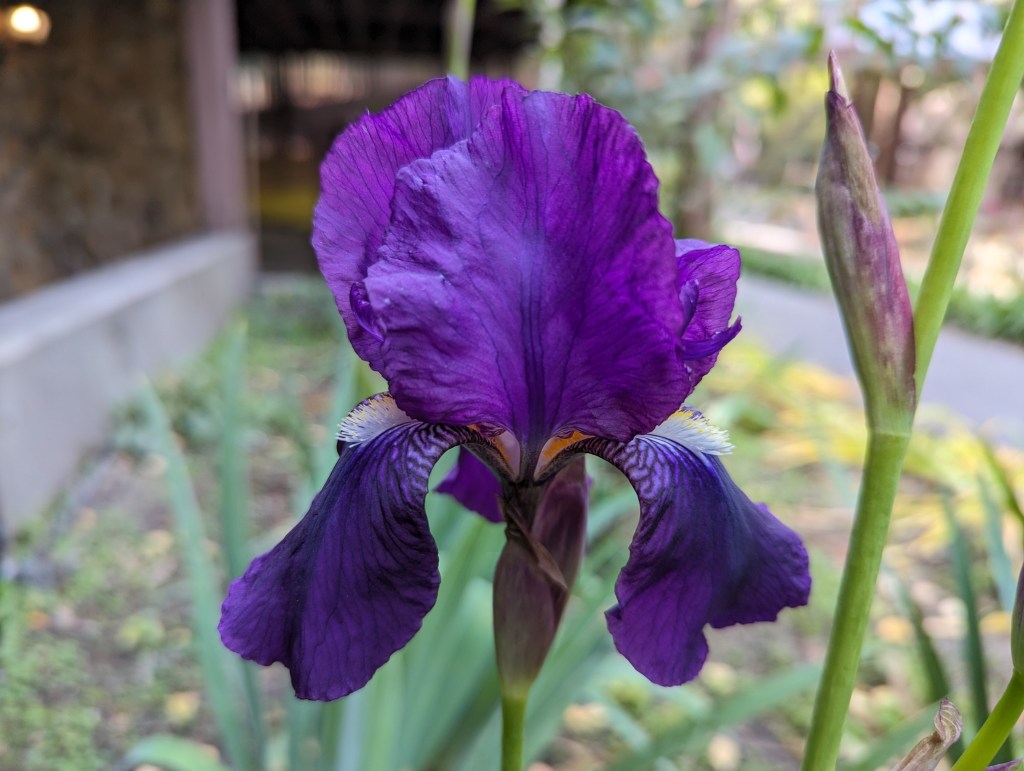
3. Purple intermediate iris is still the most abundant in the iris bed. It was recycled from a garden in Santa Cruz, where it was a bit too abundant. To me, it seems to be deep blue.

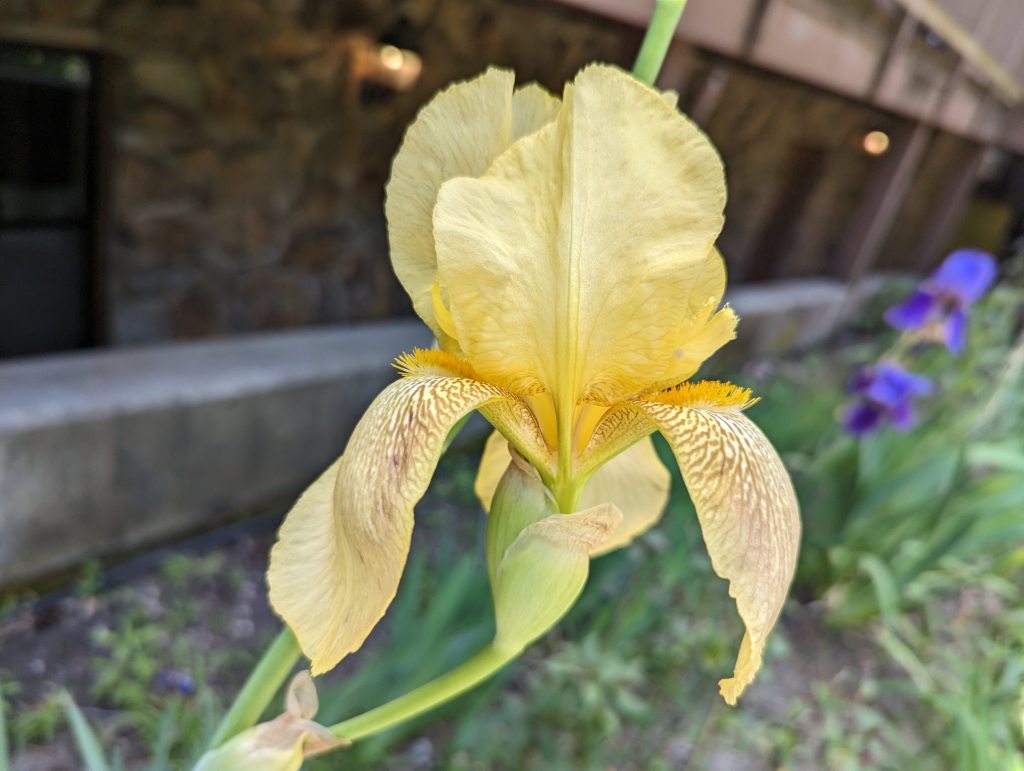
4. Feral yellow iris may not actually be so feral. Now that it inhabits the iris bed, where it is irrigated regularly, it has grown as tall and performs like the tall bearded iris cultivars.

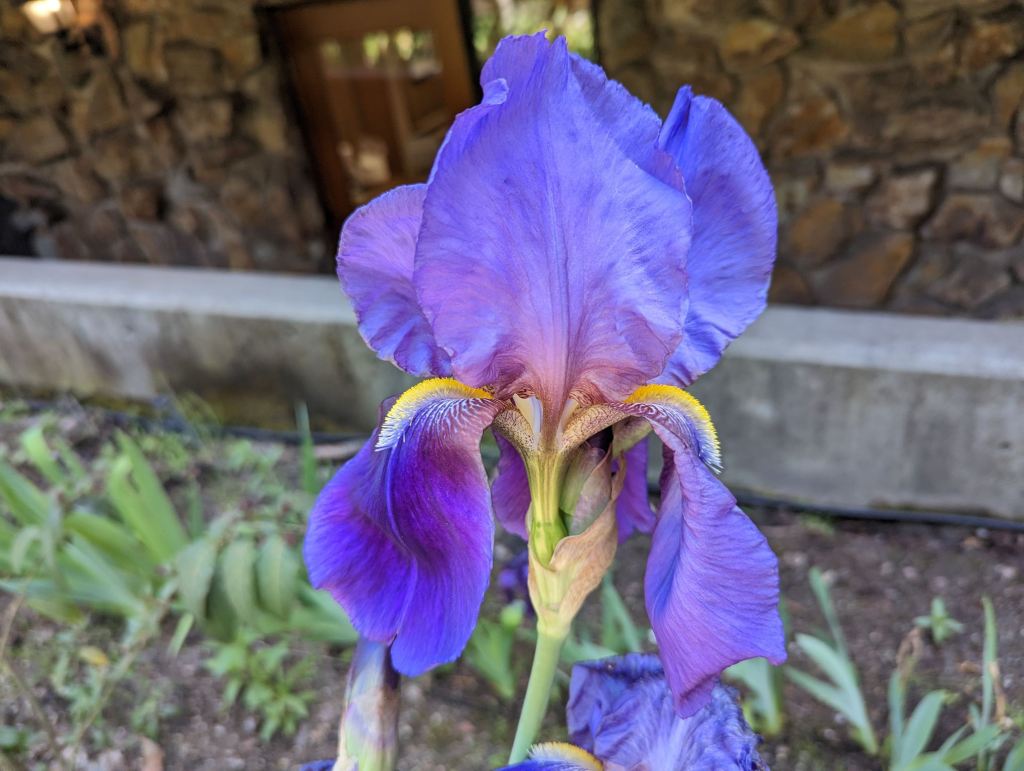
5. Purple tall iris was a gift from a neighboring residential garden. To me, it seems about as blue as the purple intermediate iris. I have been assured that it truly is purple though.

6. Blue and white tall iris was also a gift from the same neighboring residential garden. I am very confident that this really is blue, rather than purple. This is the frilliest cultivar.

This is the link for Six on Saturday, for anyone else who would like to participate: https://thepropagatorblog.wordpress.com/2017/09/18/six-on-saturday-a-participant-guide/


Douglas Iris

Douglas iris can interfere with grazing.

California poppy, sky lupine and many favorite coastal wildflowers are annuals. Douglas iris, Iris douglasiana, blooms with the best of them as a perennial. It is persistent enough to be a noxious weed within rangelands. Of course, that is only because it competes with forageable vegetation. Douglas iris is actually tame enough for cultivated home gardens.

Douglas iris bloom is mostly the color of faded blue denim. It can alternatively be slightly richer lavender blue or very pale bluish white. Purple with yellow centers is rare. Flowers stand only about a foot to a foot and a half tall. Their deep green foliage is about as high. Individual leaves are narrow and arching. New leaves displace deteriorating old leaves.

Wild Douglas iris colonies can be impressively expansive. They generally mingle nicely with other low vegetation and wildflowers. With occasional irrigation, they can get dense enough to exclude most other vegetation. However, such colonies are not evenly dense, so develop bare zones. They crave good sun exposure, but tolerate a slight bit of shade. Excessive fertilizer might inhibit bloom. Excessively frequent or generous irrigation might cause rot.

Spuria Iris

Spuria iris should be less rare.

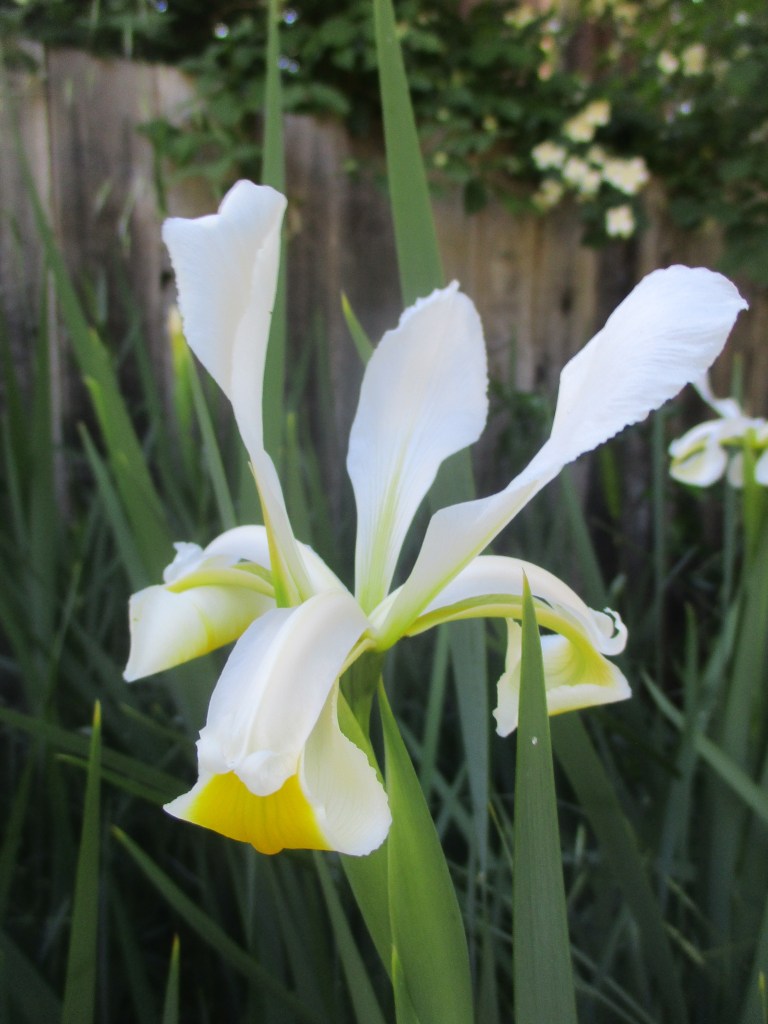
Bearded iris are famously diversely colorful. Not much lacks from their floral color range. Spuria iris, Iris spuria, are quite different. Their floral color ranges only from purplish blue to bright white, all with prominent yellow throats. The least rare of this rare species is the subspecies carthaliniae, almost all of which blooms white. Seed is generally true to type.

Seed might be abundant without timely deadheading. However, propagation is easier by division of the copiously branching rhizomes. Such rhizomes are fibrous and tough, with comparably tough and wiry roots. They migrate to develop broad colonies, which should appreciate thinning every few years. They rarely get too crowded to bloom nicely though.

Spuria iris blooms for almost two weeks during late spring or early summer. Two or three flowers bloom in succession on stems that are nearly as high as their deciduous foliage. Leaves are elegantly narrow and upright like those of cattail, but get only about three feet tall. Carthaliniae subspecies defoliate later than others, which defoliate through summer, then foliate for autumn.

Six on Saturday: Craigslist

Craigslist is becoming a bad habit for me. It was the source of the overly abundant canna that I featured earlier, as well as seven Mexican fan palms. Last Wednesday, I procured a big pile of surplus purple bearded iris and African iris, free of charge. The bearded iris are ideal for a new ‘iris bed’ that formerly lacked occupancy. The African iris were heeled in and canned for later installation into another landscape that is not yet developed. The acquisition was very fortuitous, but also necessitated a bit of effort to process all the iris. After I either canned or heeled in all of the African iris, I installed all of the bearded iris, fortunately, by yesterday evening.

1. African iris, Morea iridioides, (which is also fortnight lily, Dietes iridioides and Dietes vegeta), could have potentially been divided into more than a hundred individual pups!

2. A few small clumps of pups were either already separated from the primary colony, or were dug from elsewhere in the same garden, so were divided and processed separately.

3. The few divided and processed pups were then heeled into two #5 cans for installation directly into a landscape, preferably prior to resuming foliar growth at the end of winter.

4. The bulky primary colony was merely groomed and divided into four big clumps, and canned into #5 cans, likely to be divided as pups or smaller clumps for later installation.

5. Bearded iris generated more than a hundred rhizomes, which is enough for more than fifty linear feet if installed half a foot apart, and now occupies nearly half of the ‘iris bed’.

6. They might not look like much yet, but after settling in through winter, should bloom well for spring, grow through summer, and bloom spectacularly for the following spring.

This is the link for Six on Saturday, for anyone else who would like to participate: https://thepropagatorblog.wordpress.com/2017/09/18/six-on-saturday-a-participant-guide/

Six on Saturday: Four Feral Iris?

The iris that live in my garden will likely always live in my garden. Each one has history. I got my first Iris pallida from my great grandmother’s garden at about the time I was in kindergarten. Less than twenty others have been added since then, because I am so very selective. I must be. Otherwise, my garden would fill with iris which I would be obligated to perpetuate. These four iris pictured here are at work, although #4 originated from my garden, where the two other white iris that are not pictured here live. All finished bloom a while ago, so these are old pictures.

1. Dicentra formosa, which I believe is Pacific bleeding heart, blooms at about the same time as the bearded iris. Some of the colonies are quite broad under the redwood forests.

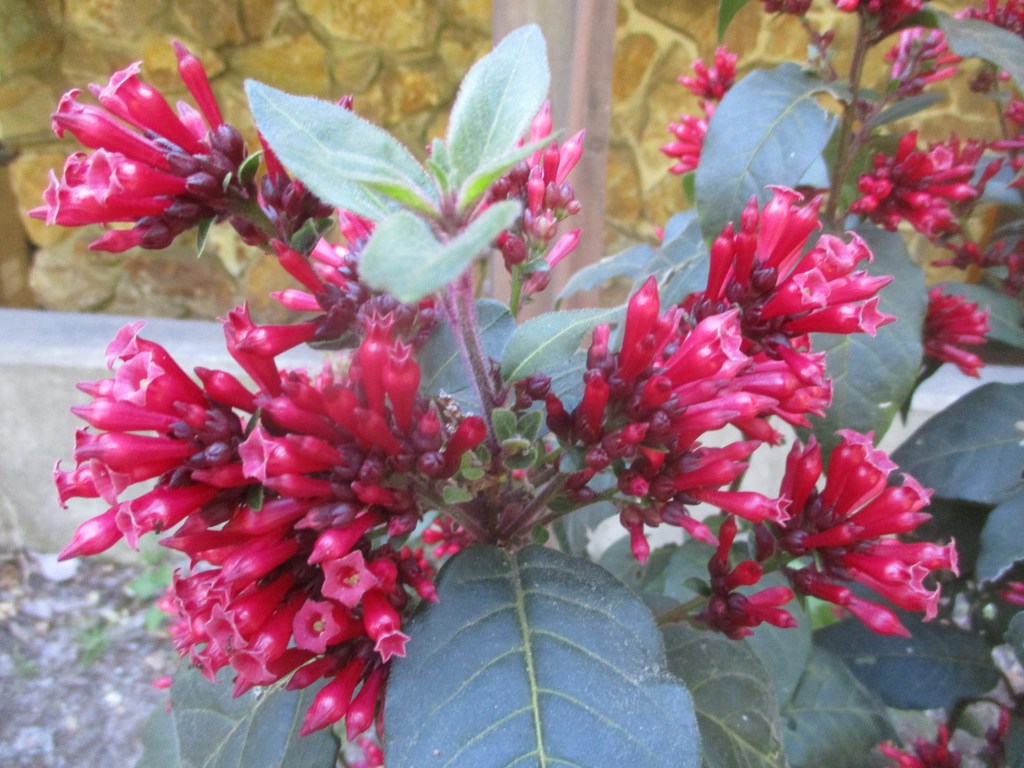
2. Cestrum fasciculatum Newellii ‘Ruby Clusters’ could do without either its first variety name or its subsequent cultivar name. I did not select it, but am getting to appreciate it.

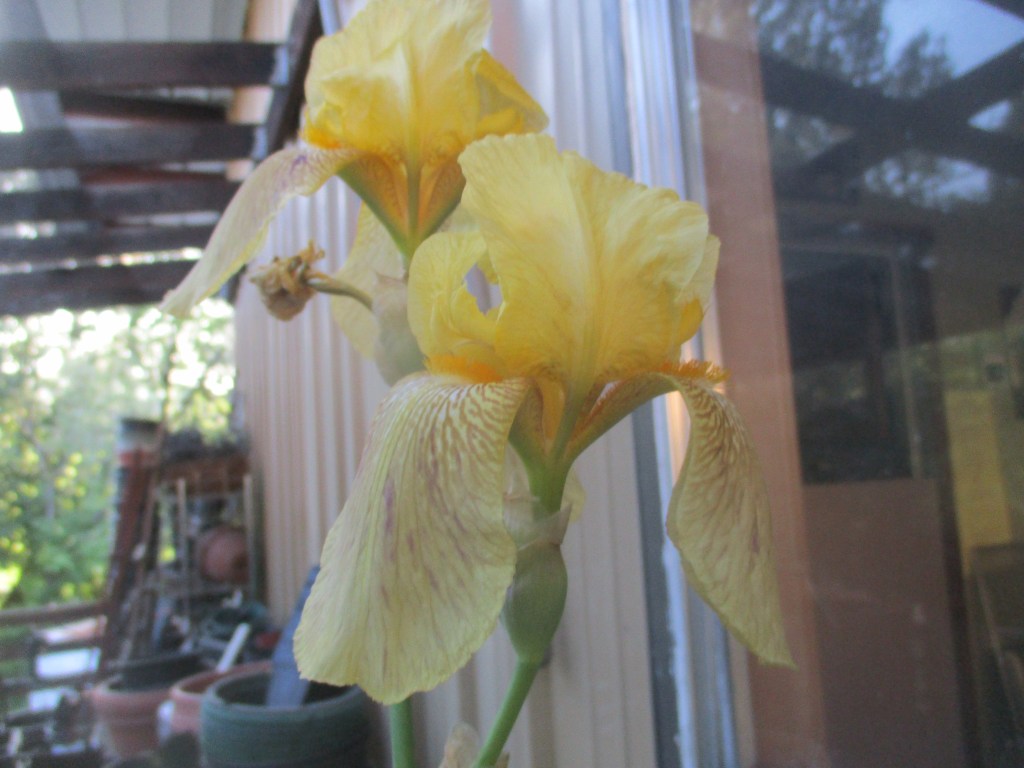
3. Yellow iris appeared next to a debris dump many years ago. It could have grown from a scrap, or could be feral. It seems wimpy. It got canned, but should have been relocated.

4. White iris seems prettier at night. During the day, it seems to be slightly grayish, with oddly pale yellow beards. I believe that it is feral. Two other cultivars are perfectly white.

5. Blue iris, with both dark and light blue, could actually be a cultivar. It is impossible to be certain. The flowers are simple and not ruffled. The stems are tall, but a bit too lanky.

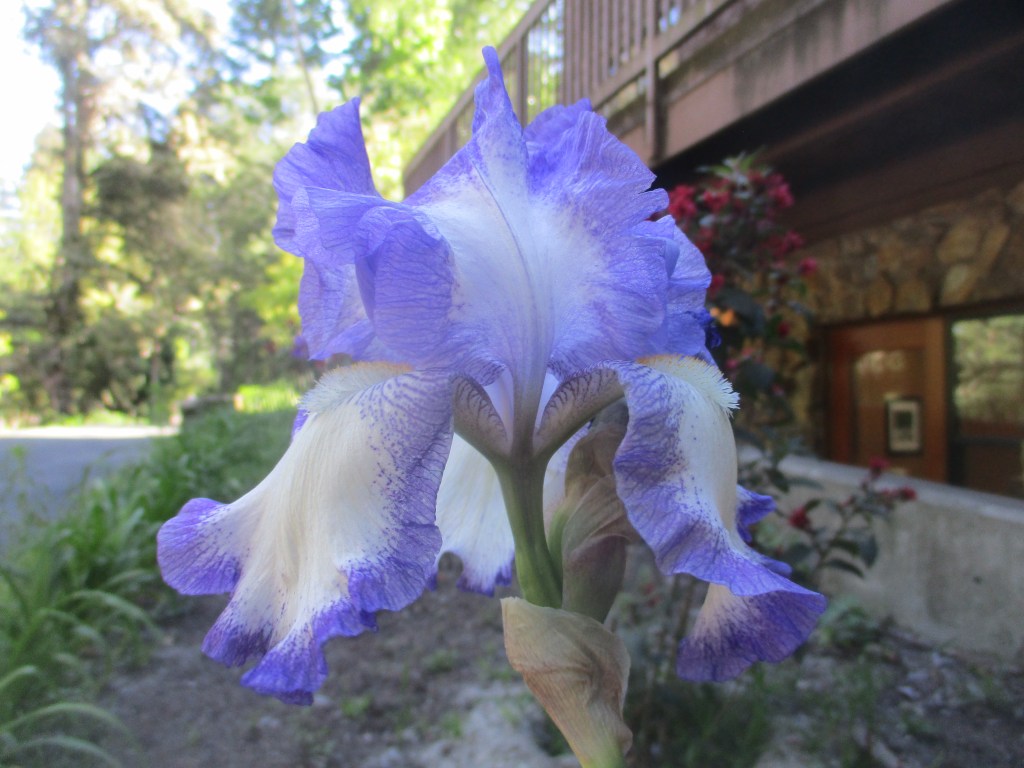
6. White and blue iris, of these four, is the most likely to be a cultivar. Lanky stems could be a result of neglect. I hastily interred the rhizomes last autumn just to keep them alive.

This is the link for Six on Saturday, for anyone else who would like to participate: https://thepropagatorblog.wordpress.com/2017/09/18/six-on-saturday-a-participant-guide/

Bearded Iris

Pastels are perfected by bearded iris.

When there is not an app for that, there is probably a bearded iris that will work just fine. Really, there is just about every shade of yellow, blue, purple, orange, pink and almost-red imaginable, ranging from wildly bright to subdued pastel. There are actually several shades of white, and a few rare flavors of dark purplish black.

It seems that the most popular of the bearded iris bloom with two or more colors. The standards may be very different from the falls. Any part of the flower may be striped, spotted, blotched or bordered with another color. Flowers may be relatively simple or garishly ruffled. Many are fragrant.

Bearded Iris bloom between March and May. Some of the modern varieties bloom again in autumn. Flower stems can be as short as a few inches, or as tall as four feet, with only a few to several flowers. The rubbery and somewhat bluish leaves form flat fans that look neater if groomed of deteriorating older leaves. Each fan dies back after bloom, but is efficiently replaced by about two more new fans. Colonies of fans should be divided over summer every few years, or as they get too crowded to bloom well. Bearded iris likes well drained soil and at least six hours of direct sun exposure daily.

Iris Blooms Almost Any Color

Such cheerful colors are too easy.

Iris got its name from the Greek word for rainbow, because all the colors are included. There are thousands of varieties of bearded iris alone, to display every color except only true red, true black, and perhaps true green. (However, some are convincingly red, black or green.) Then there are as many as three hundred other specie of iris to provide whatever colors that bearded iris lack.

Bearded iris are still the most popular for home gardening because they are so reliably and impressively colorful, and because they are so easy to grow and propagate by division of their spreading rhizomes. Siberian, Japanese and xiphium iris are less common types that spread slower with similar rhizomes. Japanese iris wants quite a bit of water, and is sometimes grown in garden ponds. The others, like most other rhizomatous iris, do not need much water once established. Dutch iris grows from bulbs that do not multiply, and may not even bloom after the first year.

Iris flowers are so distinctive because of their unique symmetry of six paired and fused ‘halves’ that form a triad  of ‘falls’ and ‘standards’. The ‘falls’ are the parts that hang downward. The ‘standards’ that stand upright above are the true flower petals. As if the range of colors were not enough, the falls and standards are very often colored very differently from each other, and adorned with stripes, margins, spots or blotches. Many specie have fragrant flowers. Each flower stalk supports multiple flowers. Some carry quite a few flowers!

Some types of iris are so resilient to neglect that they naturalize and grow wild in abandoned gardens. Bearded iris are more appealing and bloom better with somewhat regular watering, but can survive with only very minimal watering once established. Some iris multiply so freely that they get divided after bloom, and shared with any of the neighbors who will take them. Newly divided rhizomes should be planted laying flat, with the upper surfaces at the surface of the soil.