Rest Stop

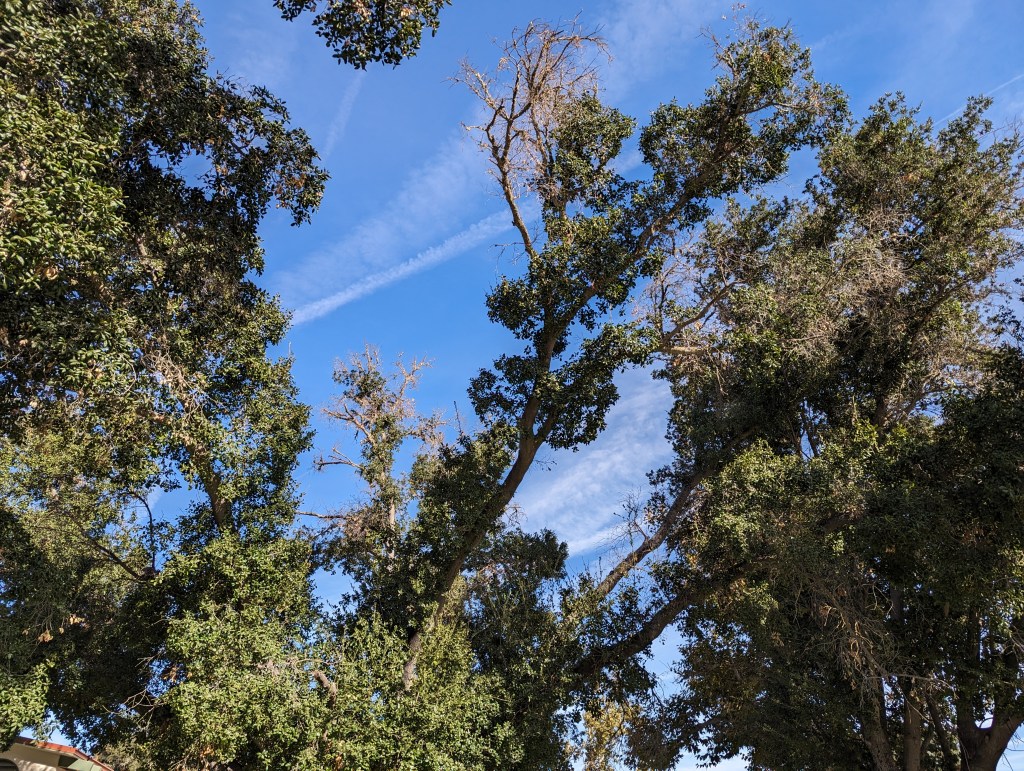
Quercus douglasii, blue oak

Rhody, Carson and I took Highway 101 for most of our recent trip from here to the Los Angeles region. We typically drive on more of a variety of highways between here and there, but for this trip, I wanted to drive on Highway 101, as was more typical when I was in college in the late 1980s.

Rhody enjoys rest stops, perhaps as much as our destinations. Because the rest stops near Gaviota remain defunct, only the Camp Roberts Southbound Rest Area was in service on our route. We stopped there, of course.

The old facilities that I remember were replaced years ago. I would prefer the old original buildings. I can not imagine why replacement was necessary. Nor can I understand why the more elaborate associated landscape was necessary. This new landscape, with its cliche crape myrtles, carpet roses and a bit of lawn, is irrigated so generously that the old coast live oaks are deteriorating and succumbing to rot. Most are now surrounded by irrigated lawn, after surviving with only annual rainfall for half a century or so. Like so much about California, not much of the familiar remains.

However, besides the deteriorating mature coast live oaks and a few seemingly younger California sycamores that are also within the landscaped areas, a few familiar native oaks remain beyond the landscaped area. Some seem to be older than those within the landscaped area, and if so, were there prior to the development of the rest stop. Most are coast live oaks, and a few are blue oaks.

I met the blue oak in the picture above in 1985. Although it has not grown much since then, the disproportionately large cavity within its trunk has. I am impressed that the trunk can still suspend the healthy foliar canopy above.

Irrigation Technology Can Get Complicated

Modern irrigation does not age well.

Old fashioned irrigation systems were quite thorough, and technically sustainable. They broadcast generous volumes of water over any vegetation that required it. Their systems were too simple to need much adjustment. Their metallic composition was very resilient. That is why so many old systems were in service for so long. Some continue to function.

However, such old fashioned irrigation systems were not perfect. Their consumption was not as sustainable as their plumbing. They wasted water on vegetation that needed less, and pavement. Some of the broadcast water evaporated before reaching any vegetation. Without automation, old irrigation systems operated when convenient for their operators.

Modern irrigation systems are typically more efficient. Automation allows them to operate prior to sunrise to limit evaporation. Most modern systems apply water directly to the soil. This leaves no irrigation water to evaporate from foliar or other surfaces. Also, it prevents evaporation from airborne broadcast irrigation water. Evaporation innately wastes water.

Of course, modern irrigation systems are no more perfect than old systems. Groundcover and lawns still rely on broadcast irrigation. Such systems still waste water on pavement. Automation can actually waste water if not adjusted manually for rain and other weather. Only the most modern automation adapts to weather. No system responds to vegetation.

Consequently, irrigation can become either deficient or excessive as vegetation matures. Many native species need regular irrigation only as they disperse roots after installation. They are likely to rot with the same irrigation as they mature. Many tropical species need more water as they grow. Some vegetation, as it grows, can obstruct broadcast irrigation.

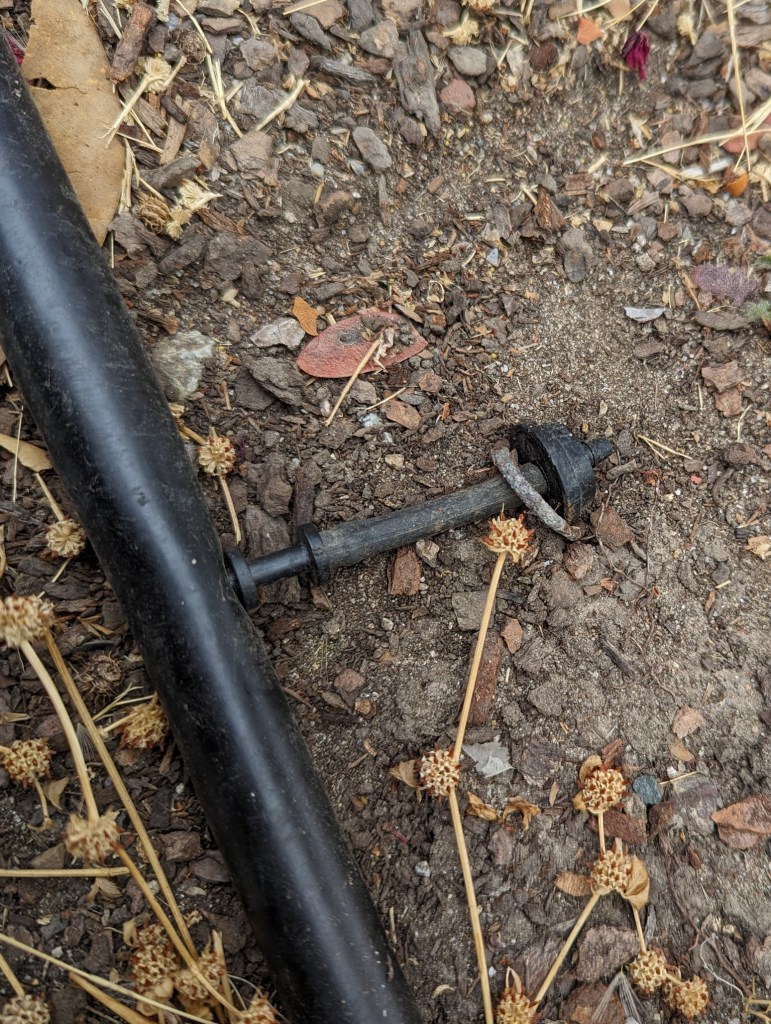
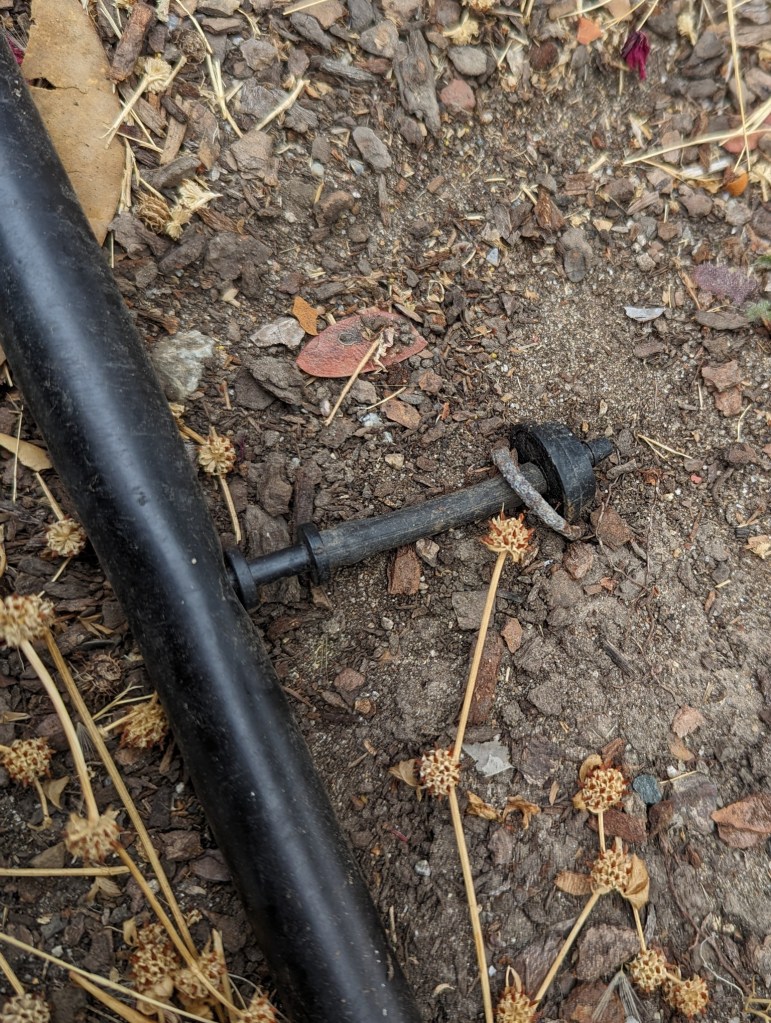
The complexity of modern irrigation systems complicates their maintenance. Automation is merely one component of the infrastructure. Emitters of drip irrigation sometimes need relocation or replacement. They are sometimes difficult to find below healthy vegetation. Because components are plastic, they are not as durable as old fashioned components.

Irrigation Must Not Be Excessive

Too much water can be a problem.

Remember when the Brady Bunch went to the Grand Canyon? Mrs. Brady read aloud from a brochure about how the Grand Canyon was formed by erosion of the Colorado River. Peter then commented, “Wow! No wonder you tell us not to leave the water running.” Too much watering in the garden certainly will not cause a canyon to form, but can cause all sorts of other big problems.

Roots rot if the the soil is constantly too wet. If the soil stays saturated, roots suffocate from the lack of aeration. Trees that survive saturation of deeper soil strata will disperse their roots shallowly near the less saturated surface, and will consequently be unstable. Besides, excessive watering is wasteful.

There are too many variables, such as exposure, drainage, humidity and temperature, to prescribe irrigation schedules that work for every site. Just remember that most plants like the soil to drain enough for the surface of the soil to at least look somewhat dry before getting watered again. Moss on the surface is an indication that things are too wet. Plants that like more water, like azaleas, rhododendrons, fuchsias, ferns and impatiens, do not mind if the soil stays somewhat damp, but only if the soil is porous and drains enough to also be aerated.

The most drought tolerant plants, which are generally also the most sensitive to excessive irrigation, ironically like to be watered somewhat regularly for the first few months after getting planted. This is because they are so reliant on well dispersed root systems. They need less, if any, watering once their roots get dispersed.

Watering should be done in the morning so that plants can soak in the water during the day, and the area can dry somewhat before the following evening. It is also better to water less frequently and a bit more generously than to water too frequently. This allows time for drainage and promotes deeper rooting. Fungal organisms associated with rot and foliar diseases proliferate overnight if the ground is damp at the surface and the air is humid.

Except for the few plants that like humidity, and those that need to be rinsed of aphid and honeydew, there is no need to wast water on foliage where it is simply lost to evaporation. Water should be applied to the soil where it is needed.

RAIN!

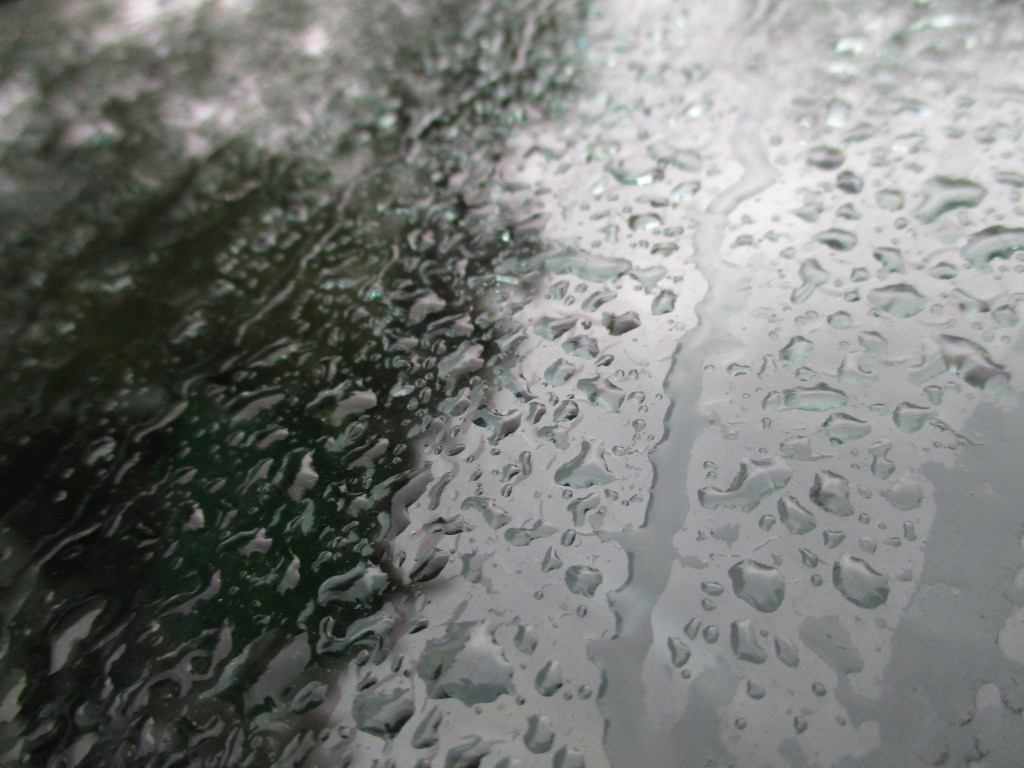
Rain is naturally and innately . . . wet.

(February 12, 2012)

More than a week ago, many of us were astonished to witness countless drops of water miraculously falling out of the sky! What could this be? Where did this water come from? It is actually not such a mystery. These unfamiliar falling drops of water are merely a type of weather known as “rain”. “Rain” is actually nothing new, and happens every winter. Typically, there should have been an abundance of “rain” by this late in winter.

The problem with “rain” is that it is wet. Whatever it encounters also becomes wet, and often messy. Wet dirt becomes mud. Wet roads are hazardous to traffic. It is uncomfortable to go outside to do any gardening when everything is wet and muddy.

However, “rain” is very important to everyone’s survival. It is what moves water from the oceans back onto land, so that it can be collected and used for the many things that water is needed for. “Rain” also brings needed water to gardens, landscapes, and even the forests outside of urban areas. In one way or another, every living thing needs “rain”.

But wait! There’s more! “Rain” so efficiently waters gardens and landscapes that no other watering is needed! Most watering systems should therefore be turned off as long as there is enough “rain” to keep everything wet. Even when the “rain” stops, cooler temperatures and higher humidity keep things from drying as efficiently as they would during warm summer weather. Consequently, most watering systems can remain off until after winter, when the “rain” stops until next winter, and the weather gets warmer.

Actually, the only plants that may want water are those that are sheltered from the “rain”, and perhaps a few large potted evergreen plants that continue to lose enough moisture by evaporation from their foliage to get a bit dry between periods of “rain”. Even these sheltered and potted evergreen plants use less moisture this time of year because they are less active, and evaporation from their foliage is limited by the weather.

Remember; for plenty of moisture that is one hundred percent natural and absolutely free, try “RAIN”!

Too Much Water Is A Serious Problem.

Well, . . . this is an exaggeration.

The most common problem with landscapes that are maintained by maintenance gardeners is excessive irrigation. In fact, with very few exceptions, the only lawns that are maintained by gardeners that are not also irrigated excessively are too dry because the irrigation systems are not operational. Excessive irrigation is not only unhealthy for the landscapes, but costly.

Wasted water is obviously expensive, but also causes all sorts of expensive damage. Saturation of soil inhibits deep dispersion of roots, causing shallow roots to displace pavement. Shallowly rooted trees that are easily destabilized by wind can cause expensive damage, and are expensive to remove. Smaller plants that do not cause damage as they succumb to saturation and rot are still expensive to replace. The gardeners who get paid to maintain the landscapes should assume liability for the damages they cause, but instead charge to repair it! If they can not repair the damage, they typically happen to know someone who can.

Fortunately, those of us who maintain our gardens, or are at least involved with the maintenance, are not so generous with water. Although lawns need quite a bit of water, they also need adequate drainage. Besides, we tend to be more aware of the expense of water than gardeners are.

Now that it is autumn, irrigation needs to be decreased for various reasons. Rain will be providing more moisture as the seasons progress. While the weather gets cooler and more humid, and the days get shorter (less sunlight) not so much moisture evaporates. Most plants are either dormant or at least less active, so consume less moisture.

There are unfortunately no accurate formulas for decreasing frequency and duration of irrigation as the weather changes. It must be done by trial and error, by providing enough irrigation during dry spells without keeping conditions too wet. Of course, no irrigation is necessary during rainy weather, except only for plants that are sheltered by eaves. Hanging pots should be monitored because they are both sheltered from rain (if hanging from eaves), but also exposed to drying wind.

Also during autumn and winter, dormant plants need no fertilizer. That can wait until they wake up early in spring. Raking falling leaves from lawns, ground cover and low shrubbery is important though, since such debris shades the plants below while sunlight is already less abundant, and can also promote rot.

Saturation Of Soil Distresses Roots

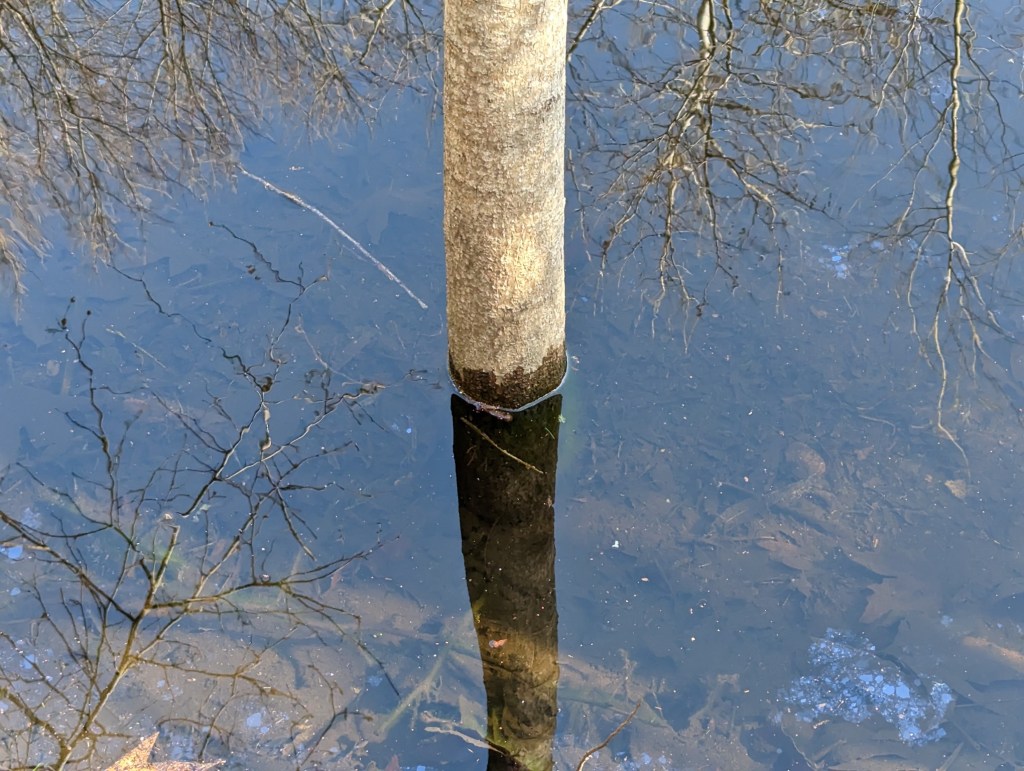
Some riparian plants tolerate soil saturation.

Saturation of the soil should be a rare problem within the local chaparral climates. Water is a limited resource. That is why plants that are not native or endemic to other chaparral or desert climates rely on supplemental irrigation. Many exotic species would not survive through the locally long and dry summers without it. Water is only sufficient during winter.

The unfortunate reality is that soil saturation is among the more common problems within landscapes that rely on gardeners. Although most gardeners are proficient with irrigation, some are not. They would prefer to irrigate too generously than risk desiccation. They do not assume the expense of the water, or of the plant material that succumbs to saturation.

Although significantly less common within home gardens that do not rely on professional gardeners, soil saturation is possible. It occasionally happens within pots or planters that lack adequate drainage, or if the drainage becomes clogged. Saucers that contain water that would otherwise damage decking or flooring might inhibit drainage if constantly full.

Besides within pots and planters, saturation is more likely within dense garden soil than within coarser soil. Downspouts could saturate surrounding soil through the rainy winter season. Leaky plumbing might do the same at any time, even if it is merely irrigation pipe that leaks only while operating. Of course, excessive irrigation produces most saturation.

Saturaturation deprives soil or medium of aeration. Roots avoid soil or medium that lacks adequate aeration. Trees and large shrubbery therefore disperse most of their roots near the surface of saturated soil. Such shallow root dispersion limits stability. The expansion of such shallow roots displaces and fractures pavement and curbs, and heaves lawn turf.

Excessive irrigation causes soil saturation during summer. Excessive frequency is more likely to cause saturation than excessive volumes of water. Unfortunately, it is impossible to prescribe appropriate irrigation schedules and application rates. Climate, soil type and plant material are all relevant considerations. Moisture requirements change seasonally, and from year to year, as plants mature.

This Parade Needs Some Rain

Now, this is something you don’t see every day in a chaparral climate.

The lack or rain has really gotten serious! This winter so far has been the driest ever recorded. The past two winters had already been unusually dry. Even when the rain starts, it will be considerably behind schedule. Some seriously torrential rain will be needed to catch up.

As much as we like to think of gardening as something that brings us closer to nature, it demands unnatural volumes of water. Only established native plants or plants that are native to similar climates can survive with the limited moisture that they get from rain. This is why gardens get watered as much as they do.

Lawns of course require the most water because their shallow root systems require such frequent watering, and also because their vast foliar surface area loses so much moisture to evapotranspiration (evaporation from foliar surfaces). Lawns are the first and most prominent of landscape features to succumb to water restriction. Flowering annuals are the next to succumb, because they too want regular watering, especially while they are not getting any from rain.

Fortunately, lawns, annuals and other plants that want an abundance of moisture need less now because they are dormant or considerably less active through winter. Besides, evapotranspiration is inhibited by cooler temperatures, shorter day length, and most of the time, by higher humidity. It is nothing like the warm and arid (minimal humidity) weather during longer days of summer.

Many large and established shrubs and trees can survive quite easily with very minimal watering or even none at all. Established oleander, bottlebrush and juniper may not be as vibrant without watering, but should survive. If they notice a lack of water at all, it would not be until they start to grow again in spring. Mature trees take even longer to notice a problem.

Deciduous plants that are now bare really do not consume much moisture at all and really only need enough moisture in the ground to keep their roots from desiccating. This will only be a problem if the soil is very sandy and drains too efficiently to retain adequate moisture, or if freshly installed plants have not had enough time to adequately disperse their roots into the surrounding soil.

Automated irrigation systems should still be operated only minimally or not at all through winter. However, because of the unusually dry weather, they may need to be used a bit more than usual for this time of year to keep some things from getting too dry.

Watering Trees Is Still Important

50812thumb
Trees in lawns, even drought tolerant sorts, expect to be watered somewhat.

All the optimistic predictions of a rainy winter do not help with the drought yet. Nice warm weather only makes the garden even drier. Many of us have let our lawns dry out, maybe with plans to replace them later. Some have decided to replace lawn with artificial turf, hardscape or other landscape features.

The problem with this is that trees and other large plants that have dispersed their roots under the lawns are thirsty for the volumes of water that they had gotten while the lawns were well watered. They can survive longer than lawn does without watering, and will adapt to less water when they do get it, but they can not do without water completely.

It seems silly to water artificial turf or new decking, but it is sometimes necessary, especially for thirsty trees like willow, ash, elm and redwood. This is why some artificial lawns are outfitted with the original irrigation systems of the lawns that they replaced.

Drought tolerant trees, like certain oaks and most eucalypti, are more adaptable. Of course, those that were originally watered generously are greedier. Those that got only minimal watering may not notice if they get none at all. Regardless of their requirements, they all can be watered less frequently than lawns were, but should be watered generously when they do get watered.

Generous, but infrequent watering soaks into the ground better to satisfy deep roots. It is actually what most trees prefer. Lawn needs frequent watering only because the roots are so shallow. Generous, but infrequent watering uses less water not only because less evaporates from the surface of the soil, but also because less water gets used.

For example, watering weekly for 20 minutes is a generous volume of water, but is still less than watering for 15 minutes three times each week. It is only 20 minutes of watering compared to forty five minutes of watering.

Know The Time To Conserve Water

P00418K-1
Automated irrigation is certainly not perfect.

In the wild, plants take water when it comes as rain. Native plants and plants that are from similar climates might be happy to get almost all of their water through winter, and almost none through summer. However, lawns and many other plants want some degree of water through summer. This is why most landscapes are irrigated.

Obviously, irrigation is unnatural. The main disadvantage is that it uses water that must be taken unnaturally from natural sources, which are often, and are presently depleted. The advantages (even during a drought) is that irrigation can be applied where needed, as needed, and when it is most appropriate.

Irrigation systems can be designed to deliver more water to plants that need it, and less water to those that are less consumptive. Watering by hose can of course be similarly tailored to the plants. The volume of water applied can be increased through warm and dry summer weather, and decreased or discontinued through winter.

Automated irrigation can be set to operate very early in the morning when no one is likely to be out in the landscape. The water gets used when the need for water in the home is minimal, so fluctuation in water pressure should not be a problem. If it operates early enough, irrigation can finish before anyone gets out to see it.

Furthermore, early morning also happens to be the best and most efficient time to apply water. Less water evaporates while the air is cooler and more humid. Therefore, more water soaks into the soil. Evapotranspiration (evaporation from foliage) is a bit subdued, so plants cycle through their own moisture a bit slower.

Many plants can just as easily be irrigated in the evening. This would allow even more time for water to soak in before the sun comes up. However, the problem for some plants and lawn is that moisture lingering on foliage all night long can promote the proliferation of all sorts of fungal diseases, including mildew.

Drip and similar irrigation is still the most efficient, simply because water is applied directly, with minimal evaporation. Broadcast irrigation from lawn sprinklers, especially fine mist, is much more susceptible to evaporation. Water evaporates as it gets sprayed through the air, and as it lingers on any wet surfaces.

Horridculture – Bad Guys

P91211Roots hold up trees. That is part of their job. They grow along with the trees they support, and disperse as necessary to maintain stability. Trees grown within the confinement of cans (pots) or boxes, and then installed into a landscape, are typically staked temporarily until their roots adequately disperse and stabilize. Once unnecessary, stakes and bindings must be removed.

Mature palms that get relocated are supported temporarily by guy wires. They are just too big to be supported by stakes. Because palm trunks to not grow any wider as at they grow taller, they are not damaged by the sorts of bindings that would damage the fattening trunks of other trees. Like stakes on other trees, guy wires must be removed as they become unnecessary.

Although they can be appropriate in unusual circumstances in which stakes would not be practical, guy wires are rarely used on trees that are not palms. Mature trees that get relocated can be guyed if too big to be supported by stakes. Because trunks and limbs of such trees expand (circumference), it is more important for guy wires to be remove when they become obsolete.

As useful as guy wires can be, they are more often used improperly or inappropriately. Firstly, those who install them rarely do so correctly, with the wires or cables as straight as possible between each end. Cabled anchors are usually pounded into the ground perpendicularly to the direction of the cable, so that the cable merely slices through the soil when tension is applied.

Once installed, cables are very often left in place long enough to constrict the growing trunks or limbs that they are attached to. Cables that apply too much tension or limit the motion of the trees they support (in the breeze) for too long will actually inhibit root dispersion. Trees will only become as stable as they need to be. Besides all this, lingering cables are just plain unsightly.

The cabled trees in these pictures demonstrate another set of problems that should be corrected by simple and necessary pruning, and comparably necessary adjustment of the automated irrigation. Guy wires should most certainly not be necessary for such mature trees of this species, and will interfere with necessary root dispersion without remedying the primary problems.

Firstly, the trees are too low and dense. Even if stability were not a concern, they should be pruned for a bit more clearance above the patio to the right of the picture, and perhaps allow a bit more sunlight to the plants below, even if only temporarily. More importantly, pruning would temporarily decrease weight and wind resistance of the canopies while roots adapt accordingly.

Secondly, the landscape is getting irrigated too much, even for the ferns in the background. This maintains soil saturation so that stabilizing roots can not disperse into deeper strata. Roots that might have extended deeper earlier will drown and rot. Until this happens, excessive irrigation promotes heavy superfluous growth that the compromised root system can not support.

Automated irrigation should be disabled for winter, and operated only manually and minimally if the weather stays dry long enough for the ferns to get drier than they are comfortable with. It can be adjusted accordingly when reactivated in spring. Even before that happens, and roots disperse, the guy wires can be removed as soon as these trees get pruned as they should be.P91211+