
In the wild, plants take water when it comes as rain. Native plants and plants that are from similar climates might be happy to get almost all of their water through winter, and almost none through summer. However, lawns and many other plants want some degree of water through summer. This is why most landscapes are irrigated.
Obviously, irrigation is unnatural. The main disadvantage is that it uses water that must be taken unnaturally from natural sources, which are often, and are presently depleted. The advantages (even during a drought) is that irrigation can be applied where needed, as needed, and when it is most appropriate.
Irrigation systems can be designed to deliver more water to plants that need it, and less water to those that are less consumptive. Watering by hose can of course be similarly tailored to the plants. The volume of water applied can be increased through warm and dry summer weather, and decreased or discontinued through winter.
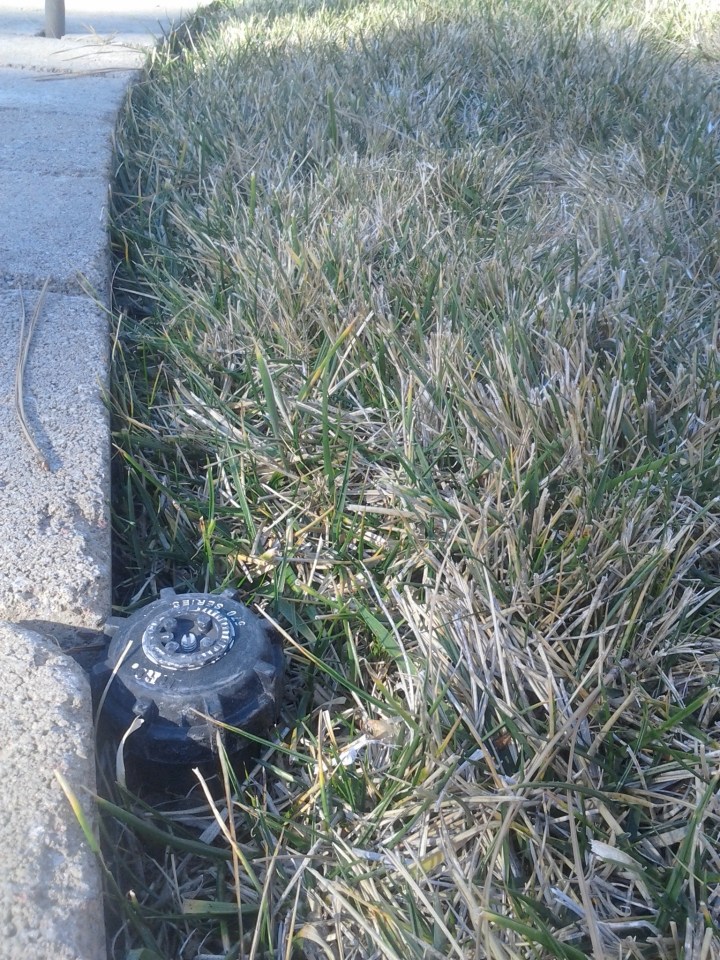
Automated irrigation can be set to operate very early in the morning when no one is likely to be out in the landscape. The water gets used when the need for water in the home is minimal, so fluctuation in water pressure should not be a problem. If it operates early enough, irrigation can finish before anyone gets out to see it.
Furthermore, early morning also happens to be the best and most efficient time to apply water. Less water evaporates while the air is cooler and more humid. Therefore, more water soaks into the soil. Evapotranspiration (evaporation from foliage) is a bit subdued, so plants cycle through their own moisture a bit slower.
Many plants can just as easily be irrigated in the evening. This would allow even more time for water to soak in before the sun comes up. However, the problem for some plants and lawn is that moisture lingering on foliage all night long can promote the proliferation of all sorts of fungal diseases, including mildew.
Drip and similar irrigation is still the most efficient, simply because water is applied directly, with minimal evaporation. Broadcast irrigation from lawn sprinklers, especially fine mist, is much more susceptible to evaporation. Water evaporates as it gets sprayed through the air, and as it lingers on any wet surfaces.
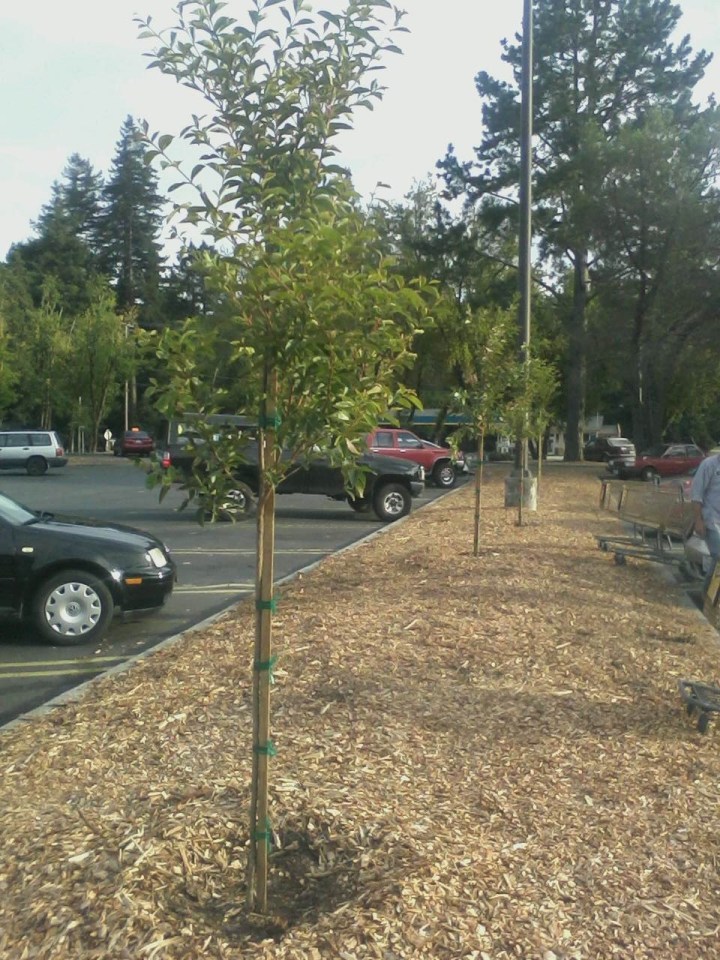
 Roots hold up trees. That is part of their job. They grow along with the trees they support, and disperse as necessary to maintain stability. Trees grown within the confinement of cans (pots) or boxes, and then installed into a landscape, are typically staked temporarily until their roots adequately disperse and stabilize. Once unnecessary,
 Most plants would prefer the real thing; how they do it in the wild. They drop their leaves, flowers and twigs. Deciduous plants do it mostly in autumn. Evergreens might spread it out through the year. The debris accumulates on the ground below, and decomposes at about the same rate as it accumulates. There is no one there to clean it up. Yet, the natural ecosystems know what to do.
 Regardless of their individual innate requirements for water, new plants need to be watered very regularly immediately after they are installed into a landscape. As they mature and disperse their roots, the regularity of supplemental watering becomes less important, and ‘drought tolerant’ plants may not need to be watered at all. Maturing larger trees generally get what they need from the landscape around them.
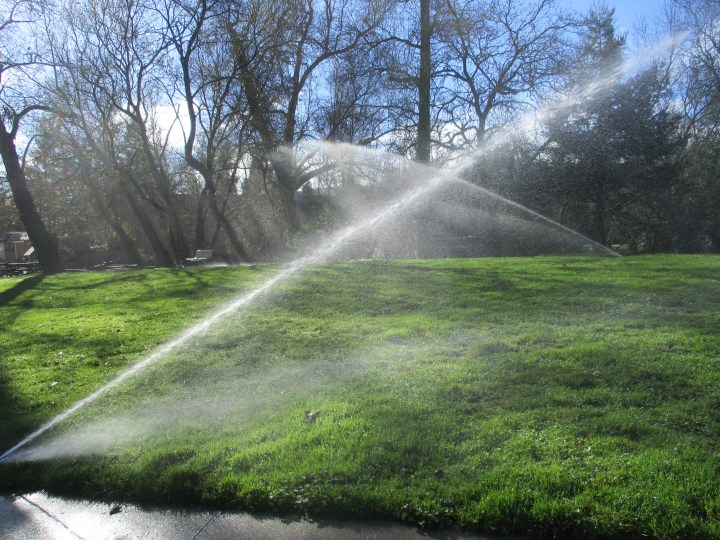 Much of California is chaparral. Much of what is not chaparral is full blown desert. Some coastal climates gets quite a bit of rain; and some climates up in the Sierra Nevada are among the snowiest places in America. Generally though, the most populous and most agriculturally productive parts of California do not get much water to spare.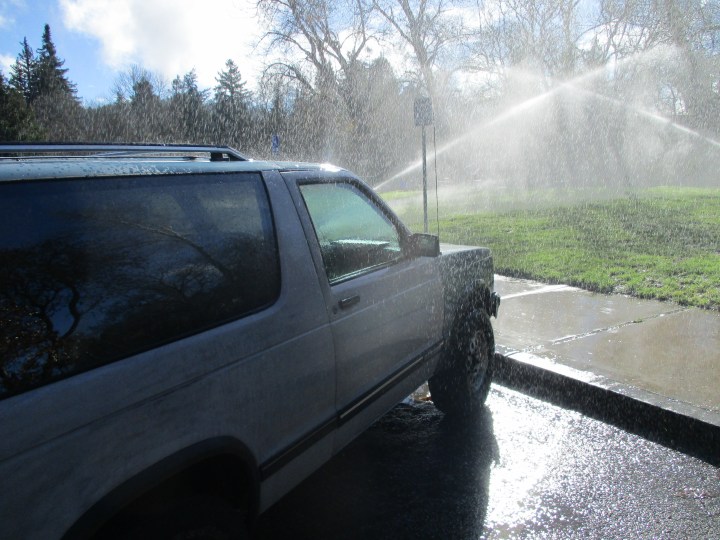
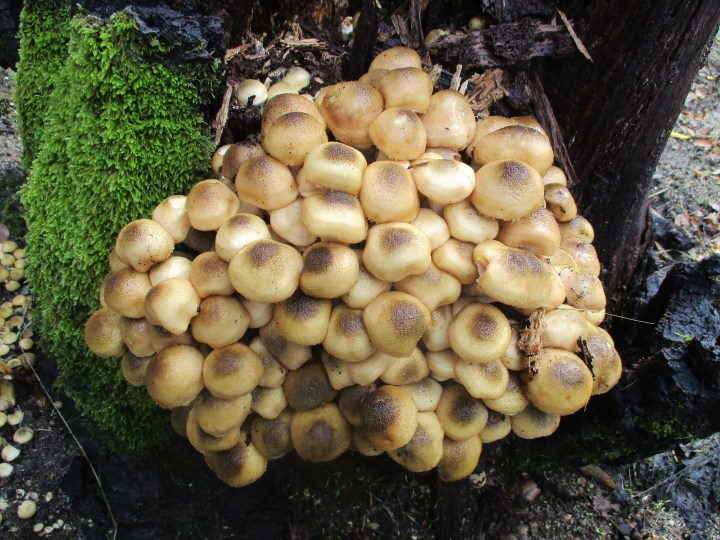 Is this Armillaria mellea, the dreaded oak root rot fungus? I really do not know. All the elements are here. The stump is that of a coast live oak. Bellow the stump there are the remains of roots. Those necrotic roots are undoubtedly decomposing as a result of rot. That rot is undoubtedly associated with this fungus. Furthermore, it fits the description of oak root rot fungus. The toasted spots were probably caused by weathering as the mushrooms started to develop while the weather was still warm and dry.
 For those who do not remember ancient history, this wet stuff that fell from the sky recently is known as “rain”. It used to be more common, particularly through winter. It has an unfortunate way of getting everything exposed to it quite wet. It makes soil muddy. Yet, rain has many attributes. It is composed of water, so provides much of what irrigation systems have provided for so long in the absence of rain.
 For a while last winter, it seemed like the rain would never stop. Obviously, it did. The warm spring weather that followed helped plants to take advantage of the rare surplus of moisture. Desert wildflowers were more colorful than they had been in many years, and maybe since 1983 in some areas. Now the weather is back to normal for here, and we must water our gardens accordingly.
 Happy Easter!
 Watering has not been much of a concern lately. All the rain has kept our gardens too wet to work in. Some of us have been more concerned with erosion caused by runoff. Automated irrigation systems are probably disabled until the rain stops. Soil can drain somewhat between rain, but will not really dry out until the weather gets warm again. Dormant plants do not draw much moisture.
 Tony Tomeo