 Watering has not been much of a concern lately. All the rain has kept our gardens too wet to work in. Some of us have been more concerned with erosion caused by runoff. Automated irrigation systems are probably disabled until the rain stops. Soil can drain somewhat between rain, but will not really dry out until the weather gets warm again. Dormant plants do not draw much moisture.
However, as strange as it may seem, there are a few plants that might want to be watered. Potted plants on roofed porches are sheltered from rain, just like houseplants. They will not dry out nearly as quickly as they would during warm summer weather, but they do eventually get dry if not occasionally watered. Hanging pots and small pots containing big plants typically dry out faster.
Plants that were moved onto porches for shelter from frost can be moved out into the rain if that would be easier than watering them. It is very unlikely that they will be damaged by frost this late. Besides, as long as it is raining, the weather can not get cold enough for frost. (In fact, any frost damage that was left through winter can be pruned away now that fresh new growth is developing.)
Small plants in the ground under big eaves might need to be watered as well, if they have not been in the ground long enough to disperse their roots beyond the eaves. Annuals do not last that long. Mature plants might have dispersed their roots well enough to get enough moisture from outside. They might not notice if the soil inside is too dry, as long as the weather is cool and humid.
Houseplants are of course in a league of their own, and as long as they are inside the home, get no water from rain. They might need less watering in winter if the home stays cooler; or they might need slightly more watering if the home heating system reduces humidity. Regardless, some might enjoy going outside to a spot sheltered from the wind, for a brief rinse from a mild rain shower.
Eventually, the weather will get warmer and drier, and automated irrigation systems will need to be reactivated. When that happens, the emitters and sprinklers should be checked for efficient function. While inactive over winter, they can get grungy or clogged with mineral deposits. Plants will not need much water early in the season. Irrigation increases as spring and summer progress.
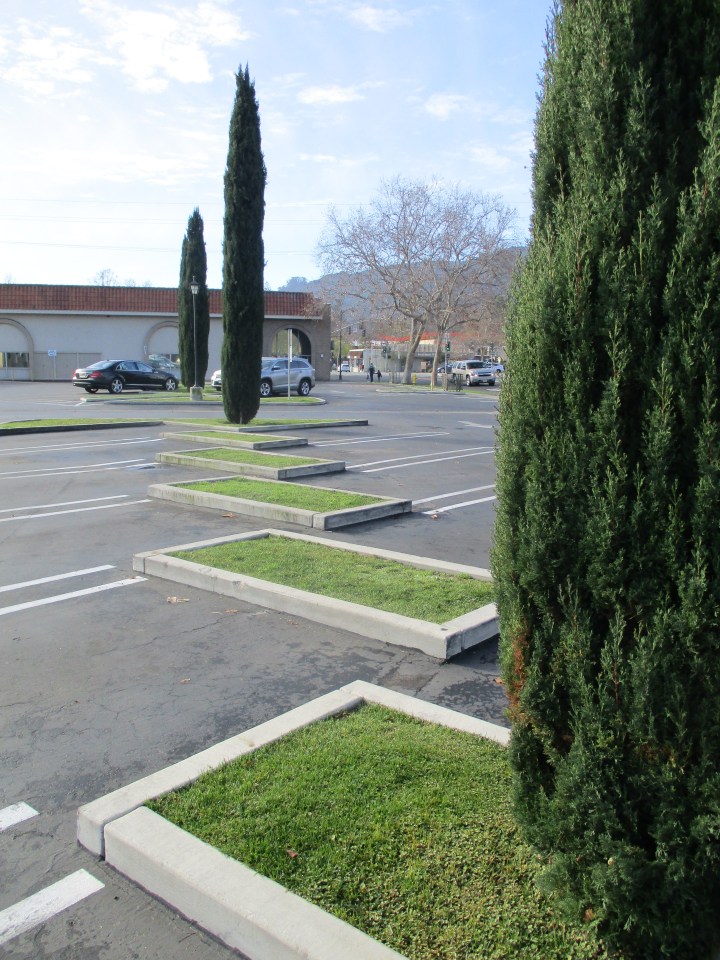 Perhaps I should elaborate on the ‘litter boxes’ in the ‘Six on Saturday’ post earlier this morning. As I already mentioned, they are in the same parking lot as the Leo and Leona sculptures. They were formerly inhabited by Italian cypress trees that would now be like those nearby if they had survived.

 Something really crazy happened last night. From out of nowhere, a profusion of drops of water started to fall from the sky! It continued to fall for a while, and got everything wet. Soil that had been dry and dusty became rather muddy. As crazy as it sounds, it is not impossible, and actually happened repeatedly last autumn, winter, and into spring. In fact, it was so abundant that the San Lorenzo River filled with all this strange sky water, and flooded worse than it had since the flood of 1982! People in other less arid climates are more familiar with this sort of thing. It is actually no mystery. It is known simply as ‘rain’.

