Horridculture – Too Many Trees (deferred from Wednesday)

Excess is expensive . . . or profitable.

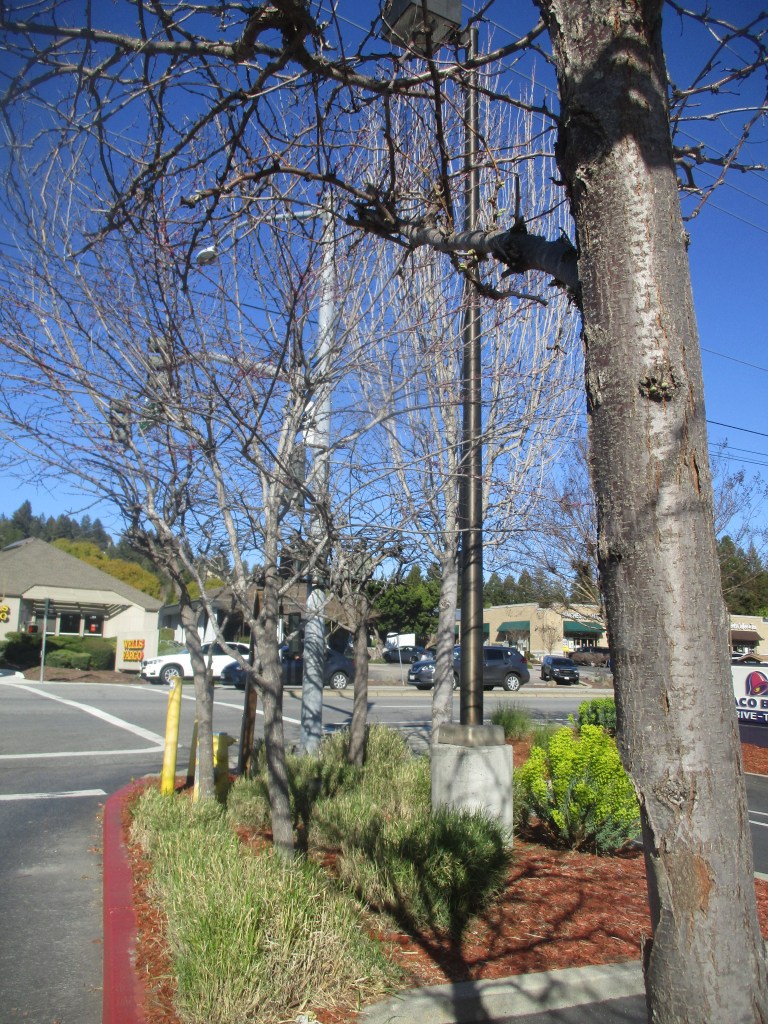
One can not see the forest for the trees here. Actually though, there is no forest, but only too many trees, surrounded by vast pavement. A wide roadway is beyond these trees. A driveway is to the left. A parking lot is to the right. Not much space remains in between for so many trees.

A honeylocust is in the foreground to the right. It mostly obscures a crape myrtle in the background. To their left, and slightly to the right of the center of the picture, there is a red maple. To the left of the center of the picture, there are three Eastern redbuds. That is six trees confined to an area that is about as spacious as three parking spaces. The picture is not of good quality, and because it is a few years old, I can not remember many more details about it.

The honeylocust and the crape myrtle are components of the original landscape of the shopping center that this landscape is associated with. Alone, they are both quite practical for this particular landscape, and would not be too crowded. The red maple and three Eastern redbuds were added for the ‘upgraded’ landscape of the adjacent business establishment. Not only are they much too crowded to grow and develop healthy form, but they also encroach into adjacent traffic signals, and obstruct illumination of their corner of the adjacent parking lot.

Furthermore, they contribute little more than problems to the landscape. Red maple provides nice foliar color for autumn, but is obscured by the other trees. Eastern redbud could bloom nicely for spring, but is too brutally pruned for clearance to do so.

Unfortunately, these crowded trees were more profitable than smaller plant material would have been for the so-called ‘landscape company’ that installed them.

Horridculture – Nice Trellis

Heard but not seen it through the grapevine.

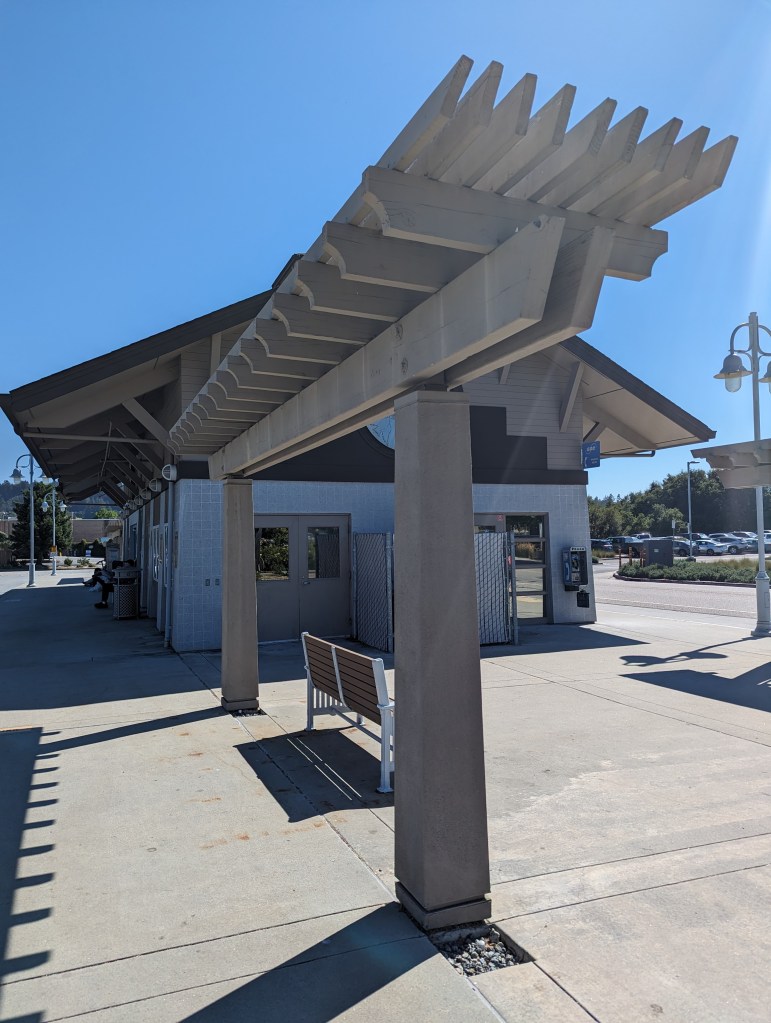
This is such a visually appealing trellis at the Cavallaro Transit Center in Scotts Valley. It is so very visually appealing that no one wanted to obscure its visual appeal with the two vines that it was intended to support. It is very well designed also. Neat holes were left in the concrete pavement for the two vines that were not planted. Capped terminuses of the irrigation system that was intended to provide the absent vines with water are ready for installation of emitters. The otherwise exposed ground was covered neatly with gravel. It is all well executed.

All that is missing is the vines.

Realistically though, who notices? It really is a visually appealing trellis. Vines would be visually appealing also, but would also clutter the landscape more. Besides, they would require more maintenance, and the surrounding landscape already lacks adequate maintenance. The empty trellis actually seems to be an asset to the otherwise bland landscape. I only notice the absence of vines because I am a horticulturist.

I will say that I am not so keen on such structures in other landscapes. Most are overbuilt. Many such as this are within situations that trees would be more practical.

I have encountered several similar structures, but with single pillars, in downtown Livermore. Grapevines climbed them to form inadequately and improperly pruned grape trees to flank the main streets. Honeylocusts that flanked the same streets would have been more than adequate alone. The grapevines were intended to commemorate the formerly vast regional vineyard that were replaced by equally vast tracts of home, but their shabbiness was too insulting.

Landscape designers and architects should realize that vines require significant specialized maintenance. Architects rely on landscape designers to select vines for their trellises. Landscape designers rely on gardeners to maintain their vines.

What a splendid hole in the concrete!

Six on Saturday: Brent’s Pointless Pictures

Esperanza and poinciana (pride of Barbados) seed that Crazy Green Thumbs sent to me earlier have not yet been sown, as I said they would be last week. Therefore, there are no pictures for them yet. Instead, I shared six of the countless pointless pictures that Brent, my colleague down south, sends to me as if I have nothing better to do than to download his countless pointless pictures and pretend to be impressed by them. They are different shapes and sizes, and some are quite small, but that is how I get them. Some are months old. Try to be impressed.

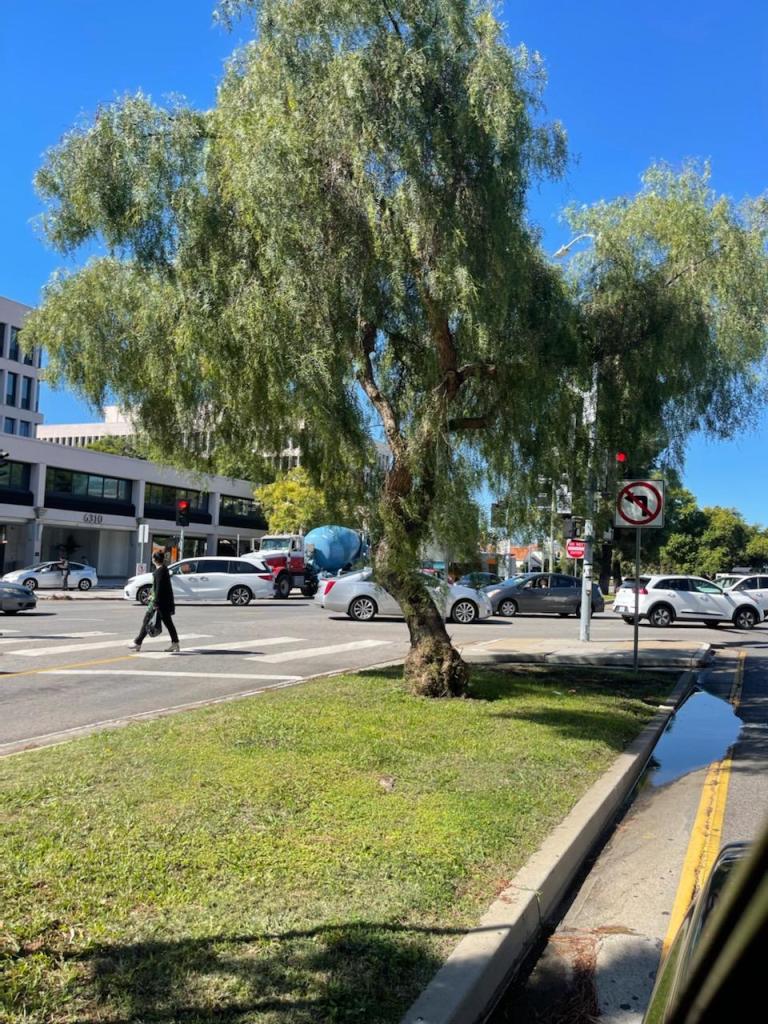
1. This California pepper tree is the only important subject of Brent’s otherwise pointless pictures. He planted it in this median when his daughter was born twenty-one years ago.

2. Poinsettia, cyclamen and a wreath on the gate at Brent’s front porch indicate that this picture was taken prior to Christmas, and that Brent’s garden is in need of a weed eater.

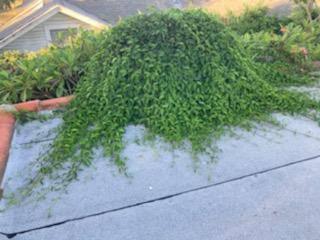
3. This is a better example of the overgrown vegetation. This flame vine spreads out over the roof and sometimes reaches the opposite side. I cut it back to bare cane a few times.

4. Brent’s older brother’s best friend grew up in this home in Leimert Park, and still lives here. He believes that this ‘saucer’ magnolia is a ‘Japanese’ magnolia. He is an idiot also.

5. This might be a red ginger, and it might be right outside of the dining room at Brent’s home. It is difficult to identify a location with all the overgrown and crowded vegetation.

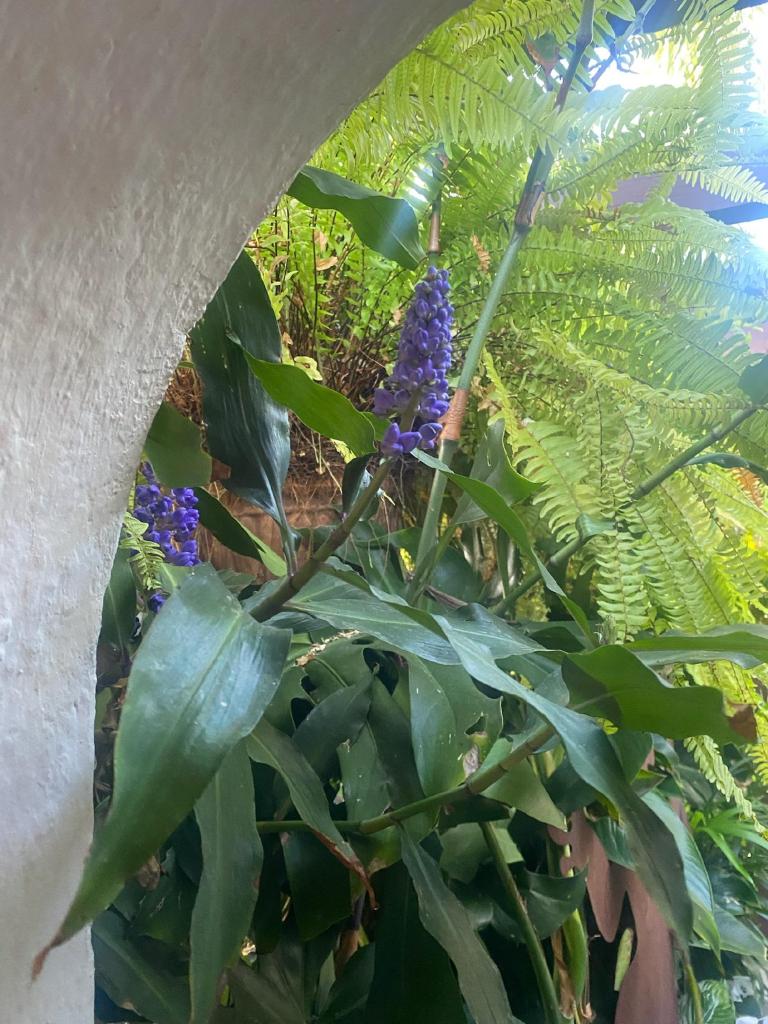
6. Blue ginger is neither related to real gingers, nor fragrant like real gingers, but sure is pretty. This could have been right outside of the front porch gate, prior to the picture #2.

This is the link for Six on Saturday, for anyone else who would like to participate: https://thepropagatorblog.wordpress.com/2017/09/18/six-on-saturday-a-participant-guide/

Six on Saturday: Integration


Brent, my colleague down south, scoffs at my predilection for white, as well as the exclusivity of the white garden from which I got pictures for Six on Saturday for last week. I suppose that he is entitled to that since he is a renowned landscape designer and I am not. White is my favorite color regardless; although I lack a white garden of my own, and have no intention of developing one. Exclusivity is no simple task. Some flowers that are not white are too appealing to easily dismiss. Some move in without invitation. Some are not what they should be.

1. Cestrum nocturnum – night blooming jasmine blooms pale white. After installing it, I learned that it might bloom pale yellow! Fortunately, it is next door, just barely beyond the landscape.

2. Bergenia crassifolia – pigsqueak has inhabited the space behind el Catedral de Santa Clara de Los Gatos longer than anyone can remember. It blooms pink, but is not visible from out front.

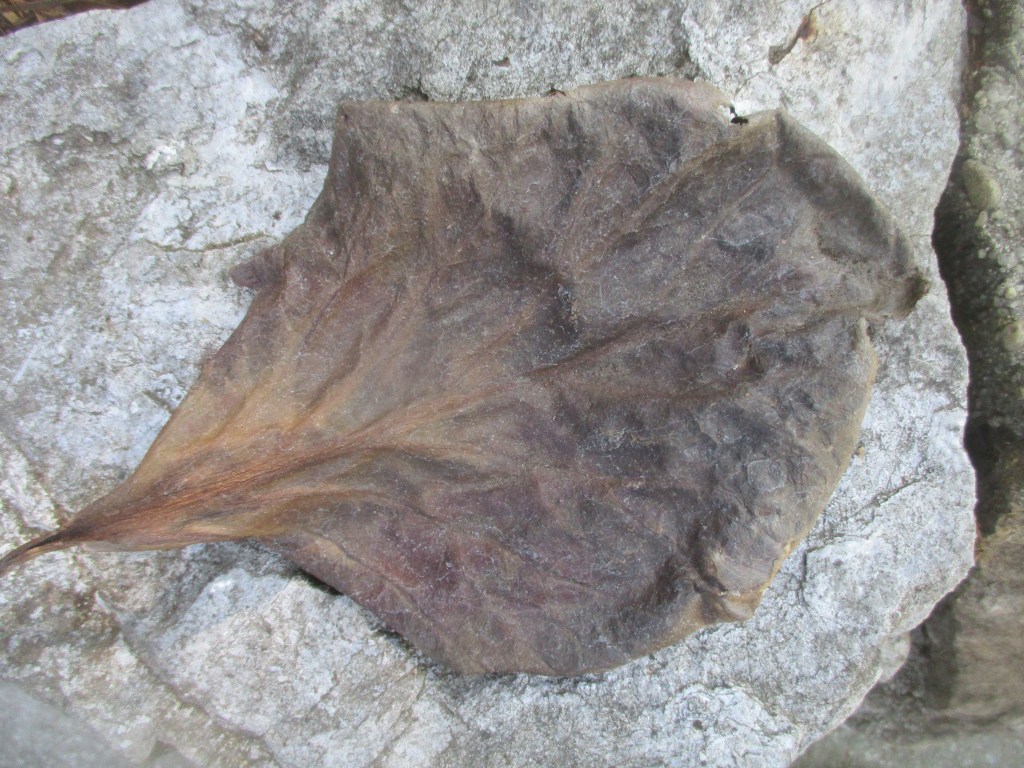
3. Bergenia crassifolia – pigsqueak should be groomed of old desiccated leaves. Incidentally, leaves blackened by frost are used as tea. I am unimpressed. These leaves are not frosted, just old.

4. Lychnis coronaria – rose campion is naturalized here, but is too pretty to pull while the landscape is still so sparse. It can bloom white, as well as red or pink, but I have not seen it do so yet.

5. Agapanthus orientalis – lily of the Nile was likely here about as long as the pigsqueak out back. Now that the first white lily of the Nile here was added at the road, the blue will be dismissed.

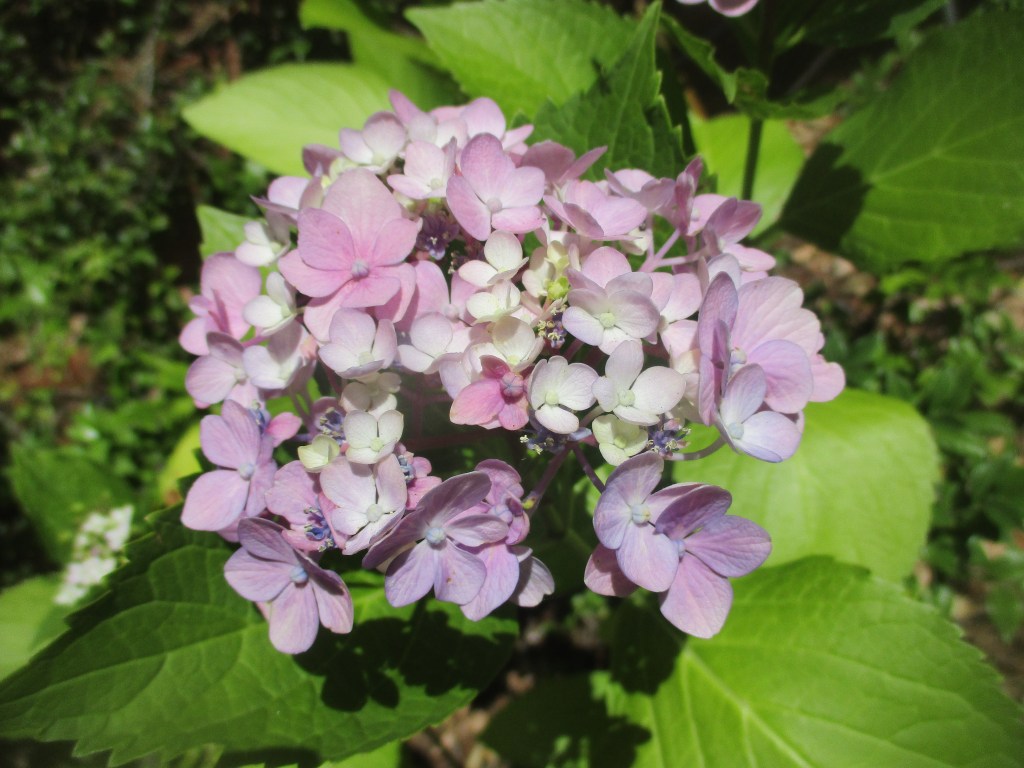
6. Hydrangea macrophylla – hydrangea got relocated to here from another landscape specifically because it was white. Now it is doing this. I do not know what color this is, but it is not white.

This is the link for Six on Saturday, for anyone else who would like to participate:

https://thepropagatorblog.wordpress.com/2017/09/18/six-on-saturday-a-participant-guide/

Horridculture – Parking Lot Islands

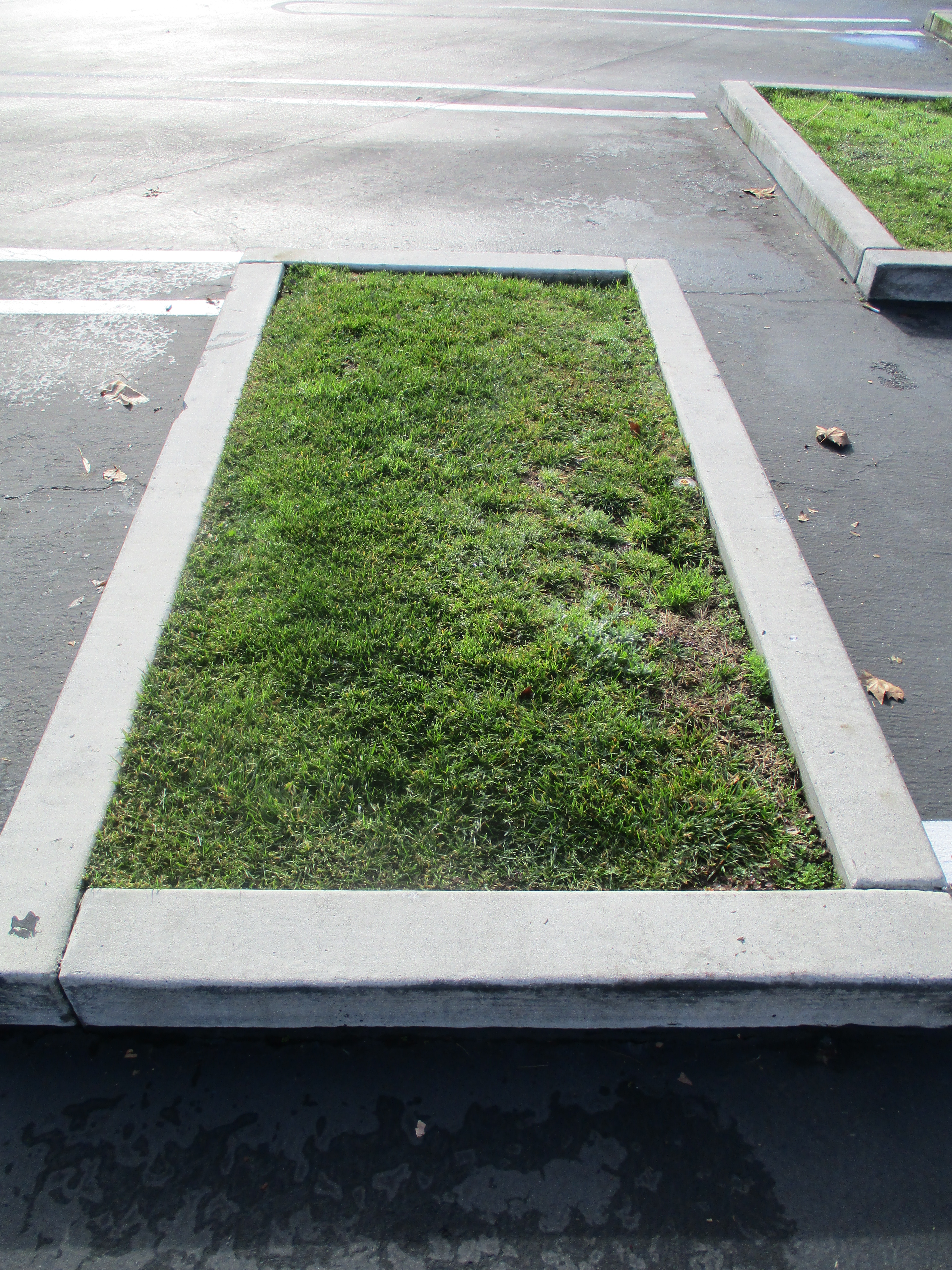
P80120kWhat a waste of space! What a waste of water! What a waste of time for the mow-blow-and-go ‘gardener’ who charges money to mow and edge it, but are too inept to suggest planting something that might actually be pretty, or shade the parking lot. There are a few of these between parking spaces marked for ‘compact’ cars, because it is cool to discriminate against full size cars that can not pull far enough forward to get out of the way.

Even between a Buick and a Chrysler, it is nothing to look at. It looks like something went seriously wrong with a grave site that was supposed to get a slab ‘over’ it (not ‘around’ it). It could be a Chia Pet litter box. There are much better spots to picnic at the park down the road. Whatever it is, it is not much better than the swales that are required in modern parking lots. It has potential to be a tripping hazard, but is not quite as dangerous.

I would make one of only two suggestions.

1 Pave over it. If there is not some building code that limits the area that can be paved, this might be thee most practical long term solution.

2. Landscape it responsibly. Yes; ‘responsibly’. Turf grass is just lame. Those trendy carpet roses that mow-blow-and-go ‘gardeners’ typically plant snag the clothing of those coming and going from the cars they park there. Since parking lots get warm, I would recommend shade trees with complaisant roots that are compatible with pavement. Such shade trees also should get tall enough to not obscure the signs on the buildings.

Parking lot islands contain some of the most deplorable landscapes. Trees commonly get hacked down below signs rather than pruned up and over them. Even if they get properly pruned with up-dos, their canopies must be carve around security lighting. Most problems result from negligent maintenance. Some problems result from design glitches. Realistically though, parking lot islands are very difficult to landscape well.

Horridculture – High Fences

P90522There is no doubt that fences are useful for a variety of functions. They exclude deer from the garden. They confine livestock. For suburban homes, they enclose a relatively safe space for children and pets. Fences should be designed according to their intended functions. Those designed to exclude deer might be as simple as coarse mesh on posts. Those enclosing backyards might be more refined and compatible with the landscape.
Over the years, conformity to modern suburban and urban landscapes, as well as modern architecture and lifestyles, has changed the standards of how fences are designed. Low picket fences do not adequately obscure the scenery that adjacent and often dissimilar landscapes contribute to a view. Where common vegetable gardens might have been, most of us want private outdoor rooms, with a distinct style of landscape.
It seems that everyone wants privacy nowadays. Those who have no need for privacy will get it anyway because no one will build fences that will not provide it. In the 1950, fences were commonly four feet high, and not every backyard had them. By the 1970s, they were more commonly six feet high, and standard for almost every backyard. Now, fences are expected, and many are seven feet high or higher, with lattice on top!
Modern architecture and lifestyles are part of the justification for such tall fences. Low profile older homes on formerly suburban lots are commonly replaced with two or more larger homes on smaller subdivided city lots. They are much closer to each other than the older homes were, with only narrow spaces between upstairs windows, where even eight foot high fences will not provide privacy.
So, not only do much larger homes on much smaller parcels mean that there is much less space for gardening, but taller two story (or taller) homes with weirdly high fences mean that more of the very limited space available for gardening is shaded!

Utilitarian Landscape

P90505I am no designer. I am merely a horticulturist. I grow things, and I know how things should be grown in landscape situations.

My colleague Brent Green is a landscape designer, as well as a horticulturist. He knows how things should be grown in landscape situations too, but more importantly, he knows how to assemble the landscapes that they grow in. He creates the sort of landscapes that most people think that all horticulturists strive for. (A few pictures of his home garden can be found in a former article, as well as another similar article that it links to: https://tonytomeo.com/2019/04/06/six-on-saturday-brents-garden/ .)

Brent and I have two completely different sets of standards for landscape design, to say the least. His ideal landscapes are very lush and inviting, with abundant color and fragrance. Mine are very simple and structured, with abundant fruits and vegetables. He strives to bring the ambiance of wild jungles into very urban settings. I try to instill formality and structure into the forests. Yet, we both agree that landscapes must be functional.

That means that landscapes must work for those using them, whatever they are using them for. Almost all of Brent’s clients use their landscapes as extensions of their homes, so want them to function as such.

I do not design landscapes, but I do happen to work in some. Most are in public spaces, and some are comparable to athletic fields. They function very differently from those in residential situations.

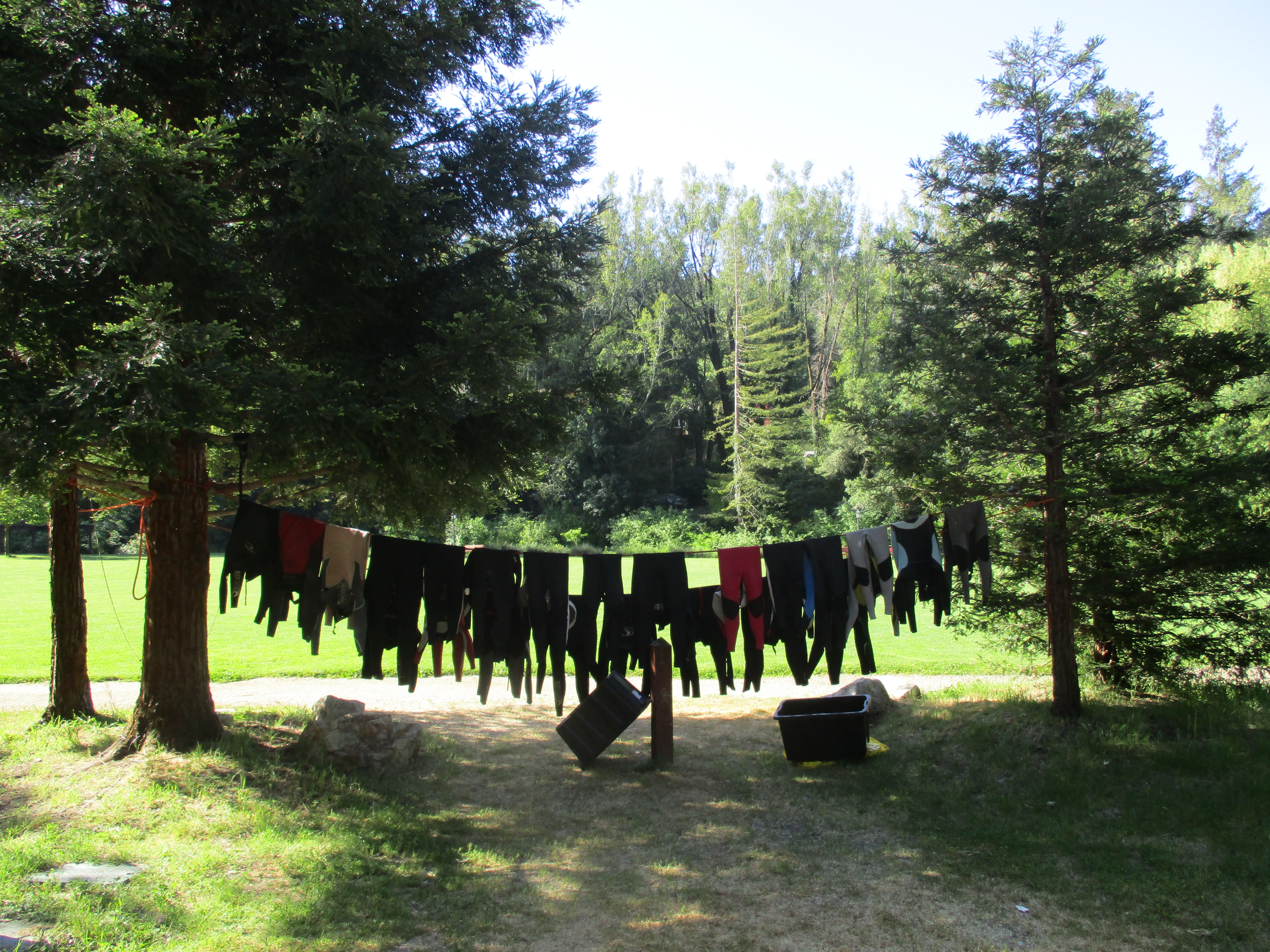
The unexpected way that these three small redwoods are functioning in this landscape was just too amusing to not get a picture of. I have no idea where all these wet suits came from, or why they are hung in this particularly prominent location, but it is the last thing I expected to encounter here.

Horridculture – That’s Just Swale

P90424Building and environmental codes are so ridiculous. So much of what I would want in my home is now illegal. So much modern technology that I do not want is now required. Fireplaces and wood stoves are not allowed. Overly elaborate electrical systems to serve every room are necessary. I would prefer a technologically simple home comparable to those built more than a century ago, but am prohibited by law from ever constructing one.
The area outside of a home is no easier to work with. Dead trees inhabited by the wrong sorts of woodpeckers can not be cut down. Excavation can be prohibited if a particular beetle happens to be in the way. Even some of the increasingly combustible trees and overgrown vegetation have more rights on my land than I do. Now, I am a horticulturist; so I know more about vegetation management than the treehuggers formulating these laws.
Even some of the weather has more rights than people do. In some municipalities, rain that falls onto a property has the right to percolate into the soil. Rain water that drains from roofs and pavement must be provided with ‘swales’ or basins where it can do so. It can not be evicted into old drainage systems that drain into local creeks and rivers. However, such rain water must not be detained in tanks for use in the landscape through summer.
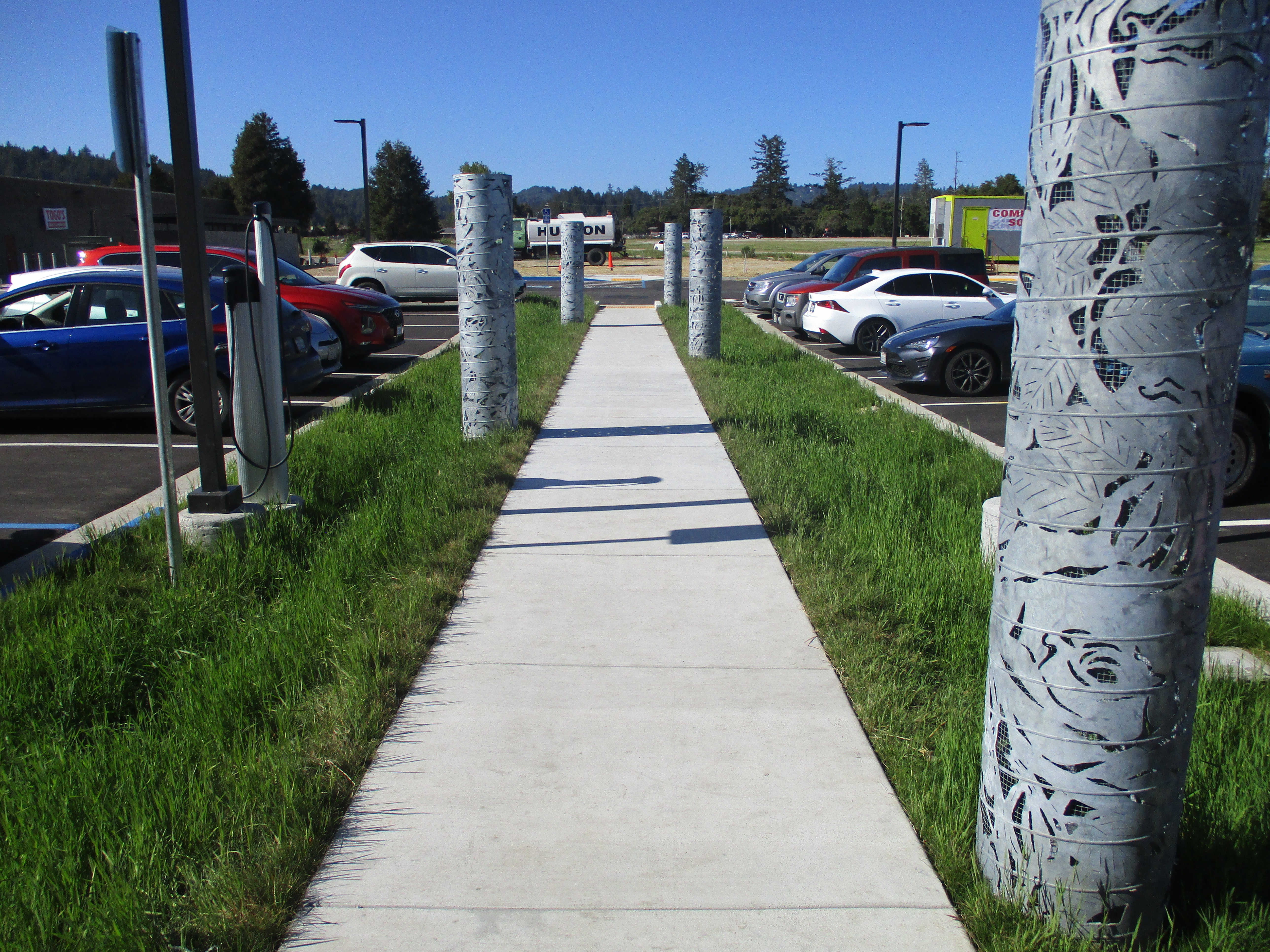
The picture above shows part of a new landscape in the middle of a new parking lot at a newly constructed building. It looks simple for a reason. It is a pair of swales. The meadow grasses conceal a pair of surprisingly deep ditches on either side of the central walkway. Rain water drains here to percolate into the ground. The soil below the walkway might have been replaced with coarse gravel to promote drainage into that area as well.
Do not park a car at the curb and try to step from the curb into a swale to get to the walkway! You could get hurt. As I mentioned, that grass is concealing ditches that are deeper than they look. It is safer to walk through the parking lot to a large paved patio like area that is out of view behind where the picture was taken from. The other option is to walk away from the building to the far end of the walkway, but really, who would do that?
Why is the walkway even there? I really don’t know. There are no curbs on it, so anyone in a wheelchair who feels so compelled to go to the far end to use it could get seriously hurt by tumbling off the edge while trying to get out of way of someone going the opposite direction! The swales are snares for walkers and baby buggies too. Perhaps the walkway is merely bait. What are the surveillance cameras really for? What sick entertainment!

Six on Saturday: Brent’s Garden II


Yes, this is another sequel; and yes, this is my second Six on Saturday post for today. So far, no one has told me that posting twice is against the rules.

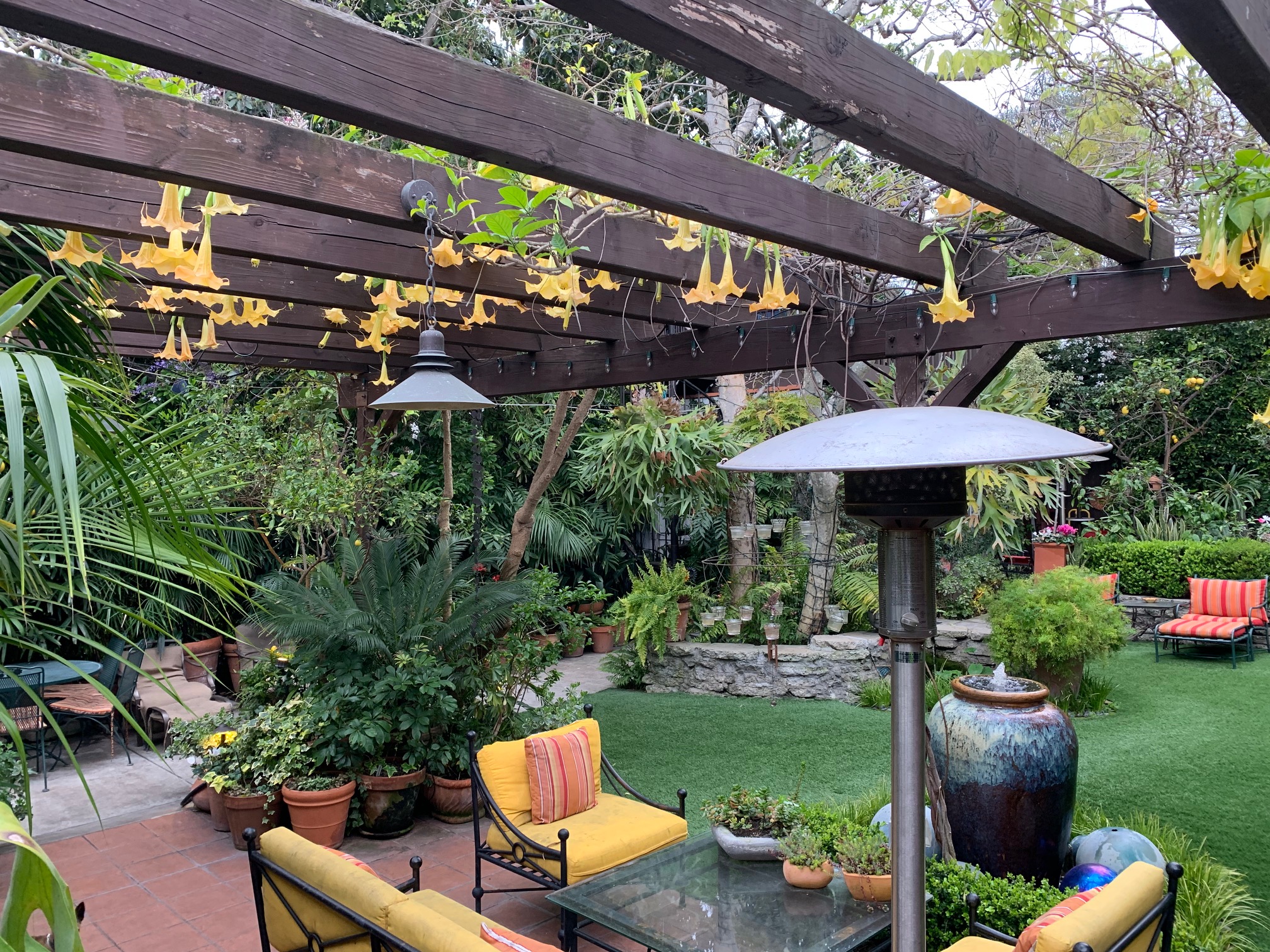
These are six more of the many pictures that my colleague, Brent Green, sent to me. They are of his home garden in Mid City Los Angeles, which is much more interesting than my utilitarian sort of garden. I explained the situation in more detail with the first post last week, and briefly mentioned it in the other Six on Saturday post just prior to this one.

The other Six on Saturday for today was posted here: https://tonytomeo.com/2019/04/06/six-on-saturday-brents-garden/

1. This is the small elevated porch-like patio at the rear of the garden from which the first of the six pictures in the previous post was taken. (This picture was taken from the back porch seen in that picture.) You can see how it, and the low wall to the left, were constructed from the broken concrete of the old driveway. The very edge of the new driveway is barely visible at the left edge of the picture. More on that with the fourth picture.P90406K
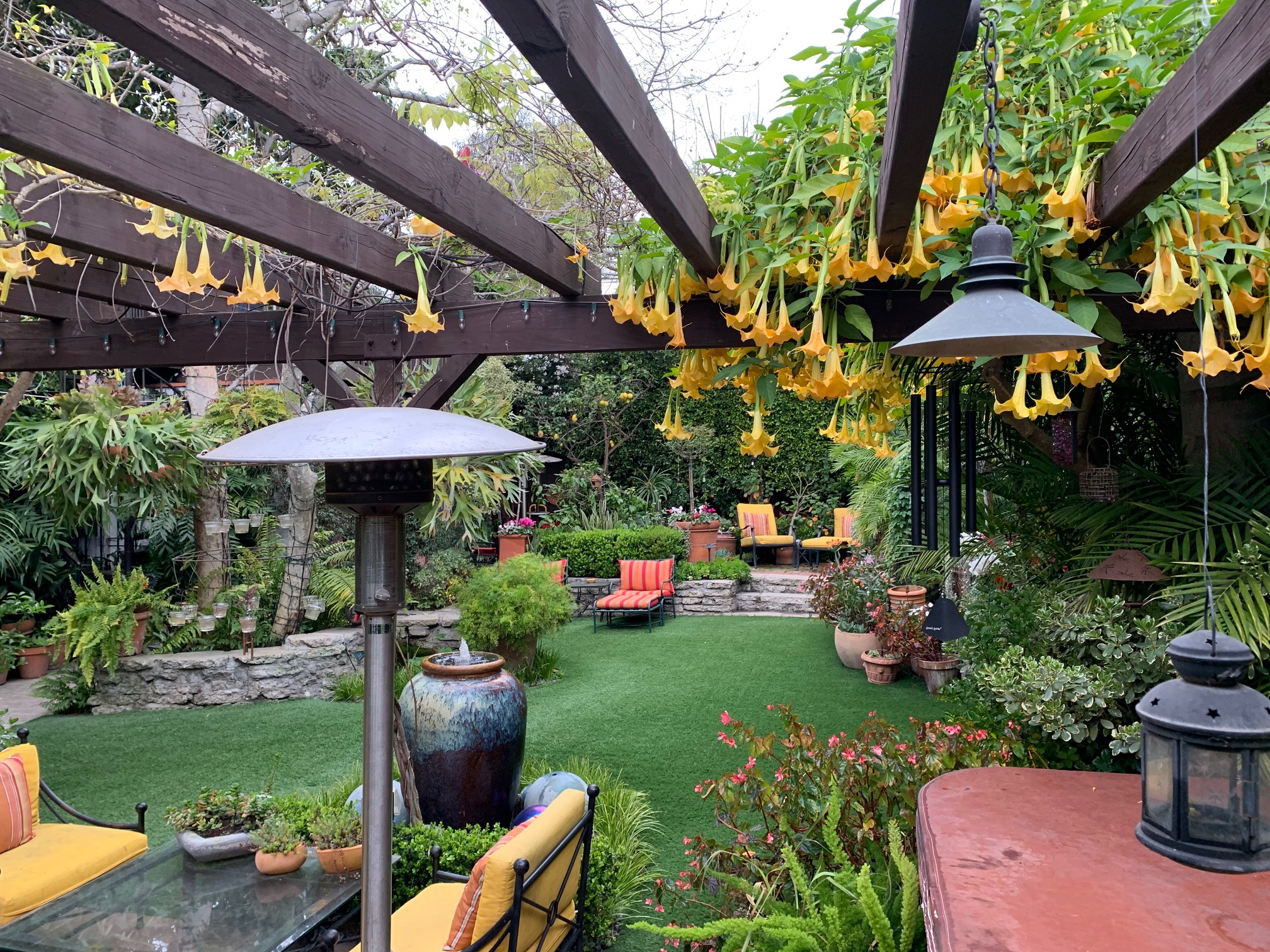
2. You can not see the most interesting feature of this picture, which is just to the left of the previous picture. Right there in the middle, completely obscured by vegetation, there is a small garage that was converted to an office with a deck on the roof, where I camp out when I go to Los Angeles. It is like sleeping in a tropical jungle with a view of the ‘HOLLYWOOD’ sign, which by the way, is different from sleeping in a redwood forest.P90406K+
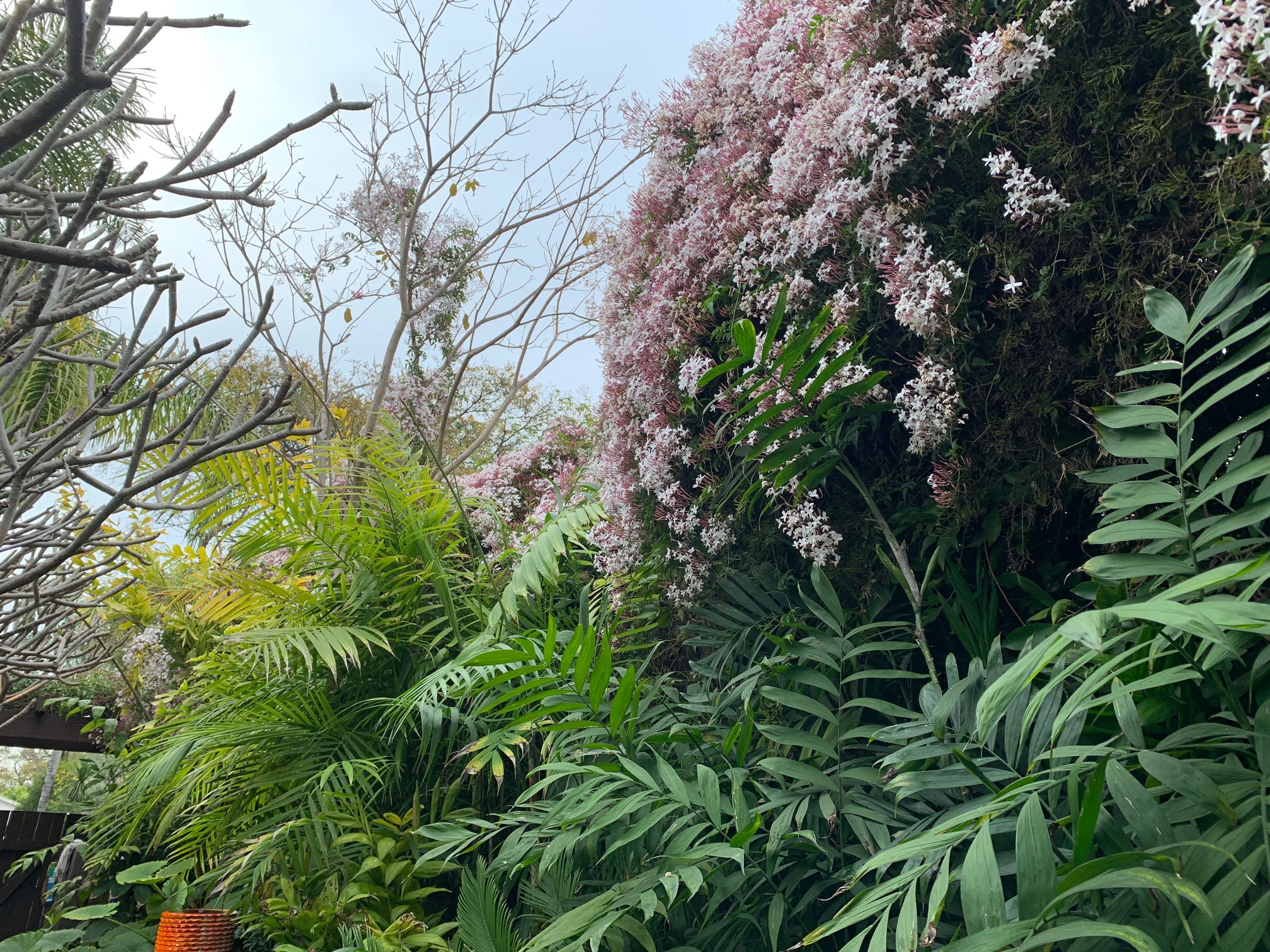
3. Just to the left of the previous picture, the ‘driveway’, which I will explain next, extends from the garage that is now an office to the street out front. In the narrow space between the driveway and fence, this overgrown mess of pink jasmine on top of a ficus hedge behind a thicket of bamboo palms obscures the house next door. All this jasmine is VERY fragrant all day and into evening when the angel’s trumpet gets powerfully fragrant too.P90406K++
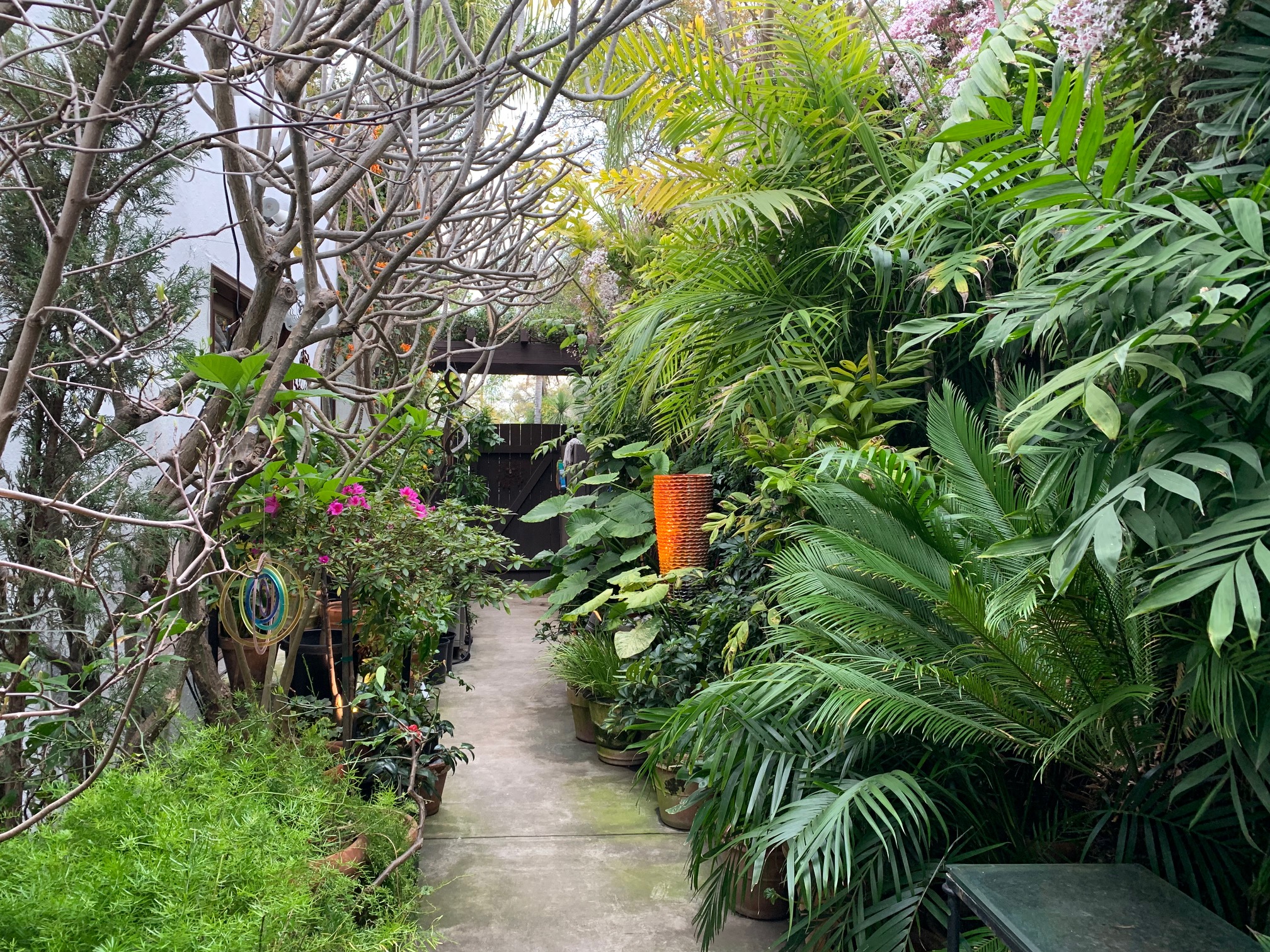
4. Now the driveway. The old pavement was removed and recycled into other features. The new pavement replaced it . . . but was never used as a driveway. The gate seen here is wide enough for a car to fit through, but is never opened. A car couldn’t get through all this vegetation anyway. A French door from the dining room opens up onto a wide spot where that weird orange fountain in the middle is. It all became more nice patios space.P90406K+++
5. Coming back around to the back patio from where the first two pictures (of these six) were taken, we can see how thoroughly the garden space is enclosed by vegetation. No outside structures are visible. You would never guess that this garden is about a block from the Santa Monica Freeway, and that it is surrounded by other homes and apartment buildings. Even the utility cables out back are hidden. Fountains obscure ambient noise.P90406K++++

6. Way back in the corner on the right of the previous picture, behind the kentia palm and past the glass door of the master bedroom, we find another blooming azalea, like the specimen in the third of the six pictures posted earlier. For Southern California, this is an impressive specimen. The big staghorn fern above and behind it is really getting monstrous. I have no idea what that weird twisted purple plastic device is. Brent has such bad taste.P90406K+++++

This is the link for Six on Saturday, for anyone else who would like to participate:

https://thepropagatorblog.wordpress.com/2017/09/18/six-on-saturday-a-participant-guide/