 Remember this from Sesame Street?
One of these things is not like the others
One of these things just doesn’t belong
Can you tell which thing is not like the others
By the time I finish my song?
Identifying a blue balloon as different from three red balloons might be construed as discriminatory, but was fun back before we went into kindergarten. So was selecting the bigger bowl of Big Bird’s birdseed from three small bowls; or the beanie from three pairs of sunglasses; or the letter from three numbers. It is not so fun now, when conformity to a landscape is important.
In the picture above, one of the four prominent trees in the foreground of the walkway and rail fence, excluding the obscured middle tree, is different from the others. They are all the same age. They are all sycamores. They are all happy and healthy. They were all supposed to conform to the landscape of native vegetation in the background. Which thing is not like the others?
The second tree from the left is a London plane, Platanus X acerifolia. The other trees, as well as the fifth middle tree and the sycamores in the background, are native California sycamores, Platanus racemosa. Not only is the London plane not native, but it is distinctly smaller and more symmetrical, with a conspicuously straighter trunk and relatively orangish autumn foliage.
The picture below shows the bark of London plane, with a trunk of a California sycamore in the background. The second picture shows how dissimilar the bark of the California sycamore is.
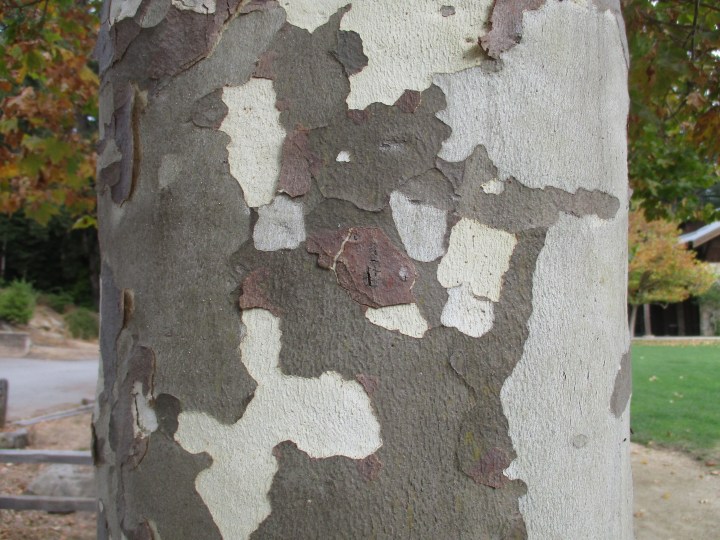
Individually, there is nothing wrong with the London plane. A few could have made a nice homogenous grove in the same spot, although they would never attain the grand scale expected of California sycamore. The problem is that the London plane is similar to, but not the same as, the California sycamores. It will always look like one of the California sycamores with problems.
A completely distinct tree would have been better. If it were a redwood or a magnolia, or anything that is not so similar to California sycamore, it would not be expected to conform to them.
I see it commonly. Himalayan birch get added to groves of European white birch, even though their trunks are whiter and straighter, and their canopies are much more upright. Taller and leaner Mexican fan palms get added to otherwise formal rows of California fan palms. The formality of rows of tall and slim Lombardy poplars is similarly disrupted by fatter Theves poplar.
These bad matches are often honest mistakes. It is not easy to distinguish Theves poplar from Lombardy poplar; and Lombardy poplar is rarely available. Sometimes, so-called ‘gardeners’ or ‘landscapers’ simply do not care. An ‘Aptos Blue’ redwood was added to a grove that was exclusive to ‘Soquel’ in a nearby park, just because it was closest to the parking lot at the nursery.
So-called ‘landscapers’ sometimes ‘sub’, or substitute, a commonly available cultivar or species for something that was specified by a landscape design, but is not so readily available. It often works out just fine. However, I once inspected a landscape in which a ground cover cultivar of cotoneaster was subbed with Cotoneaster lacteus, which promptly grew higher than the eaves!
 What a waste of space! What a waste of water! What a waste of time for the mow-blow-and-go ‘gardener’ who charges money to mow and edge it, but are too inept to suggest planting something that might actually be pretty, or shade the parking lot. There are a few of these between parking spaces marked for ‘compact’ cars, because it is cool to discriminate against full size cars that can not pull far enough forward to get out of the way.


 Batman and Robin were here!


 Incandescent light bulbs were the standard form of electric lighting for more than a century after their invention. It took a while for fluorescent and halogen lamps to become popular; and by the time they did, high intensity discharge (HID) lamps had already become available. Nowadays, light emitting diode (LED) lamps seem to be replacing all sorts of electric lighting.
 It is hard to say why boulders and sculptural stone are sometimes incorporated into American landscapes. A long time ago, boulders were only left in landscapes if they were to big and heavy to move out of the way or break apart. Early American landscapes were designed to express dominance over nature by replacing as much of it as possible with unnaturally organized landscapes.
 I am no designer. I am merely a horticulturist. I grow things, and I know how things should be grown in landscape situations.
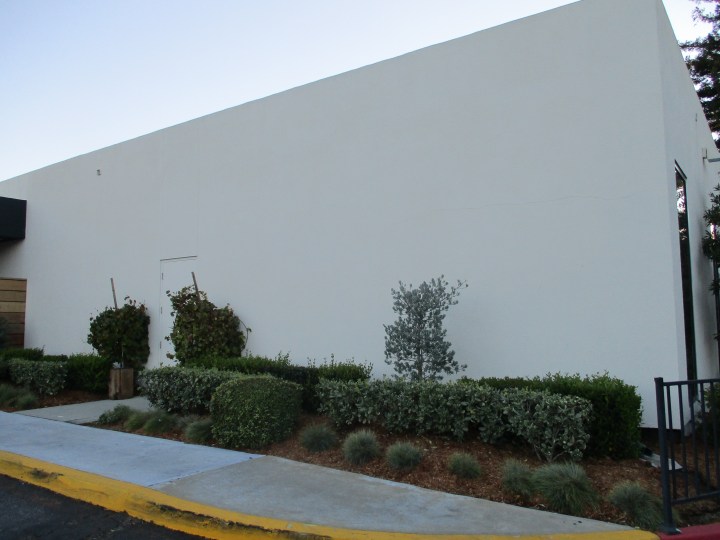 From a distance, this landscape does not look so bad. It seems to have been only recently installed, and features the sort of material that was likely intended to not necessarily obscure the sleek architecture of the building behind it, but to eventually soften the starkness of it.
 Latin and the other languages used to designate botanical names can make the mundane seem compelling, and the unpleasant sound appealing. ‘Nasturtium’ certainly sounds better than ‘nose twister’, which refers to the reaction to the unpleasant fragrance of the flowers. Horticultural professionals can use such language to our advantage, and for more than designating real genera and specie. ‘Necrodendron’ certainly sounds more interesting than ‘dead tree’, and is less likely to offend tree huggers.
 It seems that I have been negligent about writing about my colleague Brent Green and some of our crazy adventures in horticulture. I said I would do so when I started writing my articles here way back two Septembers ago. It is easy to get distracted from such topics, particularly since we do such different types of work. Brent is a renowned landscape designer and proprietor of GreenArt Landscape Design in Southern California. I am just a horticulturist and arborist who really should get back to growing horticultural commodities in Northern California. For all of our similarities, there just might be as many differences.
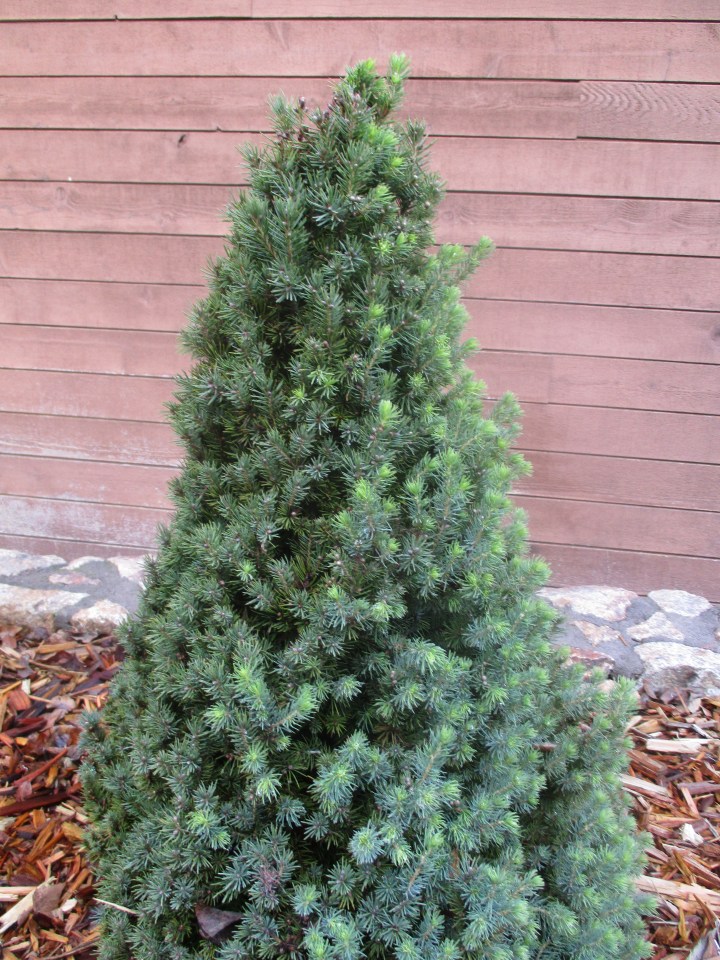 People really stress out over Christmas trees. Some do not want a cut Christmas tree because it involves killing the tree. Some do not want an artificial Christmas tree because it is . . . artificial. Some do not want a living Christmas tree because it is too expensive for a tree that is too small. There are so many myths and misconceptions about Christmas trees, yet everyone wants one.
 Tony Tomeo