Sneezeweed

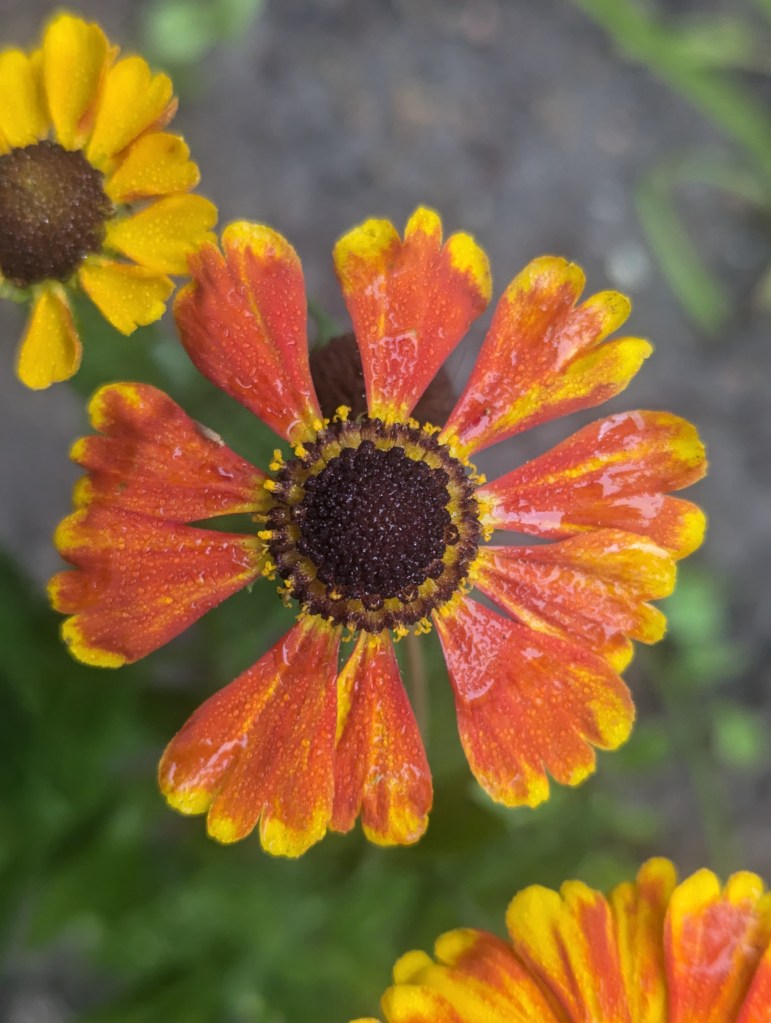
Sneezeweed typically blooms for late summer.

Contrary to its silly name, sneezeweed, Helenium autumnale, does not cause sneezing. Its flowers produce heavy pollen that relies more on pollinators for dispersion than wind. Its vibrant yellow, orange or red floral color attracts all sorts of bees, butterflies and such. Bloom may begin as early as the middle of summer, or continue as late as early autumn.

Sneezeweed is a perennial like black eyed Susan, but with a somewhat shrubbier form. It can grow three or four feet tall without growing any wider than two or three feet. Foliage has a rather fine texture with lanceolate and somewhat serrate leaves. Individual flowers are about two or three inches wide, and delightfully abundant. They are nice cut flowers.

Sneezeweed may self sow, but some cultivars are not true to type. For them, division is a more reliable method of propagation. ‘Pumilum Magnificum’ provides vivid yellow bloom. ‘Chippersfield Orange’ provides vivid orange and yellow flowers. ‘Kupfersprudel’ blooms with a bit more yellow than orange. ‘Bruno’ blooms with deeply rich ruddy brown flowers. ‘Butterpat’ provides rich golden bloom. Several cultivars are compact.
Late Summer Flowers Bloom Now

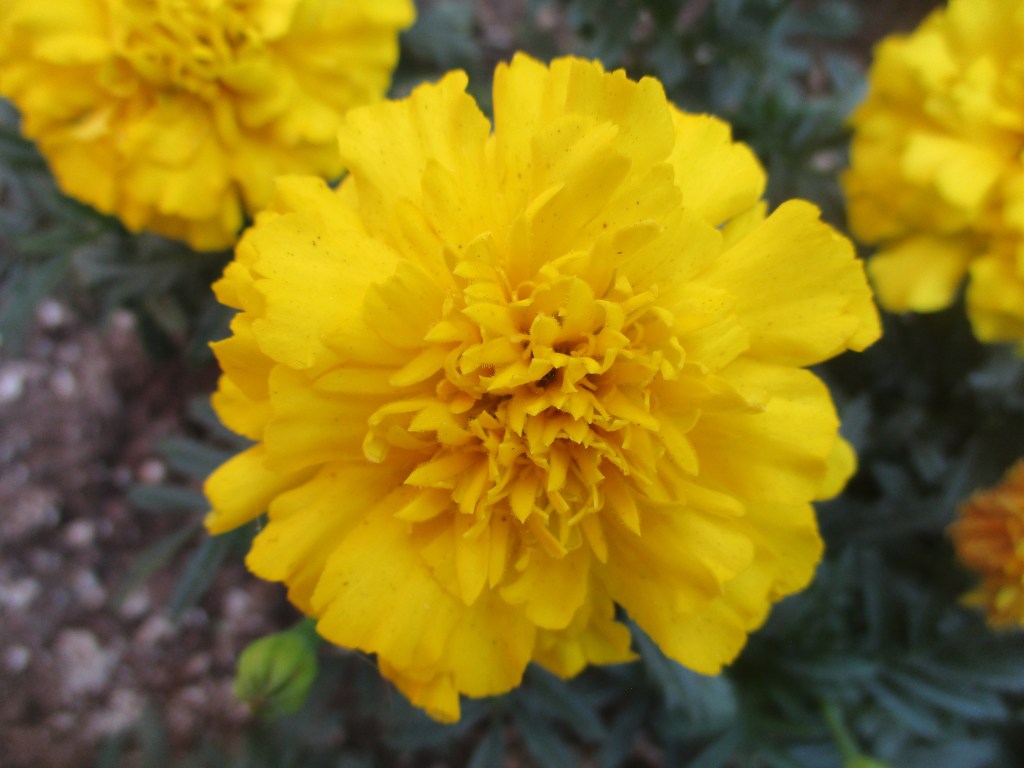
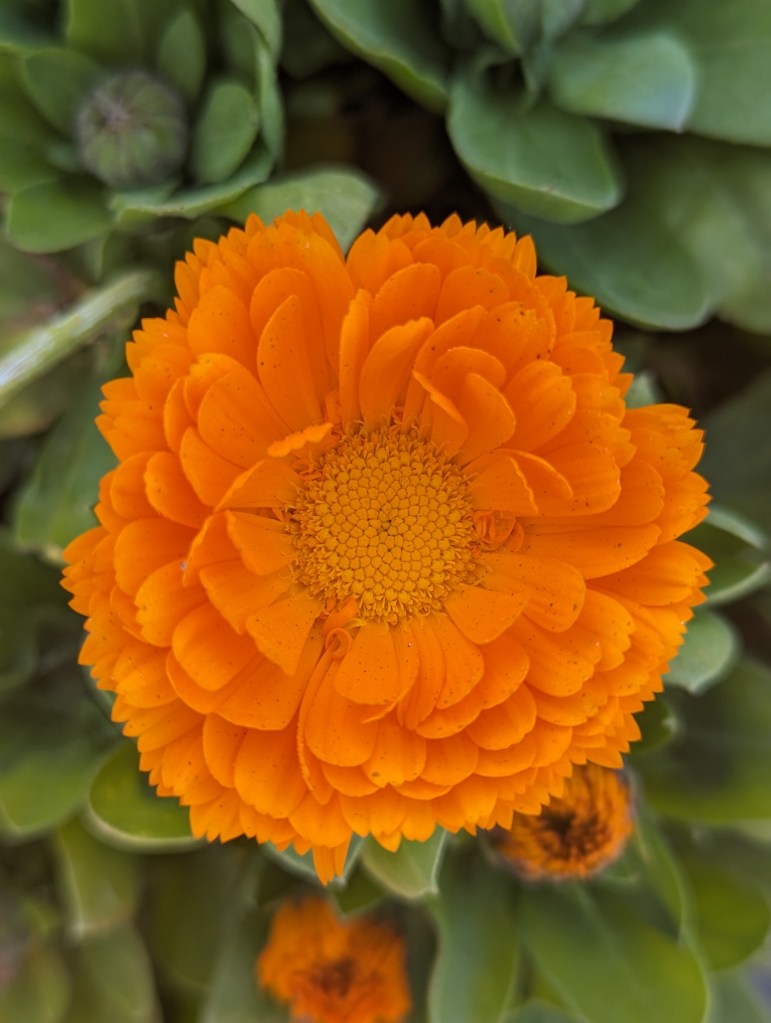
Pot marigold is an autumn annual.

Spring is the season with the most flowers. Winter is generally the season with the least. That is, of course, a generalization. There are plenty of flowers that bloom exclusively for winter color. Plenty more bloom randomly throughout the year, regardless of season. For now, late summer flowers are the most prominently colorful. Autumn flowers will be next.

Realistically, no bloom is random. Even flowers that bloom randomly throughout the year do so only because they can. Such flowers are mostly from mild climates where they can disperse seed at any time. Any pollinators that they rely on are also active throughout the year. Many randomly blooming flowers can effectively conform to more distinct seasons.

Most flowers bloom within a distinct season because it is most convenient for them. Most bloom for spring to maximize the time for their seed to develop before winter. Many of the earliest are tiny but abundant because they rely on wind for pollination. Later flowers can be bigger and more colorful to attract pollinators. Late summer flowers are no exception.

Different flowers have different priorities. Some of the earliest spring bloom needs time to produce seed after bloom. Several late summer flowers conversely need time to develop their blooms. Then, they produce seed relatively quickly before winter. This is why some late summer flowers are bolder but less abundant than spring flowers. They require time.

For example, sunflowers with relatively small blooms may bloom as early as late spring. However, those with bigger and bolder blooms are more familiar as late summer flowers. Such big blooms do not grow quickly, but are ready for their late pollinators nonetheless. They compensate for their lack of abundance with spectacularly grand individual bloom.

Many late summer flowers happen to be related to sunflowers. They include coneflower, dahlia, zinnia, sneezeweed, aster, and cosmos. Dahlias with larger flowers are later than those with smaller flowers. Marigold and chrysanthemum will become more seasonable later and into autumn. Unrelated canna and various sages are blooming well about now.

Naked Lady

Naked lady foliage grows after bloom.

They can be quite a surprise when they bloom for late summer. The tops of their dormant bulbs previously seemed to be dead at the surface of the soil. Then, suddenly, their bare floral stems emerge to bloom without foliage. That is why Amaryllis belladonna is naked lady. Foliage grows a bit later in summer or autumn. It shrivels during late spring warmth.

Naked lady flowers stand about two feet tall, on simple green or brown stalks. Their mild fragrance is easy to miss. A profusion of bloom is only slightly fragrant during humid and warm weather. Their vividly pink color more than compensates. Fleshy seed that mature now that flowers are deteriorating are perishable. They prefer almost immediate sowing.

After naked lady flowers imitate lily flowers, their leaves will imitate lily of the Nile leaves. Naked lady and lily of the Nile are related, but neither are related to lily. The strap leaves of naked lady are more fragile than those of lily of the Nile. If damaged, they can lay flatly for quite a while. After defoliation during spring, dormant bulbs are conducive to division. It might delay bloom for that year.

Six on Saturday: Late Summer Flowers

Spring is the favorite season among the majority of those who enjoy gardening. I do not really have a favorite season though. Dormant pruning is perhaps my favorite chore, which happens in winter. Stone fruits, which are perhaps my favorite, ripen in summer. I so enjoy the foliar color of autumn. Well, it is still too early for autumn foliar color. In the meantime, the flowers of late summer are blooming. Compositae is the ruling family for a while. It is not too late for the last few roses. Japanese anemones, although locally rare, bloom also.

1. Sunflower should be the grand finale; but I could not get a sufficiently good picture, without the utility cables above and the sun in the background. Nonetheless, it exemplifies late summer.

2. Rose is the one flower of these six that has been blooming all summer, so is not actually limited to late summer. It is a cheap carpet rose, which I loathe, but happens to provide pretty color.

3. Chrysanthemum landed in the landscapes after getting left behind from an event. It was formerly a fancy ‘potted mum’. Now, it is unrefined and rustic, but blooms reliably for late summer.

4. Marigold is one of many annual bedding plants that I can not figure out. Is it a warm season annual that really could bloom all summer, or is it actually limited to late summer and autumn?

5. Marigold exhibits a limited color range of yellow, orange, rusty red, almost brown and very pale yellow that is described as white. We got only yellow, as seen above, and this simple orange.

6. Anemone, or more specifically, Japanese anemone, is a rather mundane pale pink. I would prefer it to be either clear white or a more blatant pink. I like it though, because it is what we got.

This is the link for Six on Saturday, for anyone else who would like to participate:

Late Summer Bloom Until Frost

Some flowers bloom at odd times.

Seasonal changes keep gardening interesting. Like colors of a rainbow, seasons are not as distinct as their dates on a calendar imply. Each evolves into the next. Spring evolves into summer. Late summer is presently evolving into autumn. It happens like red evolves into orange on a rainbow. It is amazing that plants can monitor the changes so precisely.

Even if plants could monitor calendars, they would not. They are too busy monitoring the daily duration of sunlight. That is how they identify primary seasonal changes. Of course, they monitor the weather also. That is how they know more precisely when to react to the seasonal change. Plants are aware that it is now late summer, and they know what to do.

Most but not all plants bloom during spring or summer, so finish by late summer. By now, they prefer to prioritize seed production. Some continue to produce fruit to entice animals who eat it and disperse its seed within. However, some plants prefer to bloom late. Some bloom during autumn or winter. Some are so late that they are early during the next year.

Therefore, there is more to provide floral color through late summer and into autumn than cool season annuals and late blooming perennials. Butterfly bush, plumbago, bee balm, lion’s tail, Saint John’s wort and various salvia are now blooming for late summer. Some might continue into autumn. Oleander and euryops might bloom sporadically until winter.

Strangely, some flowers that bloom for late summer or autumn are from tropical climates. Because equatorial or tropical climates are not as cool during winter, or may lack winter, shortening days are not such a deterrent to bloom. However, many tropical plants bloom sporadically, rather than profusely within a particular season, and may be unpredictable.

Princess flower, mandevilla, hibiscus and angel’s trumpet may bloom at any time prior to winter chill, but may not. Those that do so may not repeat the process annually. Fuchsias are a bit more reliable for late bloom with flowers that are generally more interesting than colorful. Blue hibiscus looks more tropical than it is, with potential for late summer bloom.

Color Wanes As Summer Ends

Summer blooms will be finishing soon.

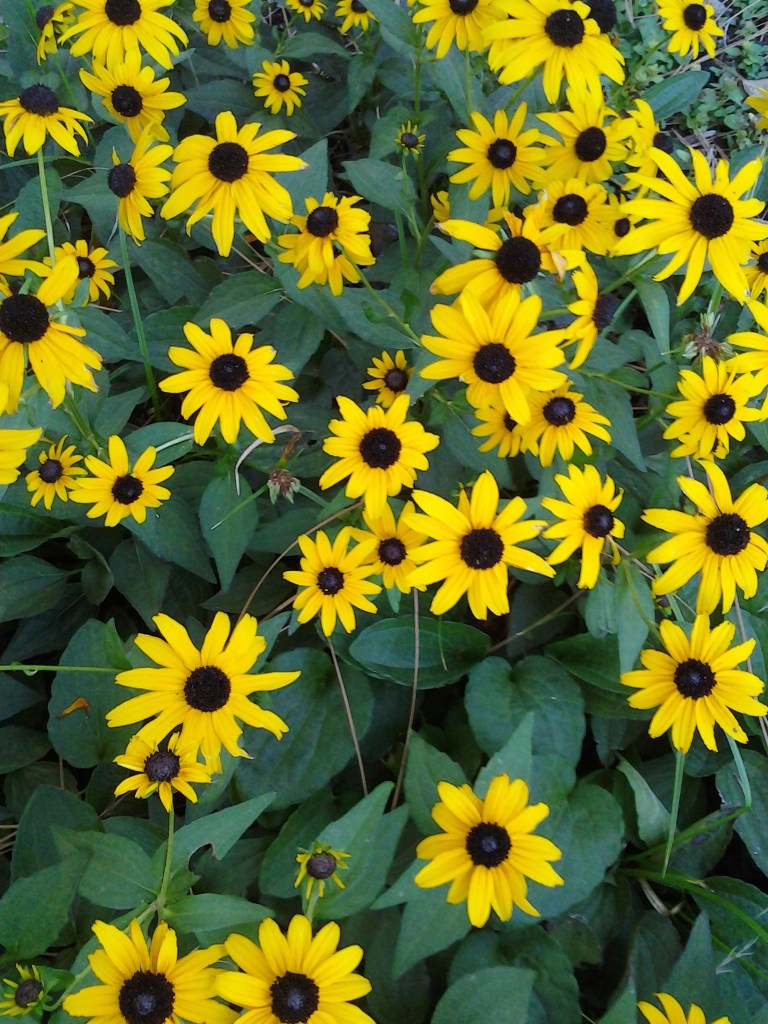
Black-eyed Susan, sunflowers and a few of the late warm season annuals and perennials are still blooming, and a few will continue into autumn. By that time, cool season annuals can move in; and some of the deciduous trees, shrubs and vines that turn color for autumn will be doing so. Realistically though, this can be the leanest time of year for color in the garden. Even some of the foliage that is colorful through spring and summer has faded.

There are certainly plenty of flowers in season now. However, not many are colorful. Honeysuckle vine is pleasantly fragrant as it bloom in random phases until the weather gets cooler, but the flowers are only pale yellowish white. Some melaleuca trees bloom profusely enough to make a mess, but are just as pale, and do not even provide fragrance; although some have pretty light pink flowers. Abelia flowers are pink and abundant, but are really not all that flashy against their bronzy foliage.

Some of the more colorful flowers are not quite as reliable. Princess flower, hibiscus, blue hibiscus and mandevilla certainly can bloom in late summer or autumn, but sometimes bloom earlier than expected, so have nothing left for later. The bright red flowers of blood red trumpet vine are quite impressive, but only if they are not obscured by the accompanying foliage. Some roses bloom in phases as late as the weather will allow, but actually, most are done by now.

Fuchsia and angel’s trumpet likewise bloom in a few phases once they get started, but unlike the many cultivars of roses, they are much more reliable for a late bloom phase. Escallonia blooms late with small but colorful flowers, but only if they have not been shorn in the past few months. Shearing deprives them of the blooming stem tips that they had worked most of the year for.

Butterfly bush, tree mallow, cape plumbago, bee balm and several varieties of sage and salvia are among the most reliable plants for late summer or autumn bloom. Even without multiple bloom phases, they just naturally bloom at the end of their growing season, before winter dormancy.

Kahili Ginger

Kahili ginger blooms as summer ends.

It is not the ginger that is so popular for culinary purposes, but it is the most popular for home gardens in the West. Kahili ginger, Hedychium gardnerianum, is so vigorous and easy to grow that it has potential to be invasive in ideal situations. Fortunately, it does not produce many of its sticky seeds locally. It therefore migrates primarily by dispersing rhizomes, which are not noxiously fast.

The delightfully fragrant bloom begins late in summer, and will finish soon. As many as forty small pale yellow and red flowers radiate from each cylindrical floral truss. Blooms stand neatly vertical, even if the stems supporting them lean. As cut flowers, they last only for a few days. Deadheading after bloom eliminates unwanted seed (if that is a concern), and unclutters the tidy foliage below.

However, with or without deadheading, the lush foliage is only temporary after bloom. It deteriorates as the weather cools through autumn. Cutting the herbaceous canes to the ground before they get too unsightly will expose some of the thick rhizomes. New canes will grow a few feet tall next spring and summer. On the canes, each leaf extends in the opposite direction of the leaf below it.

Lemon Bottlebrush

00916
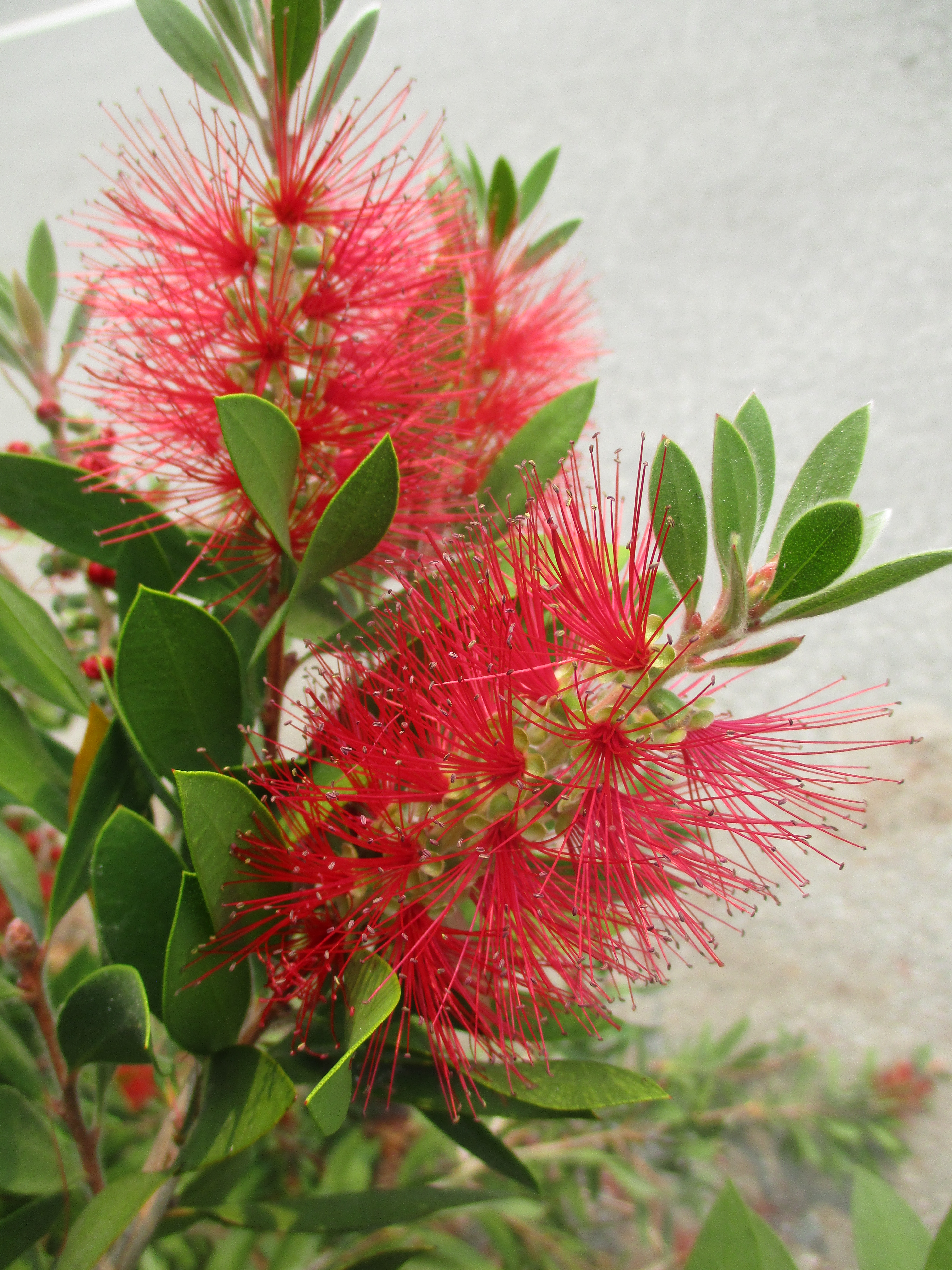
Hummingbirds enjoy red lemon bottlebrush bloom.

As its compact cultivars gained popularity over the years, the formerly common lemon bottlebrush, Callistemon citrinus, became passe. Most are mature specimens in old fashioned landscapes. It is unfortunate. Only lemon bottlebrush and weeping bottlebrush can grow as small trees. (However, lemon bottlebrush is now classified as Melaleuca citrina. Most Melaleuca get notably larger.)

If competing for sunlight, mature specimens of lemon bottlebrush can almost reach upstairs eaves. Well exposed specimens may not get much more than half as tall, with mounding form of about equal width. Removal of low growth to expose sculptural trunks and handsomely shaggy bark promotes higher growth above. Shearing of hedges should not be too frequent to allow some bloom.

Bright red bloom is sporadic through the year, and gets more abundant as summer becomes autumn. The small and staminate flowers are densely set in cylindrical ‘bottlebrush’ formation. These blooms are about two or three inches long, almost as wide, and popular with hummingbirds. Dense evergreen foliage is aromatic. Individual leaves are narrow and about two or three inches long.

Schedule Bloom For Every Season

00916thumb
There is bloom for every season.

Early spring bloom is best. That is simply how the schedule of the majority of flowers works. The priority of flowers is pollination. Pollination is necessary for the production of seed. The production of seed and any associated fruit takes time. Seed, whether contained within fruit or not, then disperses before winter. After soaking and chilling through winter, seed germinates for the next spring.

For a variety of reasons, some flowers prefer to bloom earlier, later, or randomly through the year. Some are from climates in which they want to avoid harsh weather of a particular season. Some rely on pollinators who are active for a limited time. Regardless of the reasons for their bloom schedule, early, late and randomly blooming flowers add color to the garden before and after spring.

Many flowers that bloom randomly through the year tend to bloom better and later with a bit of persuasion. Cutting roses regularly seems innocent enough, but actually deprives rose plants of their efforts to produce seed. So does deadheading to remove their developing fruit structures that contain seed. Plants respond by trying to bloom again or more prolifically than they would otherwise.

Lily of the Nile reliably provided much of the color through the middle of summer. Many gardens have some. Some gardens have many. Their color range is limited, but effective. Now that they are done, canna, dahlia and delphinium should continue to bloom until frost. Mexican blue sage that took a break after spring bloom should bloom even better as summer ends, and into early autumn.

The bloom schedule of many flowers of the Compositae (or Asteraceae) family also coincide with late summer. Some have been blooming since spring. Some just started recently. These include but are not limited to cone flower, blanket flower, zinnia, cosmos, coreopsis, sunflower and Japanese anemone. African daisy and euryops daisy often bloom well after the earliest rains of autumn.

Eucalypti that bloom colorfully, such as red flowering gum, Eucalyptus ficifolia, bloom after the warmth of summer, but before cooling autumn weather.

Color Wanes As Summer Ends

40903thumbBlack-eyed Susan, sunflowers and a few of the late warm season annuals and perennials are still blooming, and a few will continue into autumn. By that time, cool season annuals can move in; and some of the deciduous trees, shrubs and vines that turn color for autumn will be doing so. Realistically though, this can be the leanest time of year for color in the garden. Even some of the foliage that is colorful through spring and summer has faded.

There are certainly plenty of flowers in season now. However, not many are colorful. Honeysuckle vine is pleasantly fragrant as it bloom in random phases until the weather gets cooler, but the flowers are only pale yellowish white. Some melaleuca trees bloom profusely enough to make a mess, but are just as pale, and do not even provide fragrance; although some have pretty light pink flowers. Abelia flowers are pink and abundant, but are really not all that flashy against their bronzy foliage.

Some of the more colorful flowers are not quite as reliable. Princess flower, hibiscus, blue hibiscus and mandevilla certainly can bloom in late summer or autumn, but sometimes bloom earlier than expected, so have nothing left for later. The bright red flowers of blood red trumpet vine are quite impressive, but only if they are not obscured by the accompanying foliage. Some roses bloom in phases as late as the weather will allow, but actually, most are done by now.

Fuchsia and angel’s trumpet likewise bloom in a few phases once they get started, but unlike the many cultivars of roses, they are much more reliable for a late bloom phase. Escallonia blooms late with small but colorful flowers, but only if they have not been shorn in the past few months. Shearing deprives them of the blooming stem tips that they had worked most of the year for.

Butterfly bush, tree mallow, cape plumbago, bee balm and several varieties of sage and salvia are among the most reliable plants for late summer or autumn bloom. Even without multiple bloom phases, they just naturally bloom at the end of their growing season, before winter dormancy.