These are merely odds and ends that would not conform to any particular category. The first two are from my colleague’s garden that provided the pictures for last week. The third, fourth and fifth are from a nearby landscape that is comprised of native specie. The sixth is another landscape nearby, but is obviously not native.
1. Eucalyptus provides distinctively aromatic silvery foliage for young students of Outdoor Science. We keep this tree low and almost pollarded so that the students can reach the juvenile foliage. We plan to prune back any adult foliage, since it is neither as pretty, nor as aromatic. No matter how much gets cut from the tree, there is always more. We thought this tree was Eucalyptus cinerea, but we really do not know what it is.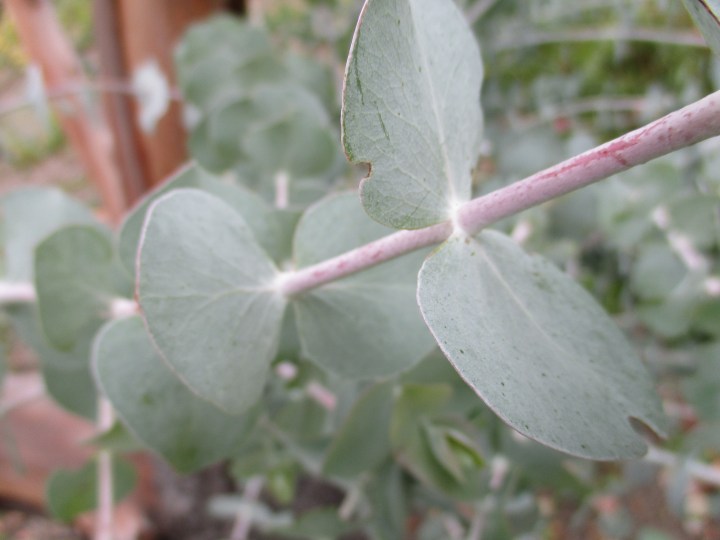
2. Lantana camara gets frosted to the ground where it is at. It might do better on a slope just a few yards away, or under the canopy of big trees nearby. It just happens to be in one of those cold spots where cold air settles on frosty nights. The dead stems get cut back at the end of every winter, and new growth regenerates just fine. However, by the time it starts to bloom nicely, it is already autumn!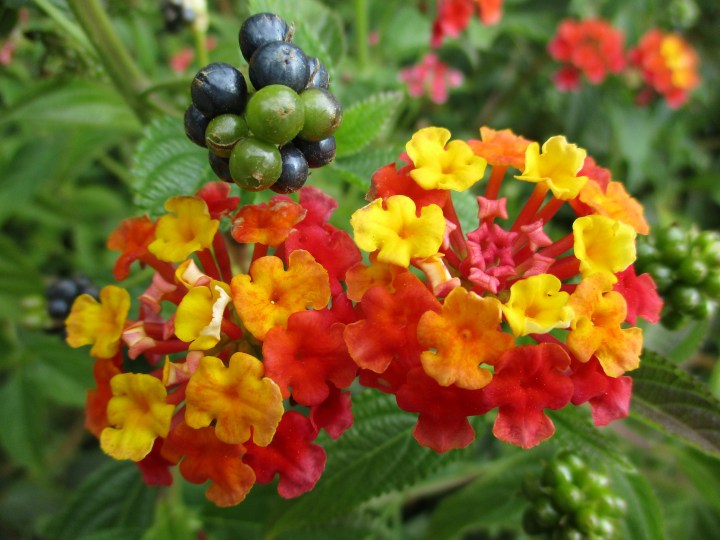
3. Cornus stolonifera is the only locally native dogwood. These pathetic blooms demonstrate why it is not more popular than it is. There are more individual flowers than other dogwoods get in each of their clustered blooms, but they bloom late in summer without the flashy bracts behind them. This dogwood is commonly known as red twig dogwood, but the twigs are not as colorful as those of another species of the same name.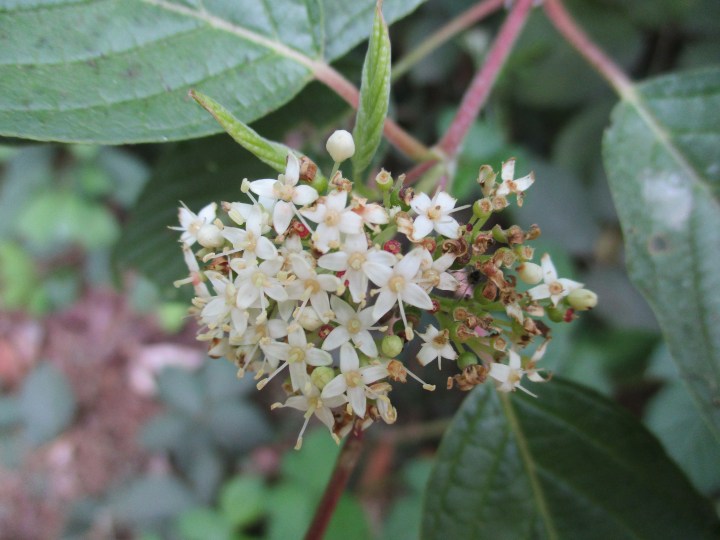
4. Rose, although planted, happens to be native to the region as well. I do not know the species of this particular rose. It is not much to look at, but it is worth growing in a landscape of natives. It does not get pruned like roses that are grown for their bloom. In fact, we do nothing to it. It just grows wild. Flowers are sporadic, starting late in spring, and continuing until frost.
5. Rose hips take a while to ripen. These were probably from the first flowers that bloomed months ago. Flowers that are blooming now may not produce hips at all, or if they do, the hips may never ripen. They just do not have enough time. Fortunately, there are enough to provide a bit of color while many of the plants in this spot defoliate through winter. They do not have great flavor alone, but are fine with other herbal tea.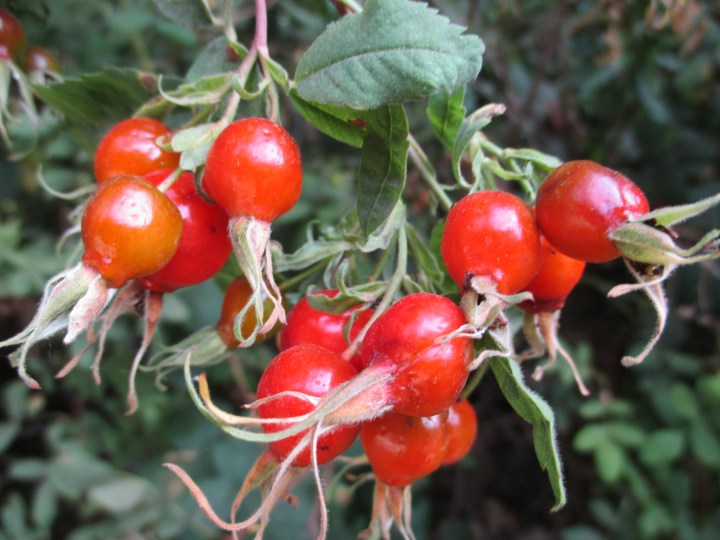
6. Gazania is related to the African daisy from last week. More gazanias will be shared next week. These were planted somewhat recently to replace English daisy that succumbed to a really bad infestation of rust, so have not bloomed as much as they might have liked to if they had gotten established earlier. They will continue until frost, and can bloom sporadically through winter, before resuming bloom as weather warms next spring.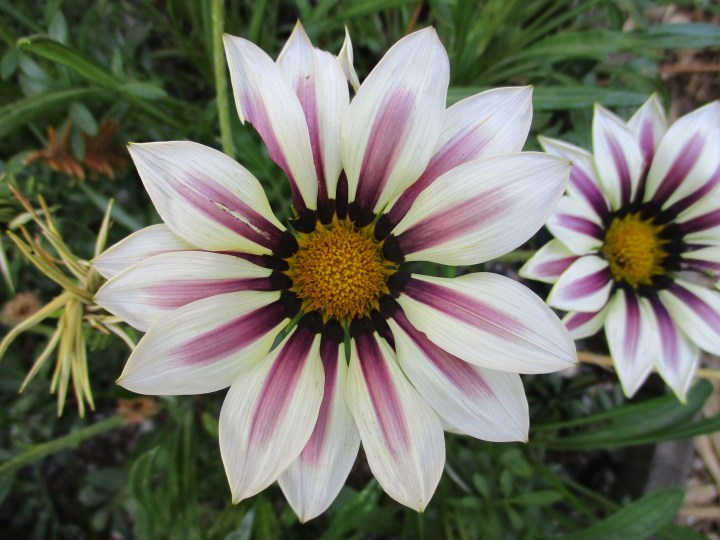
This is the link for Six on Saturday, for anyone else who would like to participate:
https://thepropagatorblog.wordpress.com/2017/09/18/six-on-saturday-a-participant-guide/
 Tony Tomeo