
English lavender is likely the most common of this genus, with the most cultivars. French lavender is the primary culinary species. Spanish lavender, Lavandula stoechas, should likely be more popular than it is. All lavenders live for only a few years. Spanish lavender is more likely to self sow to replace itself, though. It can naturalize in favorable situations.
Spanish lavender is an evergreen shrub of irregular form, that grows as tall as three feet. Its finely textured foliage is grayish or drab green. Individual leaves are quite narrow and only about half an inch to an inch and a half long. Roots are not finicky about soil, but are likely to rot if irrigation is generous. Spanish lavender prefers warm and sunny exposure.
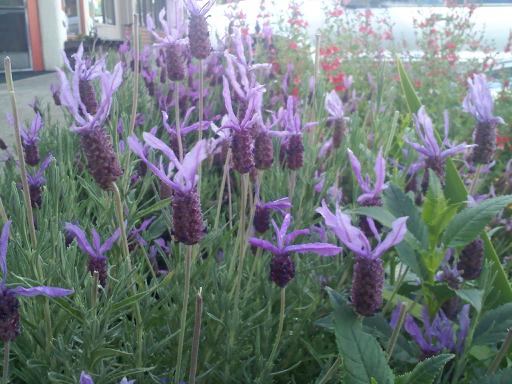
Bloom begins as soon as weather warms in spring and continues into summer. Sparsely sporadic bloom can continue until autumn. Dense floral spikes stand several inches over their foliage, on bare stems. They would not be very colorful if not for their few long upper bracts. Bloom is typically lavender, but may be bluish lavender, pink or very rarely white. It delights bees.
 It is really an evergreen shrub with limber stems; but lavender starflower, Grewia caffra, can work almost like a rambling vine. It does not actually climb or grip anything. Like the canes of a climbing rose, it can be tied onto a trellis or fence as an espalier. As a free standing shrub, the arching stems should be pruned selectively. Shearing deprives them of their natural form, and inhibits bloom.
 Tony Tomeo