Live Christmas Trees

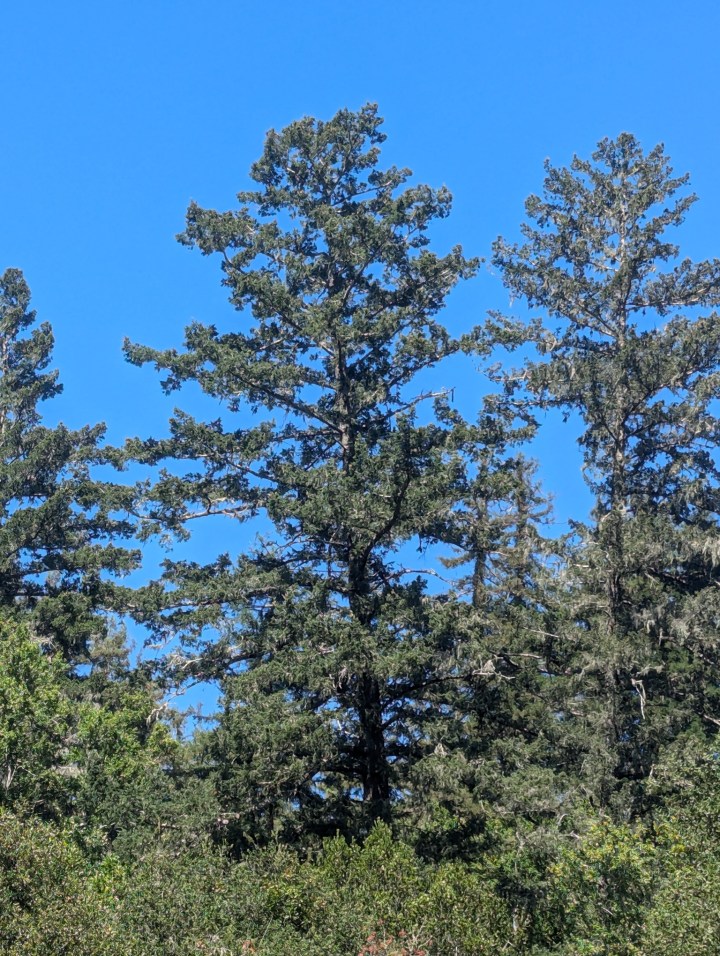
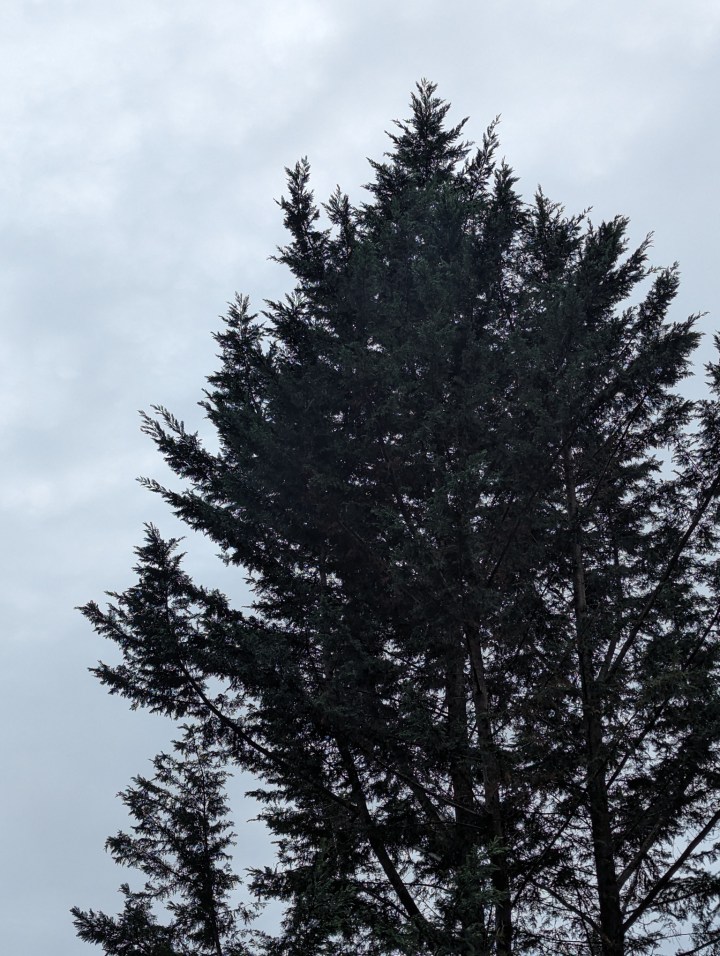
Most live Christmas trees grow too big for home gardens.

One of the problems with driving my favorite vehicles that were old long before I learned to drive them is that I spend considerable time waiting for a bus or walking. The cool thing about that is that I get to seem so much scenery that I would otherwise drive past. While waiting nearly an hour for a bus at the Cavallero Bus Terminal in Scott’s Valley, I went across the street to see the landscape of the somewhat new Post Office, which has actually been there for many years now.

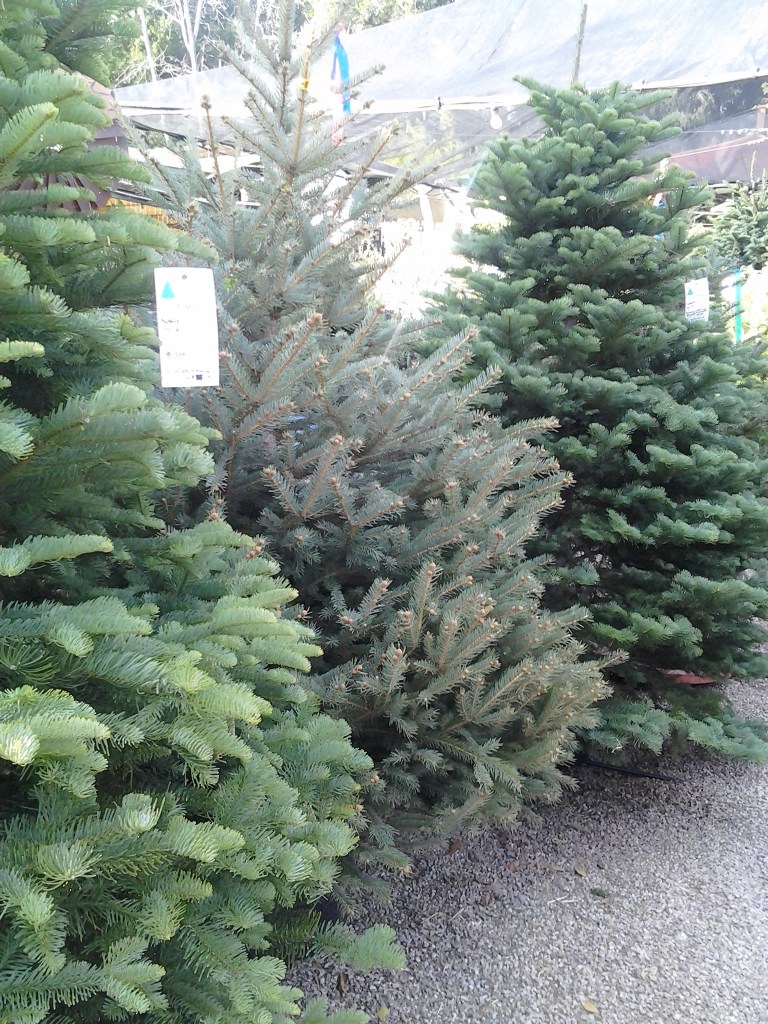
The landscape is a bit sparse in front (I think because of architectural modifications after the landscape was designed), so was outfitted with recycled live Christmas trees. Although none of these particular trees seem happy in the local climate or sandy soil, I had wanted to get better acquainted with them for some time. They are an odd assortment of spruce and fir that are rare here.

The more typical concern with the more common live Christmas trees is not that they are not well suited to local climates and soils, but that they actually do too well and grow much larger than expected. Except for the small rosemary, holly and English ivy ‘trees’, most coniferous evergreen live Christmas trees are young pines that get remarkably large; and some waste no time doing it! The most common live Christmas trees are Italian stone pines, which happen to be the two very large and broad trees in Blaney Plaza in downtown Saratoga!

Canary Island pines, which had been more common than they are now, do not get quite as broad, but do get very tall and messy. Years ago, Aleppo, Eldarica and Monterey pines all took their turns being popular live Christmas trees. Each of them grows large enough to require significant garden space.

This is of course not a problem for the few live Christmas trees that happen to get planted where they have plenty of space. However, those that get planted where they do not have room to grow can cause serious problems. Because they seem so cute and innocent while they are young, and are so often expected to stay cute and innocent, many often get planted dangerously close to houses, where they can displace porches, walkways and even foundations! Large pines, particularly Italian stone pines, are also too messy and potentially combustible (if not pruned and groomed regularly) to be too close to houses.

Sadly, large pines do not like to stay in containers too long. They can be pruned for a few years, but eventually get congested roots. (Bonsai techniques of root pruning can maintain even the largest types of pines in containers indefinitely, but not many of us know these techniques.) Small pines, like Austrian black, Japanese black and Scott’s pine (which has no relation to Scott’s Valley), as well as other small coniferous evergreens, like certain junipers, can stay in containers much longer, but these are the sort that are small enough to get planted in the garden, so do not necessarily need to stay in containers anyway.

If space is not sufficient, pines and other live Christmas trees that eventually get too large really should be given to friends and neighbors who have space to accommodate them. Fortunately, most do not require much attention once they get established after two years or so.

Live Christmas Trees

Some live Christmas trees grow too big for home gardens.

They appear to be so simple and innocent now, shorn strictly into conical form and perhaps adorned with any remnants of their Christmas time employment, but living Christmas trees can potentially become big problems. Italian stone pine, which is one of the most popular living Christmas trees, can get nearly eighty feet tall and sixty feet wide, with massive trunks and limbs! Regardless, they often get planted in small gardens and tight situations after Christmas because they do not seem like they would do any harm.

Most living Christmas trees can eventually become large trees. Canary Island pine, Aleppo pine, Monterey pine and Afghan pine are the most notorious since they are the most common, and also because they are not so easily recognized while they are young Christmas trees. Their juvenile foliage is more softly textured and often lighter colored than their more substantial adult foliage.

These most common living Christmas trees do not like to stay potted for very long, and are not very conducive to subsequent shearing. Consequently, many do not survive through their first summer, and those that do often get planted in the garden without much thought. Until recent years, they were seldom labeled; so few people knew how big they could get.

Coastal redwood, giant redwood, deodar cedar and Arizona cypress as living Christmas trees are neither as common, nor as likely to not get recognized as trees that eventually get quite large. They need their space nonetheless. Fortunately, they are generally somewhat more practical for some spacious gardens than the large pines are.

Scotts pine, Austrian black pine (rare), Japanese black pine, Eastern red cedar (juniper), Rocky Mountain juniper, some arborvitae and the various spruce are some of the best living Christmas trees. They grow somewhat slowly, are more cooperative with pruning and can live in tubs long enough to function as Christmas trees for a few years. When they eventually get too large for their pots, they are not so likely to get too large for the garden.

Whether a Colorado blue spruce being retired after ten years of service or an Italian stone pine being retired after only a single Christmas, a living Christmas tree needs some help with the transition from pot to garden. Any circling roots should be severed when the pot gets removed. Otherwise, roots become constricted as the circling roots grow and expand.

Much of the dense foliar canopy should be thinned out to compensate for confinement of roots. Besides, much of the shorn growth is actually disfigured and will eventually get replaced and shed as new growth develops above the original canopy. Formerly pruned spruce, redwood, deodar cedar and most pines may need minor trimming of the upper new growth to promote a single leader (that will develop into the main trunk).

It is best to plant living Christmas trees rather soon after Christmas so that they can loiter in the garden through winter. Rain and cool temperatures keep them from desiccating as their roots start to disperse before new foliage starts to emerge in spring. Newly planted living Christmas trees should be watered somewhat regularly during their first year because their roots take some time to disperse adequately.

Living Christmas Trees Eventually Grow Up

Although relatively compact, even spruce trees eventually grow up.

One of the problems with driving my favorite vehicles that were old long before I learned to drive them is that I spend considerable time waiting for a bus or walking. The cool thing about that is that I get to seem so much scenery that I would otherwise drive past. While waiting nearly an hour for a bus at the Cavallero Bus Terminal in Scott’s Valley, I went across the street to see the landscape of the somewhat new Post Office, which has actually been there for many years now.

The landscape is a bit sparse in front (I think because of architectural modifications after the landscape was designed), so was outfitted with recycled live Christmas trees. Although none of these particular trees seem happy in the local climate or sandy soil, I had wanted to get better acquainted with them for some time. They are an odd assortment of spruce and fir that are rare here.

The more typical concern with the more common live Christmas trees is not that they are not well suited to local climates and soils, but that they actually do too well and grow much larger than expected. Except for the small rosemary, holly and English ivy ‘trees’, most coniferous evergreen live Christmas trees are young pines that get remarkably large; and some waste no time doing it! The most common live Christmas trees are Italian stone pines, which happen to be the two very large and broad trees in Blaney Plaza in downtown Saratoga!

Canary Island pines, which had been more common than they are now, do not get quite as broad, but do get very tall and messy. Years ago, Aleppo, Eldarica and Monterey pines all took their turns being popular live Christmas trees. Each of them grows large enough to require significant garden space.

This is of course not a problem for the few live Christmas trees that happen to get planted where they have plenty of space. However, those that get planted where they do not have room to grow can cause serious problems. Because they seem so cute and innocent while they are young, and are so often expected to stay cute and innocent, many often get planted dangerously close to houses, where they can displace porches, walkways and even foundations! Large pines, particularly Italian stone pines, are also too messy and potentially combustible (if not pruned and groomed regularly) to be too close to houses.

Sadly, large pines do not like to stay in containers too long. They can be pruned for a few years, but eventually get congested roots. (Bonsai techniques of root pruning can maintain even the largest types of pines in containers indefinitely, but not many of us know these techniques.) Small pines, like Austrian black, Japanese black and Scott’s pine (which has no relation to Scott’s Valley), as well as other small coniferous evergreens, like certain junipers, can stay in containers much longer, but these are the sort that are small enough to get planted in the garden, so do not necessarily need to stay in containers anyway.

If space is not sufficient, pines and other live Christmas trees that eventually get too large really should be given to friends and neighbors who have space to accommodate them. Fortunately, most do not require much attention once they get established after two years or so.

Live Christmas Trees Eventually Grow Up

Small coniferous trees do not stay small for long.

One of the problems with driving my favorite vehicles that were old long before I learned to drive them is that I spend considerable time waiting for a bus or walking. The cool thing about that is that I get to seem so much scenery that I would otherwise drive past. While waiting nearly an hour for a bus at the Cavallero Bus Terminal in Scott’s Valley, I went across the street to see the landscape of the somewhat new Post Office, which has actually been there for many years now.

The landscape is a bit sparse in front (I think because of architectural modifications after the landscape was designed), so was outfitted with recycled live Christmas trees. Although none of these particular trees seem happy in the local climate or sandy soil, I had wanted to get better acquainted with them for some time. They are an odd assortment of spruce and fir that are rare here.

The more typical concern with the more common live Christmas trees is not that they are not well suited to local climates and soils, but that they actually do too well and grow much larger than expected. Except for the small rosemary, holly and English ivy ‘trees’, most coniferous evergreen live Christmas trees are young pines that get remarkably large; and some waste no time doing it! The most common live Christmas trees are Italian stone pines, which happen to be the two very large and broad trees in Blaney Plaza in downtown Saratoga!

Canary Island pines, which had been more common than they are now, do not get quite as broad, but do get very tall and messy. Years ago, Aleppo, Eldarica and Monterey pines all took their turns being popular live Christmas trees. Each of them grows large enough to require significant garden space.

This is of course not a problem for the few live Christmas trees that happen to get planted where they have plenty of space. However, those that get planted where they do not have room to grow can cause serious problems. Because they seem so cute and innocent while they are young, and are so often expected to stay cute and innocent, many often get planted dangerously close to houses, where they can displace porches, walkways and even foundations! Large pines, particularly Italian stone pines, are also too messy and potentially combustible (if not pruned and groomed regularly) to be too close to houses.

Sadly, large pines do not like to stay in containers too long. They can be pruned for a few years, but eventually get congested roots. (Bonsai techniques of root pruning can maintain even the largest types of pines in containers indefinitely, but not many of us know these techniques.) Small pines, like Austrian black, Japanese black and Scott’s pine (which has no relation to Scott’s Valley), as well as other small coniferous evergreens, like certain junipers, can stay in containers much longer, but these are the sort that are small enough to get planted in the garden, so do not necessarily need to stay in containers anyway.

If space is not sufficient, pines and other live Christmas trees that eventually get too large really should be given to friends and neighbors who have space to accommodate them. Fortunately, most do not require much attention once they get established after two years or so.

Live Christmas Trees Eventually Mature

Most conifers are not so compact.

Christmas trees grow on farms. They are an agricultural commodity. Their unnatural and intensive cultivation is no asset to any associated natural ecosystem. Their harvest does not deprive ecosystems of natural components. Live Christmas trees are at least equally as unnatural. Their cultivation involves more synthetic materials and unnatural irrigation.

There should be no shame associated with the procurement of cut Christmas trees. They are merely cut foliage that is significantly more substantial than that which accompanies cut flowers. Furthermore, live Christmas trees are not an ecologically responsible option. They are merely potted plants that can be difficult to accommodate within home gardens.

That certainly should not invalidate the appeal and potential practicality of live Christmas trees. With proper maintenance, other potted plants, such as houseplants, can grow and perform for many years. Since live Christmas trees are coniferous species that get rather large, they demand more attention. All are not necessarily totally unmanageable though.

Some compact conifers, such as dwarf Alberta spruce and compact cultivars of Colorado blue spruce, can remain within pots for many years. They need either larger pots as they grow, or occasional root trimming if they stay within their same pots for a few years. Their roots outgrow pots as slowly as their canopies grow. They also require diligent watering.

Unfortunately, the most common of decorated live Christmas trees that are available from supermarkets are also the most problematic. Most are either Canary Island pine or Italian stone pine, which grow surprisingly large for such seemingly innocent small evergreens. They very often go into compact gardens, where their bulky roots displace infrastructure, such as pavement and turf grass.

Contrary to popular belief, planting live Christmas trees in the wild after Christmas is not a practical option. Because their roots were confined to pots, they rely on irrigation while they disperse roots into the ground. They can not survive without irrigation after the rainy season. Besides, trees that are not native could be detrimental to the native ecosystems.

Dwarf Alberta Spruce

Dwarf Alberta spruce is densely conical.

Of all the live Christmas trees available, the dwarf Alberta spruce is perhaps the most practical. It is a shrubby little tree with a big name, Picea glauca ‘Albertiana’ ‘Conica’. (‘Albertiana’ is typically omitted.) It is a dwarf cultivar of white spruce that grows very slowly. It takes many years to potentially get eight feet tall and half as wide at the base. Wild white spruce can grow a hundred feet tall.

The main disadvantage of the dwarf Alberta spruce as a live Christmas tree is the very dense foliage. It almost seems to be artificial. The small needles are only slightly bristly, and finely textured. Otherwise, dwarf Alberta spruce can remain potted as a Christmas tree for several years. It stays sufficiently compact to return to the home annually. It just does not want to be indoors for too long.

The strictly conical form of dwarf Alberta spruce is a distinctive feature in the garden. A pair of trees elegantly flanks a doorway or walkway. A row of evenly spaced trees instills formality to a linear border of bedding plants. Although they do not get too broad, they should have enough room to grow naturally. Pruning for confinement or clearance compromises their naturally symmetrical form.

Not So Merry Christmas Trees

Cut Christmas trees are just really big cut foliage, like what comes with cut flowers.

By now most people have already acquired their Christmas trees. Some are live trees in containers. Some are artificial. Most are cut firs, pines, or alternatively, spruces, cedars, cypresses or even junipers. For at least the next two weeks, these trees dutifully maintain their healthy green vigor to brighten our homes with Christmas cheer.

Cut trees should have no problem lasting from the time they were originally cut through Christmas, as long as they get plenty of water. Artificial trees do not have much choice in the matter. Live trees are probably more reliable than cut trees are in regard to freshness, but can be more awkward to accommodate in the home, since they are more likely to leak excess water that can damage floors. If they they get a bit dry, live trees can also be sensitive to relatively dry and warm interior air after spending autumn out in cool and humid garden environments.

The main problem with living Christmas trees though, begins after Christmas. Spruces and other compact evergreens that can work as Christmas trees for several years need to be returned to the garden and maintained until next Christmas. Retired living Christmas trees, including those common, small trees that can be purchased with a few decorations already wired to their stems, eventually need to be planted out into the garden. Circling roots (that grow around the perimeter of a container in search of a way out) need to be severed so that they do not get constricted as they mature.

Unfortunately, with few exceptions, living Christmas trees mature into significant trees when they get the chance to grow. Those common, pre-decorated trees are most commonly juvenile Italian stone pine or Canary Island pine, which become very large trees. Because they seem so innocent as small potted trees, they often get planted in very awkward situations where they do not have enough space to grow without damaging nearby features.

Planting such a tree out in a forest is not practical, since it will not survive through the first year without supplemental watering. Their roots are just too confined to reach out for moisture. Even if such a tree could survive, it would not be an asset to the forest, since it would be an exotic (non-native) species.

Christmas Trees – Dead Or Alive

41203thumbChristmas trees are like vegetables. Really, they are like big vegetables that do not get eaten. They are grown on farms, and then harvested and sent off to consumers. Although they smell like a forest, and they are descendents of trees that naturally grow in the wild somewhere, there is nothing natural about their cultivation. In fact, most are grown a very long way from where their kind are from. Therefore, bringing a cut Christmas tree into the home takes nothing from the wild, and does not interfere with nature any more than eating vegetables does.

Firs, particularly Douglas fir, are the most popular of Christmas trees. Pines are probably the second most popular. Redwoods, spruces, cedars, cypresses or even Junipers can also work. They each have their own distinct color, texture and aroma. Healthy and well hydrated trees that continue to get watered as needed should have no problem lasting through Christmas. Ultimately though, cut Christmas trees are not good for much after Christmas, and eventually get composted or otherwise disposed of.

Living Christmas trees might seem like a better option to cut Christmas trees because they dispel any unfounded guilt associated with cut Christmas trees, and initially seem to be less disposable. The problem is that they have problems of their own. Simply purchasing one is a big expense. Even the big ones are smaller than cut trees, but much heavier and unwieldy. Contrary to popular belief, only a few types that grow slowly, such as some spruce, can actually live in a tub for more than one or two years, and even they can be finicky.

The main problem is where to plant a living Christmas tree when it outgrows its container. Conifers innately do not like to be confined for too long. Yet, in the ground, most grow into substantial trees. The common little Christmas trees that are already decorated are actually the worst since they are juvenile Italian stone pines or Canary Island pines, which grow big and fast. Potted trees can not be planted out in the wild because their confined roots need to be watered until new roots can disperse. Even if they could survive, non-native trees should not go into natural ecosystems.

Christmas Trees And Cut Foliage

31211thumbThere should be no guilt associated with a cut Christmas tree. They were stigmatized many years ago, when some people believed that they were harvested from forests, and more of them likely were back then. However, most of us now know that, except for a few that actually are harvested from the wild, Christmas trees are grown on farms like most other cut foliage or horticultural crops.

That is how Christmas trees get their nice Christmas tree form. Only spruce and a few types of firs grow so densely and symmetrically in the wild; and spruce are not commonly cut as Christmas trees. Almost all types of Christmas trees need to be pruned or shorn for density, symmetry and maybe even form. Most of the foliage for wreaths and garlands is likewise grown on foliage farms.

Contrary to popular belief, living Christmas trees are no more environmentally responsible than cut trees are. They are farm grown and artificially irrigated exotic (non-native) trees in vinyl cans filled with synthetic media (potting soil) and synthetic fertilizers. Just like cut trees, they need to be shorn unnaturally. Then, after all that effort, most die and get discarded after Christmas anyway.

Those that survive are usually more trouble than they are worth. Because they are exotic, they should not be planted out in the wild. Because their roots are confined, they would not survive without irrigation through the first year anyway. A few types that grow slowly and maintain density might stay potted and be brought in at Christmas for a few years, but that requires diligent maintenance.

The worst problem with living Christmas trees is that they often get planted into home gardens that can not accommodate them. Few people know what kind of tree their living Christmas tree is, or realize how big it can get. Some trees are Italian stone pines or Canary Island pines, which simply get too large. Even junipers, arborvitaes and smaller pines need adequate accommodations. Arborists can attest to damage caused by living Christmas trees in bad situations.