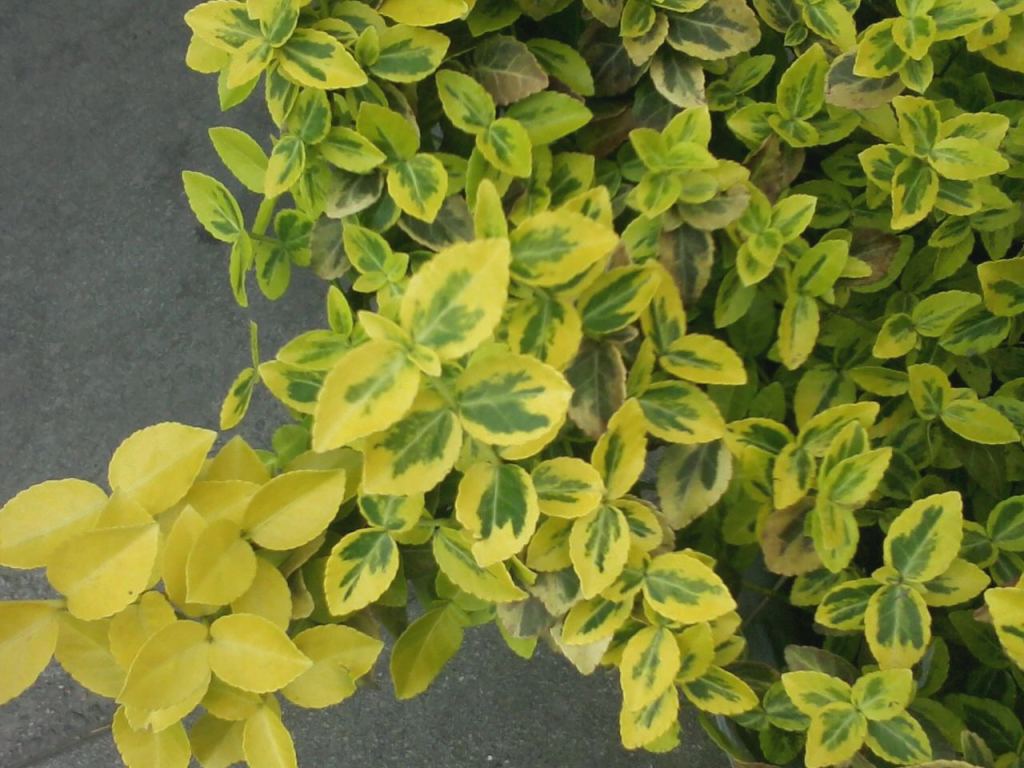
Of all the functions that the many and various plants in the garden serve, ground covers have the lowliest job description. Well, maybe it is just the lowest job; covering the ground. It is an important job though. Ground covers fill in the space between other desirable plants to obscure otherwise bare soil. They also control weeds. Some ground covers help to limit erosion. Others help to insulate the soil for plants with sensitive roots.
There certainly are all sorts of ground cover. Lawns are the most familiar. Many other ground covers are perennials like gazanias, African daisies and iceplants. Some, like ivies, honeysuckles and star jasmine, are vines. Others are low growing shrubs like certain coprosmas, cotoneasters and junipers. Some lay about as flat as carpeting. Some get a few feet deep.
Many perennial ground covers as well as some of the vines and low growing shrubbery provide colorful flowers. Japanese honeysuckle and star jasmine are not as colorful, but provide delightful fragrance. Some of the cotoneasters have colorful berries in winter. Although not seen, many ground covers are appreciated more for their network or roots that help to stabilize soil that might otherwise erode. One feature that most ground cover plants have in common though, is their foliage that is dense enough to keep weeds out, as well as to obscure the soil below.
Like all other plants in the landscape, ground cover plants need maintenance. Lawns probably need more maintenance than any other ground cover, since they need to be mowed, weeded, fertilized and watered quite regularly. Vine ground covers need to be pruned so that they do not get into trees and shrubbery. Some ground covers look best if mowed annually (typically at the end of winter) or even more frequently. Some of the deeper ground cover shrubs should be pruned down to stay low. Almost all ground covers need to be edged for confinement.
Ground cover plants must be selected for their appropriateness to particular applications. For example, most low growing shrubbery needs space, so is best for larger areas. Smaller iceplants that may not be aggressive enough for big areas are great for tight spots, or for mixing with other perennials. Tough Algerian ivy that is so useful for freeway embankments may be too aggressive for home gardens. As with all plants in the garden, careful selection helps to get the best ground cover plants for each particular situation where ground covers are needed.

 Only a few flowers are true blue. A few more are nearly blue, but slightly blushed with lavender. Of the latter group, fan flower, Scaevola albida, which is usually more lavender than blue, can be quite convincingly blue if conditions are just so. The semi-circular flowers (which are actually wide bilateral flowers) are most abundant in spring and summer, but can bloom sporadically all year.
 Like so many of the easiest to grow plants, periwinkle, Vinca major, is too easy to grow. It has become an invasive exotic (nonnative) weed in many moist riparian environments. It can get rather weedy in home gardens as well. This can be an advantage if it happens to fill in for bald spots in areas of other ground cover. It is a disadvantage if it overwhelms or competes with other plants.
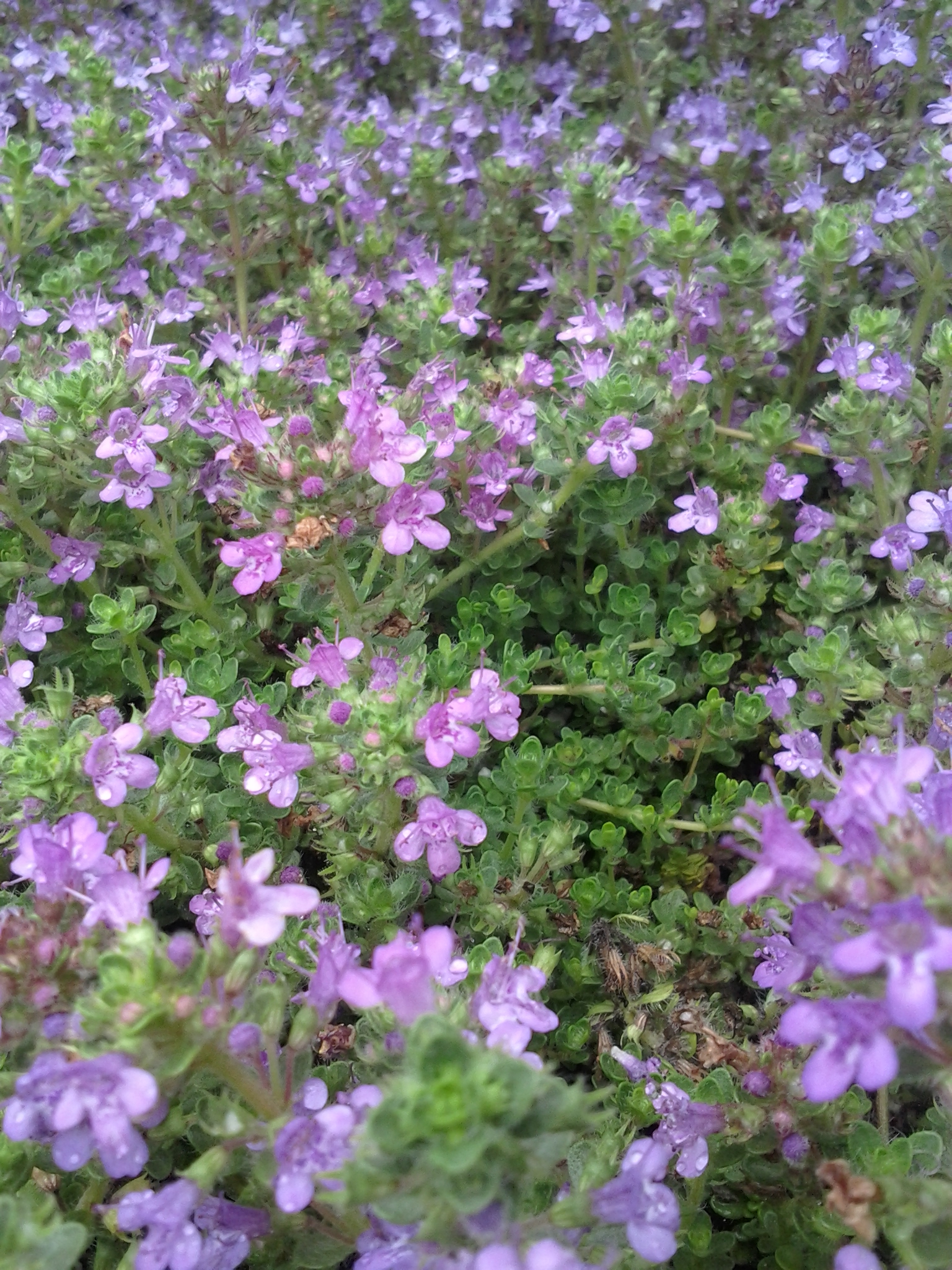 Lawns composed of turf grasses are the most functional, but also the most demanding forms of groundcover. That is old news. There are so many other less demanding low growing plants that that can cover the ground in areas that are not used like lawns are. Sometimes they work nicely just to control weeds. Sometimes they help to control erosion on otherwise unlandscaped hillsides.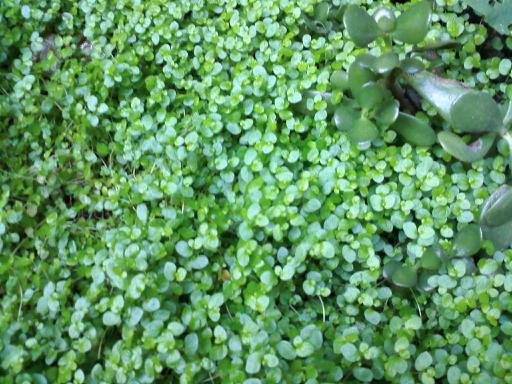
 Tony Tomeo