
Sunday Best – Elderflower
Only six of ten elderberries here were selected for “Six on Saturday”. Four were omitted:
Sambucus canadensis ‘Nova’ and ‘York’ American elderberry
Sambucus caerulea, blue elderberry
Sambucus nigra ‘Black Tower’ European black elderberry
I would have liked to include all of them, but realistically, American elderberry and blue elderberry are not much to see, and I was unmotivated to take a picture of ‘Black Tower’ European black elderberry. Although it is my favorite of the European black elderberries here, taking its picture after neglecting to do so while there earlier yesterday would have necessitated a short drive and a long walk. These six are in the storage nursery, either as cuttings, or because they were not installed into a landscape yet.
1. Sambucus racemosa, red elderberry is a gift from Skyler of Tangly Cottage Gardening. They are a group of four seedlings, so can pollinate each other, as well as a more recently acquired ‘Lemony Lace’. The species is native and grows wild in Tangly Cottage Garden.

2. ‘Lemony Lace’ is a cultivar of red elderberry that I acquired with three European black elderberry cultivars, in a manner that is not illegal. I am very pleased that it is a progeny of ‘Sutherland Gold’, which I had been coveting in the garden of The Random Gardener.

3. ‘Black Lace’ is the cultivar of Sambucus nigra, European black elderberry, that started it all. It was here before my time. I was not so keen on it, but learned to like it because so many admired it in the landscape. I procured ‘Madonna’ as a pollinator, and kept going.

4. ‘Madonna’ and ‘Black Lace’ are so MTV in 1989. This ‘Madonna’ is not so exciting. Its chartreuse variegation looks sickly while it is small. I know it will be prettier as it grows. It arrived two years prior to the three other newly acquired European black elderberries.
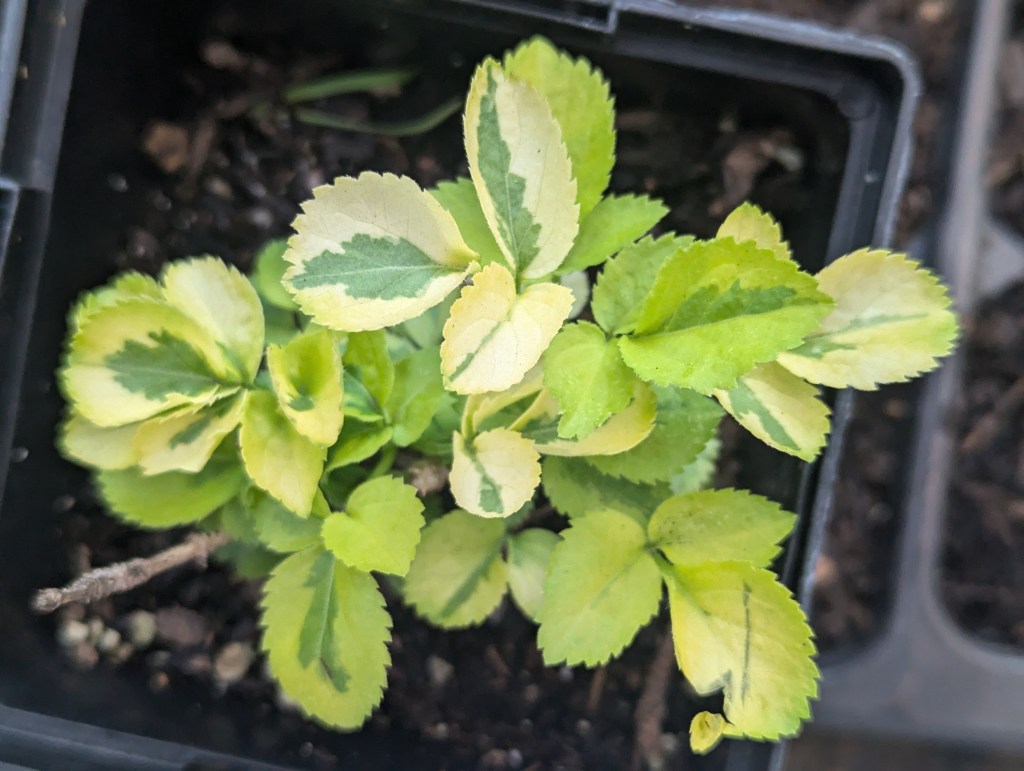
5. ‘Purpurea’ is one of the three recently acquired cultivars of European black elderberry that arrived with the ‘Lemony Lace’ red elderberry. I am unimpressed by its bland foliar color, but will learn to appreciate it if I work with it long enough. I like its foliar texture.

6. ‘Albomarginata’ was the European black elderberry cultivar that I initially wanted as a pollinator for ‘Black Lace’, but it was unavailable two years ago. I prefer its creamy white variegation and larger size to the chartreuse variegation and compact size of ‘Madonna’.

This is the link for Six on Saturday, for anyone else who would like to participate: https://thepropagatorblog.wordpress.com/2017/09/18/six-on-saturday-a-participant-guide/

These six lack a theme. They are just random pictures of a few flowers that are blooming here and now.
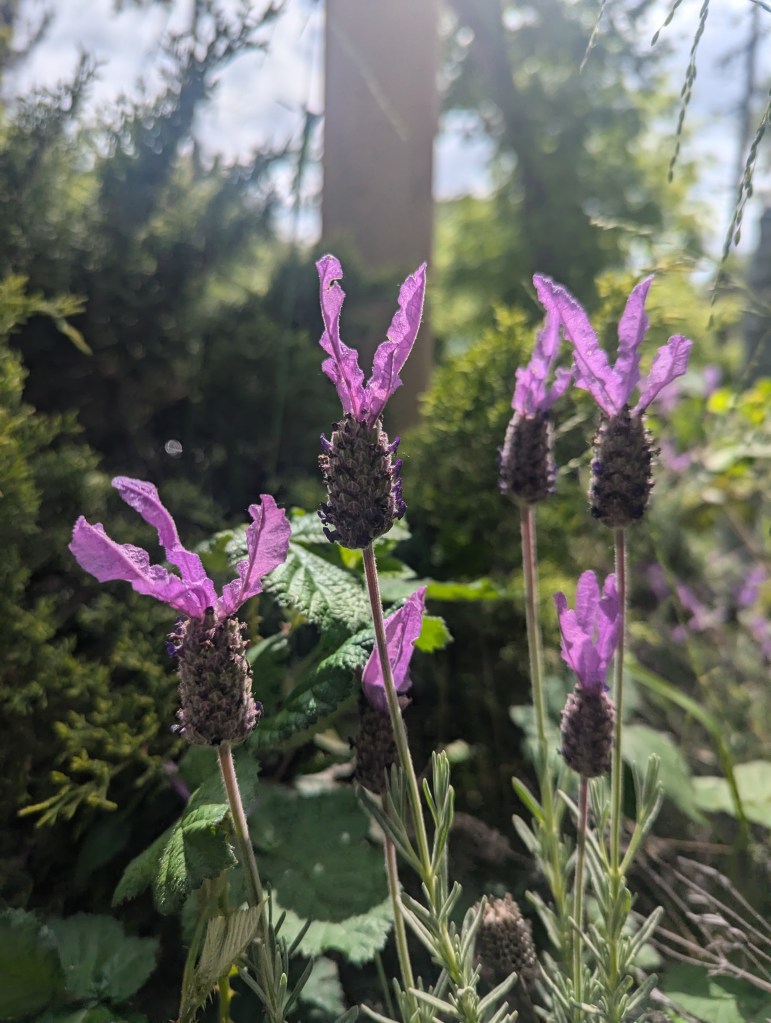
1. Lavandula stoechas, Spanish lavender posed for this picture, which was not adequate for the gardening column, but is too pretty to delete without sharing here. It looks like it is about to fly away with those long wings. A bee posed with it for the gardening column.
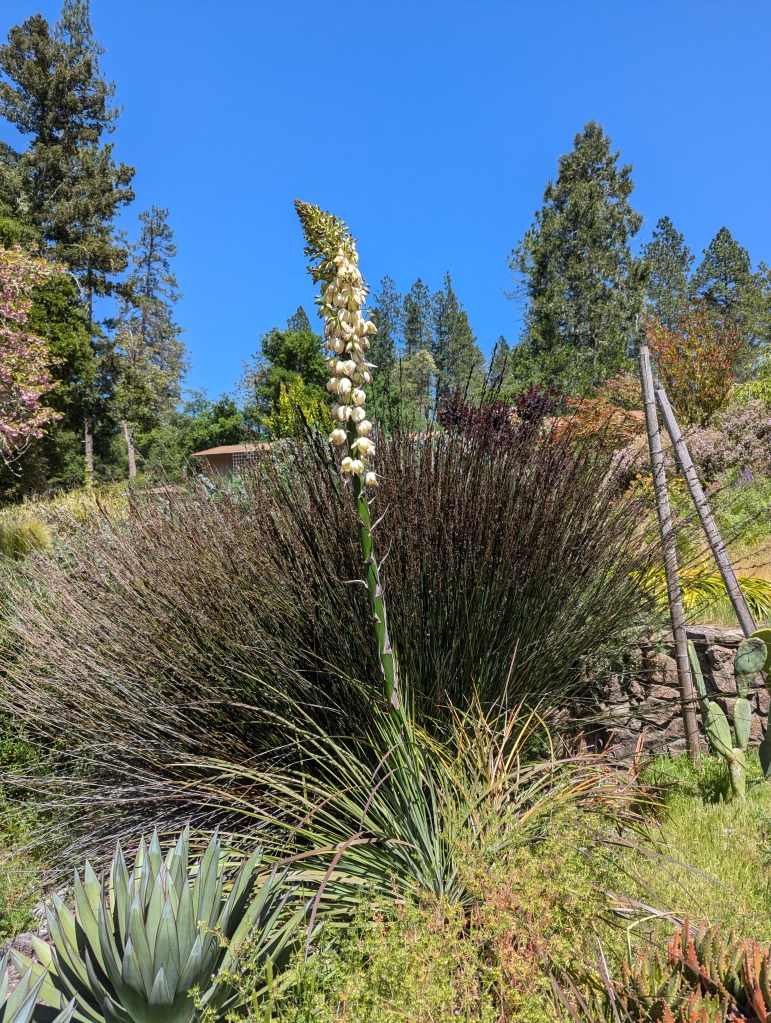
2. (Hespero)Yucca whipplei, chaparral yucca is blooming again after blooming last year. This floral truss is about twelve feet tall, and still growing. Seed that it provided last year is now growing abundantly. It is the first species of Yucca that I met in the wild in 1985.
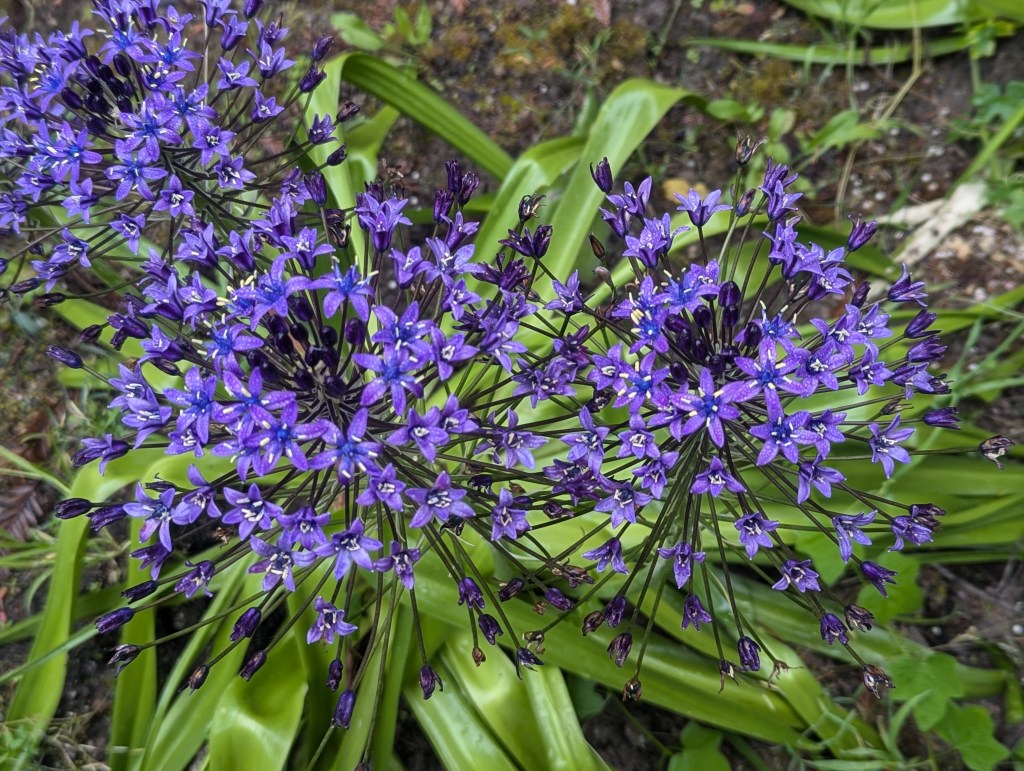
3. Scilla peruviana, Peruvian squill has been reliably perennial for about three years but has not grown much. Although the floral trusses are bigger than they were last year, they are no more numerous. Just nine remain in three groups of three, just as I planted them.
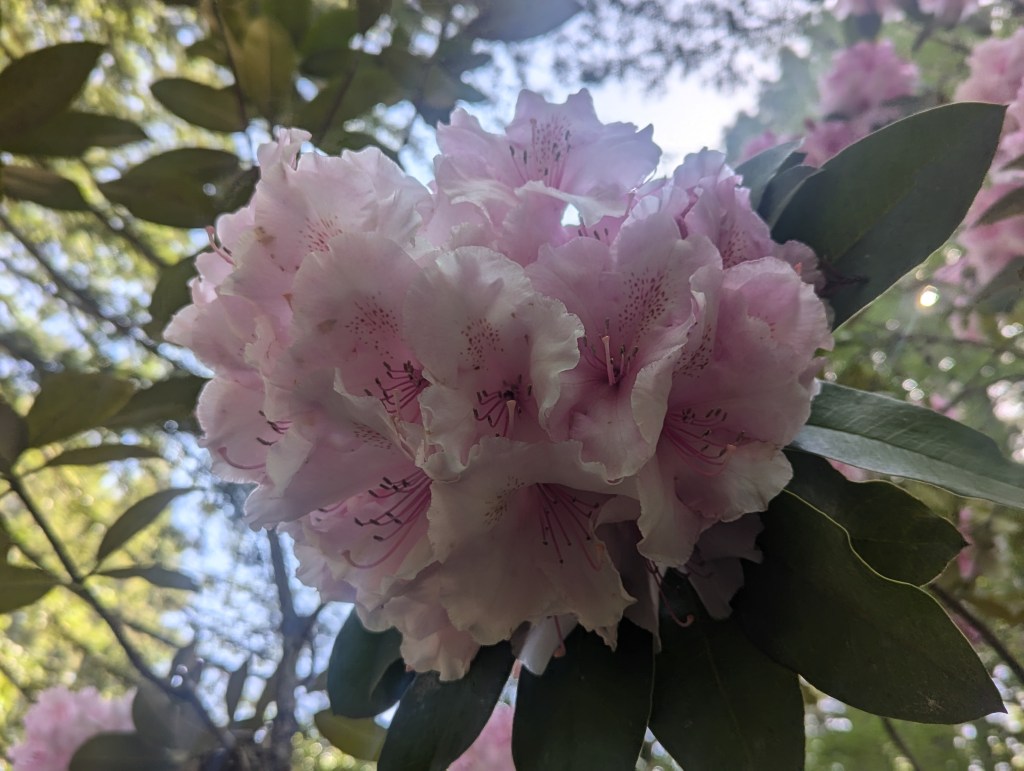
4. Rhododendron spp., like the bearded iris and cymbidium orchid, is of an unidentified cultivar. Many others are blooming now also. I refrained from posting six pictures of six different rhododendrons like I usually do though, because that can get a bit predictable.
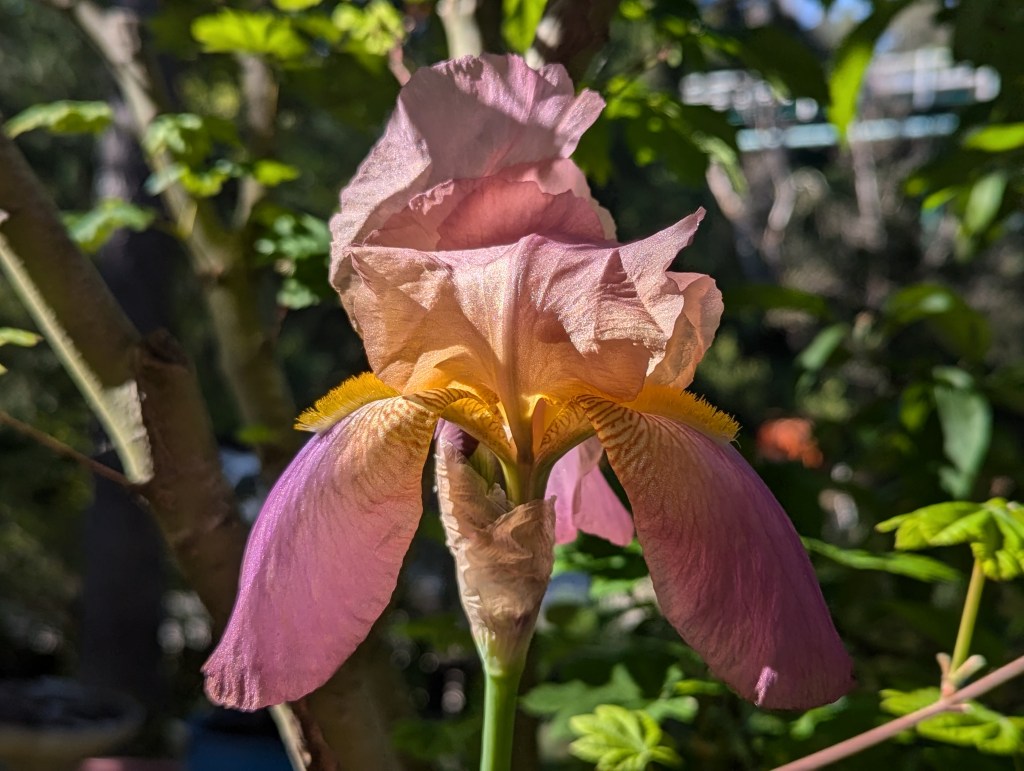
5. Iris X germanica, bearded iris was difficult to take a good picture of at the time of day that I encountered it. Its pale color did not help. I am fond of this iris though, since I got it from Cedar Lodge at Kidder Creek, on the way to the Pacific Northwest two years ago.
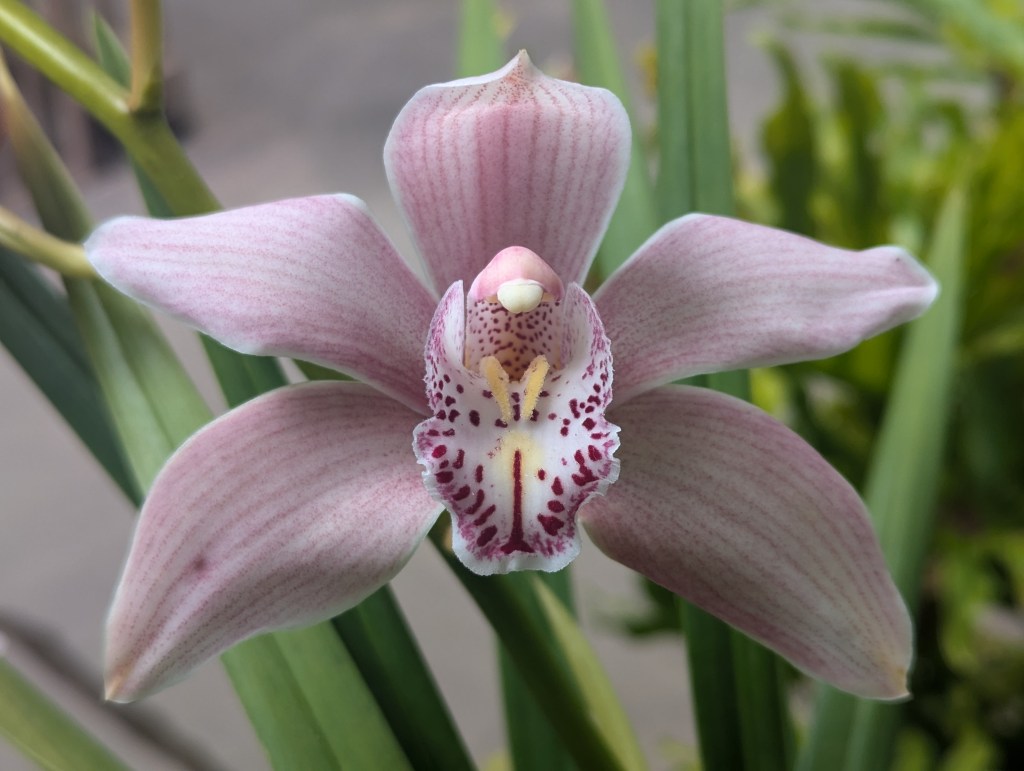
6. Cymbidium spp., has been blooming very slowly. The buds appeared over winter, and have been extending since then, but only recently opened. I never liked this orchid much anyway. A white orchid that typically blooms so impressively here did nothing this year.
This is the link for Six on Saturday, for anyone else who would like to participate: https://thepropagatorblog.wordpress.com/2017/09/18/six-on-saturday-a-participant-guide/
Camellia japonica seems to be too diverse to be a single species. Several of its countless cultivars seem to be either other distinct species or hybrids of other species. Regardless, they are all products of selection and breeding from within their single species, which is why the camellia pictured below is the only one of these six without an “X” in the middle of its name. The other five are hybrids, and three are the same hybrid species. However, one commonality of all six is that their cultivars are unidentified. I guessed a cultivar for the rose in the past. Columbine grew from a feral seed of a hybrid parent that apparently was not particularly sterile.
1. Iris X pacifica, Pacific Coast iris are hybrids of various native species, although mostly Iris douglasiana. Different cultivars can have different ancestry. These are unidentified.

2. Rosa X hybrida, rose is also an unidentified hybrid of unidentified ancestry. It seems to be a floribunda rose, with a few secondary floral buds behind each primary floral bud.

3. Iris X pacifica, Pacific Coast iris is my favorite color, but is actually not my favorite of the cultivars here. Blue, purple and burgundy red are too velvety exquisite to not prefer.

4. Aquilegia X hybrida, columbine grew in an awkward location from the seed of others that did not want to grow where planted. It stayed because it is the only columbine here.

5. Iris X pacifica, Pacific Coast iris in yellow is a bit more colorful than the white cultivar but not as richly colorful as the others. Blue, purple and burgundy red are done already.

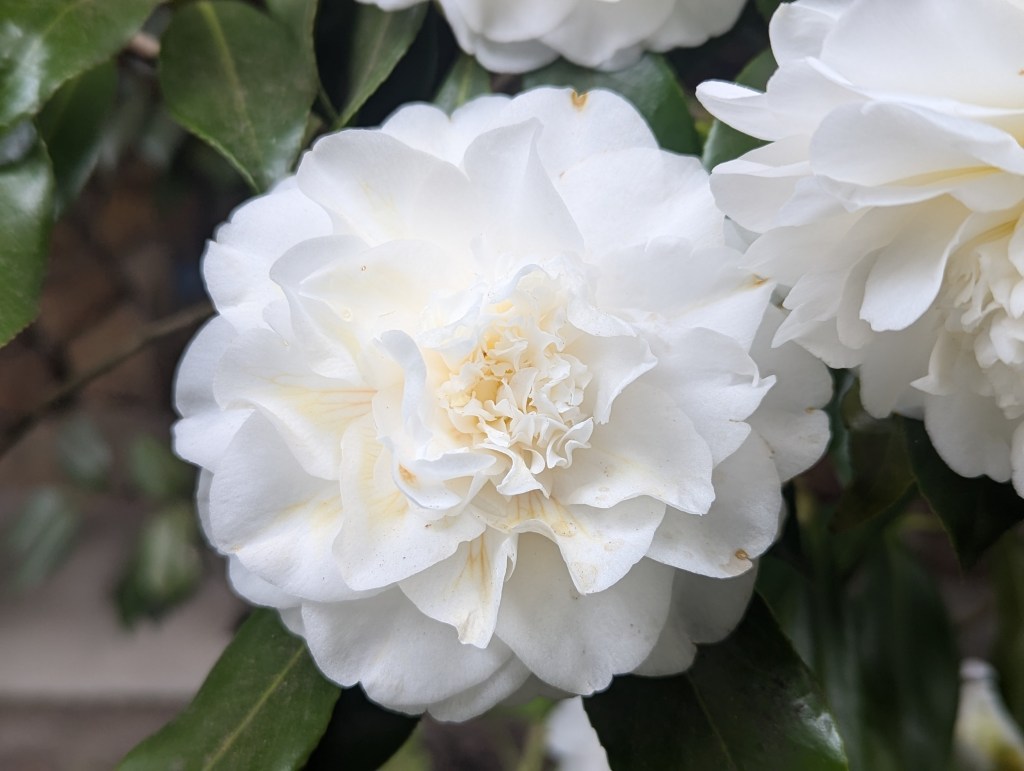
6. Camellia japonica, camellia is as unidentifiable as the other five of these six but is not an interspecific hybrid, which is why it lacks an “X” in the middle of the botanical name.
This is the link for Six on Saturday, for anyone else who would like to participate: https://thepropagatorblog.wordpress.com/2017/09/18/six-on-saturday-a-participant-guide/
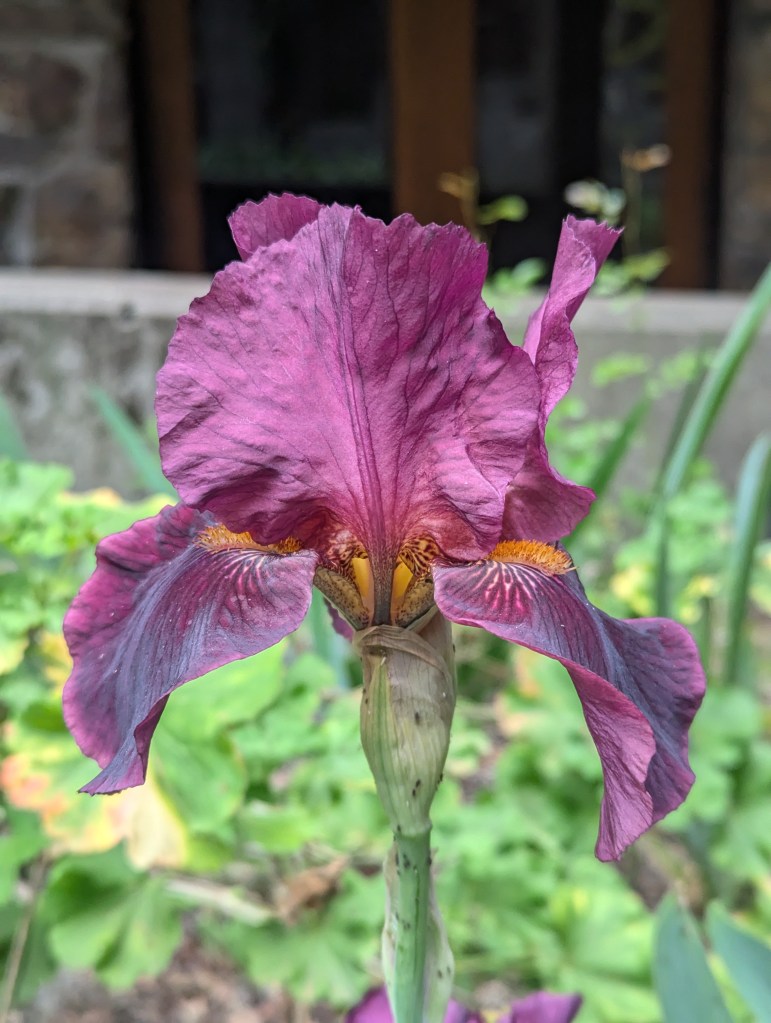
Too many iris are blooming now to document. Therefore, I limited my selection to a few bearded iris, which includes one that is not within the landscapes at work. Perhaps some of the other species can be featured next Saturday. With so much in bloom, it is difficult to be selective.
1. Of these Six, only this one does not inhabit the Iris Garden at work. It inhabits a small roadside planter in front of the totally awesome White Raven Coffee Shoppe in Felton. I believe that it is more caramel and charcoal colored than it appears to be in this picture.

2. Of these Six, only this one is likely identified. It conforms precisely to the descriptions of ‘Rosalie Figge’, including its habit of blooming sporadically throughout the year, with abundant bloom about now. Another participant of Six on Saturday identified it as such.

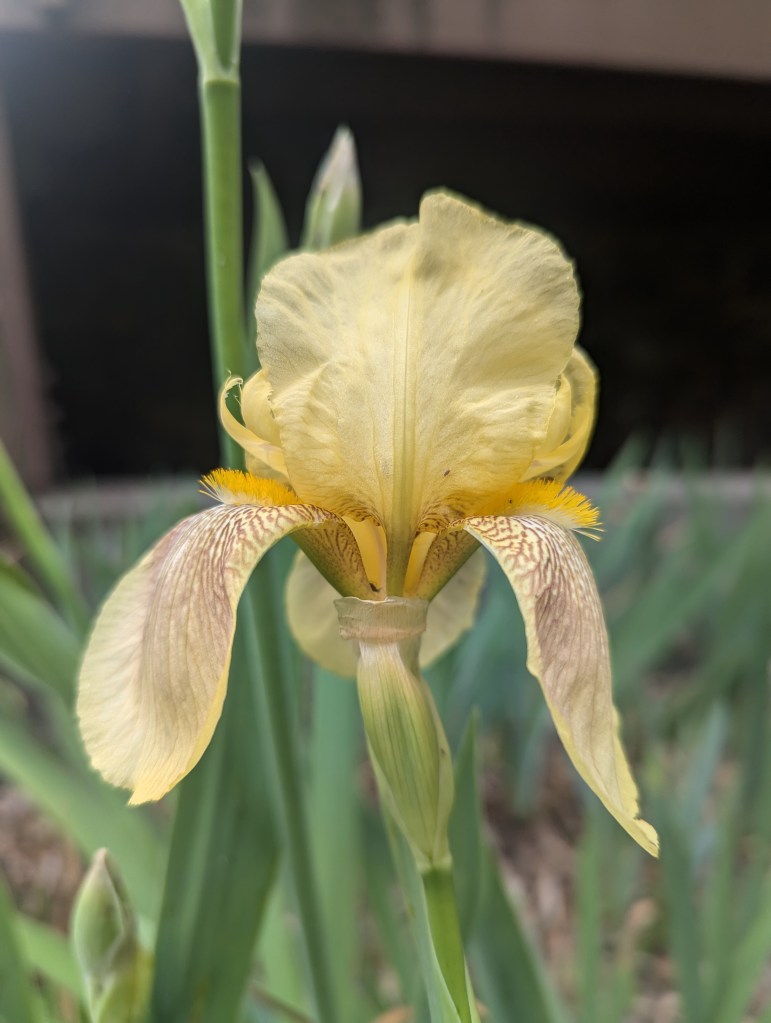
3. This relatively small pale yellow but nicely fragrant iris might be feral. It was found at a dumpsite for landscape debris, so could have grown from a deadheaded seed. It would likely be bigger and more colorful if it had grown from a discarded rhizome of a cultivar.
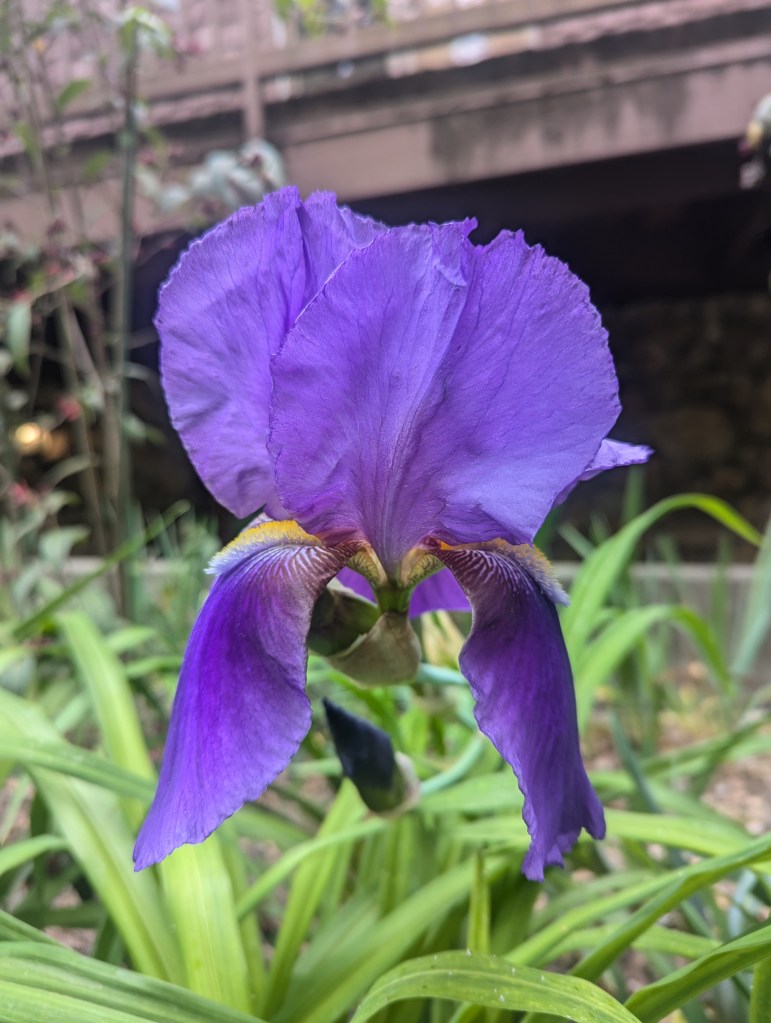
4. This big blue iris is as floppy as beagle ears, and is so heavy that its tall stems fall over if not staked. That is why its nearly horizontal stalk is obscured in its background behind it instead of visible below it. It is not actually as purplish as it seems to be in this picture.
5. Although more billowy and likely a bit bulkier, this garish iris needs no staking. Its tall and rather thin floral stems are sturdier than they seem to be. This happens to be one of my favorite bearded iris in this particular group. It was originally a gift from a neighbor.

6. Color is again deficient. This bearded iris is not as purplish as it seems to be here. It is actually a rich burgundy red. I remember the origins of all the other iris here but can not remember how this one was acquired. I do not remember ever seeing it before this year.
This is the link for Six on Saturday, for anyone else who would like to participate: https://thepropagatorblog.wordpress.com/2017/09/18/six-on-saturday-a-participant-guide/
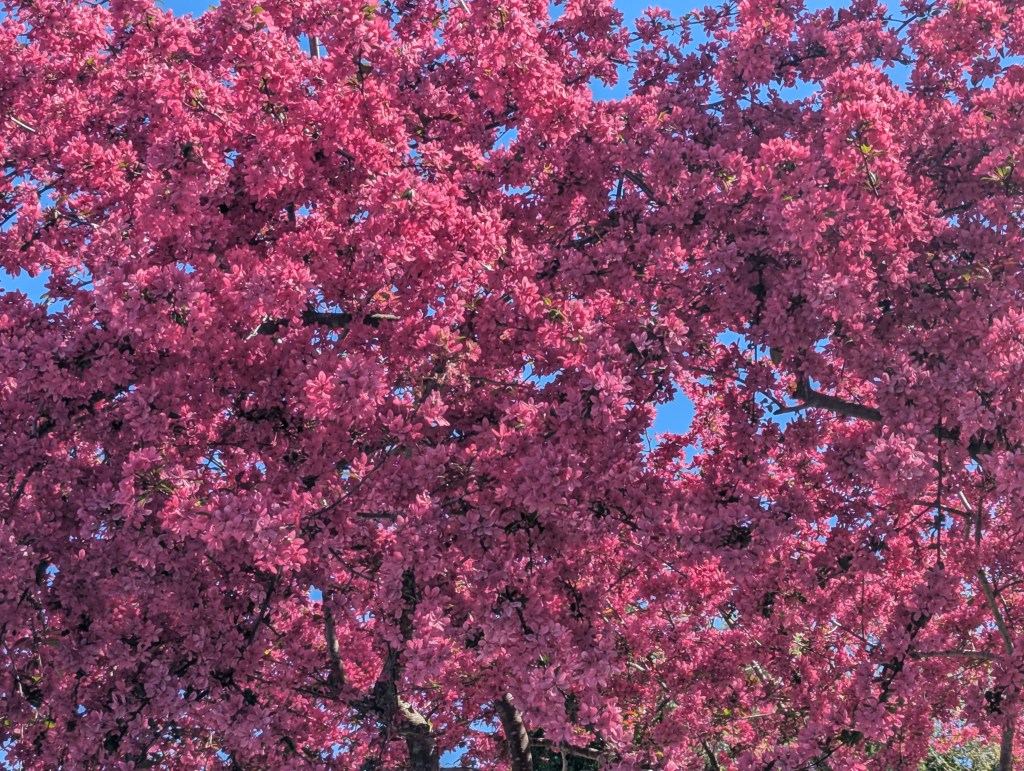
Azaleas make it difficult to limit this post to only six pictures. So many cultivars are now in bloom. However, azaleas also make it easy to comply with suggestion #7 of the Six on Saturday participation guide, which suggests minimal verbiage. There is not much to say about them, since I do not know much about them, or even what cultivars they are. I can only guess the identities of half of them. Even if I could identify the cultivars, I could not identify the species. I only know that all azaleas are of the same genus of Rhododendron. I suppose that, in this regard, they could qualify as a few more of Rhody’s rhodies.
1. ‘Hino Crimson’ happens to look very much like this. The small leaves are dark, but not quite bronzed presently. They were bronzed, but only during the coldest winter weather.

2. ‘Coral Bells’ happens to look very much like this. It is the most common azalea within the landscapes at work, and is remarkably reliable with its remarkably abundant bloom.
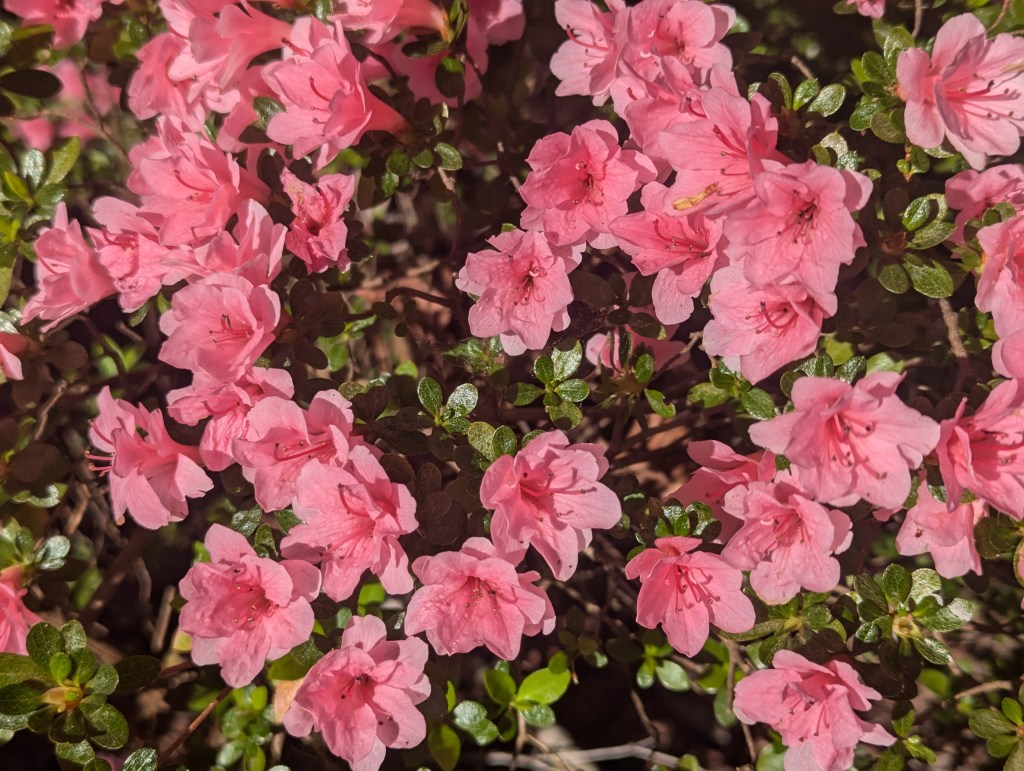
3. The bloom of this cultivar seems to be even more abundant because almost none of its foliage is visible beneath it. These flowers are little, but bigger than those of ‘Coral Bells’.
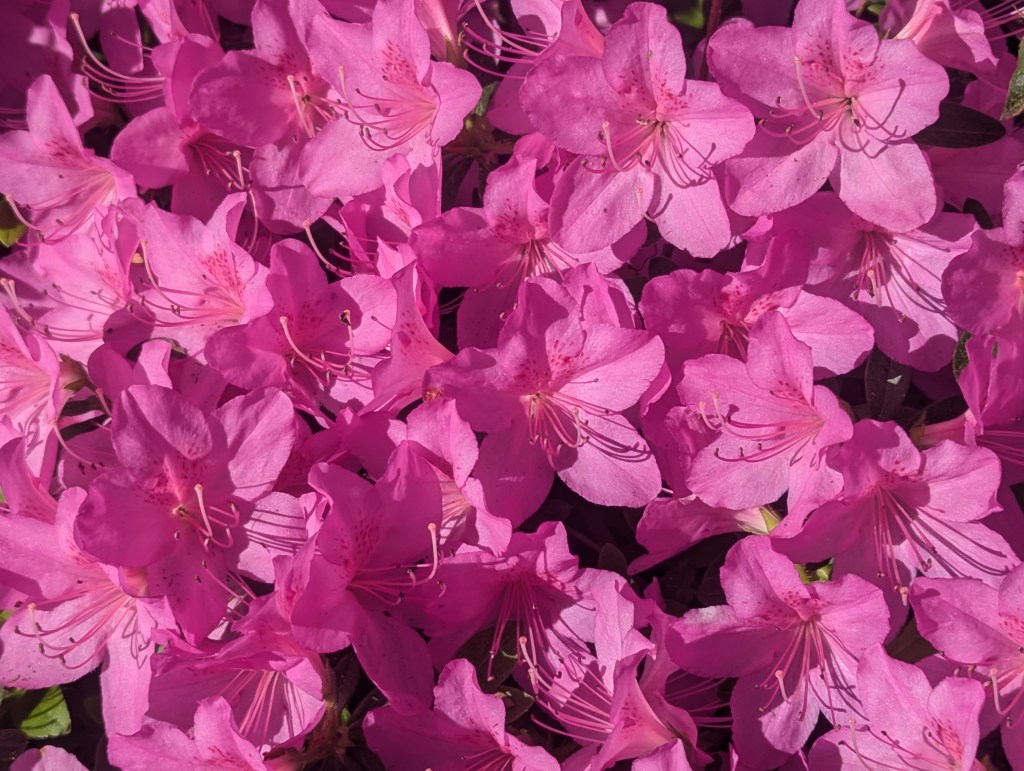
4. This azalea seems to be a ‘florist’ cultivar rather than a landscape cultivar. It was likely left by someone who worked in a nearby office years ago, and then found by a gardener.

5. Within the spacious landscapes here, each cultivar of azalea is installed in groups of at least a few individual specimens. Like the florist azalea, there is only one of this cultivar.

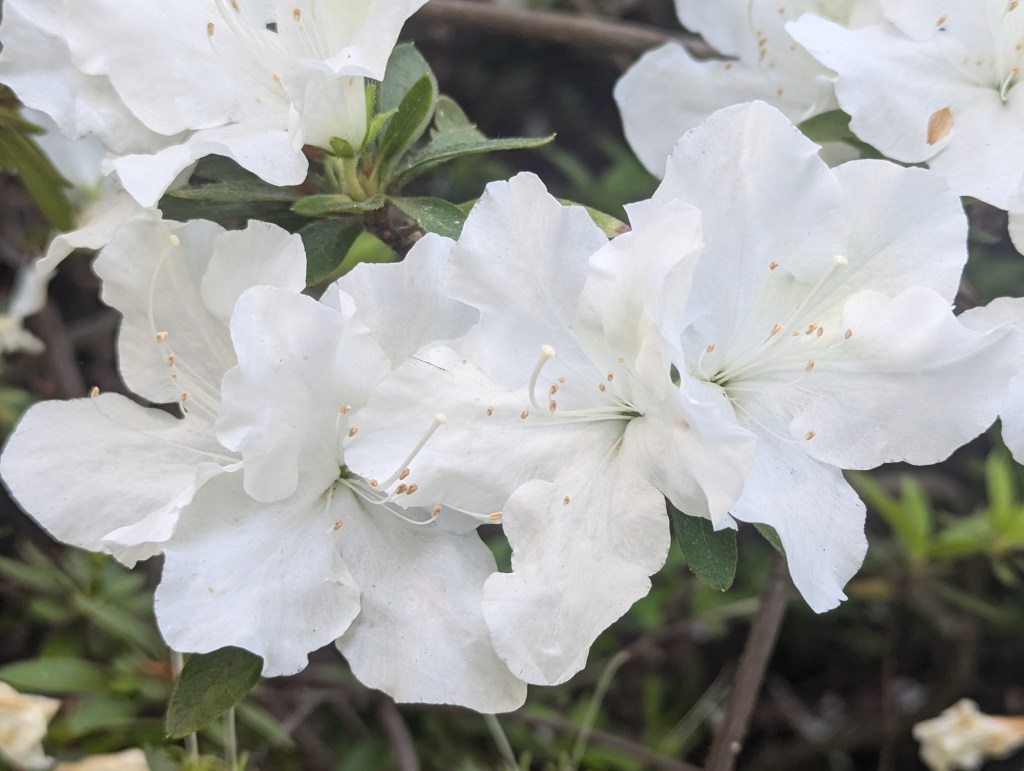
6. ‘Fielder’s White’, which is my favorite of the common azalea cultivars, happens to look very much like this. After restating this phrase thrice, I still can not identify any of these.
This is the link for Six on Saturday, for anyone else who would like to participate: https://thepropagatorblog.wordpress.com/2017/09/18/six-on-saturday-a-participant-guide/
 Tony Tomeo