Six on Saturday: Weeding & Pilferage

Pilferage annoys me. I certainly do not want to annoy anyone else with it. Fortunately, I only want to pilfer weeds that should be removed from their landscapes anyway. Several of these six were unwanted feral seedlings, which technically qualify as weeds. Seed that was not removed could have grown into more feral seedlings if I had left it. Although the red yucca pup was not a weed, it was crowded. Ocotillo was a gift, so was neither a weed, nor pilfered. Now, I have even more to grow.

1. Hesperaloe parviflora, red yucca produces quite a bit of seed. I found some which the gardeners neglected to deadhead. I wrapped it too neatly to unwrap to get a picture of it.

2. Hesperaloe parviflora, red yucca should be easier to grow by division. Unfortunately, this one shoot that I managed to divide is almost totally rotten from excessive irrigation.
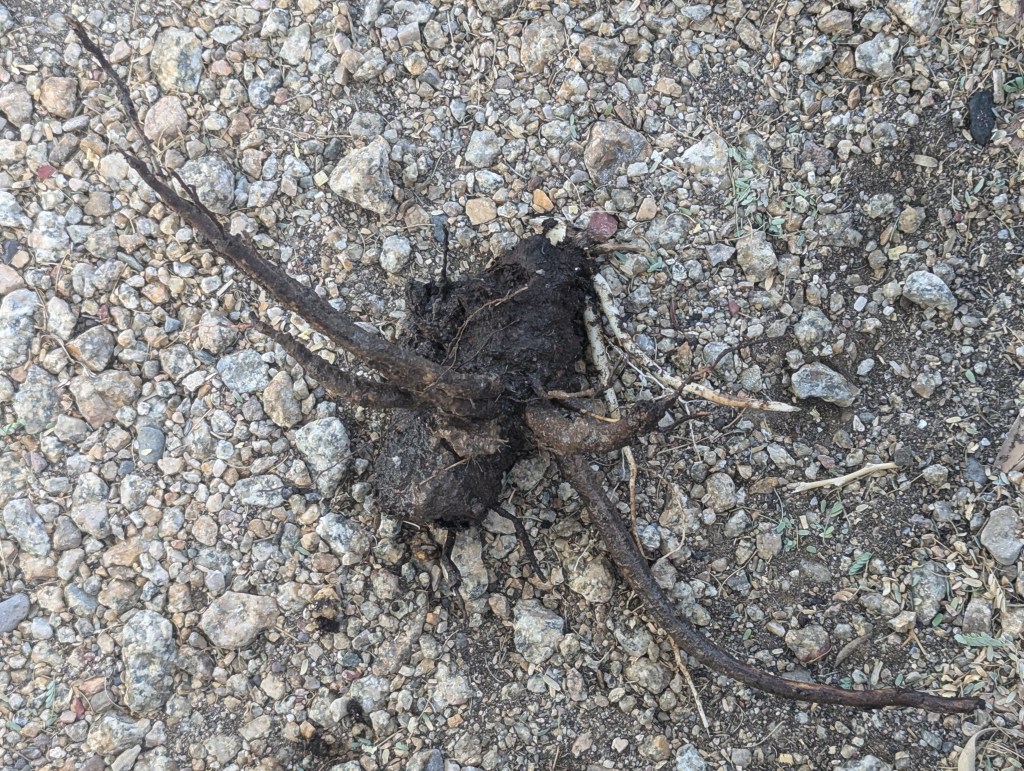
3. Calliandra californica, Baja fairy duster is the only species in this bundle of seedlings that I can identify. It is the biggest one which extends to the upper right. The bundle also includes seedlings of both or either Parkinsonia florida, blue Palo verde and or Prosopis velutina, velvet mesquite, as well as a single seedling of an unidentified species of palm.
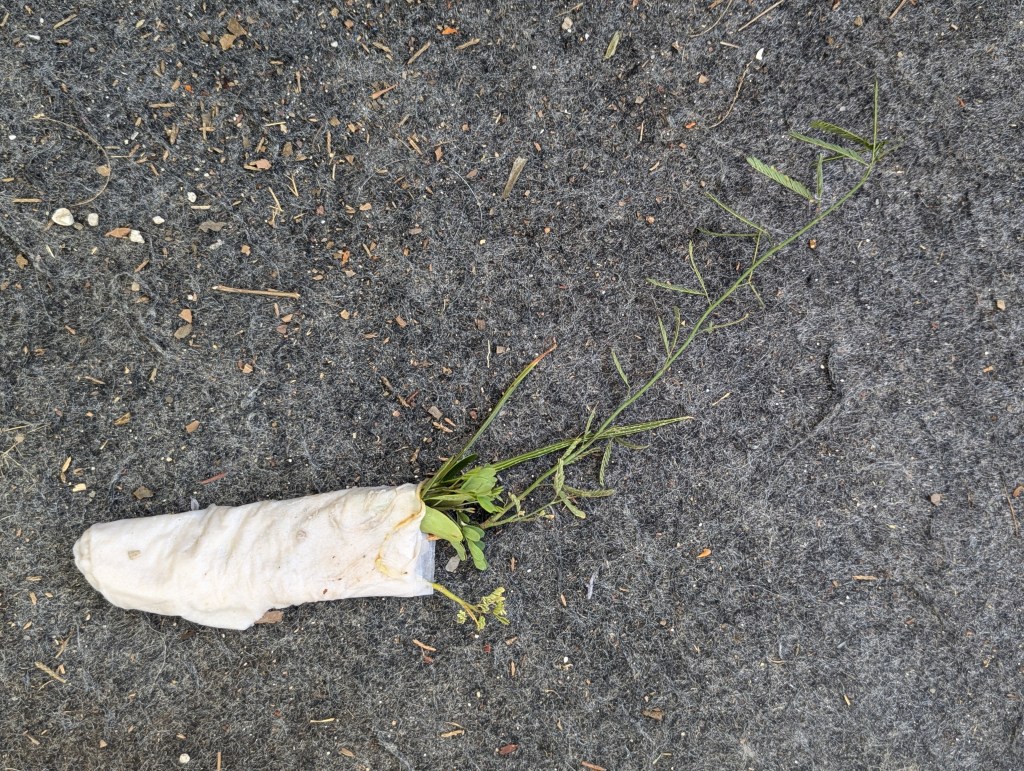
4. Parkinsonia florida, blue palo verde is easier to identify when it larger than seedlings. However, because I am unfamiliar with it, I am still uncertain if these are actually them.

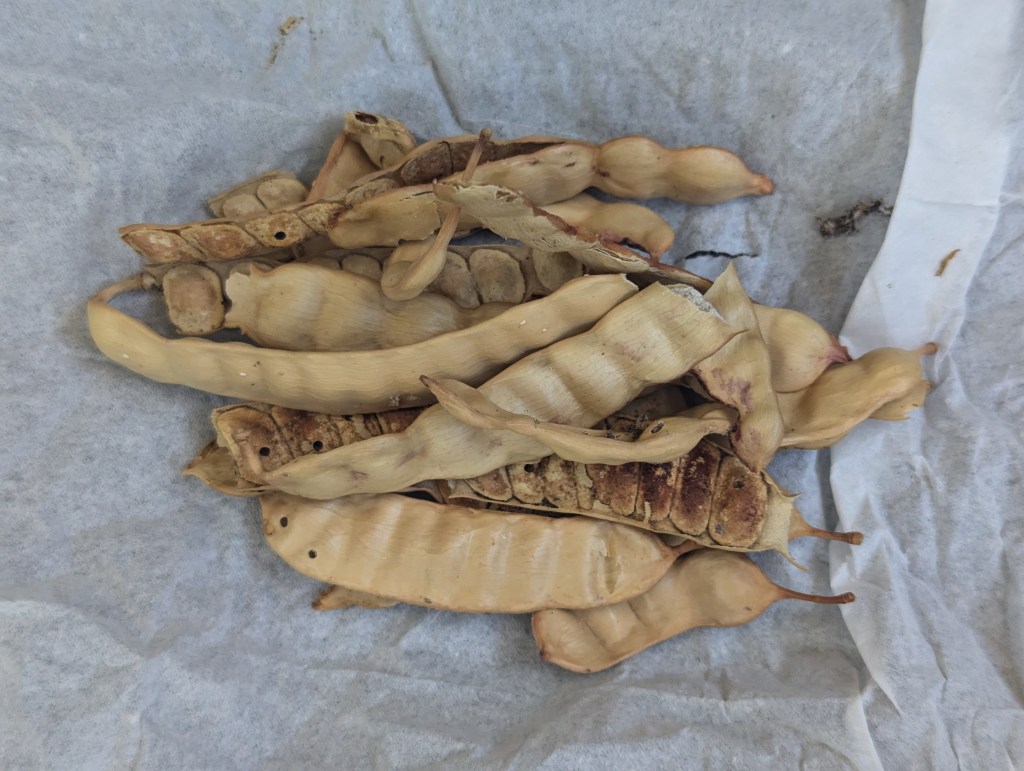
5. Prosopis velutina, velvet mesquite left these seed pods on the ground. Small holes are from insect larvae that ate some of the seed within. A few viable seed would be adequate.
6. Fouquieria splendens, ocotillo was a gift, so was not pilfered. This cane is about three feet long, so can become several cuttings when I determine how long cuttings should be.

This is the link for Six on Saturday, for anyone else who would like to participate: https://thepropagatorblog.wordpress.com/2017/09/18/six-on-saturday-a-participant-guide/

Horridculture – Queen Nefertiti

Ancient Egyptian influence within a modern landscape

Queen Nefertiti, during the fourteenth century BC, was the most famous and most influential Queen of Ancient Egypt. She wore a cool hat too. It was sort of cylindrical shaped, but also tapered so that it was wider on top, sort of like a funnel. So, not only was Queen Nefertiti very influential during her time, but she remains influential in modern mow, blow and go gardening. So-called ‘gardeners’ everywhere still shear shrubbery into the shape of Queen Nefertiti’s cool hat! Not many species of shrubbery are exempt. Just about any get shorn into a sort of cylinder shape that is wider on top, sort of like a funnel, but also tilted in one direction or another, just like Queen Nefertiti’s hat tilts toward the back. Such shearing typically deprives blooming shrubbery of its bloom, but bloom is apparently not a priority, as long as the ancient Egyptian form is maintained. The picture above includes four oleanders, a Texas sage and what seems to be two trailing lantana. The Texas sage and trailing lantana are more cylindrical than hat shaped, but the hat shape of the three oleanders is impossible to deny. It is such a universal technique that is performed so precisely wherever vegetation is maintained by mow, blow and go gardeners that it seems to be taught in classes as standard procedure. I am significantly more educated in horticulture than most mow, blow and go ‘gardeners’, but I somehow missed this in my curriculum. Instead, I learned that vegetation should be allowed to exhibit its natural attributes, such as form, texture, bloom and so on. If I wanted a herd of ancient Egyptian hats in my garden, I would probably construct something that resembled ancient Egyptian hats from an inert material that never needs shearing or irrigation.

the Original
a modern version of an ancient Egyptian fashion show

Six on Saturday: Away Again

It is a long story. To be brief, Rhody and I are again far away from work and home, near Phoenix in Arizona, without time to write.

1. Prosopis velutina, velvet mesquite is supposedly the most common mesquite here and is also native. It develops sculptural form, but only light shade, which seems to me to be substandard for such a warm climate. Perhaps it is common because it is undemanding.

2. Parkinsonia florida, blue palo verde is also native like velvet mesquite, but is only one of the two most common palo verdes here. Foothill palo verde is the other. Both develop sculptural form and light shade, also like velvet mesquite, and are a bit more sculptural.

3. Lantana montevidensis, trailing lantana is the same common type that I occasionally work with at home, but seems to be happier and more colorful here, even while shorn as these weirdly compact globs, and humiliatingly deprived of its naturally sprawling form.

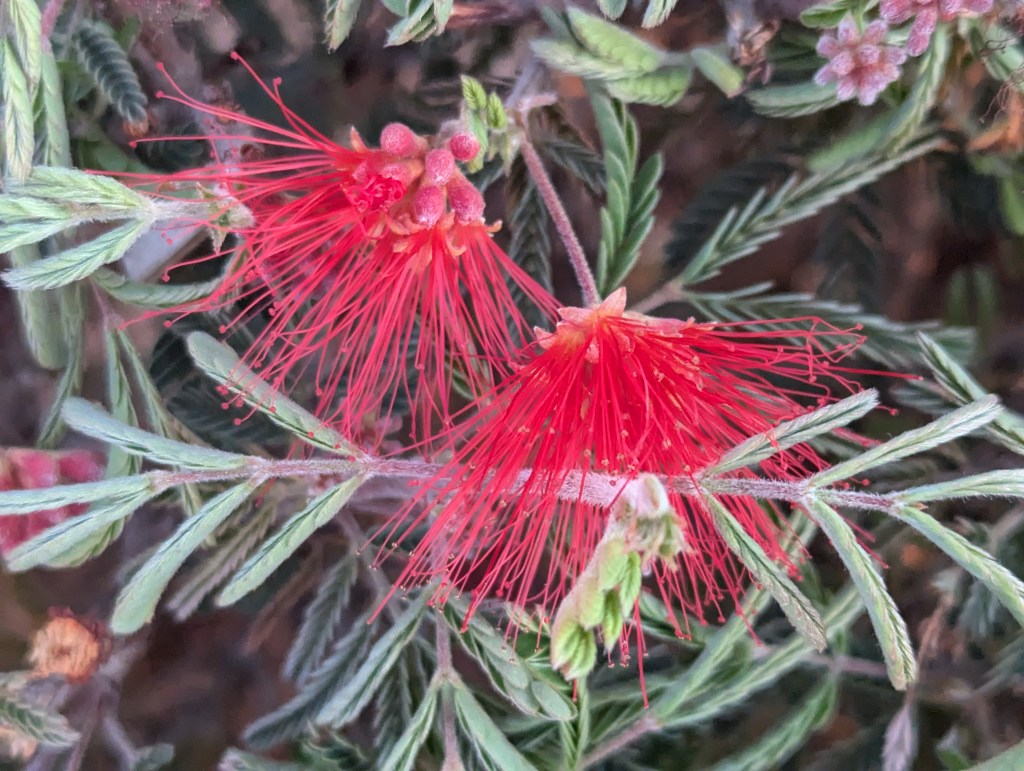
4. Calliandra californica, Baja fairy duster seems to be more prevalent here than it is in California. Of course, Baja California is a very big and very diverse region to the south of the State of California that I am familiar with. I suspect that this is a hybrid or a cultivar.

5. Leucophyllum frutescens, Texas sage, like so much of the flowering shrubbery here, is shorn too abusively to bloom as well as it likely should. Its silvery gray foliar color is also compromised. I can not even guess what its natural form or branch structure should be.

6. Rhody is so tolerant of my interest in unfamiliar vegetation. His only interaction with it involves just ‘claiming’ it. I absconded with a handful of seed pods and three seedlings of velvet mesquite, and a seedlings of Baja fairy duster (which will get a different name).

This is the link for Six on Saturday, for anyone else who would like to participate: https://thepropagatorblog.wordpress.com/2017/09/18/six-on-saturday-a-participant-guide/

Six on Saturday: Day Out

Rhody and I were in Capitola to attend to a few important tasks. Consequently, I did not take any pictures from home or work. My ‘Six’ for this week are therefore totally random without a theme.

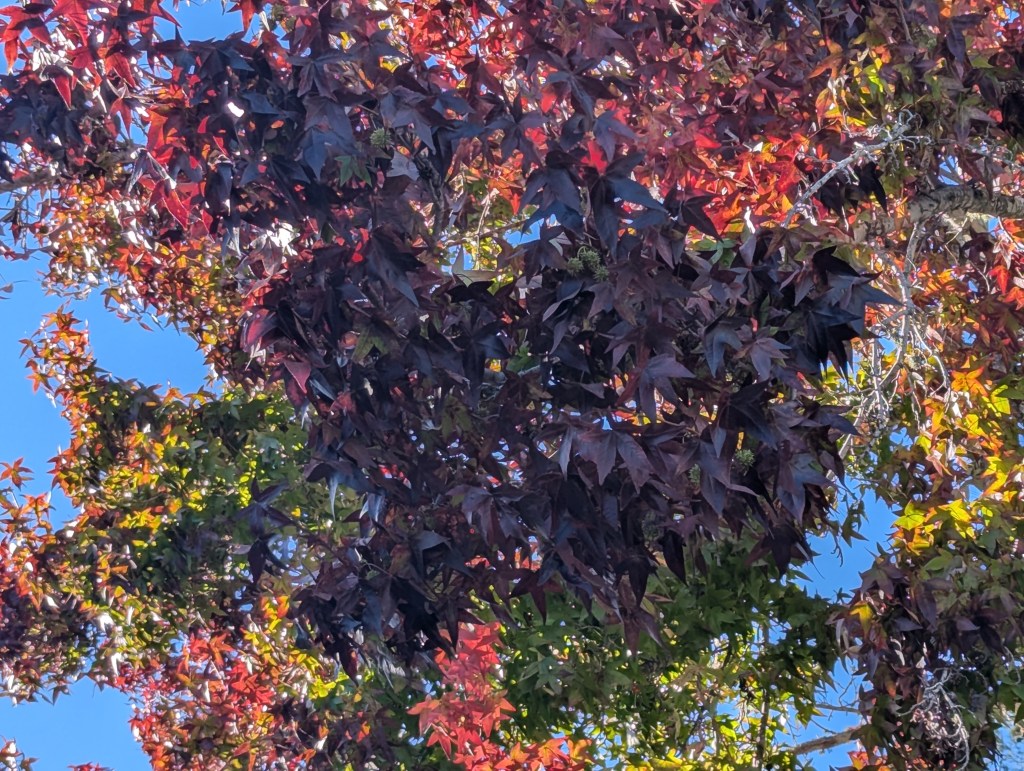
1. Liquidambar styraciflua, sweetgum does not require much chill to exhibit exemplary foliar color for autumn. This deep garnet red is almost too dark to be visually appealing. It looks like it should be in Vermont rather than here on the Central Coast of California.

2. Archontophoenix cunninghamiana, king palm is more common closer to Los Angeles than here. I know of only a few here, and almost all are somewhat shabby like these are. King palm is less tolerant of slightly excessive chill than sweetgum is of inadequate chill.

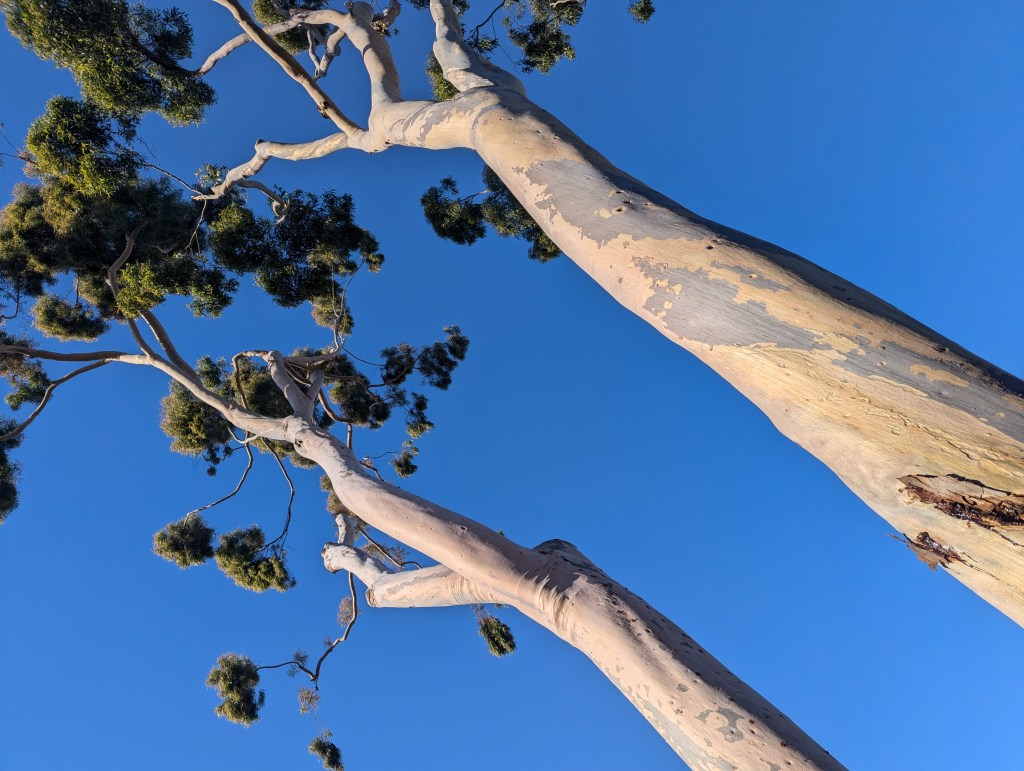
3. Eucalyptus citriodora, lemon gum is also more common in Southern California, likely because it prefers warmer winters. Although these are reasonably happy here, not many are so happy within the Santa Clara Valley on the other side of the Santa Cruz Mountain.

4. Cortaderia jubata, pampas grass is the aggressively invasive sort which is naturalized so wickedly on the West Coast of California and Oregon. This is not a good picture, since it shows only its bloom peeking above the edge of the cliff, with foliage concealed below.

5. Eucalyptus globulus, blue gum is another aggressively invasive naturalized species. It has a completely different personality, though. Where it competes with other tall trees, it grows very high, and is very combustible. This exposed tree is relatively short and stout.

6. Carpobrotus edulis, Hottentot fig, which most of us know incorrectly as ice plant, was imported from South Africa more than a century ago, and is now so abundant that some believe that it is native. Technically, it is invasive too, but it is not easy to dislike as such.

This is the link for Six on Saturday, for anyone else who would like to participate: https://thepropagatorblog.wordpress.com/2017/09/18/six-on-saturday-a-participant-guide/
Horridculture – Headless

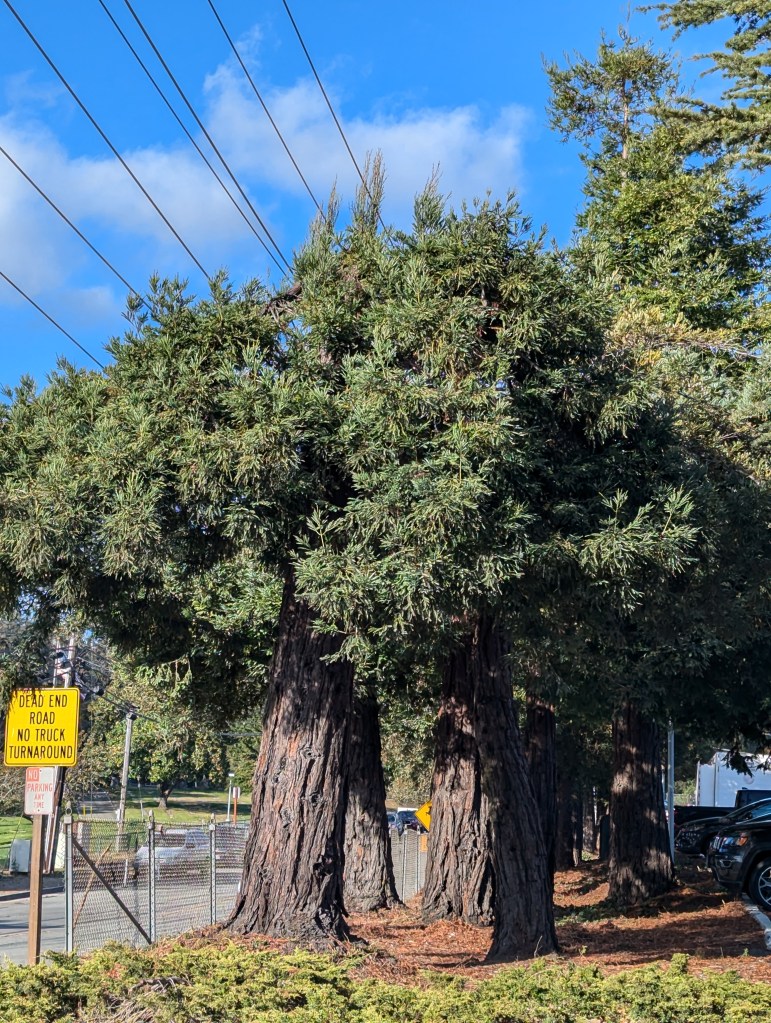
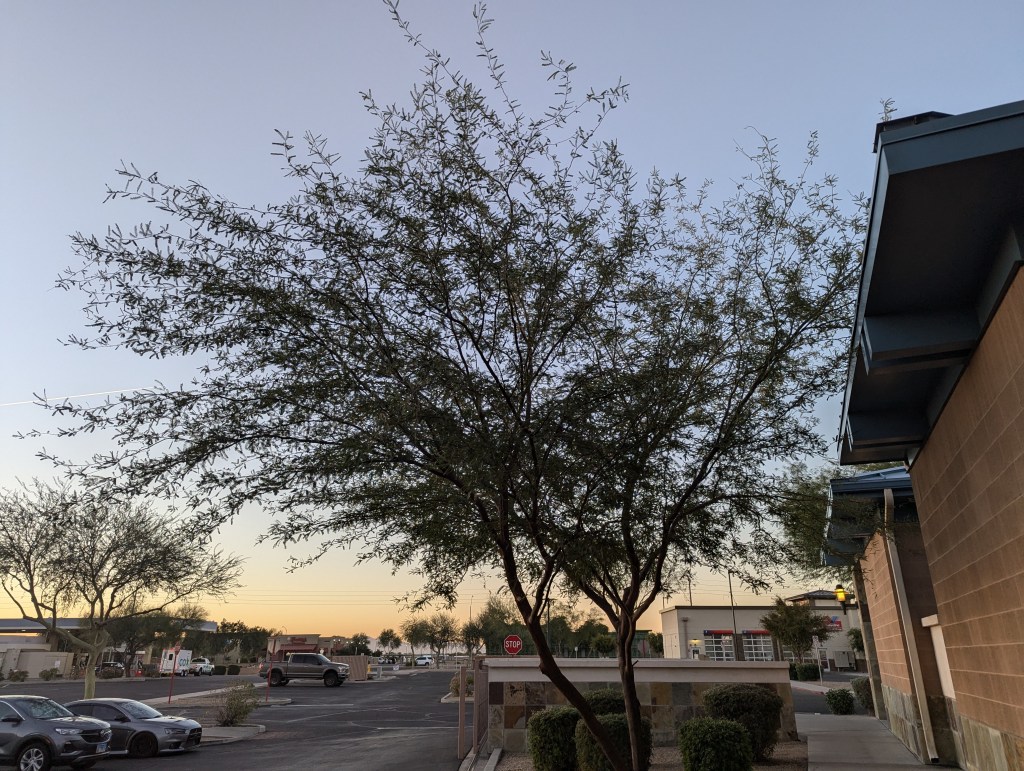
Appropriately, this picture was taken on Halloween. The ‘DEAD END’ sign and cemetery beyond, which are visible to the lower left of the picture, were also coincidental. The several headless redwood trees are the primary topic. Obviously, they were decapitated because of the electrical cables above. Otherwise, redwoods with such healthily plump trunks would be rather tall by now. After all, coastal redwoods are the tallest trees in the World. Unfortunately for them and those who are now appalled by their disfigurement, reliable and safe electrical service is more of a priority than poorly situated trees. It is no fault of the trees. Nor should this atrocity be blamed on those who executed it. Their only better option would be complete removal of the subjects, and perhaps replacement with smaller trees that will not grow tall enough to get too close to the electrical cables above. Maintenance of clearance of the vigorously upright redwoods from the cables above is a chronic problem that must be morally challenging for the arborist who must perform the necessary procedures. However, removal of several such significant trees would be very objectionable to the Community, which is very likely why these trees remain, regardless of their severe and irreparable disfigurement. Application for permits for their removal requires posting of such intentions on the trunks of the subject trees, to which neighbors would very likely protest. None of this would be such a problem now if only trees that are more appropriate to this particular situation were installed instead! Did the landscape designer who designed this landscape even visit the site during the design process, or was it all done on paper in a remote studio? Why did those who installed these trees not foresee this problem and modify the landscape plan and species selection accordingly?

Six on Saturday: Attempted Autumn

Astronomical autumn began more than a month ago. It is about a third done, with about two thirds remaining. Meteorological autumn can start at any time. Sometimes, it starts, but then pauses before restarting a bit later. Sometimes, the first rain is the beginning of the rainy season, which typically continues through winter. A bit of rain arrived between Wednesday and Thursday, and a bit more is here now, but no more is in the forecast for next week. Regardless of future weather, some flowers bloom, or at least try to, as late as they possibly can. Of course, some actually prefer to bloom even later and during winter. Apologies for the lack of focus of pictures #4 and #6.

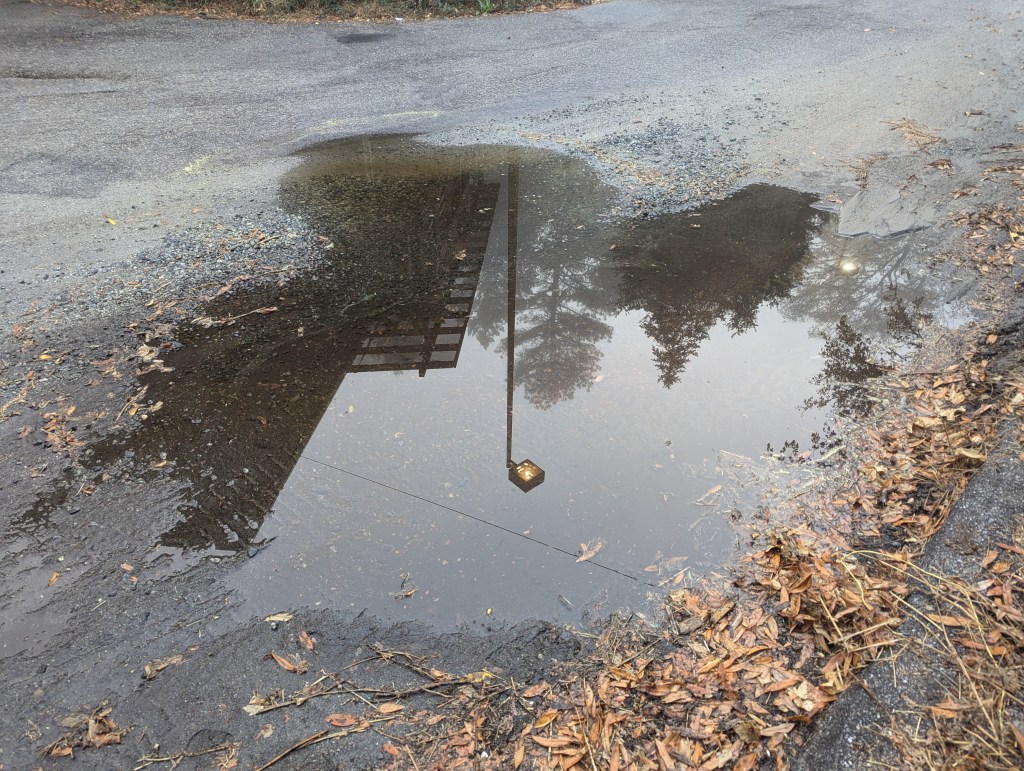
1. A ‘chance or rain’ in the weather forecast here is generally not taken too seriously until something like this happens. It is a genuine puddle. It is wet, and full of water from rain.

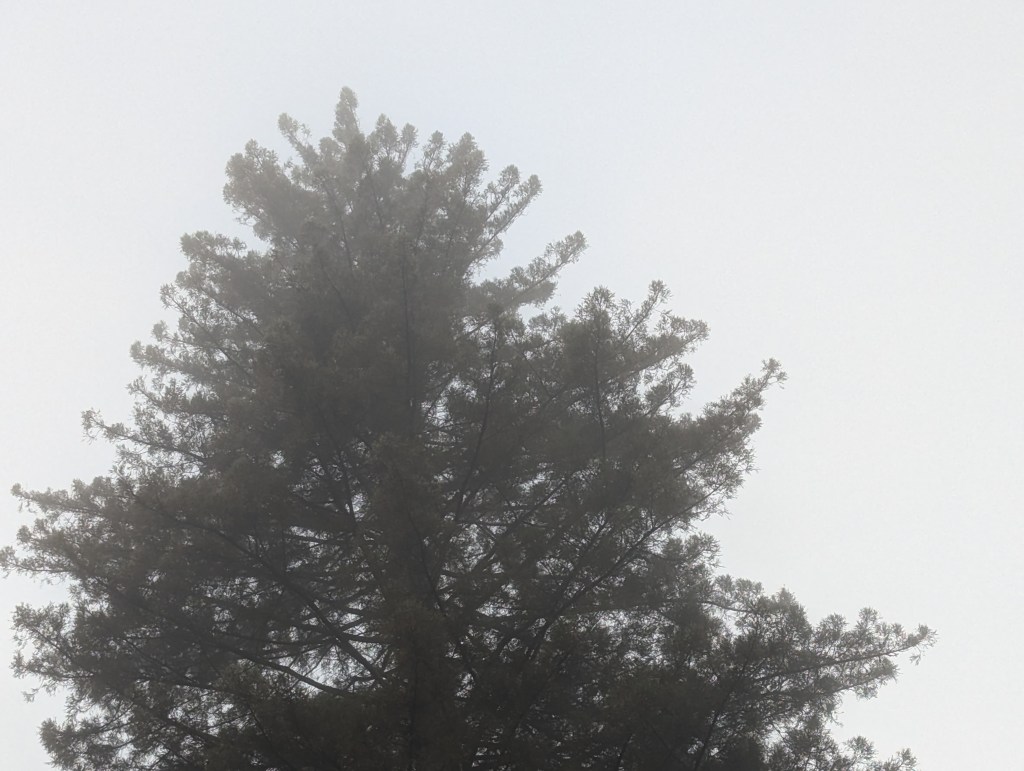
2. Sequoia sempervirens, coastal redwood seems to enjoy this damp weather. It actually enjoys all weather, but appears to be more refreshed by any interruption of arid warmth.

3. Lemna minor, duckweed is even weirder with this border of white foam that develops as the first rain washes away pollen and dusty crud that accumulated since the last rain.

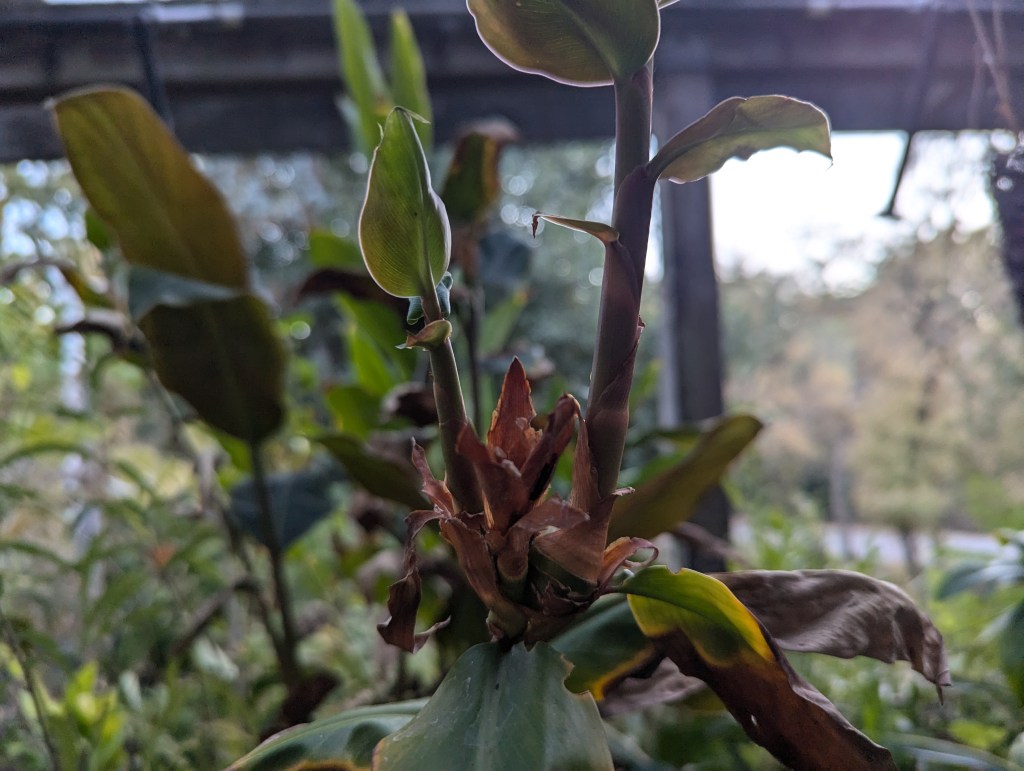
4. Hedychium coccineum X coronarium ‘Peach Delight’ ginger lily, which was blooming for last Saturday, is trying to bloom again. I already doubted its ability to follow through.

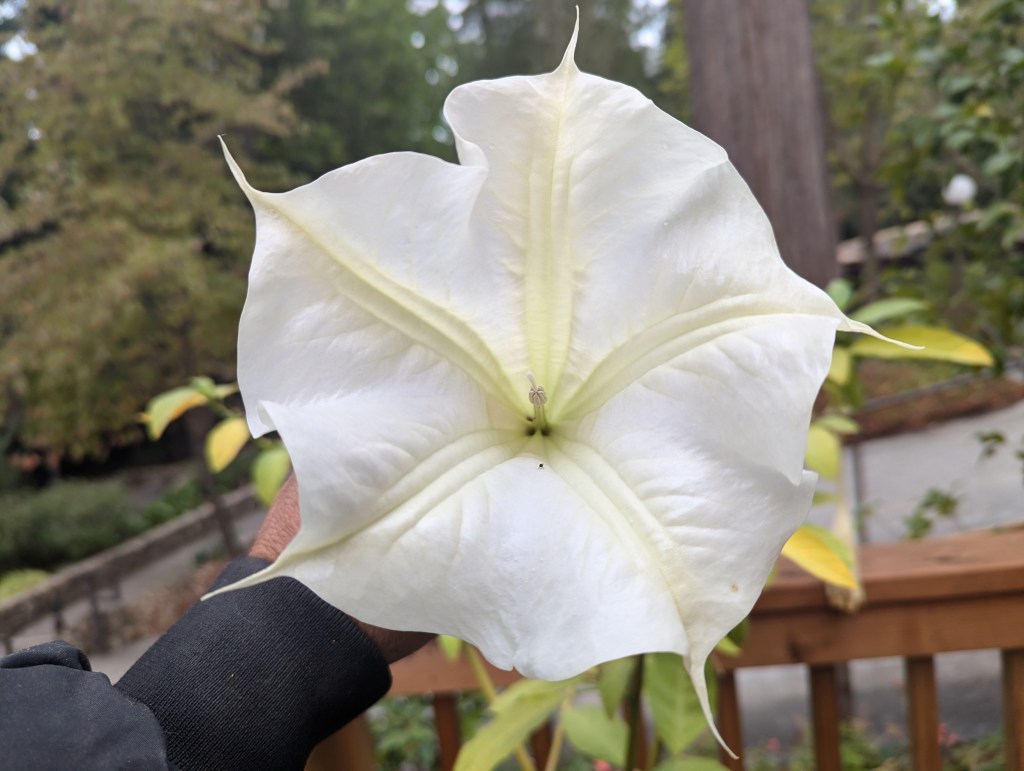
5. Brugmansia X cubensis ‘Charles Grimaldi’ angel’s trumpet looks like Carl’s Junior ate too much of its own food. I added this because of response to angel’s trumpet last week.

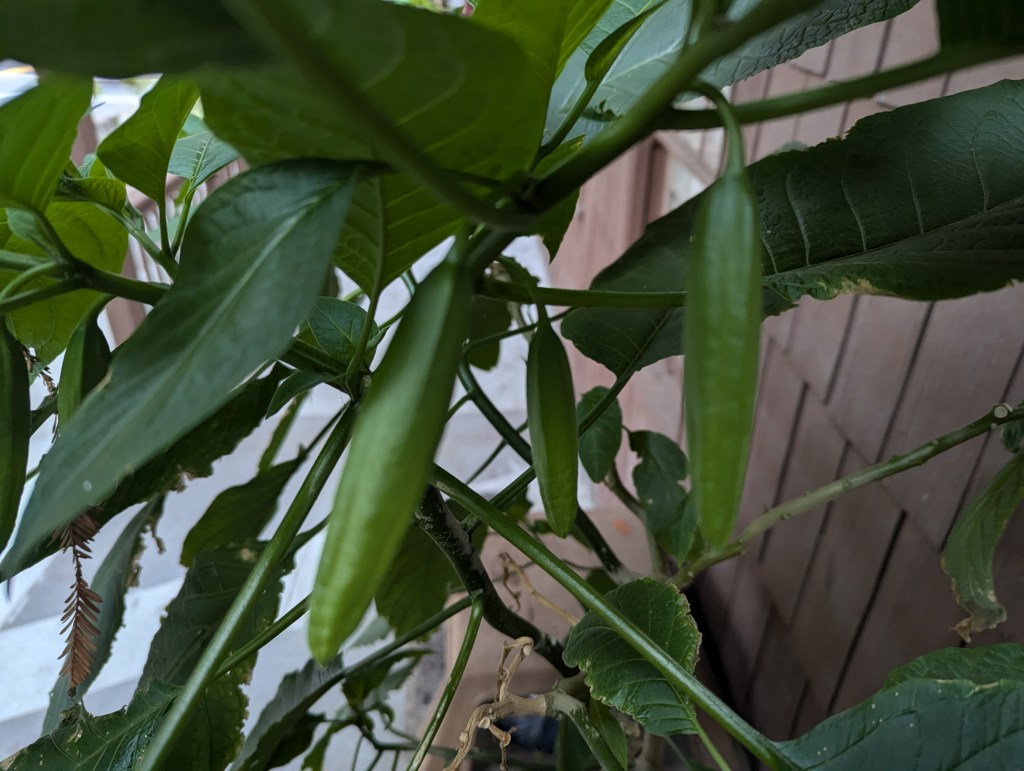
6. More interestingly, it produced this seed pod. Such hybrids should be sterile. I can not help but wonder if seed is true to type. If so, propagation by cuttings is easier than seed.

This is the link for Six on Saturday, for anyone else who would like to participate: https://thepropagatorblog.wordpress.com/2017/09/18/six-on-saturday-a-participant-guide/
Horridculture – Rocky XXIV . . . or XXV . . . or XXVI . . . Oh, I can not count them all.

another sequel

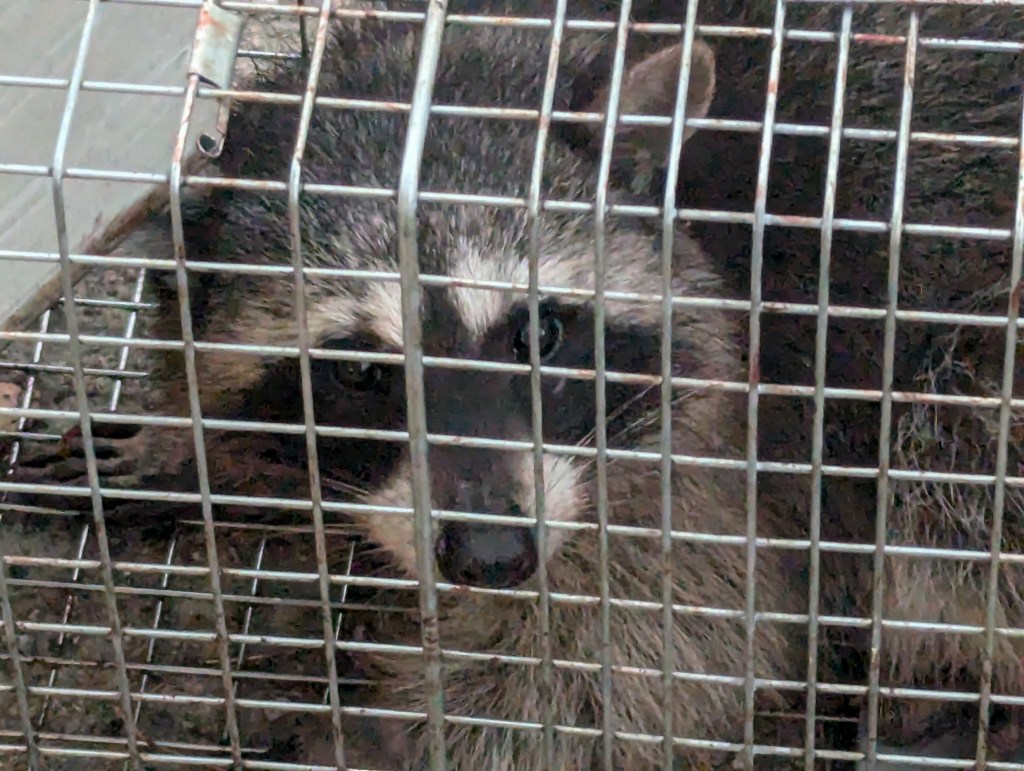
Winters are not very cold here. Otherwise, I might have assembled a fur coat. Instead, relocation of furs has been more practical than utilization. Besides, without exception, all were already in use when I encountered them. Actually, they were not relocated merely because I had no practical use for them, but, more importantly, because relocation was significantly less inconvenient to those who were wearing them at the time. Of course, it was not totally convenient either. That was sort of the objective. The inconvenience of relocation is a deterrent to those who wear the furs, who identify as racoons. They are unwelcome here. I realize that they eat mollusks and rodents; but neither mollusks nor rodents are problems here. I do not grow much vegetation that mollusks find to be appealing. Heather the kitty who identifies as a feline person is too proficient at deterrence of rodents to have use for any assistance. Actually, Heather is one of the two primary reasons that it is necessary to relocate raccoons. Rhody is the other. Unfortunately, raccoons have potential to become impolite or even dangerously hostile with my canine and feline housemates. Relocation does not permanently eliminate them, but it annoys them enough that, by the time they return, they are much more careful about avoiding us and our space. Also, their impressionable associates seem to learn from their examples. Because they can not be relocated off of the property, they go less than a mile away. So far, that seems to be sufficient. I do not know how long it takes for them to return, but I suspect that it takes quite a while. After this most recent relocation, I do not expect another relocation to become necessary until members of the most recent generation mature enough to become a problem.

Six on Saturday: Firsts & Lasts

Angel’s trumpet should be finishing bloom by now. Instead, and even while their foliage is fading with cooler weather, their bloom continues. Only the unidentified cultivar with single pink flowers currently lacks open flowers, but even it is budded for potential later bloom. (I neglected to get a picture of a flower of ‘Charles Grimaldi’ angel’s trumpet only because two pictures of angel’s trumpet is sufficient.) While angel’s trumpet is finishing, Algerian iris and ‘Peach Delight’ ginger lily are blooming for their first time here and red butterfly ginger is generating bulbils for its first time here. I was not aware that this sort of ginger generates bulbils. Otherwise, I could have allowed the other gingers do so also.

1. Hedychium greenii, red butterfly ginger is making bulbils! I did not know that it knew how to do so. I am now glad that I refrained from pruning the bloomed canes out earlier.

2. Hedychium coccineum X cornonarium ‘Peach Delight’ ginger lily started to bloom so late that I did not expect for it to actually show this much color and confirm its identity.

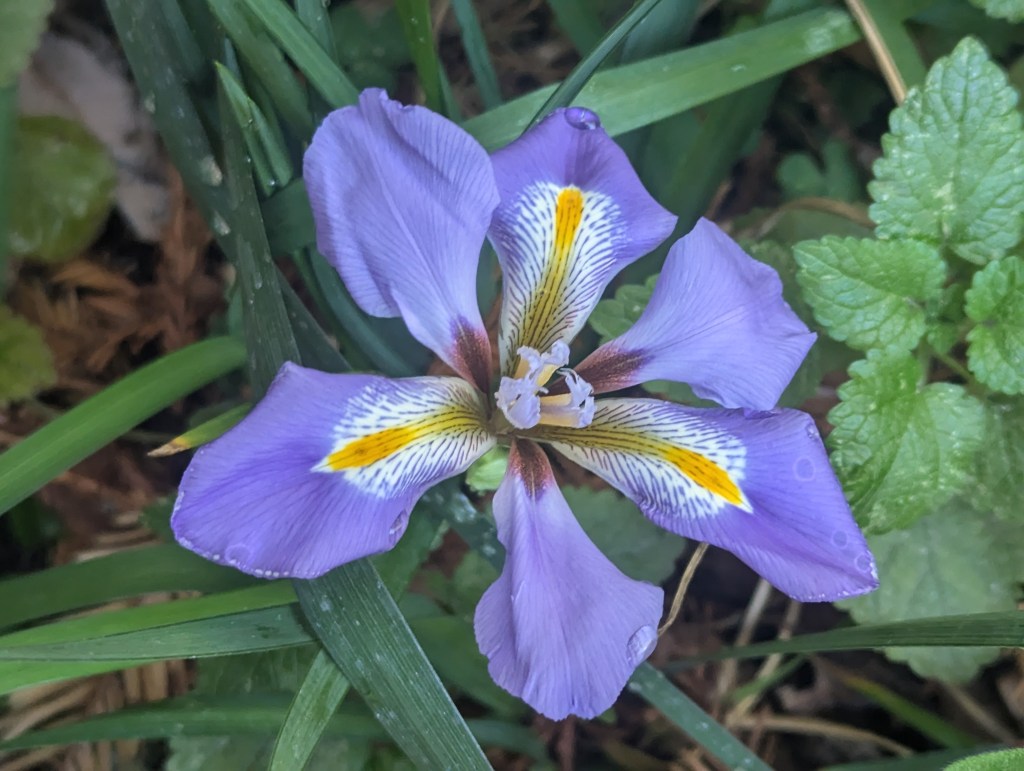
3. Iris unguicularis, Algerian iris is also blooming for the first time here, since its arrival from Tangly Cottage Gardening. It should bloom more for winter. Is it blue or purplish?

4. Brugmansia, angel’s trumpet of an unidentified cultivar, species or perhaps hybrid, is trying to bloom with its last big single pink flowers of the season, and it just might do so.

5. Brugmansia insignis ‘Single White’ angel’s trumpet is my favorite in regard to bloom, but not one that I recommend. It is blooming nicely though, now that its season is done.

6. Brugmansia candida ‘Double White’ angel’s trumpet also intends to bloom until it no longer can. It bloomed only sporadically since spring, but better than the ‘Single White’.

This is the link for Six on Saturday, for anyone else who would like to participate: https://thepropagatorblog.wordpress.com/2017/09/18/six-on-saturday-a-participant-guide/

Horridculture – Pave Paradise

pavement within pavement within pavement

The Santa Clara Valley really is, as it was formerly known, the Valley of Heart’s Delight. A long time ago, it was famous for vast orchards that thrived in its exemplary climate and soil. The climate is still here, but so are nearly two million people who now live where orchards formerly were. Not so much of the formerly productive soil remains exposed, and almost none is appreciated for its potential. Urban development continues to expand to occupy more of it. At a strip mall in the Berryessa District of San Jose, I noticed what appeared to be gravesites of small patches of once exposed soil that died slow deaths after all other soil around them was developed. The concrete pavement outside of and below the yellow curbs was likely the original parking area, walkway and paved patio, which were separated from each other by what was likely small landscaped patches of exposed soil within and at the same level as the yellow curbs. Sometime after the area outside of the curbs were paved, most of what was likely exposed soil within was also paved with exposed aggregate concrete, leaving only what was likely three smaller square patches of exposed soil, perhaps for trees to survive in. Eventually, even these three smaller square patches of exposed soil were also paved with simpler concrete. It is impossible to say why all this concrete pavement was necessary, or why exposed soil was so objectionable. Perhaps the dirt was dirty. Perhaps it was infested with weeds. Perhaps all this concrete is some sort of Brutalistic art. Regardless, the good soil below is now useless. The patio now lacks shade from trees. A little bit more of the Santa Clara Valley can not sustain any vegetation. A little bit more of Paradise is paved.

Brutalism?

Six on Saturday: Red Flag Warning

A Red Flag Warning that began Thursday night continues at least until five this evening. Arid wind severely increases the risk of wildfire during this time. The strong wind can be hazardous, even without fire. Big trees become big problems.

1. Wind developed soon after sunrise yesterday. I tried to get a picture of foliar debris as it fell from the forest canopy, but took only this. Sequoia sempervirens, coastal redwood makes the background, with Quercus agrifolia, coast live oak in the lower left quadrant.

2. Turkeys should hide from such wind. This one was alone and in a hurry, likely to find a sheltered situation with others, and just as likely, after shredding the red berries of the firethorn, Pyracantha coccinea. I saw no others as the wind continued through the day.

3. Sequoia sempervirens, coastal redwood is remarkably stable but structurally deficient where exposed to wind, which is why it grows in dense and mutually sheltering colonies. These big fractured limbs are very heavy, and fell with deadly velocity from very high up.

4. Umbellularia californica, California bay is often destabilized by structural deficiency. In other words, although its trunks and limbs are generally not structurally deficient, rot often compromises the structural integrity of the roots, which then become destabilized.

5. Two California bay trunks that destabilized and blocked the road in the picture above are obscured on the ground by their own foliage here. The fractured trunk that is visible was not structurally deficient, but was pulled down by the other two as they destabilized.

6. Hedychium coccineum X coronarium ‘Peach Delight’ ginger is likely too late to finish blooming. I would like to see it bloom to confirm its identity, but may need to wait until next year. Although irrelevant to the wind, I thought I should feature at least one bloom.

This is the link for Six on Saturday, for anyone else who would like to participate: https://thepropagatorblog.wordpress.com/2017/09/18/six-on-saturday-a-participant-guide/