Horridculture – Hackers (again)

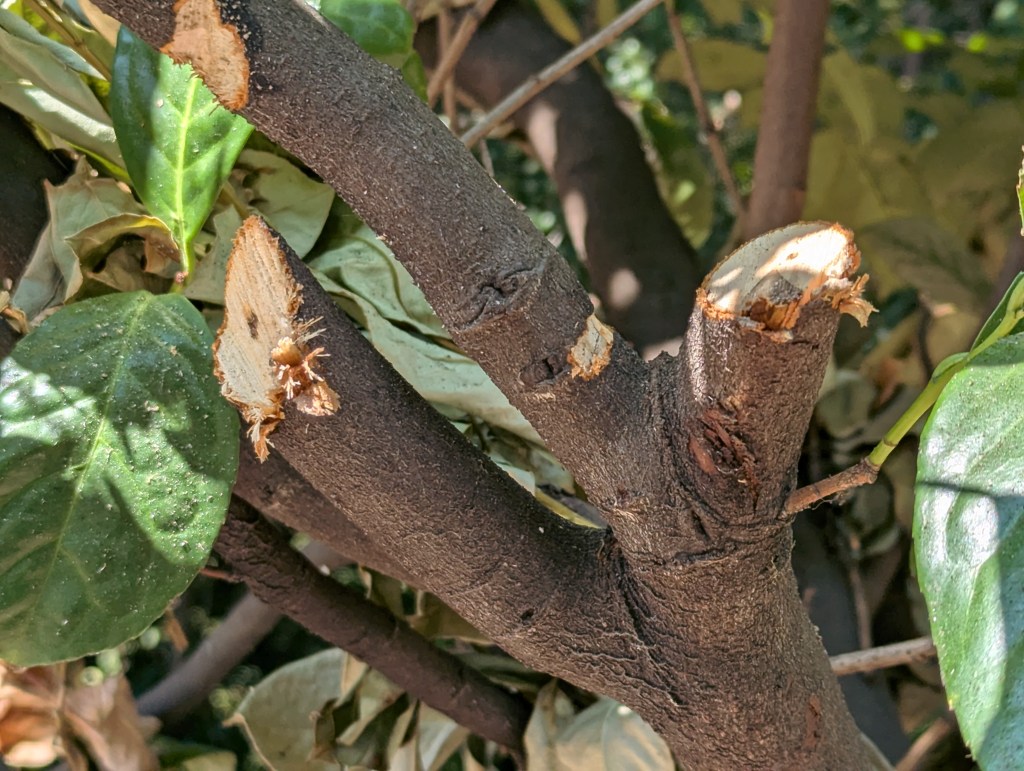
Is it really too much work to not leave such stubs while destroying a hedge?!

It has been quite a while since I posted anything that qualifies for the theme of ‘Horridculture’. Such topics are not only unpleasant, but have become redundant and passe. They are annoyingly frequent reminders of how several of the horticultural industries attract too many of those who either lack practical experience or simply do not care about their work. I can not even remember how many times I wrote about hackers, which is why I did not assign a number to this title. I can see that I addressed this issue as recently as February. Nonetheless, because this particular incident involves a Prunus laurocerasus, cherry laurel hedge that we have been renovating for a few years, it is difficult to ignore. The formerly severely overgrown hedge had been responding somewhat slowly but otherwise adequately to its renovation, all behind a reasonably presentable facade. Actually, until recently, the facade had become tidier and denser than it had ever been before. Then, a tree service was hired to clear some adjacent unmanaged vegetation. The objective was to remove vegetation from an area that is to be paved for dumpsters. There was no concern for the quality of the work, since remnants of such vegetation can be managed or removed later. The problem is that those who performed the task also removed a significant portion of the facade of the hedge beyond the area from which unmanaged vegetation needed to be removed. What is worse is that it was done so horridly. I do not remember seeing any proper cuts. All involved stems were stubbed and gashed. I can only guess that whoever did this expected the hedge to be removed later. I can not be certain of that, since complete removal within one process would have been less work than such thorough disfigurement. I mean that someone put a great deal of effort into disfiguring the hedge this severely. Fortunately, the hedge will eventually recover. I removed the stubs and neatened what remains, and will try not to look at it for the next several months. The tree service that did this actually removes unwanted trees for us efficiently and safely. Their arborists are quite experienced and qualified for what they do. I just do not want them to do anything else.

Someone put a great deal of effort into this degree of damage.
Six on Saturday: Off Color

Perennial pea, lily of the Nile and dahlia displayed aberration of color earlier and started a trend.

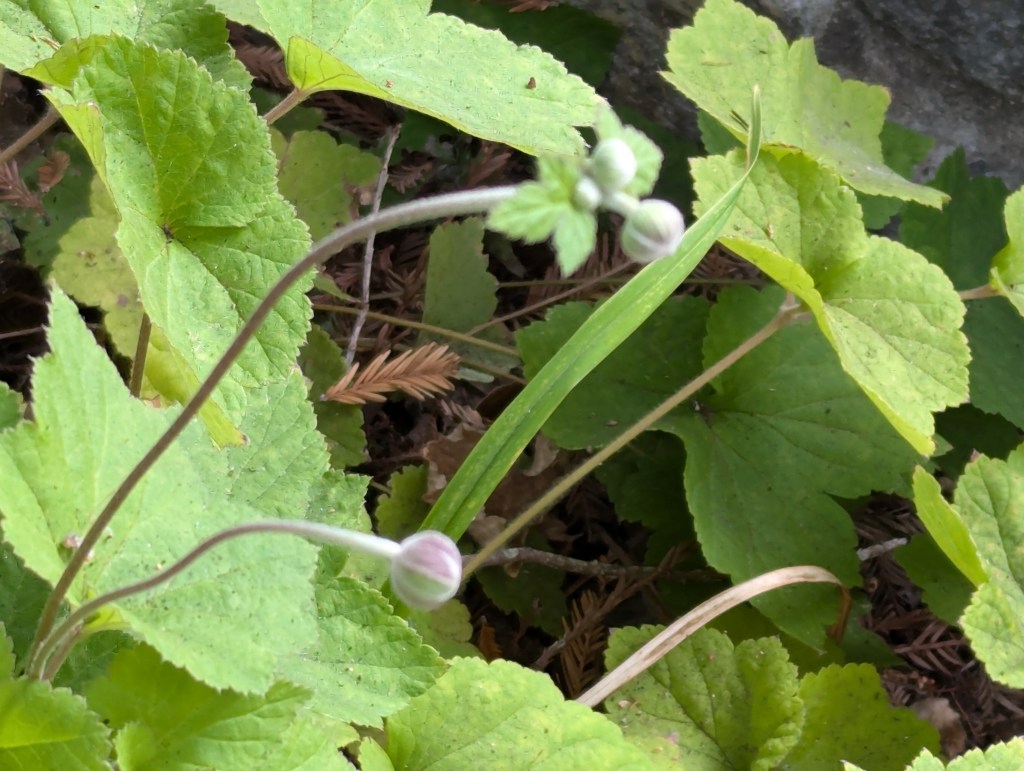
1. Eriocapitella hupehensis, Japanese anemone is enviable in other gardens. I neglect to remember that a minor bit of it survives in one of our landscapes. I ignore it because it is such a grungy almost grayish white without enough blush to be pink. I should see how it blooms now and then relocate it to a better situation where it might develop better color.

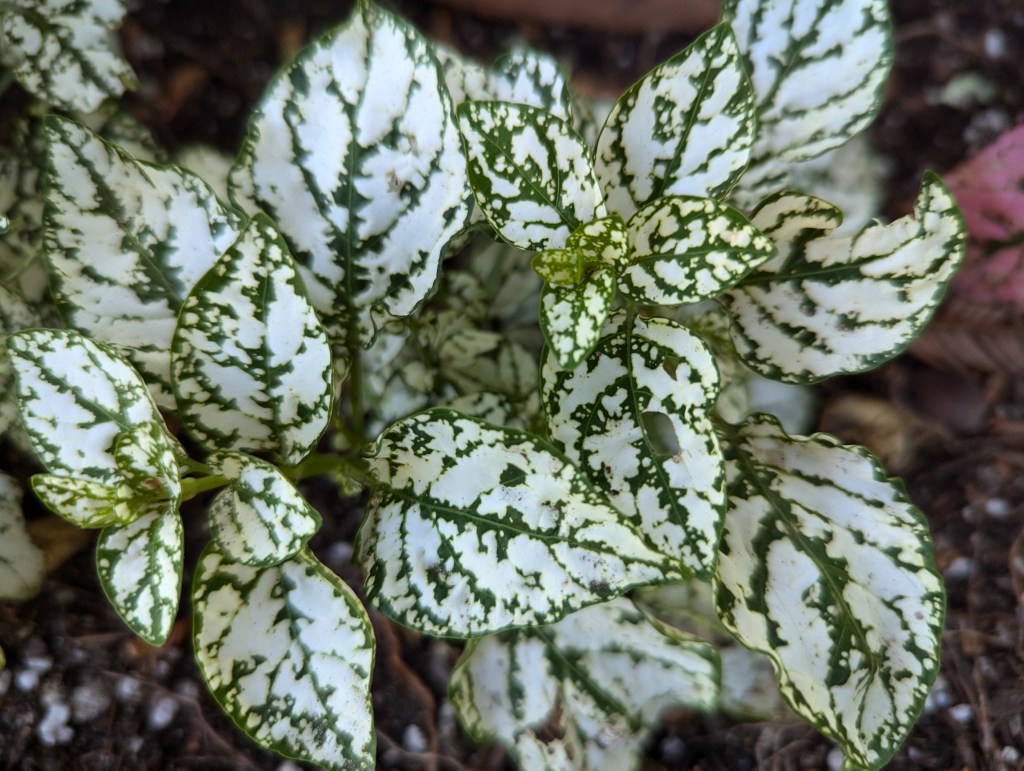
2. Hypoestes phyllostachya, polka dot plant is typically spotty with either white or pink. Two of seventy-two cell pack plugs exhibited this darker pinkish red. I got copies of it to perhaps grow as houseplants, at least until they will be happy in the garden next spring.

3. Chrysanthemum X morifolium, florist’s chrysanthemum seems to change color like a dahlia that I got a picture of last week. I thought that it bloomed orange last year, which was a surprise after it bloomed rusty red two years ago. I must not remember accurately.

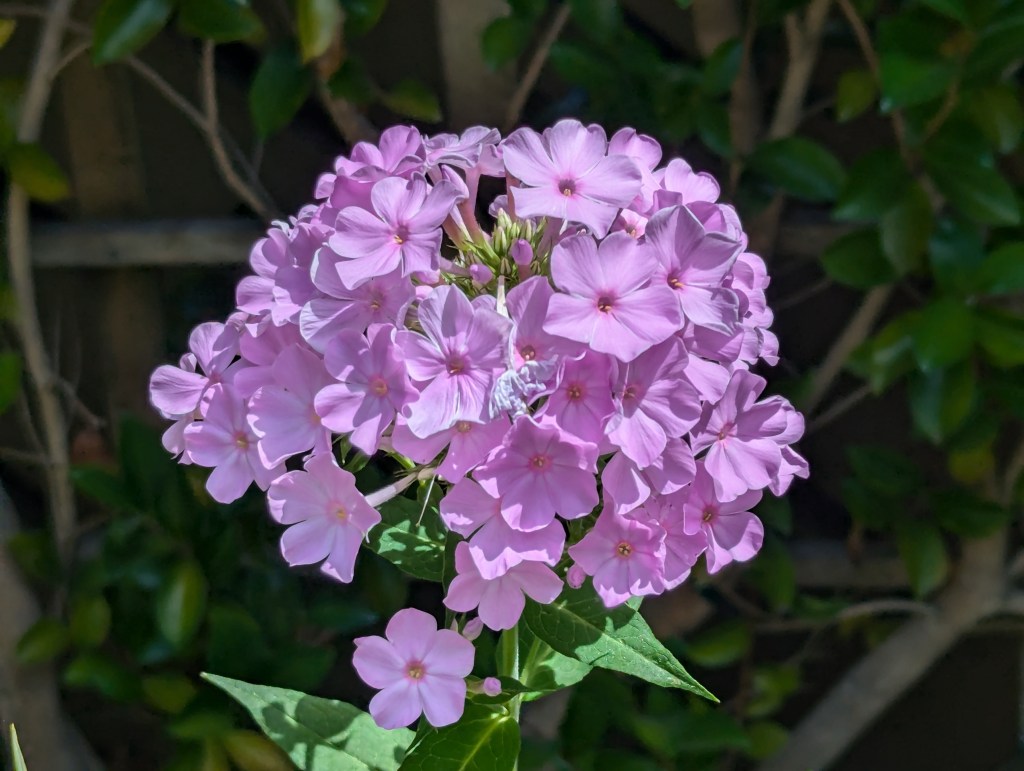
4. Phlox paniculata, garden phlox has bloomed exclusively white since it arrived here by unknown means a few years ago. Although I have been very pleased with its white color, and white happens to be my favorite color, I am also pleased with this new pink variant.

5. Amaryllis belladonna, naked lady did the opposite. It had always bloomed exclusively bright pink. Then, I found and isolated a few bulbs of a white blooming variant last year. An associate found two more in the same location this year. I like it much more in white!

6. Rhody is canine so lacks perception of red, which is the basis of these off colors. Most have more than they should, and one has none. Rhody sees them only as shades of gray.

This is the link for Six on Saturday, for anyone else who would like to participate: https://thepropagatorblog.wordpress.com/2017/09/18/six-on-saturday-a-participant-guide/

Six on Saturday: More About This Later

Brevity is not always easy with Six on Saturday. I might elaborate on some of these later. There is no common theme. These are merely six random pictures from last week.

1. Sambucus nigra ‘Black Lace’ European black elderberry got ‘Madonna’ as a pollinator only this year. ‘Madonna’ will not bloom until next year. ‘Black Lace’ makes a few berries anyway. I hope that they are prettier when more abundant. I can elaborate about it later.

2. Amaryllis belladonna, naked lady is demonstrating is preference for sunny exposure. This row of bulbs extends from left to right across this picture, but blooms only half way, with no transition to where bulbs are too shaded to bloom. I can elaborate about it later.

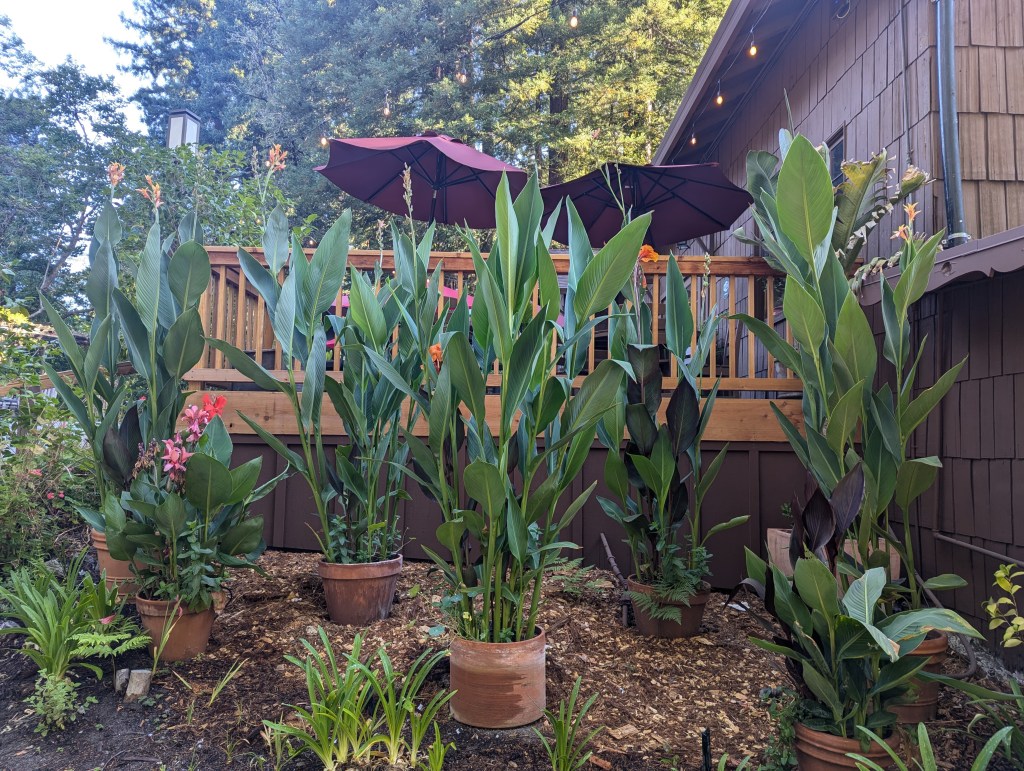
3. Canna musifolia, canna, which has been very fun to grow, was a gift from a neighbor, but not practical for our landscapes. These, with a few fancier cultivars, were potted here temporarily until a new landscape develops this autumn. They earn many compliments.

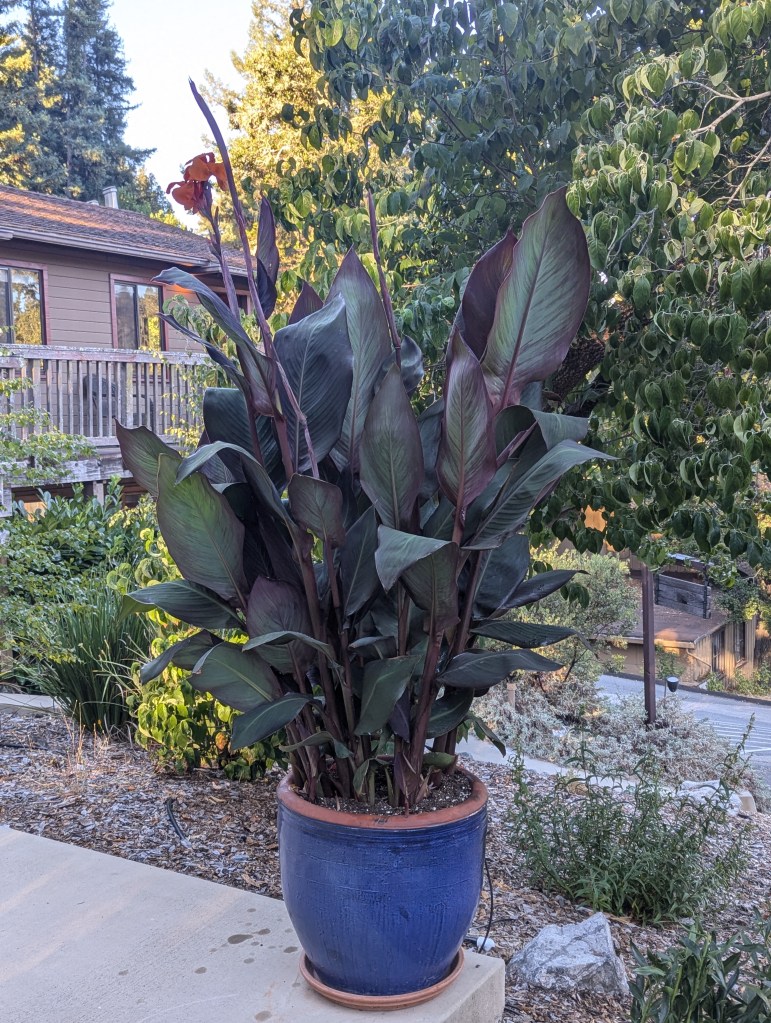
4. Canna X generalis ‘Inferno’ canna arrived with Canna musifolia. I think that it looks like ‘Wyoming’. Without a plan, we put this specimen into this ugly cobalt blue pot from a very dead Ficus benjamina houseplant that someone left for us, and now it looks RAD!

5. Hymenocallis festalis, Peruvian daffodil had been in the nursery for too long when we finally put all ten into three landscapes shortly before bloom. It is supposedly as reliably perennial as some of the more reliable types of Crinum. If so, it should be more popular.

6. Dahlia ‘Tabasco’ dahlia was purchased as a bedding dahlia, which implied that it is as disposable as annuals. However, this is its third season. It was originally red with orange stripes. Then, it was yellow with orange blotches. Now, it is this delightfully simpler red.

This is the link for Six on Saturday, for anyone else who would like to participate: https://thepropagatorblog.wordpress.com/2017/09/18/six-on-saturday-a-participant-guide/

Six on Saturday: Amiss

Heather worked ‘VERY’ late. Labels got switched on two cultivars of passion flower vine. We got another banana tree with no plan. A walnut replaced a palm. Palms did nothing. Oh my!

1. Musa acuminata ‘Popoulu’ banana ‘tree’ arrived in the mail as this tissue culture plug with a crease across it. It will recover, but its blemish is annoying. What is more amiss is that this is the twentieth cultivar of banana here, but we have plans for none of them yet.

2. Juglans nigra, black walnut was a typical understock for the English walnut orchards of the Santa Clara Valley. It is somewhat naturalized nearby, but not here. Where are all these seedlings coming from? Why did this grow in a can for Costa Rican bamboo palm?

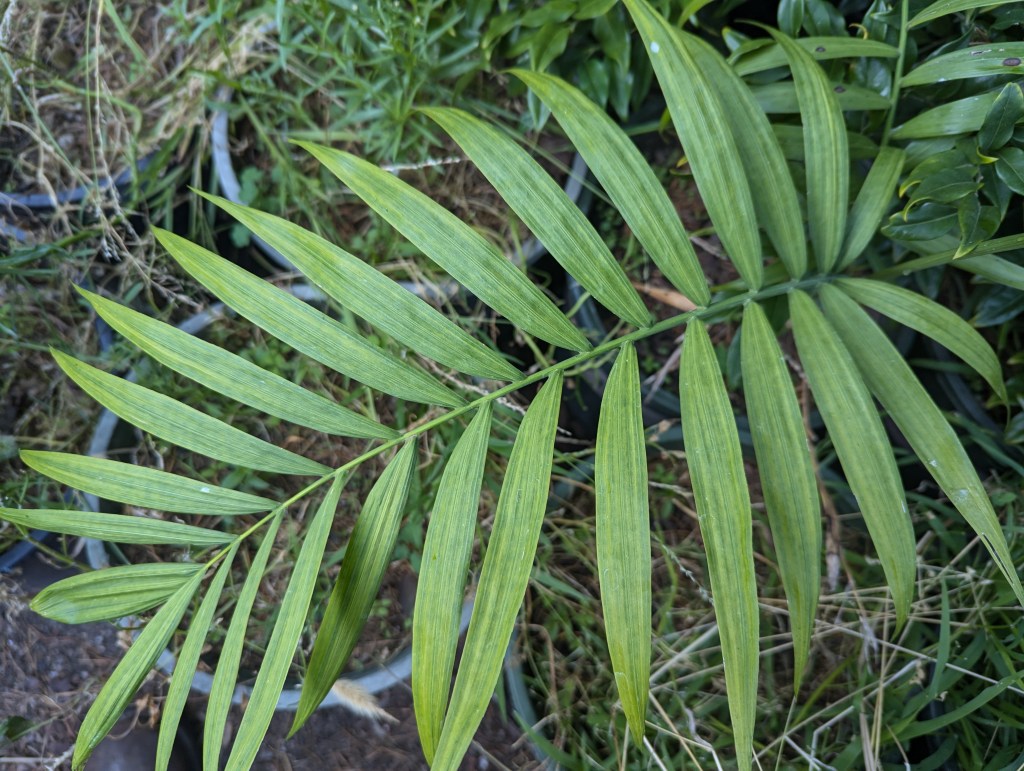
3. Chamaedorea costaricana, Costa Rican bamboo palm is what should be in the can of the black walnut seedling. I brought enough rhizomes from Brent’s garden for about ten #5 cans and about as many #1 cans, but after a year, this is the only specimen that grew.

4. Hakonechloa macra ‘Aureola’ Hakone grass had never performed particularly well. A few other small perennials were added nearby to compensate. Now, the Hakone grass is growing lushly enough to overwhelm some of the perennials that were added to assist it.

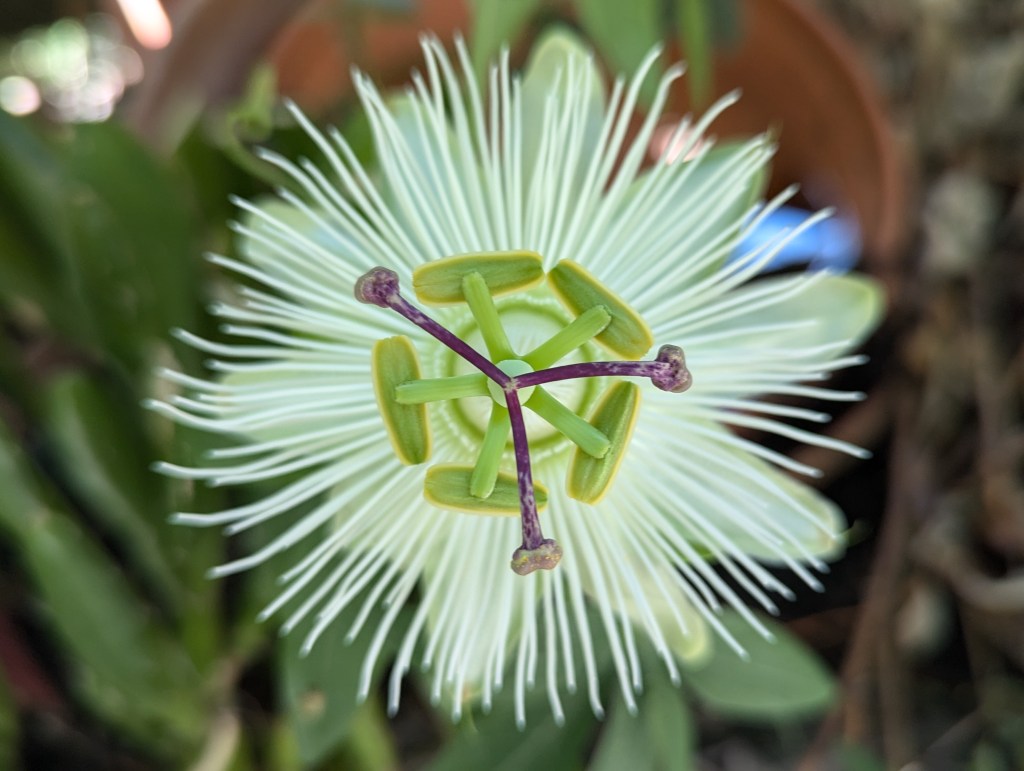
5. Passiflora caerulea ‘Constance Eliot’ passion flower vine went into a landscape after it impressed with purple bloom. Of course, it was expected to bloom white like the original that provided the cuttings. This specimen was expected to bloom purple like its original.

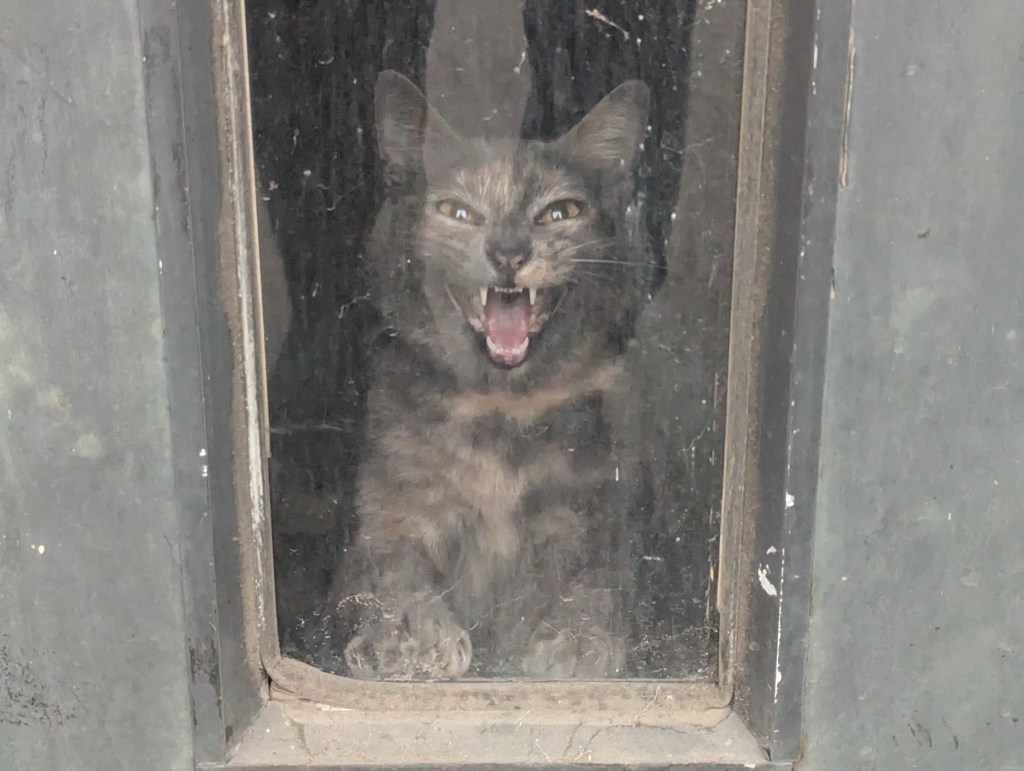
6. Heather is a very proficient mouser. Rodents had been a major annoyance prior to her arrival. They are now no bother at all. However, a rat was observed within this particular shop. Heather apparently went in to investigate, and consequently spent the night there.

This is the link for Six on Saturday, for anyone else who would like to participate: https://thepropagatorblog.wordpress.com/2017/09/18/six-on-saturday-a-participant-guide/

Six on Saturday: Firsts

The first and last may potentially suggest that this is an episode of the Red Green Show.

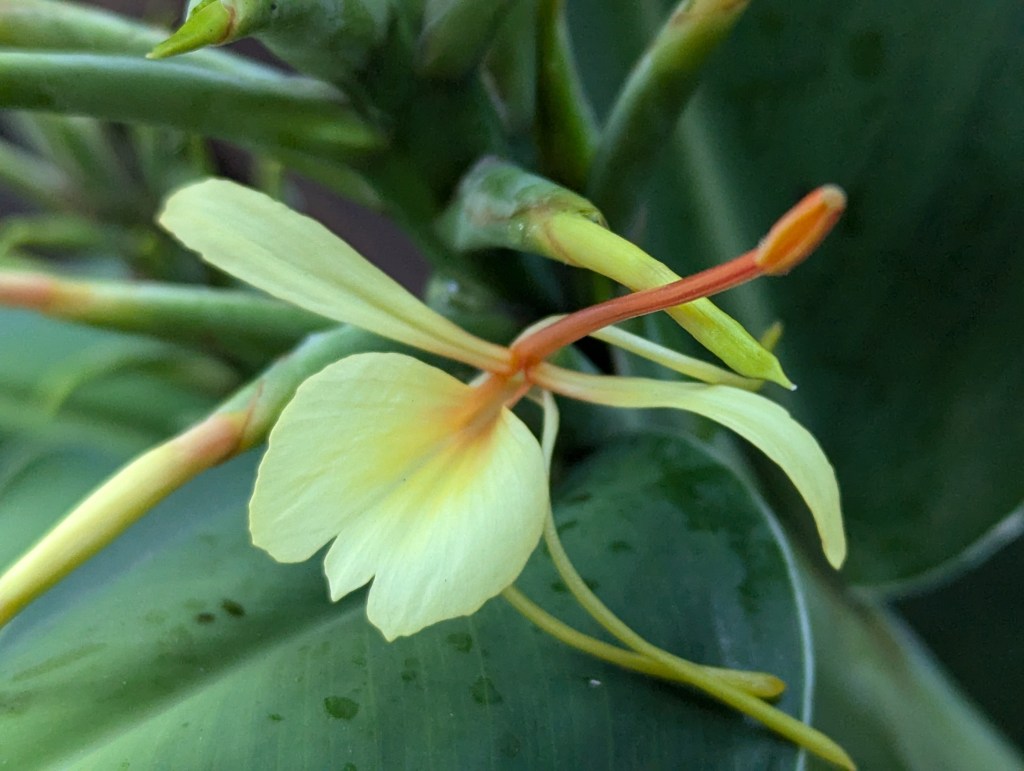
1. Hedychium greenii, red butterfly ginger, which I accidentally took from Brent Green’s garden with a bunch of crowded out Heliconia psittacorum, is now about to bloom here. I was totally unaware that it was here until Brent mentioned that it was no longer there.

2. Hedychium gardnerianum, kahili ginger bloomed during the pandemic, while no one was here to see it. Then, gophers ate it. I canned the remnants, which are blooming now. This is the first of several florets to bloom on the first tall floral spike. It smells like 1986.

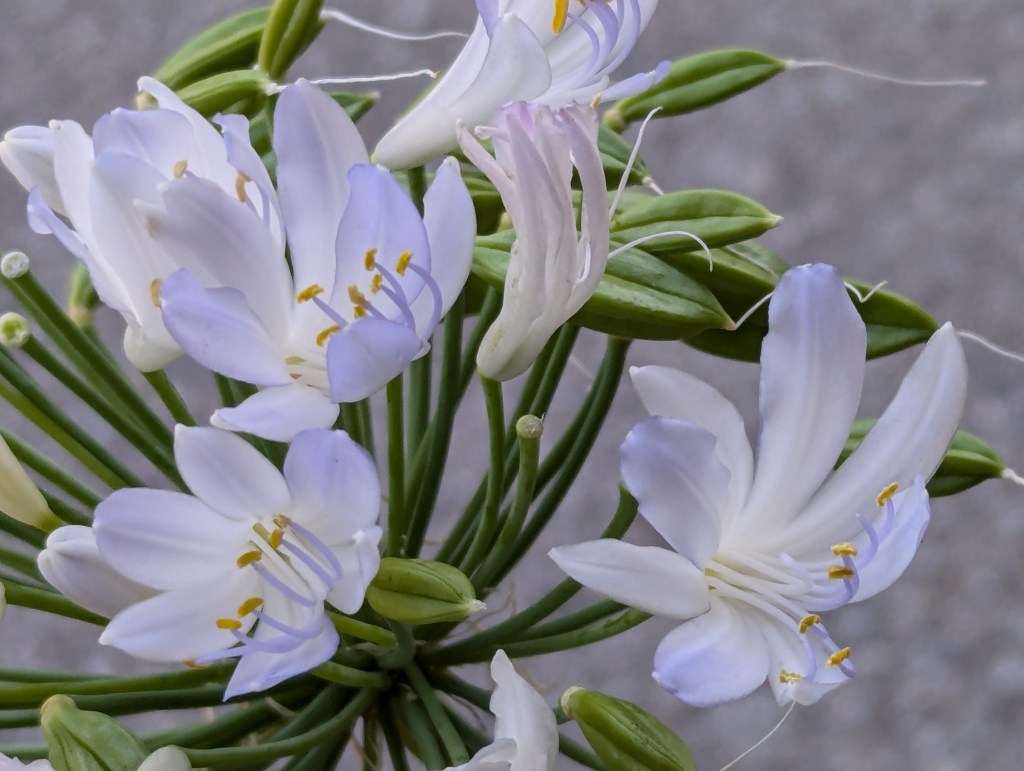
3. Agapanthus orientalis, lily of the Nile suddenly bloomed with this single white umbel within an exclusively blue colony. I removed the offending shoot as bloom began to fade, but found that it is not completely white. I canned it to observe how it blooms next year.

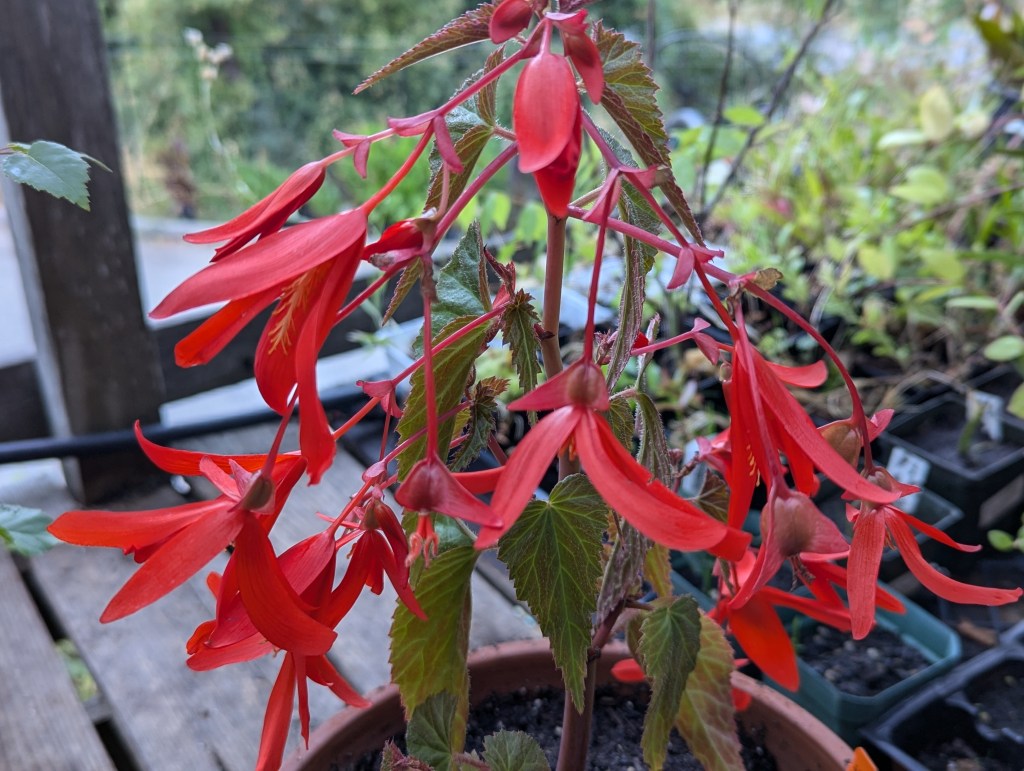
4. Begonia boliviensis ‘Santa Cruz’ begonia was not my idea. Another horticulturist here just procured it from a nursery in Santa Cruz, a few miles away. It is quite happy here in Santa Cruz County. It deserves a more appealing name, such as ‘Los Gatos’ or ‘San Jose’.

5. Canna ‘Cannova Mango’ canna was not my idea either. Brent sent it to me. I am not at all keen on modern cultivars, particularly this color. I nonetheless divided it too much to bloom well. This is its first opportunity to demonstrate how profuse its bloom should be.

6. Canna that was a gift from friends of a friend last winter is now blooming here. I have no idea what cultivar it is, and I do not care. Gifts are always better than nursery surplus from Brent’s projects. It is elegantly tall with simple red bloom and simple green foliage.

This is the link for Six on Saturday, for anyone else who would like to participate: https://thepropagatorblog.wordpress.com/2017/09/18/six-on-saturday-a-participant-guide/

Six on Saturday: Early or Late

Some of these six are early. Some are late. Some merely seem to be one or the other, but are actually right on schedule. Only the banana pup, which is the only of these six that is not blooming, was influenced intentionally.

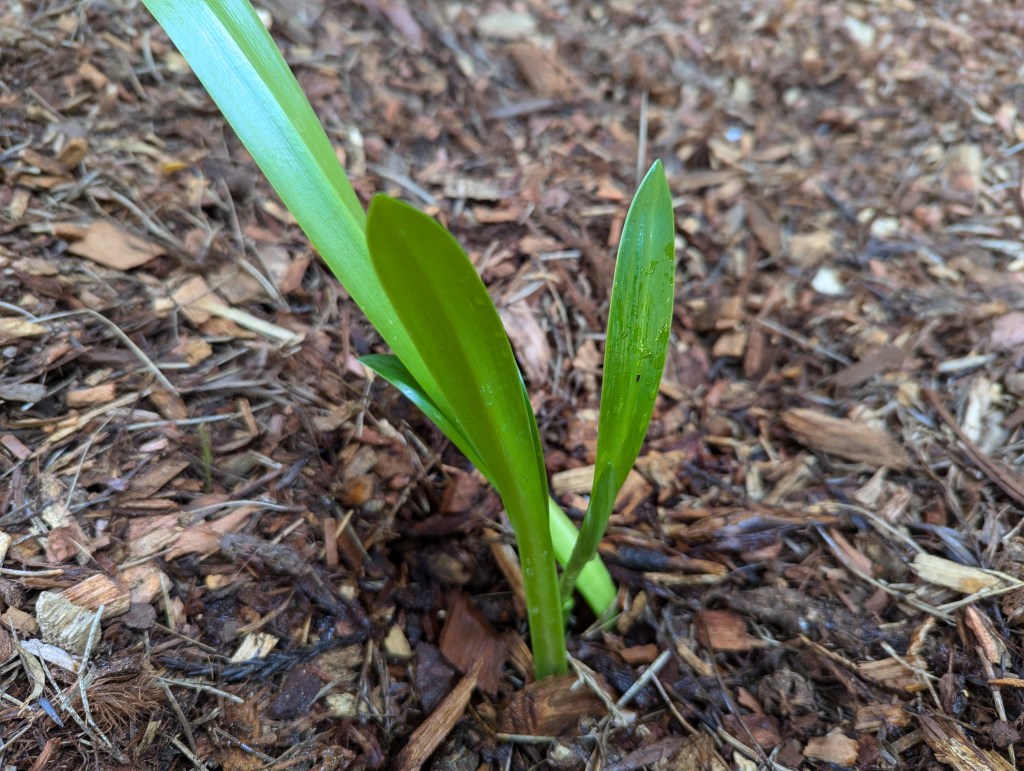
1. Hymenocallis latifolia, Peruvian daffodil is actually right on schedule. I expected it to remain dormant through summer to bloom for autumn, after naked lady. It may still do so if it foliates first. Otherwise, it should naturally bloom for summer. These are my first.

2. Musa acuminata ‘Cavendish’ banana was divided earlier and allowed to grow for two months, but then lopped and sent by mail. It must now grow new foliage before autumn. It is actually less likely to rot with this technique. I am quite pleased to have procured it.

3. Hedychium gardnerianum, kahili ginger surprised me with what initially seemed like early floral trusses. However, they have since grown so slowly that they might bloom for later summer or autumn, which is when I previously thought that they normally bloom.

4. Gladiolus hybridus, gladiola has been unexpectedly reliably perennial, and is actually slowly multiplying. A sport of an orange and yellow variety now blooms yellow. Another blooms red. This one seems to be trying to extend its bloom season by blooming so late.

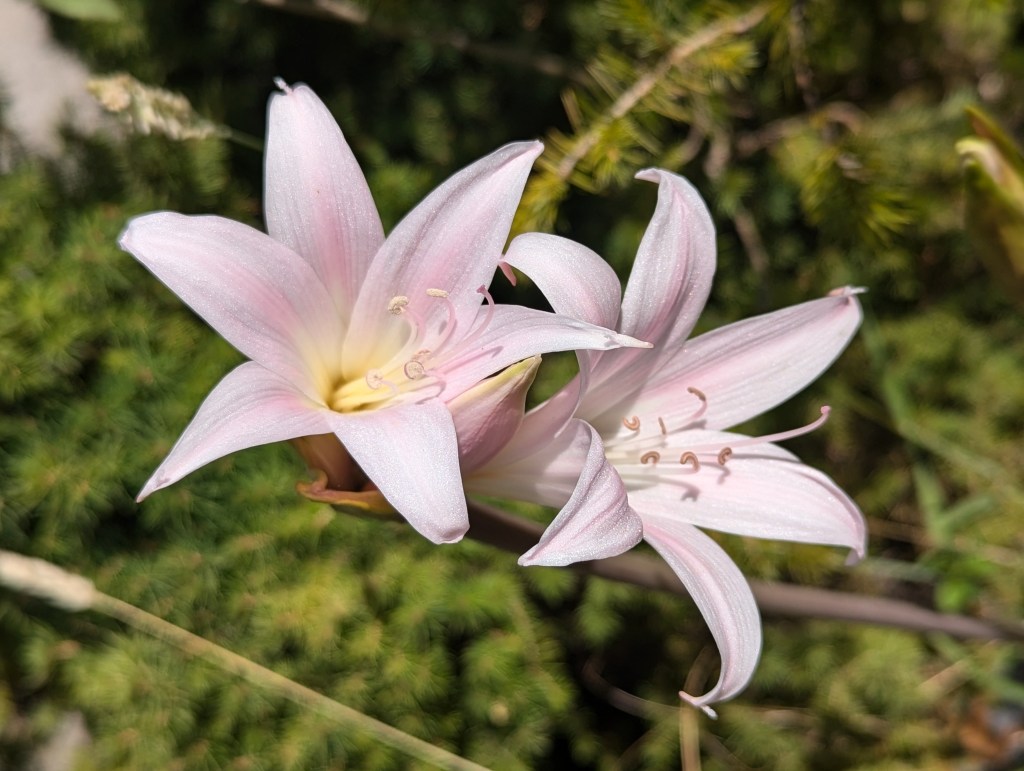
5. Amaryllis belladonna, naked lady is doing the opposite. It should not bloom for about another month. This bulb might be blooming early as a result of distress associated with crowded confinement with too many other bulbs within a big pot. It is pretty regardless.

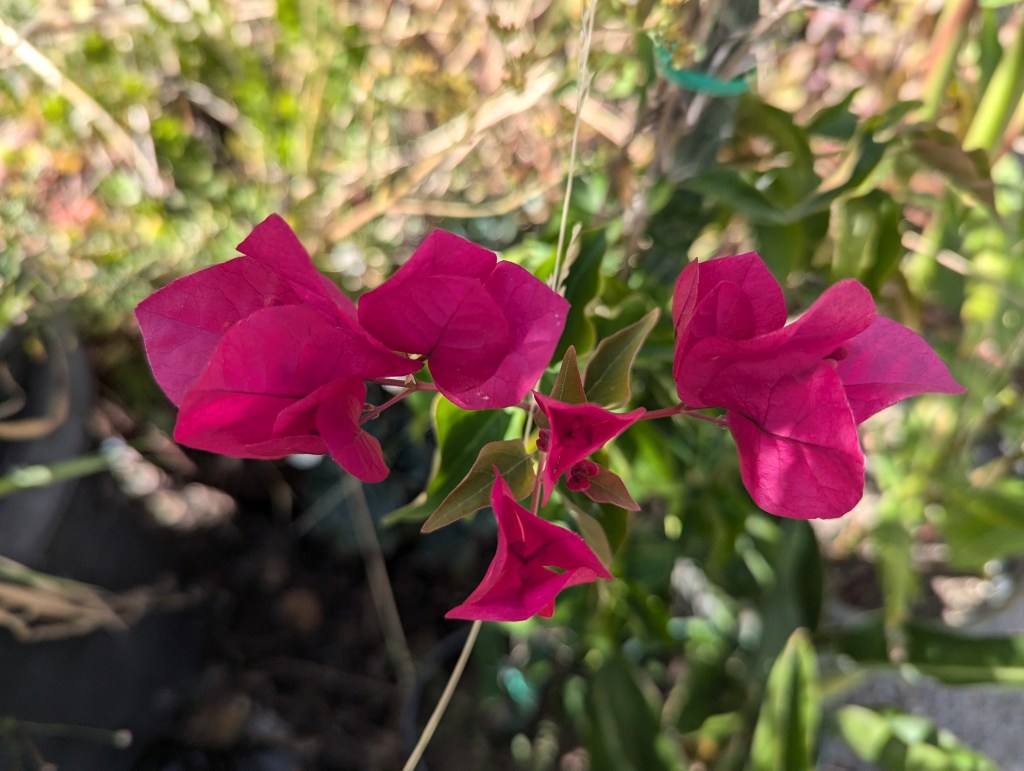
6. Bougainvillea, which lacks a common name that is actually common, could have been blooming since the weather began warming at the end of last winter. It recovered slowly from minor frost damage, though. It still seems to be rather lean, but at least it is trying.

This is the link for Six on Saturday, for anyone else who would like to participate: https://thepropagatorblog.wordpress.com/2017/09/18/six-on-saturday-a-participant-guide/

Six on Saturday: P III

P was about a white blooming perennial pea, Lathyrus latifolius, that I recently found to replace what I inadvertently lost earlier. P II was irrelevant to both that and this, but did happen to get a title that incorrectly designates it as a sequel to P, and prevents me from using that title for this Six on Saturday post with three variants of perennial pea and the more typical sort. Perhaps I should not have expended such effort for such a weed. What is worse is that I canned and am now growing copies of the three variants as well as the favored white blooming variant.

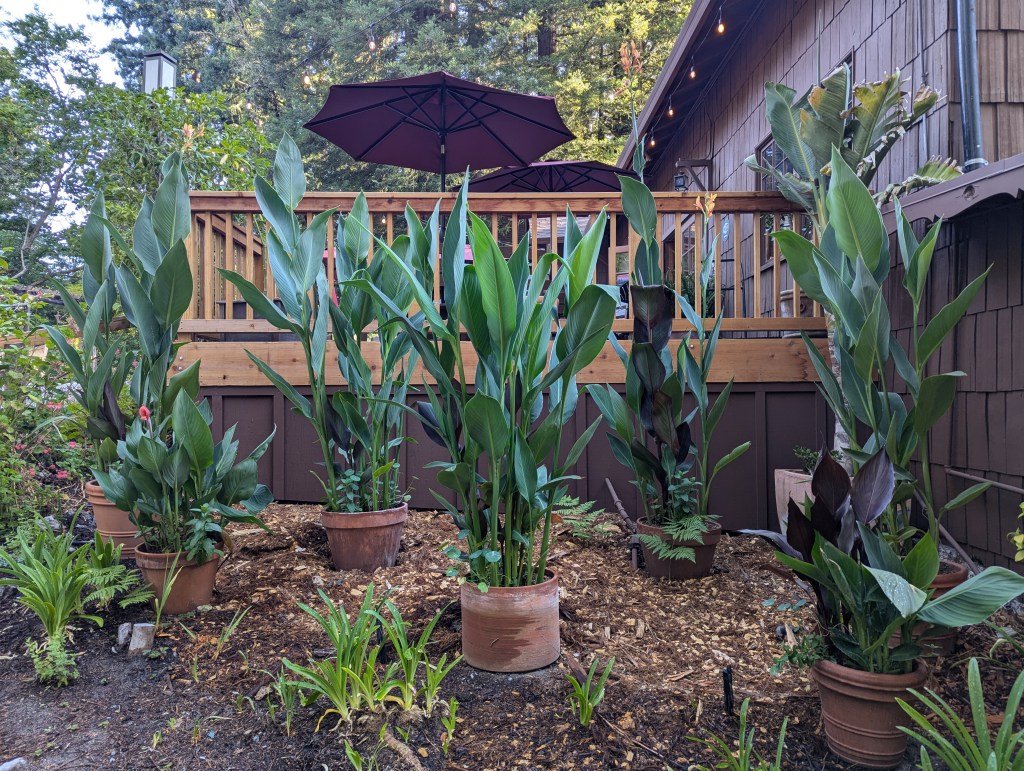
1. Canna are irrelevant to the primary topic, but are too cool to not mention. These were placed here temporarily in random pots until a new landscape gets installed next winter.

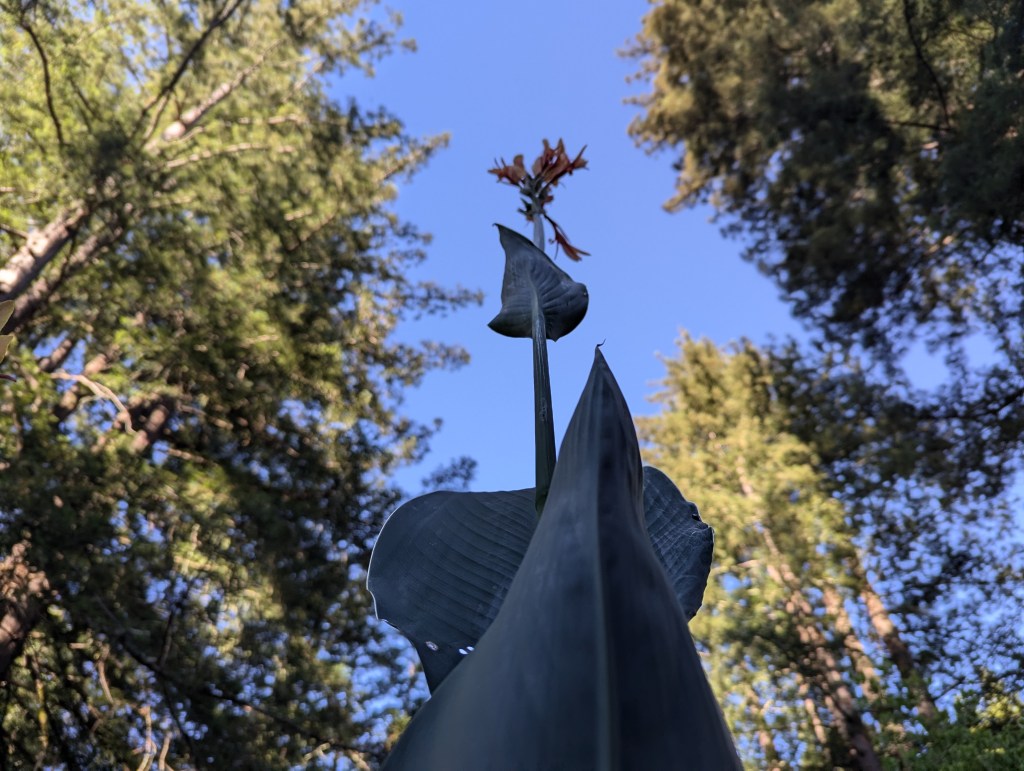
2. Canna musifolia dominates, which is why there is not much bloom. This one stands a bit more than eight feet high in its pot. It might be ‘Omega’ like the compact Oldsmobile.

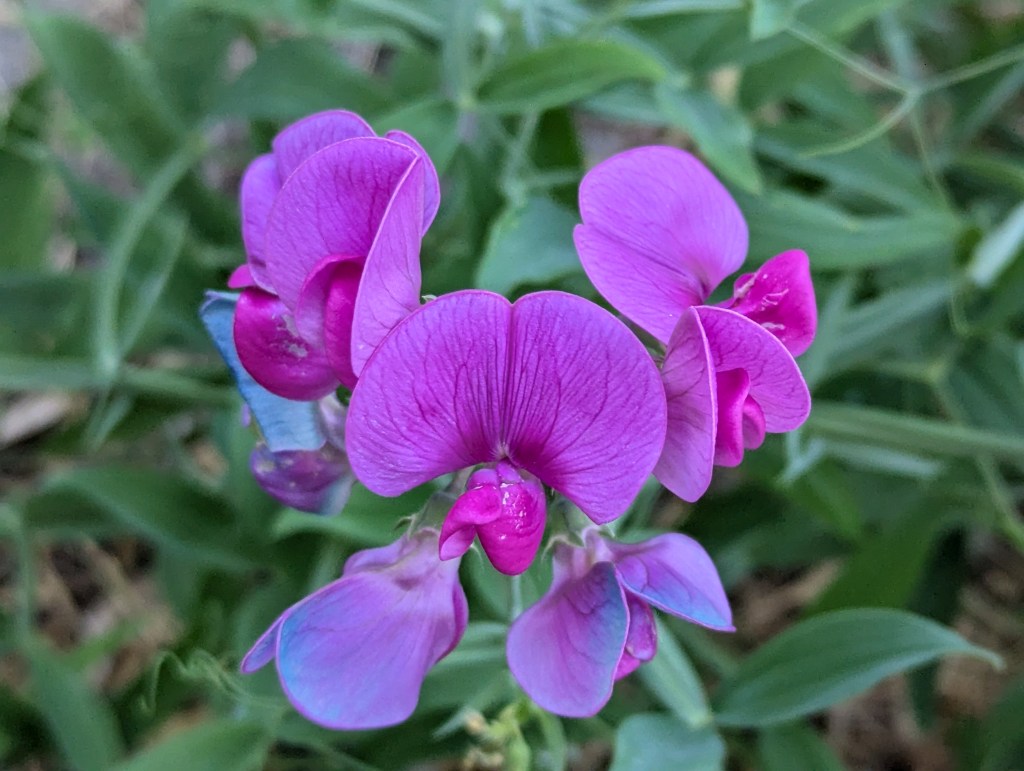
3. Lathyrus latifolius, perennial pea is the primary topic because I found three variants. This one blooms with swirled pink flowers. It is about as rare as those that bloom white.

4. This looks white in this picture but is actually blushed very slightly with pink. I should have gotten a better picture. I dug and canned a copy because I had never seen it before.

5. This is the typical floral color of the species. To me, it looks purplish pink. I am not so proficient with color. Others say it is pinkish purple. It justifies my preference for white.

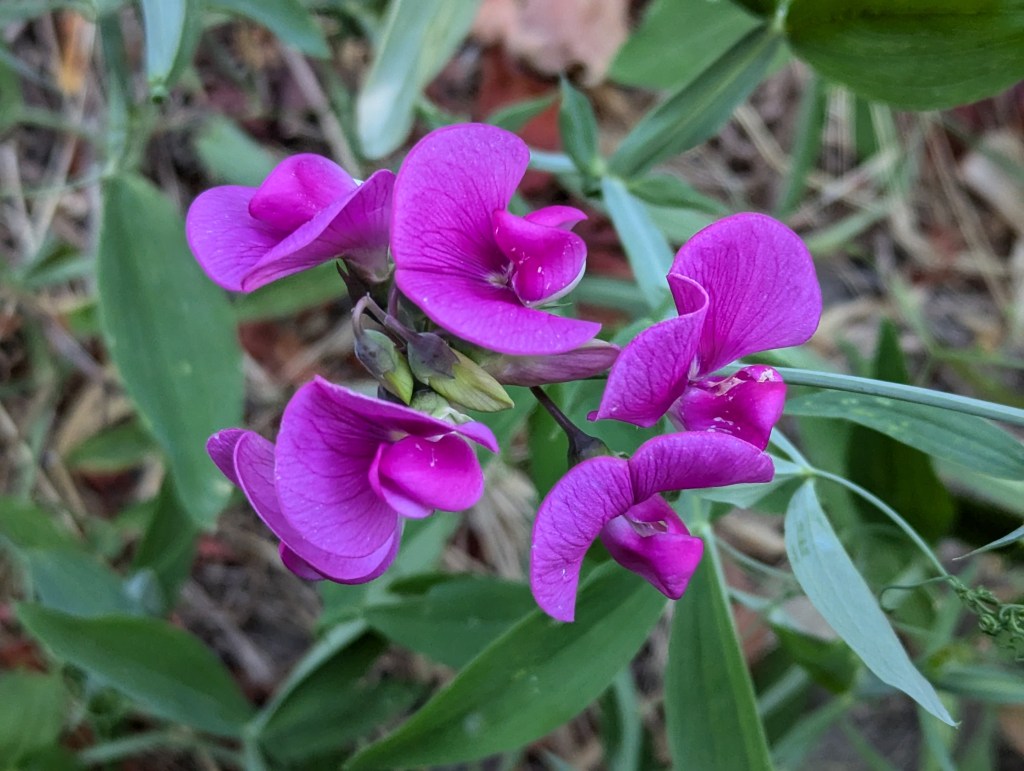
6. Like the picture of the very slightly blushed white flowers, this is not a good picture of flowers that seem to be slightly richer purple than the typical purplish pink. I got a copy.

This is the link for Six on Saturday, for anyone else who would like to participate: https://thepropagatorblog.wordpress.com/2017/09/18/six-on-saturday-a-participant-guide/

Six on Saturday: ‘Variegata’

‘Variegata’ is a common designation for the first variegated cultivar of a species. Fancier or later distinct cultivars get fancier cultivar designations. The first three of these six are variegated, but lack a cultivar designation as if variegation is normal for the species. The fourth seems to have a few cultivars with the same designation. The last two could be the only variegated cultivars of their respective species. I can not remember ever seeing any of the first four without variegation. The fifth is still rare. The sixth is now more popular than unvariegated.

1. Hypoestes phyllostachya, polka dot plant lacks cultivar designation. This was labeled merely as white. Variation of foliar variegation indicate that they were grown from seed.

2. Hypoestes phyllostachya, polka dot plant is also pink, which is exactly how this other half of them was labeled, likewise without cultivar designation. ‘Variegata’ would suit it.

3. Hypoestes phyllostachya, polka dot plant variegation is variable. Some specimens are more green than others. At least two of the pink sort are variegated with red such as this.

4. Aucuba japonica ‘Variegata’, gold dust plant is about as variable as polka dot plant is, but is known by the same cultivar name. Of course, modern cultivars have other names.

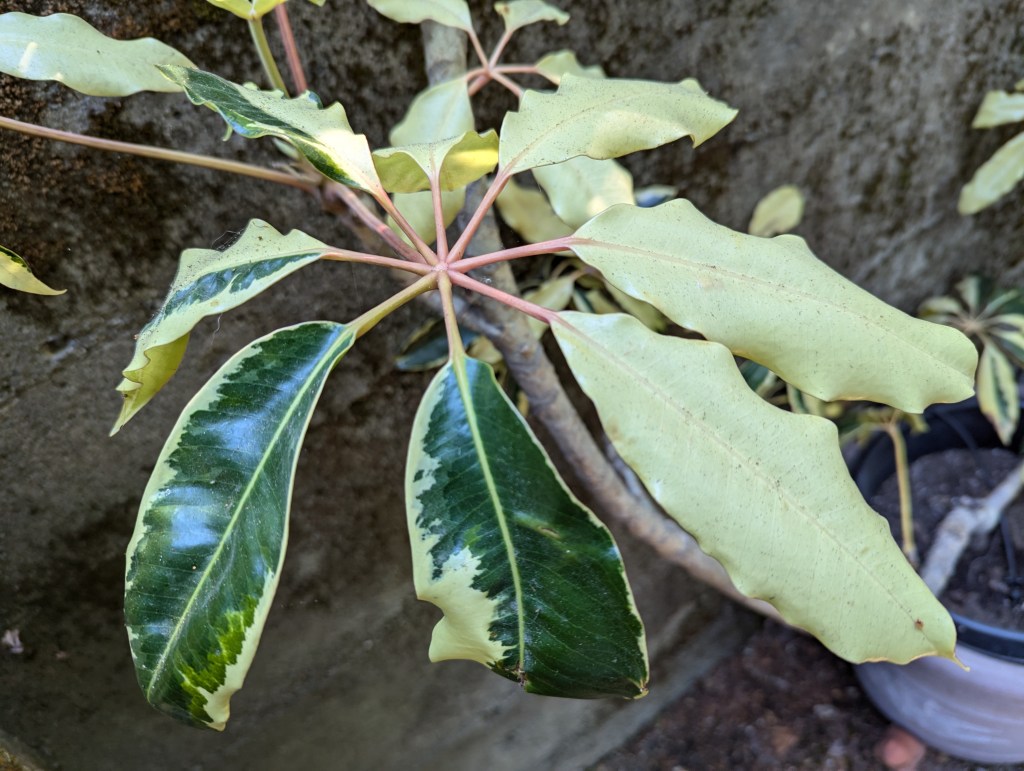
5. Tupidanthus calyptratus ‘Variegata’, mallet flower was not planned. I have wanted to grow the typical unvariegated type since I met it in 1986. Brent sent me this raggedy old but rare variegated specimen so that I would grow more for him. I am learning to like it.

6. Solandra maxima ‘Variegata’, cup of gold vine was also unplanned. I grew the typical unvariegated type to the left first. Then, Brent got me the variegated cultivar to the right. I am getting to like it because it is more docile. The unvariegated sort grows like a weed!

This is the link for Six on Saturday, for anyone else who would like to participate: https://thepropagatorblog.wordpress.com/2017/09/18/six-on-saturday-a-participant-guide/

Six on Saturday: Homey

Almost nothing is purchased for my garden. Not much more is purchased for work. Just about everything is recycled from somewhere else, along with its history. Consequently, the landscapes are as homey as my home garden is. It is often difficult to not brag about it a bit too much. It is gratifying that others can enjoy so much of what I have enjoyed in my garden. For Six on Saturday, though, I will be brief with my descriptions of these few flowers that bloomed last week. Half are angel’s trumpets. Half are white. Of course, it is no coincidence that white is my favorite color. I requested pruning scraps of single white angel’s trumpet and white orchid cactus. Even if recycling, I may be somewhat selective. It all works out well.

1. Gladiolus papilio, butterfly gladiolus that was budded last week bloomed this week. It makes its landscape feel delightfully homey for me. I should have gotten a better picture.

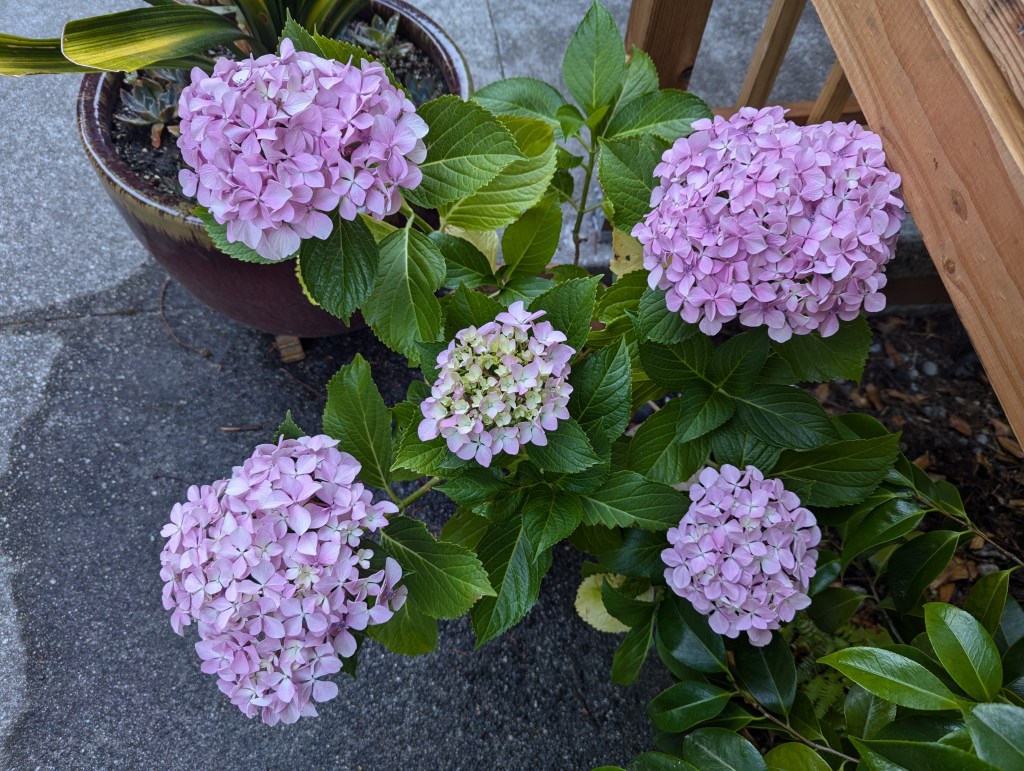
2. Hydrangea macrophylla, bigleaf hydrangea, like so much of what blooms here, came from another garden, then bloomed too well in recovery to not move out to a landscape.

3. Brugmansia, angel’s trumpet of an unidentified cultivar remains unidentified, but is a bit more obviously pink than any other color. Perhaps its cultivar name is not important.

4. Brugmansia candida, angel’s trumpet with fluffy double white flowers is what started all this fuss about angel’s trumpet. Yellow ‘Charles Grimaldi’ was the second acquisition.

5. Brugmansia, angel’s trumpet with single white flowers is an unidentified cultivar that I got merely because I like its single white flowers, but is not so great for the landscapes.

6. Epiphyllum, orchid cactus with clear white flowers remains as unidentified as most of these Six. Like all of these six, it also has important history that makes its garden homey.

This is the link for Six on Saturday, for anyone else who would like to participate: https://thepropagatorblog.wordpress.com/2017/09/18/six-on-saturday-a-participant-guide/

Six on Saturday: No Rhododendrons

Rhody’s rhodies were spectacular in bloom. This year, I refrained from posting too many pictures of them by posting none at all. I thought that I might get a few at the end of the season; but now find that the few that remain are either shabby or difficult to get a good picture of. There is plenty of other bloom though, even without exploitation of the warm season annuals. Now that daylilies are blooming, they will continue until autumn. Roses continue at least as late, but bloom in phases since most are partially shaded. All but one of these six species were recycled, although one was recycled by remaining where it was.

1. Daylily is not actually a lily. With all the bickering amongst botanists, its classification remains vague. This surplus from thinning a congested colony now borders the iris bed.

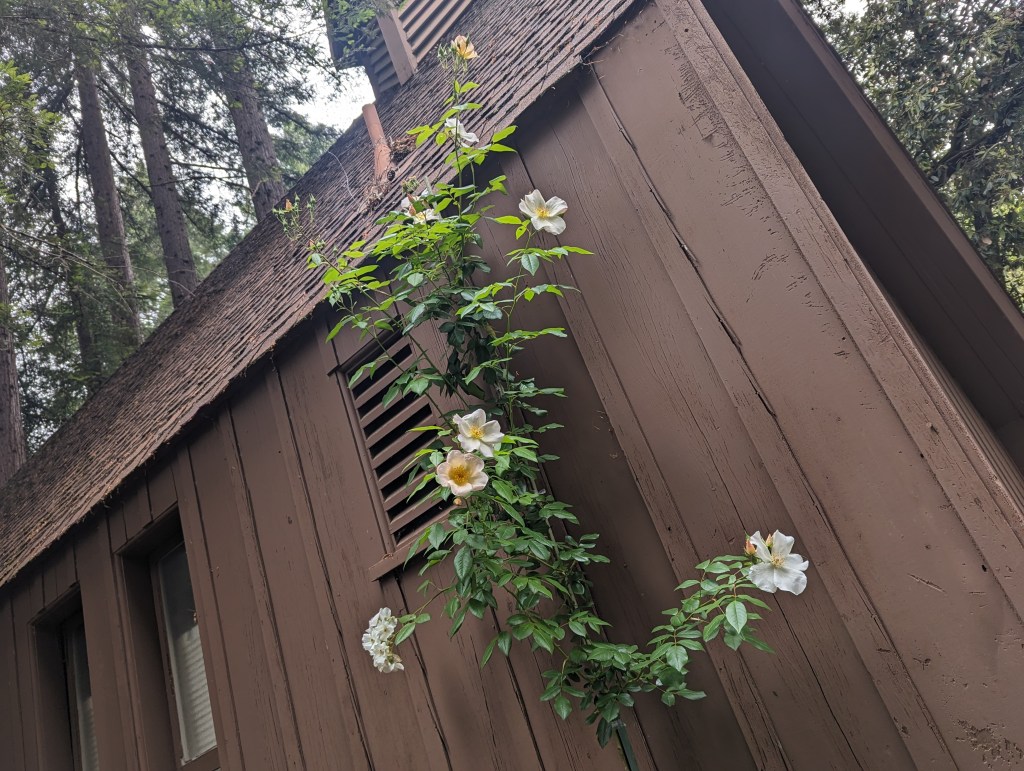
2. White climbing rose that was removed from the garden of a renovated cabin has been relocated to el Catedral de Santa Clara de Los Gatos, where merely white flowers bloom.

3. Rose lily that was plumply budded for Six on Saturday two weeks ago is now finishing. It recycled itself from a previous froufrou garden as the rose garden was installed over it.

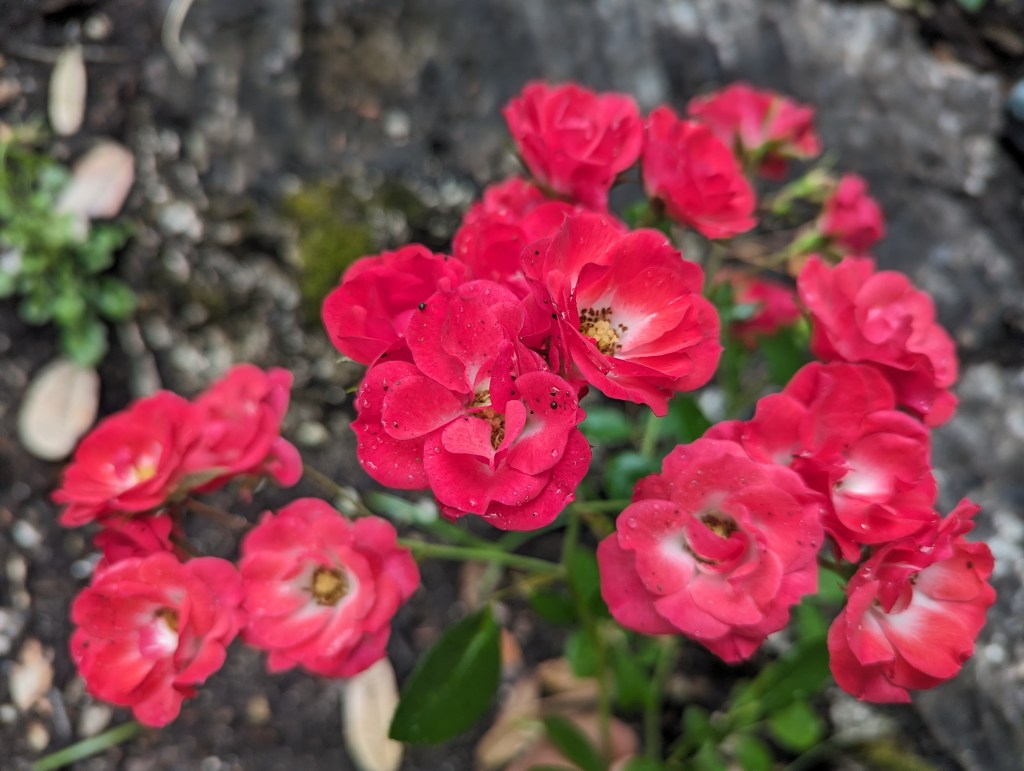
4. Carpet rose was originally too close to a walkway, so was relocated to a wide roadside embankment. I am none too keen on carpet rose, but it is appropriate for its application.

5. Easter lily that was left from a wedding at el Catedral de Santa Clara de Los Gatos was added to the perennials across the road, but could have remained with the white flowers.

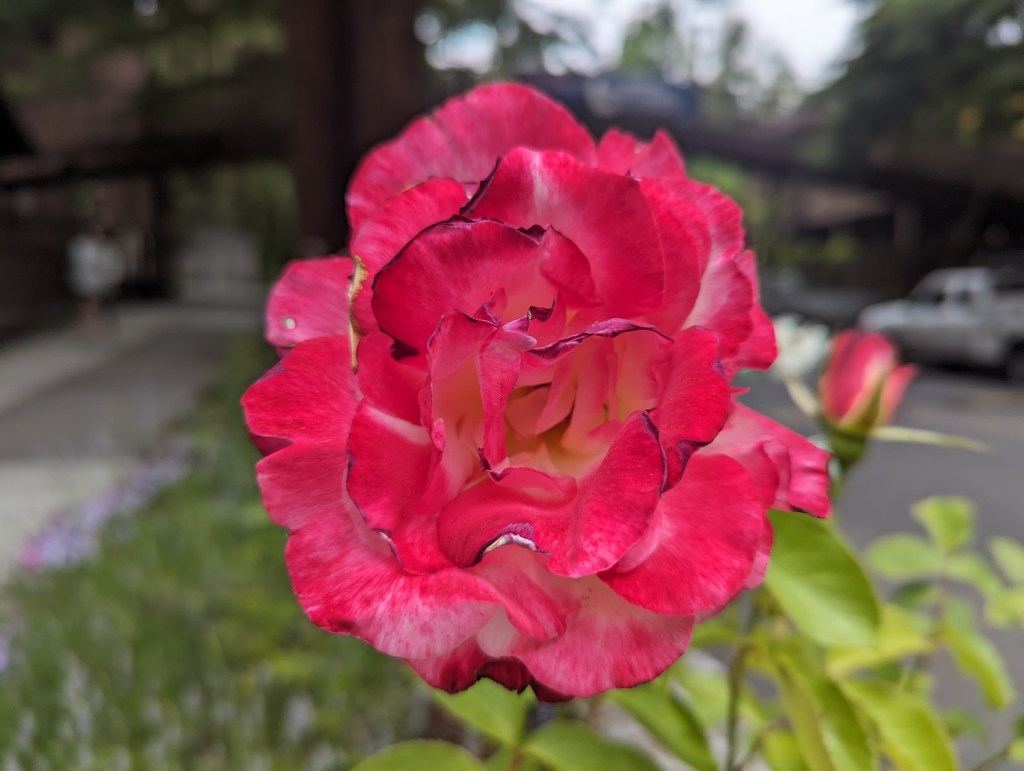
6. Unidentified hybrid tea rose, which had the color but not the form of ‘Double Delight’ before it began to fade, blooms in the rose garden, which was installed over the rose lily.

This is the link for Six on Saturday, for anyone else who would like to participate: https://thepropagatorblog.wordpress.com/2017/09/18/six-on-saturday-a-participant-guide/