Six on Saturday: Old School

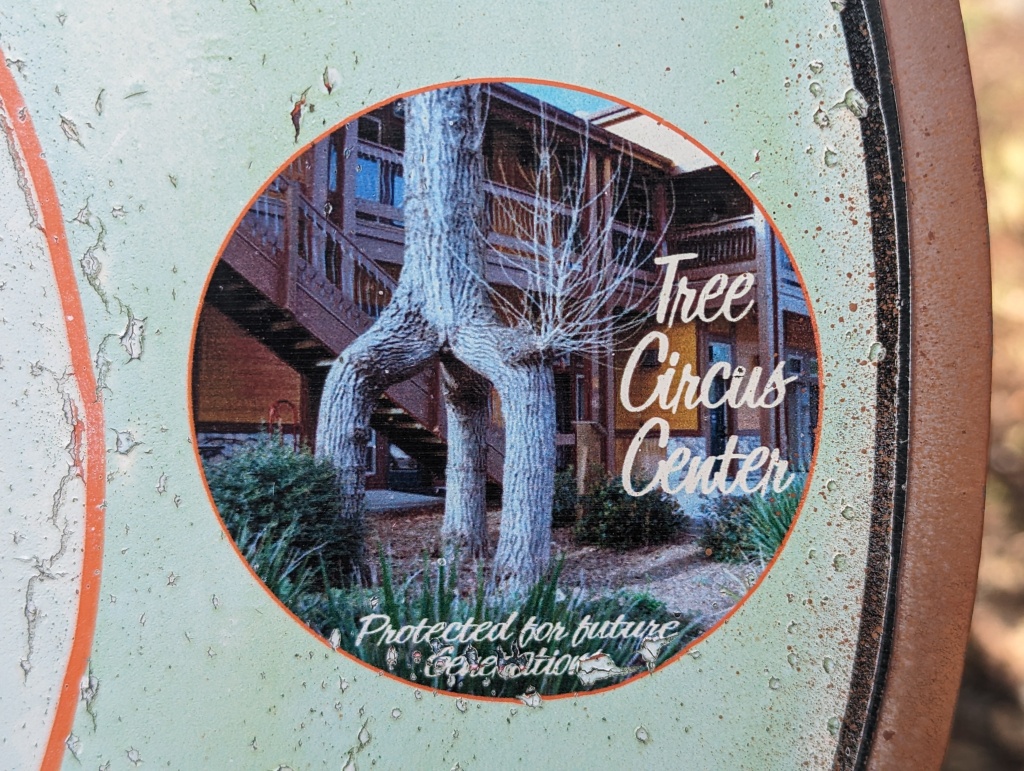
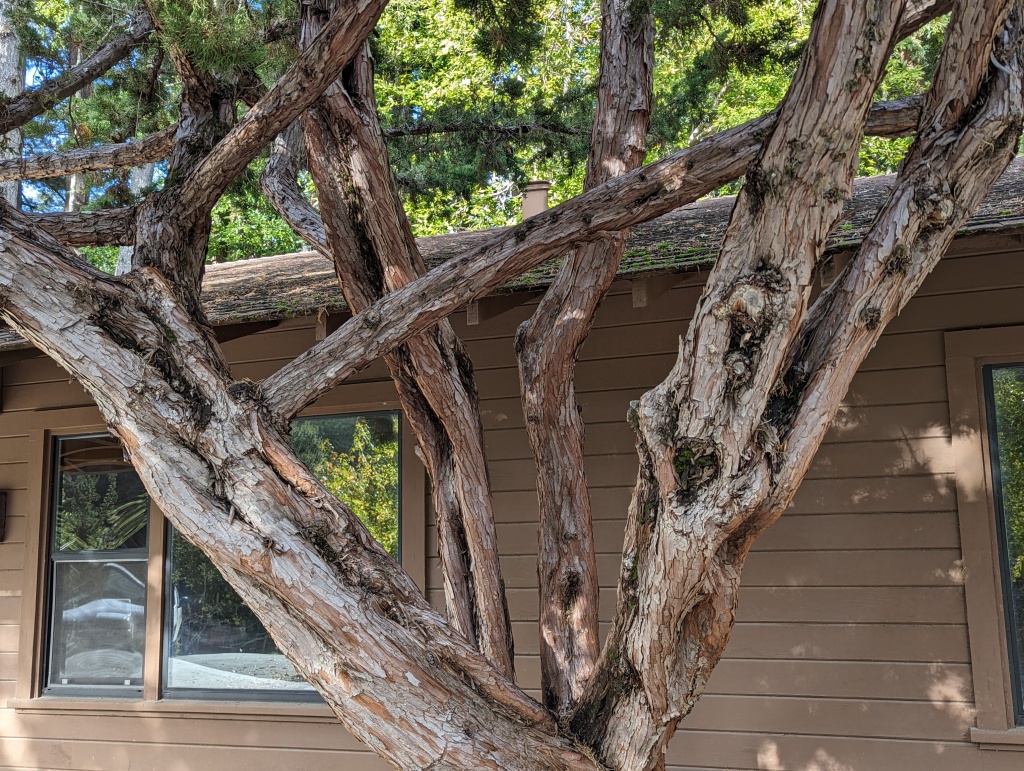
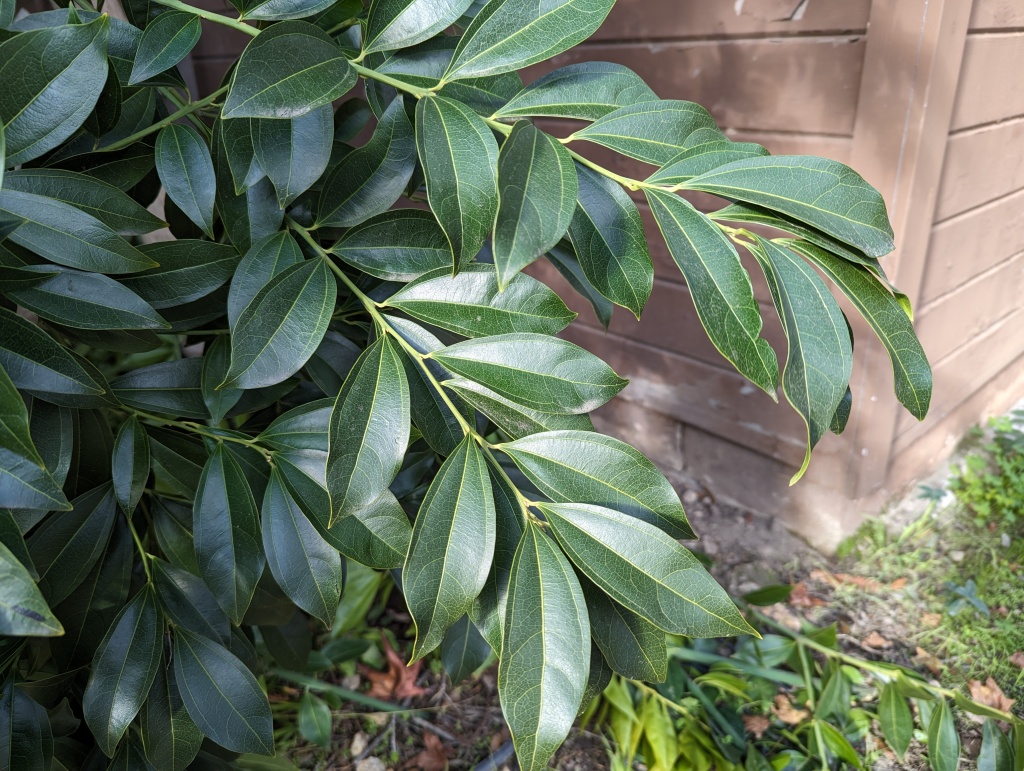
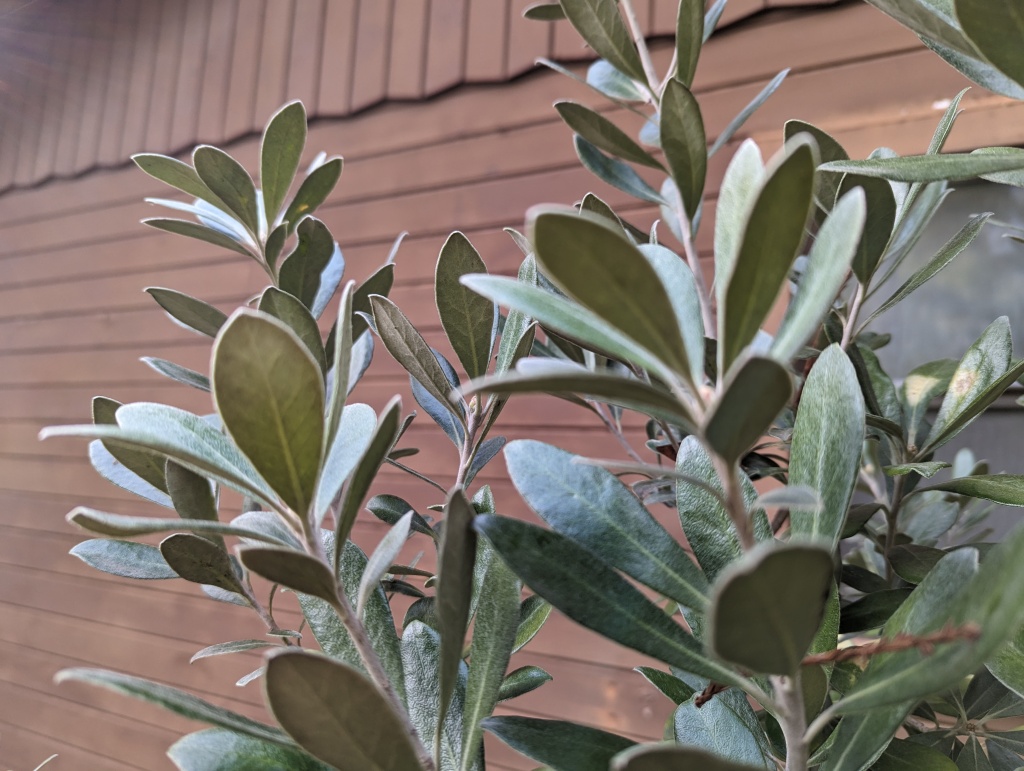
Bauhinia punctata, Tupidanthus calyptratus, Olmediella betschleriana and Oreopanax capitatus are a few species that Brent and I studied in school during the late 1980s, then encountered only very rarely afterward. Actually, neither of us have encountered a single specimen of Oreopanax capitatus since 1990. Brent managed to procure a Tupidanthus calyptratus for his driveway. I may eventually procure a Bauhinia punctata. Nowadays, I work with Cocculus laurifolius and Pittosporum crassifolium, which, previously, I had not seen since school. Agapanthus orientalis and Juniperus chinensis ‘Kaizuka’ could be just as old fashioned, but never really got scarce. Perhaps I should post more pictures of species here that are actually rare instead.

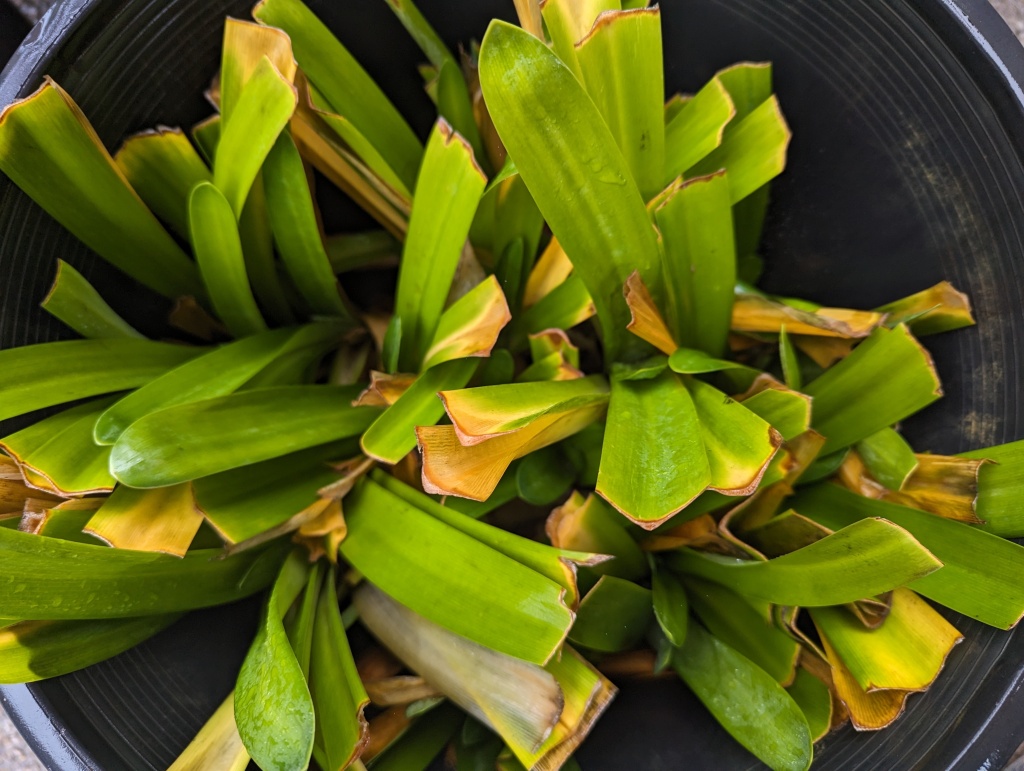
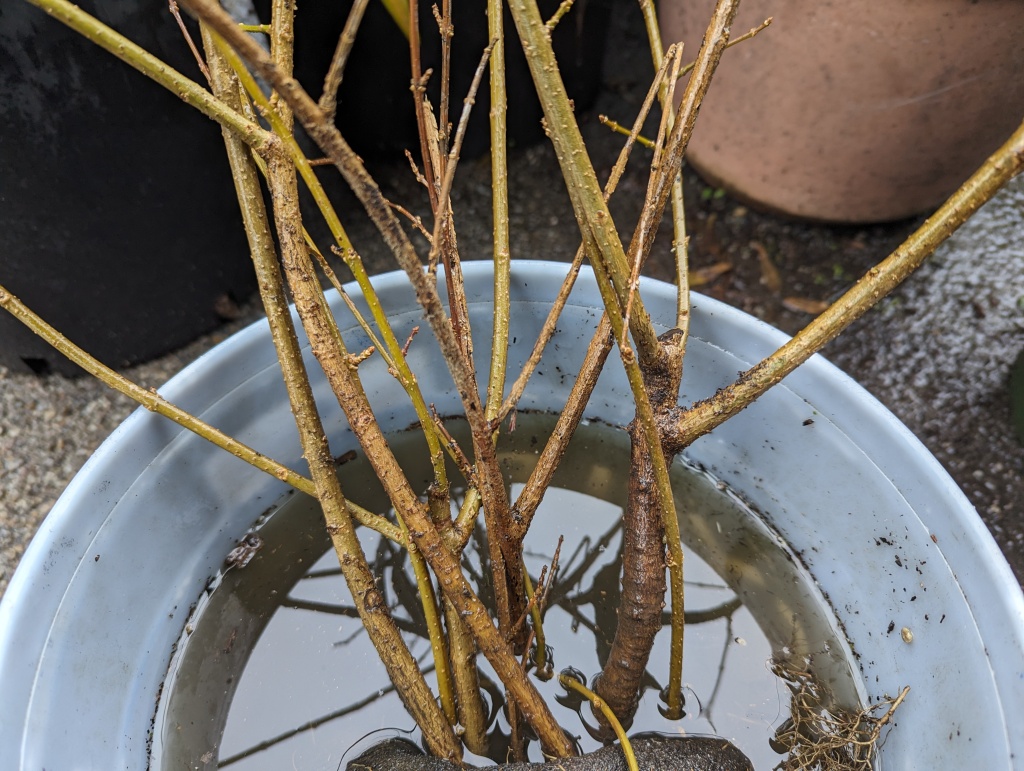
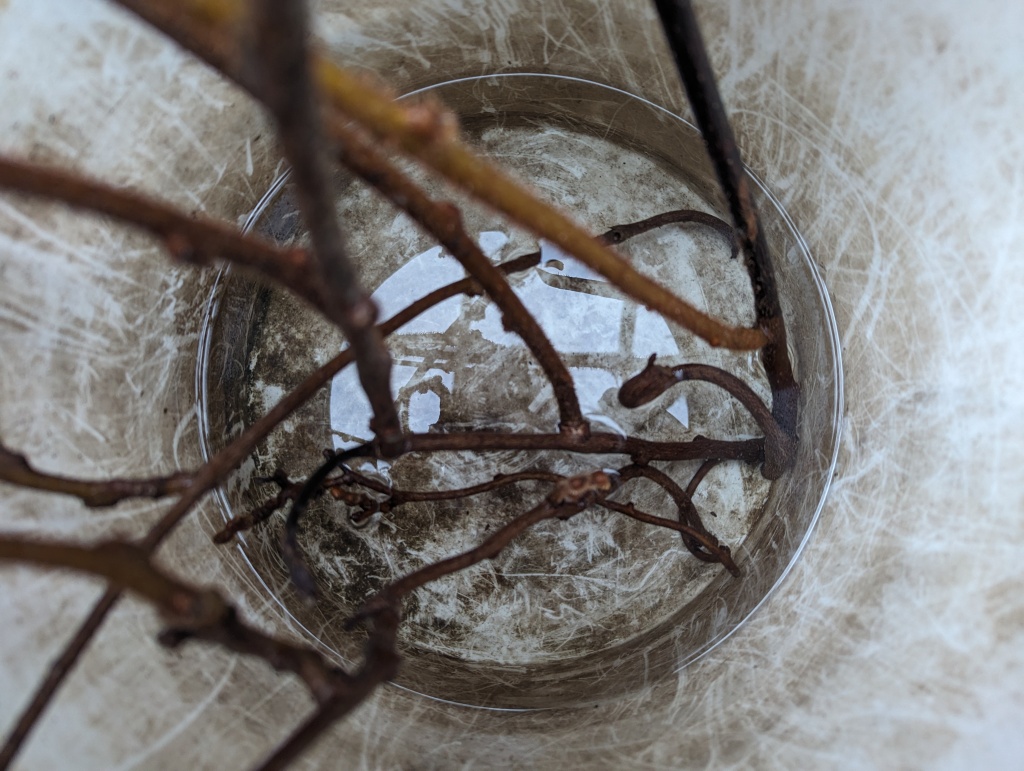
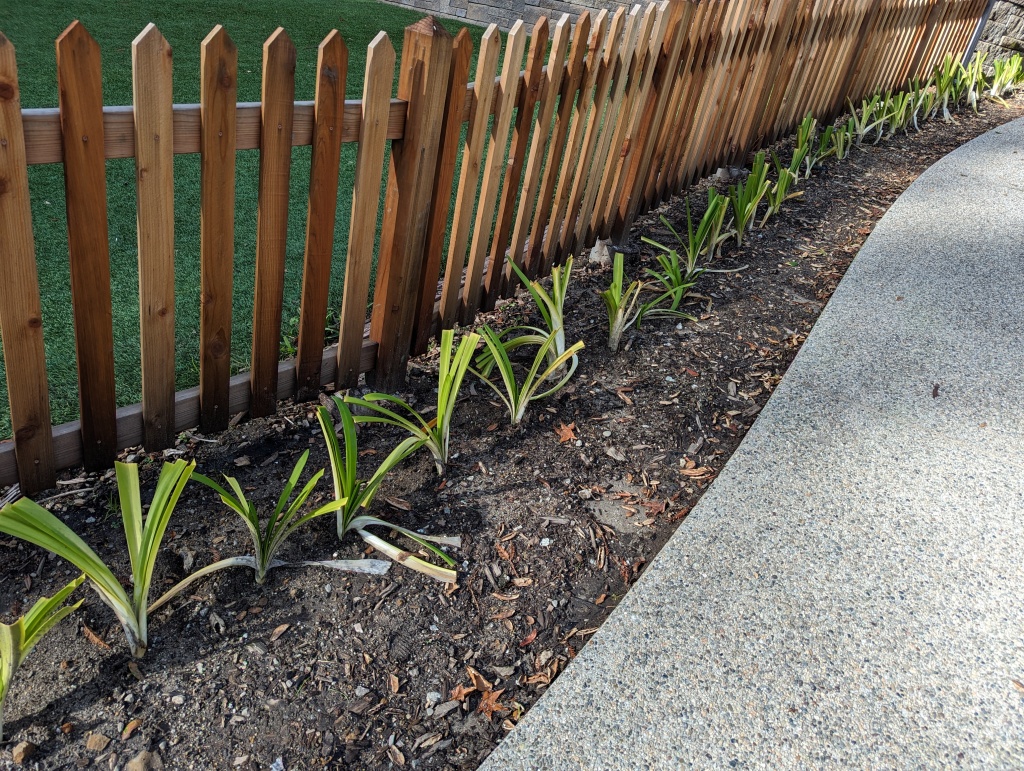
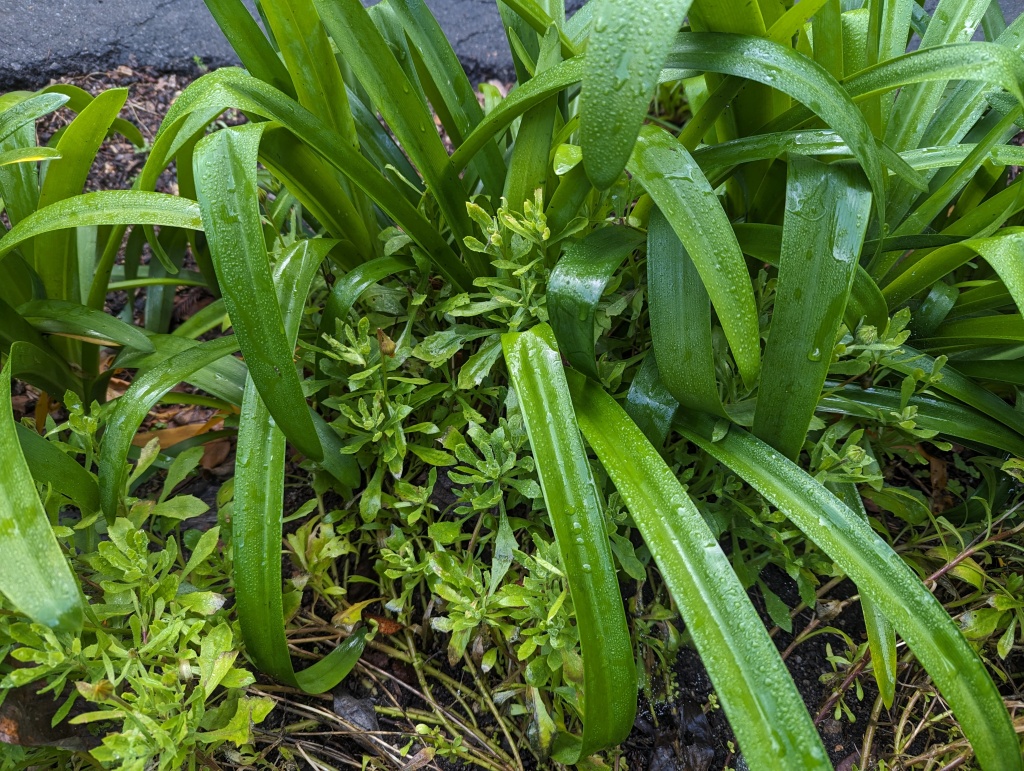
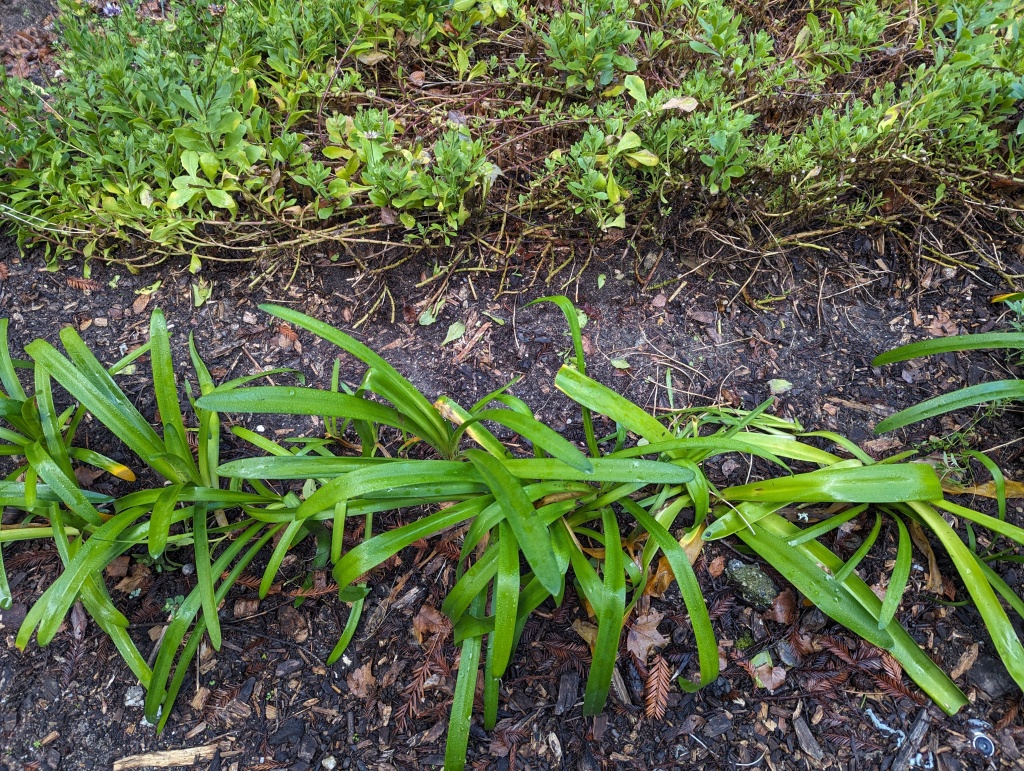
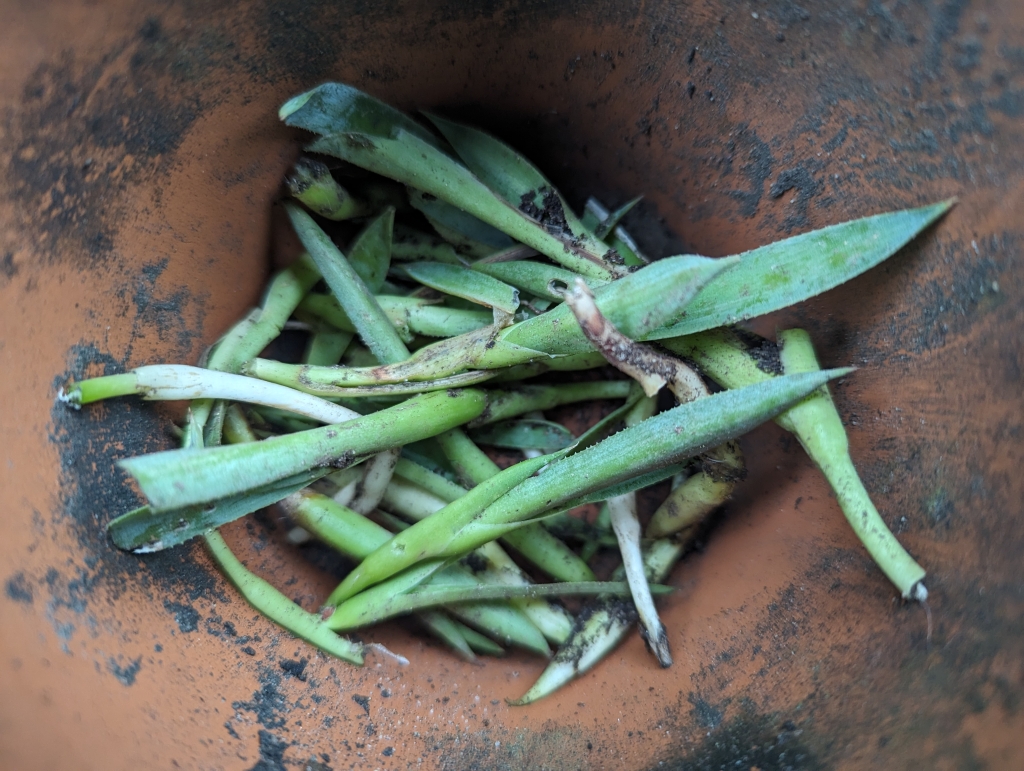
1. Agapanthus orientalis, lily of the Nile has been very popular and even common longer than anyone can remember, and still is. This picture of these divided and plugged shoots is here because I neglected to post it as I discussed them in Six on Saturday a month ago

2. Juniperus chinensis ‘Kaizuka’, Hollywood juniper was passe prior to when Brent and I were in school, but older specimens remain. They are like sculptural small cypress trees.

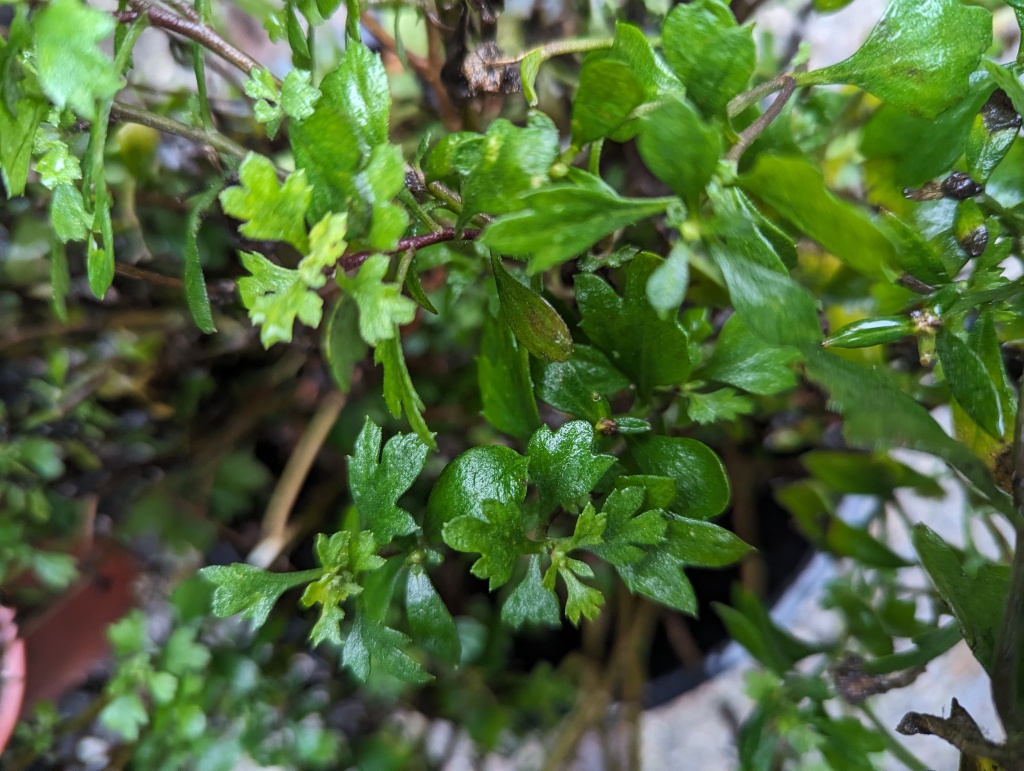
3. Cocculus laurifolius, laurel leaved snailseed is a species that we studied in school, but have seen in only a few situations since then. I happen to be acquainted with a few now.

4. Pittosporum crassifolium, karo is very similar in that regard. It might have been more popular a long time ago, but lost popularity as more interesting species were introduced.

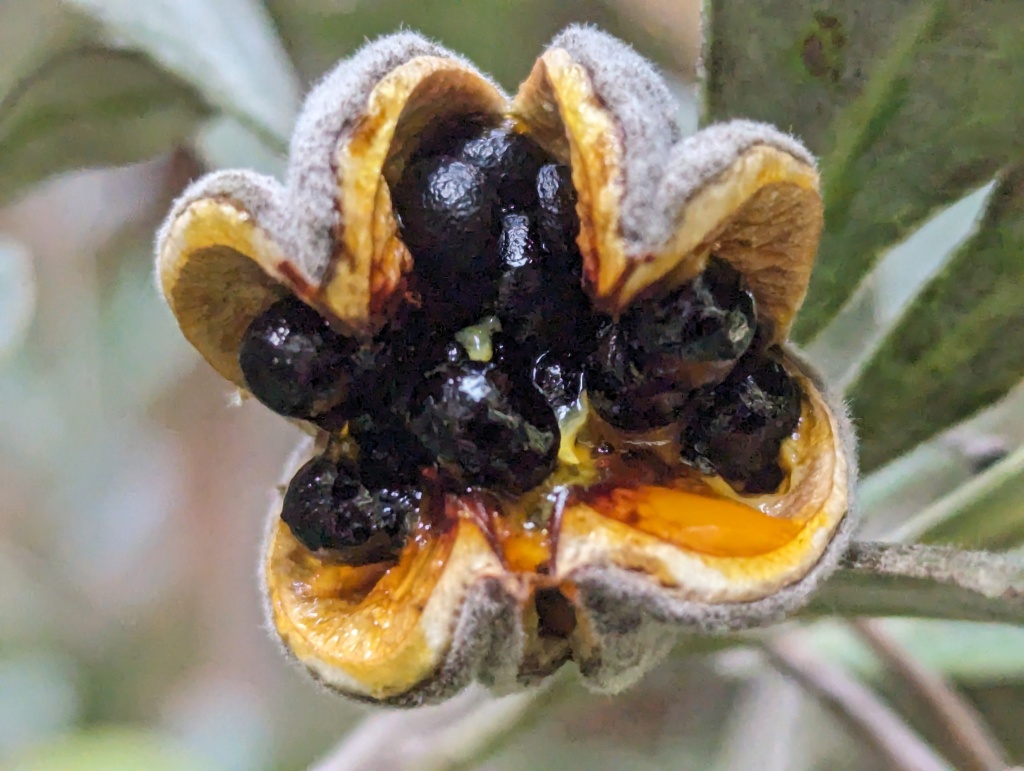
5. Pittosporum crassifolium, karo produces annoyingly abundant and annoyingly sticky seeds. ‘Pittosporum’ translates to ‘pitchy seed’. If they germinate, they do not do it here.

6. Rhody’s Roady got its new license plate with the colors of 1969. ‘O’ is for ‘Occidentale’, which is Rhody’s last name. It is irrelevant to an Isuzu or a downtown shopping district.

This is the link for Six on Saturday, for anyone else who would like to participate: https://thepropagatorblog.wordpress.com/2017/09/18/six-on-saturday-a-participant-guide/
Six on Saturday: Bad Botany II

Botany is bad this week for a different reason than it was last week. It is lacking. I mean, there is none. Only common names are mentioned. The first picture, which is not mine, includes too many different species to cite. Even if I wanted to, I could not identify all of them from this picture, and I can not remember what all of them are. The other pictures conversely show only a few common species that need no introduction.

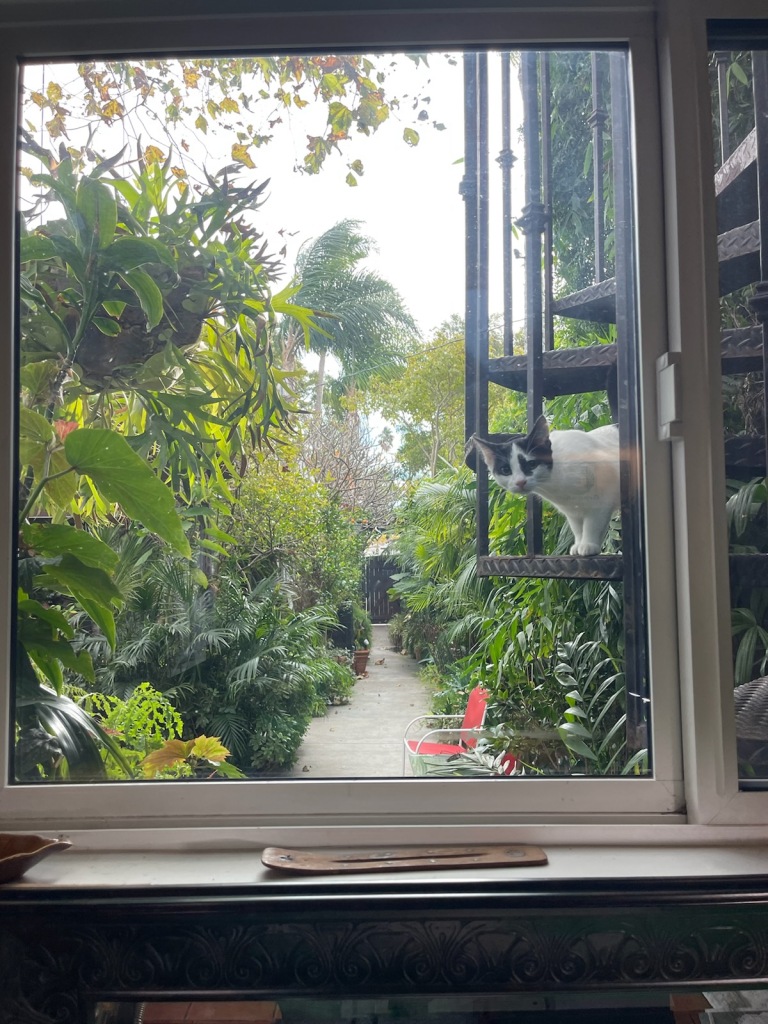
1. Brent sent this picture of a view from his primary landscape design studio west of Los Angeles. The Jungalow is obscured by overgrown vegetation on the left. More species of flora inhabit this compact garden than all the combined acreage that I work and live on.

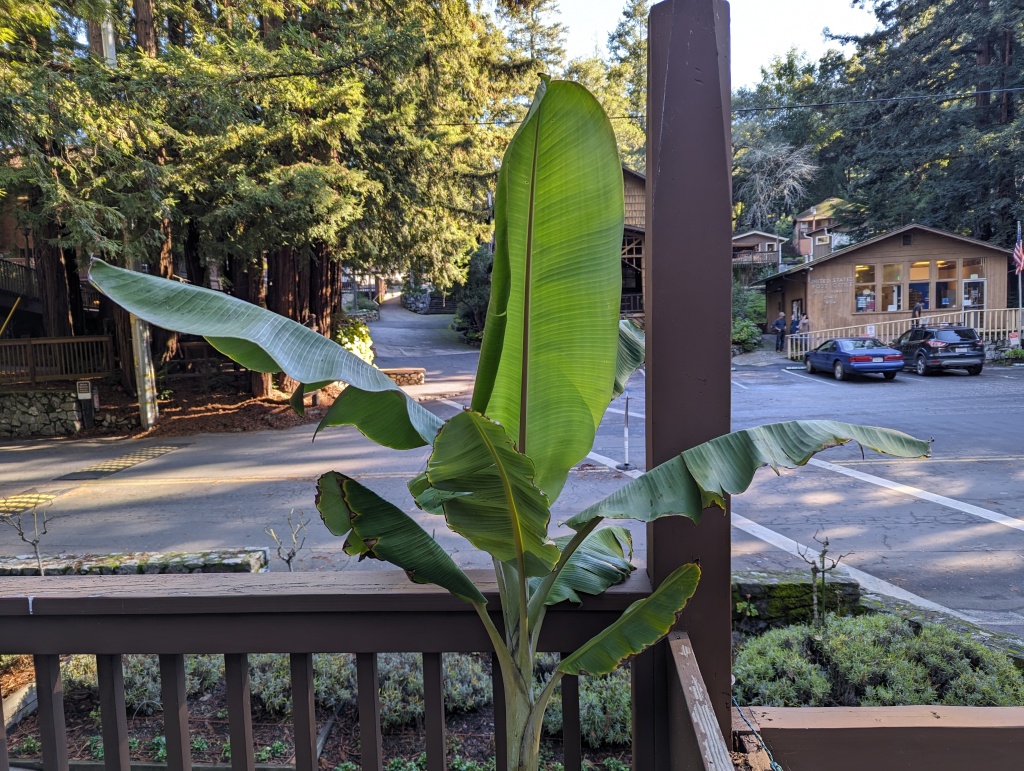
2. Scenery from my work is very different. Redwoods are the primary species. The bland foliage to the left is tanoak. Only a few species of trees grow wild here. The scenery from my writing studio is embarrassingly less interesting, but that is a topic for another time.

3. Banana trees live at work because I like a few species that, to me, seem to be the sort of vegetation that is more common in the Los Angeles region. They got frosted at home.

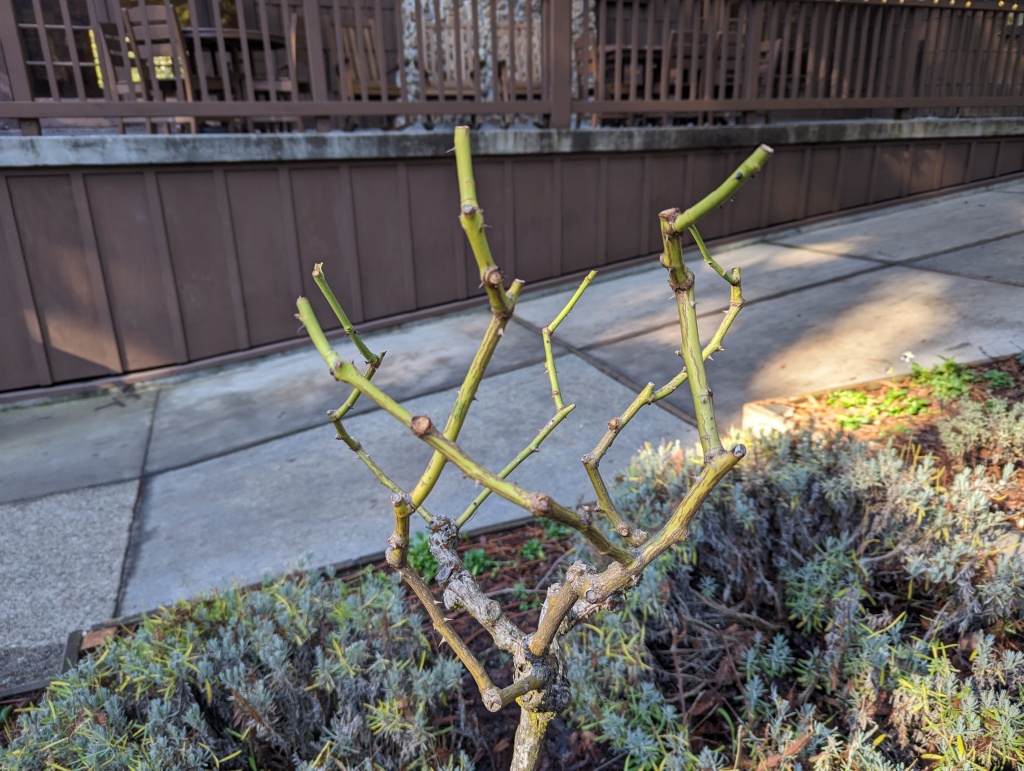
4. Roses, which are in the background of the banana tree, are more popular here than in the Los Angeles region, and are actually dormant for winter. This one does not generate new canes from its base though, which is why it is now so gnarly after dormant pruning.

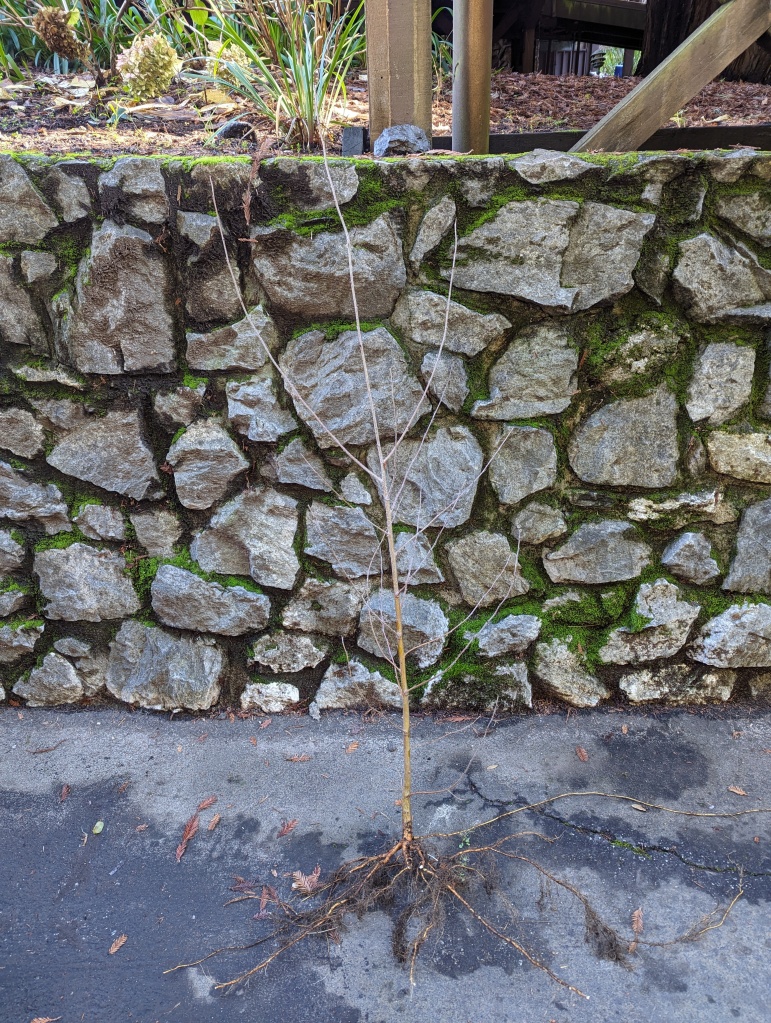
5. European white birch are also dormant during the slightly cooler wintry weather here. I can easily relocate feral specimens like bare root stock. Cooler weather has advantages.

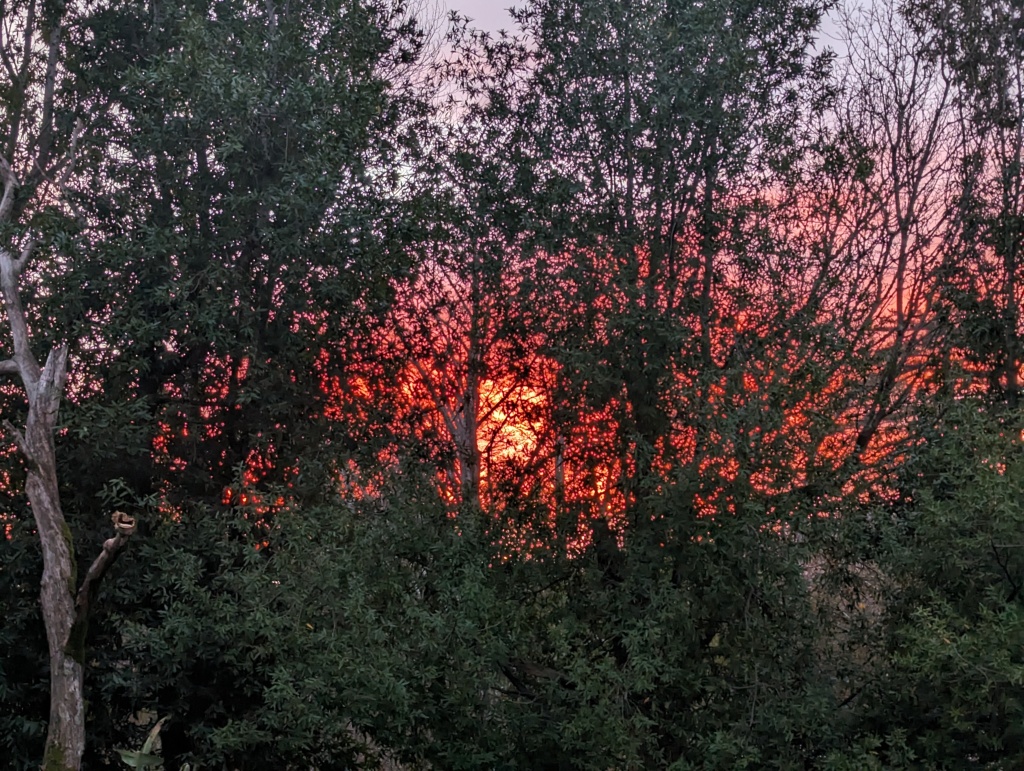
6. Bay and box elder obscure this local sunset that looks like it should be in Los Angeles.

This is the link for Six on Saturday, for anyone else who would like to participate: https://thepropagatorblog.wordpress.com/2017/09/18/six-on-saturday-a-participant-guide/
Six on Saturday: Bad Botany

These six lack a common theme. I do find the botany of four of them to be annoying, but that is no theme. Leyland cypress has a new genus name, which I did not mention. I still do not believe that the native blue elderberry is the same species as the black elderberry of the East. I still do not know for certain if the double white angel’s trumpet is a hybrid, although I do believe that it is. Although I exceeded my preferred word count limit here, I tried to abbreviate some of the redundancy of nomenclature while including both Latin and common names with the same cultivar name. Otherwise, the first of these six would be Saccharum officinarum ‘Pele’s Smoke’, ‘Pele’s Smoke’ sugarcane, with ‘Pele’s Smoke’ mentioned twice, with a comma in between. I may continue this technique in the future.

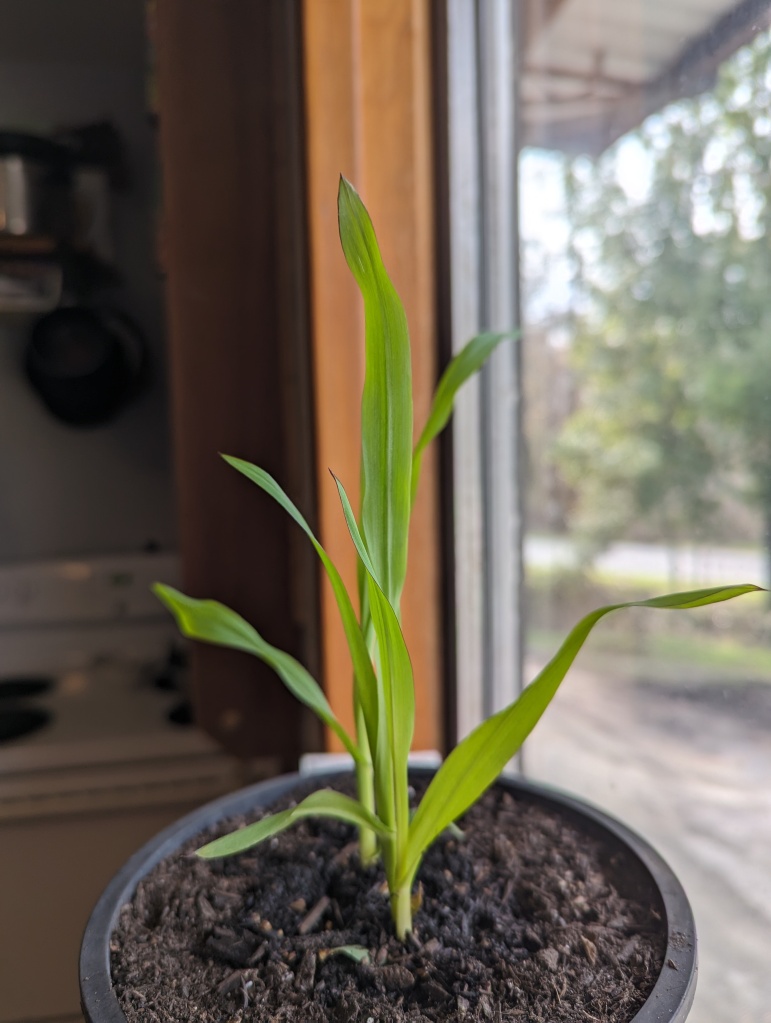
1. Saccharum officinarum ‘Pele’s Smoke’ sugarcane continues to grow like a weed on the warm windowsill in the galley at work. It is not bronzing though. I suspect that this fresh new foliage will be too tender to survive outside even after early spring. It is no problem. It will simply make more. Many more cuttings are growing outside. They are slower but more resilient. For less redundancy, I used its same cultivar name after its species name and before its common name. Of course this explanation is longer than any redundancy.

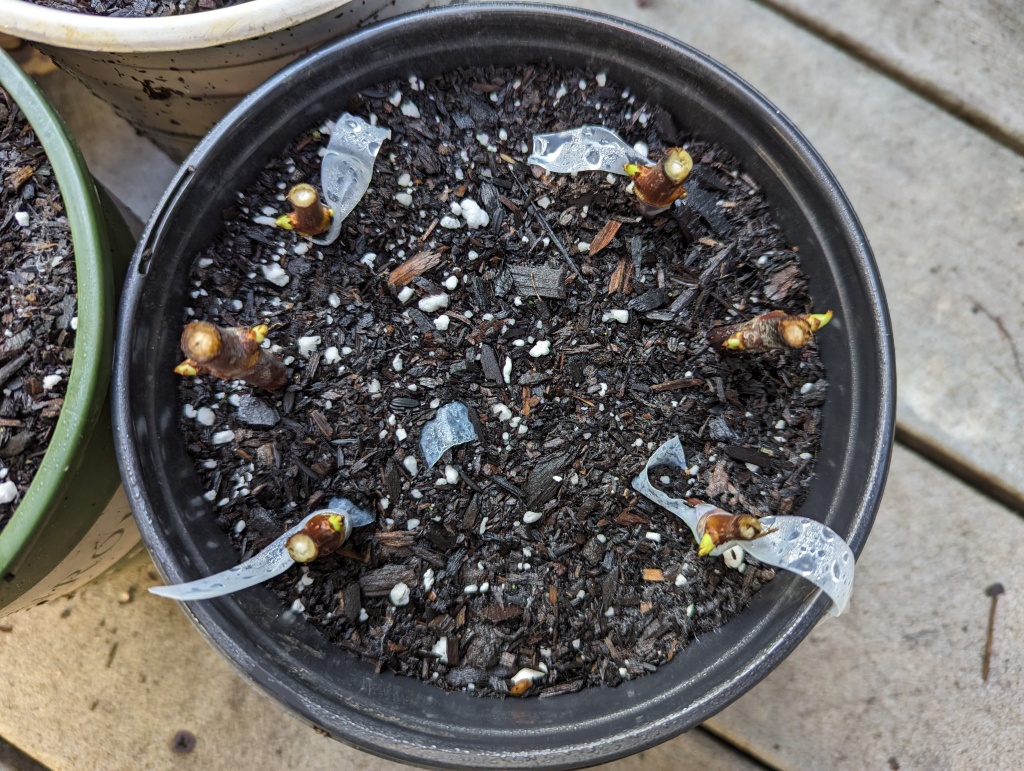
2. Sambucus cerulea, blue elderberry is classified by most botanists as a Western variety of American black elderberry. I know better. I am Californian. Regardless, I am growing a few cuttings from a few different parents because no one seems to know if they should be more productive with pollinators, like European black elderberry is. Four tagged bits are from the same very productive specimen, which must be removed from a landscape. The other pair is from a random roadside specimen. Three other pairs were added later.

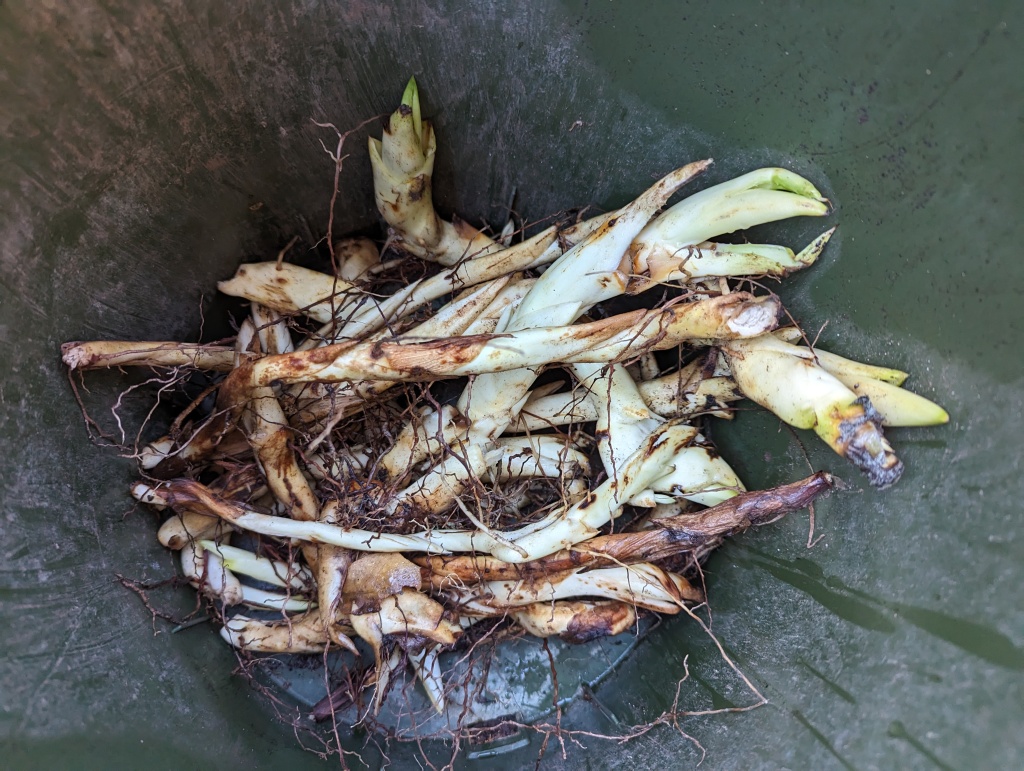
3. Agave americana, century plant is too prolific. We installed one of several ‘unwanted’ specimens and found all these pups within its can underneath. We can not use them all.

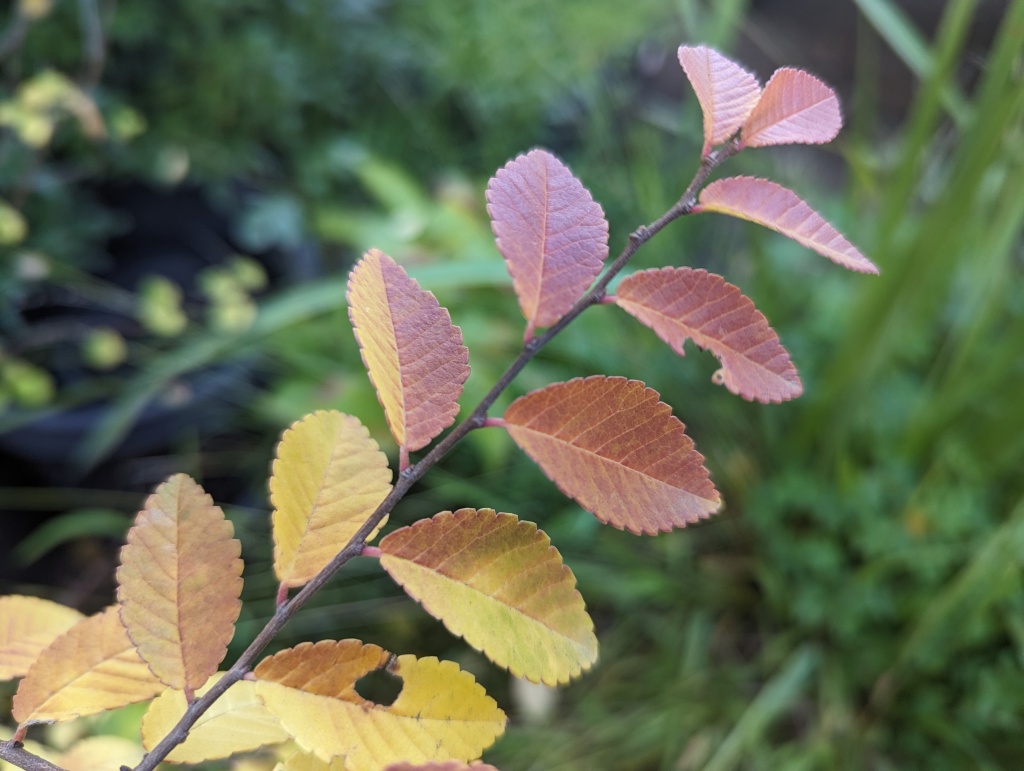
4. Ulmus parvifolia, Chinese elm became unavailable years ago after it was identified as a host for Dutch elm disease. Watersprouts continue to grow from a stump of a tree that was cut down years ago. If I could, I would grow several of this formerly familiar species.

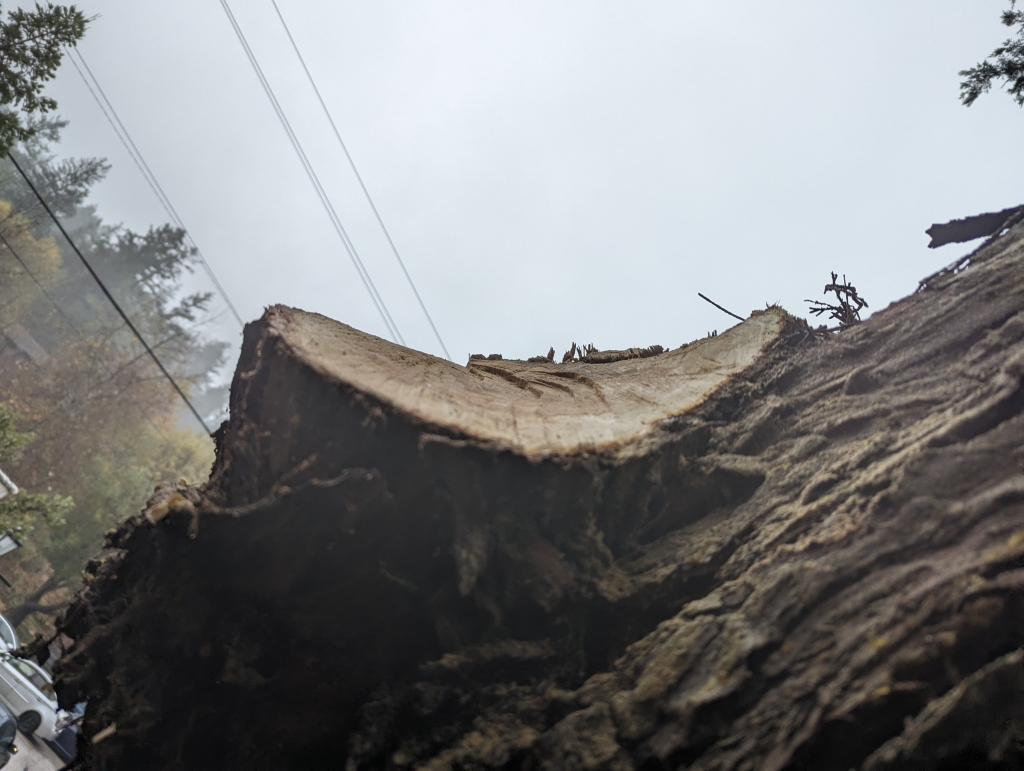
5. X Cupressocyparis leylandii, Leyland cypress is irrelevant to this illustration of how a chainsaw cuts if one side is sharper than the other. Another saw cut the flatter surface to the left. Incidentally, the ‘X’ preceding the genus name indicates an intergeneric hybrid.

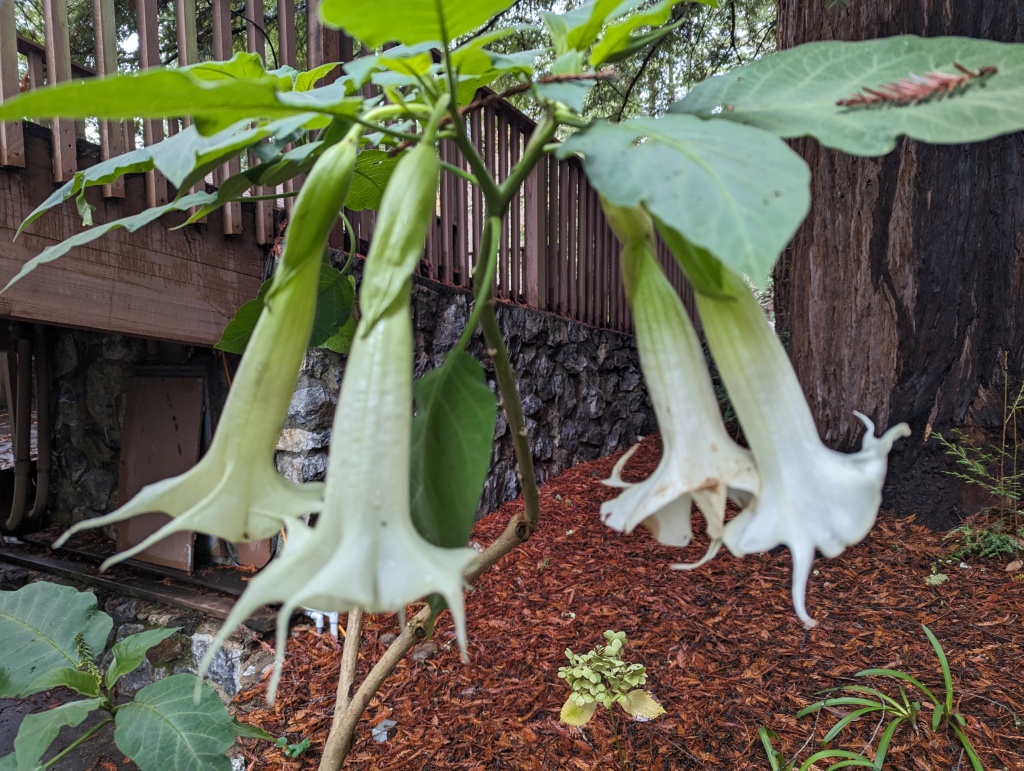
6. Brugmansia X candida ‘Double White’ angel’s trumpet should not bloom now. Either it does not know, or it does not care. Incidentally, the ‘X’ between the genus and species names indicates an interspecific hybrid. Like for the sugarcane, I used the same cultivar name after its species name, and before its common name. Is such abbreviation proper?

This is the link for Six on Saturday, for anyone else who would like to participate: https://thepropagatorblog.wordpress.com/2017/09/18/six-on-saturday-a-participant-guide/
Six on Saturday: Colorful but Inedible Berries

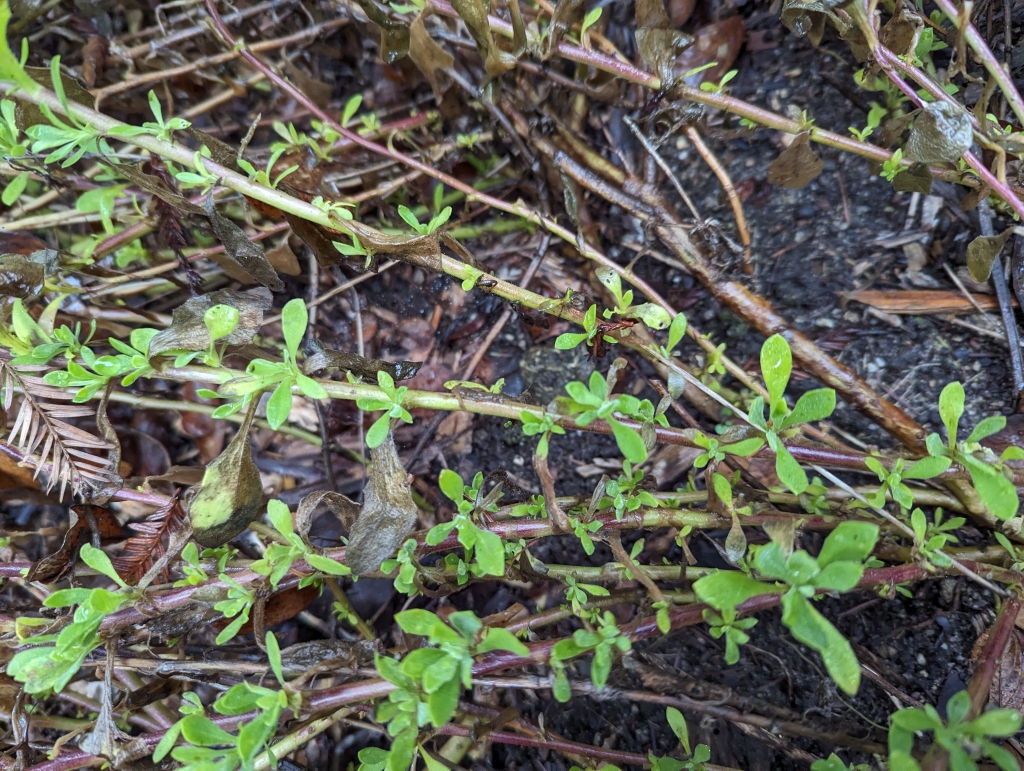
Snowberry is native here. I have been wanting to grow it because I like its white berries. I just found a seedling where it could not stay, so brought it back here. I am very pleased with it, but did not want to share pictures of it as scrawny canned bare twigs. I got these pictures instead.

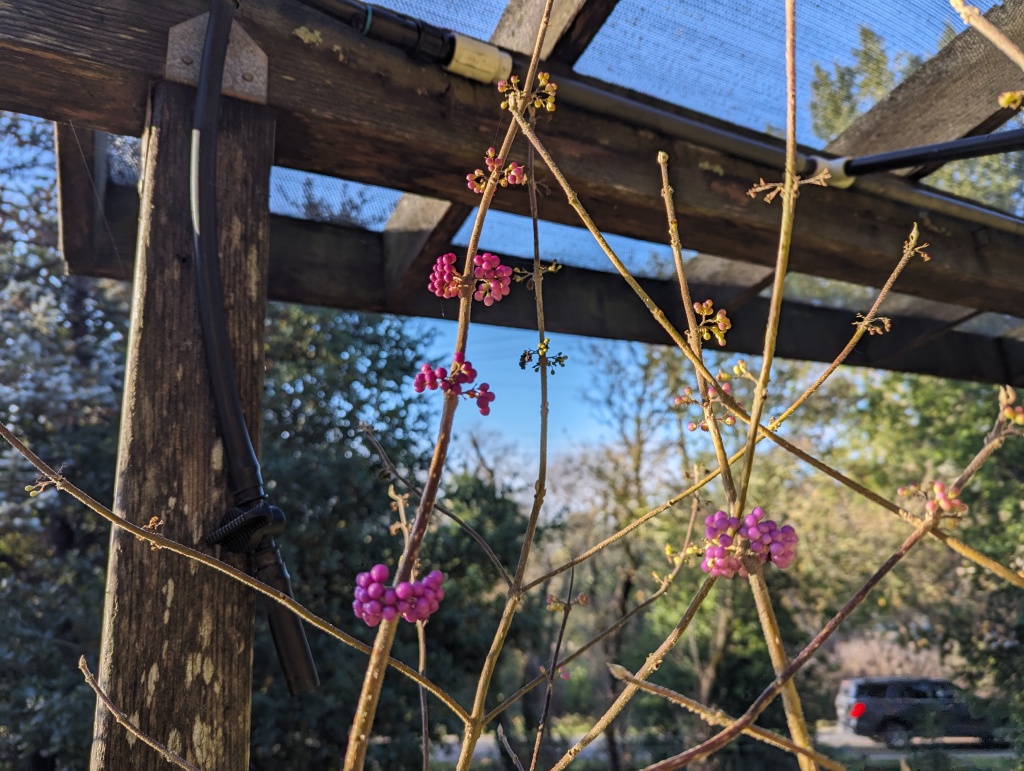
1. Callicarpa americana, American beautyberry is what compelled me to get pictures of berries for this week. I shared a closeup picture of the first of these berries as they began to ripen more than a month ago, which was about two months later than elsewhere. I do not mind. These are my first, and there are more of them now. Perhaps their berries will ripen on time when they are established within the landscapes. The seedlings, as well as white butterfly ginger and, recently, American holly, were gifts from Our Forest Garden.

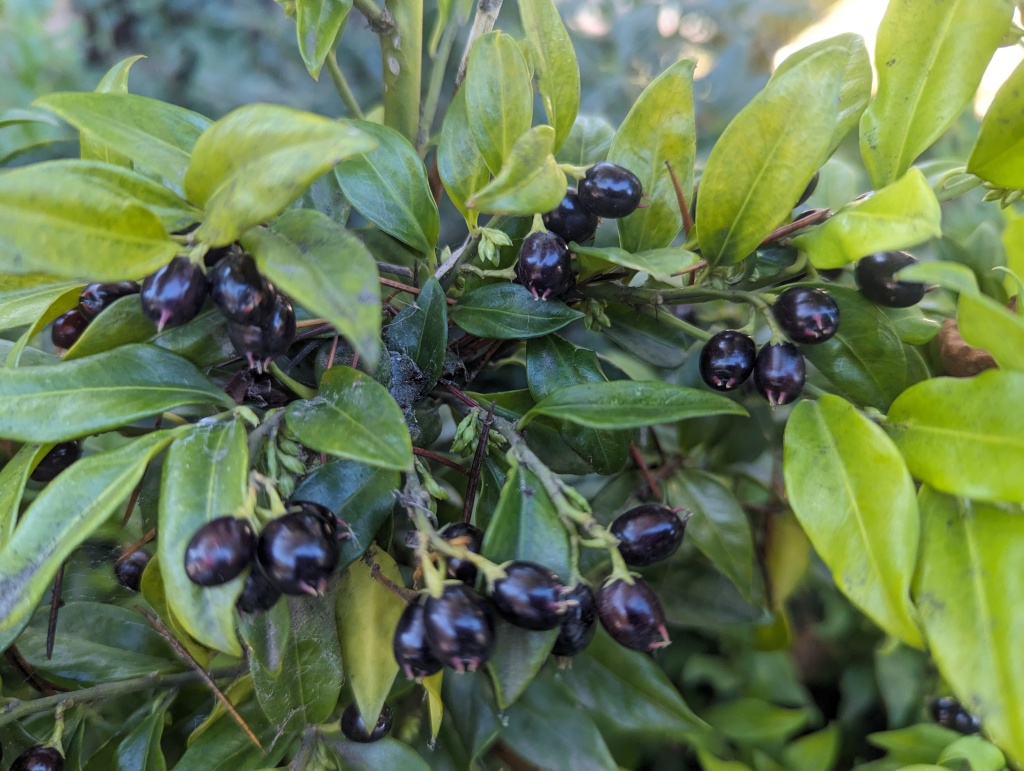
2. Sarcococca ruscifolia, sweet box typically produces very few red berries that typically fall off before turning black. They are both atypically abundant and atypically black now.

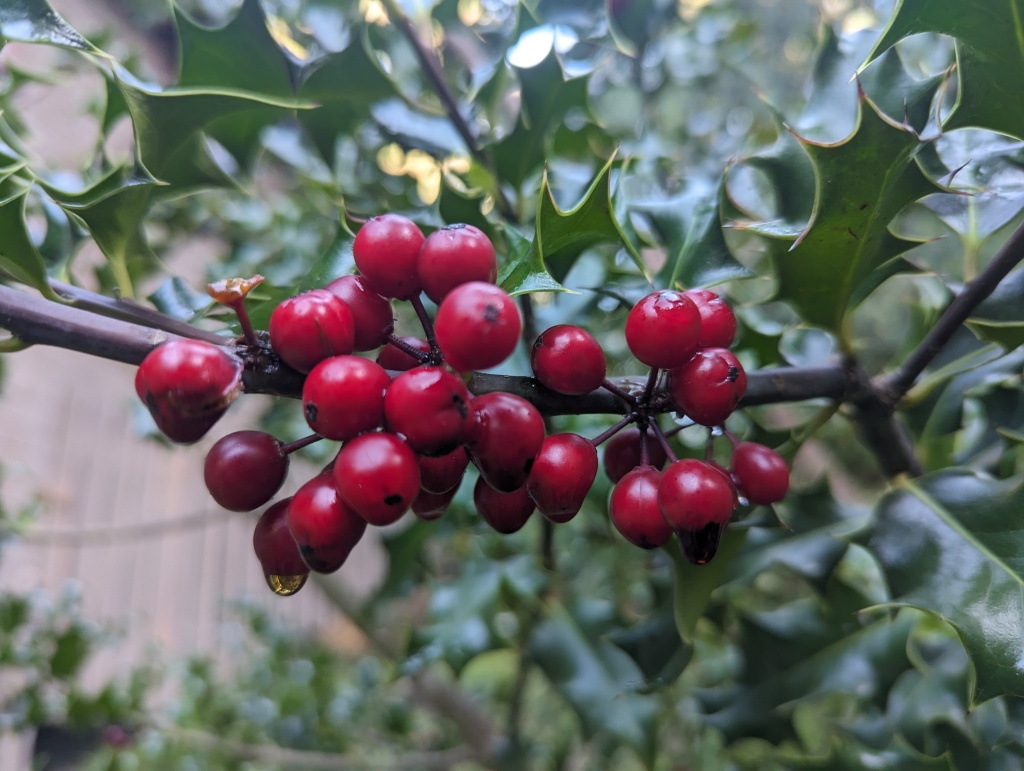
3. Ilex aquifolium, English holly self sows, but most feral specimens seem to be male, or produce only a few berries, in a few sparse clusters. Very few produce clusters like these.

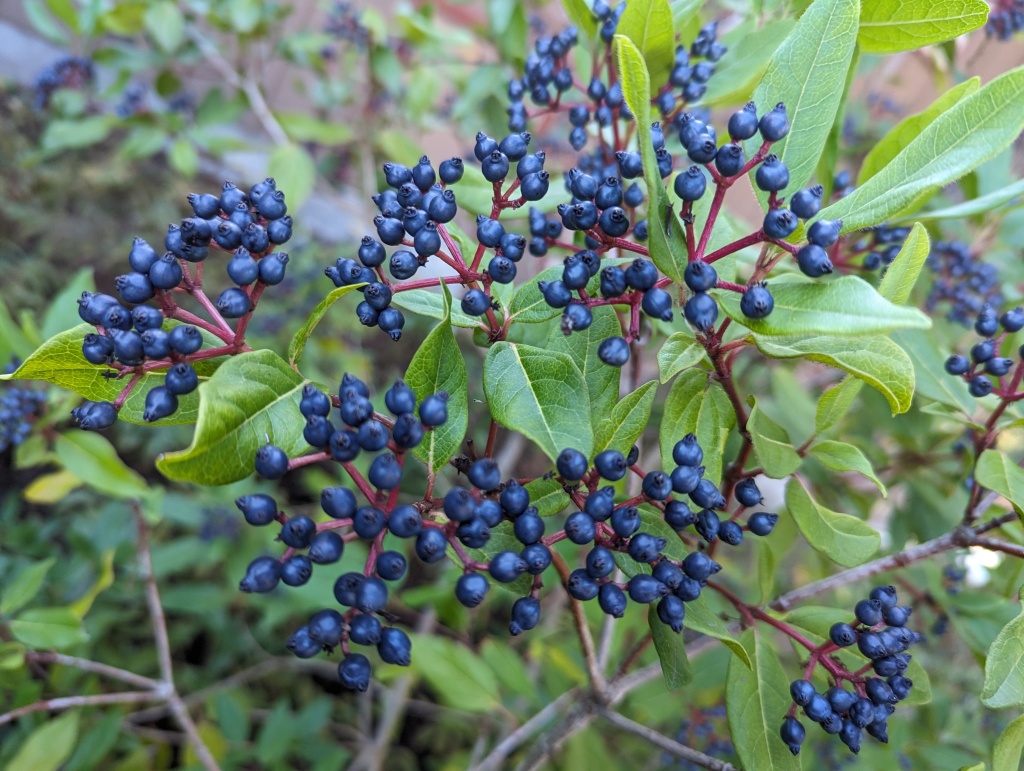
4. Viburnum tinus, laurustinus also self sows. I am not as impressed with it as I am with English holly, but have been learning to appreciate it more, as those in other regions do.

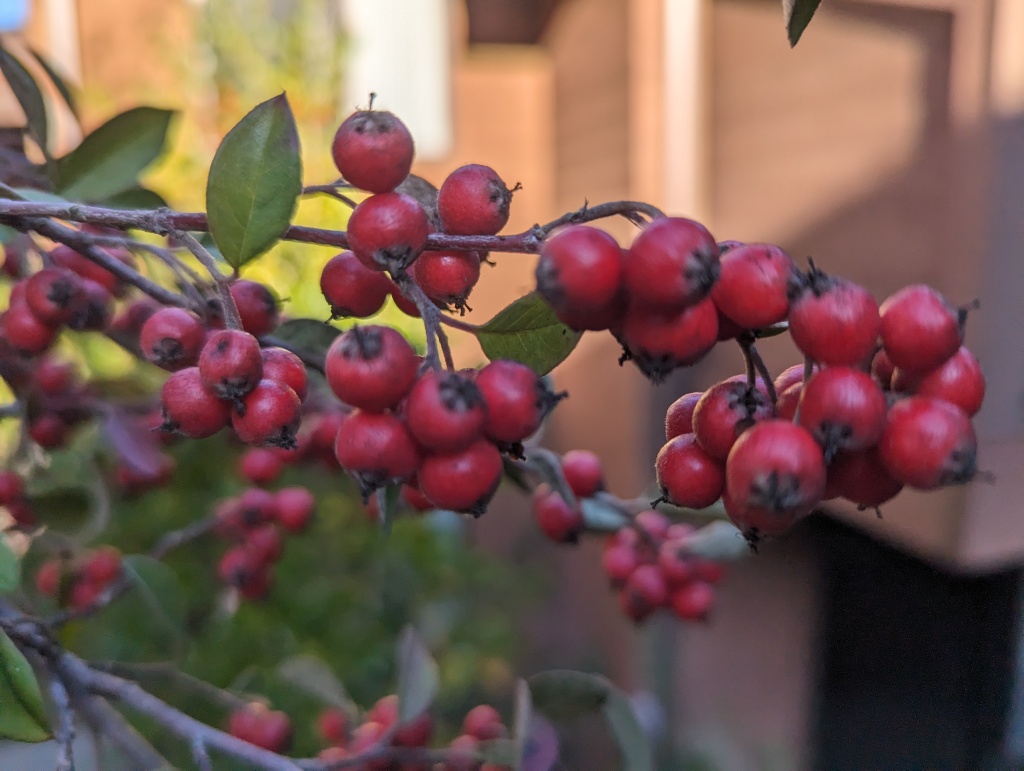
5. Cotoneaster pannosus, silverleaf cotoneaster is naturalized a bit more vigorously. It is not as pretty as I like to think it is. I should retain a few specimens but eradicate the rest.

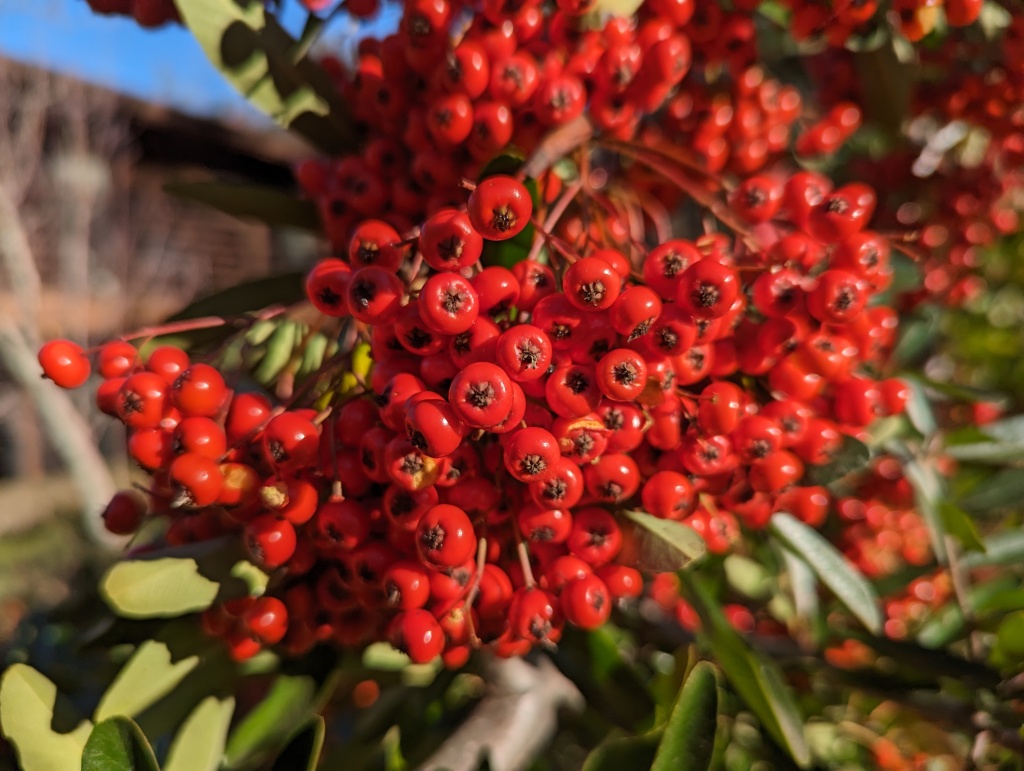
6. Pyracantha coccinea, firethorn is more colorful with similar but with more abundant and glossier berries. Unfortunately, it is also much thornier, so it is no fun to work with.

This is the link for Six on Saturday, for anyone else who would like to participate: https://thepropagatorblog.wordpress.com/2017/09/18/six-on-saturday-a-participant-guide/
Horridculture – Rainy Days and Mondays (deferred from Wednesday)

Deferred maintenance has consequences.

Karen Carpenter famously said, “Rainy days and Mondays always get me down.”

Several old and deteriorating box elders on the roadside outside the gate at work have survived many rainy days and many Mondays during the past many years that they have grown there. Earlier this week though, a rainy Monday brought one down.

It was no surprise. All of the several box elders there are in very bad condition. Most are completely dead and collapsing. However, I can do nothing about them because they extend over the roadway. They must be removed by a County Crew who can remove them safely. Unfortunately, they are unable to do so in a timely manner while so much similar work is needed throughout the County.

The problem with the demise of this particular tree is that it fell onto the hood of a Ford F150 that was travelling toward town. The Ford swerved and collided with a Subaru station wagon of some sort that swerved off the other side of the road, where it seemed to stop just inches from a utility pole. The tree or portion of the tree that fell was not very big, but indirectly caused extensive damage to both vehicles, and necessitated lane closures while the vehicles were removed.

In the picture, which was taken as I opened the gate for the crew, the Subaru is still visible on the opposite side of the road, at the center of the picture. The Ford has already been removed to the side of another road that extends to the right in the distance, beyond the bridge, where the traffic signals are. The taillights belong to one of the responding Sheriff’s cars. Most of the debris from the fallen box elder has already been pushed into the ditch to the right.

Six on Saturday: Lily of the Nile Division

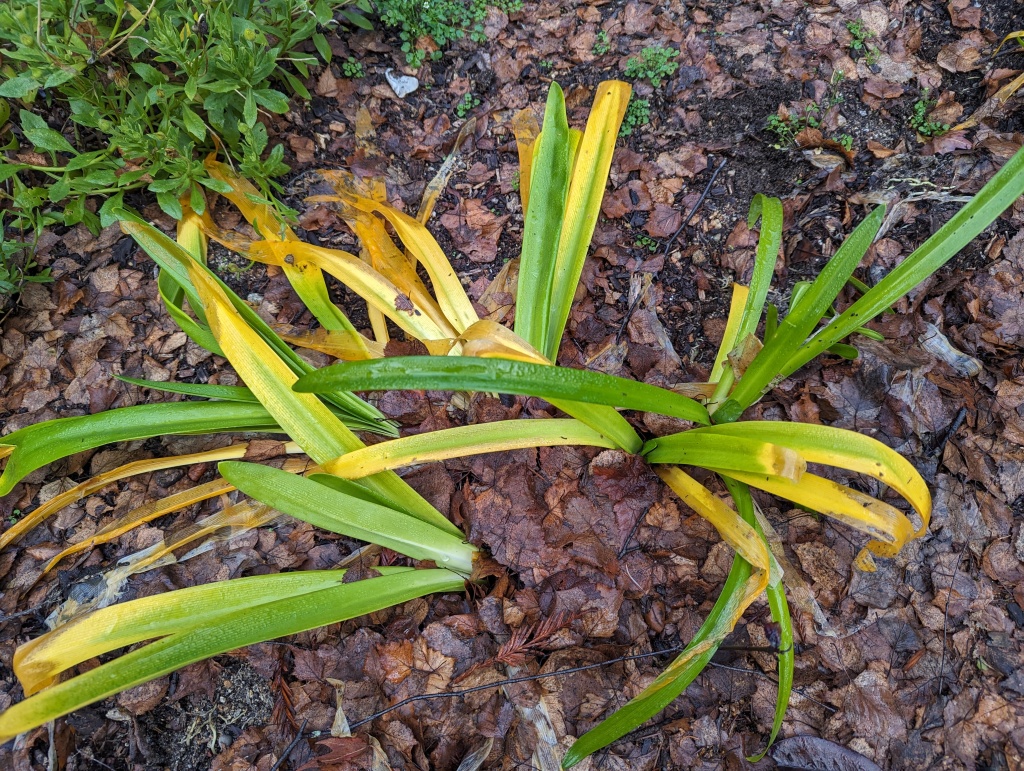
Now that the weather is getting cooler and almost rainy, it is time to relocate overgrown lily of the Nile. Quite a bit of it has slowly climbed over stone retaining walls to encroach into walkways. I remove rhizomes that are on top of walls, as well as any that are within a foot or so of the walls. After I divide and groom them, I install them where they will be more of an asset to the landscapes. They settle in with cool and rainy wintry weather, so should be ready to grow as soon as the weather gets warmer in spring. I neglected to get any before and after pictures to show where they came from and where they went to, (or to get six pictures).

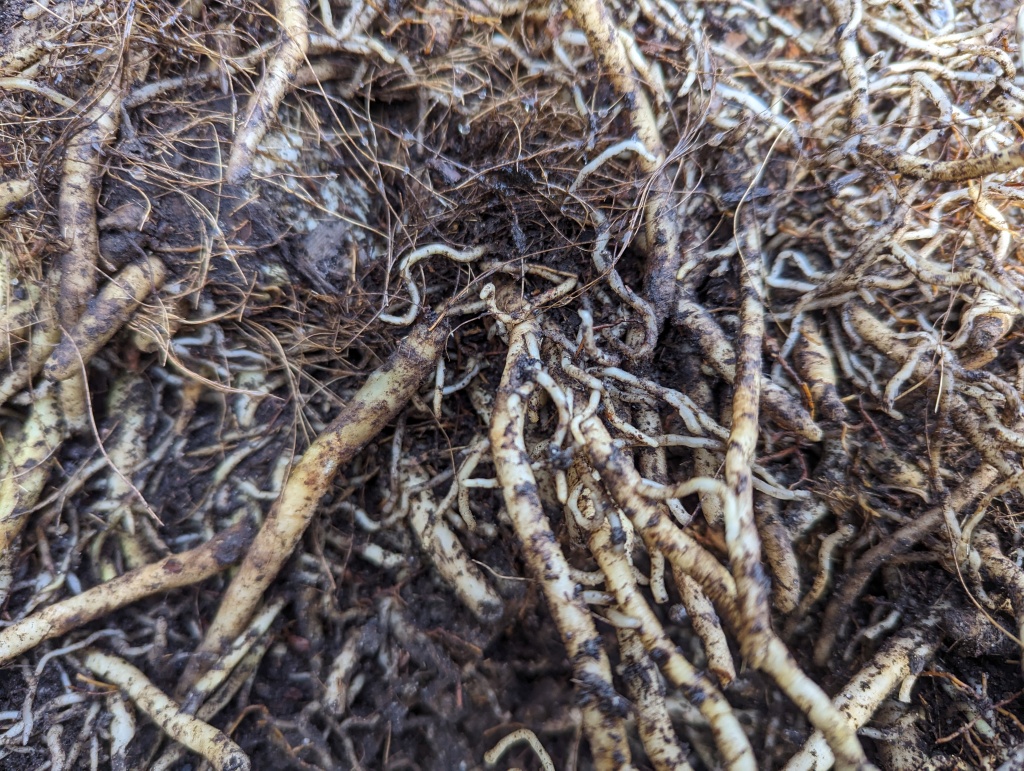
1. Roots of lily of the Nile can hold firmly onto a silty riverbank as the river floods above. They are impressively densely meshed. They are fleshy though, and therefore easily cut.

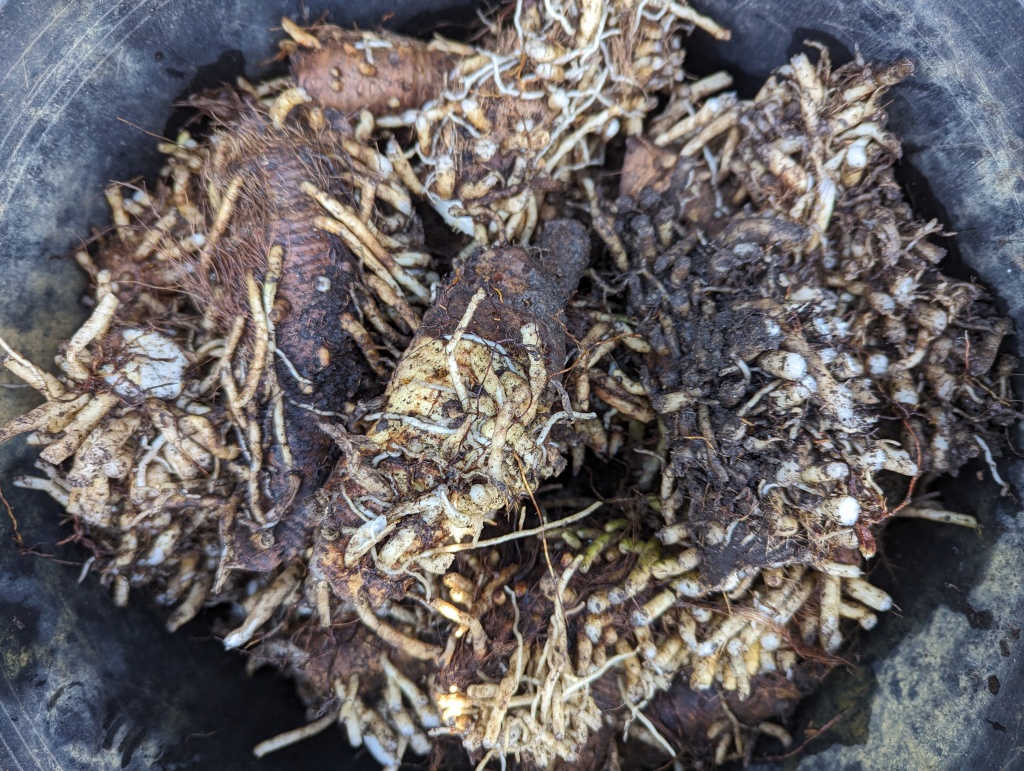
2. Rhizomes are also both impressively densely meshed and fleshy. Division is no simple task. I separated these scraps by cutting their roots. I bury them between divided shoots.

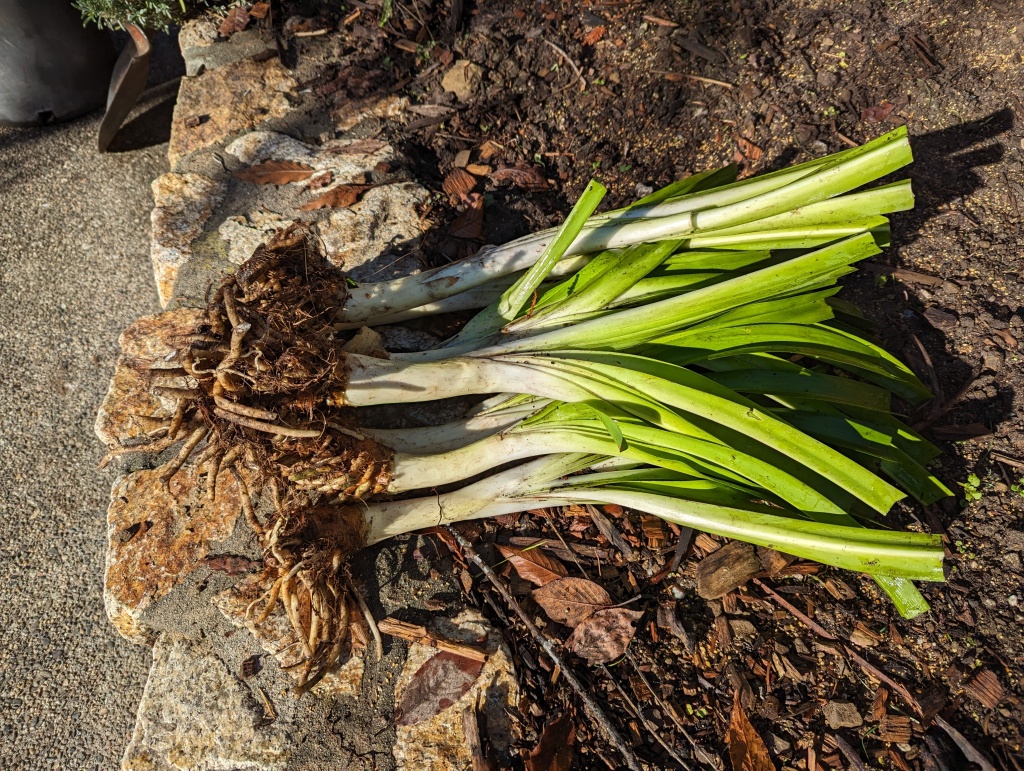
3. Foliar shoots or rosettes with a few inches of their rhizomes will grow into new plants. These have been groomed, so are ready for plugging with scraps of rhizomes in between.

4. Gophers claimed all but a few lily of the Nile that were plugged here last year. I should have taken a picture of their replacements here, even if they are not much to brag about.

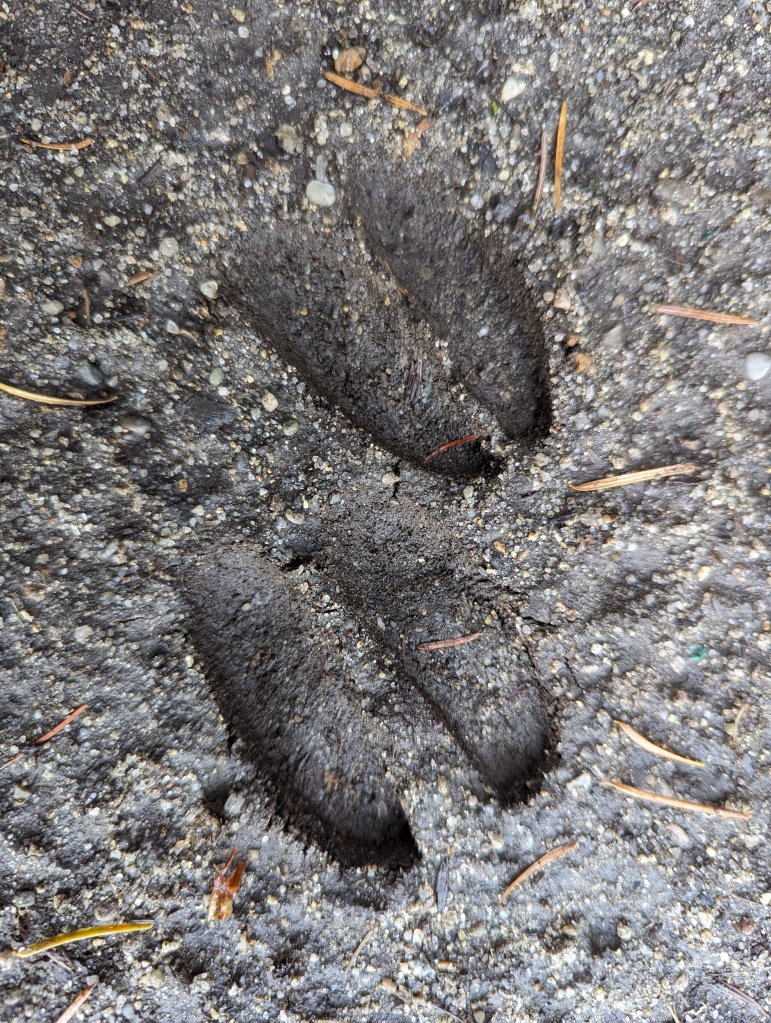
5. Oh deer! We are very fortunate that deer avoid the landscapes here. They always have.

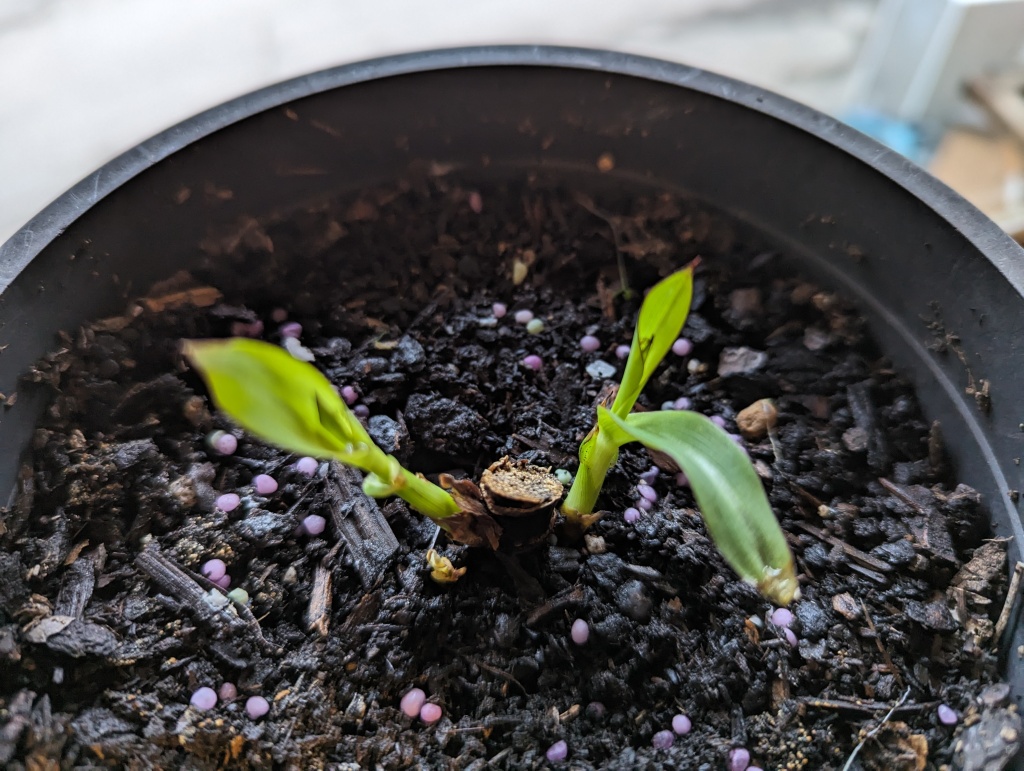
6. Sugarcane is growing like a weed. This is one of too many cuttings that I brought from Los Angeles. They were pruning scraps from what I believe to be ‘Pele’s Smoke’. Sweeet!

This is the link for Six on Saturday, for anyone else who would like to participate: https://thepropagatorblog.wordpress.com/2017/09/18/six-on-saturday-a-participant-guide/
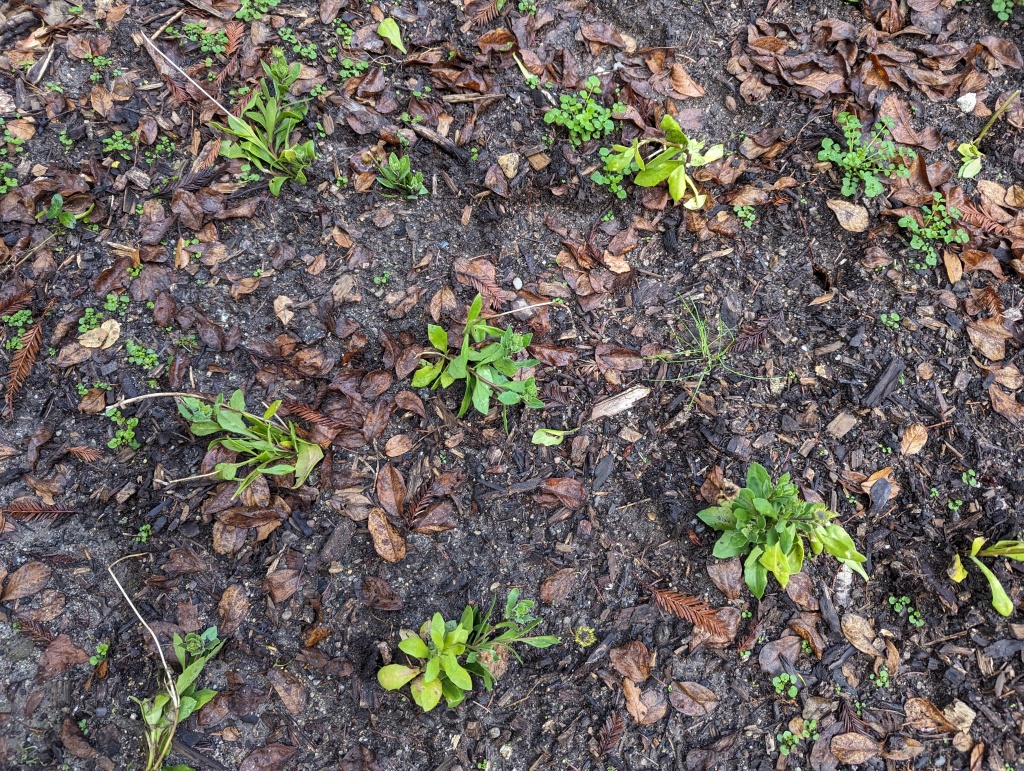
Horridculture – Sniveling

My colleagues are as totally excellent as my career is!

Horridculture is a collection of rants about horrid horticulture. Almost all of such rants are from my own experience and observation within the various horticultural industries. There are more than I can write about. I have been involved with so much more than just production of horticultural commodities on the farm. Horridculture is a bunch of sniveling about the worst of it.

Perhaps I should occasionally say a bit more about the best of it. If I thought it would be more interesting, I could write much more about the best than the worst. Except for the few experiences that I so frequently snivel about, my career has been awesomely RAD!

Therefore, for this week, I will briefly deviate from the typical Horridculture theme.

While we were in school, the professor who taught ‘Orientation to Horticulture’ told us, “If you want to make a lot of money in your career, change your major NOW!”. Of course, we did not. Brent and I both were naturally horticulturists, even if we were not good students. We studied exactly what we wanted to study. We made our careers of what we do naturally. Brent became one of the most renowned landscape designers of the Los Angeles region. I became a nurseryman.

Not only did I work for two legendary nurserymen within my primary career, but I also worked for at least four legendary arborists. I worked with the production of both citrus and rhododendrons with their companion crops. My gardening column was not planned, but has continued for a quarter of a century. Although not as well distributed locally as it had been, it is presently shared with a few publications between San Francisco and Beverly Hills in the Los Angeles region. These few publications sometimes share it with a few others elsewhere.

So, besides all the sniveling, I have been very pleased with my career. The worst of it may not have been as difficult as retirement might be. Fortunately, I do not necessarily need to retire completely, although I should quit sniveling.

Six on Saturday: Self-Replication

Kwanzan flowering cherry is spectacular as it blooms for early spring. Only one inhabits our landscapes, and of course, it is dormant and defoliated until next spring. I took these six pictures of it anyway, to demonstrate that it is deteriorating fast, but could be able to replace itself before it succumbs to decay completely. Unfortunately though, it will likely be removed before it is able to do so, so that we can install a purple leaf plum within this particular situation instead. I only assist with this self-replication process because of the very unlikely possibility that replacement with another different tree may never actually happen. It has been delayed for years.

1. This flowering cherry tree has been deteriorating for the past several years. Several big limbs have died, leaving its canopy disfigured and lopsided. Its right half is nearly gone.

2. Only shiners remain where some of the major limbs that died were removed from the trunk. If this tree were to survive any longer, these shiners would decay before they heal.

3. Incidentally, this tree is not grafted. Suckers from the roots are indistinguishable from growth of the canopy. Bark of exposed roots is indistinguishable from bark of the trunk.

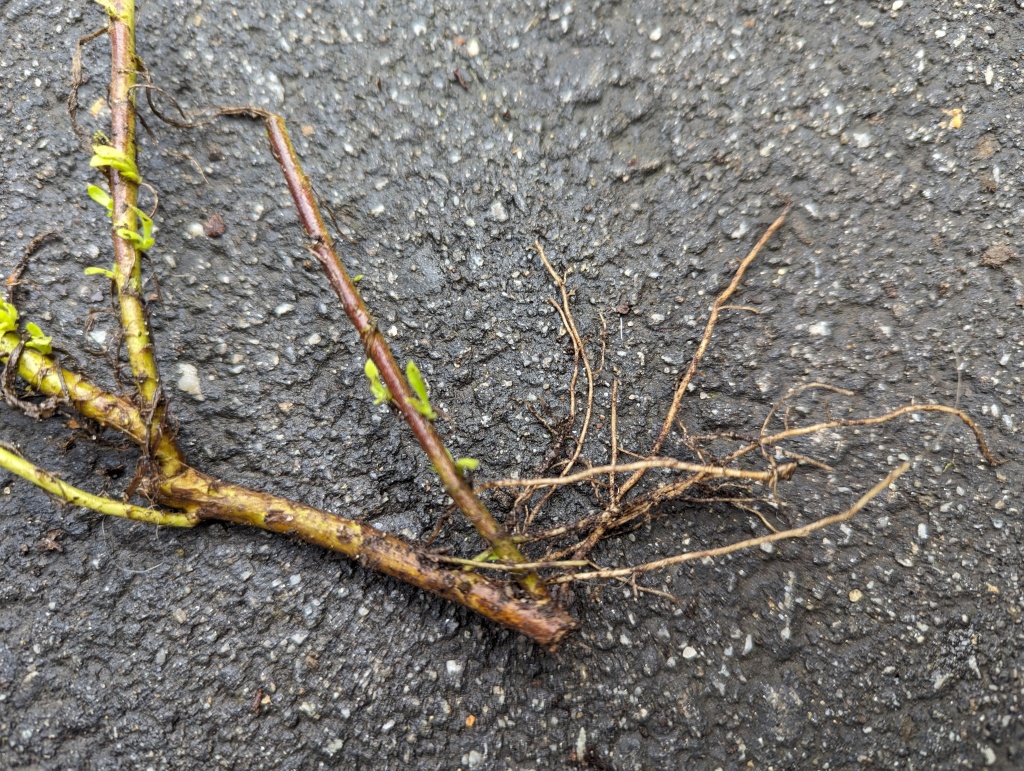
4. Therefore, this sucker is genetically identical to the original tree. The roots have been generating suckers for several years. All but this one were removed. Instead, it is bound.

5. The binding stake is nailed to one of the major limbs of the original canopy, as well as to a big root below. Damage to the limb is unimportant. It will be removed soon anyway.

6. The bound sucker is now more than six feet tall. It could develop branches to begin to grow as a new tree next year. It could stay as a replacement after removal of the original.

This is the link for Six on Saturday, for anyone else who would like to participate: https://thepropagatorblog.wordpress.com/2017/09/18/six-on-saturday-a-participant-guide/
Horridculture – Cyclamen (deferred from Wednesday)

Cyclamen are too expensive to be as disposable as they are.

Cyclamen persicum is a popular cool season annual. It is known simply as cyclamen here because it is the only common cyclamen that is available. It might be known as florists’ cyclamen where other species are available. Red and white are the most popular colors because cyclamen are associated with Christmas. Cyclamen can alternatively bloom with various tints and shades of pink, salmon pink and purplish pink. Some bloom with two-toned color or picotee margins. Cyclamen really is a delightful perennial.

Yes, perennial. Like many garden annuals, cyclamen is actually a perennial. It can survive in the garden for many years. It merely goes dormant through warm summer weather, and then resumes growth as weather cools during autumn.

Not only is it a perennial, but it is an expensive perennial. It is too expensive to be so disposable. So-called ‘landscapers’ do not mind. Disposable annuals are lucrative for them. Besides, even where cyclamen can perform as a perennial, it is not colorful throughout the year, and even in season, it is not as colorful as it is for its first season away from the nursery that it originally grew in.

Other species of Cyclamen that are available within other regions are becoming available here as well. Their bloom is sparser, with only light pink or blushed white flowers. They are grown as perennial wildflowers that bloom for autumn or winter, when not much else blooms. Although not as garish as common florists’ cyclamen, they are appreciated for their perennial performance.

The few florists’ cyclamen that we install at work bloom somewhat reliably only until spring. Because they were grown within ideal greenhouse conditions, they do not adapt immediately to landscape conditions. By spring, many are already beginning to rot. Those that survive their summer dormancy may become perennial.

Six on Saturday: Springtime

Flowers bloom throughout the year here. I featured bloom this week to avoid the topic of minor frost damage that I should have protected vulnerable foliage from. Frost is minor here, and does not occur every year, but it occurred here prior to some other regions this year. However, this bloom can imply that it is springtime.

1. Osteospermum X hybrida, African daisy should bloom most for spring, but can bloom randomly whenever it chooses, and often blooms most profusely for summer or autumn.

2. Helichrysum bracteatum, strawflower is my favorite of these six because I remember it as the main cut flower crop to the east of my Pa’s home in Montara through the 1980s.

3. Salvia chiapensis, Chiapas sage is a species that I had never met before last year. They grew well through last summer, and even better with more bloom through this summer.

4. Cestrum fasciculatum ‘Newellii’, bastard jasmine has an interesting name. Of course, it is not really jasmine. It recovered slowly from gopher damage, but blooms nicely now.

5. Rosa, carpet rose is my least favorite of these six because it is so cheap and common. I prefer old fashioned and respectable hybrid tea roses that are such excellent cut flowers.

6. Iris X germanica, bearded iris should bloom for spring. Reblooming types also bloom for autumn. I have no idea what this is, but I sort of doubt that it is a reblooming variety. Earlier, it did not bloom much, so now seems to be blooming late for the first phase this year, rather than blooming again for a second phase within the same year. Furthermore, its simple bloom and slim floral stalks suggest that it is not extensively bred. It might be a simple species that is confused about the seasons here, because this climate is so mild.

This is the link for Six on Saturday, for anyone else who would like to participate: https://thepropagatorblog.wordpress.com/2017/09/18/six-on-saturday-a-participant-guide/