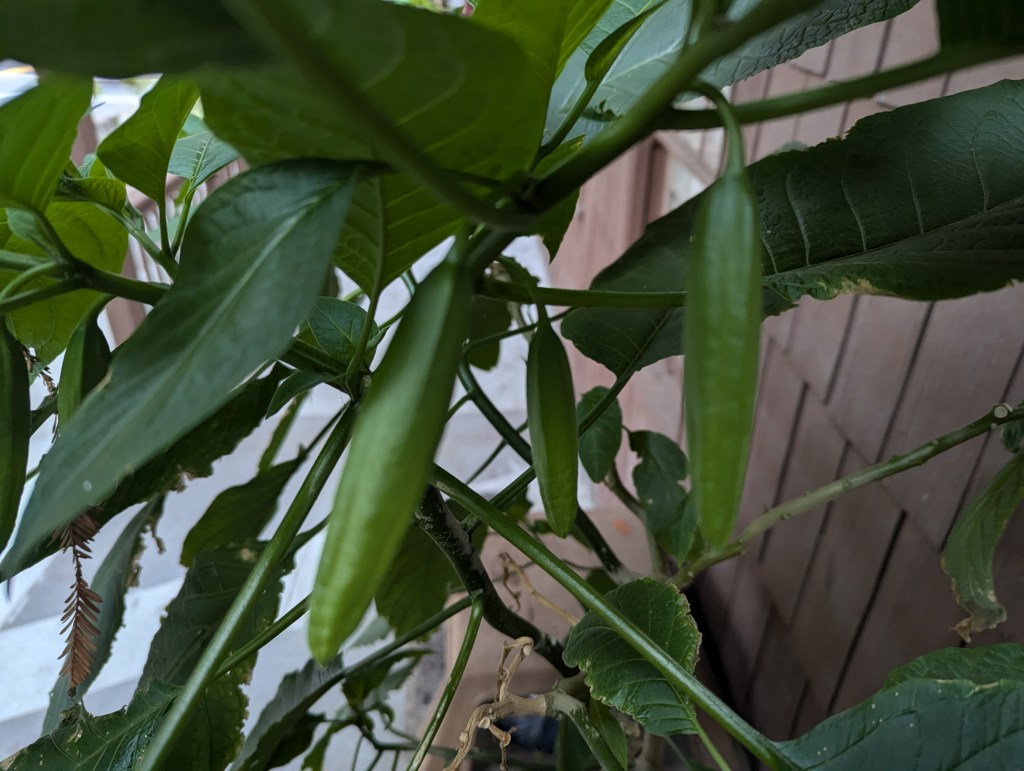
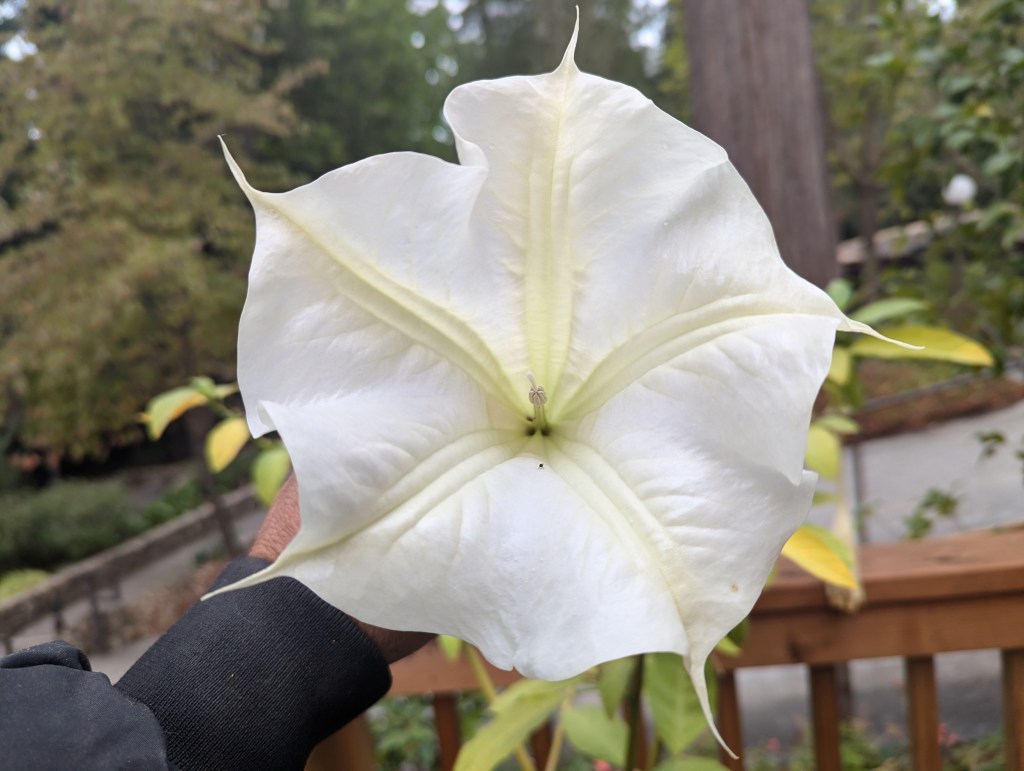
Six on Saturday: Mix It Up

Six pictures can not represent all that is blooming now. I did not even try. Nor did I post six pictures of six different cultivars of the same species, as I typically do with camellias, azaleas, rhododendrons, flowering cherries, roses, or other flowers that we grow several cultivars of. I posted three pictures of bearded iris, but I could have procured more than six if I wanted to. I likewise could have posted more than six pictures of different African daisy. I tried to mix it up a bit more than I typically do, as I did with the snakeroot here.

1. Persicaria bistorta, snakeroot and (likely) Iris ensata ‘Variegata’, variegated Japanese iris from Tangly Cottage Gardening are happy on the edge of the pond. The Japanese iris is barely visible at the center. The rest of it is on the edge of another stream. Naturalized exotic Nasturtium officinale, watercress to the upper right shows how close the water is. I thought that there were two cultivars of snakeroot, but found three labels for ‘Superba’, ‘Firetail’ and ‘Dimity’. I can segregate their copies later, but will likely leave these mixed.

2. Clivia miniata ‘Variegata’, variegated Natal lily from Brent’s Jungalow tried to bloom, but this happened before I took a picture. Its cultivar is unidentified, but it is variegated.

3. Osteospermum ecklonis, African daisy blooms too generously for anyone to take all its flowers. About six cultivars inhabit this particular landscape with a few more in another.

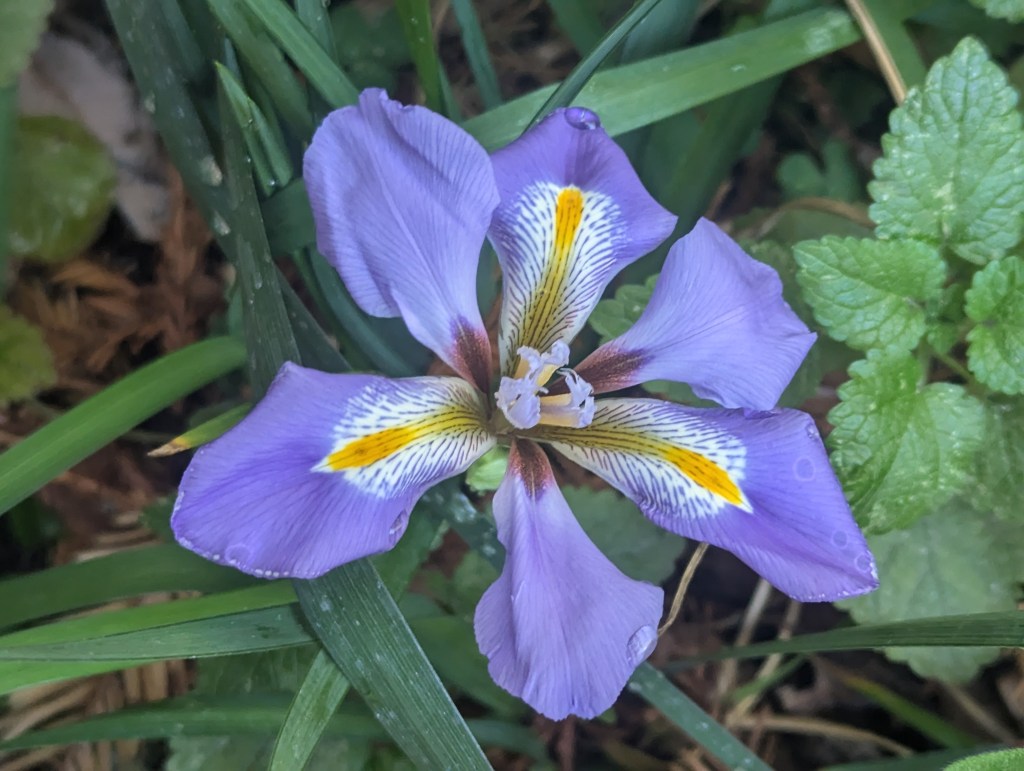
4. Iris X germanica, bearded iris are blooming so tall that some should be staked. There are too many cultivars in the Iris Bed to take pictures of, so I will show only these three.

5. All cultivars of the primary Iris Bed are unidentified. At least three that were relocated from the forest are likely feral. One is pale white. This pale yellow looks like Tweety Bird.

6. All of the iris here, like the iris in my garden, have history. This iris is from the former home of an respected colleague. He brought it to me before the garden was demolished.

This is the link for Six on Saturday, for anyone else who would like to participate: https://thepropagatorblog.wordpress.com/2017/09/18/six-on-saturday-a-participant-guide/

Horridculture – Thorough Hacking

This is no simple hack job. Someone or a few someones put a great deal of effort into this very thorough hack job. This took significantly more effort than would have been needed to do it properly. Seriously, proper pruning would have been much easier, and much healthier to this victimized vegetation. In the future, this vegetation would have needed much less maintenance. Furthermore, this is more than visually unappealing. It is downright unsightly. Removal of such disfigured shrubbery would be an improvement, even without replacement. As the illustration below demonstrates, this is not merely a single specimen. It is an entire herd of brutally disfigured shrubs. How did someone determine that this was the right thing to do?!

This mangled shrubbery is vine maple, Acer circinatum, which is native to the Pacific Northwest where I got these pictures. I actually like this particular species because it can perform similarly to Japanese maple, but is not Japanese maple, which I am not at all keen on. Part of my dislike of Japanese maple is the result of working with so many that were ruined like these vine maples were. Vine maple is more tolerable to me because it is too rare here at home for me to encounter any that are ruined like these. This is a first for me. Perhaps that is why it was more difficult to ignore than the countless similarly ruined Japanese maples that I do not need to work with, but see around town.

I can not help but wonder what these vine maples would look like if they had developed somewhat natural form with only significant pruning for clearance above the adjacent pavement, perhaps with minor pruning to limit congestion within their canopies.. Would they resemble mature Japanese maples with extra trunks by now?

Six on Saturday: Surprise!

Even annual bloom can be surprising after a few or many months without it. Perhaps an unexpected bloom is more surprising. Familiar wildlife might be surprising when it does something unexpected. Unexpected or unplanned ‘wildlife’, even if domesticated, is a bit of a surprise. Ultimately though, the major surprise is the fifth of these Six. The first two pictures are from Brent’s garden, not here.

1. Persea americana, avocado fruit ripens in the tree above Brent’s office for quite a few months. The tree rarely lacks fruit completely. These spiral stairs are from the roof deck. This squirrel saw Brent taking a picture of it taking its avocado down, so took it back up.

2. Hippeastrum papilio, butterfly amaryllis was left at Brent’s garden by a neighbor who relocated. It is as perennial here as it is there; so I want a copy. Brent did not know what it was until, after two years or so, it surprised him with bloom. Brent takes bad pictures.

3. Malus X (floribunda?) ‘Prairie Fire’ flowering crabapple bloomed spectacularly. It is a relatively modern cultivar from 1982, but is surprisingly old fashioned. I grew up with a tree that was a decade or so older than I am, but it bloomed with a similar reddish pink.

4. Cymbidium orchid of an unidentified cultivar was left by a colleague who only wanted it off his porch. It gets only watering, but blooms annually, and surprisingly abundantly. I should eventually divide it, but I am hesitant to interfere with such a reliable specimen.

5. Koi met an unfortunate demise two winters ago as someone who was unaware of their presence drained their pond. However, a neighbor inquired about two small fish that he saw in the pond soon afterwards. More recently, the same neighbor inquired about this. It seemed to be about a foot and a half long, with a slightly smaller and darker associate.

6. Koi are supposedly schooling fish. Two do not qualify as a school. So, now they have a few more friends to go to school with. These tiny koi should be able to evade their larger classmates, who might otherwise eat them. Actually, I doubt that the larger koi are large enough to eat them anyway. This is not something that I expected to be contending with.

This is the link for Six on Saturday, for anyone else who would like to participate: https://thepropagatorblog.wordpress.com/2017/09/18/six-on-saturday-a-participant-guide/

Six on Saturday: Double Whammy!

Rhody, Carson and I are back from vacation. Now I see that I did not get many pictures

1. If this looks like the same major stockpile of vegetation from Skooter’s Garden (Tangly Cottage Gardening) that I posted a picture of last week, it is because it is. The difference is that it is here at home now. Goodness, it will be a busy week of division and plugging.

2. Cerinthe seed are in the pill bottle to the lower right of the previous picture. So is that obstinate pill to the left. I should have tried cerinthe by now, and this is my justification.

3. Poinciana and esperanza seed from Crazy Green Thumbs are the second of my double whammy! They were likely in my mail before we left on vacation, but we left town before the Post Office was open. Shamefully, they will be my second attempt for both species. It is a long and embarrassing story. This particular poinciana is more commonly known as dwarf poinciana, Caesalpinia pulcherrima. This particular esperanza is more commonly known as yellow bells, Tecoma stans. ‘Esperanza’ means ‘hope’, which I have enough of.

4. My vacation was scheduled to be as late in winter as possible but prior to the bloom of apple trees because I intended to prune eleven apple trees while still dormant. All eleven trees are pruned, and their formerly fresh detritus is gone. Sweet Brown would approve.

5. Bonsai stock is what my Pa grows on his farm where the pruned apple trees and other old fruit trees live. Goodness, I really should have stayed later, and taken more pictures.

6. Star magnolia performs very well in the Pacific Northwest. I rarely see them any more than five feet tall locally. This is an awkward picture because I took it from a moving car.

This is the link for Six on Saturday, for anyone else who would like to participate: https://thepropagatorblog.wordpress.com/2017/09/18/six-on-saturday-a-participant-guide/
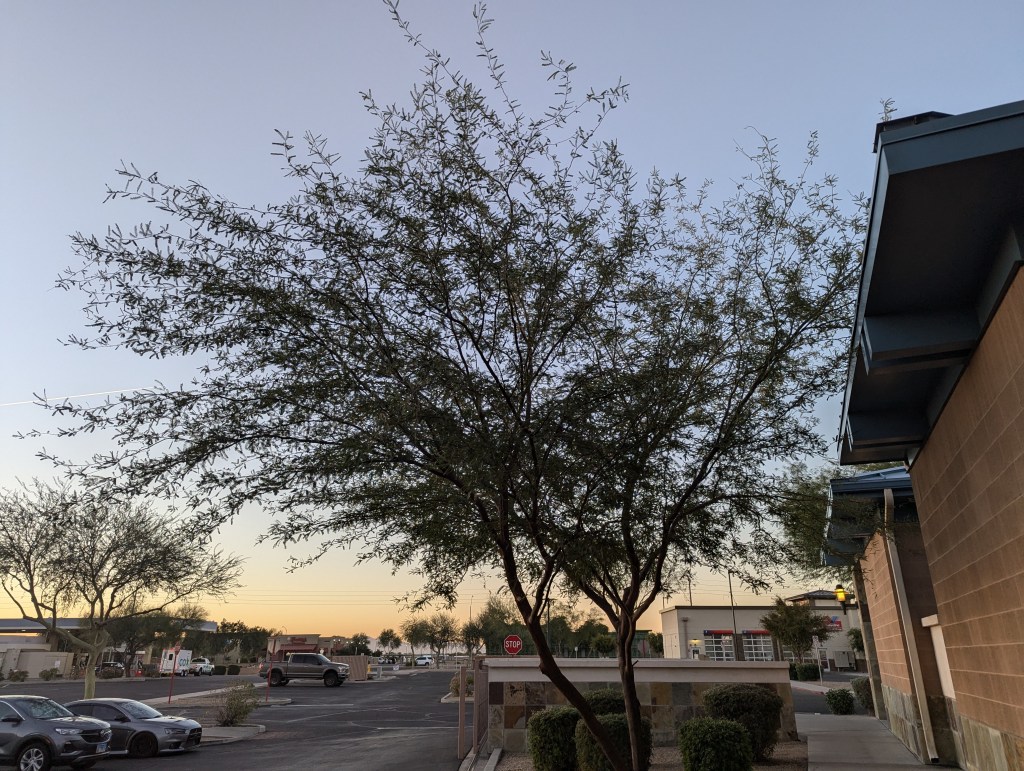
Six on Saturday: Vacation

Rhody, Carson and I are finally on vacation in Western Washington. As usual, departure was delayed. Now that we are here, and not at work, I have not been taking pictures like I should have been. Consequently, I am deficient of pictures for Six on Saturday. Four of these six, or two thirds, are not even relevant to horticulture.

1. Sasquatch, who is also known as Bigfoot, is a celebrity of the Pacific Northwest; and is a species that is commonly considered an individual. This was in Canyonville in Oregon.

2. Portland in Oregon is the City Of Roses. This is its South Waterfront district, south of Downtown. Incidentally, most roses prefer the climates of San Jose to those of Portland.

3. Rhody enjoys rest stops. They allow him to renew his ownership of Oregon. This is the Toutle River Rest Area, on northbound Highway 5, north of Castle Rock in Washington.

4. Ferns are common within the coastal climates of the Pacific Northwest. I do not know what this fern is. The pine may be a Japanese red pine. It is in Raymond in Washington.

5. ‘Black Gamecock’ Louisiana iris is to the left within the big box to the right. It was the priority, to replace what the gophers ate last year. There is more now than then! The rest of this vegetation is a dozen or so additional perennials from Tangly Cottage Gardening! I will get individual pictures of some of them as I process them when I get back to work. The unidentified variegated foliage to the far right seems to be variegated Japanese iris.

6. Skooter approves of my exploitation of his garden. He must know that I intend to take better care of his Louisiana iris than I did last year. He was on a sunny porch at the time.

This is the link for Six on Saturday, for anyone else who would like to participate: https://thepropagatorblog.wordpress.com/2017/09/18/six-on-saturday-a-participant-guide/
Six on Saturday: 6 X

Rhody, Carson and I are still here. We should be in Washington now. We were supposed to leave at about midnight between last Tuesday and Wednesday. Now, we plan to leave at about midnight between Sunday and Monday, and stay in the Pacific Northwest for as long as initially planned. I wrote about the delay earlier. It is why I posted no pictures of our trip yet. Instead, there are three ‘X’s and three eXotics, although the last might really be an undocumented native species. The first three ‘X’s are between generic and specific names of three interspecific hybrids. By next week, I should get six pictures from Oregon and Washington. Incidentally, the Official State Flower of Washington was nicely named after Rhody.

1. Prunus X subhirtella, winter flowering cherry was featured for the garden column last week, or later in some papers. This picture was not used. I did not want it to go to waste.

2. Pelargonium X hortorum, zonal geranium is nothing special, but I happen to like this red too much to discard it after it was clobbered by a car. I can only hope it was a Buick.

3. Freesia X hybrids, freesia is likewise nothing special, but got my attention just after I mentioned feral freesia in the garden column. It is misplaced but too colorful to be feral.

4. Vinca major, greater periwinkle is an aggressively invasive naturalized exotic species. Less pretty aggressively invasive naturalized exotic species would replace what I remove.

5. Allium triquetrum, wild onion is supposedly another aggressively invasive naturalized exotic species. It is so established that I had always considered it to be a native species.

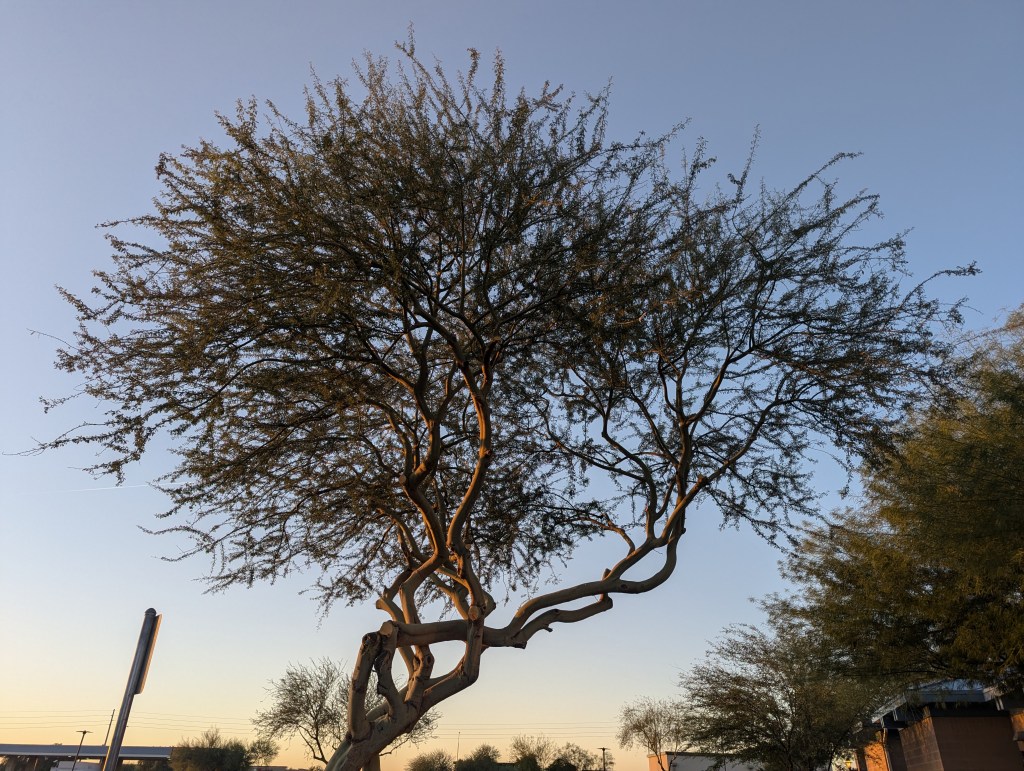
6. Thuja plicata, Western red cedar is supposedly a naturalized species, but could be an undocumented native species. No one seems to know; but it is not aggressively invasive.

This is the link for Six on Saturday, for anyone else who would like to participate: https://thepropagatorblog.wordpress.com/2017/09/18/six-on-saturday-a-participant-guide/

Horridculture – Traditional Delay

Rhody and his Roady, . . . still waiting to leave.

This article is scheduled to post at midnight between March 19 and March 20, which is precisely when we were scheduled to leave for the Pacific Northwest. We were supposed to arrive on the Kitsap Peninsula late in the afternoon, and likely continue to the coast the following morning. Now, we will not leave until midnight between Sunday, March 24 and Monday, March 25. I know that it is only five days later, but it changes the entire schedule. I should still be there in time to prune the apple trees prior to bloom. I do not know when we will return now, but it will likely be about Thursday, April 4.

Then, two and a half weeks later, we leave again for eleven days in Beverly Hills in Los Angeles County, and Buckeye near Phoenix in Arizona. That would involve leaving Wednesday, April 24, and returning on Saturday, May 4. That should be before the weather gets too warm in Arizona to prune the mesquite trees there comfortably. I suppose that the second trip does not necessarily need to be delayed just because the first trip was. We could still leave on Wednesday, April 17 and return on Saturday, April 27 as originally planned, even if that leaves less time between the two trips. Perhaps I should not worry about this until we return from the first trip!

This seems to happen annually. Regardless of how intent I am on leaving on time, we encounter a delay of some sort of another. Ultimately, we leave at about the same time annually, but only after planning to leave about a week earlier, just as we planned for the previous few years. I can not complain, of course, since the delay is justified, but that is another topic for another post.

Six on Saturday: Shabby Spring II

Some of these Six are leftovers from last week. Some might have been late last week, and are a week later now. African daisy and calla bloom somewhat randomly, so technically, may not qualify as late. Likewise, candelabra aloe does not bloom quite as randomly, but is not always punctual either. I should be more observant of bloom schedules. Evergreen clematis and bridal wreath spirea are more likely to be blooming late. I am more certain that flowering quince should have bloomed earlier. Only calla and candelabra aloe were grown here. The others were originally acquired from nurseries many years ago, so I can not gloat about growing them. Incidentally, Rhody and I will leave for Washington early Wednesday morning, so my next two ‘Six on Saturday’ posts should be from there.

1. Clematis armandii, evergreen clematis bloomed while I was not looking. This picture is from last week. Bloom lasted a bit longer than expected, but is presently deteriorating.

2. Osteospermum ecklonis, African daisy also bloomed last week, but of course, is rarely without bloom. It blooms a bit more profusely in phases between now and late summer.

3. Aloe arborescens, candelabra aloe typically blooms for late winter. These vivid orange flowers are resilient to wintry weather, and contrast splendidly with blue California lilac.

4. Zantedeschia aethiopica, calla grows wild within a portion of one of the landscapes. It could do the same elsewhere if we were to relocate some of it, which is why we rarely do.

5. Spiraea prunifolia, bridal wreath spirea seems to be blooming late. I do not know for certain because I do not remember when it typically blooms. Foliage develops afterward.

6. Chaenomeles speciosa ‘Double Take Orange’ flowering quince also develops its foliage after bloom. I am more certain that it is blooming late. It typically blooms with forsythia.

This is the link for Six on Saturday, for anyone else who would like to participate: https://thepropagatorblog.wordpress.com/2017/09/18/six-on-saturday-a-participant-guide/
Six on Saturday: Shabby Spring

This should have been done earlier. While most who participate in Six on Saturday have been posting pictures of early spring bloom, I have been posting less colorful pictures of dormant corms, their barely visible new spring growth, some windmill palm foliage and a sliced weirdly yellow beet. Some of the few flowers that I posted pictures of were oddly pallid, which was sort of why I thought they might be interesting. Now that I am posting floral pictures, early spring flowers are beginning to deteriorate. The first two are rather shabby. The third has not been quite right for a few months. I should have found fresher flowers.

1. Eucalyptus cinerea or pulverulenta, florist silver dollar got an identity crisis. I learned it as cinerea. I am now told that it is pulverulenta. Regardless of its name, bees enjoy it. We thought we added another tree of the same species nearby, but it is the other species.

2. Tecomaria capensis, cape honeysuckle really was prettier earlier. Its bloom is not too profuse, but it is distinctly orange. Goodness, I really should have taken a better picture.

3. Rosmarinus officinalis, rosemary is badly infested with mites, but blooms regardless. It is right across the road from the silver dollar, and just as popular with the honeybees.

4. Lavandula stoechas, Spanish lavender is the only lavender that self sows here. It does not become invasive though. Its bloom may be blue, pink, white or, obviously, lavender.

5. Tulbaghia violacea, society garlic is one of my least favorite of perennials. It stinks! It is not so much to look at either. It has been here for many years though, and will not die.

6. Grevillea rosmarinifolia, rosemary grevillea seems as popular with hummingbirds as rosemary and silver dollar is with bees. Hummingbirds are prettier than this odd bloom.

This is the link for Six on Saturday, for anyone else who would like to participate: https://thepropagatorblog.wordpress.com/2017/09/18/six-on-saturday-a-participant-guide/

Horridculture – White

White bloom brightens a shady landscape.

White is my favorite color. Do not argue with me about it. I do not need to hear that it is not truly a color or that it is the absence of color. Technically, it is either or both the complete absence of color or the complete saturation of all color. In that regard, it has either or both the same or opposite definition as black.

A prism demonstrates the colorfulness of white light by separating it into all other colors that it contains. Nothing is lacking.

Other colors can be mixed with a bit of white to become a tint, but retain their identity. They can be mixed with a bit of black to become a shade, but retain their identity. They can be mixed with other colors for various hues. Only white and black lose their identities with the addition of another color. No matter how pale, white becomes a tint of the additional color. No matter how dark, black becomes a shade of the additional color.

Pink is not really a color, but it is somehow more acceptable as such than white is. It is merely a tint of red. In other words, it is red with white.

Furthermore, brown is not really a color, but is somehow more acceptable as such than white is. It is merely a shade of orange. In other words, it is orange with black.

Gray is either or both a tint of black or a shade of white, but only if either or both black or white is considered to be the color that it is. Goodness, this is getting complicated.

Ultimately, such analysis is irrelevant to my predilection for white. Brent says that I am a white supremacist. That is rude. I just know that my favorite color is white.