
Sunday Best – Winter Flowering Cherry
Perhaps flowers were not the best subjects. They are quite scarce about now.
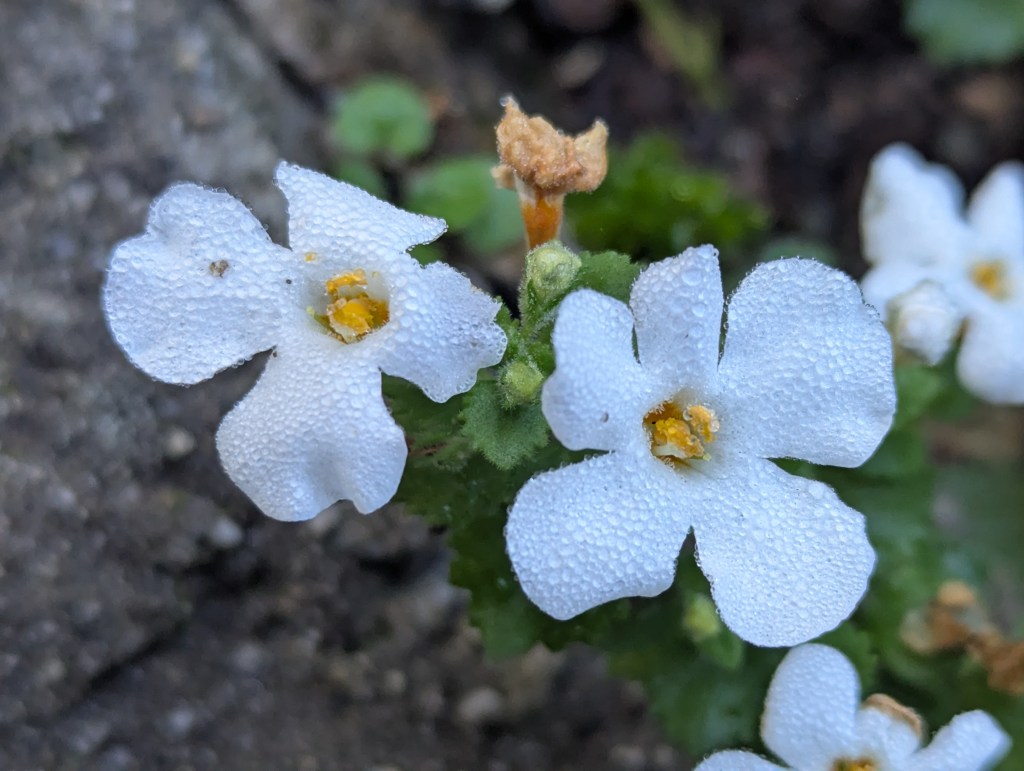
1. What is this? It grows like ground cover. Although it has not yet bloomed profusely, it blooms with a few flowers continually. I am not keen on it, but I want to know what it is.
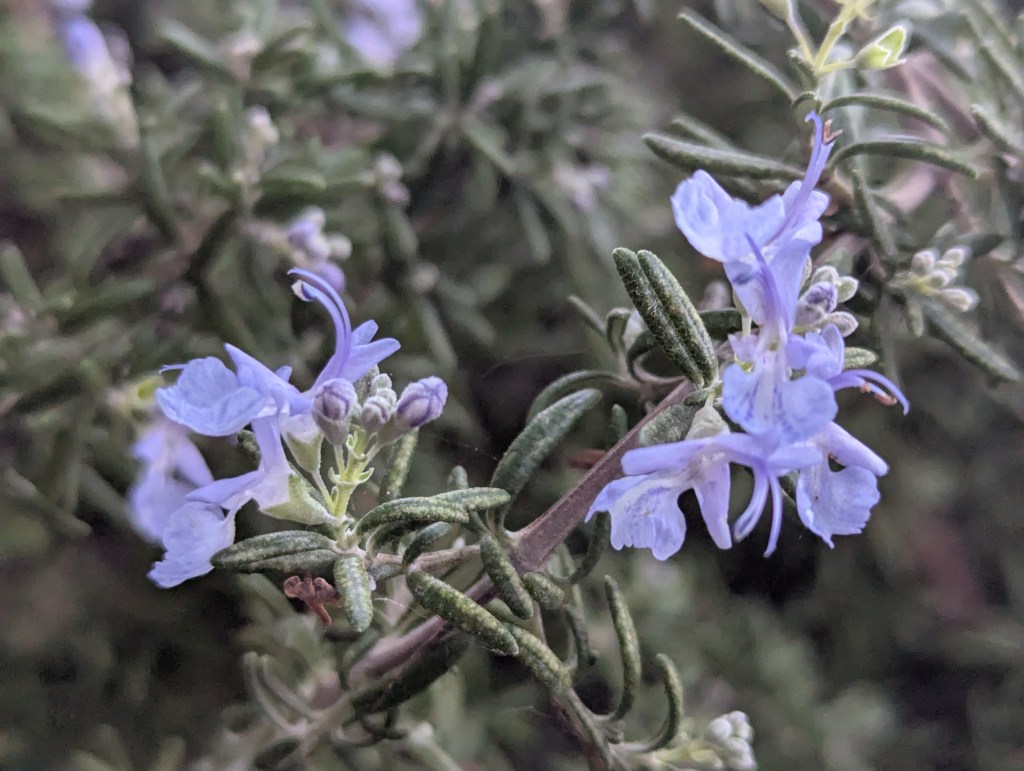
2. Rosmarinus officinalis ‘Prostratus’, trailing rosemary blooms a bit less during winter, but seems to never be completely without bloom. Hummingbirds are pleased with these.
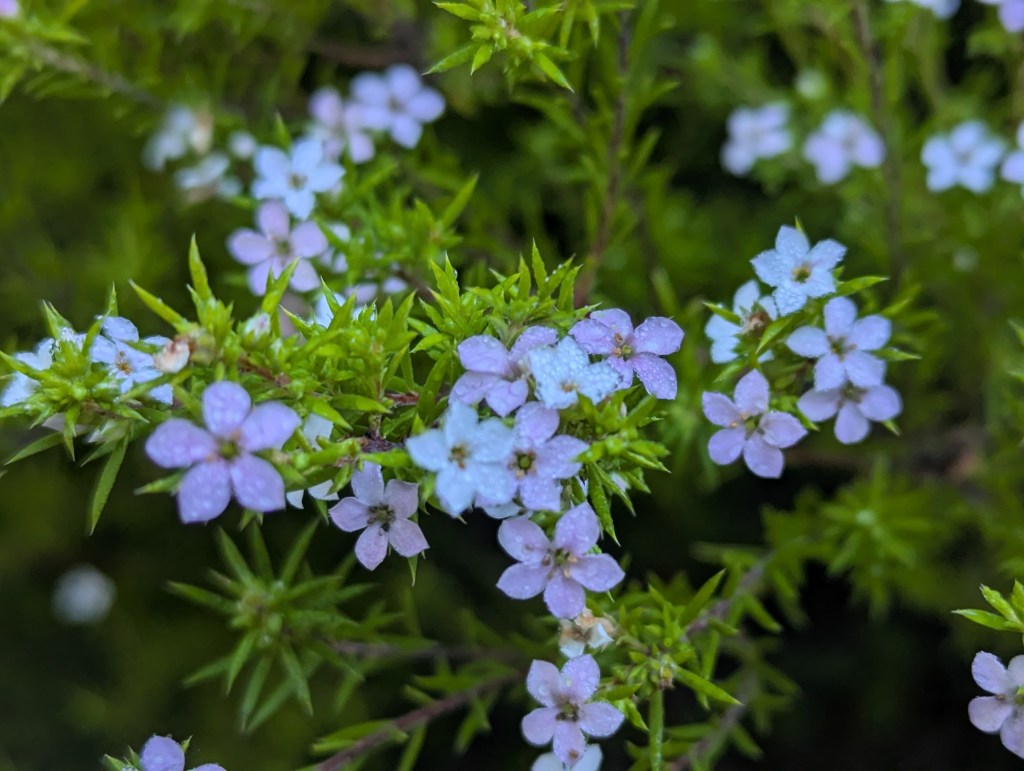
3. Coleonema pulchellum ‘Sunset Gold’ breath of Heaven probably should have stopped blooming by now; but I must not complain if it insists on blooming right through winter.
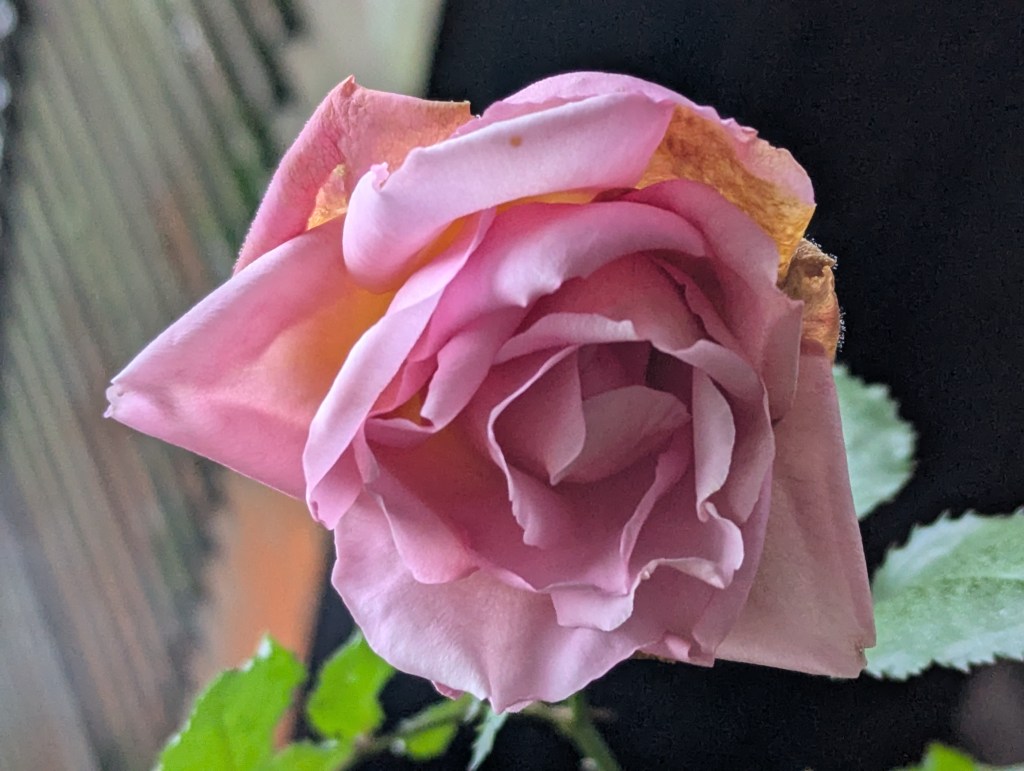
4. Rosa spp., rose bloom is finally succumbing to wintry weather. I do not know if this is because of the earlier rain or more recent chill. Other roses have been pruned for winter.
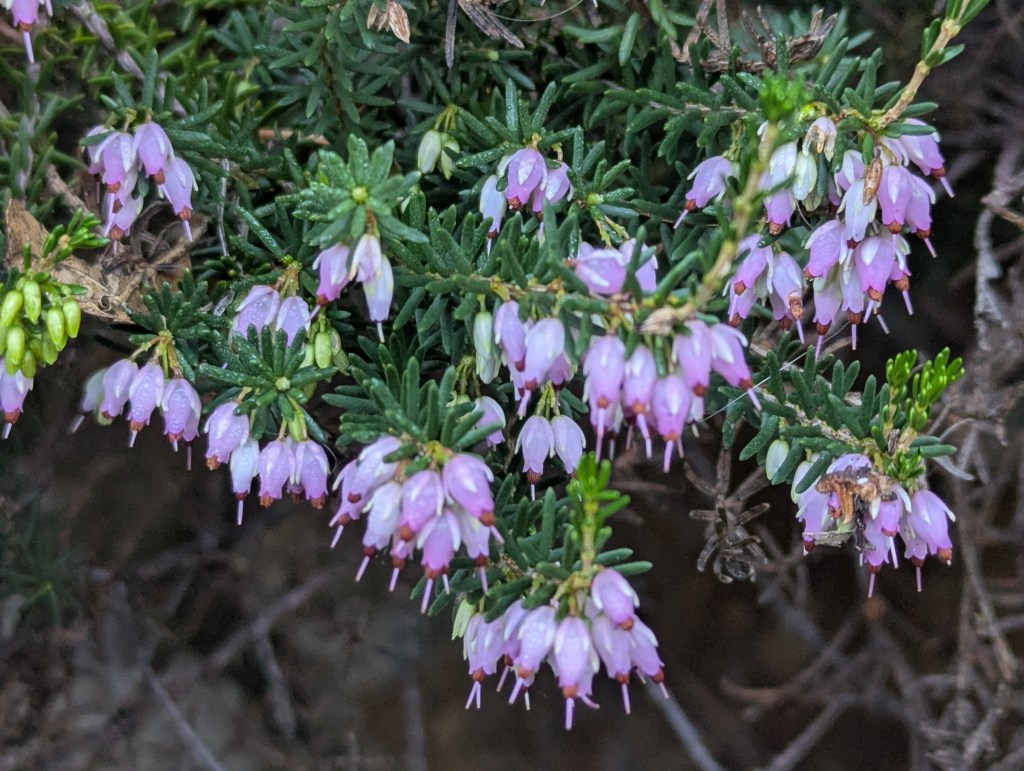
5. Erica spp., heath is happy to bloom through winter and perhaps into spring. I have no idea what cultivar this is, and I do not remember when it started blooming in November.
6. Rhody has been absent from Six on Saturday for quite a while. He is not easy to take a good picture of. This week though, it might have been easier than finding a sixth flower.

This is the link for Six on Saturday, for anyone else who would like to participate: https://thepropagatorblog.wordpress.com/2017/09/18/six-on-saturday-a-participant-guide/
Five of these six succulents have weirdly silly common names. I did not notice until after I got all of their pictures.
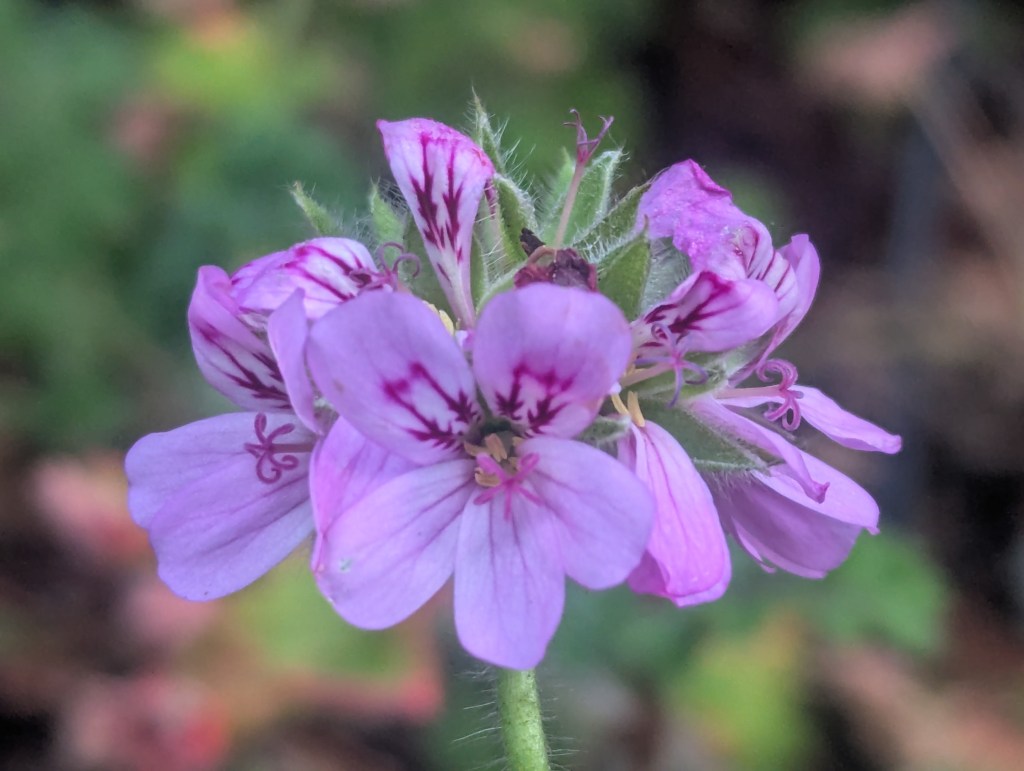
1. Carpobrotus edulis or Carpobrotus chilensis, pigface is a new acquisition that should help stabilize a sandy bank in one of our landscapes. It came from a beach in Santa Cruz.
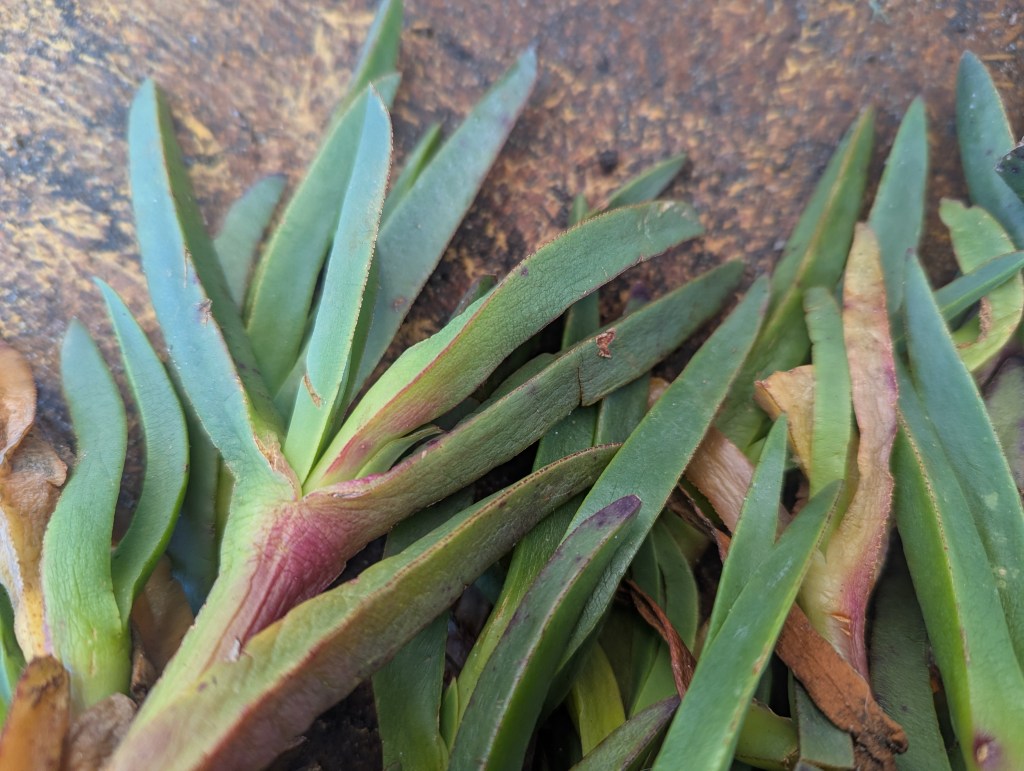
2. Aeonium arboreum, common houseleek not only has a silly name, but also has a silly form, with wide foliar rosettes suspended by lanky and otherwise awkwardly bare stems.
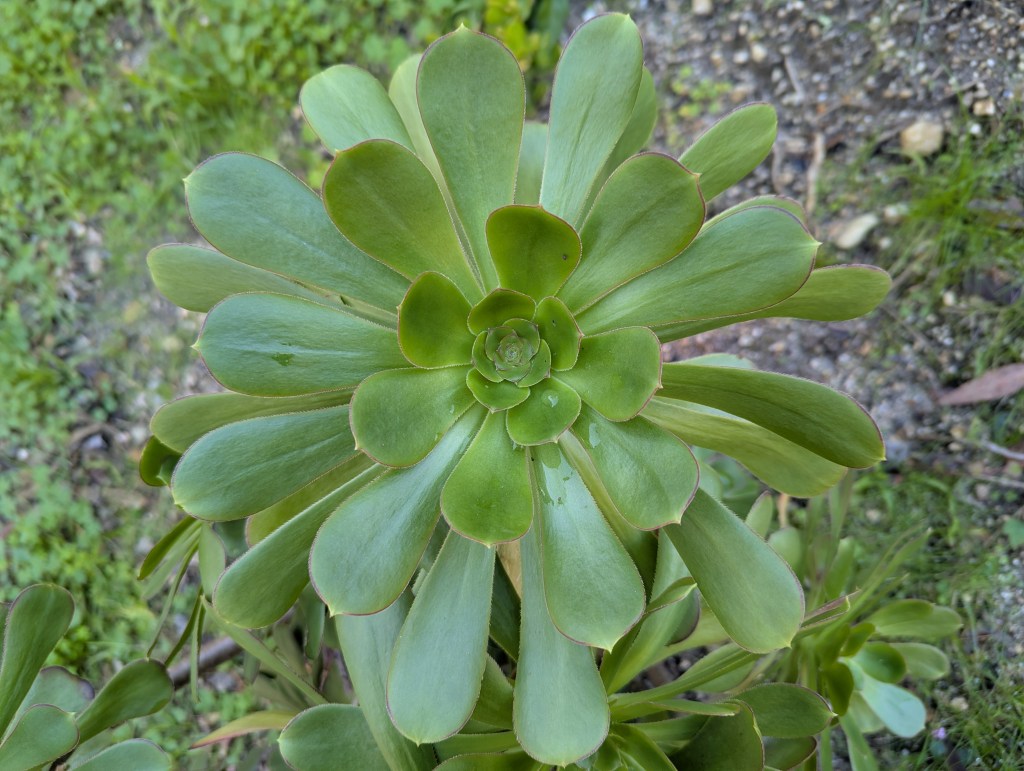
3. Graptopetalum pentandrum, bluebean is not actually within any of the landscapes. It is a diminutive specimen that remains potted in the nursery. I am unsure of its identity.
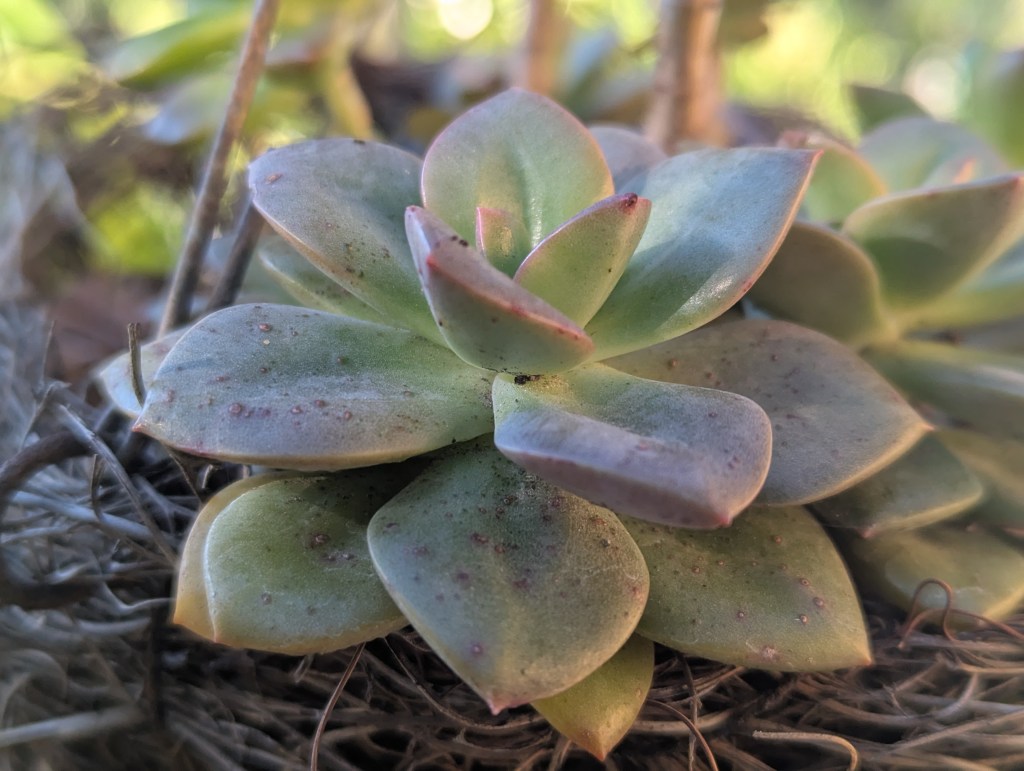
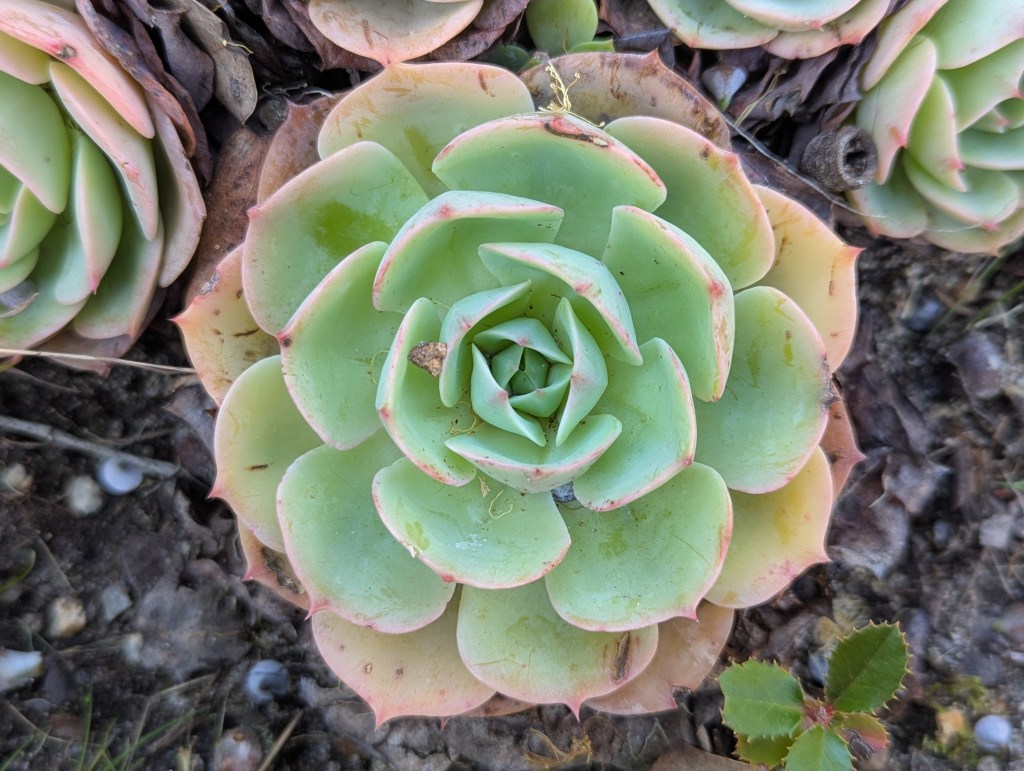
4. Echeveria elegans, Mexican snowball contrasts splendidly with the limey green of the common houseleek, which it grows at the base of. I would not mind more of these about.
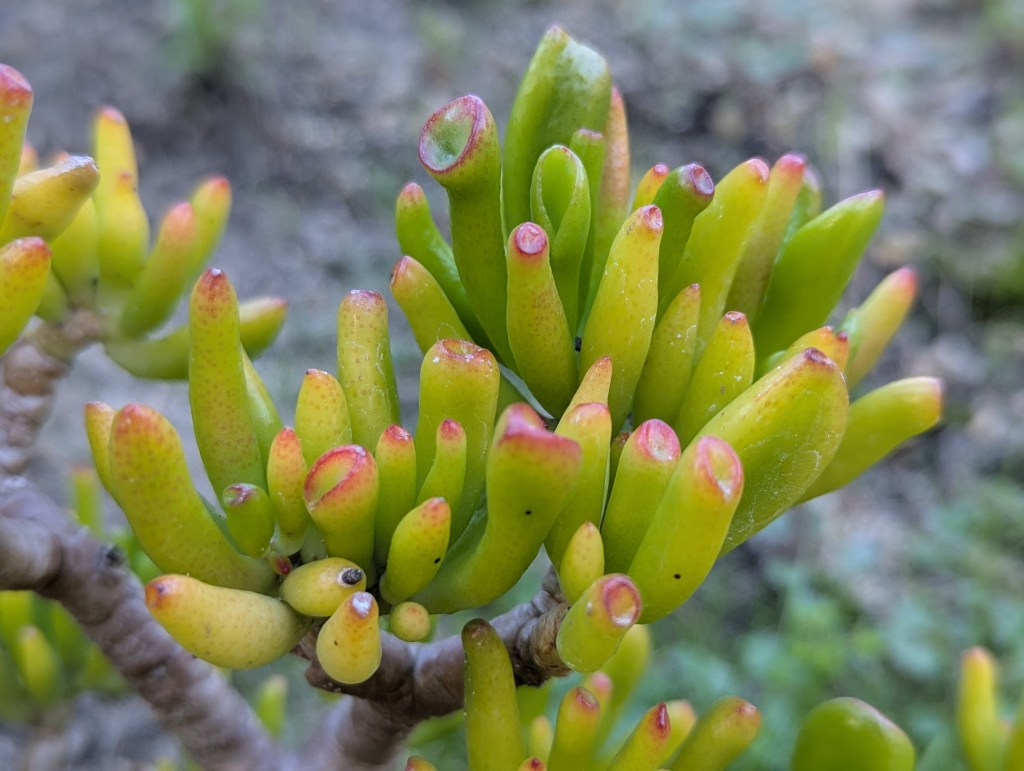
5. Crassula ovata ‘Hobbit’, Hobbit’s pipe, like common houseleek, is silly both in name, and in form, with these oddly tubular leaves. It is a lighter green than typical jade plant.
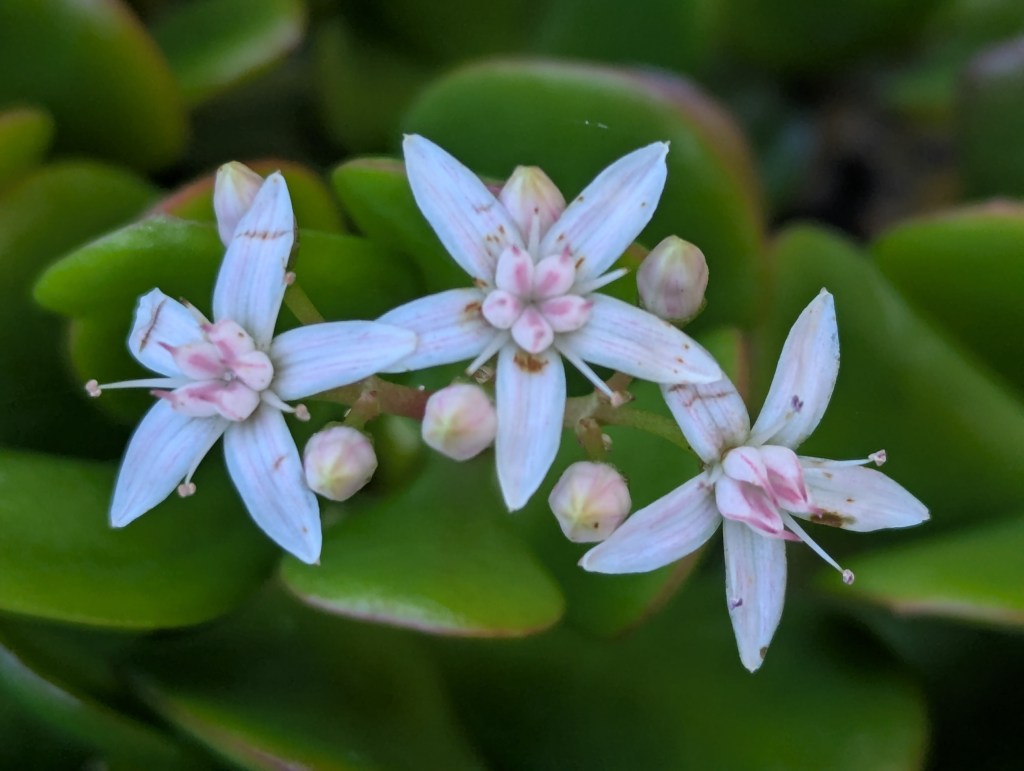
6. Crassula ovata, jade plant is the only one of these Six that lacks silliness. Its bloom is too cute in closeup view to omit, though. Besides, Six on Saturday is better with flowers.
This is the link for Six on Saturday, for anyone else who would like to participate: https://thepropagatorblog.wordpress.com/2017/09/18/six-on-saturday-a-participant-guide/
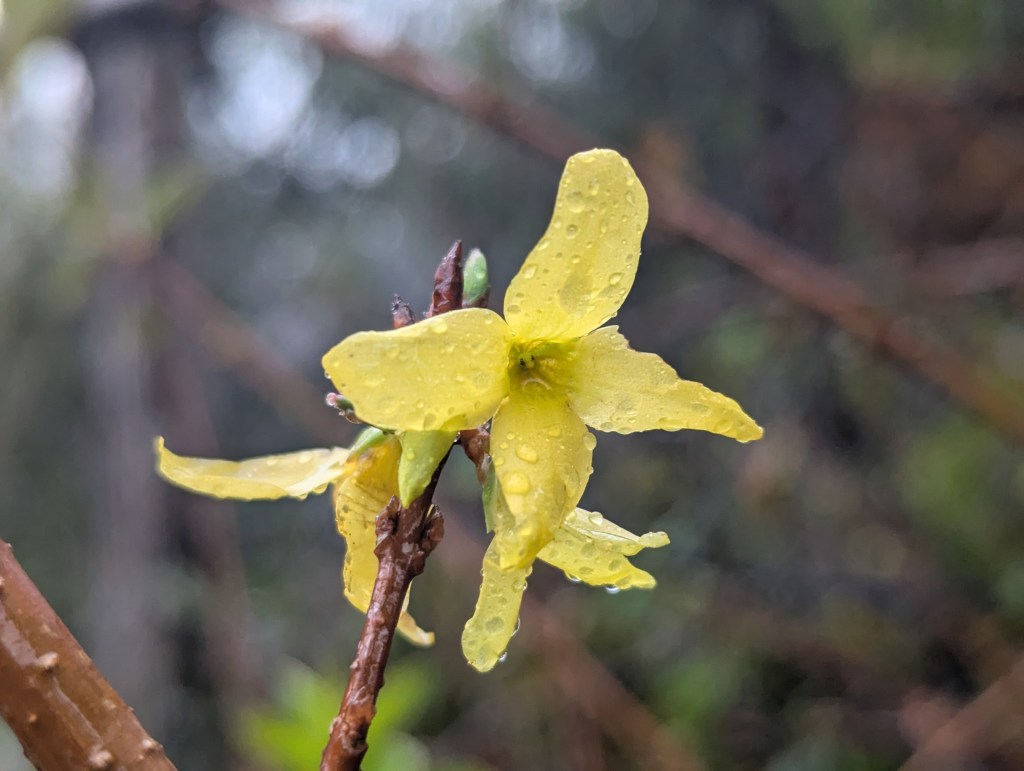
Even if there were plenty of flowers to take pictures of, I have not been in the landscapes much while it is so rainy. These are from the nursery.
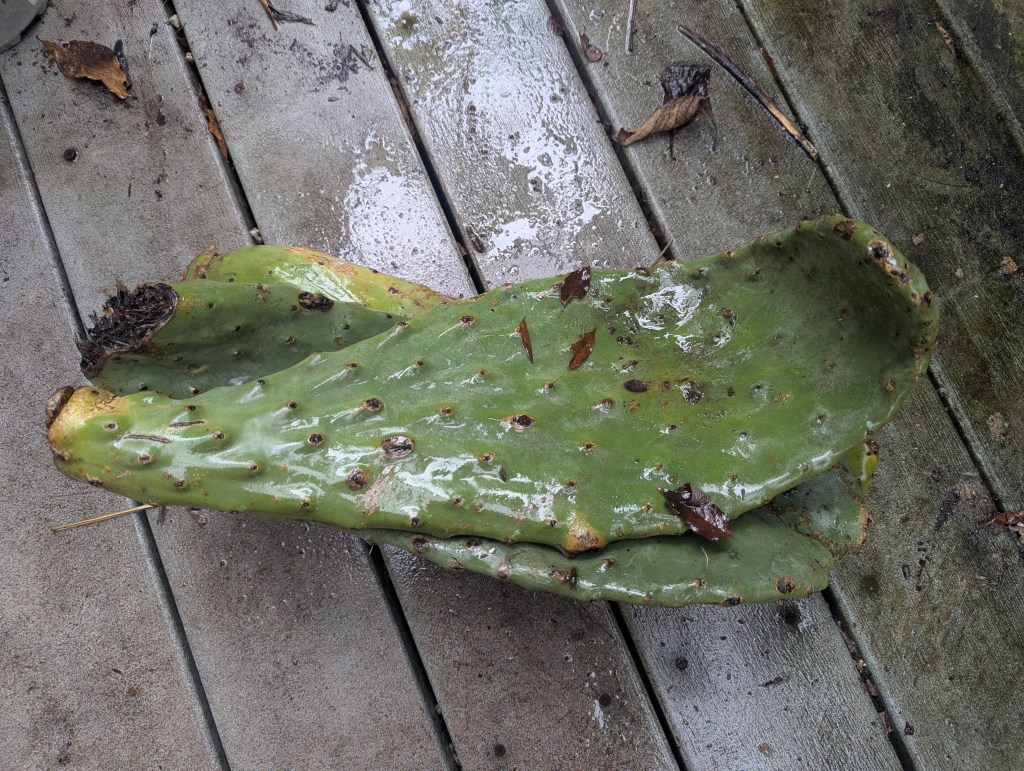
1. Opuntia ficus-indica, prickly pear pads were found at the dump while other landscape debris was being dumped. I was not involved. However, I will be pleased to install them.
2. Buxus japonica, Japanese boxwood turns so yellowish during winter, that it seems to have died this year. We have been trying to find a use for this specimen for quite a while.

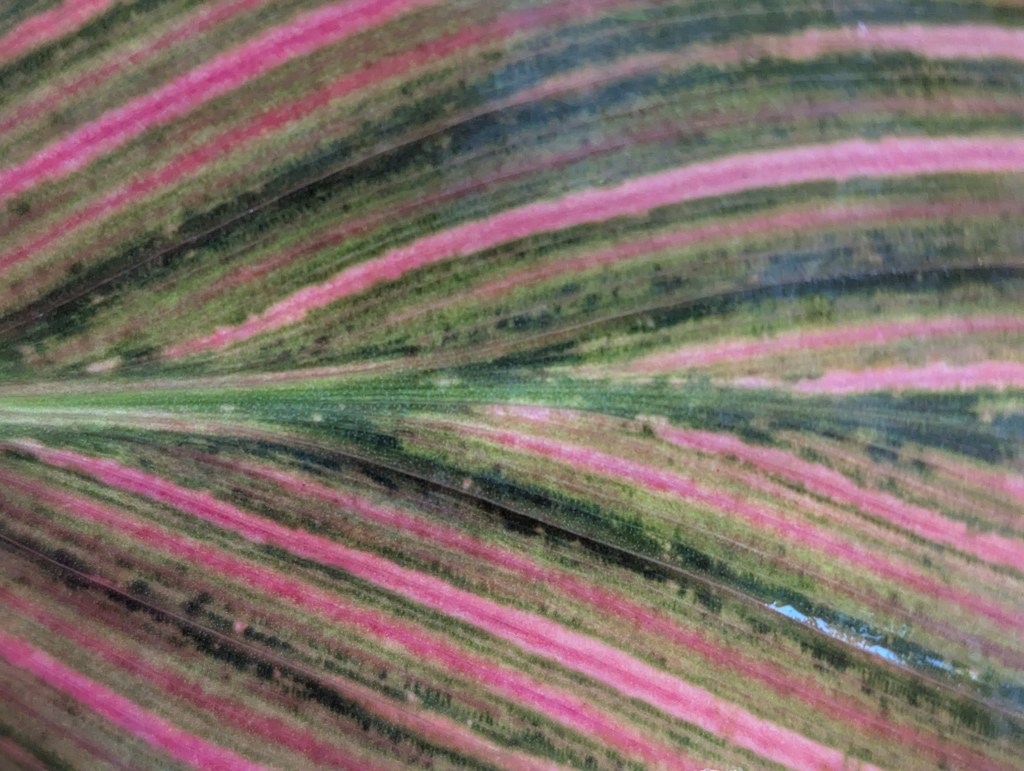
3. Canna indica ‘Alaska’ canna is obviously not ‘Alaska’, which has simple green foliage. I suspect that this is ‘Tropicana’. I hope that its spotty foliar discolorations are not virus.
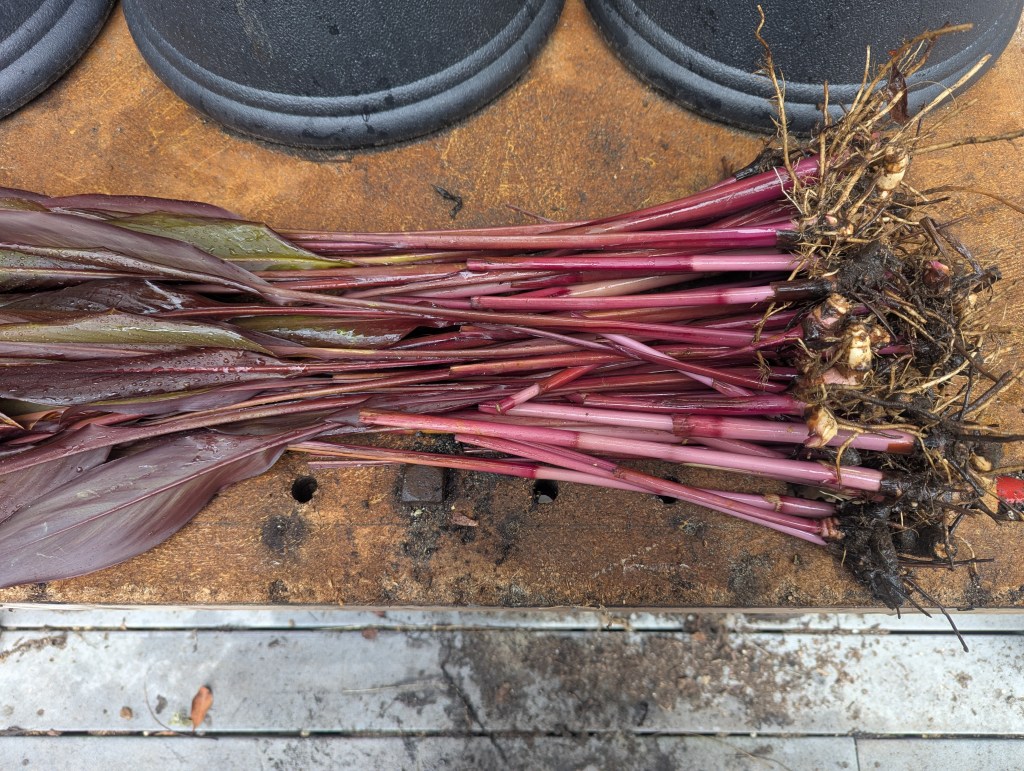
4. Canna indica ‘Australia’ canna got plucked where it migrated a bit too far. These pups will be canned and grown for other landscapes. Surplus might be shared with neighbors.
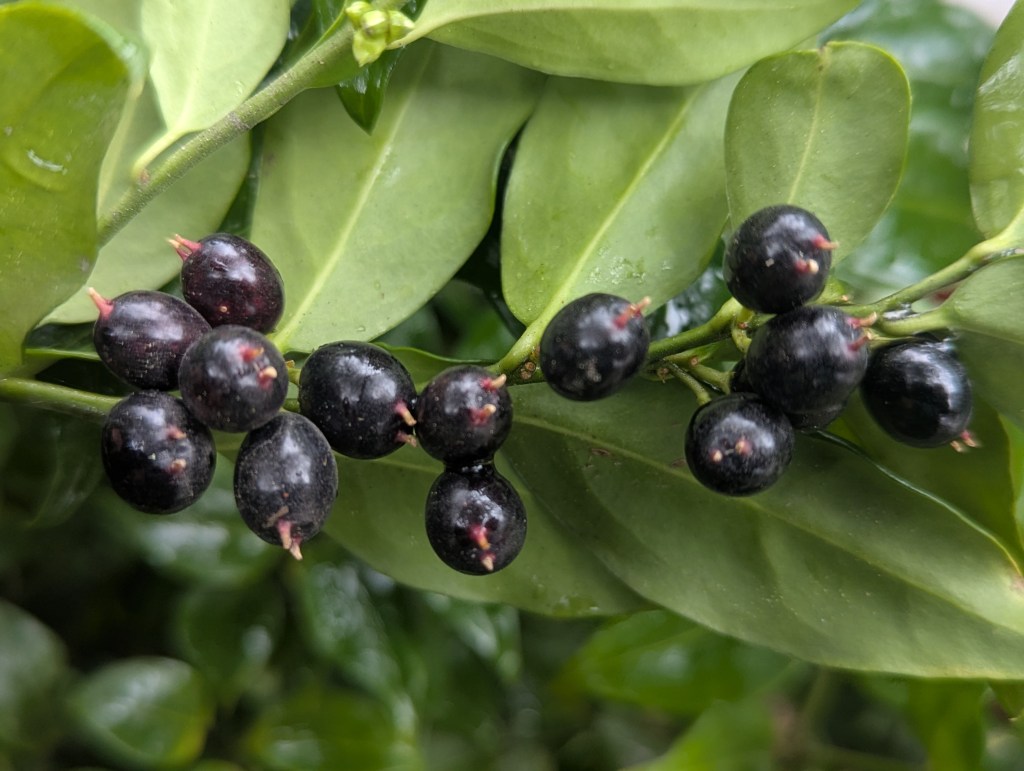
5. Sarcococca ruscifolia, sweet box produces black berries. Apparently, such berries are red before they ripen to black. I was not aware. There are typically not enough to notice.
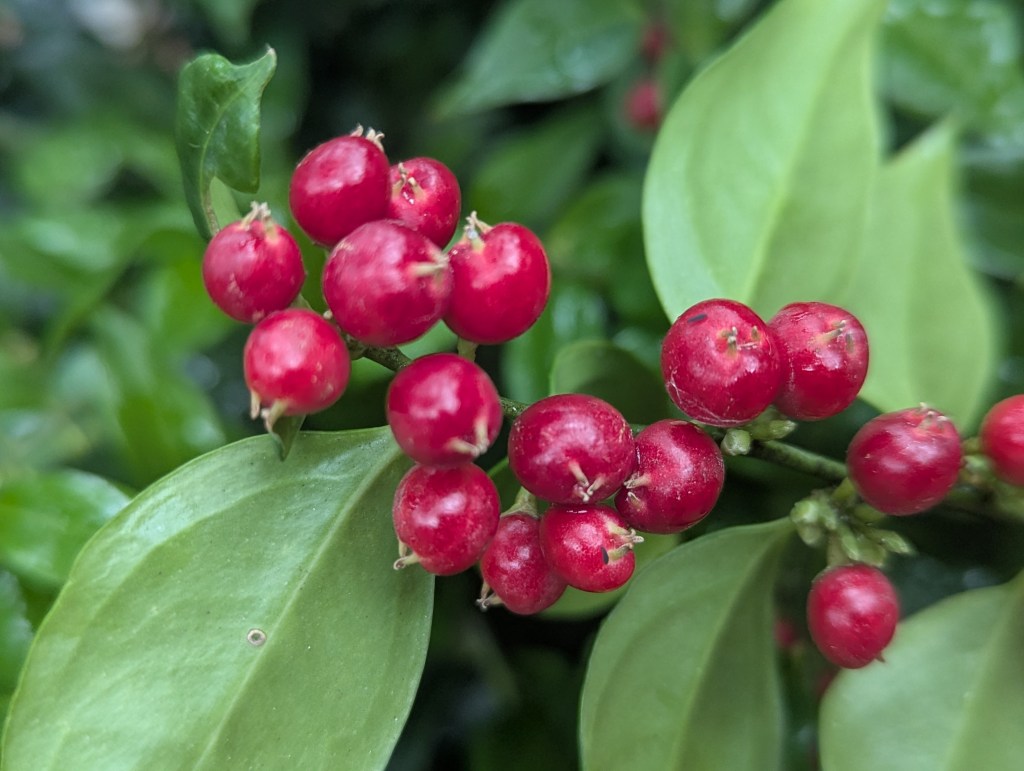
6. Sarcococca ruscifolia, sweet box berries are unfortunately poisonous. Otherwise, they look like they might have culinary application. They are unusually abundant this season.
This is the link for Six on Saturday, for anyone else who would like to participate: https://thepropagatorblog.wordpress.com/2017/09/18/six-on-saturday-a-participant-guide/
Several days of stormy weather were predicted, and came with a flash flood warning and a tornado warning for Christmas, but it really was not that bad. No floods. No tornados.
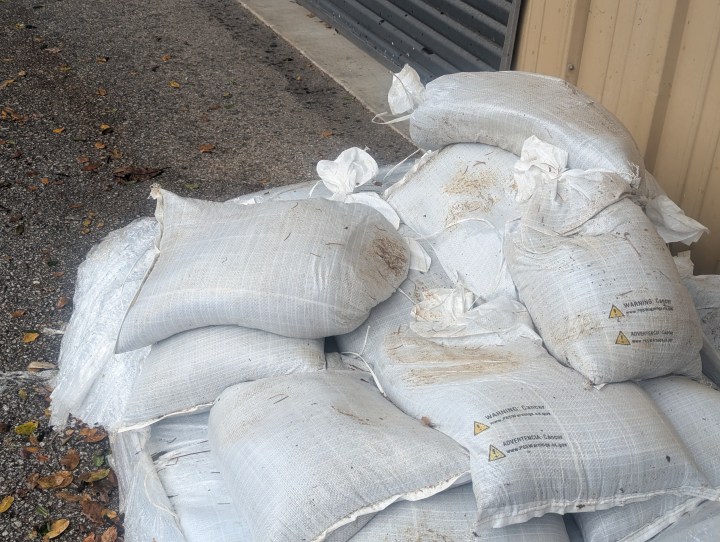
1. Sandbags were readily available for those who might have needed them for the storms that were expected. The wind was strong, but the rain was not as torrential as predicted.
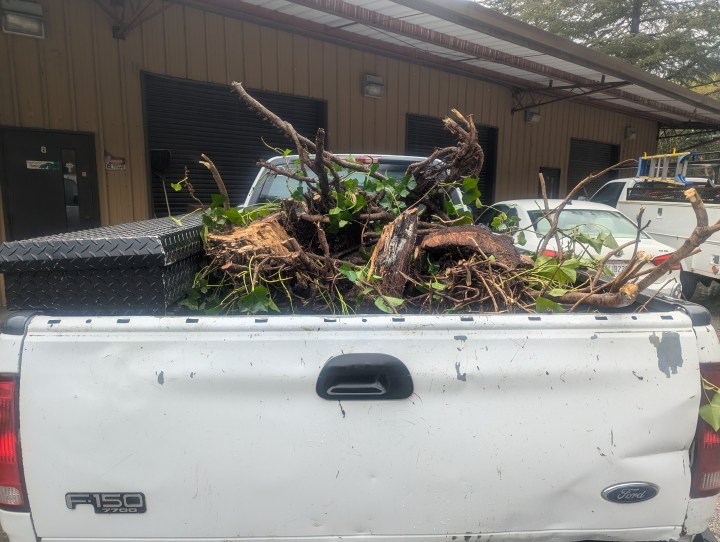
2. Hedera helix, English ivy and a rotten stump of Lithocarpus densiflorus, tanoak were among the vegetation debris that needed to be removed from roadways after the storms.
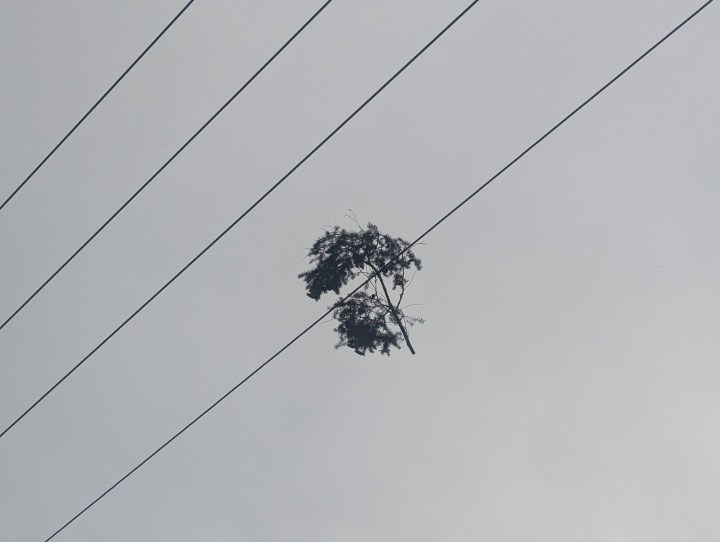
3. Pseudotsuga menziesii, Douglas fir contributed to the mess as well. This small bit did not reach the ground, though. Larger branches interrupted electrical service to the area.
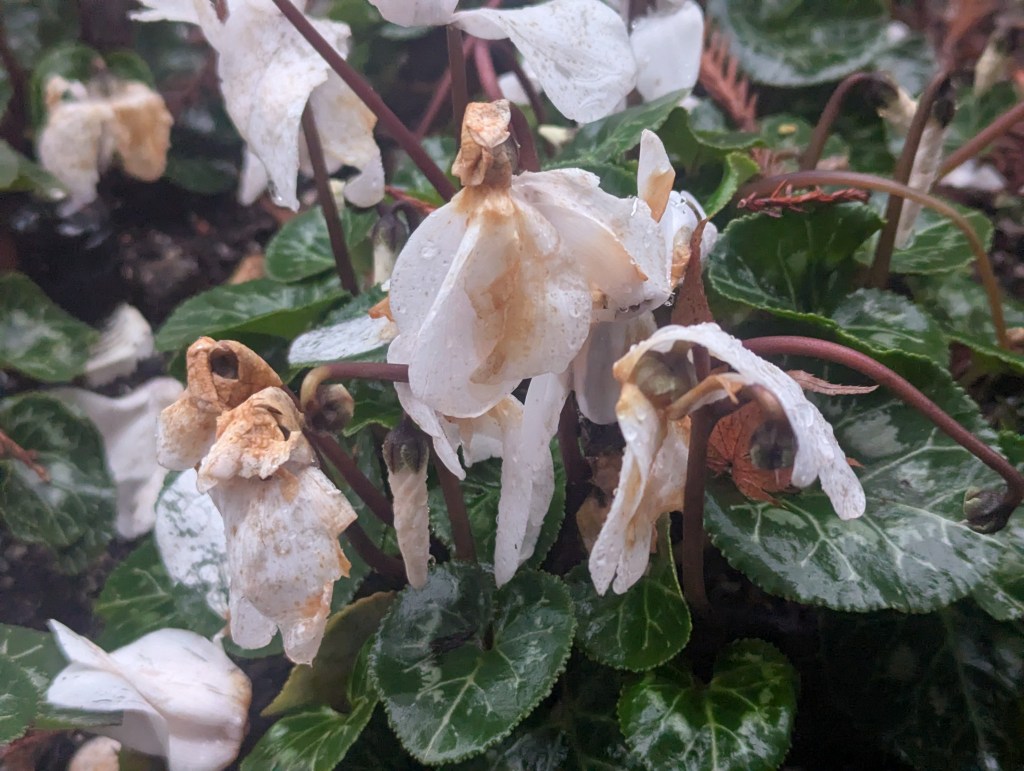
4. Cyclamen persicum, florist’s cyclamen looks rather shabby after so much windy, cold and rainy weather without interruption. The weather should be a bit drier for next week.
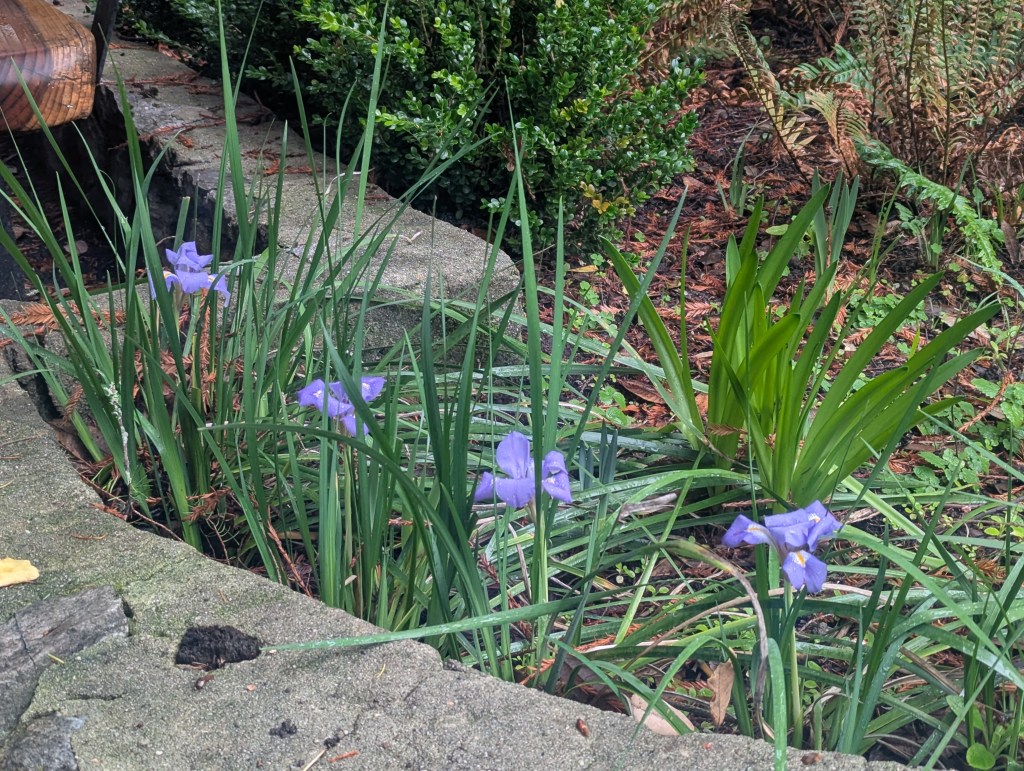
5. Iris unguicularis, Algerian iris has been more resilient to the weather; and it has been blooming for a long time. This might be its third appearance here in my Six on Saturday.
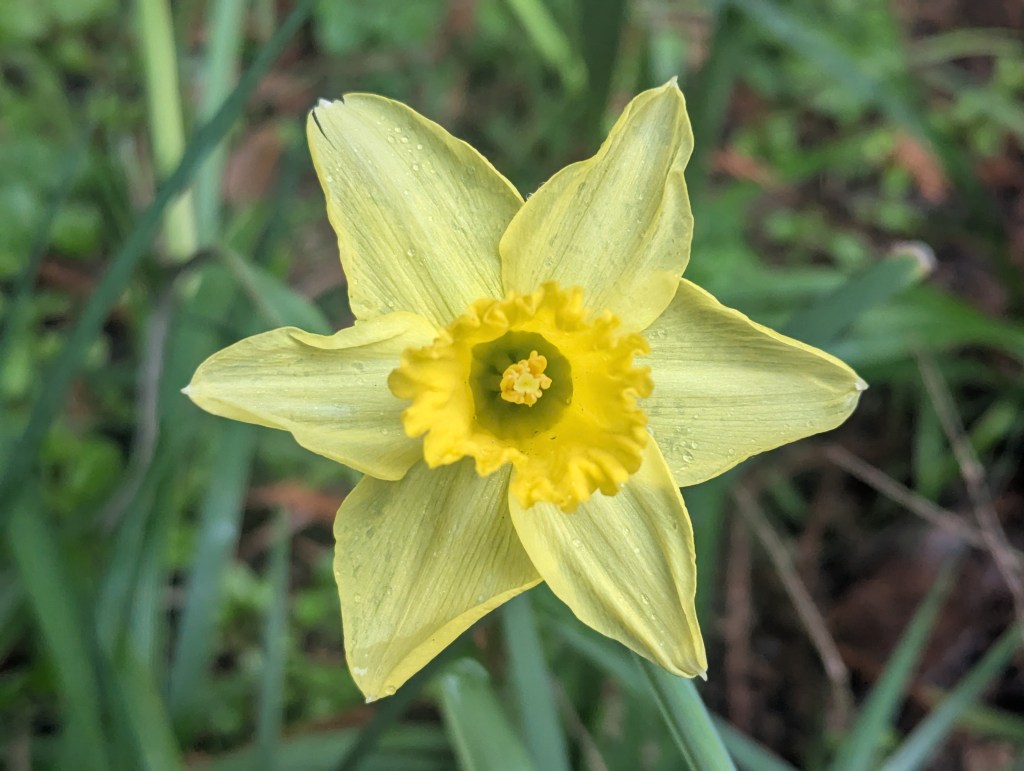
6. Leucojum vernum, snowflake is what we know as snowdrop. Now that snowdrop is so commonly available online, there could eventually be some confusion with their names.

This is the link for Six on Saturday, for anyone else who would like to participate: https://thepropagatorblog.wordpress.com/2017/09/18/six-on-saturday-a-participant-guide/

Half of these blooms are right on time. The other half are azaleas that really should wait until spring to bloom. I hope that some refrain from blooming now to bloom in season.
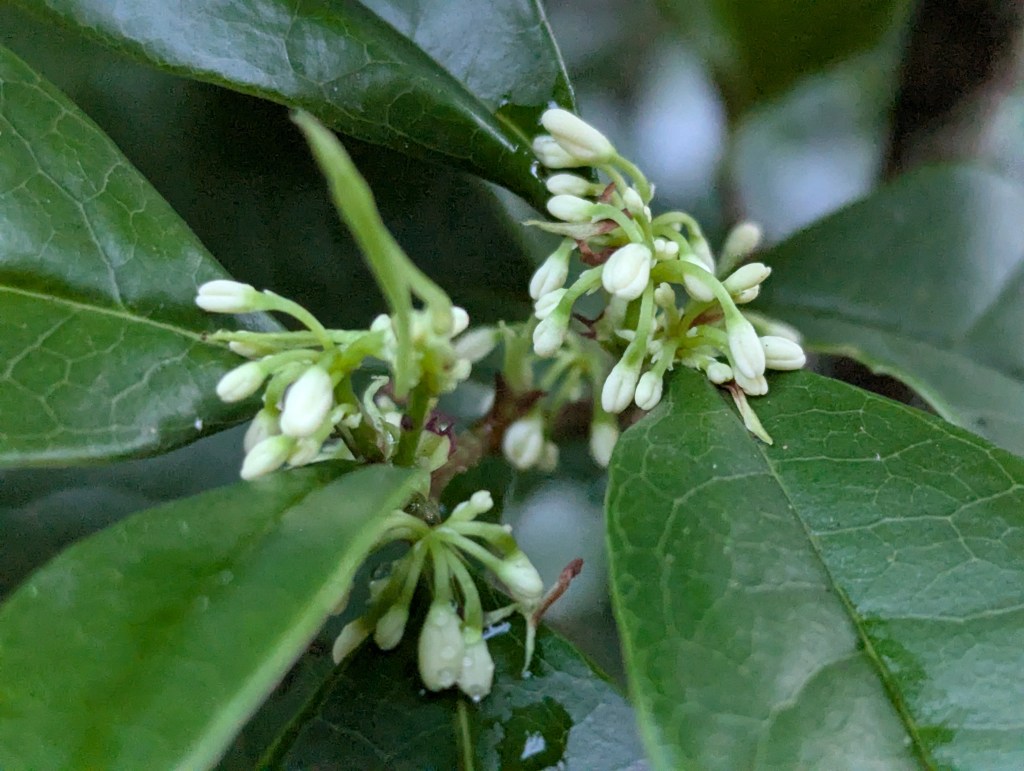
1. Osmanthus fragrans, sweet osmanthus may not be much to look at, but is exquisitely fragrant. I believe that the current cool and humid weather enhances its floral fragrance.
2. Viburnum tinus, laurustinus, which is not typically very fragrant, likewise seems to be more fragrant with cool and humid weather. This one blooms white without pink blush.

3. Osteospermum ecklonis, African daisy blooms significantly less while weather is cool, but seems to never be completely without bloom. This one blooms with a billowy center.

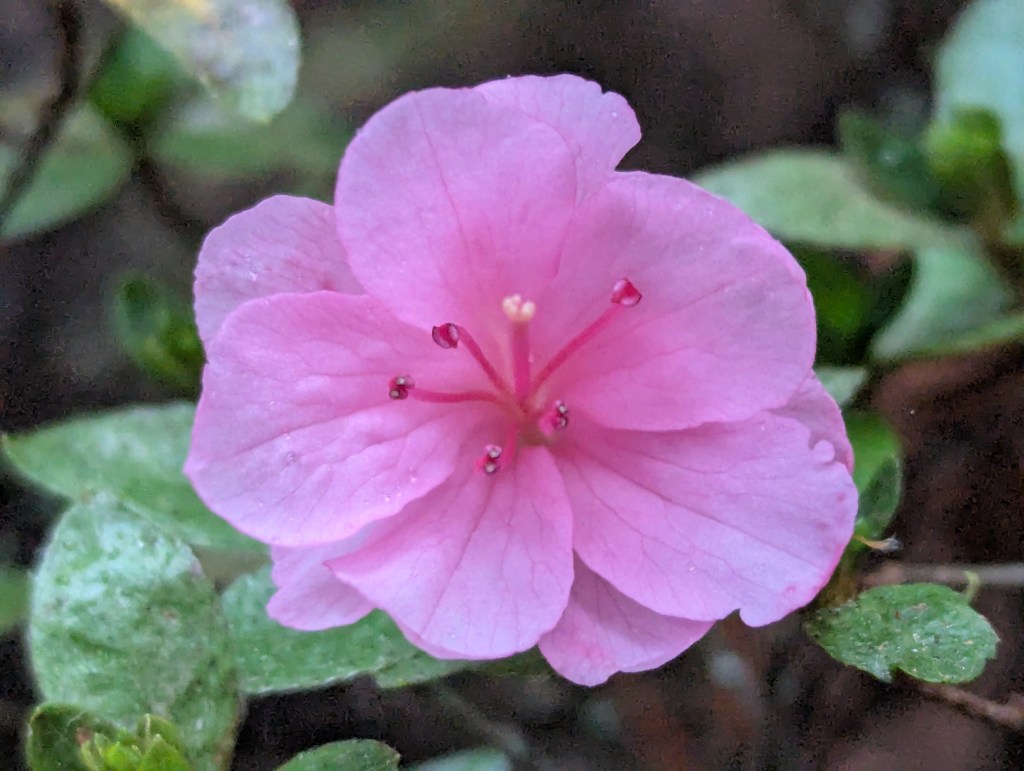
4. Rhododendron spp., azalea should not be blooming now. Flowers that bloom now will be finished and unavailable to bloom in spring. I believe that this cultivar is ‘Coral Bells’.
5. Rhododendron spp., azalea, which is likely ‘Fielder’s White’, is blooming prematurely also. If I remember correctly, it typically does this, but somehow blooms for spring also.

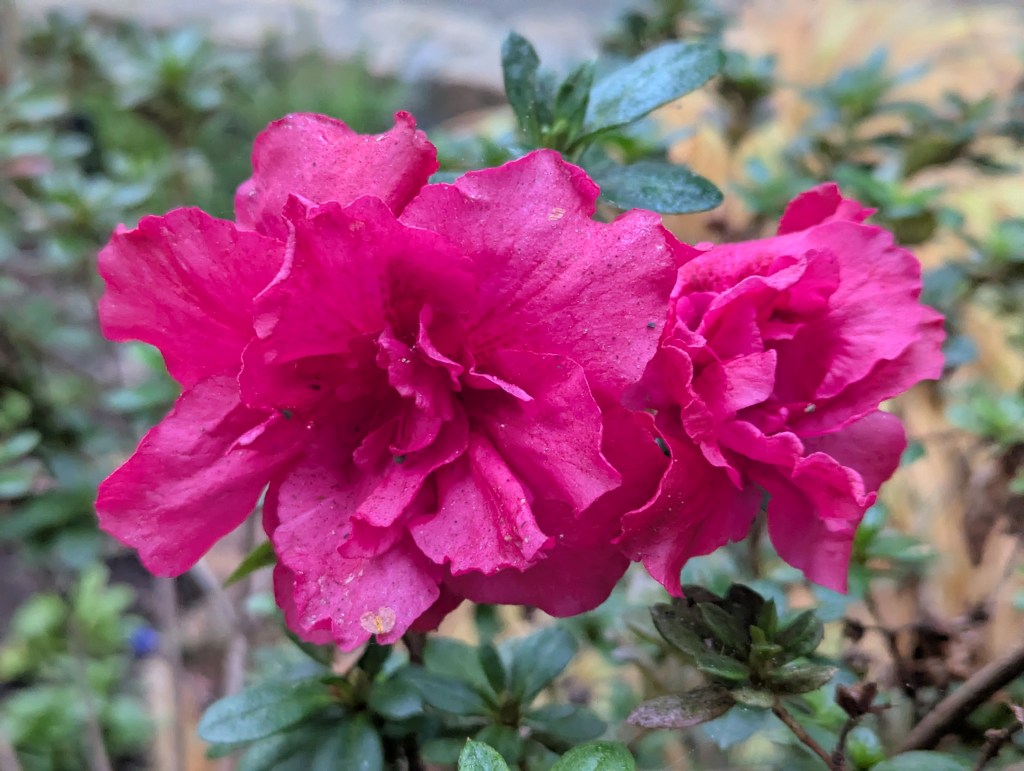
6. Rhododendron spp., azalea with double bloom is probably a recycled florist specimen. I have no idea what cultivar it is. It certainly is colorful. I hope it saves bloom for spring.
This is the link for Six on Saturday, for anyone else who would like to participate: https://thepropagatorblog.wordpress.com/2017/09/18/six-on-saturday-a-participant-guide/
 Tony Tomeo