Six on Saturday: Revelation II

Conditions here have certainly improved.

1. Ash regularly reminds us of how close the fire got. There is not as much as there was two weeks ago, but it still lingers in sheltered spots and on sticky foliage. At least no new ash is falling.

2. Smog also lingered early in the week. The sun looked like one of the moons of Tatooine. I worked inside for the early part of the week. It was not a good time for working out in the garden.

3. Then, this happened. The entire sky was this color for a while. The air still tastes like smoke, and remains rather toxic. It is a bit hazier now. Regardless, it was easier to resume gardening.

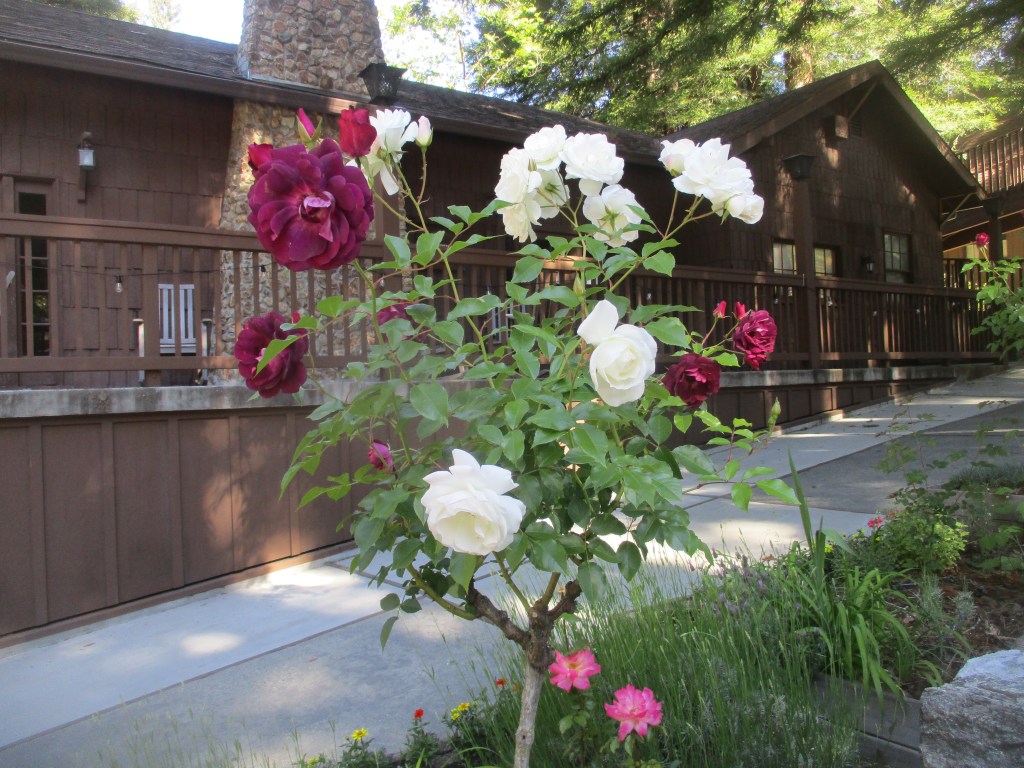
4. The redwoods and firs on the ridge in the background behind the utility pole are just outside of the fire zone. Everything beyond them is within the fire zone. The forest does not look very different from how it looked prior to the fire. Only a few brown spots can be seen from here. The fire must have burned only underbrush in this region. I know it was much worse elsewhere.

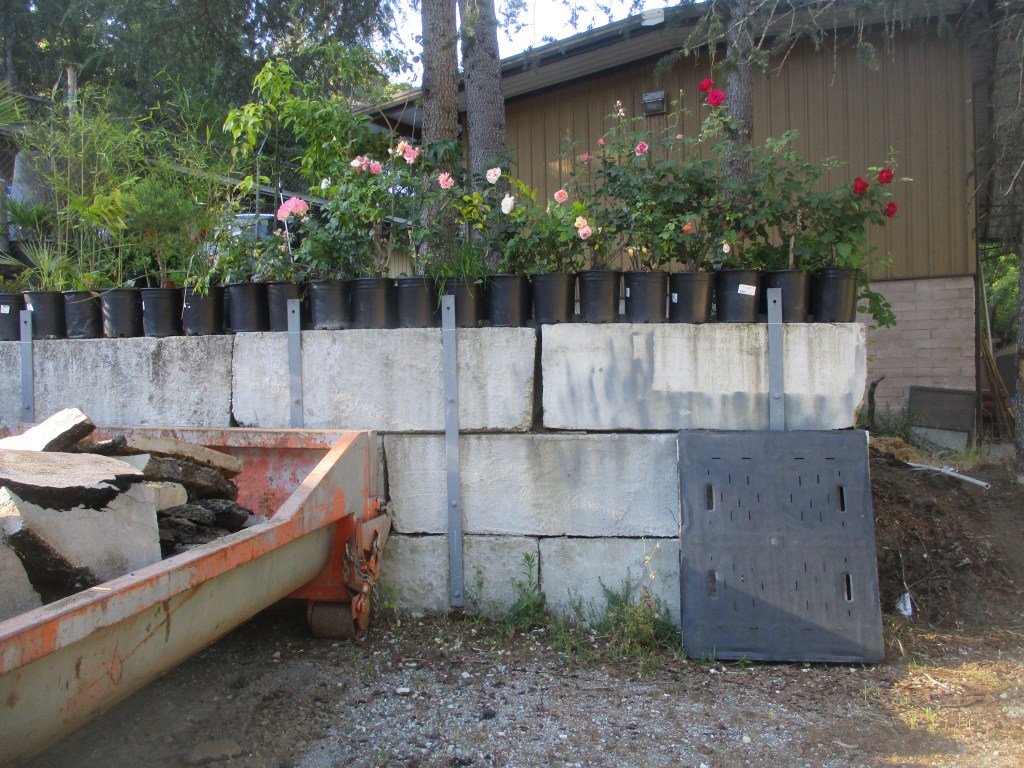
5. Horticulture is SERIOUS business here. (Actually, this is just parking for a cabin that happens to be named ‘Acorn’.) Vegetation management is a priority at cabins that are now residences for some who lost their homes to the CZU Lightning Complex Fires. The Conference Center has been closed because of the other ‘situation’ anyway. Firefighters stayed in some of the lodges.

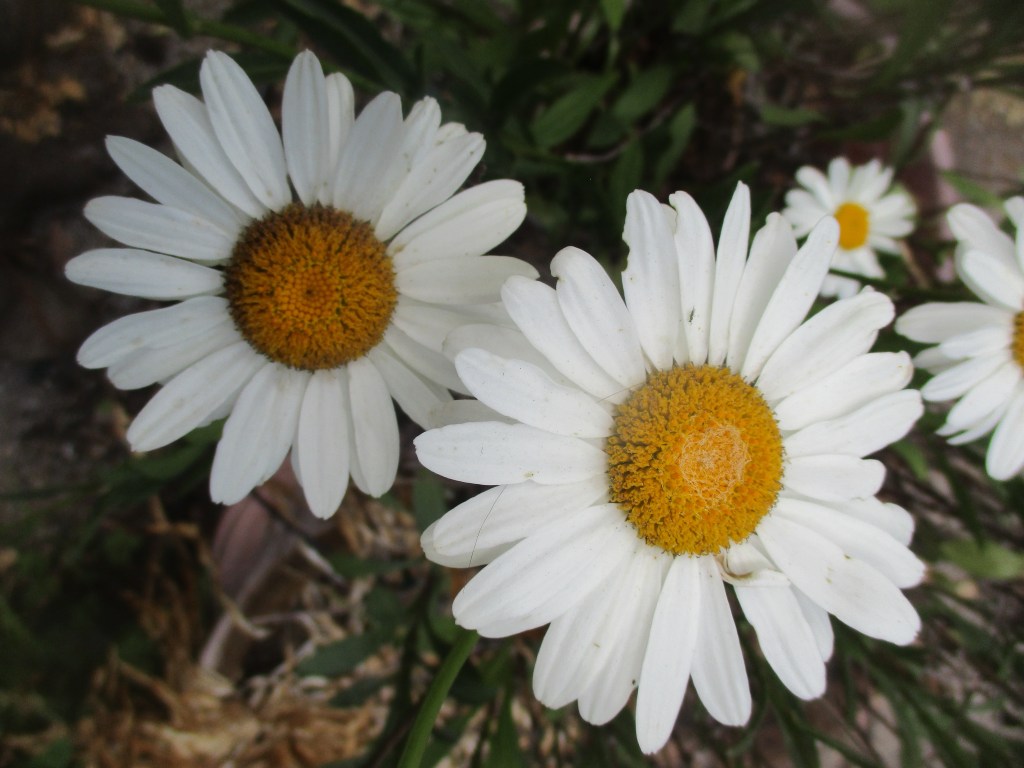
6. White chrysanthemums are in order. After, all this ‘should’ be a gardening blog. These bloomed on old plants that were left behind after a wedding in the chapel here more than a year ago.

This is the link for Six on Saturday, for anyone else who would like to participate:

https://thepropagatorblog.wordpress.com/2017/09/18/six-on-saturday-a-participant-guide/

Six on Saturday: Revelation

Genesis 1: 11-12 describes the creation of all vegetation and the beginning of horticulture on the Third Day of Creation. Those must have been such happy times. Nowadays, it is getting to be more like the Book of Revelation! During this time of pestilence, while smoke obscures the sun, moon and stars, I have been contending with locusts. The premature defoliation of box elders that I mentioned last week (supposedly) might be associated with diminishment of sunlight by so much smoke.

1. Gloves which seem to have been worn for the Battle of Armageddon were my primary defense against the hellacious swarms of locusts that have been tormenting us for more than a year.

2. Thorns of black locust, Robinia pseudoacacia, are nasty! They are paired like the horns of Satan! The thorns are modified stipules, so are actually neither thorns nor spines, but ‘prickles’.

3. Swarms of locusts are more numerous this year because more mature locust trees were cut down last November, leaving more stumps and many more roots of the not quite so deceased.

4. Smoke and fog filled the sky with old fashioned smog before the sun rose on Wednesday. (‘Smog’ is an abbreviation of ‘smoke’ and ‘fog’.) Not much is from the CZU Lightning Complex Fire.

5. Smoke was so dark at noon that street lamps and this porch light came on. That is a big coast live oak in the middle, with a California buckeye to the left and a coastal redwood to the right.

6. That was not the worst of it. It was so dark by 4:00 that I needed headlights to drive back. Those are deodar cedar to the right, a cottonwood to the left, and a coastal redwood in between.

This is the link for Six on Saturday, for anyone else who would like to participate:

https://thepropagatorblog.wordpress.com/2017/09/18/six-on-saturday-a-participant-guide/
Six on Saturday: Pompeii

The CZU Lightning Complex Fire got no closer than a mile and a half from here. Except for the ash and the aroma of smoke, there is not much evidence of a fire. The burn zone is within view from here, but the forest is just as green as it was prior to evacuation. I received news while away that smoking debris was falling from the sky here, so did not know what to expect when we returned. So many neighbors were not as fortunate.

1. Fire roasted leaves blew in from the fire. Some were still smoking as they fell. These are two madrone leaves at the top, three tanoak leaves at the bottom, and redwood below the middle.

2. Ash is everywhere! I left on the day prior to the yet unforeseen evacuation, with the intention of returning later, so left windows open. It now smells like a barbecued bacon burger in here.

3. Summer squash survived days of warm weather without irrigation. This was the worst of the wilt. There was nothing ‘ini’ about the ‘zucchini’. They looked like a herd of green dachshunds.

4. Pole beans were in reasonably good condition as well. They recovered rather efficiently after getting irrigated. The few beans that started to wilt and dry were just plucked and discarded.

5. Boxelder are suspiciously defoliating prematurely under a smoky orange sky. I do not know if it is associated with the smoke or the weather, but I doubt that President Trump is involved.

6. Blue gum that is still confined to a #15 can did not wilt any more than the summer squash or pole beans. I am impressed! It must have rooted into the ground below the bottom of the can.

This is the link for Six on Saturday, for anyone else who would like to participate: https://thepropagatorblog.wordpress.com/2017/09/18/six-on-saturday-a-participant-guide/

Six on Saturday: Urban Flight


The CZU Lightning Complex Fire continues to burn. Consequently, I had been unable to return home until just a few hours ago. My garden survived the abandonment better than expected. I will get pictures for next week. These pictures are from where I was in the Santa Clara Valley. I noticed a few features that I forgot that I disliked about urban situations. Of course, Rhody found something to appreciate about our situation there. He was in no hurry to return home.

1. Breeze in the silver maple should be appreciated on a warm day. While the fires are burning in the Santa Cruz Mountains just several miles away, an absence of breeze would be preferred.

2. Raindrops should likewise be appreciated. Unfortunately, there were no more than a few, and certainly not enough to slow a fire. They only indicated that more dry lightning was possible.P00829-2

3. Smoke was thicker over the Santa Clara Valley than I can ever remember. All those utility cables crowded by too many trees are normal though. I thought this picture was rather artistic.P00829-3

4. Fences are a bother too. This one shades lower branches of a nearby pear tree, that grew up with a shorter slat fence. The neighbor’s garage shows how close the homes are to each other.P00829-4

5. Soil is fortunately as awesome as it has always been in the Santa Clara Valley. It is unfortunate that so few of the more than a million who live here now will never bother to experience it.P00829-5

6. Rhody expressed his opinion of my request that he stay off of the sofa while here. Does the floral pattern of the upholstery qualify this as a horticultural subject? We all want to see Rhody! P00829-6

This is the link for Six on Saturday, for anyone else who would like to participate:

https://thepropagatorblog.wordpress.com/2017/09/18/six-on-saturday-a-participant-guide/


Six on Saturday: Do You Know The Way To San Jose?


These six are not from my garden or landscapes, since I am away from home for now.

Before the evacuations, and before I was even aware of the local wildfires, I came to the Santa Clara Valley for unrelated obligations. Evacuations started in a neighboring town the following Wednesday morning. By Thursday morning, my region was evacuating. I have been here for several days and may be here longer than I need to be if I am unable to return home afterward.

1. Plumbago auriculata – looked pretty when I planted it here, and before I knew how rampant it can get. It really wants more space. The blue is almost too bland. The foliage is rather pale.P00822-1

2. Pelargonium peltatum – is the only one of these six that I did not plant here. I have no idea where it came from. I know this species is nothing special, but this color is too pretty to ignore.P00822-2

3. Chamaecyparis lawsoniana ‘nidiformis’ – is rare here, perhaps because it dislikes a chaparral climate. This specimen is not much bigger than it was when I installed it three decades ago.P00822-3

4. Juniperus chinensis ‘Shimpaku’ – sound as if it is related to Pikachu. Bonsai artists appreciate it more than I do. It is sculptural like a diminutive Hollywood juniper, but grows very slowly.P00822-4

5. Juniperus chinensis ‘Hetzii (Glauca)’ – is known by a few species or hybrid species names, including X media, X pfitzeriana and virginiana, rather than chinensis, most without ‘Glauca’.P00822-5

6. Acer saccharinum – is not one of the favorite maples within its native range; but it happens to be one of my favorites. I grew this one out front by layering a stem from its parent out back.P00822-6

This is the link for Six on Saturday, for anyone else who would like to participate:

https://thepropagatorblog.wordpress.com/2017/09/18/six-on-saturday-a-participant-guide/
Six on Saturday: Feast Of The Assumption


August 15 is the Feast of the Assumption, which celebrates when the Blessed Virgin Mary, at the end of her life, was assumed into Heaven, body and soul. In some cultures, it is known more simply as the Assumption, so is not considered a Feast Day. That would be fine with me. The vegetable garden is rather pathetic for the middle of August. There are plenty of cucumber, and more summer squash than we know what to do with, but the rest of the produce is slim pickings.

1. Squash – of this sort will not be ready until after the first frost next winter. Nonetheless, it seems to be maturing slowly. It should probably be substantially larger for this late in summer.P00815-1

2. Kale – could be either late or early. It is a spring or autumn vegetable here. Seed was sown late, but should have been later to be ready for autumn. It should survive, and start over later.P00815-2

3. Tomato – are better than they look here. The cherry tomatoes do not ripen in clusters though. I just pluck the ripe fruits off individually. None of the bigger tomatoes have ripened yet.P00815-3

4. Bean – vines have grown like weeds, but are just beginning to produce. I have never grown this variety before. The variety that I had always grown starts producing earlier, while young.P00815-4

5. Cucumber – production has been adequate. However, because I have not been watering regularly enough, the cucumber are rather bitter. I like how the vines climb up over the junipers.P00815-5

6. Squash – has been too productive! These are the summer squash, mostly zucchini, for the neighbors. However, there is nothing ‘ini’ about those that could not get harvested early enough.P00815-6

This is the link for Six on Saturday, for anyone else who would like to participate:

https://thepropagatorblog.wordpress.com/2017/09/18/six-on-saturday-a-participant-guide/

Six on Saturday: Suburbia II

As I said last week, the Santa Clara Valley is the best place in the entire Universe for horticulture. That is where these pictures came from. Although I planted only the Ilex aquifolium of the second picture, I collected all six of these plants from various sources over the years. They have been quite happy here. I will now be taking more copies or originals of all but Ilex aquifolium.

1. Juniperus virginiana – is my favorite this week. I know it is uninteresting to those who are familiar with it, but it happens to be one of only a few that I brought from Newalla in Oklahoma.P00808-1

2. Ilex aquifolium – is the only one this week that I actually purchased from a nursery, while in school in San Luis Obispo in the late 1980s. It is uncommon (and unpopular) here. I still dig it.P00808-2

3. Viola odorata – came from Santa Clara while I was in high school. (I thought) I wanted it because it blooms white. It is not very pretty, but I can not get rid of it. Violets should be ‘violet’.P00808-3

4. Pelargonium hortorum – is not the original that I found in a compost pile in Montara in about 1980, but is very likely the same ‘unimproved’ species or whatever it is. I found it downtown.P00808-4

5. Agapanthus orientalis – from Watsonville in 1992, is one of my two favorite agapanthus; because it is white, but is otherwise identical to my original blue agapanthus from the late 1970s.P00808-5

6. Amaryllis belladonna – came from Hoot Owl Creek in Oklahoma. It lived in the same garden with my Iris pallida! I know it is no more interesting that these others here, but it has history!P00808-6

This is the link for Six on Saturday, for anyone else who would like to participate:

https://thepropagatorblog.wordpress.com/2017/09/18/six-on-saturday-a-participant-guide/