Six on Saturday: 4:00

Four o’clock has been unusually pretty in bloom. It self sows almost enough to become a weed, but I am fond of it.

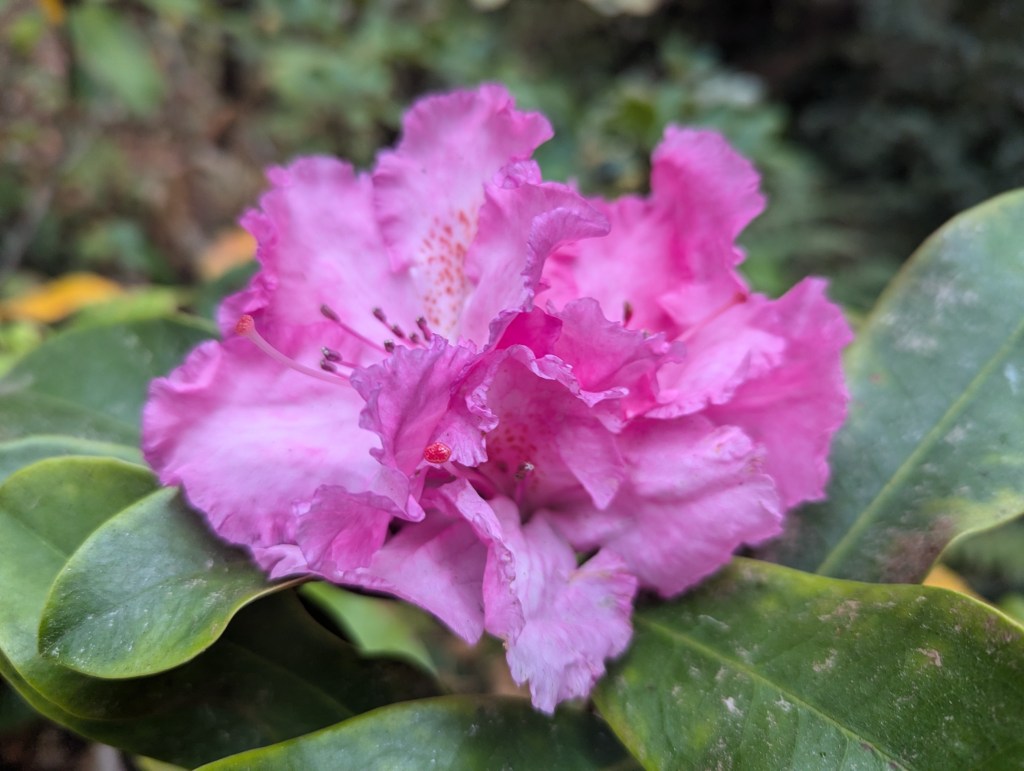
1. Mirabilis jalapa, four o’clock blooms in various shades of pink, including one that can be fragrant about 4:00 and into evening. It alternatively can bloom white, red, magenta, yellow, or with striped combinations of colors. Different colors may bloom on one plant.

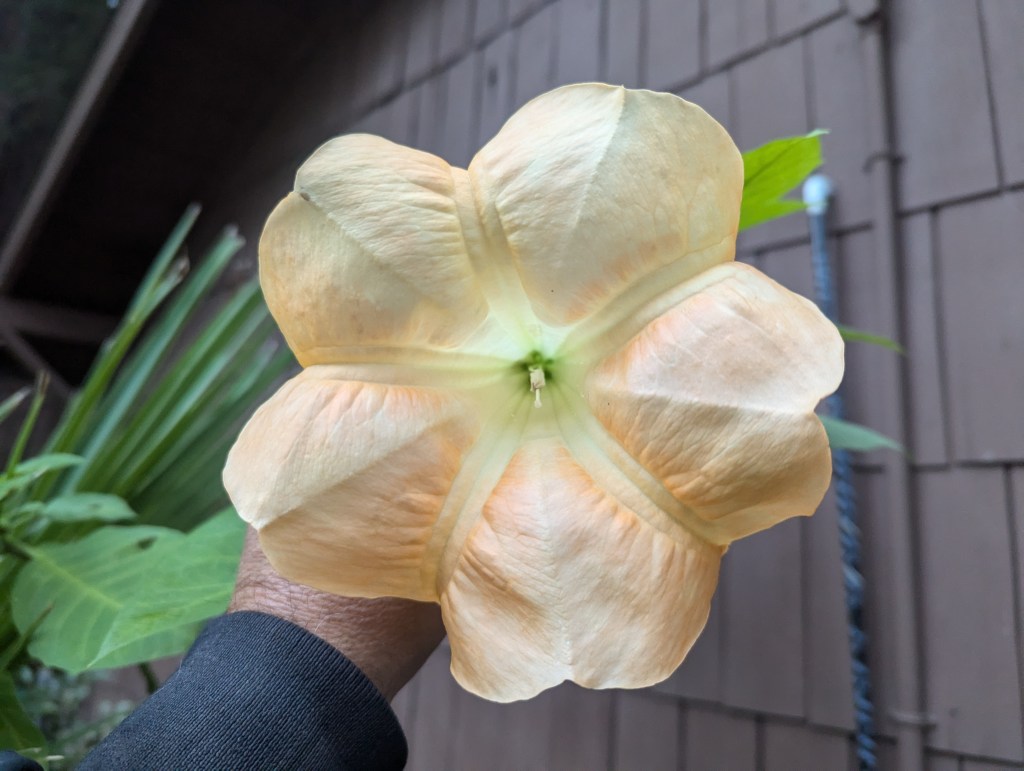
2. Mirabilis jalapa, four o’clock does not exhibit very much variation of floral color here, though. This yellow bloom is one of only three variations. I thought that I noticed simple red bloom through previous summers, but can find none now. I would like to find white.

3. Mirabilis jalapa, four o’clock demonstrates what can occur when the two other colors here combine. It is the third of only three variations that I am aware of. From a distance, it seems to be peachy orange. Some of its flowers are just like the first two pictures here.

4. Nerium oleander, oleander that blooms pink mingles with the oleander which blooms white that I posted a picture of three weeks ago. Oleander is so cheap and common here that, even with oleander scorch, it is still the primary shrubbery for freeway landscapes.

5. Fuchsia magellanica, fuchsia is easy to miss where it is wedged between healthier and prettier hydrangea and canna. I should grow copies of it elsewhere. It would probably be bigger with fuller foliage where it gets more water than the four o’clock and oleander get.

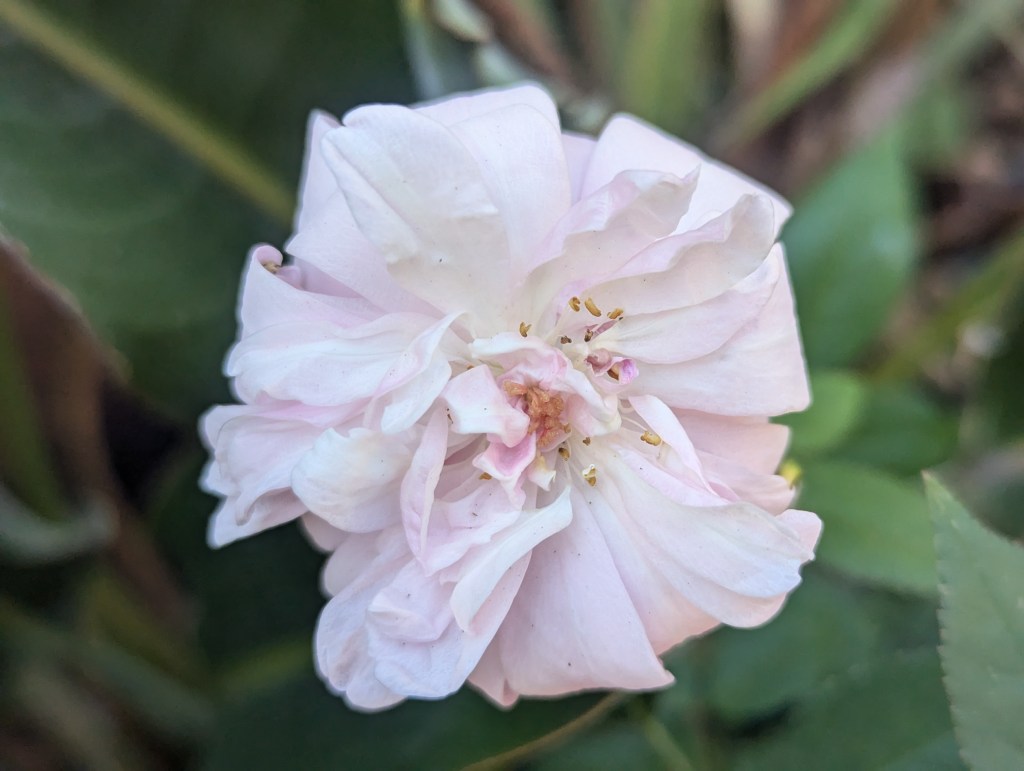
6. Rosa spp., rose is in a rose garden that is nowhere near the four o’clock, oleander and fuchsia, but is too pretty to omit. I believe that it is ‘Double Delight’. It is nicely fragrant. Flowers bloom white with red edges, but fade to mostly pinkish red, just as they should.

This is the link for Six on Saturday, for anyone else who would like to participate: https://thepropagatorblog.wordpress.com/2017/09/18/six-on-saturday-a-participant-guide/

Six on Saturday: Abandoned

These are a few plants that survived where my former home was abandoned, and where the new home is to be built. Some of them had been here since 2006 nineteen years ago.

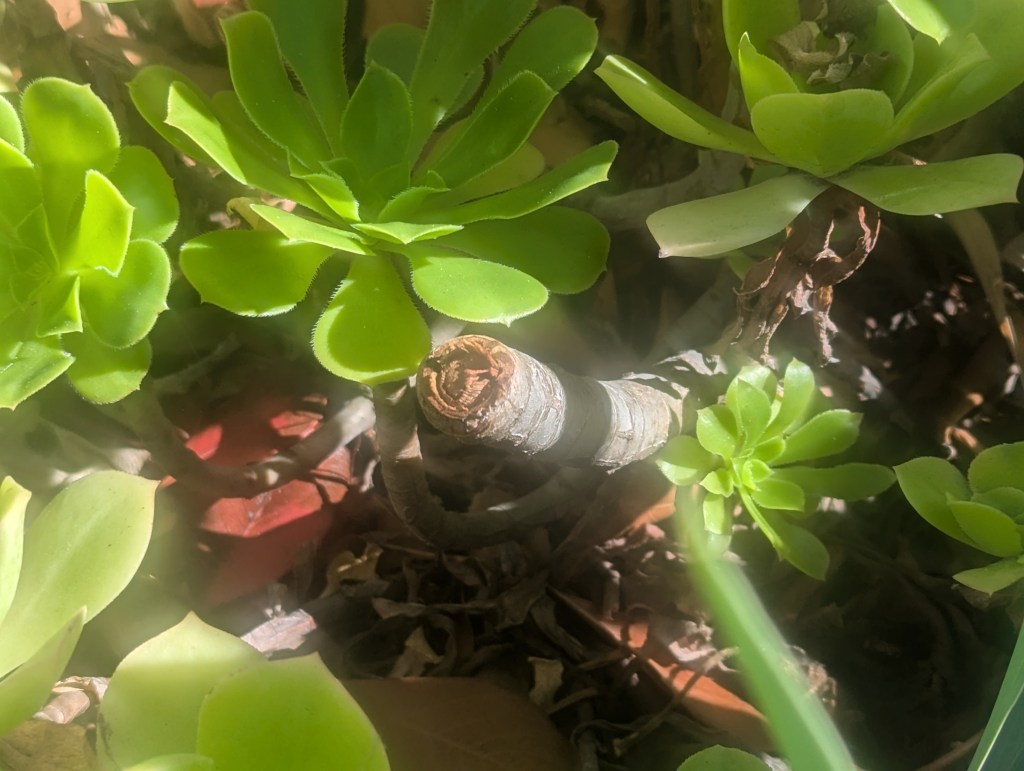
1. Cereus peruvianus, night blooming cereus is from Brent’s former Miracle Mile garden balcony. I do not know why it is so spiny now. Maybe it is angry about being abandoned. Aeonium arboreum, common houseleek is from another friend’s garden near Monterey.

2. Crassula arborescens spp. undulatifolia, ripple jade, as well as the pinwheel aeonium below, remain unidentified. These names that I present here are merely guesses of their identities. Anyway, I procured this from a jobsite that I worked at in Hayward years ago.

3. Aeonium haworthii, pinwheel aeonium came from the same garden that the common houseleek came from near Monterey. The slope that it is attached to is actually too steep to stand on. Yucca recurvifolia, curve leaf yucca is from an old jobsite in Boulder Creek.

4. Aloe arborescens, candelabra aloe came from the home garden of an old friend in the East Hills of San Jose. It is higher on the same steep slope as the pinwheel aeonium and curve leaf yucca. It should grow better and produce pups for dividing with a bit of water.

5. Pelargonium graveolens, rose geranium impresses me most because it survived for so long, like the other perennials, but is supposedly not as resilient as they are. I found this in an old home garden in San Francisco, although I believe that it is common elsewhere.

6. Iris pallida, Dalmatian iris is important because it is from the garden of my maternal maternal great grandmother in Oklahoma. I acquired it when I was about four. Crassula ovata, jade plant was from my former home in town, where I lived after the earthquake.

This is the link for Six on Saturday, for anyone else who would like to participate: https://thepropagatorblog.wordpress.com/2017/09/18/six-on-saturday-a-participant-guide/

Six on Saturday: Purple?

Purple is not as easy as white. White is either white or not white. Purple can be bluish or reddish. I am not totally certain if all Six of these are purple or lavender, which is merely pastel purple.

1. Lavandula angustifolia, English lavender blooms, as its name suggests, with lavender floral color, which is really just pastel purple. It looks blue to me, though. I do not know what cultivar this is, but it has survived here longer than lavender should be expected to.

2. Phlox paniculata, garden phlox also blooms lavender, although it looks pink to me. It is a feral progeny of the already feral garden phox with pure white bloom that I posted a picture of last Saturday. Although white is my favorite, I find this odd variant appealing.

3. Lobularia maritima, sweet alyssum also resembles its white counterpart that I posted a picture of last week, but is not a progeny of it. It is a common garden variety, although I do not remember its name. It survived through last winter for another summer season.

4. Lantana montevidensis, trailing lantana survives within a badly neglected landscape. It really is worthy of consideration for other sunny and warm landscapes here. Lantana camara also performs well in an adjacent landscape, and was recently added to another.

5. Penstemon gloxinioides, beard tongue blooms sparsely for now only because it is new in this particular situation. It grew from several rooted bits that were separated from old specimens as they were cut back last winter. These might produce similar bits next year.

6. Petunia X hybrida, petunia is always reliable for bright color through summer. These have been growing somewhat slowly this year only because the weather has been so mild and even weirdly cool sometimes. Gophers consumed quite a few in a landscape nearby.

This is the link for Six on Saturday, for anyone else who would like to participate: https://thepropagatorblog.wordpress.com/2017/09/18/six-on-saturday-a-participant-guide/

Six on Saturday: White Again

Giant bird of Paradise may not look so good in its picture, but started the trend for these Six for this Saturday. White is my favorite color.

1. Strelitzia nicolai, giant bird of Paradise did not pose for a good picture, but impresses with its fancy bloom nonetheless. It bloomed nicely last year too, just three months after getting relocated from another garden. It is still canned, so is not even in the ground yet.

2. Nerium oleander, oleander reminds me that, contrary to the mild weather, it really is the middle of summer. This particular oleander was so overgrown and shabby from bad pruning for many years that it was coppiced. It worked so well that we could do it again.

3. Pelargonium X hortorum, zonal geranium is a short term perennial, but provides too many replacement cuttings for extinction. I do not know how long it has been here, but I do enjoy propagating it now, not just because it blooms white, but also because it is easy.

4. Lobularia maritima, sweet alyssum has been here a bit longer than expected also, but is not as perennial as zonal geranium. It was planted as a warm season annual early last summer. Because wax begonia is growing around it, it will not be replaced, but removed.

5. Begonia X semperflorens cultorum, wax begonia has been doing remarkably well now that it has its planter boxes within planter boxes to exclude aggressive redwood roots. It has been growing slowly but surely since last summer, so it now needs no replacements.

6. Phlox paniculata, garden phlox self sowed from an unknown source several years ago. It continued to self sow with such vigor that we thought it could become invasive. Then, it unexpectedly became docile, and now grows only where it is an asset to the landscape.

This is the link for Six on Saturday, for anyone else who would like to participate: https://thepropagatorblog.wordpress.com/2017/09/18/six-on-saturday-a-participant-guide/

Six on Saturday: More Unexpected Surprises

Several of these Six were featured here before, and some only recently. They continue to surprise.

1. Musa ingens, oem, or giant highland banana, produced two pups. This is the larger of the two. Although I was told that this is oem, I am not certain. It behaves like the species in some ways, but not others. For example, oem should only occasionally produce pups.

2. Heuchera sanguinea, coral bells does not look coral to me. This looks like simple red. I think of coral as more orangish pink. Is that correct? I can not complain, since I prefer this color. Some of the fancy foliar cultivars here bloom with colors other than coral too.

3. Canna X generalis ‘Cannova Mango’ canna and feral Antirrhinum majus, snapdragon that I posted pictures of two weeks ago are blooming even better together now. Why are some of the best flowers as unplanned as these were? Perhaps I should unplan for more.

4. Helenium autumnale, tickseed was yellow last week. This is literally the same flower. Is this new color orange or red? Was it supposed to be this color, or is this what happens to yellow flowers as they fade? I will need to see how the other two varieties bloom later.

5. Passiflora caerulea ‘Constance Elliott’ passion flower smells like pineapple guava, but only briefly. Its fragrance is gone before I can get someone else to confirm the similarity. The garishness of this bloom does not last very long either. This flower is wilted by now.

6. Rhody rarely cooperates for pictures. He should though, since he is who we all want to see here for Six on Saturday. I would post six pictures of him weekly if he would allow it. Perhaps I should have gotten a picture of Heather too. She cooperates more for pictures.

This is the link for Six on Saturday, for anyone else who would like to participate: https://thepropagatorblog.wordpress.com/2017/09/18/six-on-saturday-a-participant-guide/