Six on Saturday: Leave It To Beaver

Squirrels have been chewing some of our foliar plants since spring. Now that they found our banana trees, I am more concerned. Their damage is more severe and impossible to ignore.

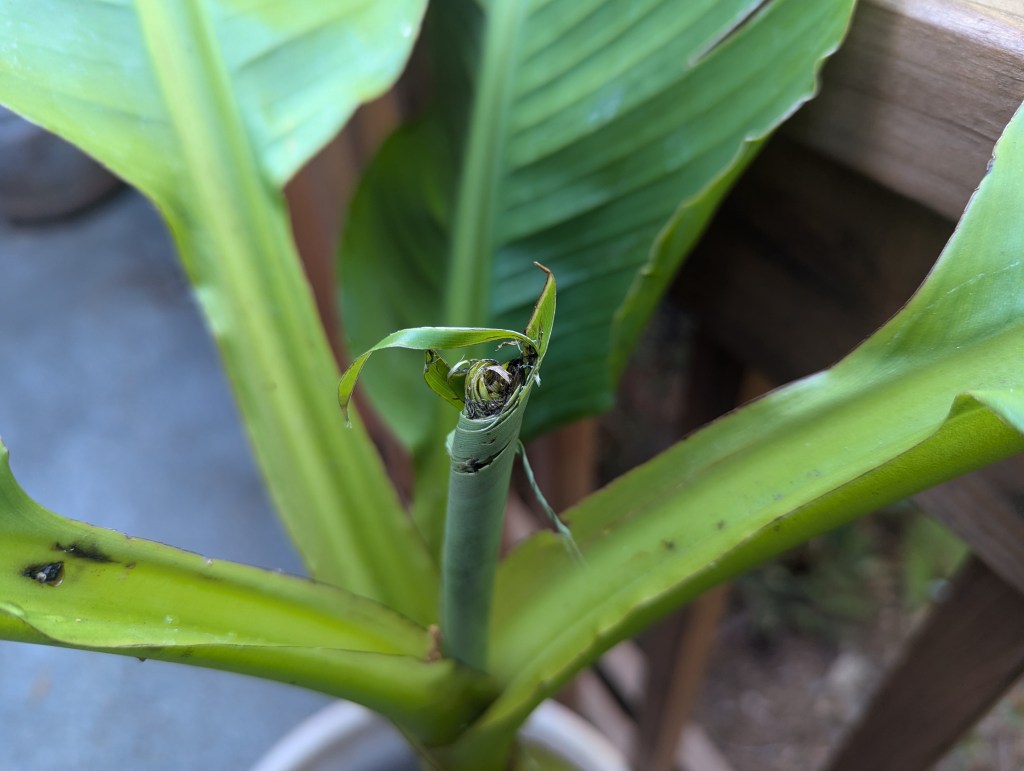
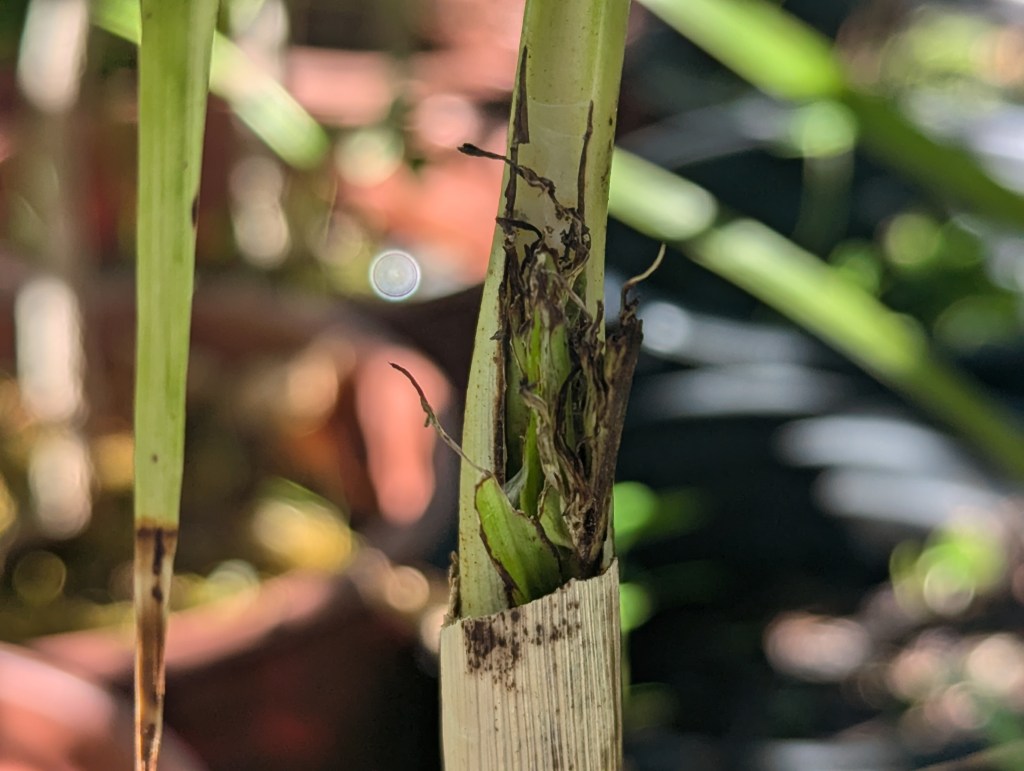
1. Musa acuminata ‘Golden Rhino Horn’ banana got chomped by a squirrel, right where its new leaf is unfurling. A Musa acuminata ‘Ever Red’ banana got chomped at its base! Squirrels are also chomping other cultivars of banana and two species of Chamaedorea.

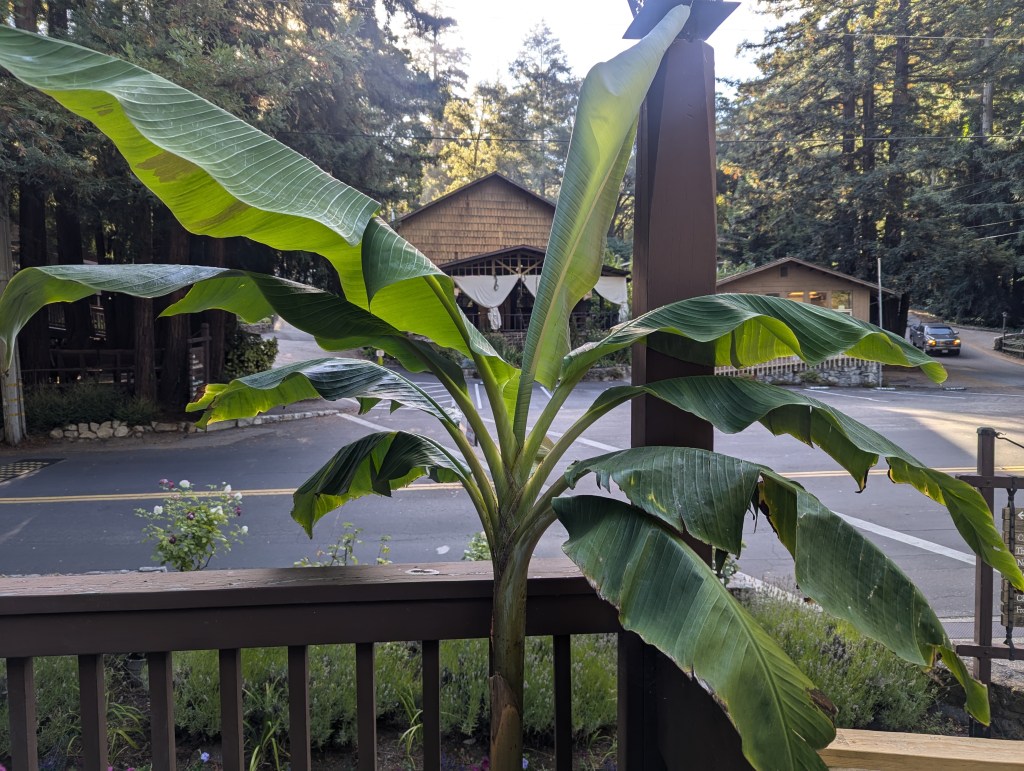
2. Musa ingens, oem, or giant highland banana demonstrates what a young banana tree should look like without squirrels chomping on them like little arboreal demon beavers. I will be furious if I see any more damage on any of these more prominent banana trees.

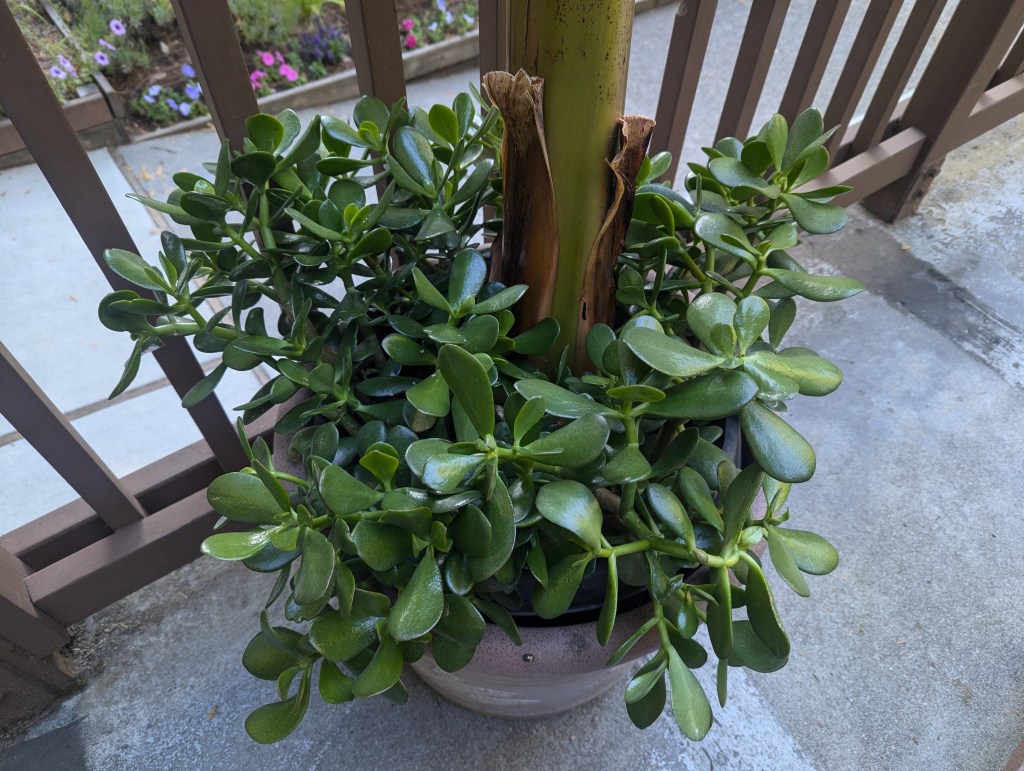
3. Crassula ovata, jade plant is not often considered to be a ‘foliar’ plant, but happens to function splendidly as such by obscuring the otherwise bare bases of several of the small banana trees. It all grew from pruning scraps from one big, old and sculptural specimen.

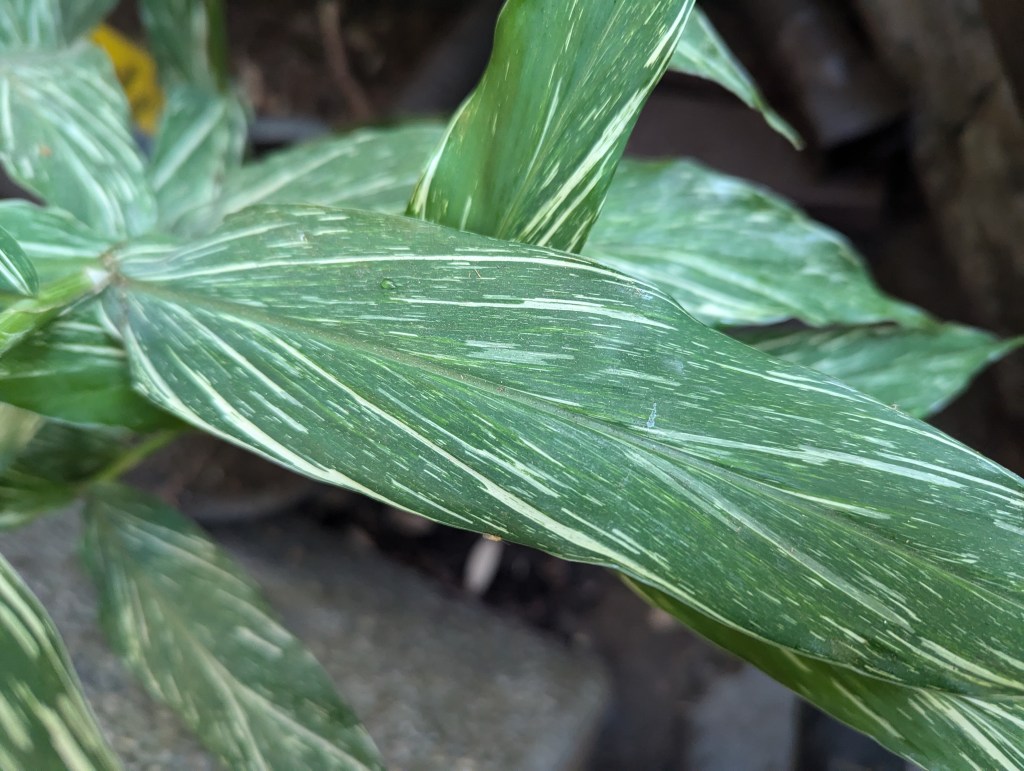
4. Hedychium coronarium ‘Vanilla Ice’ ginger was chomped by squirrels as soon as new growth began to develop last spring. Fortunately, it recovered. Although it appears to be ‘Vanilla Ice’, and likely is, I was told that its flowers are white rather than vanilla yellow.

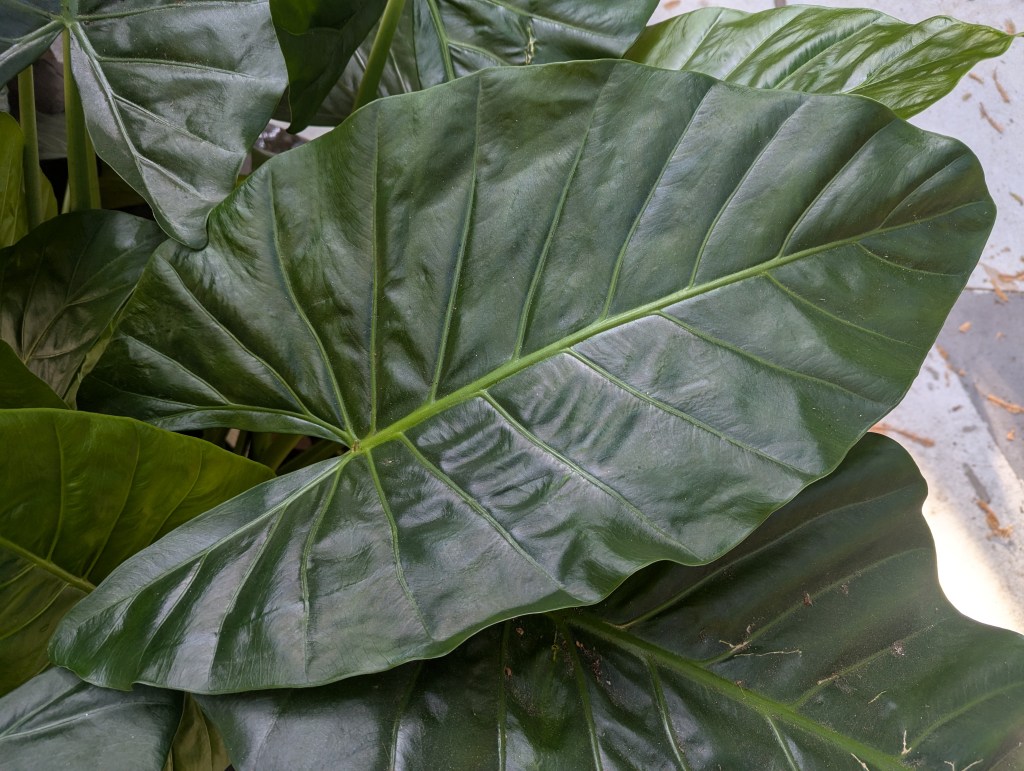
5. Alocasia gigantea, elephant ear was also chomped by squirrels as soon as it started to regenerate foliage last spring, and also recovered. It is quite large now. If its foliage were not so simple, it would be as striking as that of the old fashioned Philodendron selloum.

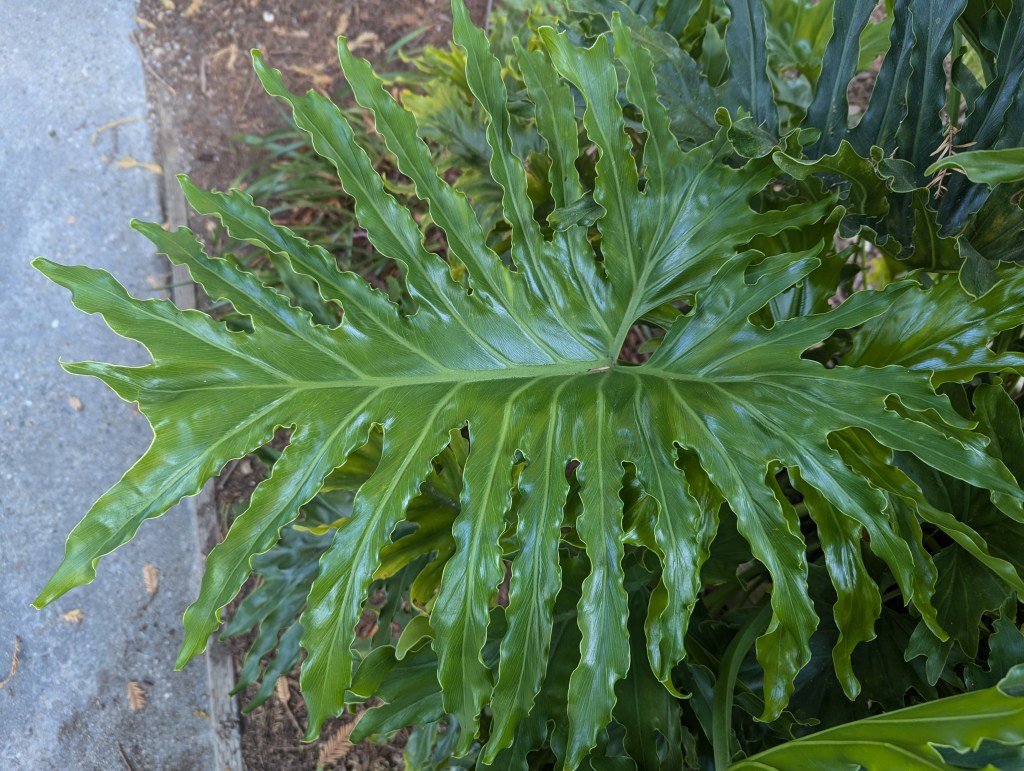
6. Philodendron selloum ‘Lickety Split’ philodendron produces the striking foliage of the species, but not the form. Its multiple trunks are so stout that I have not seen them yet. I suspect that individual leaves do not get very big either. Squirrels have ignored it so far.

This is the link for Six on Saturday, for anyone else who would like to participate: https://thepropagatorblog.wordpress.com/2017/09/18/six-on-saturday-a-participant-guide/
Six on Saturday: Construction Site

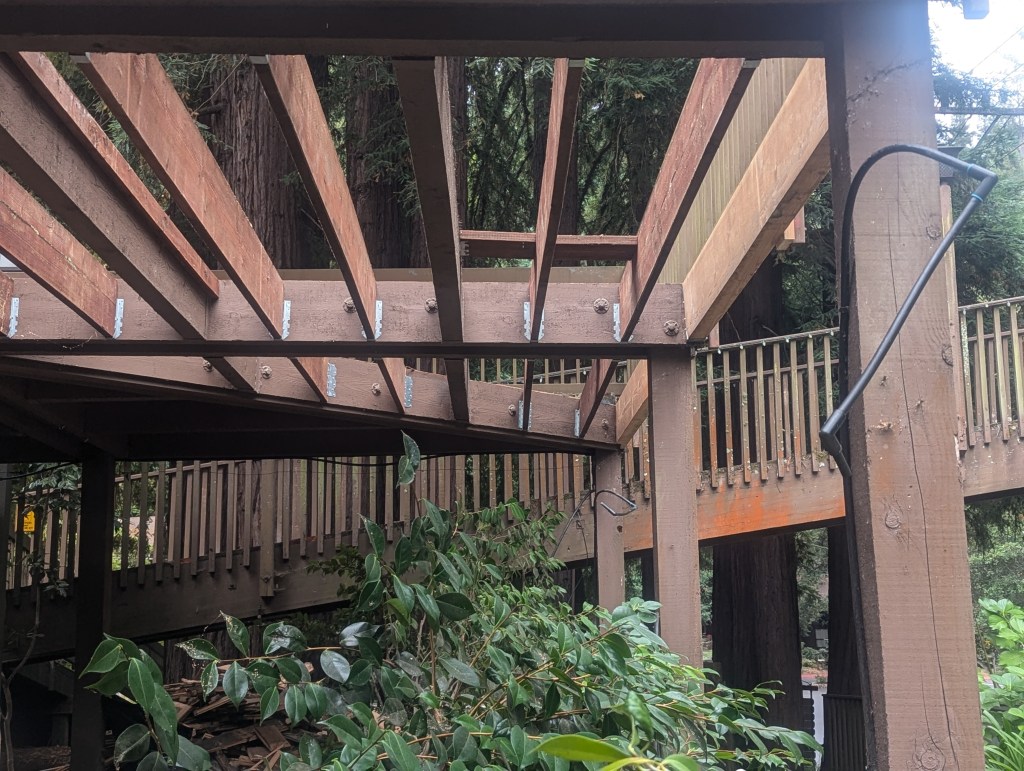
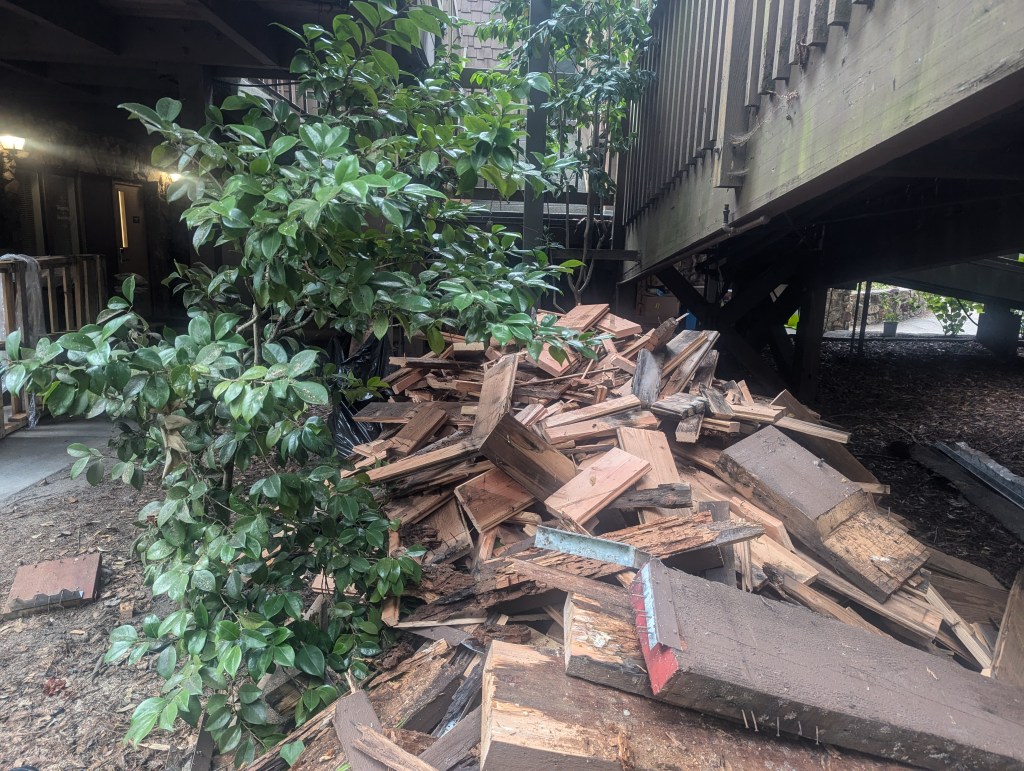
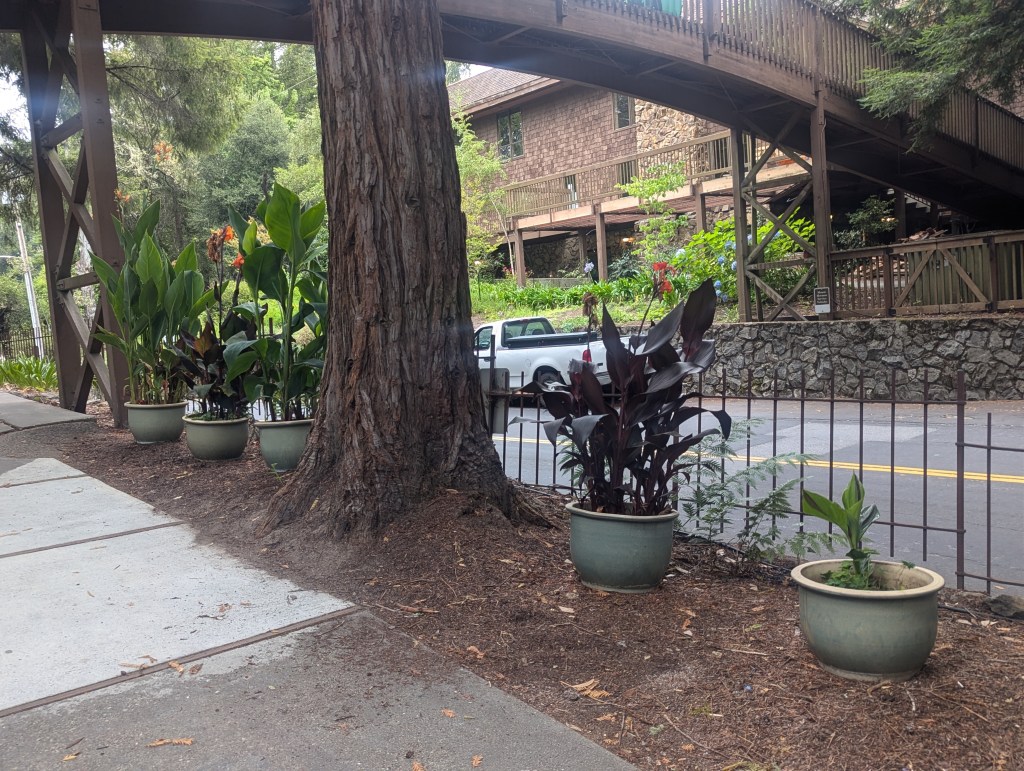
An old deck at work is presently being replaced. Potted cannas that resided on it needed to be moved. Camellias below it are in the way, but safe for now. It is quite a big project.

1. Camellia japonica, camellia under the old deck are temporarily getting more sunlight than they are accustomed to. There are about eight. This will not last long, though, until the new deck replaces the old. The disheveled irrigation tubing was for pots on the deck.

2. Camellia japonica, camellia at the far end of this row is somehow undamaged by this accumulation of debris from the dismantled deck above. I am impressed. Some extent of damage is expected from such a project, particularly with so many camellias in the way.

3. Canna indica, canna was looking good on the deck across the road in the background. Not only were they removed, but because of a realistic concern that they promote decay, they will not return to the new deck. For now, they were straightened into position here.

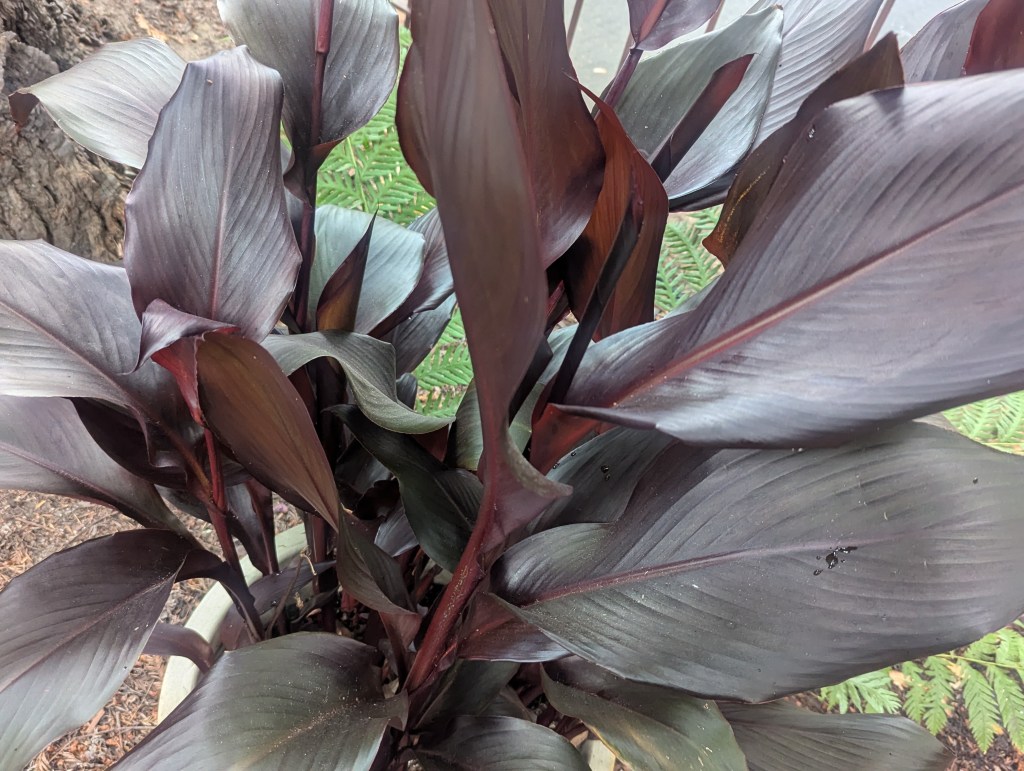
4. Canna indica ‘Australia’ canna is probably the boldest of the five even without bloom. The others are ‘Wyoming’, ‘Cleopatra’, ‘Stuttgart’ with an unidentified cultivar with large red bloom, and ‘Inferno’ with a notably tall but unidentified cultivar of Canna musifolia.

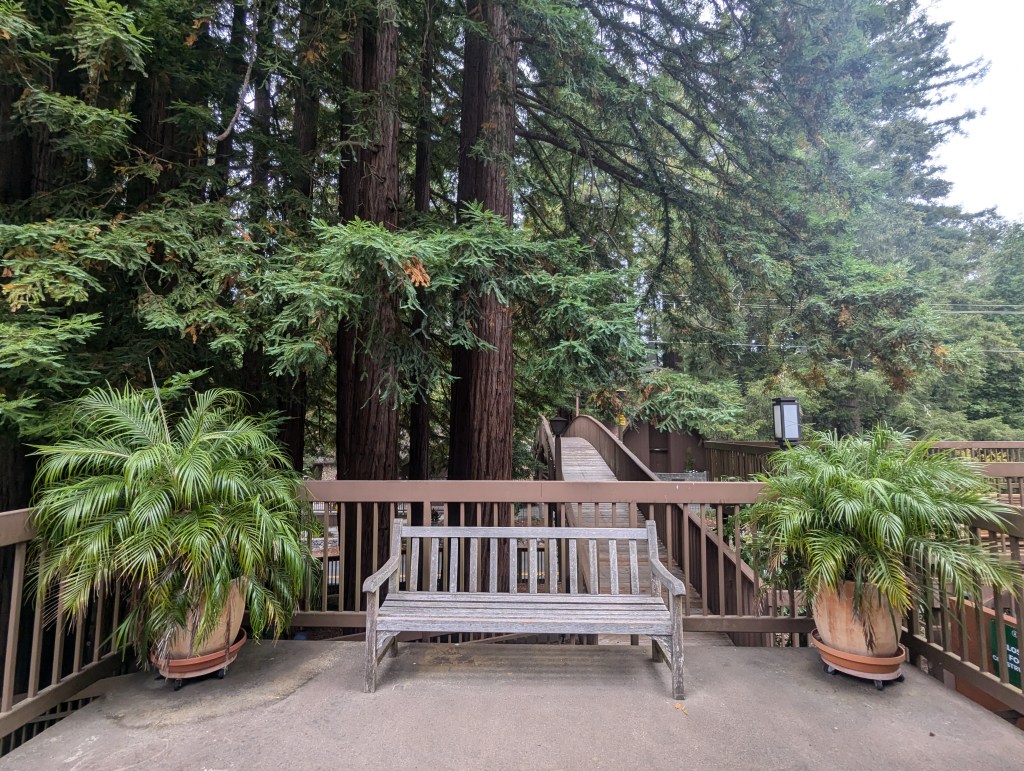
5. Phoenix roebelenii, pygmy date palm paired on another area of the deck will also need to be removed prior to a second phase of reconstruction. Unfortunately, I do not know if these big old pots can be moved intact. Both are deteriorated, fractured, and very heavy.

6. Pelargonium X hortorum, zonal geranium should also be removed, but from another situation. They were originally installed to hold posts for the signs that are now attached to the fence behind them. Now they just get bashed by parking cars. One is already gone.

This is the link for Six on Saturday, for anyone else who would like to participate: https://thepropagatorblog.wordpress.com/2017/09/18/six-on-saturday-a-participant-guide/
Six on Saturday: Pestilence

Molluscs, rodents, insects, virus, fungal pathogens and an identified disease that causes gummosis; we have it all. I know that it is nothing to brag about, but it makes a good six.

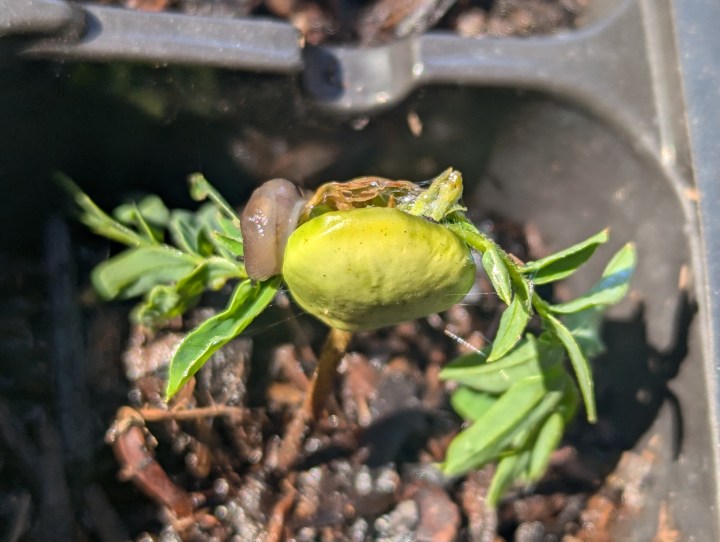
1. Tamarindus indica, tamarind seedlings are popular with slugs. Not much else here is. Weirdly, slugs do not seem to consume the foliage. They only coat it with slime that does not rinse off. The foliage eventually deteriorates. What is the point of this odd behavior?

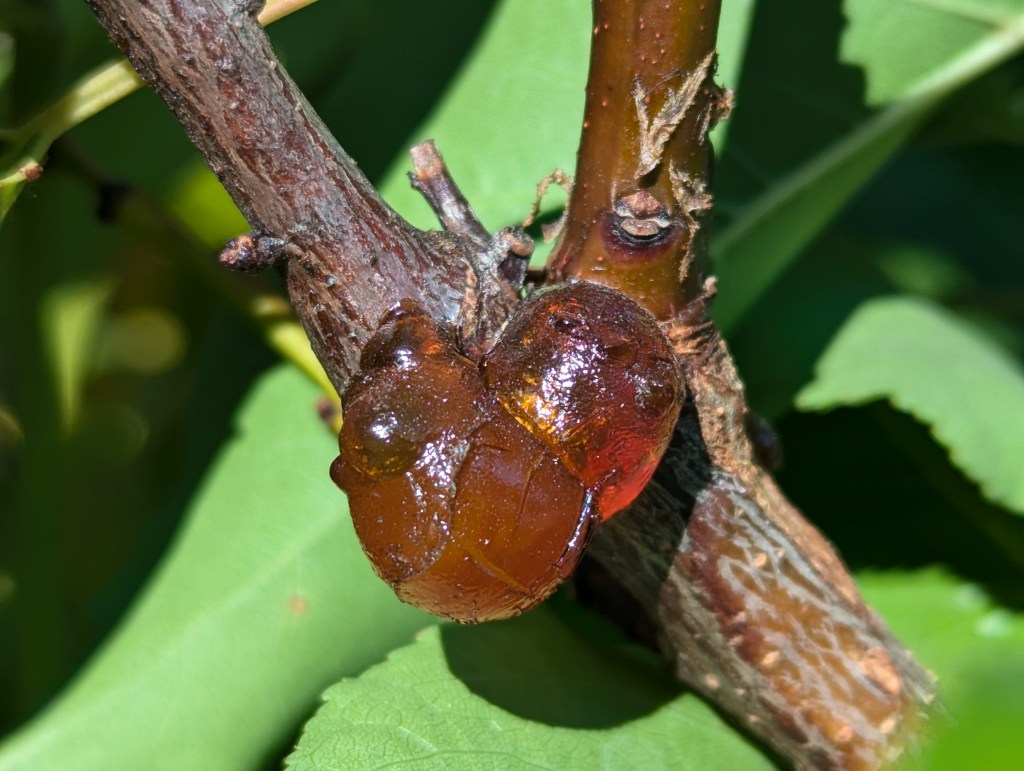
2. Prunus armeniaca, apricot trees sometimes exude gummosis as a symptom of disease or boring insect infestation. I can not see what caused this, and do not care to. I will just prune it out. I know that it will not be the last time. Gummosis is common with apricots.

3. Chamaedorea plumosa, baby queen palm was chewed so badly by some sort of rodent that it will not likely survive. I suspect that a squirrel did this. I have not seen any rats or their damage since Heather arrived. This is one of only two rare baby queen palms here.

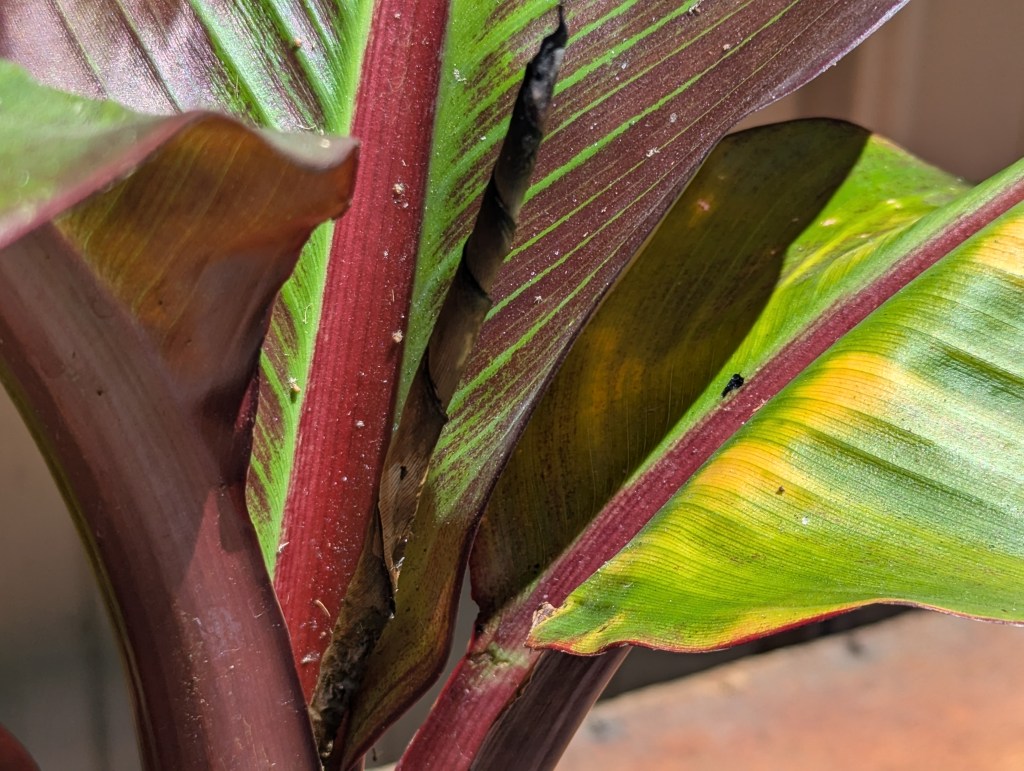
4. Ensete ventricosum ‘Maurelii’ red Abyssinian banana was initially infested with aphid and associated mold. The aphid disappeared, as it typically does, but the mold remained and ruined the currently emerging leaf. I hope that the primary bud within does not rot.

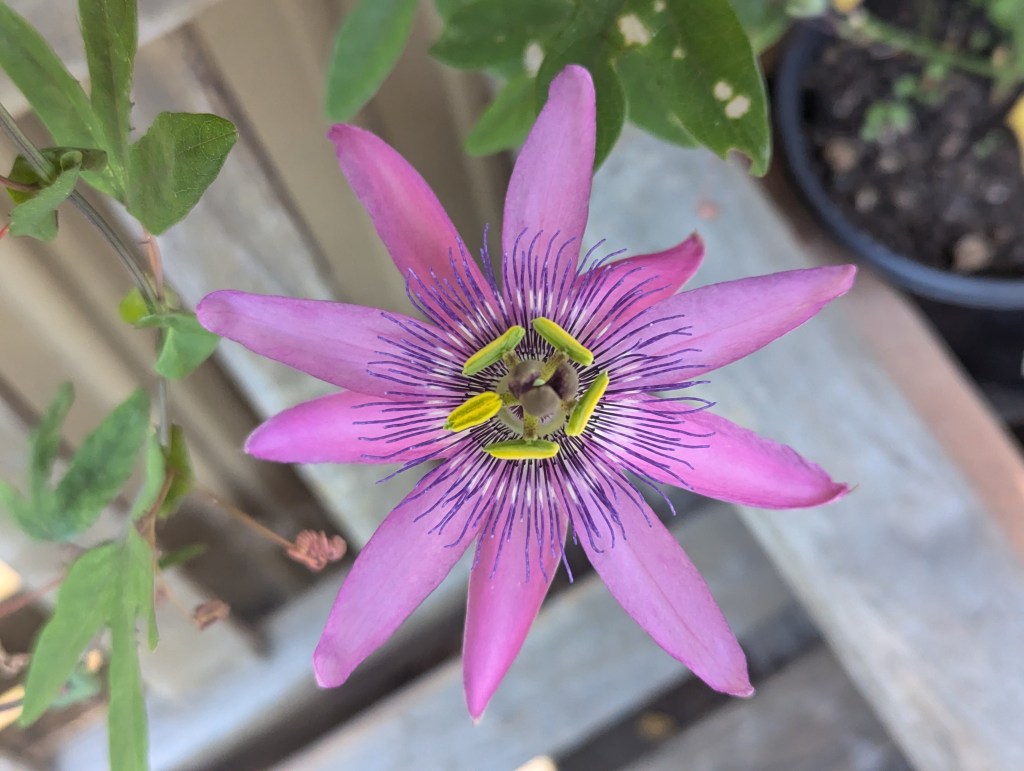
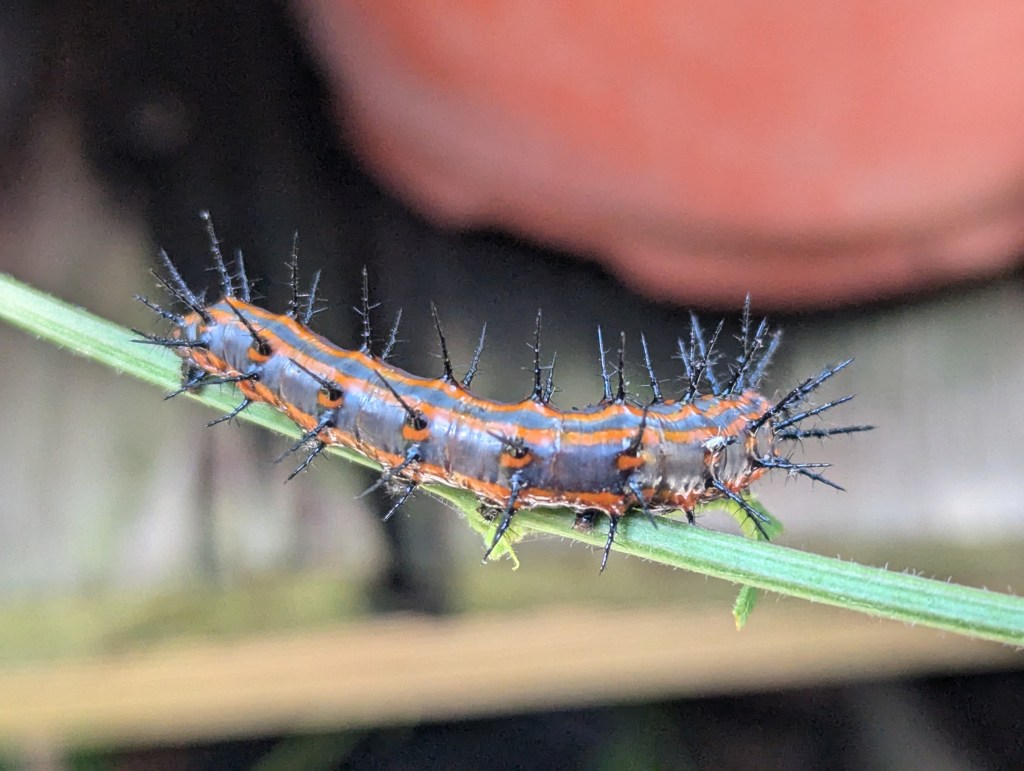
5. Passiflora racemosa, red passion flower vine has been defoliated a few times just this year by a few of these unidentified caterpillars. The caterpillars leave after they consume all foliage, but then return shortly after the foliage regenerates, while I am not watching.

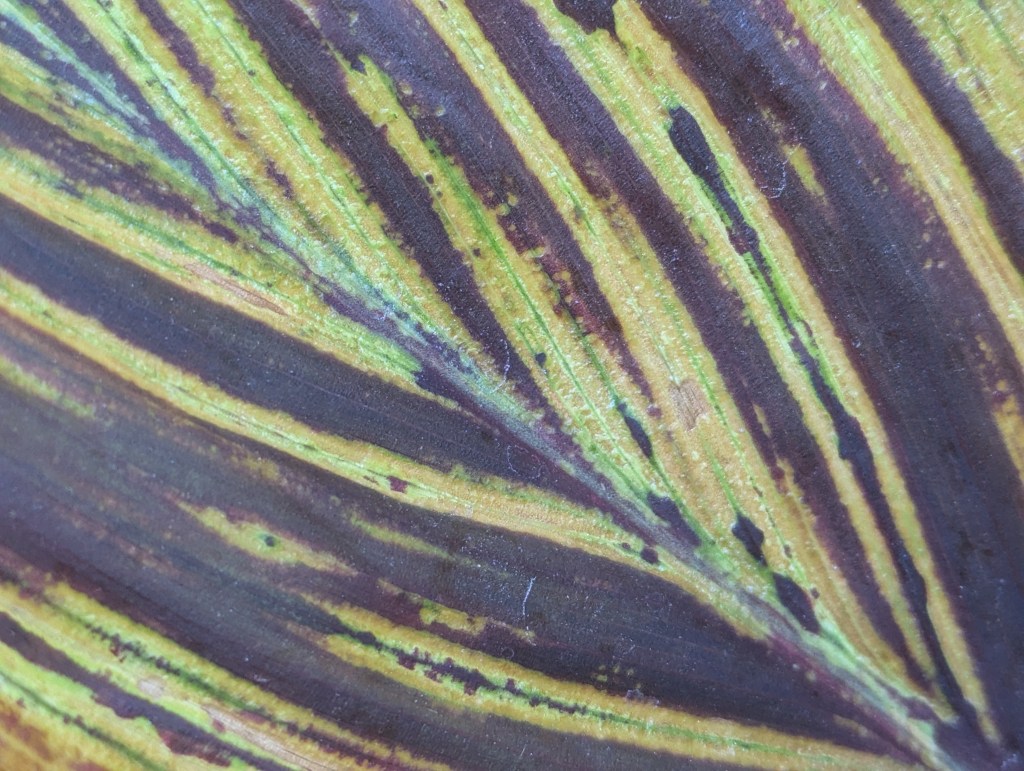
6. Canna indica ‘Australia’ canna is infected with canna mosaic virus. Several others are also, although they do not express symptoms as colorfully as ‘Australia’ does. Most other cannas are isolated from this virus within their landscapes. I am infuriated nonetheless.

This is the link for Six on Saturday, for anyone else who would like to participate: https://thepropagatorblog.wordpress.com/2017/09/18/six-on-saturday-a-participant-guide/
Six on Saturday: 4:00

Four o’clock has been unusually pretty in bloom. It self sows almost enough to become a weed, but I am fond of it.

1. Mirabilis jalapa, four o’clock blooms in various shades of pink, including one that can be fragrant about 4:00 and into evening. It alternatively can bloom white, red, magenta, yellow, or with striped combinations of colors. Different colors may bloom on one plant.

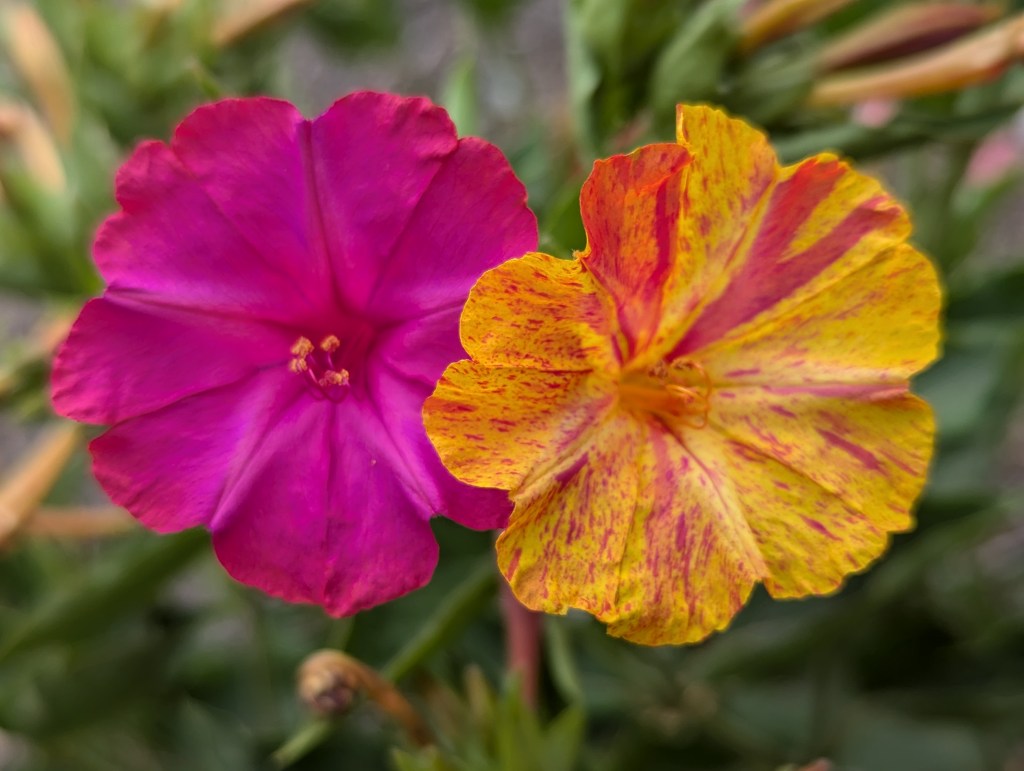
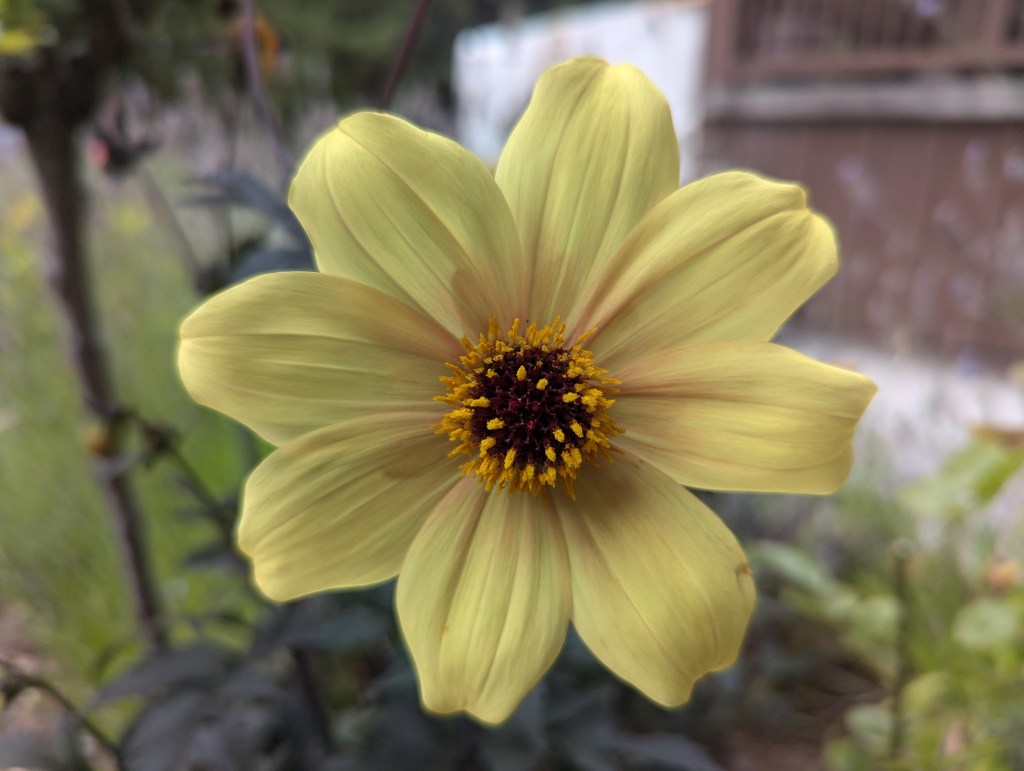
2. Mirabilis jalapa, four o’clock does not exhibit very much variation of floral color here, though. This yellow bloom is one of only three variations. I thought that I noticed simple red bloom through previous summers, but can find none now. I would like to find white.

3. Mirabilis jalapa, four o’clock demonstrates what can occur when the two other colors here combine. It is the third of only three variations that I am aware of. From a distance, it seems to be peachy orange. Some of its flowers are just like the first two pictures here.

4. Nerium oleander, oleander that blooms pink mingles with the oleander which blooms white that I posted a picture of three weeks ago. Oleander is so cheap and common here that, even with oleander scorch, it is still the primary shrubbery for freeway landscapes.

5. Fuchsia magellanica, fuchsia is easy to miss where it is wedged between healthier and prettier hydrangea and canna. I should grow copies of it elsewhere. It would probably be bigger with fuller foliage where it gets more water than the four o’clock and oleander get.

6. Rosa spp., rose is in a rose garden that is nowhere near the four o’clock, oleander and fuchsia, but is too pretty to omit. I believe that it is ‘Double Delight’. It is nicely fragrant. Flowers bloom white with red edges, but fade to mostly pinkish red, just as they should.

This is the link for Six on Saturday, for anyone else who would like to participate: https://thepropagatorblog.wordpress.com/2017/09/18/six-on-saturday-a-participant-guide/
Six on Saturday: Abandoned

These are a few plants that survived where my former home was abandoned, and where the new home is to be built. Some of them had been here since 2006 nineteen years ago.

1. Cereus peruvianus, night blooming cereus is from Brent’s former Miracle Mile garden balcony. I do not know why it is so spiny now. Maybe it is angry about being abandoned. Aeonium arboreum, common houseleek is from another friend’s garden near Monterey.

2. Crassula arborescens spp. undulatifolia, ripple jade, as well as the pinwheel aeonium below, remain unidentified. These names that I present here are merely guesses of their identities. Anyway, I procured this from a jobsite that I worked at in Hayward years ago.

3. Aeonium haworthii, pinwheel aeonium came from the same garden that the common houseleek came from near Monterey. The slope that it is attached to is actually too steep to stand on. Yucca recurvifolia, curve leaf yucca is from an old jobsite in Boulder Creek.

4. Aloe arborescens, candelabra aloe came from the home garden of an old friend in the East Hills of San Jose. It is higher on the same steep slope as the pinwheel aeonium and curve leaf yucca. It should grow better and produce pups for dividing with a bit of water.

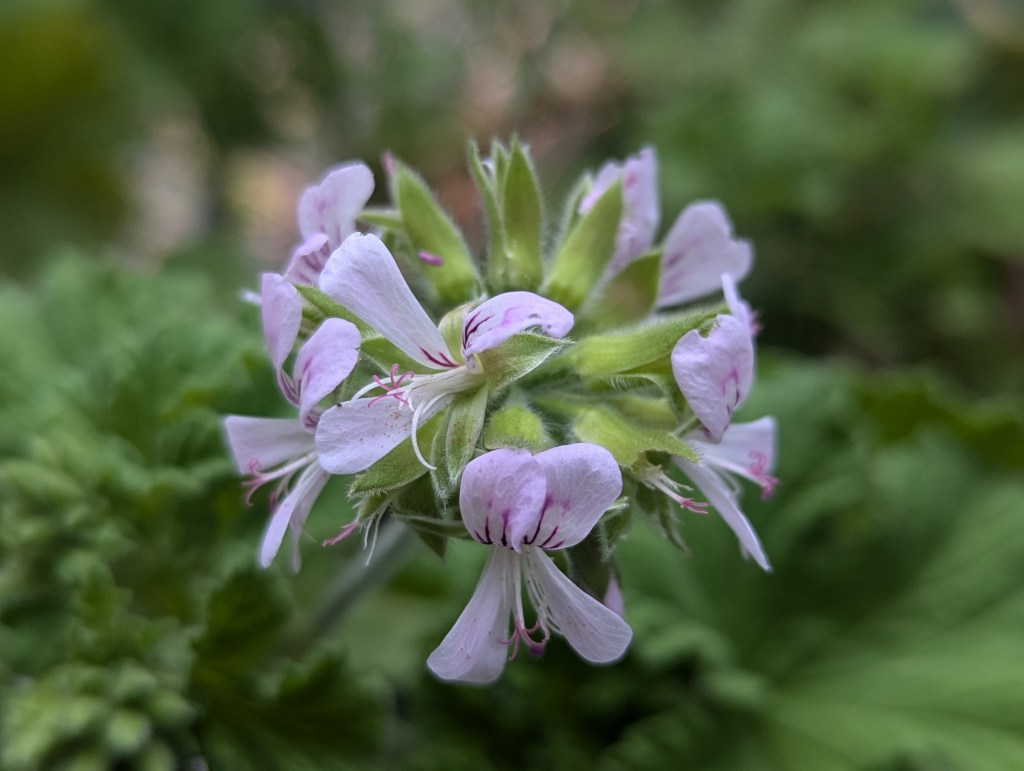
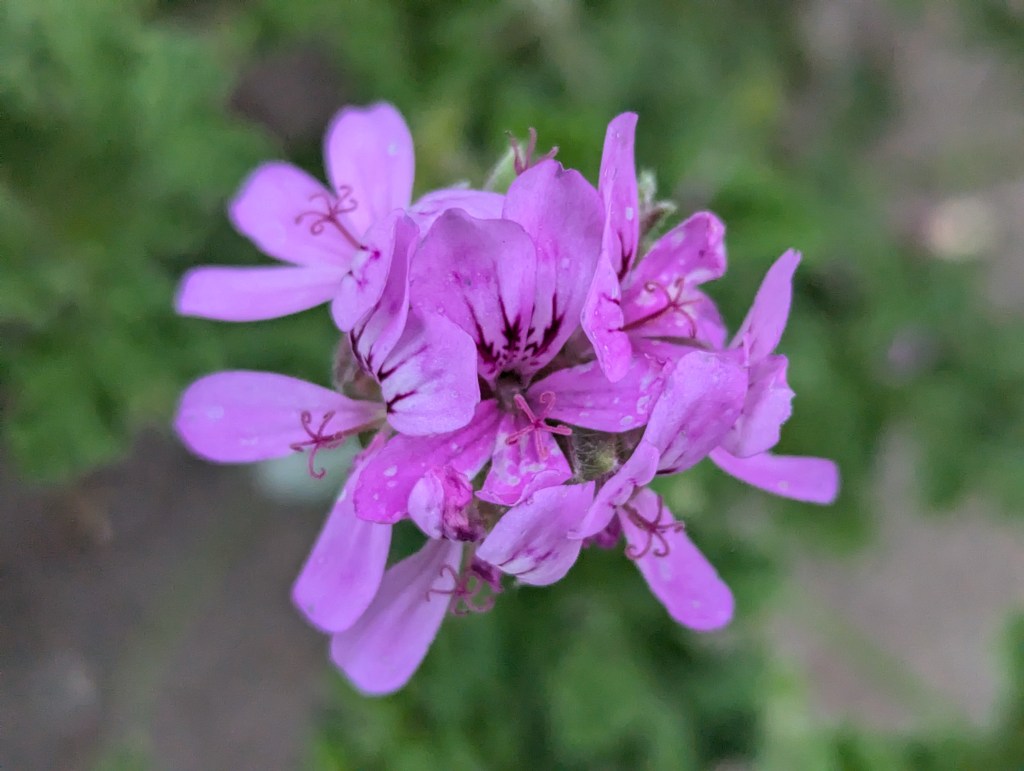
5. Pelargonium graveolens, rose geranium impresses me most because it survived for so long, like the other perennials, but is supposedly not as resilient as they are. I found this in an old home garden in San Francisco, although I believe that it is common elsewhere.

6. Iris pallida, Dalmatian iris is important because it is from the garden of my maternal maternal great grandmother in Oklahoma. I acquired it when I was about four. Crassula ovata, jade plant was from my former home in town, where I lived after the earthquake.

This is the link for Six on Saturday, for anyone else who would like to participate: https://thepropagatorblog.wordpress.com/2017/09/18/six-on-saturday-a-participant-guide/