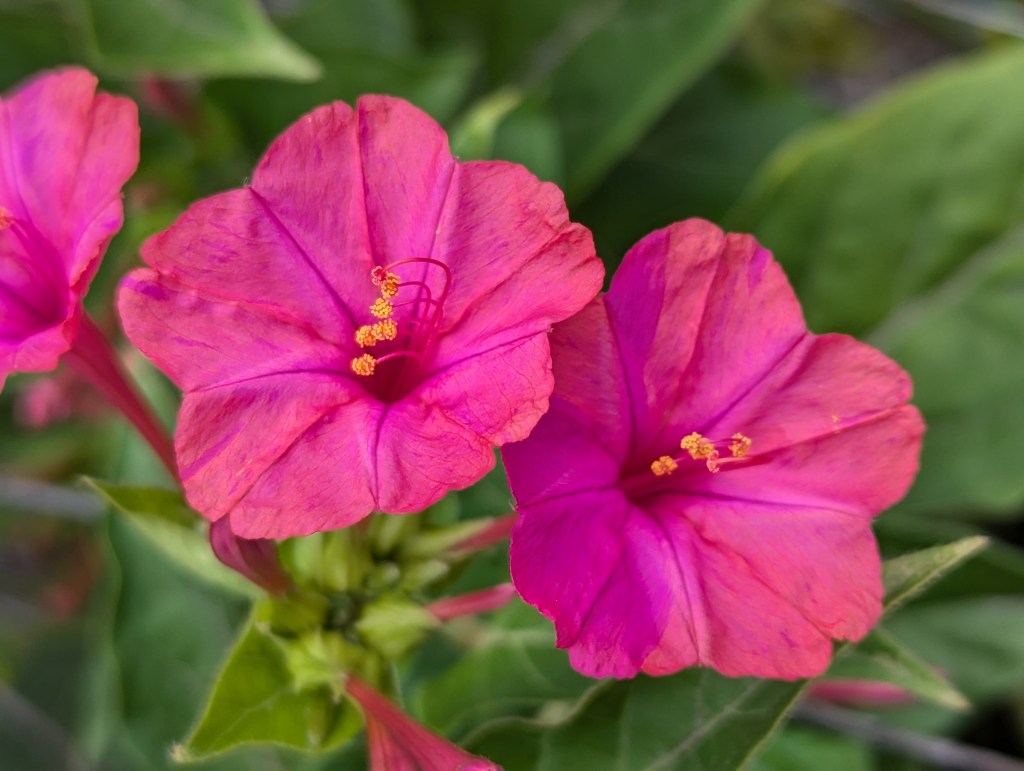
Four o’clock has been unusually pretty in bloom. It self sows almost enough to become a weed, but I am fond of it.
1. Mirabilis jalapa, four o’clock blooms in various shades of pink, including one that can be fragrant about 4:00 and into evening. It alternatively can bloom white, red, magenta, yellow, or with striped combinations of colors. Different colors may bloom on one plant.
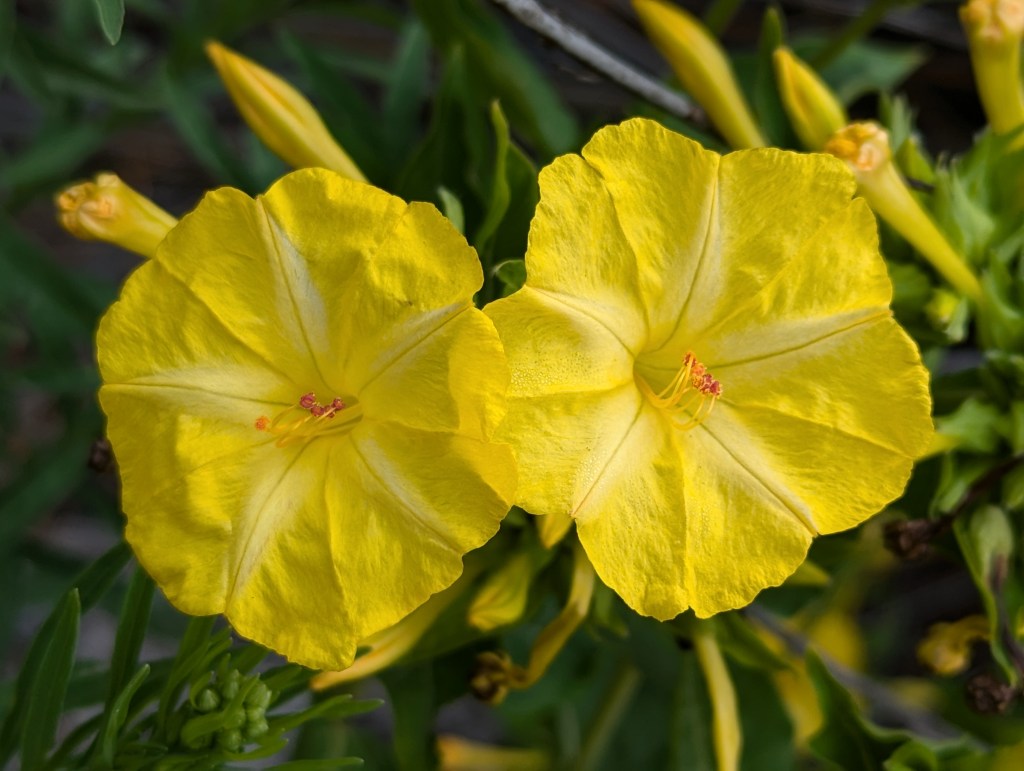
2. Mirabilis jalapa, four o’clock does not exhibit very much variation of floral color here, though. This yellow bloom is one of only three variations. I thought that I noticed simple red bloom through previous summers, but can find none now. I would like to find white.
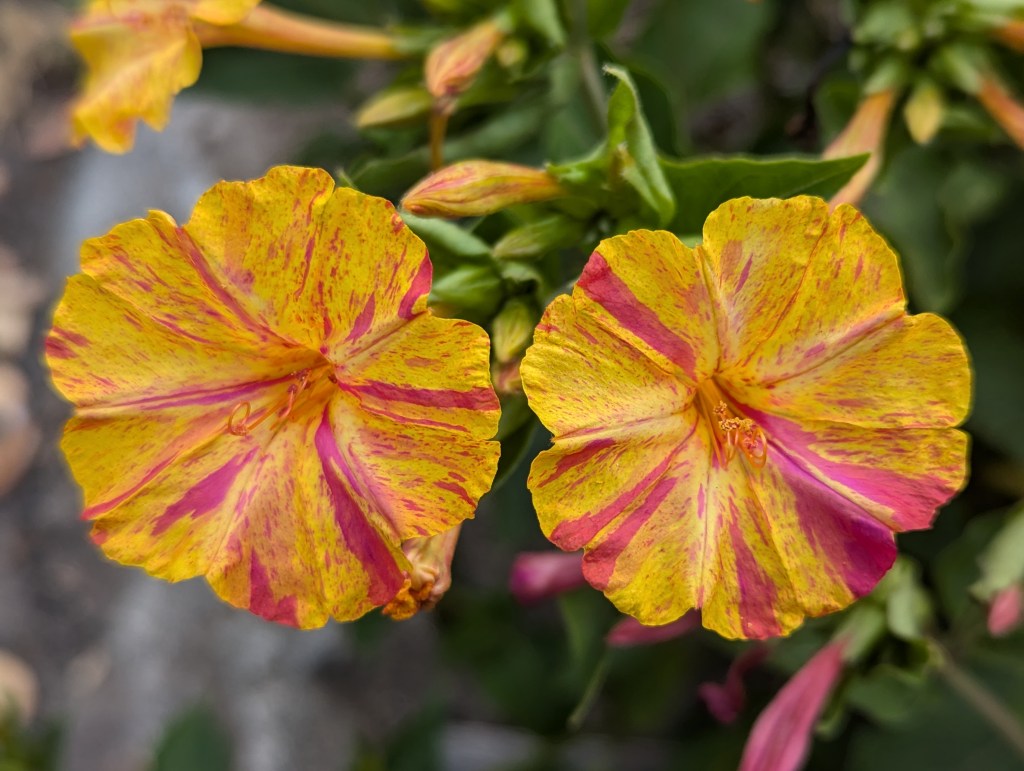
3. Mirabilis jalapa, four o’clock demonstrates what can occur when the two other colors here combine. It is the third of only three variations that I am aware of. From a distance, it seems to be peachy orange. Some of its flowers are just like the first two pictures here.
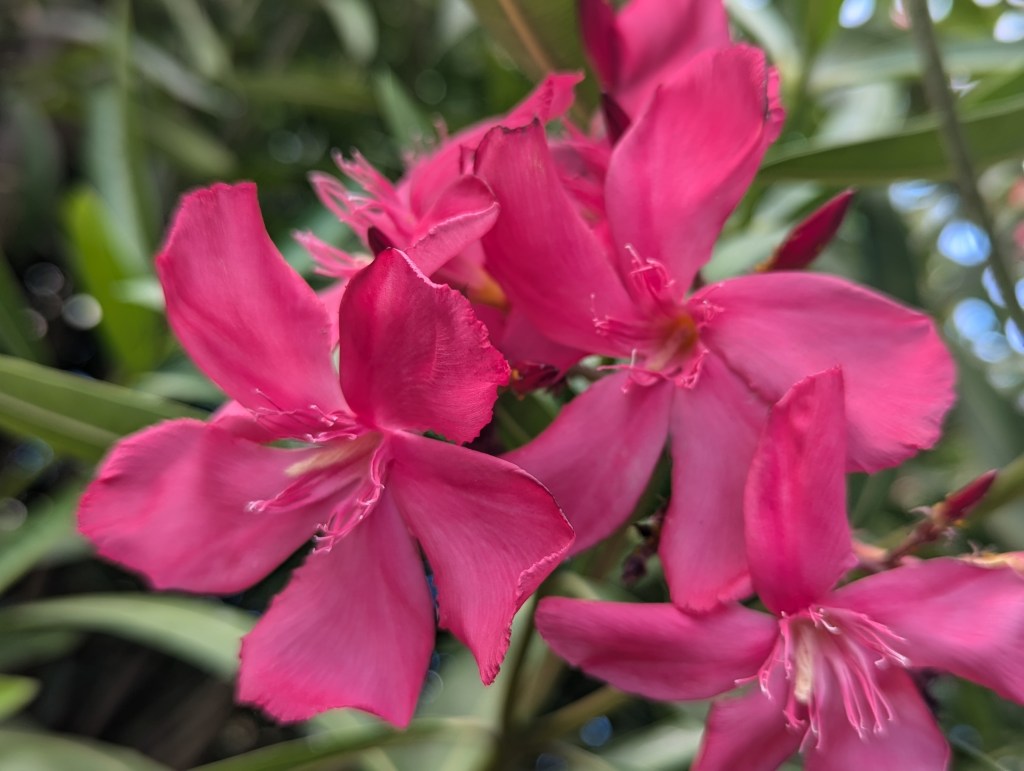
4. Nerium oleander, oleander that blooms pink mingles with the oleander which blooms white that I posted a picture of three weeks ago. Oleander is so cheap and common here that, even with oleander scorch, it is still the primary shrubbery for freeway landscapes.
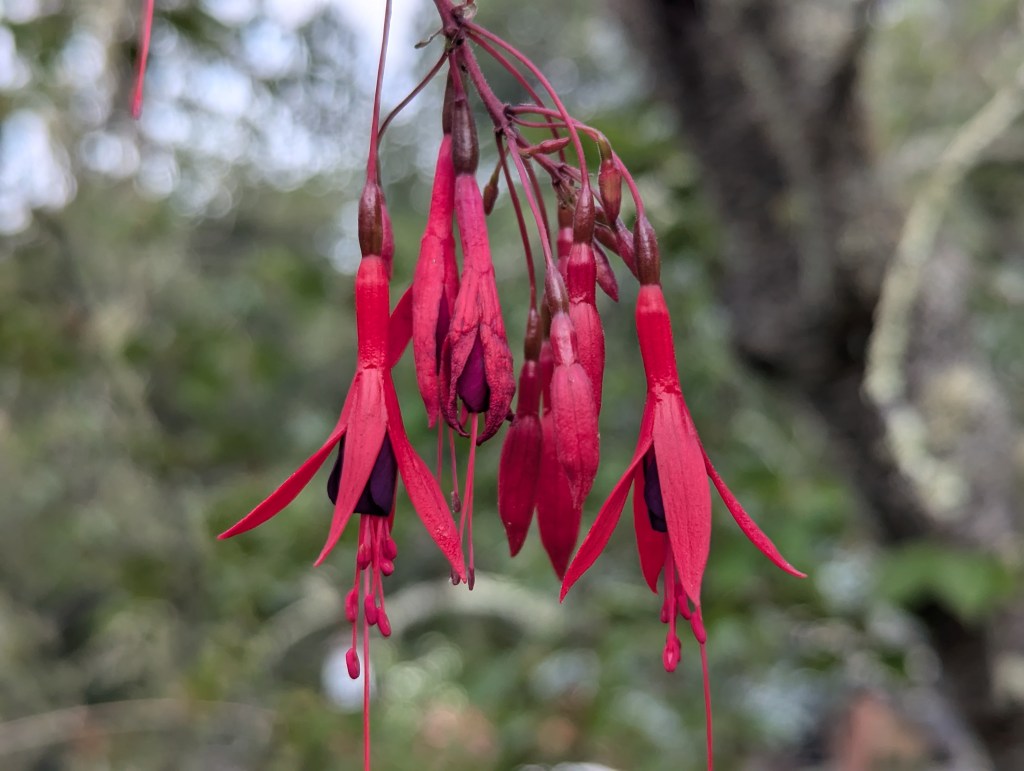
5. Fuchsia magellanica, fuchsia is easy to miss where it is wedged between healthier and prettier hydrangea and canna. I should grow copies of it elsewhere. It would probably be bigger with fuller foliage where it gets more water than the four o’clock and oleander get.
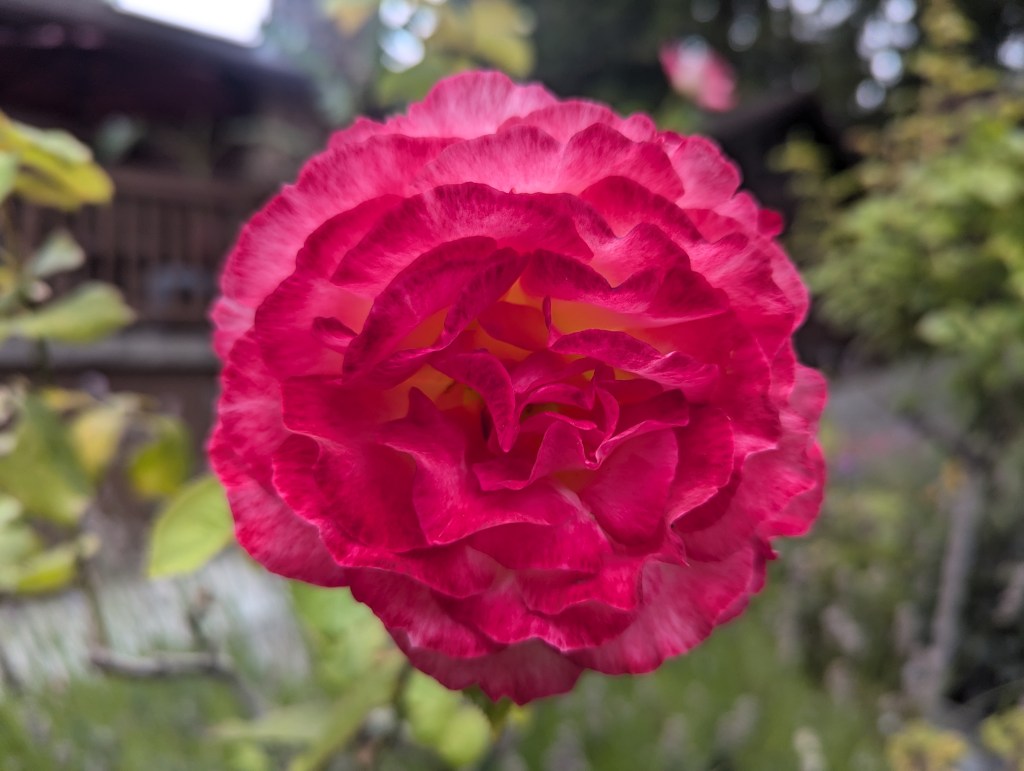
6. Rosa spp., rose is in a rose garden that is nowhere near the four o’clock, oleander and fuchsia, but is too pretty to omit. I believe that it is ‘Double Delight’. It is nicely fragrant. Flowers bloom white with red edges, but fade to mostly pinkish red, just as they should.
This is the link for Six on Saturday, for anyone else who would like to participate: https://thepropagatorblog.wordpress.com/2017/09/18/six-on-saturday-a-participant-guide/














 Tony Tomeo