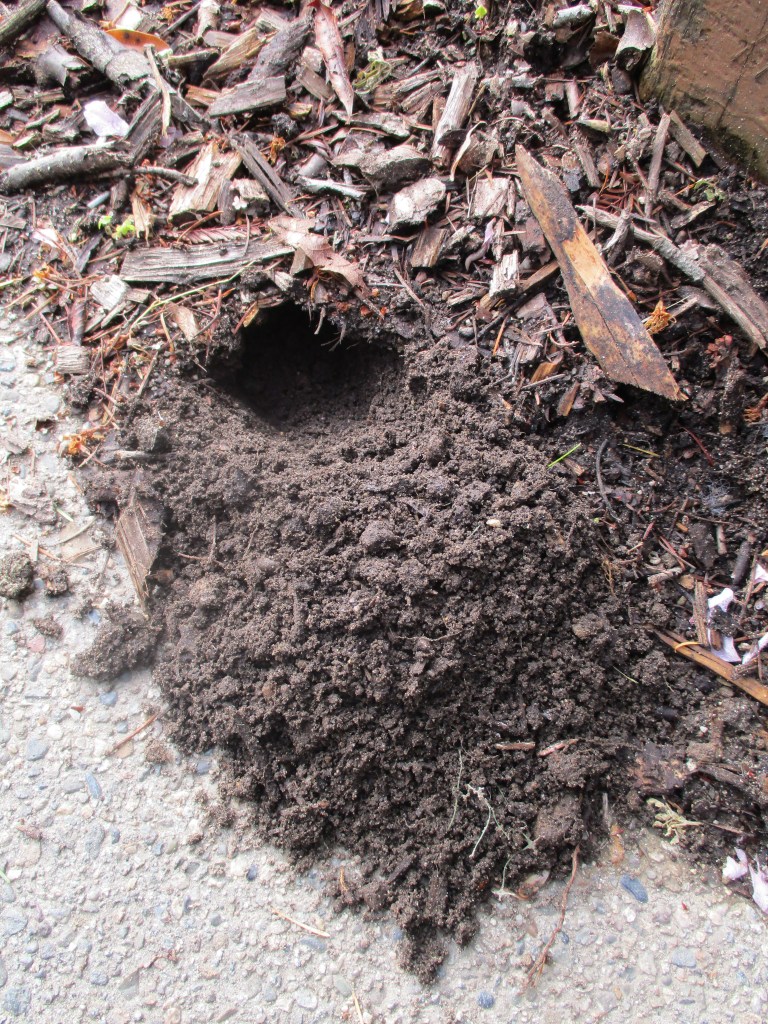
Wildlife belongs in the wild. Many of us appreciate it there, and get pictures of it to share with others as if it is rare and unusual. Deer, raccoons, skunks, squirrels, gophers and so many other residents of the wild are not so appealing in home gardens. They all need to eat. None are tactful about it. Some eat foliage. Some eat fruits. Moles eat larval insects.
That seems like it would be beneficial to the garden. In some situations, it is. Not only do moles inhibit the proliferation of grubs that damage roots, but they also aerate dense soil. The problem is that they heave soil as they excavate just below the surface. This activity damages lawns and shallow ground cover. Uninhibited grubs might cause less damage.
Gophers often take the blame for damage that moles cause. However, gophers are much more destructive. They excavate more substantially, and generate larger mounds. While moles consume mostly detrimental grubs, gophers devour roots and any other plant part within the soil. Gophers do not hesitate to kill the most important plants in the landscape.
Like gophers and other rodents, moles can not take much time off for hibernation through winter. The weather is just too mild. Although they are less active during cool weather, or while there is less to hunt, they never stop excavating. They merely become more active now because, as the weather warms, they can plan for a family, and find plenty of grubs.
Mole excavation generates distinctive small ‘berms’ of displaced soil within lawns. Such berms extend randomly in no particular direction, but are impressively consistent in form. Mounds of expelled soil are small and sporadic, or may not be evident. Moles often push their way below the surface of firmly rooted turf, without expelling any soil to the surface.
Unfortunately, moles can be about as difficult to dissuade as gophers. The most practical means of repellent is to eliminate the grubs that they crave, which can be difficult without insecticide. Blood meal and bone meal are fertilizers that can supposedly repel moles by their objectionable aroma, but require frequent application. Traps also require diligence, as well as precision.
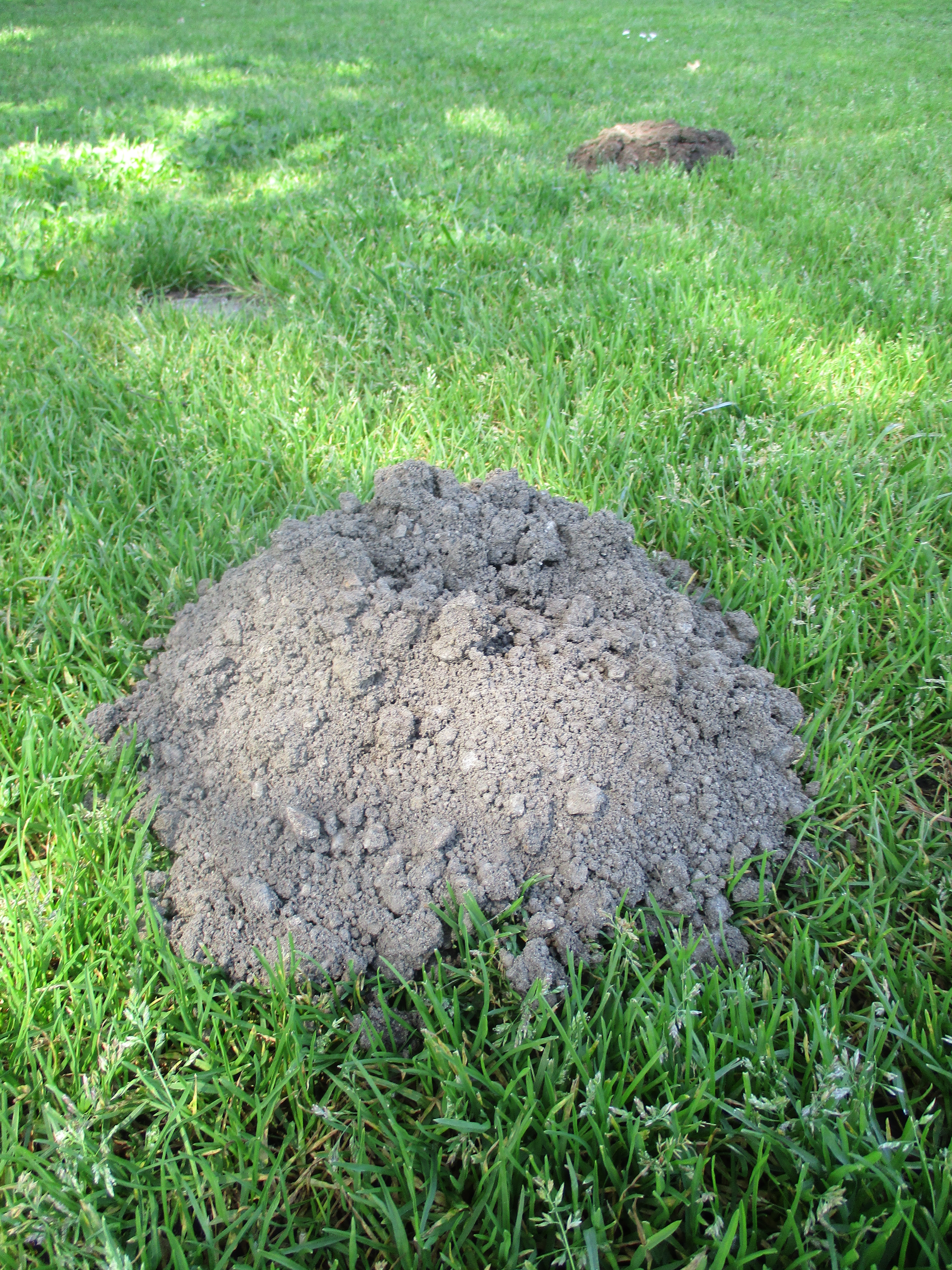 Who do they think they are?! This ain’t ‘Caddy Shack’! They have such attitude! Gophers move into our gardens and lawns, take what they want, and build their messy volcanoes of loose soil. They do not care how much work we put into our gardens, or how much we spend on nice plants, or how much we crave our first zucchini of the year. They are safe in their subterranean tunnels.
 Tony Tomeo